
When you're reeling from a car accident, one of the first things you should do for your long-term health is find a chiropractor who specializes in whiplash. It’s a critical step. A true auto injury specialist does more than just quiet your neck pain; they dig deeper to find and treat the root cause, stopping chronic problems before they can even start.
Why The Right Chiropractor For Whiplash Is Crucial

Here's the thing about whiplash: it's a lot more complicated than a simple sore neck. That violent, sudden whip of your head creates tiny micro-tears in muscles and ligaments, can knock vertebrae out of alignment, and irritates delicate nerves.
And the worst part? Symptoms like dizziness, splitting headaches, or pain shooting down your arm might not show up for days or even weeks. Trying to ignore these signals or just covering them up with pain meds is a recipe for long-term trouble. This is exactly why finding a chiropractor who lives and breathes whiplash cases is so important.
Addressing The Core Problem
Unlike a general doctor who might just hand you a prescription for muscle relaxers, a chiropractor is focused on one thing: restoring your spine's natural alignment and function. They use targeted, specific adjustments to correct the misalignments caused by the crash, getting right to the source of your pain and inflammation.
For instance, a gentle, precise adjustment can take the pressure right off a pinched nerve. This can bring immediate relief from symptoms like tingling or numbness in your hands. This focus on the body's mechanics is what truly sets chiropractic care apart for whiplash recovery.
The goal isn't just to make the pain go away. It's about restoring full mobility and proper function to your neck and upper back. This is how you help prevent chronic issues like arthritis or that nagging, persistent stiffness from setting in years later.
The Value of Specialized Care
There's a reason chiropractic care is so widely recognized as a non-invasive and cost-effective treatment for neck injuries after a collision. Musculoskeletal issues are a leading cause of disability across the globe, which has fueled a huge demand for treatments that actually work.
In fact, the market for chiropractic services is expected to climb from $1.48 billion in 2025 to a staggering $2.44 billion by 2032. You can read more about the growth of chiropractic care for musculoskeletal issues to see just how many people are finding relief.
A chiropractor with deep experience in auto injuries brings a well-rounded approach to the table. They understand the unique forces at play in a whiplash injury and will build a treatment plan that often includes:
- Spinal Adjustments: Gentle corrections to realign vertebrae and get your joints moving correctly again.
- Soft Tissue Therapy: Techniques to release tight, spasming muscles and break down restrictive scar tissue.
- Therapeutic Exercises: Specific movements designed to strengthen the supporting muscles in your neck and improve long-term stability.
When you're searching for a provider, it helps to have a clear checklist of what separates a good chiropractor from a great one for whiplash.
Key Qualities in a Whiplash Chiropractor
| Qualification | Why It's Important for Whiplash |
|---|---|
| Experience with Auto Injuries | They understand the specific biomechanics of whiplash and related documentation for insurance or legal claims. |
| Advanced Certifications | Post-graduate training in areas like neurology or orthopedics shows a deeper commitment and knowledge. |
| Uses Multiple Techniques | Not every patient responds to the same adjustment. A varied toolkit means a more personalized treatment plan. |
| Focus on Rehabilitation | They should provide therapeutic exercises and stretches to strengthen the injured area and prevent re-injury. |
| Positive Patient Reviews | Real-world feedback from other whiplash patients can give you confidence in their ability to deliver results. |
Ultimately, finding someone with these qualities ensures you’re not just getting a temporary fix, but a partner in your long-term recovery.
Building Your Shortlist of Potential Chiropractors

When you're dealing with whiplash, the last thing you want is to feel overwhelmed by an endless list of search results for a "chiropractor near me." The goal isn't to find every single chiropractor in town. It's about creating a focused, manageable list of the best 3-5 potential clinics that truly fit your needs.
Before you even open a web browser, start with the people you already know and trust.
Your family doctor is an incredible resource. They often have a solid network of specialists they refer patients to and can point you toward chiropractors known for getting real results with auto accident injuries. Next, think about friends, family, or even coworkers. Someone who has been through a car accident and had a positive recovery experience can offer the most genuine kind of recommendation.
Refining Your Online Search
Once you've exhausted your personal network, it's time to turn to the internet—but with a smart strategy. Vague searches will give you vague results. You need to be specific to filter out the noise.
Try using more targeted search terms like:
- "Chiropractor for car accident injuries"
- "Whiplash specialist near me"
- "Auto injury chiropractor [Your Town]"
These phrases immediately narrow the field, pushing general wellness clinics to the side and highlighting practitioners who have experience with your exact situation. As you find a few promising clinics, dive into their online reviews. Go beyond the simple star rating. Read what actual patients are saying, specifically looking for mentions of whiplash, neck pain, and successful car accident recovery.
A pattern of positive comments about a chiropractor's thoroughness, communication, and success with auto-related injuries is a massive green flag. It tells you they have a track record of helping people just like you.
Spotting Red Flags Early
While you're building your "yes" list, you should also be building a "no" list. Knowing what to avoid is just as important as knowing what to look for.
Be wary of vague websites that don't specifically mention treating auto injuries. High-pressure sales pitches that promise a quick "cure" are another major warning sign. A lack of clear, transparent information about their treatment methods should also give you pause.
For a more detailed look at this, our guide on the top things to look for in a chiropractor near you provides some fantastic insights. Ultimately, a trustworthy clinic will be upfront and honest about its focus, approach, and what you can realistically expect from care.
How to Vet and Evaluate Your Top Choices

Once you have a shortlist of a few promising chiropractors, it's time to do some real digging. This is where you move past the initial Google search and really figure out who has the specific skills to handle a complex injury like whiplash. Don't even think about picking up the phone until you've done a thorough website review.
Start with the basics. Head straight for the "About Us" or "Meet the Doctor" page. You're looking for their credentials. Is their Doctor of Chiropractic (D.C.) degree and state license information clearly visible? Any doctor proud of their qualifications will make them easy to find. Also, keep an eye out for post-graduate certifications in areas like auto accident injuries, neurology, or specific rehabilitation techniques. These show a deeper commitment.
Dig Deeper Into Their Expertise
Now, let's get specific. Direct experience with whiplash is non-negotiable. You aren't just looking for any chiropractor; you need a whiplash specialist.
Their website should be a dead giveaway. Look for:
- Blog posts specifically about car accident recovery.
- Patient success stories or testimonials that mention whiplash.
- Service pages that detail their approach to auto injuries.
A clinic that truly focuses on this will have it all over their website. It’s how you separate a general practice from a genuine whiplash chiropractor.
A chiropractor’s treatment philosophy is a major deciding factor. Are they focused on long-term wellness and correcting the root cause, or do their marketing materials promise a quick, one-size-fits-all fix? For a complex injury like whiplash, you want a partner committed to your full rehabilitation.
Finally, check out the types of care they offer. Whiplash makes the neck incredibly sensitive, so the technique used matters. Some of the most effective approaches are gentle and precise, avoiding any harsh or forceful movements.
For instance, some modern techniques are designed to be extremely low-force, which can be a game-changer for someone in acute pain. If you see them mention specific methods, it's a great sign. You can get a better sense of these by reading up on things like what the Torque Release Technique is and how it helps, as it's a popular choice for issues involving the nervous system.
Critical Questions for Your First Consultation
Think of your first meeting with a potential chiropractor as an interview—where you're the one in charge. This is your chance to move beyond a simple "Can you fix my neck pain?" and really dig into their approach. Getting the right answers upfront ensures their philosophy and treatment style align with what you need for a full recovery.
Being prepared with a solid list of questions will tell you everything you need to know about their expertise, their process, and whether they're the right fit for your specific injury.
You need to understand their entire game plan for whiplash, not just the adjustments. Start by asking about how they diagnose the problem in the first place. Do they use digital X-rays to get a clear picture of your spinal alignment? Or maybe they use functional movement screens to see exactly how the injury is limiting your day-to-day mobility? This tells you how deeply they investigate before ever starting treatment.
The image below breaks down why vetting a chiropractor's credentials, real-world experience, and patient feedback is non-negotiable.
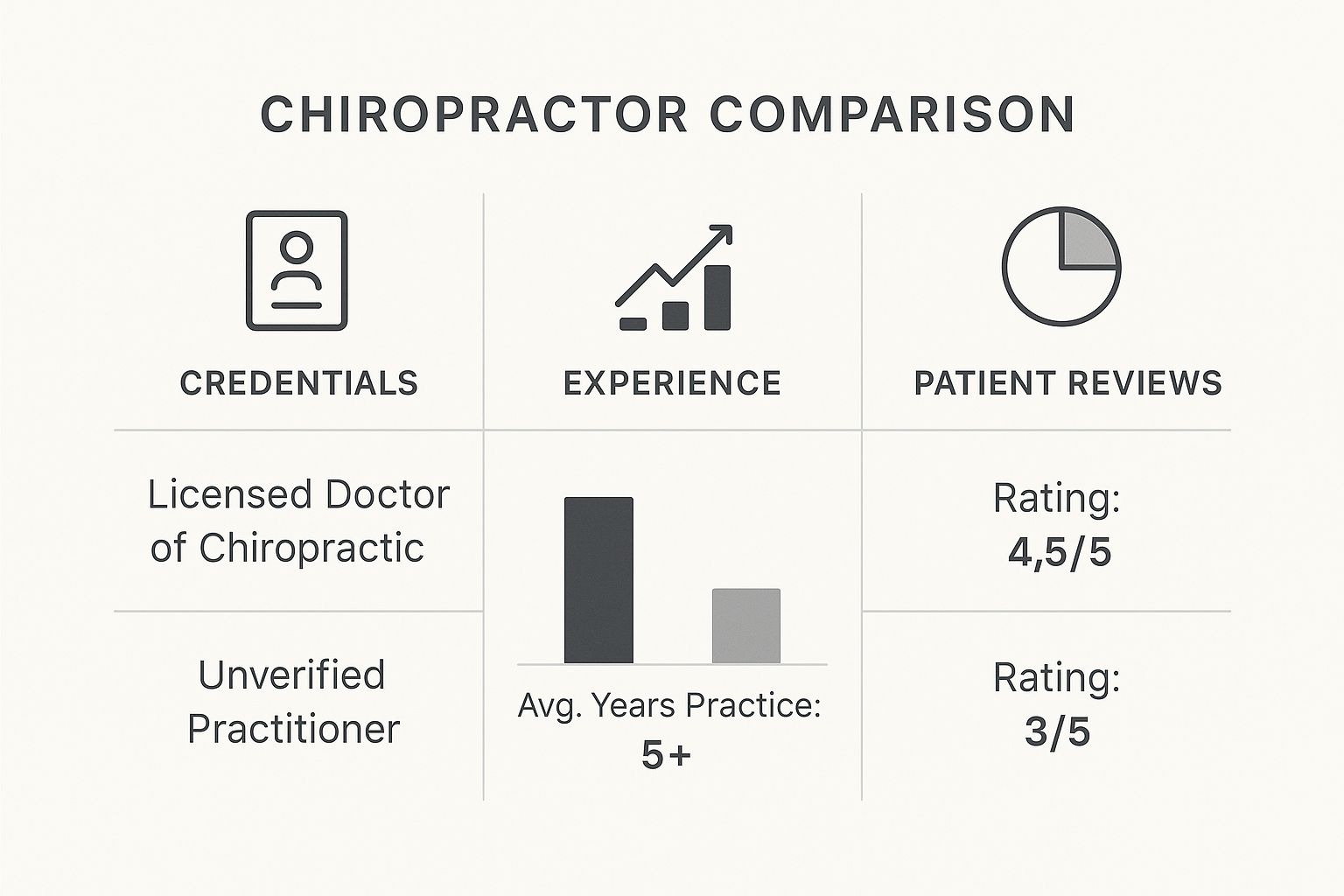
As you can see, choosing a licensed chiropractor with proven experience and positive patient reviews directly correlates with a better outcome for you. It's that simple.
Questions About Treatment and Progress
Once you understand their diagnostic process, it’s time to talk about the treatment itself. Ask them what specific techniques they use for patients with acute whiplash. The best chiropractors often use gentle, low-force methods initially to avoid making sensitive, inflamed tissues even angrier.
It's also crucial to know how they measure success. A good whiplash chiropractor near me will have a clear system for tracking your improvement. This could be through periodic re-examinations, objective functional tests, or even simple symptom scoring to show progress over time.
Finally, you need to talk about the practical side of things. Since a car accident is often the cause of whiplash, ask point-blank about their experience with insurance claims. Do they handle the billing with auto insurance or MedPay directly? A clinic that is a pro at this can take a massive weight off your shoulders.
Comparing Chiropractic Treatment Techniques for Whiplash
Before your consultation, it helps to understand a few common techniques a chiropractor might use for whiplash. This isn't an exhaustive list, but it gives you a sense of the different approaches available. Knowing the basics helps you ask more informed questions about why they might choose one method over another for your specific case.
| Technique | Description | Primary Goal |
|---|---|---|
| Chiropractic Biophysics (CBP) | An advanced method using mirror-image® adjustments, exercises, and traction to correct spinal alignment. | To restore the natural curve of the spine and improve posture long-term. |
| Flexion-Distraction | A gentle, non-thrusting technique using a special table that moves to decompress the spine. | To relieve pressure on spinal nerves, reduce disc bulging, and increase spinal motion. |
| Instrument-Assisted Adjusting | Uses a handheld instrument (like an Activator) to deliver a precise, low-force impulse to the joint. | To restore motion to a targeted joint without the twisting or "cracking" of manual adjustments. |
| Soft Tissue Therapy | Manual techniques like massage or trigger point therapy applied to muscles, ligaments, and fascia. | To reduce muscle spasms, break down scar tissue, and improve circulation to injured tissues. |
Each of these techniques has its place in a comprehensive whiplash recovery plan. A skilled chiropractor will often blend several methods to create a protocol that’s just right for you.
Top 5 Must-Ask Questions for Your Consultation
- What specific diagnostic tools do you use for whiplash injuries (e.g., X-rays, motion studies)?
- What chiropractic techniques do you find most effective for acute neck trauma like mine?
- How do you objectively measure a patient's progress throughout the treatment plan?
- Do you have experience working directly with auto insurance companies for payment?
- What complementary therapies (like soft tissue work or rehab exercises) do you incorporate into your whiplash protocols?
By asking these targeted questions, you'll walk away with a crystal-clear picture of their expertise and communication style. It's the best way to find a true partner you can trust on your recovery journey.
What to Expect From Your Whiplash Treatment Plan
When you’re dealing with a whiplash injury, understanding the road ahead is a huge part of feeling in control of your recovery. A good whiplash chiropractor won’t just give you a few adjustments and send you on your way. Instead, you should expect a structured, multi-phase plan designed to get you from immediate pain relief to long-term stability.
It all starts with what we call acute care. Right after the accident, when everything is inflamed and screaming in pain, the goal is simple: calm things down. Your chiropractor will focus on reducing that initial pain and swelling using very gentle, low-force techniques. They might also incorporate soft tissue therapies to soothe irritated nerves and sore muscles. The last thing you want is an aggressive adjustment that makes a sensitive injury feel worse.
From Pain Relief to True Rehabilitation
Once that initial, intense pain starts to back off, the real work begins. Your treatment will shift into the rehabilitative phase, where the focus moves from just managing pain to actually restoring your neck's proper function and strength. This is the part of the process that prevents whiplash from becoming a chronic, nagging problem.
Here, your chiropractor will introduce specific therapeutic exercises and targeted stretches. These aren't random movements; they're prescribed to:
- Strengthen the small, supporting muscles around your spine.
- Improve your neck’s flexibility and range of motion.
- Retrain your body's posture to take the strain off the injured area.
This active part of your care is what truly builds resilience against future problems. It’s what separates a quick fix from genuine healing.
Your commitment during this phase is just as important as the adjustments you receive in the office. Following through with your at-home exercises is how you take an active role in your own recovery, speed up the results, and build a stronger, more resilient neck.
This kind of structured, non-invasive approach is why so many people are turning to chiropractic care. The global chiropractic market, valued at $2.94 billion in 2024, is expected to reach $12.24 billion by 2029, a jump largely driven by patients looking for effective, drug-free solutions. You can discover more insights about chiropractic market growth on TheBusinessResearchCompany.com.
It's also common for whiplash to cause secondary issues like persistent headaches. Our guide on how chiropractic care helps with headaches explains how these problems are often connected and can be addressed together.
Common Questions About Whiplash and Chiropractic Care
It’s natural to have questions when you’re dealing with an injury like whiplash. Feeling informed and confident is a huge part of the healing process, so let’s tackle some of the most common concerns we hear from people looking for a "whiplash chiropractor near me."
How Soon Should I Get Checked After an Accident?
One of the first things people ask is when they should come in. My answer is always the same: as soon as you can, even if you don't feel much pain right away.
There’s a good reason for this. Whiplash symptoms are notorious for showing up late. That initial stiffness might not turn into debilitating pain, headaches, or dizziness for days or even weeks. Getting an early evaluation lets a chiropractor find those hidden issues, manage inflammation, and start gentle care before restrictive scar tissue has a chance to form. It often makes the difference between a quick recovery and a long, drawn-out one.
Does Car Insurance Cover Chiropractic Visits?
This is a big one. People worry about the cost, and rightfully so. The good news? In most cases, yes, your auto insurance will cover the care you need.
Your policy likely has Medical Payments (MedPay) or Personal Injury Protection (PIP) coverage. This part of your insurance is specifically designed to pay for necessary medical care after an accident, no matter who was at fault. An experienced auto injury chiropractor’s office will know exactly how to work with these claims, billing the insurance company directly so you can focus on healing instead of paperwork.
Is It Safe to Adjust an Injured Neck?
It’s a valid concern—your neck is sensitive after a crash. But are chiropractic treatments safe for whiplash?
Absolutely. When performed by a licensed chiropractor who specializes in auto injuries, adjustments are a safe and proven treatment. We use incredibly gentle, specific techniques designed for the delicate nature of the injury. It all starts with a thorough exam to make sure you’re a good candidate for care in the first place.
How Long Will Recovery Take?
Everyone wants to know when they’ll feel like themselves again. The honest answer is: it depends. Your recovery timeline is unique to you and hinges on the severity of the injury, your overall health, and how quickly you started treatment.
Some people feel significant relief in just a few weeks. More complex cases might take several months to fully resolve. After your initial exam, your chiropractor will give you a personalized prognosis. From there, your commitment to the care plan is one of the biggest factors in how quickly you heal.
At First Steps Chiropractic, we specialize in providing gentle, neurologically-focused care for the whole family, including those recovering from auto accident injuries. If you're dealing with the effects of whiplash, we're here to help you get to the root of the problem. Schedule your complimentary consultation today!