
You're lying in bed, exhausted but unable to settle. Your heart feels loud, your muscles won't relax, and a smartwatch alert makes the whole experience more frightening. The original stress may have happened hours ago, yet your body still seems to be waiting for danger.
This experience is often called overactive nervous system anxiety. It isn't a character flaw or a sign that you're failing to think positively. It's a pattern involving automatic body regulation, threat detection, attention, and recovery. Understanding those parts can make the symptoms less mysterious and help you choose responses that are calmer and more practical.
When Your Nervous System Feels Stuck on High Alert
A parent may notice that a child startles easily, struggles to fall asleep, or becomes irritable after an ordinary day. An adult may feel wired but tired, scan constantly for bodily changes, or wake up already tense. In both situations, the nervous system may be behaving as though the alarm is still relevant, even when the person consciously knows they're safe.
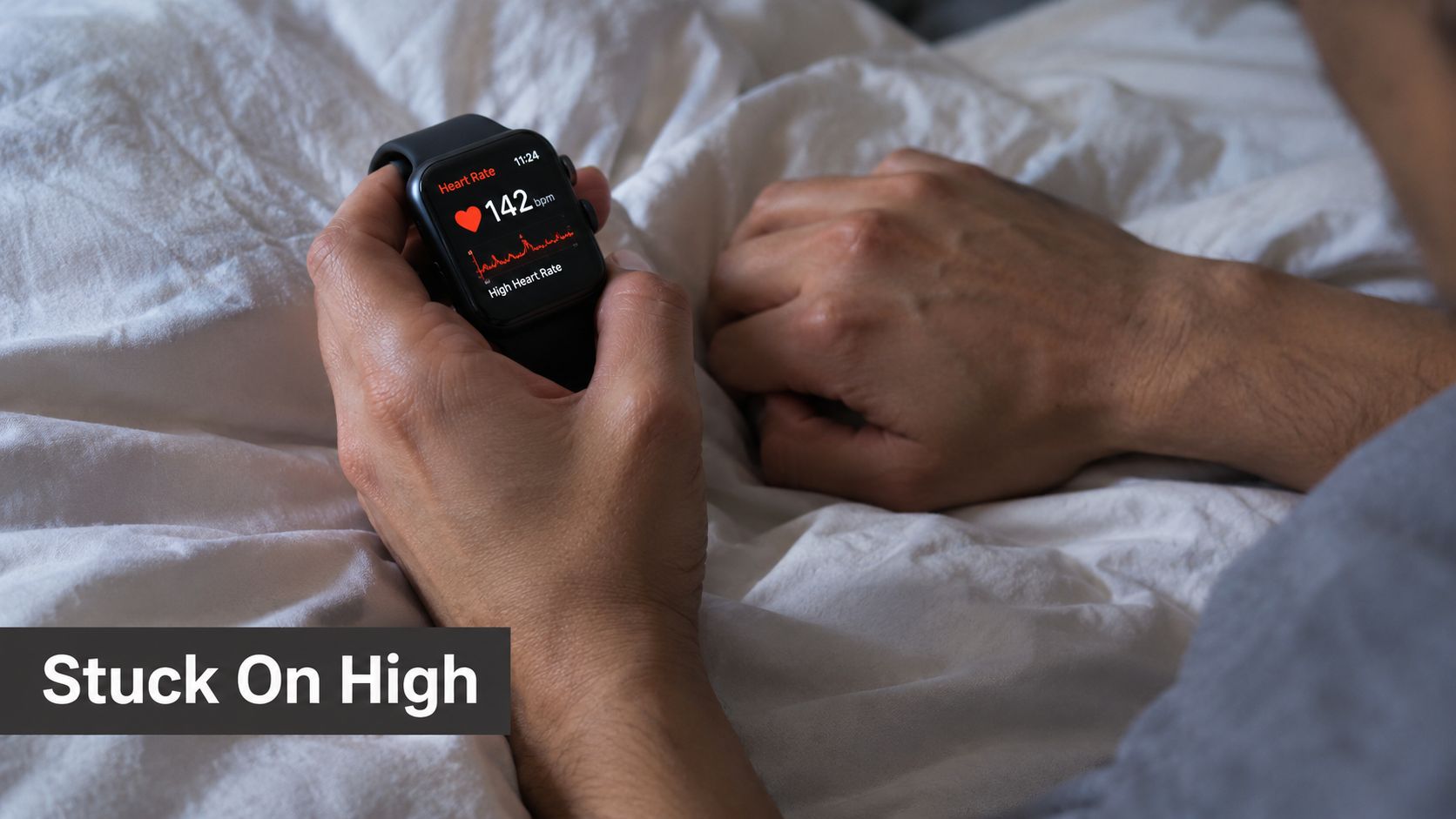
That alarm can produce real sensations, including a racing or pounding heart, restless sleep, shallow breathing, digestive discomfort, trembling, and a strong urge to check, escape, or seek reassurance. The sensations can then become new sources of threat. A heartbeat feels unusual, the mind interprets it as dangerous, and the body prepares even more intensely.
A reassuring starting point: Feeling physically activated doesn't mean you're imagining the problem. It means your body's protection systems may need support returning to a safer setting.
Anxiety disorders are the world's most common mental disorders. The World Health Organization describes anxiety disorders as affecting an estimated 470 million people in 2023, or about 5.8% of the global population, making anxiety the largest mental-disorder category worldwide. That scale matters because an overactive alarm system isn't an unusual personal failure. It's a widespread health concern that can affect family life, work, healthcare needs, and quality of life.
The useful question isn't, “How do I force myself to calm down?” A better question is, “Which part of the alarm system is active, and what helps it recognize safety?” The answer may involve sympathetic arousal, reduced recovery capacity, or a sensitized threat circuit that keeps re-triggering after the original stress has passed.
By learning the difference, you can stop treating every symptom as a separate emergency. You can observe patterns, use regulation tools more effectively, and know when professional support makes sense.
How Your Autonomic Nervous System Creates Anxiety
Your autonomic nervous system manages many functions you don't have to control consciously, including heart activity, breathing patterns, digestion, pupil size, and blood-vessel responses. It constantly adjusts the body to meet changing demands.
A simple way to understand it is to picture a car. The sympathetic branch acts like an accelerator. It helps you mobilize quickly when you need to respond. The parasympathetic branch acts more like a brake and recovery system. It supports settling, digestion, and restoration after demand has passed.
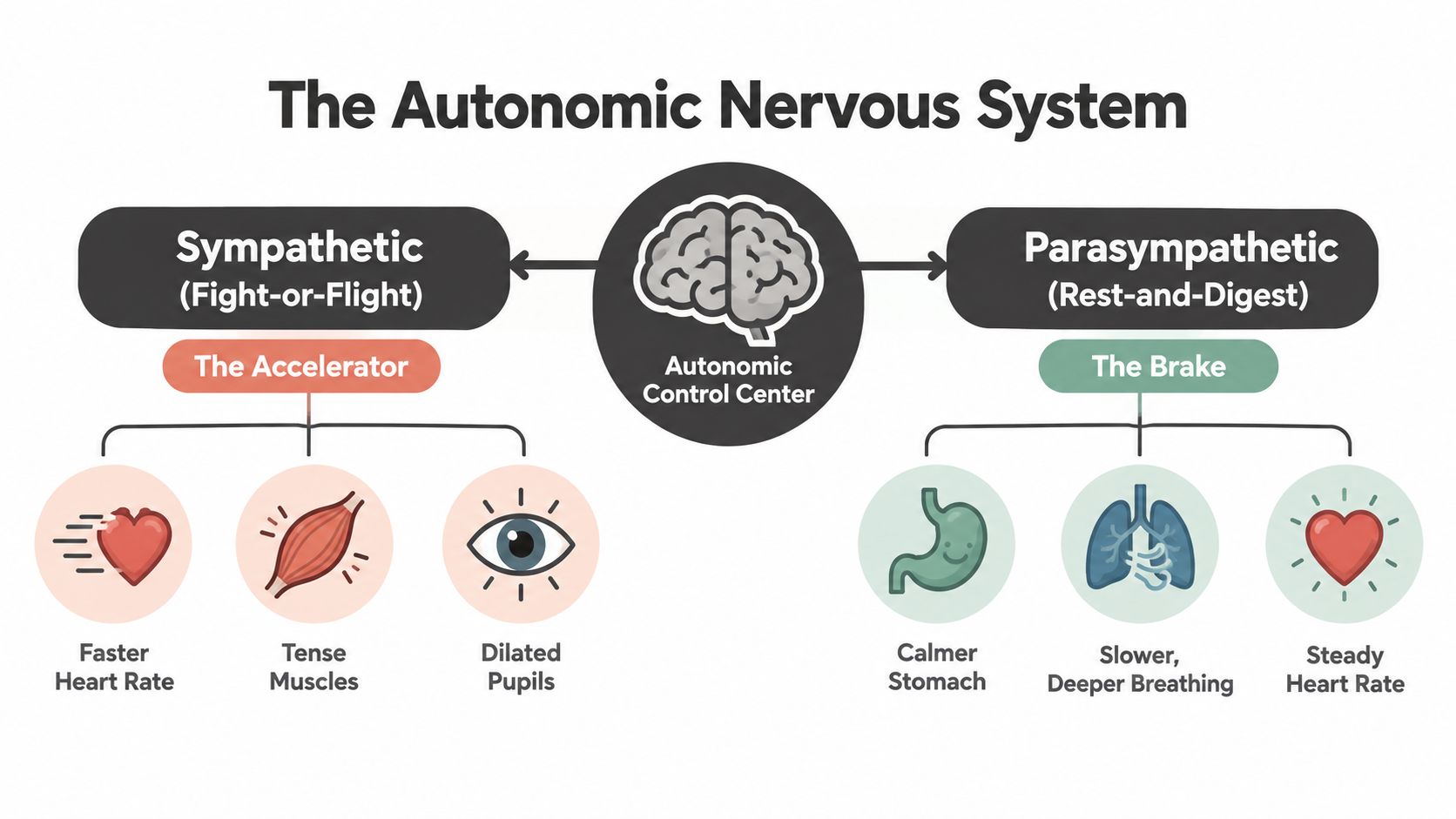
The accelerator and brake
The sympathetic response is useful during genuine danger, intense exercise, or urgent concentration. It can increase heart activity, tighten muscles, change breathing, and direct attention toward possible threats. The problem isn't that this branch exists. The problem develops when the body keeps receiving signals that demand readiness.
Noradrenergic activity is part of this process. Expert reviews describe the sympathetic branch as mediating many physical anxiety symptoms, while increased noradrenergic activity can intensify arousal and stress reactivity. Quantitative human research has linked greater subjective anxiety with higher systolic blood pressure, piloerection, and plasma MHPG, findings consistent with heightened sympathetic activation, as discussed in this clinical overview of anxiety physiology.
That doesn't mean every anxious person has the same resting physiology. It means the body can produce a convincing physical alarm response, and that response can amplify anxious interpretation. A tight chest may prompt fear. Fear adds more sympathetic drive. The body then feels even less safe.
For a broader explanation of the body's automatic control systems, see how the nervous system works.
The deeper alarm network
The autonomic system doesn't act alone. Brain networks evaluate danger, uncertainty, memories, internal sensations, and context before influencing the body. If those networks become more sensitive, a small cue can activate a larger response.
A 2025 review of anxiety circuits describes hyperactivation in the amygdala and bed nucleus of the stria terminalis during threat processing, along with reduced functional connectivity to regulatory regions. That pattern helps explain why someone may feel “stuck on” despite knowing intellectually that there's no immediate danger. The alarm can be generated before deliberate reasoning has time to reassure the body.
This is why regulation isn't just a matter of arguing with anxious thoughts. Thought-based strategies can help, but the body may also need repeated experiences of safe breathing, steady movement, predictable routines, and nonthreatening attention to physical sensations.
Recognizing Signs of an Overactive Nervous System
Hyperarousal can look different from person to person. One person feels a pounding heart and restless energy. Another notices nausea, mental blankness, irritability, or a sudden need to withdraw. The shared feature is a body and brain that stay prepared for threat longer than the situation requires.
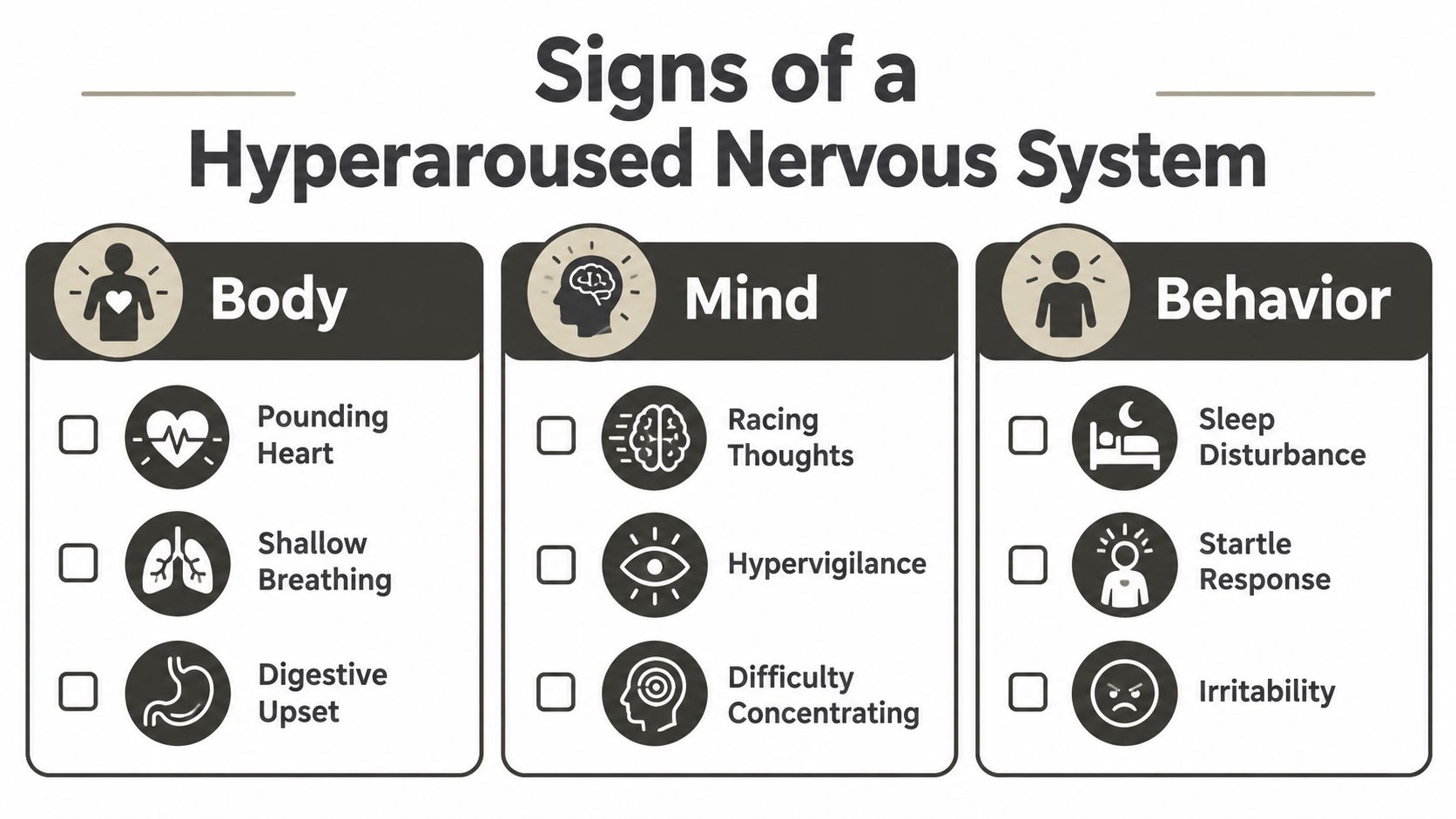
Body signals
Physical signs often draw attention first:
- Heart activity: You may notice pounding, fluttering, or a strong awareness of each beat.
- Breathing: Breaths may become shallow, fast, irregular, or difficult to satisfy.
- Muscle readiness: The jaw, shoulders, abdomen, or hands may remain tense without obvious exertion.
- Digestion: Stress-related activation can accompany nausea, stomach discomfort, appetite changes, or bowel disruption.
- Sleep: You may feel tired yet unable to transition into restful sleep or return to sleep after waking.
These symptoms can reinforce one another. A person who breathes shallowly may feel lightheaded, then interpret the sensation as evidence of danger. That interpretation increases vigilance, which makes relaxation more difficult.
Mind and attention
The mind may begin scanning for problems rather than processing ordinary information. Racing thoughts, repeated “what if” questions, difficulty concentrating, and exaggerated attention to bodily sensations are common experiences. Hypervigilance can make neutral events seem significant because the brain is prioritizing possible danger over background detail.
Children may show this pattern without using the word anxiety. They might ask repeated safety questions, resist separation, complain of vague stomach discomfort, become unusually reactive to sound, or have trouble shifting between activities. Adults may describe the same internal state as being unable to switch off.
Behavior and recovery
Behavioral changes often reveal the pattern over time. Someone may avoid places that produced symptoms, check a pulse repeatedly, seek constant reassurance, or cancel plans to prevent another episode. Irritability can appear when the person has spent the day managing internal alarm signals.
These signs can suggest hyperarousal, but they don't establish a diagnosis. Medical conditions, medication effects, sleep problems, trauma-related responses, and other concerns can produce overlapping symptoms. Seek appropriate clinical evaluation for new, severe, or persistent symptoms, especially chest pain, fainting, severe breathing difficulty, or thoughts of self-harm.
Why Normal Tests Do Not Always Show Anxiety
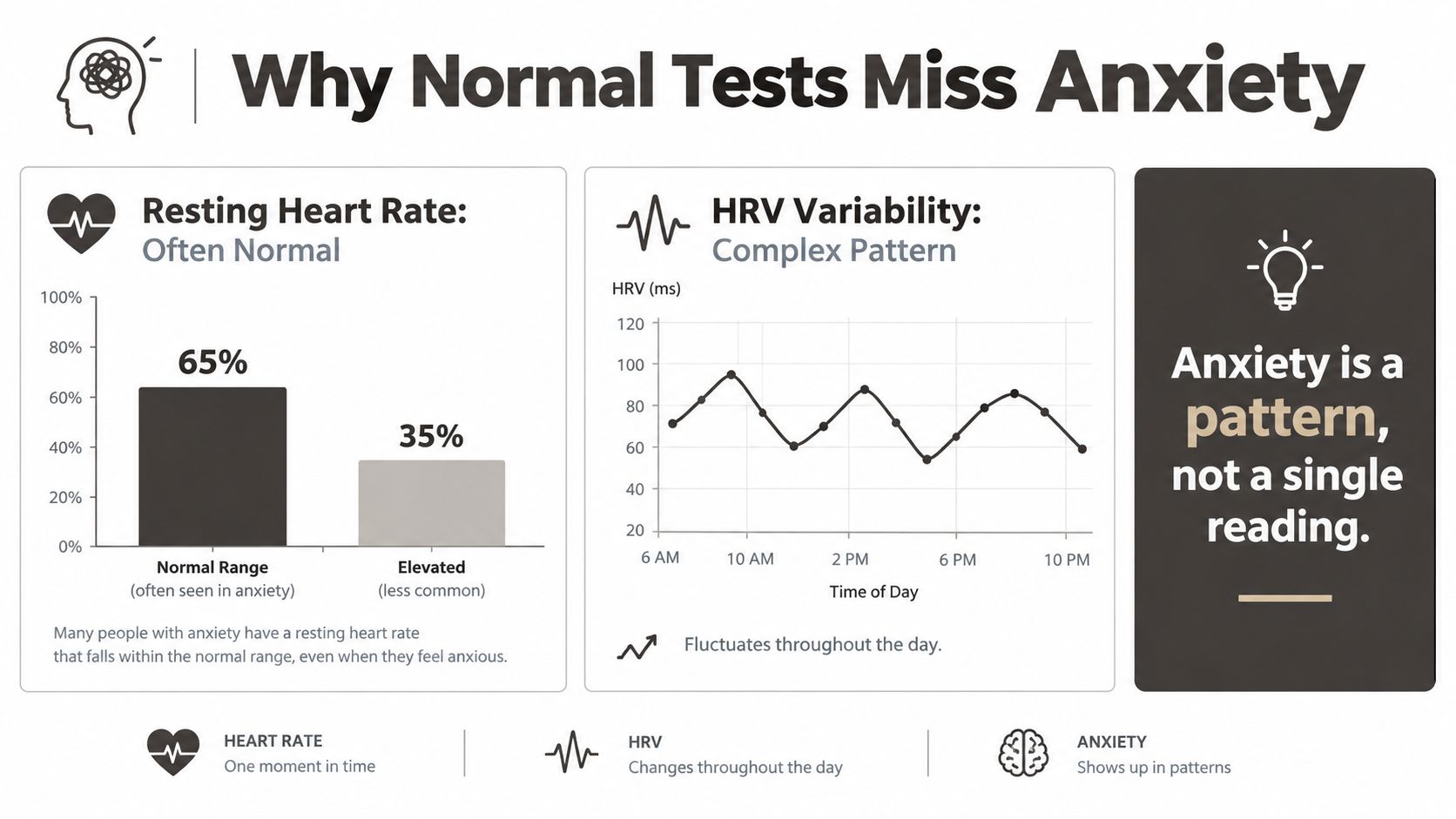
A normal resting measurement doesn't invalidate an anxious experience. It may only show how the body looked during a quiet moment, in a clinic, or while the person was actively trying to appear composed.
This distinction matters because anxiety can involve reactivity, not just a persistently abnormal baseline. A person might respond strongly to a sudden sensation, stressful conversation, crowded room, difficult memory, or anticipated event while showing ordinary resting values beforehand.
HRV is a clue, not a verdict
Heart rate variability, or HRV, reflects changes in the timing between heartbeats. It can offer information about autonomic flexibility, including how effectively parasympathetic influences help the body adapt.
A systematic review of psychophysiology data reports generally consistent HRV reductions across anxiety states, suggesting that lower HRV can be a meaningful clue. However, the pattern isn't universal or simple. A 2024 review found reduced parasympathetic HRV signals in anxiety disorders with small-to-moderate effects, and it also reported variability across diagnoses, medication status, and comorbidities in its review of autonomic flexibility.
That makes HRV useful for context, not self-diagnosis. A wearable's number can change with sleep, illness, exercise, hydration, breathing, measurement conditions, and ordinary daily variation. Comparing yourself with another person can create more vigilance rather than more understanding.
Resting state versus stress response
Many anxiety disorders don't show clear baseline sympathetic overactivity. Some people primarily show an exaggerated response when a threat cue appears or when they notice a bodily sensation. The resting system may look relatively calm, while the transition into alarm happens quickly and the return to baseline takes longer.
Anxiety is a pattern across situations and time, not a single reading taken at rest.
If your tests look normal but you feel consistently distressed, describe the sequence rather than presenting only a number. Note what happened before symptoms, which sensations appeared first, how long activation lasted, what helped, and whether avoidance or checking followed. That information can reveal reactivity patterns that a brief measurement misses.
Evidence Based Ways to Calm and Regulate Your System
Calming an overactive system works better as repeated practice than as a desperate attempt to force symptoms away. The aim is to give your body clear, nonthreatening signals and enough recovery opportunities to learn that it doesn't need to remain prepared every moment.
Start with breathing that feels safe
Try a gentle breathing pattern with a relaxed inhale and a slightly longer, unforced exhale. Don't pull in large breaths or hold your breath if that makes you lightheaded or more alarmed. Sit with both feet supported, soften your jaw, and keep the effort quiet.
The point isn't to achieve a perfect breathing rate. The point is to reduce struggle and make exhalation feel easier. If focusing on breathing increases panic, shift attention to the room and use orienting instead.
For additional context on techniques that support parasympathetic activity, read about stimulation of the parasympathetic nervous system.
Use orientation and grounding
Orienting helps the brain gather present-time information instead of relying only on an internal threat signal. Slowly look around and name neutral details, such as the color of a wall, the feeling of your feet on the floor, or the sound of a nearby appliance.
Grounding can also involve movement. Press your hands together, roll your shoulders gently, walk at an easy pace, or hold a comfortably textured object. These actions don't prove that everything is safe, but they give attention a wider field than anxious body checking.
Build recovery into ordinary days
Regulation becomes easier when the body receives predictable rhythms:
- Sleep routine: Keep wake and sleep times reasonably consistent, reduce stimulating content before bed, and make the bedroom feel associated with rest rather than monitoring.
- Steady movement: Choose walking, mobility work, gentle cycling, or another activity you can repeat without turning it into a performance test.
- Regular nourishment: Avoid letting long gaps between meals add another physical stress signal to an already reactive system.
- Recovery pauses: Place brief quiet transitions between work, school, commuting, caregiving, and bedtime.
- Measured tracking: Record broad patterns, not every heartbeat or sensation. Excessive checking can become part of the alarm loop.
Work with the fear of sensations
When a familiar sensation appears, try naming it accurately: “My body is activated, and I'm uncomfortable.” That statement validates the experience without declaring catastrophe. If symptoms are new or medically concerning, get evaluated rather than assuming anxiety.
A therapist, physician, or other qualified professional can help you work with panic, trauma responses, avoidance, or persistent worry. Behavioral tools are strongest when they're adapted to your health history and used consistently, not when they're treated as a test you can fail.
How Neuro Tonal Chiropractic Supports Nervous System Balance
Some people want a hands-on assessment alongside psychological, medical, and lifestyle care. A neurologically focused chiropractic consultation may consider movement, posture, spinal function, sensory input, and the way symptoms change across daily activities.
First Steps Chiropractic describes a five-step process involving an in-depth consultation, Insight Scans, a chiropractic examination, a personalized care plan, and gentle Torque Release Technique adjustments. The practice serves pediatric, prenatal, and family patients in Hayden, Idaho. This type of care can be considered as a complementary option, not a replacement for medical evaluation, psychotherapy, or prescribed treatment.
Connecting structure, sensation, and threat
The nervous system receives continuous information from the body. Muscle tension, joint discomfort, restricted movement, and unfamiliar sensations can become additional inputs for someone who is already monitoring for danger. Addressing physical contributors may make regulation practices easier, although no hands-on approach should be presented as a guaranteed cure for anxiety.
The circuit perspective adds an important qualification. Anxiety may involve sympathetic activation, but it may also involve threat-circuit sensitization, altered context processing, or rapid reactivity to internal sensations. A spinal adjustment alone cannot explain every form of persistent anxiety. A responsible plan asks what symptoms are present, what has been medically assessed, and which supports fit the person's needs.
For an overview of the clinic's described approach, see nervous system regulation therapy.
Choosing care thoughtfully
Ask how a provider evaluates your concerns, what outcomes the approach is intended to support, and how it fits alongside existing care. Families should also expect clear boundaries. Severe panic, depression, trauma symptoms, medication questions, fainting, significant chest symptoms, and other urgent concerns may require medical or mental-health professionals.
A complementary consultation can be useful when it adds individualized observation and practical support without asking you to abandon established care. The most helpful plan is usually coordinated, measured by function and well-being, and adjusted when symptoms change.
Your Next Steps Toward Lasting Calm and Resilience
You don't have to solve the entire problem during the next anxious episode. Start by noticing the sequence. What happened before the activation, what did you feel first, what story did your mind attach to it, and what did you do next?
For the next week, choose two or three practices rather than collecting an overwhelming list. You might use gentle breathing once during the day, take a short walk after work, create a calmer bedtime transition, and record triggers without repeatedly checking your vital signs.
Progress looks like recovery, not perfection. A nervous system becomes more resilient through repeated experiences of activation followed by safe return, not through never feeling anxious.
Seek professional support if symptoms persist, interfere with sleep or daily responsibilities, lead to significant avoidance, or leave you unsure whether a physical problem has been ruled out. Urgent symptoms, including severe chest pain, fainting, serious breathing difficulty, or thoughts of self-harm, need prompt medical attention.
The accelerator may be sensitive right now, but that doesn't mean the brake is permanently broken. With appropriate evaluation, steady practice, and support matched to the underlying pattern, your body can learn more reliable transitions between readiness and recovery.
First Steps Chiropractic offers consultations, Insight Scans, examinations, personalized care plans, and gentle Torque Release Technique adjustments for pediatric, prenatal, and family patients in Hayden, Idaho. If you'd like to discuss how complementary nervous-system-focused care could fit alongside your current anxiety support, visit First Steps Chiropractic.