
You may be reading this after a diagnosis, after a school meeting, or after another hard bedtime where your child seemed exhausted but still couldn't settle. Then you search for help and run into two very different messages. One says chiropractic can “fix” autism. The other says there's nothing worth discussing at all.
Neither response is very helpful when you're the parent trying to make a thoughtful decision.
A better question is narrower and more practical. If your child is autistic, could a neurologically focused chiropractic approach support comfort, regulation, sleep, movement, or sensory tolerance in a meaningful way, without pretending to treat autism itself? That's the question most families need answered.
Autism is common enough that many families are having this same conversation. The CDC's ADDM Network estimated that about 1 in 31 U.S. children age 8 were identified with autism spectrum disorder in 2022, based on surveillance across 16 reporting sites in the United States, according to the CDC autism data and research overview. That means parents are not asking fringe questions. They're trying to sort through a growing number of care options for a very real, very common condition.
What Every Parent Should Know About Autism and Chiropractic Neurology
A family often arrives in this conversation with a mix of hope and fatigue. Their child may already be in speech therapy, occupational therapy, or behavioral support. They may also be dealing with things that don't fit neatly into a therapy schedule, such as poor sleep, constant movement, distress during transitions, sound sensitivity, headaches, or obvious body tension.
That's where autism chiropractic neurology starts to sound appealing. It uses nervous system language. It talks about regulation. It often promises a gentler, body-based approach. For a parent who sees that their child is always “on edge,” that framing can make intuitive sense.
The part that often gets confused
The confusion starts when people blur together three different ideas:
- Autism itself: A neurodevelopmental condition that affects social communication, behavior patterns, and sensory experience.
- Co-occurring medical or neurological issues: These can include things that need medical evaluation and shouldn't be reduced to posture or spinal function.
- Day-to-day regulation problems: Trouble settling, body discomfort, sensory overload, and difficulty shifting from stress back to calm.
Those aren't the same problem, so they shouldn't be approached as if they are.
Practical rule: Be cautious any time a provider talks as if improving nervous system regulation is the same thing as treating autism.
Why families still ask about this approach
They ask because the nervous system matters. Anyone who lives with an autistic child can see that body state affects everything. A child who's overwhelmed by noise, poorly rested, constipated, in pain, or stuck in a constant stress response will usually have a harder time with learning, transitions, and communication.
That doesn't mean chiropractic changes core autism traits. It does mean body comfort and regulation can influence how a child functions day to day.
A careful discussion of autism chiropractic neurology should sound less like a cure story and more like this:
- Can we reduce barriers to comfort?
- Can we notice signs of musculoskeletal tension or pain?
- Can we support calmer body regulation?
- Can we do that while staying honest about the limits?
The standard parents deserve
Parents deserve a provider who can say two true things at once. First, the nervous system is relevant to an autistic child's daily life. Second, today's evidence does not support claims that chiropractic treats autism itself.
That middle path is where good decision-making happens. It protects families from hype without dismissing the possibility that some supportive care may still be useful for the right child and the right goal.
Understanding the Neuro-Tonal Approach in Pediatric Care
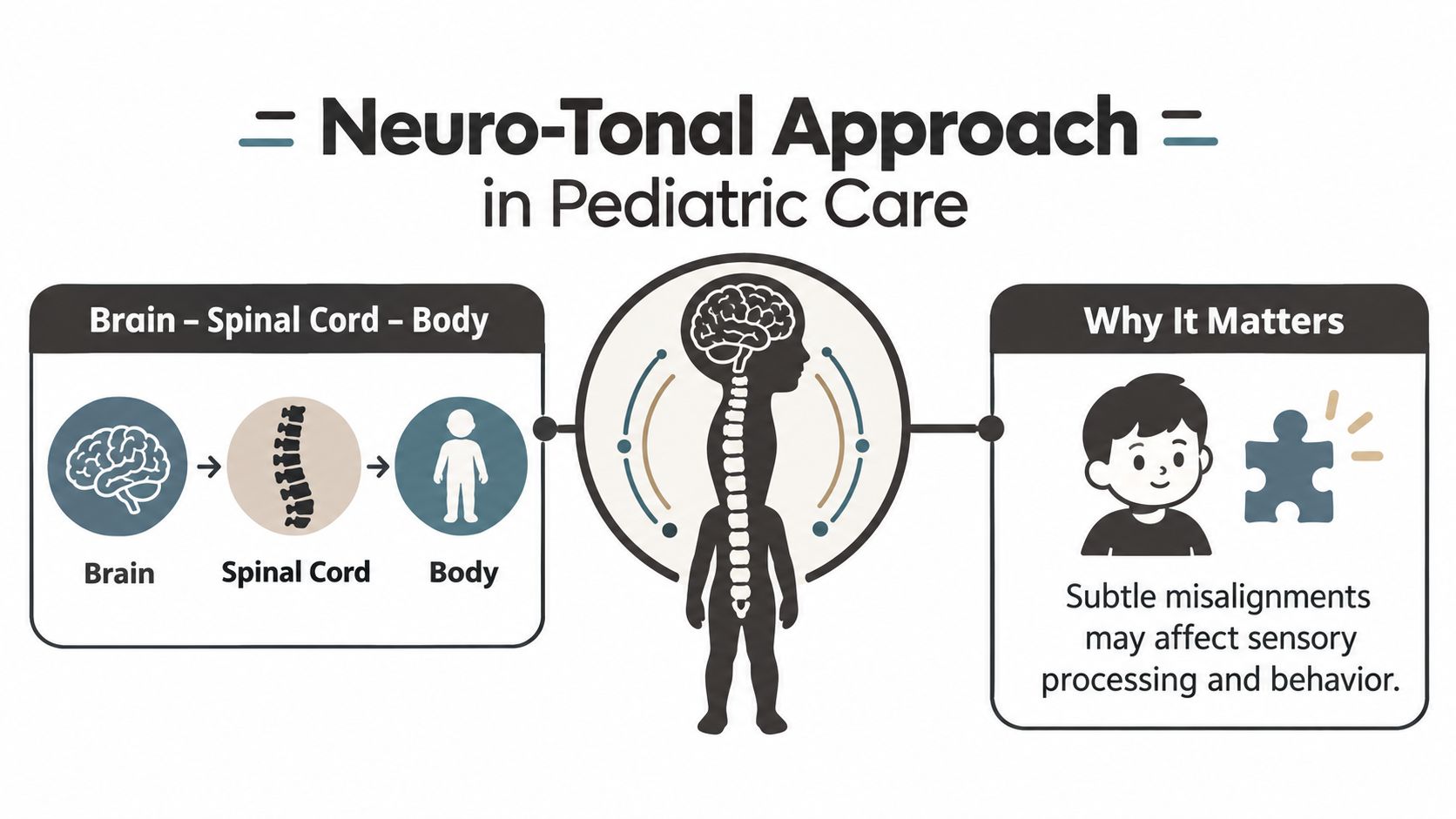
Think of the nervous system as your child's internal communication network. The brain receives information, the spinal cord carries signals, and the body constantly sends feedback back up the chain. If that system is overloaded, the child may not look “sick” in the usual sense, but they may look disorganized, tense, reactive, or exhausted.
That's the basic idea behind a neuro-tonal approach. The focus isn't just joints. It's how posture, muscle tension, movement patterns, and spinal input may relate to regulation.
What “neuro-tonal” usually means in practice
In plain language, “tone” refers to the body's background level of tension and readiness. Some children seem constantly braced. Their shoulders stay high. Their jaw stays tight. They crash, spin, push, or seek pressure. Others appear floppy, collapse into posture, or struggle to organize movement.
A neuro-tonal chiropractor looks at those patterns through a nervous-system lens. The working theory is that gentle input to the spine and related structures may help the child's system organize sensory and motor responses more efficiently.
If you want a broader primer on this style of care, this overview of functional neurology in chiropractic gives useful background on how some clinics frame brain-body function.
What a pediatric visit often includes
Many parents expect a traditional adult chiropractic visit. Pediatric neurological care usually looks different, especially in a family-centered office.
A common five-step process includes:
In-depth consultation
The provider asks about birth history, feeding, milestones, sleep, digestion, behavior, sensory patterns, injuries, and what daily moments are hardest for your child.Insight Scans or similar nervous system screening tools
Some clinics use noninvasive scans to look at stress patterns, tone, and physiologic regulation. These tools may help organize clinical impressions, but they aren't a diagnostic test for autism.Exam
This may include posture, reflexes, movement quality, spinal mobility, balance, coordination, and tactile tolerance.Personalized care plan
A thoughtful plan should name specific goals, such as easier bedtimes, less distress with car rides, or reduced neck tension. “Treat autism” should not be the goal.Adjustments or neurologically focused input
In pediatric settings, this is often light, quick, and highly specific rather than forceful.
Why technique matters
Not all chiropractic methods feel the same. Many pediatric practices use gentler techniques such as Torque Release Technique, which relies on low-force input rather than the larger rotational movements some adults associate with chiropractic care.
Gentle does not automatically mean effective. It does mean the method should match the child's size, tolerance, and clinical needs.
For autistic children, the question isn't whether a technique sounds advanced. It's whether the care is calm, measurable, respectful, and tied to a clear functional goal.
The Evidence Behind Chiropractic Care for Autism Spectrum Disorder
If you search long enough, you'll find dramatic testimonials. Research asks a harder question. Can we separate hopeful stories from reliable evidence?
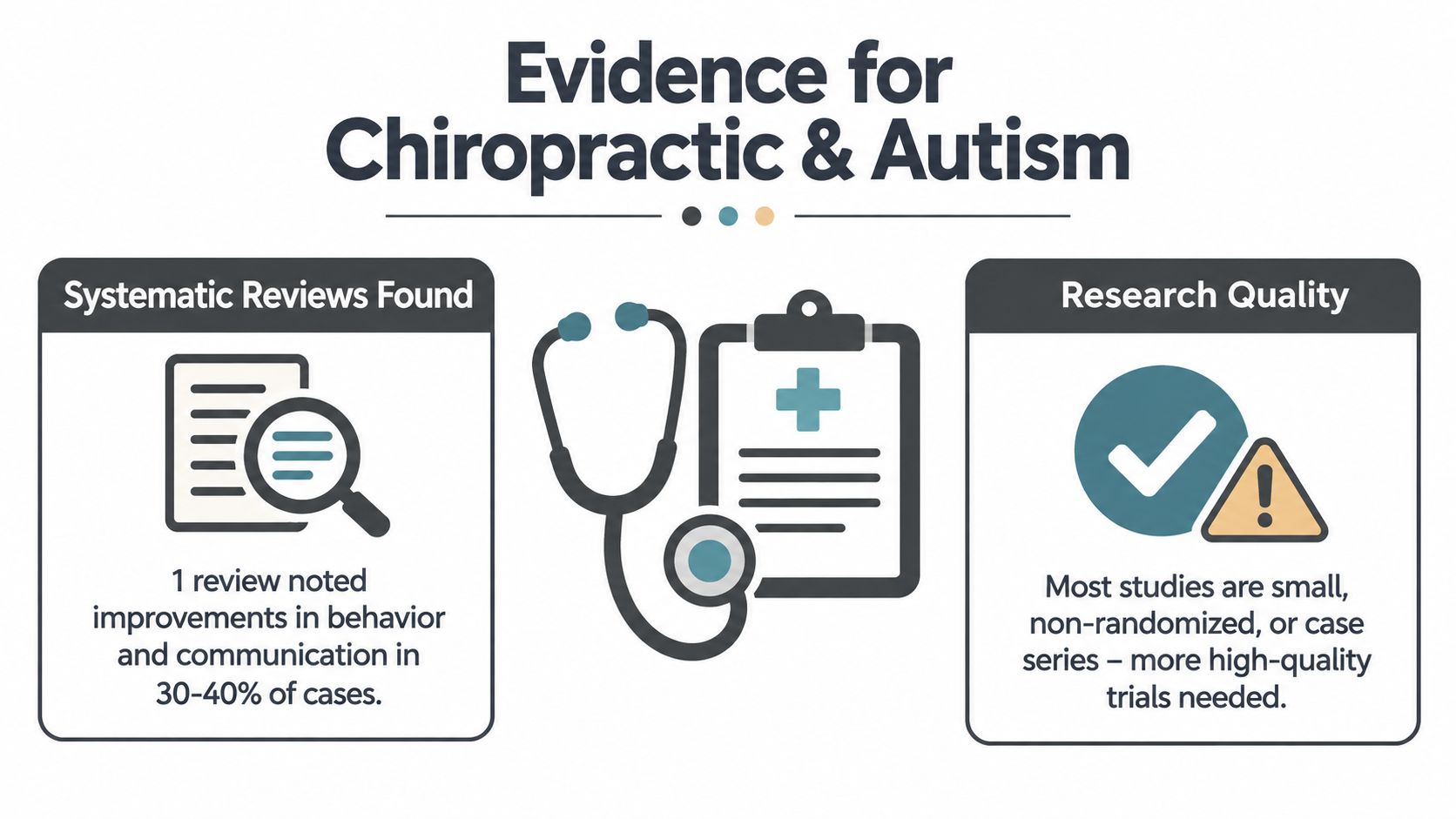
The short answer is that the evidence base for chiropractic care in autism is very limited.
What the published reviews actually found
A systematic review focused on chiropractic care for children with autism found only five total studies. Those were three case reports, one cohort study, and one randomized comparison trial, and the authors concluded that the literature is insufficient to document chiropractic care for autism and does not provide high-level evidence for efficacy, according to the systematic review on chiropractic care for ASD.
That matters because case reports can be interesting, but they can't tell us whether an intervention caused the improvement. Children change over time. Families often start more than one therapy at once. Symptoms also fluctuate naturally.
Why low-quality evidence matters so much here
When a study design is weak, almost anything can look like it helped.
Here's a simple way to consider it:
| Study type | What it can tell you | What it can't tell you well |
|---|---|---|
| Case report | What happened to one child | Whether the treatment caused it |
| Cohort study | Patterns over time | Whether other factors explained the outcome |
| Better-controlled trial | More reliable comparison | Still depends on sample size and methods |
Independent reviews of pediatric spinal manipulation have reached similar conclusions. Evidence for autism-related outcomes is described as very low quality and inconclusive, and one synthesis reported no good-methodology studies while another noted that small autism studies showed no significant between-group differences even when both groups improved, according to the review of pediatric spinal manipulation and autism-related evidence.
Here's a short video that helps frame the broader nervous-system conversation around autism and regulation:
For parents trying to understand one piece of that puzzle, this discussion of the vagus nerve and autism may also help explain why regulation language shows up so often in this field.
What we do know about autism and neurology
Autism is not a chiropractic diagnosis. It is a neurodevelopmental condition, and neurological co-occurring conditions are well documented. A major systematic review and meta-analysis published in 2021 found that neurological disorders are common in autism. Across 35 samples and 94,539 participants, the pooled prevalence of epilepsy among autistic people was 14.2%, with a 95% confidence interval of 11.3% to 17.2%, according to the systematic review and meta-analysis on neurological conditions in autism.
That finding doesn't prove chiropractic helps. It does show why medical and developmental assessment matters. Some concerns in autistic children belong first with pediatricians, neurologists, developmental specialists, or other licensed professionals.
Realistic Expectations What Chiropractic Can and Cannot Help With
Many families need the most clarity. The question isn't “Does chiropractic help autism?” That question is too broad to be useful. A better question is, “What specific problem are we trying to help?”

What care may reasonably target
The best independent summaries say there still isn't enough evidence to know whether chiropractic changes autistic characteristics or broadly “helps autistic children” in a reliable way. They also note that the research base remains mostly case reports and other low-level studies, according to the independent review of chiropractic evidence gaps in autism.
Even so, there's a practical distinction parents should keep in view. A child may have needs around autism that are different from autism itself.
Reasonable goals may include:
- Body comfort: Neck tension, back discomfort, guarded posture, and movement stiffness can affect mood and tolerance.
- Sleep support: Not as a cure claim, but as a trackable functional goal if physical tension seems to be part of the picture.
- Sensory regulation: Some children seem less irritable when their bodies feel organized and calm.
- Stress recovery: The child may still become overwhelmed, but may settle more easily afterward.
What chiropractic should not be sold as
It should not be presented as changing the core nature of autism.
That includes promises to cure or reverse:
- Social communication differences
- Repetitive or restricted behavior patterns
- Autistic identity or neurodevelopment
- Documented neurological conditions that require medical care
If a provider says your child's autism comes from spinal misalignment alone, that's a red flag.
A simple comparison parents can use
| Claim | Reasonable or not |
|---|---|
| “We'll support comfort and regulation if your child seems physically tense.” | Reasonable |
| “We'll track sleep, tolerance for sitting, and ease with transitions.” | Reasonable |
| “We treat autism at the root.” | Not supported |
| “Your child won't need other therapies if this works.” | Not responsible |
This distinction protects families from disappointment. It also helps them notice smaller, real-world changes that matter, such as easier dressing, fewer complaints of discomfort, or less resistance to certain activities.
Safety Considerations and Ethical Guidelines for Families
Safety isn't just about technique. It's also about judgment. A gentle adjustment from a careful clinician is only one part of safe care. The rest comes from proper screening, clear limits, and honest communication.
Questions worth asking any provider
You don't need to interview a chiropractor like a researcher, but you should feel comfortable asking direct questions.
Consider asking:
What exactly are you trying to help?
Listen for concrete goals like comfort, posture, or regulation. Be cautious if the answer is “autism.”How do you decide whether my child is a good fit?
A responsible provider should screen for cases that need medical referral or co-management.What technique do you use with children?
Ask what the adjustment physically feels like and how they adapt it for a sensory-sensitive child.How will we measure progress?
Useful answers involve behavior logs, sleep notes, functional observations, or parent-defined goals.When would you tell us to stop or change the plan?
Ethical care includes an exit ramp.
What ethical care looks like
A sound provider doesn't ask you to choose between chiropractic and medical care. They don't discourage developmental evaluation. They don't promise outcomes they can't support.
They also explain informed consent in plain language. That means you understand what the visit involves, what the goals are, what's uncertain, and what alternatives exist.
Good pediatric care sounds calm, specific, and humble. Marketing-heavy language usually sounds certain where the evidence isn't.
Red flags families shouldn't ignore
Some warning signs are straightforward:
- Cure language: Any promise to cure autism, detox the brain, or permanently erase autistic traits.
- Pressure tactics: Long prepaid care plans before your child has had a careful response assessed.
- Isolation advice: Telling you to stop evidence-based therapies or ignore your pediatrician.
- No child-specific adaptation: A provider who doesn't adjust pace, touch, language, or environment for sensory needs.
Safety also means emotional safety. An autistic child should never be forced through care in a way that overwhelms them just to complete a protocol.
Integrating Chiropractic Neurology with Behavioral and Medical Therapies
Most autistic children who receive chiropractic care aren't starting from zero. They already have a care map that may include school services, speech therapy, occupational therapy, counseling, feeding support, developmental pediatrics, or neurology. Chiropractic only makes sense when it fits into that bigger picture.
Where it can fit well
The best role for autism chiropractic neurology is usually complementary, not primary. It may make sense when a child has obvious body tension, movement guarding, sensory defensiveness around certain positions, headaches, or difficulty settling physically.
One practical example is a child who resists table work in occupational therapy because sitting still is physically uncomfortable. Another is a child whose meltdowns spike after poor sleep and visible neck or shoulder tightness. In cases like that, body-focused supportive care may have a clear purpose.
How to build a coordinated plan
Parents are often the people connecting the dots between providers. That works better when goals are shared and simple.
Try this framework:
Choose one or two target outcomes
Pick things you can actually observe, such as bedtime duration, complaints of discomfort, tolerance for toothbrushing, or ease getting into the car seat.Tell every provider the same goal
Your occupational therapist, pediatrician, and chiropractor don't need identical methods. They do need the same target.Track before and after patterns
Brief notes are enough. You're looking for daily function, not perfect data collection.Reassess if the plan becomes vague
If nobody can explain what is improving, the care may not be earning its place in your child's schedule.
When it should not replace other care
Chiropractic shouldn't stand in for evidence-based therapies that directly address communication, daily living skills, feeding, behavior, or learning. It also shouldn't replace medical workup when symptoms suggest seizures, regression, severe headache, major sleep disruption, or other neurological concerns.
A balanced plan might include a speech therapist for communication, an occupational therapist for sensory and self-care goals, medical oversight for co-occurring conditions, and a chiropractor for carefully defined regulation or comfort goals.
First Steps Chiropractic is one example of a clinic that describes a five-step pediatric process with consultation, scans, exam, care planning, and gentle adjustments. For a family considering that kind of model, the key question isn't the branding. It's whether the care stays coordinated, measurable, and within proper limits.
Making an Informed Decision for Your Child
Parents rarely make these decisions from a detached place. They make them while managing school forms, meals, appointments, sleep loss, and the quiet fear of missing something that could help. That emotional weight is real. It's also why a decision framework helps.
A grounded way to decide
Before starting care, ask yourself these questions:
What problem am I hoping to improve?
Name it precisely. “Autism” is too broad. “My child seems physically tense and can't settle at night” is much clearer.Is this goal realistic for chiropractic care?
Comfort, tension, movement tolerance, and regulation are different from changing core autism traits.Has my child had appropriate medical and developmental evaluation?
Body-based care should complement, not replace, that foundation.Can the provider explain limits clearly?
If they can't say what chiropractic cannot do, they probably aren't the right fit.Do I have a way to tell whether this is helping?
Pick observable outcomes before you begin.
A useful test for parent confidence
If you can describe the plan to another adult in two sentences, you probably understand it well enough to consent to it.
For example: “We're trying gentle chiropractic care to see whether reducing body tension helps bedtime and car rides. We are not using it to treat autism, and we'll stop if we don't see useful functional change.”
That kind of clarity protects families.
The best decision is rarely the most dramatic one. It's the one that matches your child's needs, respects the evidence, and leaves room for course correction.
If you're still sorting through local options, this guide on finding a pediatric chiropractor near you can help you think through what to ask before booking.
In the end, autism chiropractic neurology may be worth considering for some children as a supportive tool for regulation, comfort, or musculoskeletal concerns. It is not a treatment for autism itself. When parents understand that distinction, they're much more likely to make choices that feel both hopeful and grounded.
If your child seems stuck in cycles of tension, sensory overload, poor sleep, or stress-related dysregulation, First Steps Chiropractic offers pediatric neuro-tonal care built around consultation, nervous system-focused assessment, and gentle adjustments for children. If you want help deciding whether that kind of supportive care fits alongside your child's existing therapies, you can learn more or request a visit at First Steps Chiropractic.