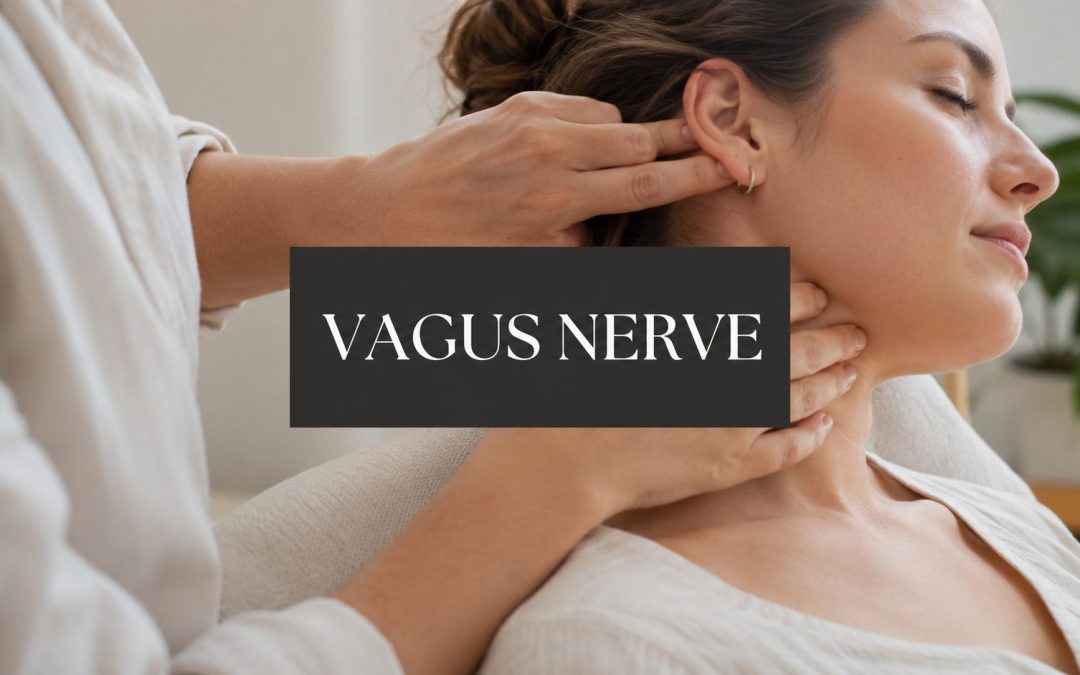
You're probably here because someone in your house is stressed, sleeping badly, or bouncing between “fine” and overwhelmed, and you want something gentle you can try before reaching for another complicated solution. That's a fair instinct. Vagus nerve manual stimulation sits in that space between curiosity and caution, and the biggest mistake I see is people treating every neck rub, ear massage, or breathing drill as if it directly zaps the vagus nerve the same way a medical device does.
Understanding What Manual Vagus Nerve Stimulation Actually Does
A parent usually shows up with the same question in different words. They've seen a reel about ear rubbing, neck pressure, or humming, and they want to know whether it's real or just wellness theater. The honest answer is that manual work can be useful, but it's usually indirect, not a direct replacement for device-based vagus nerve stimulation.
The vagus nerve has earned a serious place in medicine. Left cervical VNS was approved by the FDA for refractory epilepsy and later for treatment-resistant depression, and later approvals expanded VNS into migraines, cluster headaches, obesity, and post-stroke motor rehabilitation, with more than 100,000 implanted VNS devices placed in over 70,000 patients globally by 2013 (clinical history and scale). That history matters because it shows the nerve is a legitimate neuromodulation target, not a passing trend.

What manual touch can reasonably affect
Manual techniques don't usually “hit” the vagus nerve directly in the way a clinical stimulator does. They influence surrounding tissues, breathing patterns, and autonomic state, which can create a calmer response in some people. Recent review material on non-invasive cervical stimulation also notes that non-invasive cervical stimulation can directly activate the vagus nerve, but that's still grounded in stimulation methods and clinical trial logic, not simple hand pressure on the neck (non-invasive cervical VNS review).
Practical rule: if a technique feels forceful, targets the throat, or promises a dramatic instant reset, it's usually overselling what the anatomy can support.
For families, the more useful frame is this. Manual vagus nerve stimulation is best thought of as a calming input that may nudge the nervous system toward parasympathetic balance through touch, breath, and position. That's a different claim from direct nerve access, and keeping that distinction clear prevents disappointment later.
For a basic overview of the nerve itself, this vagus nerve function guide gives helpful background without mixing up anatomy and marketing.
Safe Manual Techniques You Can Try at Home
A child who's tense at bedtime, or an adult who carries stress in the jaw and upper neck, usually doesn't need a complicated protocol. They need something light, repeatable, and safe. The goal is not to chase sensation, it's to create a quiet input the body can tolerate well.

Gentle ear work and base-of-skull release
Start with the ear, because that area is easy to reach and easy to keep gentle. Use the pads of two fingers to make small circles around the tragus and the soft bowl of the ear, with pressure that feels more like brushing than pressing. If you're helping a child, keep the touch light enough that they'd still want to keep playing.
For the base of the skull, place both hands under the occiput, the bony shelf where the head meets the neck. Let the head rest into your hands for a minute or two, and keep the pressure steady instead of digging. Many people hold tension here, so the win is often a reduction in guarding rather than a dramatic “release.”
Neck contact without carotid pressure
The neck needs more caution. Stay on the muscle tissue along the back and side of the neck, and avoid pressing into the front of the throat or deep into the carotid area. If you're unsure, a good rule is to stay on the muscle belly, not the windpipe side of the neck.
For self-care, use one hand to support the head while the other gently glides down the upper trapezius. Work one side at a time for about a minute, then switch. For children, keep it playful and brief, and never turn it into a deep tissue exercise.
A simple breathing pattern makes these techniques more useful. Slow the exhale, keep the shoulders low, and let the body decide whether it wants more input. If the breath gets shallow or the person tenses up, stop and simplify.
For a few more routine ideas, these vagal tone exercises are a useful companion to manual work.
The best home routine is usually boring in the right way. One to three minutes, once or twice a day, is more realistic than trying to force a big result from a single session.
What the Research Shows About Effectiveness and Duration
A short ear rub rarely creates the kind of dramatic nervous system change people expect from consumer content. Research on duration, frequency, and site points in a different direction. Repeated input matters more than force, and that is one reason manual approaches can feel uneven from one person to the next.
!An infographic summarizing research on vagus nerve stimulation effectiveness, participant improvement rates, and long-term duration of effects.
Why multi-week work matters more than a one-off session
In gastrointestinal research, a recent systematic review found the strongest practical protocol in auricular taVNS at 10 Hz or 25 Hz for 4 weeks in a trial of 300 functional dyspepsia patients. Active treatment outperformed sham on response rates of 81.2% and 75.9% vs 47% and adequate relief rates of 85.1% and 80.8% vs 67%, with benefit persisting through Weeks 8 and 12 (trial summary). That does not map perfectly onto home massage, but it does show a pattern clinicians should respect. The nervous system usually responds better to repeated input than to a single forceful session.
Treatment-resistant depression research points in the same direction. A long-term systematic review reported response rates of 25% to 50%, with larger cohorts showing response rates from 28% to 57% and remission rates from 19% to 39%; treatment completion stayed relatively high at 60% to 80% (systematic review summary). Those figures come from implanted or device-based therapy, not manual care, but they support the idea that vagus-targeted stimulation tends to build over time rather than produce an instant, dramatic shift.
What that means for manual work
For home use, a short ear massage may help a child settle before bed, yet it will not tell you much about the method's ceiling. Repetition usually matters more, especially when manual input is paired with slower breathing and a predictable routine.
Consistency beats force. If a technique only seems to work when you press harder, it is probably the wrong choice for home use.
There is also evidence that vagus-directed stimulation can produce measurable physiological change in other settings. One trial reported 30 minutes daily for 7 consecutive days increased VO2peak by 1.04 mL/kg/min versus a decrease of 0.54 mL/kg/min with sham, while a separate review found an overall adverse-event rate of only 3.6% across 562 participants (An infographic summarizing research on vagus nerve stimulation effectiveness, participant improvement rates, and long-term duration of effects., systematic review summary). Again, that is not a manual massage protocol, but it reinforces a practical point. The signal exists, and dose matters, so manual work should be paired with consistent breathing and predictable routines.

Common Misconceptions About Direct Nerve Access
A lot of online advice treats the vagus nerve like it's sitting right under the skin on the neck or ear. That's the main misunderstanding. The nerve is anatomically important and clinically reachable in certain device-based ways, but simple touch does not equal direct activation.
The neck is especially overhyped. Consumer guides often suggest rubbing, pressing, or “releasing” the front or side of the neck as if the nerve can be directly manipulated through the skin. In reality, many non-invasive manual methods are indirect, including breathing, humming, cold exposure, or massage of surrounding tissues, not direct nerve access itself.
Why site and frequency change the outcome
The research on non-invasive vagus approaches doesn't support the idea that every location works the same way. In migraine research, non-invasive cervical VNS improved the chance of a ≥50% responder rate with an OR of 1.64 and p = 0.02, but it did not consistently reduce monthly migraine days overall, with pooled analyses showing no significant monthly reduction in some comparisons (migraine meta-analysis). Low-frequency auricular stimulation, by contrast, reduced migraine or headache days and headache intensity in that analysis.
That difference matters for parents and patients. It tells you that site and frequency materially change outcomes, so treating all vagus-nerve techniques as interchangeable is a mistake. Neck touch, ear work, and breathing can't be lumped together as if they're the same intervention.
Direct nerve access isn't the same thing as a calming experience. A method can feel soothing and still be anatomically indirect.
Many online claims fall apart here. A person may feel calmer after a neck rub or ear massage, but that doesn't prove the vagus nerve was directly stimulated in the way a medical device would do it. The smarter approach is to treat manual techniques as supportive inputs, not anatomical shortcuts.
Age-Specific Modifications and Safety Considerations
Children and newborns need a different standard than adults. Their nervous systems are still developing, their tissues are more sensitive, and they can't always tell you when pressure feels wrong. That means the safest version of manual vagus nerve manual stimulation is the gentlest one.
What changes by age and stage
For newborns, avoid any direct neck pressure. Light holding, soothing touch, and calm positioning are the limit. For children, keep pressure extremely light and stay off the throat and front neck entirely.
For adults, the main safety rule is still to avoid the carotid area and any forceful neck pressure. A relaxed approach is usually enough. During pregnancy, manual techniques should be conservative, and it's wise to clear any new routine with a provider, especially if dizziness, faintness, or blood pressure concerns are already in the picture.
| Group | Safe emphasis | What to avoid |
|---|---|---|
| Newborns | Gentle holding, soothing touch | Direct neck pressure |
| Children | Very light ear or upper-back contact | Throat pressure, deep neck work |
| Adults | Calm, brief techniques, slow breathing | Strong carotid or windpipe pressure |
| Pregnancy | Conservative touch, provider guidance | Aggressive manual work |
Who should stop and get checked first
People with a history of arrhythmias, syncope, or carotid artery disease should not treat neck work as a casual self-care trick. Stimulation can affect heart rate and other autonomic functions, and that's exactly why clinicians are careful with true VNS. If someone gets dizzy, nauseated, paler, or feels faint during a session, stop immediately.
A systematic review of transcutaneous auricular VNS found side effects are usually mild but they do happen (safety review). That's one reason higher-quality sources stay focused on screening and supervision instead of promising that every household can safely apply neck or ear pressure with no caveats.
When to Consult a Neurologically Focused Chiropractor
If a family member has ongoing sleep issues, persistent sensory overload, frequent headaches, or a pattern of stress that never seems to downshift, home techniques may not be enough. Manual work can support nervous system regulation, but it can't assess whether the underlying issue is spinal, developmental, vestibular, or something else that needs a fuller exam.
A neurologically focused chiropractic evaluation looks at function, not just symptom labels. At First Steps Chiropractic, one of the published clinical resources on functional neurology chiropractic care points to a broader approach that connects nervous system function with exam findings and care planning. That kind of assessment is useful when simple self-care doesn't match the size of the problem.
Signs that deserve a deeper look
When a parent keeps seeing the same pattern, it's time to stop guessing. A child who has chronic dysregulation, an adult who never fully relaxes, or a pregnant patient who feels stuck in stress physiology may need more than ear massage and breathing drills.
A neurologically focused chiropractor can help sort out whether the issue is local tension, spinal mechanics, or a broader regulation problem. That matters because manual vagus work is often just one piece of the puzzle, and it works best when the rest of the system isn't fighting against it.
If the nervous system never gets a clean “downshift,” home techniques may feel like temporary relief instead of a real change in baseline.
For families who want a practical starting point, professional care can complement home techniques instead of replacing them. That combination is often where the most realistic progress happens, especially for kids and parents who've already tried the usual self-soothing advice and still feel stuck.
If you want a careful, family-friendly assessment of nervous system patterns, First Steps Chiropractic can help you sort out what's worth trying at home and what needs a closer look. Visit First Steps Chiropractic to explore care that fits pediatric, prenatal, and family needs, and to decide whether your situation calls for gentler home strategies or a more complete neurological evaluation.