A child waking up at 2 AM with ear pain can turn a quiet night into a panic. An adult who can't lie down without throbbing pressure feels the same urgency, then starts searching for inner ear infection natural remedies and hoping for something safe that works fast.
The hard part is that ear pain doesn't always mean the same thing. Some home care can make a person more comfortable, but true inner ear infection problems are medically different from the more common ear infections people describe in everyday language, and that difference matters for safety, especially when the ear canal might be involved or the eardrum might be injured.
When Ear Pain Strikes at Night
A parent hears crying from the bedroom, opens the door, and finds a child holding one ear and refusing to lie flat. An adult may have the same problem in a quieter way, with pressure, broken sleep, and the uneasy sense that the ear hurts more with every position change.
What parents and adults usually feel first
Nighttime pain often feels sharper because there are fewer distractions, and lying down can make pressure more noticeable. Comfort steps like rest, fluids, head elevation, and compresses are common in mainstream home-care guidance, and they are meant to ease symptoms rather than fix the cause. Cleveland Clinic's home-care guidance explains that these measures can help with comfort while the ear is being evaluated.
A lot of the confusion starts with the phrase “inner ear infection.” Families often use it for any painful ear problem, but the ear has separate parts, and each part behaves differently. Pain and pressure point more toward the outer or middle ear, while true inner ear trouble more often raises questions about balance and hearing.
Practical rule: if the pain is severe, the ear is draining, or the person suddenly seems off-balance, do not keep treating it like a simple home discomfort issue.
Why a calm response helps
Worried caregivers often jump from one internet remedy to another, especially in the middle of the night. That usually adds risk without adding clarity, because some “natural” ideas are only meant to soothe the outside of the ear, while others should never go into the ear canal. Verywell Health's review of ear home remedies is cautious for that reason.
A steadier first response is to slow the situation down. Keep the person comfortable, avoid putting random mixtures into the ear, and watch the pattern of symptoms. If the pain comes with dizziness, hearing changes, or drainage, the problem needs more than a kitchen-cabinet fix.
The nervous system also matters here. When a child is frightened or an adult is exhausted, pain can feel louder, muscles tighten, and sleep gets harder, which can make the whole experience feel more intense. Gentle reassurance, a calm room, and a position that keeps pressure down can help the body settle while the next step is decided.
Understanding Inner Ear Infections and Ear Anatomy
The ear works like a three-part system, and each part has a different job. The outer ear gathers sound, the middle ear moves it through a small space behind the eardrum, and the inner ear helps with hearing and balance.

Why the label matters
A satellite dish gives you the right picture for the outer ear. A drum helps explain the middle ear. The inner ear works like the body's balance and hearing control center, so symptoms there can look different from the sharper pain people associate with outer or middle ear problems. When people say “inner ear infection,” they may be talking about balance trouble, hearing changes, pressure, or pain, but those symptoms do not always come from the same place.
That is why diagnosis matters before home treatment. MedicineNet's review says there are no proven natural remedies that cure an inner ear infection, and remedies often discussed online, including garlic oil, tea tree oil, apple cider vinegar, basil, olive oil, and hydrogen peroxide, are not supported by scientific studies for curing inner ear infection. A careful check of the symptoms helps separate a comfort issue from a problem that needs medical care.
What symptoms point where
Balance problems and vertigo make people think about true inner ear involvement. Pressure, earache, and muffled hearing can happen in other ear problems too, especially in the middle ear. That is one reason home remedies get overpromised online, because a method that helps dry moisture in the outer ear will not address inflammation deeper inside.
The safest takeaway is simple. If symptoms are mostly discomfort and the ear is otherwise normal, comfort care may be reasonable. If the person has hearing changes, strong dizziness, or signs that the ear canal or eardrum may be involved, professional evaluation becomes the smarter choice. The nervous system connection also matters here. A child who is scared, or an adult who is worn down, can feel the same ear symptoms more intensely because stress raises tension and makes rest harder.

Evaluating Popular Natural Remedies Against the Evidence
A worried parent can hear a long list of “natural” suggestions after ear pain starts, then wonder which ones are safe to try and which ones could make things worse. That question matters because the ear is not one simple space. The outer ear, middle ear, and inner ear each respond differently, so a remedy that soothes the skin around the ear may do nothing for deeper inflammation.
What the evidence actually says
Some remedies are repeated so often online that they start to sound proven. Ginger is a good example, yet Verywell Health says there's no evidence ginger is effective for ear infections, and it warns against putting ginger into the ear. Verywell Health also describes ginger only as an outer-ear comfort idea, with a few drops of ginger juice applied around the ear, not inside the ear canal. That difference is easy to miss, but it changes the safety picture completely.
Vinegar-based or alcohol-based drops are usually discussed for moisture control, especially with outer-ear irritation. They are not a treatment for true inner-ear disease, and they can sting or irritate delicate tissue if they are used in the wrong setting.
Why some remedies stay in the caution zone
Hydrogen peroxide gets attention because some home guidance gives narrow directions for its use. Verywell Health states that a 3% hydrogen peroxide solution can be diluted 1:1 with warm water, used as two drops in each ear, and repeated twice daily for up to five days. That kind of limit shows the role of home care. It is support, not a cure for an active inner-ear infection.
The ear also has a direct connection to the body's stress response. When a child is exhausted or anxious, pain can feel louder and balance can feel worse because the nervous system stays on alert. A gentle routine, including sleep, hydration, and calm positioning, can lower that strain, and readers who want a broader health foundation can also look at natural ways to support immune function.
The internet often treats “natural” as if it automatically means harmless. The ear does not work that way.
What to keep in perspective
Garlic oil, tea tree oil, apple cider vinegar, basil, olive oil, and hydrogen peroxide are all common suggestions, but they do not have scientific support for curing inner ear infection, as noted in MedicineNet's review. That does not mean every home approach is useless. It means comfort care and cure claims are very different things, and families need to separate the two before putting anything into or near the ear.
For readers comparing inner ear infection natural remedies, the safest filter is simple. If a remedy claims to kill infection, ask whether a real medical source supports that claim. If it only aims to reduce discomfort, keep the use conservative, protect the ear canal, and stop if symptoms get worse.
Safe Home Care Measures That Actually Help
A child who is rubbing an ear at bedtime, or an adult who feels pressure build after lying down, usually needs comfort first. The best home care is steady and simple. It lowers discomfort, protects sleep, and gives the body a calmer setting to heal in.
Compresses, rest, and positioning
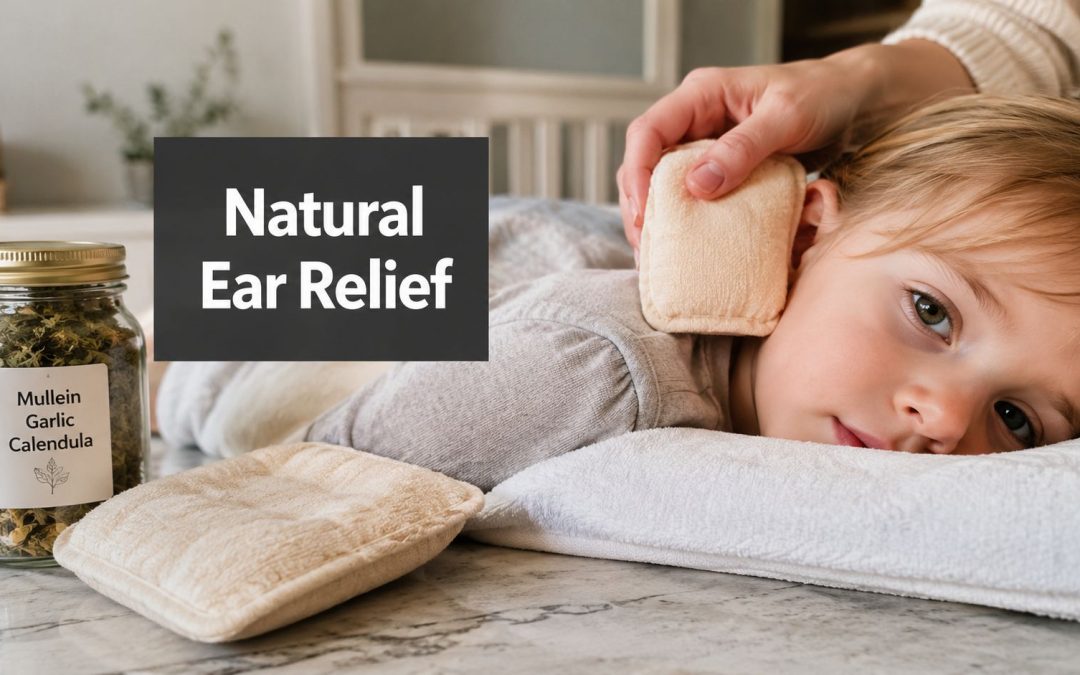
A compress can soothe the pain signals around the ear, much like a gentle hand on a sore muscle helps the body settle. A warm compress is often the easier starting point, and HealthPartners advises a warm compress for up to 20 minutes. Keep the cloth warm, not hot, and check the skin often so the heat stays comfortable.
Some families also use cold for short periods if warmth feels irritating. The key is to keep the pressure light and the skin protected. For families looking for broader health habits that support recovery, natural ways to support immune function can help round out sleep, hydration, and daily routines without treating the ear itself as a place to experiment.
Rest matters because pain is harder to ignore when the nervous system is already on alert. Head elevation can help some people feel less congested and more settled, especially at night. If dizziness is present, move slowly and avoid quick changes in position.
A clear, safe routine
Use the following as a comfort checklist, not a cure plan:
- Warm or cold compresses: Use them briefly and carefully, and keep the skin protected from overheating or chilling.
- Head elevation: Support the head in a way that feels relaxed for the neck and jaw.
- Hydration: Plain fluids help a tired child or adult stay comfortable and avoid feeling run down.
- Rest and stillness: Keep the body quiet if balance feels off or the ear pain flares with movement.
These steps support comfort in the same way a calmer room supports sleep. They do not claim to remove infection, and they should not be treated as a substitute for care when symptoms are severe, worsening, or unusual.
The nervous system connection matters here too. Ear pain can trigger guarding, irritability, and poor sleep, and that stress can make the whole experience feel louder than the ear finding alone would suggest. In chiropractic care, we also pay attention to how tension in the neck, jaw, and upper back can affect comfort and posture while a child or adult is recovering.
Safety Considerations for Children and High-Risk Groups
“Natural” gets treated like a safety label, but the ear doesn't hand out free passes. Anything placed directly into the ear canal deserves caution, and that caution goes up fast when a child, pregnant person, or anyone with possible eardrum damage is involved.
Why children need a lower threshold for care
Young children are more vulnerable because their ear anatomy is smaller and drainage can be less efficient. In practice, that means symptoms can escalate quickly, and parents shouldn't wait around for every home remedy to prove itself. BuzzRx notes that babies younger than 6 months with inner-ear infection symptoms need proper medical treatment.
Warning signs matter more than the label on a bottle. Drainage from the ear, sudden hearing loss, or pain that doesn't improve within a few days should stop home treatment and trigger evaluation. If the child can't sleep, can't hear normally, or seems unusually irritable, that's not the time to keep trying different drops.
Why perforation changes everything
Remedies that go into the ear canal can become risky fast if the eardrum might be ruptured. That includes many vinegar, alcohol, oil, and peroxide ideas that are casually recommended online. If there's ear drainage, new hearing loss, or a history of trauma, the safest move is to leave the ear alone until a clinician examines it.
Children don't need a long list of home experiments. They need a safe decision point.
For parents looking for a gentle family lens, this pediatric chiropractic resource may help explain why careful evaluation matters so much in babies and young children. The main point stays the same, though, the ear canal is not a place to improvise when tissue injury is possible.
The Nervous System Connection to Ear Health
Ear health isn't only about what's happening inside the ear. Balance, fluid movement, muscle tension, and the body's stress response all run through the nervous system, which is why some families want a broader approach when ear issues keep coming back.

Why chiropractors talk about the neck and ears together
The upper neck and head are closely connected to posture, balance, and comfort. Gentle chiropractic care focuses on nervous system function, which is one reason some families explore it when they're dealing with repeated ear problems rather than a one-time ache. This overview of chiropractic and the nervous system explains the broader principle behind that approach.
That doesn't replace medical diagnosis for infection. It does explain why some clinicians look at the body as a connected system instead of treating only the painful spot. In a child with recurring discomfort, parents often want more than a short-term pain plan.
What a careful chiropractic process looks like
A structured visit usually starts with an in-depth conversation, then moves into scanning, exam findings, and a care plan that fits the person's age and needs. Gentle adjustments are then used with the goal of supporting better function and less tension. Families who want a chiropractic perspective often appreciate that it looks beyond a single symptom and asks what's stressing the system as a whole.
Nervous system language can be helpful, as long as it stays honest. Chiropractic care isn't a proven cure for infection, and it shouldn't be sold as one. But for families who want to support overall function while monitoring ear symptoms carefully, it can be part of a thoughtful plan.
When to Seek Professional Medical or Chiropractic Care
Some ear pain can be watched at home for a short period. Some can't. The difference is not subtle when the ear starts draining, the person can't hear normally, or balance gets bad enough to interrupt daily life.
Clear reasons not to wait
Get professional evaluation if there is severe pain lasting more than 48 hours, fluid drainage, sudden hearing loss, vertigo that affects daily function, high fever, or symptoms in an infant under 6 months. Those signs move the situation out of the comfort-care category and into the needs-evaluation category. The safest response is timely assessment, not another round of untested drops.
A medical exam usually looks at the eardrum and the ear canal, then decides whether the problem is infection, injury, fluid, or something else. A chiropractic assessment, by contrast, looks at posture, nervous system stress, and mechanical tension that may be adding to discomfort or recurring issues. Those approaches can complement each other when used appropriately, but they aren't substitutes for a needed ear exam.
How to think about antibiotics and informed care
Some ear infections resolve without aggressive intervention, and some don't. A clinician may recommend antibiotics when the infection appears bacterial or when symptoms are persistent and worsening. The point is not to avoid medical care, it's to match the treatment to the actual problem instead of guessing.
If you're deciding what to do tonight, keep it simple. Comfort care is for mild, stable symptoms. Professional care is for pain that's escalating, hearing that's changing, dizziness that's interfering with life, or any sign the eardrum may be involved.
If your child or family member has ear pain that isn't settling down, don't keep cycling through unproven remedies. Reach out to First Steps Chiropractic for a thoughtful, family-centered evaluation, and get clear guidance on whether the ear needs medical attention, supportive chiropractic care, or both.