
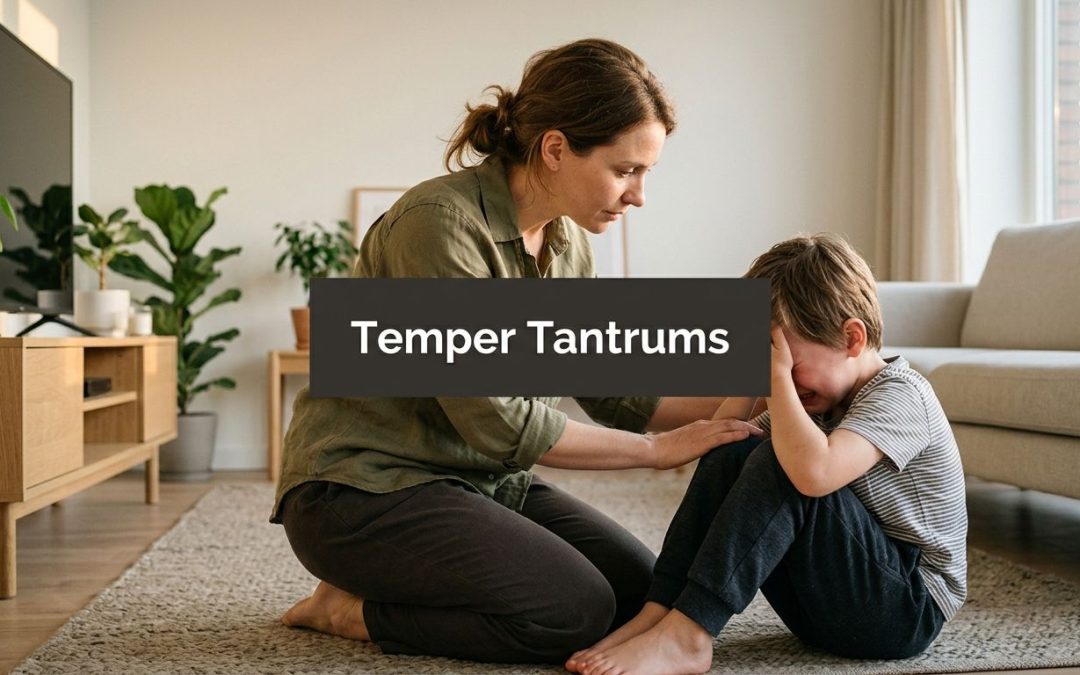
Your child is sobbing because the blue cup is in the dishwasher. Or because math homework felt impossible after a long school day. Or because you said it was time to turn off a game and brush teeth. You look at this eight-year-old in front of you and think, You're not a toddler anymore. Why is this happening?
That confusion is one of the hardest parts of temper tantrums in 8 year olds. Parents often expect fewer meltdowns by this age, not bigger feelings in a bigger body. When outbursts show up anyway, it can feel like your child is choosing drama, testing limits, or slipping backward.
Usually, something deeper is going on. An 8-year-old can sound grown-up in one moment and completely fall apart in the next because their inner world is getting more complex faster than their regulation skills can keep up. They notice fairness more. They care more about peers. They feel pressure at school. They want independence. But their nervous system is still learning how to handle stress, disappointment, and overload.
That doesn't mean every outburst is acceptable. It does mean the behavior makes more sense when you understand the body underneath it.
Your 8-Year-Old's Outbursts Feel Different
You ask your child to put on shoes so you can leave for soccer. They say no. You repeat the request. Suddenly they're yelling, crying, kicking the hallway bench, and shouting that everyone is against them. Five minutes earlier, they were laughing at a joke.
That shift can feel shocking.

For many families, temper tantrums in 8 year olds don't look like toddler tantrums. They often sound more verbal, more personal, and more intense. An eight-year-old may slam doors, argue like a tiny lawyer, burst into tears over a correction, or melt down after holding it together all day at school. Because they're older, adults may assume they should be able to stop.
Often, they can't stop quickly once the storm starts.
Why parents get especially unsettled at this age
At eight, kids can explain a lot. They can talk about rules, remember routines, and tell you what should happen. That makes it easy to believe they should also manage frustration smoothly. But knowing what to do and being able to do it while upset are two different skills.
Parents also get thrown off because the trigger seems so small. The snack is wrong. A sibling touched a pencil. The homework page has too many problems. The reaction seems bigger than the event because the event usually isn't the full story. The nervous system may already be carrying fatigue, noise, hunger, social stress, sensory overload, disappointment, or the strain of trying hard all day.
Big reactions to small problems usually mean the child's system was already overloaded before the problem showed up.
This isn't always regression
It can look like your child is going backward. In many cases, they're bumping into a new developmental challenge. Their feelings are getting deeper, their awareness is widening, and their body is still practicing how to recover from stress.
That doesn't make parenting it easy. It does make it understandable.
The Science Behind Big Kid Tantrums
An 8-year-old often has a strong vocabulary, sharp observations, and big opinions. But emotional control still develops unevenly. That's why a child can discuss fairness at dinner and then dissolve into rage when a sibling gets the bigger cookie.
The simplest way to picture it is this. Your child's brain has a powerful gas pedal for emotion and survival responses, but the brakes that help with pause, perspective, and self-control are still maturing.
The gas pedal and the brakes
When something feels threatening, frustrating, embarrassing, or overwhelming, the reactive parts of the brain can take over fast. The body shifts into protection mode. Muscles tighten. Breathing changes. Thoughts get rigid. Your child may move toward fight, flight, freeze, or collapse.
The thinking brain doesn't disappear, but it becomes harder to access in that moment.
That means an 8-year-old may:
- Argue intensely when corrected, because their body hears danger before their mind hears guidance
- Burst into tears over a minor change, because flexibility drops when stress rises
- Get louder or rougher when you try to reason with them, because language is no longer the main system in charge
- Say mean things they don't mean, because impulse control weakens under strain
Why smart kids still melt down
Parents often say, "But they know better."
Usually, that's true when the child is calm. During a tantrum, though, the issue isn't lack of knowledge. It's lack of access. Stress makes it harder for the brain's braking system to slow the emotional surge.
The nervous system lens offers a helpful perspective. Instead of seeing only disobedience, you start asking, What state is my child in right now? A dysregulated child may look oppositional when they are overwhelmed.
If you'd like a fuller explanation of how body-based stress responses affect behavior, this overview of nervous system regulation gives a helpful foundation.
What overload can look like at age eight
An 8-year-old's system can get overloaded by things adults may miss:
- School demands
- Noise and busy environments
- Social friction with peers
- Transitions between preferred and non-preferred tasks
- Hunger, thirst, or poor sleep
- Too much stimulation without enough recovery time
Some children feel this overload in obvious ways. Others hold it together in public and then unravel at home. That's common. Home often feels safest, so the body lets go there.
Practical rule: A tantrum is rarely the whole problem. It's usually the visible end of a longer chain of stress.
Why consequences alone often fall short
Consequences have a place in family life. Children need boundaries. But if you rely only on punishment during moments of dysregulation, you may miss the reason the behavior keeps happening.
A child whose nervous system is flooded won't learn much from a lecture in the middle of the storm. They need regulation first, then reflection, then repair. That's not being permissive. It's working with how the brain functions.
In-the-Moment Strategies to Calm the Storm
When your child is in full meltdown, your first job isn't to win the argument. It's to help the nervous system come down enough for thinking to return. That's why the most effective response is usually co-regulation. Your calmer body helps their overwhelmed body settle.
Start with your own posture, voice, and pace. If you get louder, faster, or more reactive, your child often escalates too.

What to do first
Use fewer words than you think you need. A dysregulated child can't process a long explanation well.
Try a sequence like this:
Get physically steady
Unclench your jaw. Drop your shoulders. Slow your breathing. Stand or sit nearby without looming.Name the feeling briefly
"You're really upset."
"This feels unfair to you."
"Your body looks angry."Set the limit clearly
"I won't let you hit."
"I won't let you throw the tablet."
"You can be mad. You can't hurt people."Offer a simple path toward calm
"Let's sit on the rug."
"Push against my hands."
"Take a drink of water with me."
"We'll talk when your body is quieter."
Scripts that help
Parents often ask what to say without rewarding the outburst. These phrases can help:
For anger
"I see how mad you are. I'm staying with you. I won't let you throw things."For refusal
"You don't like this. It's still time to stop."For overwhelm
"This is too much right now. Let's get your body calm first."For shame after yelling
"You're not bad. You were overwhelmed. We still need to fix what happened."
A body-based approach can also include calming sensory input. Some families find support in practices that encourage rest-and-digest responses, such as the ideas described in this article on stimulation of the parasympathetic nervous system.
Here's a visual walkthrough many parents find useful:
What tends to make things worse
When adults feel embarrassed, rushed, or powerless, they often reach for strategies that accidentally intensify the tantrum.
Avoid these if you can:
- Arguing facts. "That is not what happened" rarely helps in peak distress.
- Asking too many questions. A flooded child can't explain themselves clearly.
- Lecturing. Teaching works better later.
- Threatening big punishments in the moment. It raises fear without building regulation.
- Matching their intensity. Your nervous system is the anchor.
Stay calm enough to borrow your child some regulation until they can find their own.
After the storm passes
Recovery matters. Don't skip straight from meltdown to punishment and move on. Once your child is calm, reconnect and review.
You might say:
- "What did your body feel like before you exploded?"
- "What was the hardest part?"
- "What can we try next time when you notice that feeling?"
- "How do you want to repair this with your brother?"
This is when learning happens. Not in the hottest minute, but in the quiet after.
Proactive Routines for Tantrum Prevention
A calmer child isn't built only in crisis moments. Regulation grows from daily patterns that support the nervous system before it gets overloaded. If your child's outbursts seem to come out of nowhere, look first at the rhythm of the day.

Protect the basics
Some prevention work is simple, but not easy.
- Sleep needs to be steady. An overtired nervous system loses flexibility fast. Try to keep bedtime and wake time predictable, even on busy weeks.
- Food needs to be reliable. Some children melt down when they're hungry long before they can identify hunger.
- Transitions need warnings. Going from game time to homework or from school to errands can be rough without a bridge.
- Downtime needs to exist. Kids who move from school to activities to screens to bed may never fully reset.
Build in recovery after school
Many 8-year-olds come home holding stress in their bodies. If you demand homework, chores, and good manners immediately, you may be asking for skills that are temporarily offline.
Try an after-school landing routine:
- Quiet snack first
- Low-demand connection, like sitting together or chatting in the car
- Movement, such as swinging, walking, jumping, or bike riding
- Reduced sensory load, with lower noise and fewer instructions
Children who seem "fine" at school may still be running on fumes by late afternoon.
Watch for overstimulation patterns
Some kids are especially sensitive to crowded rooms, layered sounds, scratchy clothes, bright lights, or too many tasks back-to-back. In those children, prevention means reducing unnecessary input and spacing demands more carefully. This guide to what overstimulation can look like in children may help you spot patterns you hadn't connected before.
The goal isn't to remove all stress from a child's life. It's to make sure stress is balanced by enough recovery.
Create small rituals that signal safety
Rituals help the nervous system predict what's next. Predictability lowers friction.
Useful examples include:
- A bedtime sequence with the same order each night
- A morning checklist posted where your child can see it
- A homework start ritual like water, snack, stretch, then begin
- A repair ritual after conflict, such as reconnecting with a hug, drawing, or a short conversation
Fill the connection bucket
Kids often cooperate better when they feel connected, not managed. That doesn't require elaborate one-on-one outings. A short stretch of undivided attention can go a long way.
Sit on the floor and build something. Toss a ball. Read together. Let them talk without correcting every detail. For some children, misbehavior is partly a clumsy bid for connection when they're running low.
Parents sometimes focus on stopping the tantrum and forget to strengthen the conditions that make tantrums less likely. The body notices that difference.
Typical Tantrums vs Concerning Behaviors
Most children have outbursts sometimes. The harder question is whether the behavior fits a rough developmental range or suggests your child needs added support. The table below can help you think more clearly about the pattern.
Typical vs concerning outbursts in 8-year-olds
| Behavioral Aspect | Typically Developing Behavior | Potentially Concerning Behavior |
|---|---|---|
| Triggers | Usually linked to clear stressors like disappointment, fatigue, transitions, frustration, sibling conflict, or sensory overload | Seemingly constant, extreme, or disconnected from understandable triggers |
| Frequency | Happens occasionally or in predictable rough spots | Happens so often that home, school, or relationships are regularly disrupted |
| Intensity | Loud, tearful, argumentative, or dramatic, but eventually settles with support or time | Escalates into dangerous behavior, destruction, or severe aggression |
| Recovery | Child can recover, reconnect, and return to baseline | Child struggles to recover for a long time or remains dysregulated well after the event |
| Awareness afterward | Often shows some remorse, embarrassment, or ability to reflect later | Shows very limited awareness afterward or cannot discuss the event even when calm |
| Impact on daily life | Stressful, but family life still functions overall | Interferes significantly with school participation, friendships, sleep, or family routines |
| Safety | May stomp, yell, or slam a door | Tries to hurt self, hurt others, run away, or damage property in a serious way |
| Context | Mostly happens in specific situations, such as after school or during transitions | Happens across settings and with many adults, including at school and in public |
Questions worth asking yourself
If you're unsure, it helps to observe patterns instead of focusing on one bad day.
Ask:
- Does my child have any calm periods where regulation is easier?
- Are there predictable triggers or is everything a trigger?
- Can my child recover with support?
- Are teachers seeing the same thing?
- Do safety issues come up?
A tantrum can be developmentally typical and still deserve attention. You don't need to wait for a crisis before getting help.
When and How to Seek Professional Support
If your child's outbursts are intense, frequent, dangerous, or disrupting daily life, reach out. That's not overreacting. It's responsive parenting.
A good first step is often your child's pediatrician. You can also talk with the school counselor, teacher, occupational therapist, or a child mental health professional, depending on what you're seeing. If sensory challenges, attention difficulties, anxiety, learning stress, or sleep problems seem connected, mention that directly.
What to bring to the conversation
You'll get more useful help if you bring observations, not just conclusions.
Write down:
- Common triggers
- What the outburst looks like
- How long recovery seems to take
- What helps and what backfires
- Whether school sees similar behavior
- Any concerns about sleep, sensory issues, or attention
Short notes on your phone are enough. Patterns matter more than polished wording.
Support can be collaborative
Some children benefit from counseling that teaches emotional skills. Some need occupational therapy for sensory processing support. Some need a school-based plan. Some need a fuller evaluation for underlying developmental, behavioral, or emotional factors.
For families who suspect their child is living in a chronically stressed or dysregulated state, some also explore neurologically focused pediatric chiropractic care as part of a broader support team. The idea is not to label every tantrum as a chiropractic issue. It's to consider whether a child who seems stuck in stress responses may benefit from care aimed at supporting nervous system balance alongside pediatric and therapeutic guidance.
You don't need to prove something is seriously wrong before asking for help. You only need to know that your child is struggling and your family needs support.
What matters most
An 8-year-old having tantrums doesn't mean you've failed. It doesn't mean your child is manipulative, broken, or destined for constant conflict. It means their system may need more support, more skill-building, and more understanding than punishment alone can provide.
When you respond to behavior with both boundaries and nervous system awareness, you give your child two things at once. Safety and a path forward.
If you're looking for a supportive, family-centered approach to nervous system health, First Steps Chiropractic offers pediatric, prenatal, and family care focused on helping children and parents build better regulation, resilience, and overall function.