You're finally sitting down after feeding the baby, and the ache starts again. It stings when you shift in the chair, burns in the bathroom, and the idea of another bowel movement makes you tense before it even happens. Postpartum piles can make the early days of motherhood feel much harder than anyone warned you about.
The good news is that this usually responds well to steady, simple care. The most effective treatment piles after labour plan doesn't rely on one cream or one trick. It combines calming the irritated tissue, protecting it from further strain, improving bowel habits, and paying attention to the pelvic mechanics that changed during pregnancy and birth.
Your Guide to Postpartum Hemorrhoid Relief
Postpartum piles are swollen veins around the anus or lower rectum that become irritated after pregnancy and labour. Many women notice them after a long pushing stage, after constipation, or after days of sitting awkwardly while healing and feeding a newborn. Common symptoms include itching, soreness, pressure, a tender lump, and small amounts of bleeding.
Some discomfort improves with time, but “wait it out” isn't the best plan if you're already guarding every movement. Tissue heals better when you reduce swelling, avoid friction, and keep stool soft enough to pass without straining. That's the practical foundation.
What helps first
The fastest relief usually comes from a few basics used consistently:
- Warm water exposure to relax the area and make cleaning easier
- Cold therapy to settle swelling
- Gentle topical support to reduce irritation
- Soft bowel movements so healing tissue isn't re-injured each day
- Better pelvic support and positioning so pressure through the pelvic floor is reduced
Practical rule: If your care routine makes the area sting more, dries it out, or increases rubbing, it's probably slowing recovery.
Why a broader approach matters
A lot of medical advice stops at creams, wipes, and fiber. Those can help, but some mothers keep flaring because the pressure problem hasn't fully changed. After birth, the pelvis and sacrum may still feel unstable, the pelvic floor may stay guarded, and posture during feeding, lifting, and toileting can keep tension where you least need it.
That's why a fuller recovery plan matters. Local symptom relief treats what you feel right now. Bowel care prevents repeated aggravation. Pelvic biomechanics addresses the structural stress that can keep the area congested and slow to settle.
When those pieces work together, healing is usually smoother, less frustrating, and easier to maintain.
Immediate Soothing for Pain and Bleeding
When the area is inflamed, the goal is simple. Calm it down without adding pressure, dryness, or friction.

Start with warmth, then cooling
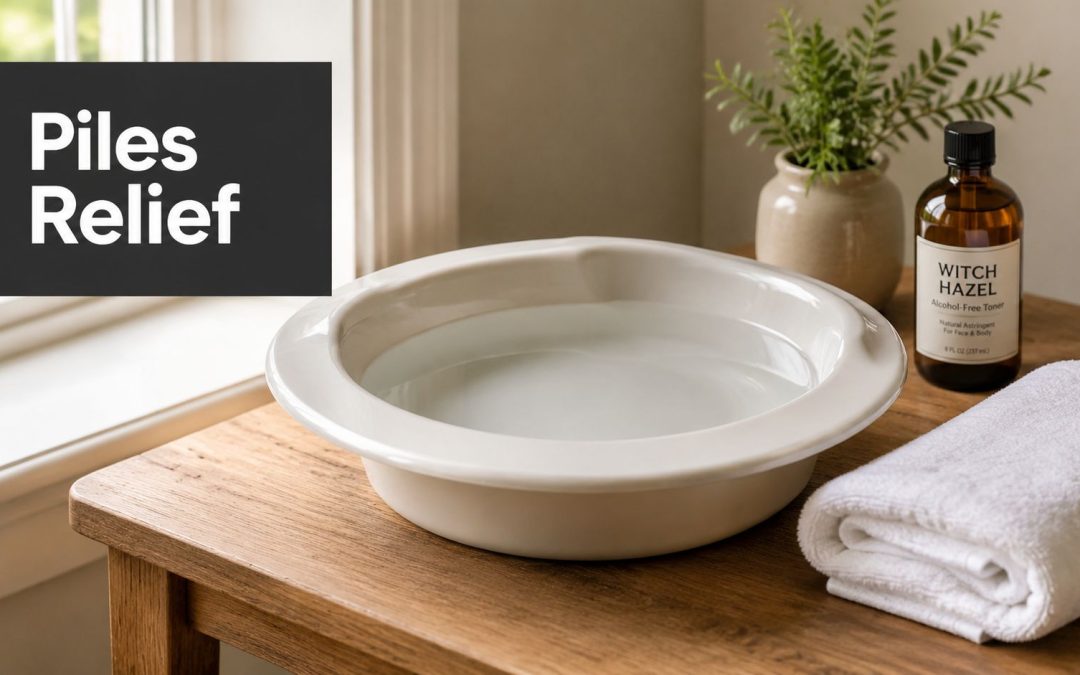
A sitz bath is often the easiest first step. Use warm water, not hot water. Sit for a short stretch, then gently pat dry. The warmth can help the anal area relax and can make cleansing less painful after a bowel movement.
A simple routine works well:
- Fill a clean tub or sitz bath basin with warm water.
- Sit so the sore area is submerged.
- Stay there long enough to feel the muscles let go.
- Stand up slowly.
- Pat dry with a soft towel or use a cool hair dryer setting from a distance if touching the area is too tender.
If bleeding is light and seems linked to irritation, warmth may help because it reduces spasm and makes cleaning gentler. If swelling and throbbing are the main problem, follow with a cool compress.
Use cold carefully
Cold helps most when the tissue feels puffy, hot, or sharply sore. Wrap an ice pack, frozen peas, or a chilled gel pad in soft cloth. Never place frozen items directly on skin. Hold it against the area briefly, then remove it.
Cold is useful after:
- A painful bowel movement
- A period of sitting
- A long feed when you've been in one position
- The end of the day when swelling tends to build
Try witch hazel or a protective ointment
Witch hazel pads can soothe irritation because they act as an astringent. Press them gently against the area rather than rubbing. If the pad contains alcohol or feels stingy, skip it. Sensitive postpartum tissue usually does better with bland, non-irritating products.
Some mothers also get temporary relief from over-the-counter creams or ointments. Products may include a local anesthetic, a protectant, witch hazel, or a steroid. If you're breastfeeding, the Breastfeeding Network guidance on haemorrhoids and breastfeeding notes that over-the-counter remedies and steroid creams for haemorrhoids are compatible with breastfeeding, and it also explains that creams, ointments, and suppositories help symptoms rather than cure the hemorrhoids themselves.
The best cream is the one that reduces irritation without causing burning, dryness, or a “clean but raw” feeling later.
What tends not to work well
A few common habits often backfire:
- Dry toilet paper only leaves friction on already swollen tissue
- Very hot baths can leave the area more irritated afterward
- Heavy rubbing with medicated wipes often feels good briefly, then stings later
- Using multiple creams at once makes it hard to tell what's helping and what's irritating
If pain is severe, or you feel a suddenly hard, very tender lump, don't assume it's “just normal postpartum healing.” That needs a closer look.
Essential Hygiene and Bowel Care Strategies
The bathroom routine matters as much as the cream. If each bowel movement reopens irritation, piles linger.

Clean gently, not aggressively
After birth, many women already have a peri bottle for perineal care. Keep using it. Warm water is often kinder than wiping, especially if you also have stitches, a graze, or general pelvic soreness.
Use this simple do this, not that approach:
| Do this | Not that |
|---|---|
| Rinse with a peri bottle after a bowel movement | Scrub with dry toilet paper |
| Pat or dab dry | Wipe back and forth |
| Choose soft, unscented products | Use fragranced wipes |
| Change pads regularly | Stay in a damp pad for hours |
| Wash hands, then apply ointment gently | Rub ointment in firmly |
If you prefer wipes, choose soft, fragrance-free ones and blot instead of dragging them across the area. “Fresh” and “cooling” labels often mean added ingredients that sting on healing skin.
Make stool soft on purpose
Constipation is one of the biggest reasons postpartum hemorrhoids stay angry. Soft stool doesn't happen by luck. It usually comes from enough fluid, enough fiber, and not waiting until you're already backed up.
Foods that are often easy to work into postpartum life include:
- Oatmeal with berries or ground flax
- Pears, kiwi, prunes, and apples
- Lentil soup or soft bean dishes
- Avocado on toast
- Cooked vegetables that are easier to tolerate than a giant raw salad
- Whole grain toast or crackers
- Chia pudding or yogurt with fruit, if dairy suits you
Hydration matters too. Keep water where you feed the baby, where you sit, and by your bed. New mothers often don't forget to drink because they don't care. They forget because they never have both hands free.
If your stool is hard, the hemorrhoid can't calm down. Every bowel movement becomes a fresh mechanical injury.
Change your toilet habits
Don't push. Don't brace your breath. Don't stay on the toilet scrolling because you finally have a quiet minute. That prolonged sitting increases pressure right where you're trying to heal.
A better pattern is:
- Go when the urge is there
- Rest your feet on a small stool if that helps you relax
- Lean forward slightly
- Exhale instead of bearing down
- Get up when you're done
Some mothers need a temporary stool softener or bulk-forming product. That decision is best made with your midwife, GP, OB-GYN, or pharmacist, especially if you're taking iron or recovering from blood loss. This short video gives a useful overview of practical bowel habits and symptom relief.
The Role of Pelvic Alignment in Postpartum Recovery
This is the piece most mothers aren't told about. Hemorrhoids after labour aren't only a skin-level problem. They often sit inside a bigger pattern of pelvic pressure, muscular guarding, and altered postpartum mechanics.

What changes after pregnancy and birth
During pregnancy, the pelvis adapts to a shifting center of gravity, ligament softness, and the load of the growing baby. Labour adds more force through the pelvic floor, sacrum, coccyx, and deep hip muscles. Afterward, some women feel fine quickly. Others stay twisted, guarded, or unstable in ways that affect bowel mechanics and pressure through the rectal veins.
That can show up as:
- Tailbone soreness
- One-sided pelvic heaviness
- Pain when rolling in bed
- A sense of bearing down when standing
- Difficulty relaxing during bowel movements
These aren't separate from hemorrhoid recovery. They can feed it.
Why biomechanics matter
When the pelvis doesn't move well, the muscles around it often compensate. The glutes, deep rotators, lower abdominals, and pelvic floor may all start gripping. A pelvic floor that can't relax well makes passing stool harder, even when you're trying not to strain. Add slumped feeding posture, cautious walking, and fatigue, and pressure tends to stay downward.
This doesn't mean pelvic misalignment is the only cause of piles. It does mean that in some postpartum bodies, it's a meaningful contributor to why symptoms linger.
A gentle, neurologically focused chiropractic assessment can help identify whether joint restriction, sacral tension, or asymmetry is adding to that pressure pattern. The aim isn't to “push hemorrhoids back in” through chiropractic care. It's to improve how the pelvis functions so circulation, posture, and muscular coordination have a better chance to normalize.
Where postnatal chiropractic care fits
Mothers who had chiropractic support during pregnancy may already know the Webster Technique in prenatal chiropractic care. Postpartum care is different, but the same biomechanical thinking applies. The focus is on gentle evaluation of pelvic balance, sacral motion, lumbar mechanics, and nervous system tension.
That can be combined with:
- Breathing work to reduce bearing-down patterns
- Pelvic floor physical therapy when there's ongoing tension or weakness
- Position changes during feeding so the tailbone and pelvic floor aren't constantly compressed
- Walking and gradual movement to support circulation without overloading healing tissue
A postpartum pelvis doesn't always need force. It usually needs precision, comfort, and enough support that the body stops guarding.
What doesn't work well is aggressive adjustment in a body that still feels fragile, or treating the pelvis as if it's unrelated to bowel symptoms. In practice, the best results come from care that respects soft tissue healing, sleep deprivation, and the fact that a new mother needs realistic strategies, not complicated rehab homework.
When to Seek Professional Medical and Chiropractic Care
Home care is reasonable for many postpartum piles. It's not the right plan for every situation.

Call a medical professional promptly if you notice these signs
- Heavy or ongoing bleeding that doesn't settle
- Severe pain that isn't improving with simple home care
- A hard, very painful lump, which may suggest a thrombosed external hemorrhoid
- Fever, pus, spreading redness, or feeling unwell
- Pain with bowel movements that feels sharp or tearing, which can point to an anal fissure rather than hemorrhoids
- Tissue that stays outside and won't reduce
- Any rectal bleeding you're unsure about
Medical assessment matters because not every postpartum anal symptom is a hemorrhoid. Some women need prescription treatment. Some need examination to confirm the diagnosis. In more stubborn or severe cases, office procedures or surgical care may be considered. The AGA clinical practice update on hemorrhoid diagnosis and treatment00282-X/fulltext) notes that symptoms can include bleeding, itching, discomfort, or prolapse, and that significant pain is more typical when a hemorrhoid is acutely thrombosed.
When chiropractic care makes sense
A chiropractor isn't the right first stop for active heavy bleeding, infection, or a suspected thrombosed hemorrhoid. That's medical territory.
Chiropractic care becomes useful when the bigger postpartum pattern looks mechanical:
- Persistent pelvic asymmetry
- Tailbone or sacral pain
- Pain with sitting or rising
- Ongoing pressure despite better bowel habits
- A feeling that your core and pelvis still aren't coordinating well
If you're looking into postpartum support from a family practice that also works with pregnancy-related pelvic changes, this overview of prenatal and family chiropractic care options gives a sense of how that type of care is approached.
A simple decision guide
| Symptom pattern | Best first contact |
|---|---|
| Bleeding, severe anal pain, fever, suspected fissure or thrombosis | GP, OB-GYN, urgent care, or emergency evaluation depending on severity |
| Constipation with hemorrhoid flare-ups | GP, midwife, OB-GYN, pharmacist, or pelvic floor therapist |
| Lingering pelvic imbalance, tailbone pain, pelvic pressure | Postnatal chiropractor andor pelvic floor physical therapist |
The most effective support team is often shared care. Medical care handles diagnosis, medication, and procedures when needed. Chiropractic care can support the mechanics and nervous system side of recovery when pressure patterns and pelvic dysfunction are part of the picture.
Long-Term Healing and Preventing Piles in the Future
Healing usually happens in layers. First you calm the tissue. Then you protect it from daily irritation. Then you improve the pressure patterns that caused the flare to keep returning.
For long-term treatment piles after labour, keep the strategy simple enough that you'll use it. Stay ahead of constipation. Keep bathroom habits gentle. Change positions often if feeding leaves you planted in one chair. Notice whether tailbone pain, one-sided pelvic tension, or a constant bearing-down sensation is still present well after the early postpartum window.
What prevention looks like in real life
A sustainable prevention plan often includes:
- Regular hydration through the day, not all at once
- Fiber from food first when possible
- Prompt bowel response instead of delaying the urge
- Exhaling with effort when lifting the baby carrier, car seat, or stroller
- Pelvic and sacral care if symptoms seem linked to alignment and pressure
- Follow-up support for inflammation habits, especially if you tend to flare when stressed, sleep deprived, or constipated
For mothers planning another pregnancy, proactive pelvic care can make a real difference. Keeping the pelvis moving well, the pelvic floor coordinated, and inflammation lower gives your body a better starting point before the next round of pregnancy pressure. This broader approach lines up well with practical guidance on reducing inflammation in daily life.
You don't need a perfect recovery routine. You need one that lowers pressure, protects healing tissue, and supports your whole postpartum body instead of treating the hemorrhoid as an isolated problem.
If you'd like support that looks beyond symptom management and considers how pelvic alignment, nervous system tension, and postpartum biomechanics affect recovery, First Steps Chiropractic offers gentle family-centered care for mothers in the postpartum season. Their approach is designed to help you feel more stable, more comfortable, and better supported as your body heals.