

You've followed the bedtime routine, dimmed the lights, and offered the usual reminder to relax. Yet your child is still rubbing their skin, calling out at every small sound, kicking against the sheets, or getting more upset as the room becomes quiet. By the time sleep finally arrives, everyone is exhausted.
For many families, this pattern isn't a discipline problem or a lack of consistency. Sensory processing differences can keep a child's nervous system alert when the rest of the household is ready for sleep. Understanding the connection between sensory processing disorder and sleep can help you replace guesswork with careful observation, targeted support, and appropriate pediatric care.
Understanding Sensory Processing Disorder and Sleep
Bedtime often exposes sensory differences that stay hidden during the day. A child may manage school, errands, and family activities by moving constantly, avoiding certain textures, or relying on familiar routines. Once the lights go down and external distractions fade, the sensations they've been holding off can become much harder to ignore.
A pajama seam may feel sharp. A refrigerator motor may sound unusually loud. The mattress may feel too soft, too warm, or unpredictable against the skin. Another child may seem unable to get comfortable because their body is asking for stronger movement or pressure before it can settle.
These reactions can look like refusal. A child who leaves the bed repeatedly may be trying to escape an irritating texture or searching for movement that helps them feel organized. A child who cries at bedtime may be experiencing sensory-based alarm, not trying to prolong the evening.
A useful starting point is learning how sensory processing differences affect the way a child receives and responds to everyday input. This plain-language guide to sensory processing disorder can help families recognize patterns beyond behavior alone.
Why ordinary sleep advice may fail
Typical sleep advice assumes that the bedroom feels comfortable and safe to the child's nervous system. A predictable schedule, reduced screens, and a quiet room can help, but they won't remove a hidden tactile, auditory, visual, or body-awareness trigger.
That doesn't mean routines are unhelpful. It means the routine needs to address regulation, the process of helping the body move from alertness toward rest. A child can understand the bedtime rules and still be physically unable to settle if their brain continues to treat ordinary sensations as urgent information.
Practical rule: Treat bedtime resistance as information. Ask what the child's body may be communicating before assuming the child is choosing not to cooperate.
The evidence supports taking this concern seriously. In a 2021 cross-sectional study of Spanish school-aged children, 32.6% slept fewer than 10 hours per day, while 10.4% had poor sleep quality. The same study found sensory reactivity was common, and poor sleep quality was significantly associated with greater reactivity across several sensory domains, including touch, sound, taste and smell, visual input, energy, and sensation-seeking patterns. Read the study in Frontiers in Pediatrics.
The Nervous System Connection to Rest
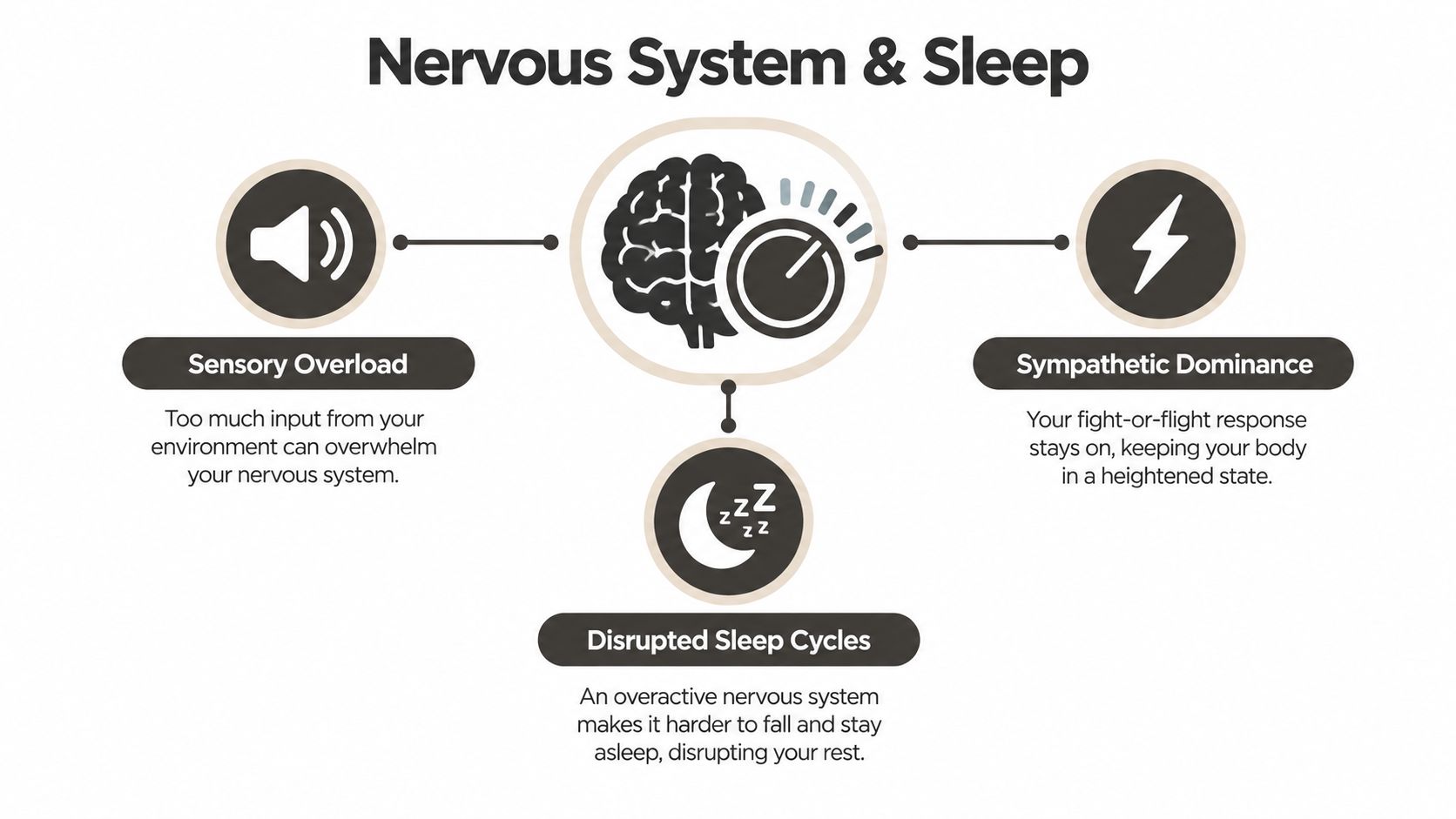
Think of the nervous system as having a volume dial. Most children can gradually turn down the volume of background sensations as bedtime approaches. A child with sensory processing differences may experience that dial as unusually sensitive, slow to adjust, or stuck at a high setting.
During the day, the brain constantly sorts incoming information. It decides which sounds, touches, movements, smells, and visual details deserve attention and which can remain in the background. When filtering takes more effort, a child may reach the evening already carrying a high level of alertness.
The sympathetic nervous system supports action and readiness. It helps the body respond when something feels important or threatening. The parasympathetic nervous system supports recovery, digestion, and rest. Falling asleep requires a gradual shift toward a calmer state, but persistent sensory signals can interrupt that transition.
This doesn't mean every child with sensory differences has a damaged nervous system, and it doesn't prove that sensory processing is the sole cause of a sleep problem. It means that sensory input and arousal can interact in ways that make settling harder.
What the research shows
A 2022 study found that children with sensory sensitivity had significantly more sleep problems than children without sensory sensitivity. The differences appeared in both parent-rated and child-rated outcomes, with large effect sizes, g = 1.11 and g = 1.17, and both results had p < 0.001. Review the findings in the full PMC article.
The same study identified specific patterns that parents often recognize at home. Sleep anxiety, bedtime resistance, and delayed sleep onset were more frequent among children with sensory sensitivity. These findings help explain why a child may become increasingly distressed during the exact period when adults expect calm behavior.
A related study also connected sensory patterns with measurable sleep outcomes. In toddlers, longer settling was associated with visual and touch sensitivity, while longitudinal data linked settling difficulty with hearing sensitivity. Sensory-seeking behavior was associated with shorter daytime sleep, and sensory sensitivity was associated with longer time to settle at night. See the PubMed record and study details.
Families can support this transition by reducing unnecessary input and introducing predictable, tolerable sensations. Guidance on nervous system regulation for children may offer additional language for discussing these patterns with a care provider.
Identifying Hidden Sensory Triggers at Night
A bedroom can look peaceful to an adult and still feel demanding to a child. Instead of changing everything at once, examine one sensory channel at a time. Watch what happens before, during, and after the child enters bed.
Start with touch
Tactile triggers are common because bedtime places the skin in constant contact with clothing, bedding, and room temperature. Look for reactions to:
- Clothing details: Tags, seams, waistbands, elastic, socks, and tight sleeves may irritate the skin.
- Bedding texture: Some children dislike fleece, rough cotton, slippery fabrics, or sheets that bunch beneath the body.
- Temperature: Overheating, cold feet, or changing temperature after the covers are pulled up can delay settling.
- Unexpected contact: A parent's hand, a sibling's movement, or a loose blanket may feel startling rather than comforting.
Offer choices without turning bedtime into a negotiation. You might test tagless pajamas, a familiar sheet, or a lighter sleep layer for several nights and record the response.
Listen for sounds adults filter out
Auditory filtering differences can make distant or intermittent noise especially disruptive. A child may ignore steady sound but react strongly to the dog barking, plumbing, traffic, a television in another room, or a heating system switching on.
Notice whether your child covers their ears, asks repeated questions about noises, or wakes after sudden sounds. Continuous background sound, such as a carefully chosen white-noise machine, may mask unpredictable changes for some children. Keep the volume comfortable and avoid using sound that the child already finds irritating.
Check visual and movement needs
Streetlights, electronic indicators, ceiling shadows, and moving tree branches can keep a visually sensitive child alert. Blackout curtains or covering small light sources may help if your child watches the room instead of closing their eyes.
Some children also need more body input. They may rock, kick, crash into cushions, or ask for firm pressure. These behaviors can reflect a need for proprioceptive input, the body's sense of position and force. Don't assume that every movement is “overstimulation.” For some children, safe heavy work earlier in the routine may make stillness more achievable.
A helpful observation is not “My child won't sleep.” It's “My child settles more easily when this sensation is removed or this type of input is offered.”
Assessing Your Childs Unique Sleep Profile
A targeted plan begins with a pattern, not a label. Your child may avoid certain sensations, seek stronger input, or show both responses depending on the time of day and the type of stimulus.
Keep a brief bedtime record. You don't need complicated equipment. Write down what happened before bed, the child's response, the approximate settling pattern, and any night waking you noticed. Look for repeated relationships rather than drawing conclusions from one difficult evening.
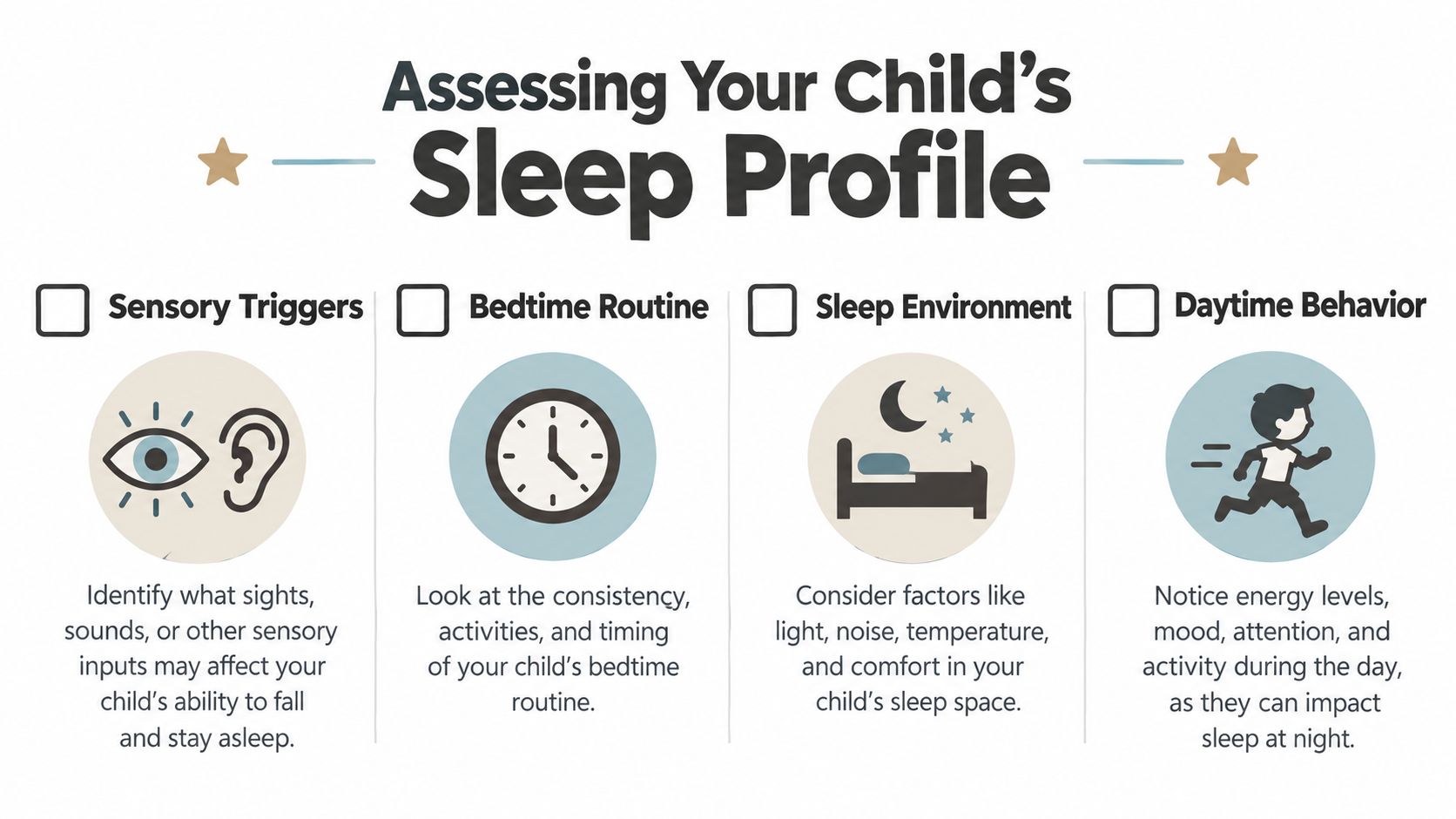
Map the evening in four areas
Sensory triggers: Record reactions to light, sound, touch, smell, movement, and temperature. Include internal sensations, such as hunger, a full bladder, reflux symptoms, pain, or difficulty noticing body position.
Routine: Note the order of activities and how predictable the transition feels. Some children become anxious when the sequence changes, while others become more alert during a long or conversation-heavy routine.
Environment: Examine the room at the time your child struggles, not only when it appears quiet to you. Check light changes, household sounds, air temperature, bedding, and the presence of siblings or pets.
Behavior: Describe what your child does without judgment. Bedtime resistance, repeated requests, rocking, crying, covering the ears, leaving the room, or seeking pressure can all provide clues.
Compare profiles carefully
A sensory-avoiding child may become distressed when the room is too bright, clothing feels uncomfortable, or touch is unexpected. A sensory-seeking child may appear restless, ask for rough play, or struggle with the sudden loss of movement at bedtime. A mixed profile is also possible. A child may avoid light touch but actively seek firm pressure.
Test one modest change at a time. If you remove several possible triggers and add multiple calming activities simultaneously, you won't know which adjustment helped. Share your notes with a pediatrician, occupational therapist, or other qualified clinician, especially if sleep anxiety or settling problems continue.
The 2022 study described earlier found strong differences in sleep behavior between children with and without sensory sensitivity, including sleep anxiety, bedtime resistance, and delayed sleep onset. Those findings support documenting these symptoms clearly rather than dismissing them as ordinary bedtime behavior. The PubMed summary is available here.
Evidence-Based Sensory Bedtime Interventions
The most useful bedtime intervention matches the child's sensory pattern. A child who avoids sensation may need less input and more predictability. A child who seeks sensation may need carefully chosen body input before the lights go out. Both children benefit from a steady rhythm and an adult who introduces changes gradually.
For children who avoid input
Reduce the sensations that repeatedly trigger distress. Try tagless pajamas, a familiar sheet texture, softer lighting, and a bedroom arrangement that limits visual clutter. If streetlights or small electronic lights draw your child's attention, blackout curtains and covered indicators may make the room easier to tolerate.
Sound also deserves a deliberate plan. If sudden household noise causes alerting, a steady white or brown noise source can provide an auditory background. Introduce it while your child is awake, keep it at a comfortable level, and stop if it increases agitation.
A predictable wind-down can include quiet reading, slow breathing, or a familiar song. The aim isn't to force relaxation. It's to give the nervous system fewer surprises.
For children who seek input
Offer organizing movement before the final part of the routine. Carrying books, pushing a laundry basket, wall push-ups, animal walks, or slow resistance play can provide body feedback. Keep the activity calm and structured rather than turning it into exciting roughhousing right before bed.
Deep pressure may feel grounding to some children. A firm massage, a pillow squeeze under adult supervision, or a weighted lap item during a quiet activity may be considered, but weighted products aren't appropriate for every child. Use them only with professional guidance about fit, safety, the child's ability to remove the item, and medical considerations.
Rhythmic movement can also help some children shift toward rest. Slow rocking, a gentle walk, or repeated breathing paired with a visual cue may be easier to tolerate than instructions to lie still immediately.
Build a sensory-aware sequence
A practical sequence might look like this:
- Lower stimulation: Reduce bright lights, loud conversation, and fast transitions.
- Offer matched input: Use a tactile, movement, or pressure activity that fits the child's observed profile.
- Repeat the same order: Keep the final activities familiar and brief enough to remain manageable.
- Create a quiet landing: Move into bed with minimal talking and a consistent phrase or visual cue.
- Review the response: Adjust one element after observing the pattern over several evenings.
Research supports tailoring interventions to the sensory profile, but it doesn't establish one universal strategy or prove that a particular product will solve sleep disruption. The 2026 systematic review identified 16 studies linking sleep problems, especially insomnia symptoms and night wakings, with sensory dysfunctions, while also calling for longitudinal intervention research and objective measures to clarify causality and treatment order. Read the systematic review summary.
The Role of Pediatric Chiropractic Care
Some families seek pediatric chiropractic care when home adjustments haven't resolved persistent regulation or sleep concerns. A neurologically focused chiropractor may assess movement, posture, spinal function, and the child's broader nervous system presentation as part of an individualized evaluation.

The proposed clinical rationale is that the brain and body depend on continuous information from muscles, joints, and the spine. If a child has discomfort, restricted movement, or difficulty coordinating body signals, a clinician may consider whether those factors are adding to the child's regulation burden.
That assessment should remain grounded and individualized. Chiropractic care shouldn't be presented as a proven cure for sensory processing disorder, insomnia, autism, or another developmental condition. Current evidence establishes an association between sensory differences and sleep problems, but it doesn't prove whether sensory issues cause poor sleep, poor sleep intensifies sensory symptoms, or which problem should be treated first.
What a responsible visit should include
A careful pediatric appointment should begin with a detailed history. Bring your sleep observations, sensory triggers, medical history, developmental concerns, medications or supplements, and any reports from other clinicians. The practitioner should explain the examination, discuss expected goals, identify limits of care, and refer to another professional when the concern falls outside chiropractic scope.
Some clinics use gentle neurologically focused approaches, including Torque Release Technique. The technique and any adjustment plan should be explained in terms you understand, with consent and attention to the child's comfort. Parents should never feel pressured to continue care without a clear rationale or a way to assess whether the plan is helping.
A sound care plan complements, rather than replaces, medical, occupational, developmental, or sleep evaluation.
First Steps Chiropractic describes a process involving consultation, Insight Scans, examination, an individualized care plan, and gentle neuro-tonal techniques. Its information about chiropractic care for babies is relevant to parents considering care during infancy, when questions about birth, development, alignment, and regulation may arise.
Families can also use educational video material to understand what a gentle pediatric visit may involve before deciding whether to schedule an evaluation.
When to Pursue Multidisciplinary Support
Sensory processing disorder and sleep concerns often need more than one perspective. An occupational therapist can evaluate sensory patterns and daily functioning, while a pediatrician can review pain, breathing, reflux, medication effects, developmental history, and other medical contributors. A pediatric sleep specialist may be appropriate when settling problems, frequent waking, breathing concerns, unusual nighttime events, or persistent daytime effects continue despite thoughtful environmental changes.
A broader evaluation is also important when sensory differences appear across settings. Note concerns involving eating, dressing, toileting, school participation, movement, attention, communication, anxiety, or social interaction. Sensory symptoms can overlap with neurodevelopmental and emotional conditions, so families should avoid assuming that one explanation accounts for every difficulty.
Build one shared plan
Care becomes more coordinated when each professional receives the same concise summary:
- Main sleep concern: Describe settling, waking, early rising, or bedtime anxiety.
- Sensory pattern: List the specific sounds, textures, lights, movements, or body sensations that change behavior.
- Interventions tried: Record what you changed and how your child responded.
- Safety and medical details: Include diagnoses, medications, allergies, pain, breathing concerns, and relevant developmental history.
- Family priorities: State whether the immediate goal is easier settling, fewer awakenings, a calmer routine, or better daytime functioning.
Ask clinicians to distinguish observation from interpretation. “My child wakes when the heater turns on” is more useful than “My child's nervous system is broken.” It gives the team a testable starting point without assigning a cause that hasn't been established.
The current evidence leaves an important question open. The 2026 systematic review found a relationship between sensory dysfunctions and sleep problems, but it called for stronger longitudinal intervention studies and objective measurements to determine causality and whether sleep or sensory treatment should come first. That uncertainty doesn't mean families should wait without help. It means care should be collaborative, measured, and willing to revise the plan.
Seek prompt medical advice for symptoms such as breathing difficulty during sleep, significant pain, unusual movements, severe daytime sleepiness, or sudden changes in sleep and behavior. With the right team, bedtime can become a source of information and support rather than a nightly battle.
First Steps Chiropractic offers pediatric and family chiropractic consultations, nervous system assessments, and gentle neuro-tonal techniques that may be considered alongside your child's broader care plan. Visit First Steps Chiropractic to learn about available services and request a consultation for sensory and sleep concerns.