
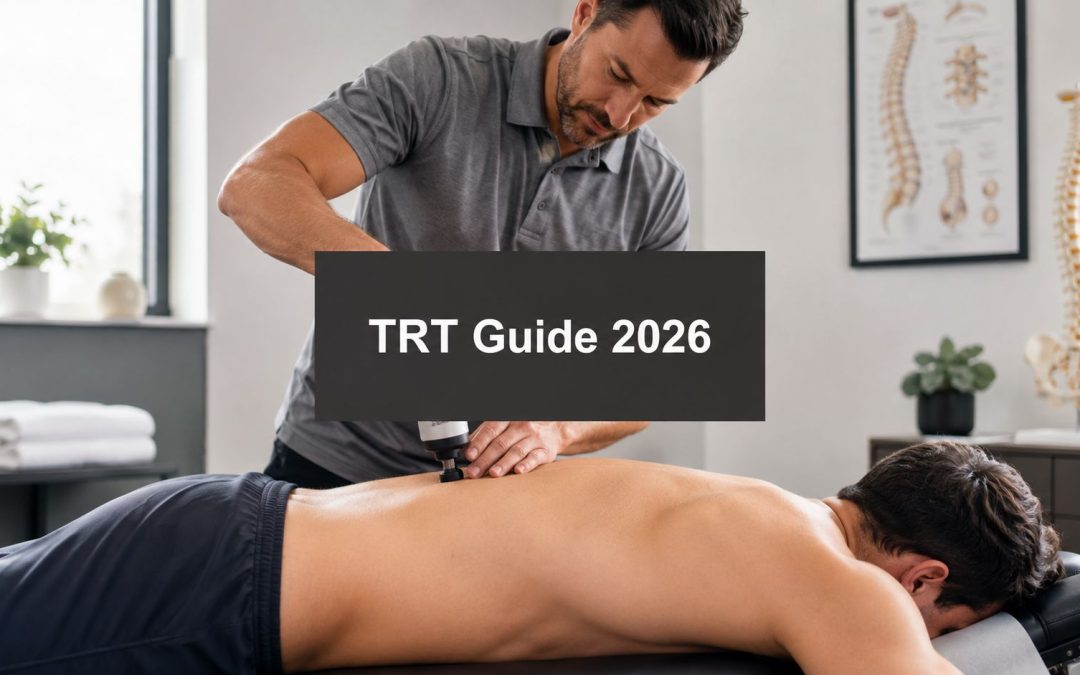
You may be a parent searching after a difficult night with your toddler, an expectant mother wondering whether a gentle adjustment could help with pelvic discomfort, or an adult who wants chiropractic care without twisting and popping. A Torque Release Technique chiropractor may appear to offer exactly that: a low-force, instrument-assisted approach that feels less intimidating than a traditional manual adjustment.
TRT deserves a careful explanation, especially for children and pregnant patients. Its technique is specific, its proposed nervous-system model is different from symptom-focused care, and its research base is still limited. The most useful question isn't whether TRT sounds promising. It's whether the practitioner can clearly separate what has been studied in humans from claims that remain preliminary, theoretical, or primarily promotional.
Why Parents and Expectant Moms Are Searching for TRT
A parent may be looking for help because a toddler struggles with sleep, sensory regulation, or persistent fussiness. An expectant mother may be dealing with pelvic discomfort and wondering whether her body is balanced for labor. An adult with chronic tension may want an option that doesn't involve forceful neck or back manipulation.
Those concerns explain TRT's appeal. The technique uses the Integrator, a handheld instrument intended to deliver a precise impulse rather than a traditional hands-on thrust. Families who feel uneasy about twisting a child's spine, pregnant patients who want a conservative approach, and adults who dislike audible cracking often find the low-force format easier to consider.
Prenatal chiropractic care itself should still be discussed in context. General guidance on pregnancy-related low back pain notes that spinal manipulation is commonly used, while also emphasizing that evidence quality and estimates of benefit aren't uniform. A practical overview of pregnancy chiropractic considerations is available in this guide to chiropractic benefits during pregnancy.
Why the language can become confusing
TRT practitioners often describe their work using terms such as neurological tone, subluxation, and nervous-system adaptation. Those terms belong to the technique's tonal chiropractic model. They don't automatically prove that TRT can treat a named medical or developmental diagnosis.
Online marketing may connect TRT with sleep concerns, anxiety, ADHD, autism, infertility, addiction, colic, or sensory processing challenges. The available TRT-specific review identified four case studies, two public health articles, two TRT review articles, and one randomized controlled study, and concluded that more research was needed (TRT evidence review).
Practical rule: A gentle delivery method can make an appointment more comfortable, but comfort isn't the same as proof that the technique treats a particular condition.
Use this guide to ask better questions. A reasonable TRT chiropractor should explain the proposed goal, identify what outcome you'll track, discuss alternatives, and coordinate with your child's pediatrician or your obstetrician when appropriate.
What Torque Release Technique Actually Does
TRT begins with a different working idea from a conventional pain-relief appointment. Rather than focusing only on the painful area, a practitioner looks for a proposed primary subluxation, meaning a spinal finding the technique associates with altered nervous-system tone and adaptation.
A thermostat offers a useful analogy. Your nervous system constantly responds to changes in sleep, stress, movement, illness, and the environment. In the TRT model, an area of spinal dysfunction may be compared with a thermostat that isn't regulating smoothly. The practitioner isn't just trying to push one bone back into place. The aim is to provide a precise signal that may help the system organize its response.
That analogy explains the word tonal. TRT is presented as an approach to the tension and responsiveness of the nervous system, not only as a mechanical method for moving joints. This is a model used by TRT practitioners, not a substitute for an established medical diagnosis.
The Integrator and the adjustment impulse
The Integrator is the instrument associated with TRT. Technique materials describe it as developed through a randomized clinical trial with placebo control, with design work involving biostatistician Robert Duncan at the University of Miami School of Medicine and the Holder Research Institute (TRT development information).
During an appointment, the practitioner uses analysis findings to select contact points and an adjustment priority. The instrument delivers a brief impulse designed around torque and recoil, the two elements reflected in the technique's name. Patients commonly describe the sensation as a light, quick tap.
TRT is also distinct in what it generally avoids. The practitioner doesn't usually twist the patient's body or attempt to create an audible cavitation. That means the appointment may feel less dramatic than a manual adjustment, but a quieter experience doesn't by itself establish a stronger clinical effect.

The most honest description is this: TRT is an instrument-based chiropractic system that uses a tonal nervous-system framework and a standardized adjusting instrument. Whether it improves your symptoms depends on the problem being addressed, the quality of assessment, your overall care, and the limits of the available evidence.
How TRT Compares to Traditional Chiropractic Adjustments
The clearest difference is what you feel on the table. A traditional diversified adjustment uses the chiropractor's hands to apply a high-velocity, low-amplitude thrust. That may involve noticeable pressure and sometimes an audible popping sound. TRT uses the Integrator to deliver a more consistent impulse at selected contact points, usually without twisting, cracking, or a forceful movement.
That doesn't make all manual care aggressive, and it doesn't make all instrument care appropriate for every person. Chiropractors use several approaches, and the right choice depends on examination findings, patient preference, age, medical history, and the clinician's training.
| Feature | TRT, Integrator | Manual Diversified | Activator or Other Instrument |
|---|---|---|---|
| Delivery | Handheld instrument with a precise impulse | Chiropractor's hands | Instrument-assisted adjustment, with method varying by technique |
| Sensation | Light tapping is commonly reported | Pressure and a quick thrust may be noticeable | Usually a focused tap or pressure |
| Sound | Typically no intentional cavitation | A popping sound may occur | Usually no intentional cavitation |
| Body movement | Designed to avoid twisting and rotational thrusts | May include positioning and manual movement | Depends on the instrument and protocol |
| Clinical model | Tonal analysis and adjusting priorities | Often focuses on joint motion and functional findings | Varies by method and practitioner |
| Visit structure | May include neurological or surface measurements | Examination and manual reassessment | Examination and instrument-based assessment |
Other low-force methods
Activator methods also use a handheld instrument, but they aren't interchangeable with TRT. Logan Basic uses a different low-force contact and application model, while Network Spinal Analysis uses its own light-contact and pattern-based approach. A clinic may describe all of these methods as gentle, yet the examination, terminology, adjustment sequence, and proposed outcomes differ.
Ask the practitioner to explain the actual tool and protocol, not just promise a “gentle adjustment.” You can also compare approaches through this overview of different types of chiropractic care.
For a child or pregnant patient, the practical questions matter most: Where will the practitioner contact the body? Will the neck be rotated? What happens if the patient is uncomfortable? How will progress be judged beyond a parent's hope that things improve?
What Happens During a TRT Visit From Start to Finish
A first visit usually starts with conversation, not an adjustment. The chiropractor reviews health history, current symptoms, medications, previous injuries, pregnancy status, and the outcome you care about. For a child, that may be sleep quality, comfort, movement, or daily function. For a pregnant patient, it may be pelvic discomfort, mobility, or tolerance of normal activity.
The clinic may then perform neurological or surface measurements. Thermal scans are intended to assess temperature patterns at the skin, while surface electromyography, or surface EMG, measures electrical activity associated with muscle tension. Think of these tools as a temperature and tension check, not as a direct diagnosis of autism, ADHD, anxiety, or another disease.
The analysis comes before the impulse
The chiropractor interprets the examination and decides which spinal contact point receives priority. A responsible practitioner should explain what the finding means within the TRT model and what it doesn't mean. A scan shouldn't be presented as proof that a child has a medical condition or that one adjustment will resolve a complex problem.
The adjustment itself is brief. The patient may lie face down on a supportive table, often with the spine in a relaxed position. The practitioner places the Integrator at the selected location and delivers a light impulse. Patients generally shouldn't expect twisting, cracking, or forceful popping.
Afterward, the chiropractor may reassess the same findings or record how you feel. A clinic may describe visits as lasting 15 to 30 minutes, but actual appointment length varies by practice and by whether the visit includes a full examination or only a follow-up. Some care plans begin with two to three visits per week for several weeks, then taper, although the appropriate schedule should be individualized rather than treated as automatic.

Before agreeing to a plan, ask three practical questions:
- What will we measure? Choose functional outcomes such as sleep routines, comfort, mobility, or headache frequency, rather than relying only on scan changes.
- When will we reassess? You should know when the chiropractor will review progress and reconsider the plan.
- Who else should be involved? Children and pregnant patients may need communication with a pediatrician, midwife, or obstetrician.
Who TRT Is Commonly Used For and What the Evidence Shows
TRT is used in clinics serving infants, children, pregnant patients, adults with musculoskeletal complaints, and people seeking support during addiction recovery. The important distinction is between who seeks TRT, what practitioners claim, and what TRT-specific research has tested.
The research footprint is specialized and small. The review cited earlier found a limited collection of case reports, reviews, public health articles, and one randomized controlled study. That doesn't prove TRT is ineffective. It does mean readers should avoid treating testimonials or broad clinic claims as equivalent to a mature independent evidence base.
| Population | Common TRT goal | Evidence strength |
|---|---|---|
| Infants and children | Support for fussiness, sleep, sensory concerns, or developmental challenges | TRT-specific evidence is limited. Claims about autism, ADHD, or developmental recovery go beyond the available robust independent trials. |
| Pregnant patients | Gentle care for pelvic comfort, balance, or movement | General spinal-manipulation evidence for pregnancy-related pain is mixed in quality and shouldn't be treated as proof for TRT specifically. |
| Adults with pain | Help with back pain, neck tension, headaches, or general function | Broader chiropractic research provides context for some musculoskeletal complaints, but it doesn't establish TRT as superior to other approaches. |
| Adults with anxiety or sleep concerns | Improve nervous-system regulation and daily resilience | TRT-specific evidence remains preliminary. These outcomes need careful tracking and medical evaluation when symptoms are significant. |
| Addiction-treatment participants | Support retention, mood measures, and neurological markers | One randomized, placebo-controlled study in a residential addiction-treatment setting reported favorable results, but the setting and technique-linked reporting limit broad conclusions. |
The addiction-treatment study
The most specific publicly available efficacy claims come from a randomized, placebo-controlled study in residential addiction treatment. The TRT group was reportedly adjusted three times weekly and showed 100% retention, a 36.5% improvement in anxiety scores, a 97% improvement in depression scores, and improved P300 wave outcomes compared with a sham group (study report).
Those figures shouldn't be generalized to toddlers, pregnant patients, or adults receiving routine chiropractic care. They come from a specific population and are presented through a technique-linked source. The sensible interpretation is preliminary evidence in a narrow setting, not proof that TRT treats addiction, depression, or anxiety.
Evidence boundary: A result in one carefully defined setting can justify further research. It can't establish a cure for every condition mentioned on a marketing page.
For families, this distinction protects decision-making. TRT may be considered as complementary care for comfort or function, but it shouldn't replace pediatric developmental services, mental-health treatment, prenatal medical care, medication, antibiotics, or addiction treatment.
Safety, Misconceptions, and When to See a Medical Doctor First
“Gentle” doesn't mean “risk-free.” Any spinal intervention can produce temporary soreness, fatigue, or a brief headache. TRT's instrument-based delivery may avoid the rotational neck thrust associated with some manual cervical techniques, but patients still deserve a proper history, examination, informed consent, and clear instructions about what to report.
The broader chiropractic safety picture also needs nuance. Chiropractic care is generally considered low risk when delivered by trained clinicians, while rare serious adverse events have been documented in broader literature involving neck manipulation. A low-force approach may be appealing, but the practitioner must still recognize when chiropractic care isn't the right first step.
Seek medical evaluation first
Contact a medical professional before chiropractic care when symptoms suggest a potentially urgent condition, including:
- Systemic warning signs: Unexplained weight loss or fever accompanied by back pain.
- Neurological changes: New numbness, weakness, loss of coordination, or other significant deficits.
- Possible structural injury: Suspected fracture or serious trauma.
- Fragile bones: Severe osteoporosis or another condition that may alter adjustment safety.
- Emergency symptoms: Signs of stroke, sudden severe headache, facial drooping, speech changes, or one-sided weakness.
Newborns with congenital conditions need pediatric guidance. Pregnant patients with complications such as placenta previa should obtain clearance from their obstetric team. Older adults taking blood thinners also need medical coordination before spinal care.

TRT doesn't diagnose medical diseases, replace vaccines or antibiotics, or serve as a substitute for pediatric, obstetric, neurological, or mental-health care. Treat it as a complementary approach, and be cautious when a clinic promises to cure a named condition or asks you to stop recommended medical treatment.
How to Find a Certified Torque Release Technique Chiropractor
Start with the credentials that establish a legal and professional foundation. The practitioner should have graduated from an accredited chiropractic college, hold an active license in the state where they practice, and have completed TRT training through the Holder Research Institute or affiliated instructors.
Certification matters, but it isn't the whole assessment. A practitioner may understand the technique and still lack experience with infants, children, pregnancy, or complex medical histories. Ask direct questions before booking.
Use this first-call checklist
- Confirm training: Ask whether the chiropractor currently holds TRT certification and what training pathway they completed.
- Ask about experience: Find out how long they've used TRT and which age groups they regularly treat.
- Clarify the instrument: Confirm that the clinic uses the Integrator for TRT rather than describing a generic activator-style tool as the same method.
- Request outcome measures: Ask what the clinic tracks and whether you'll receive understandable explanations of scan findings.
- Discuss coordination: Pregnant patients should ask how the office communicates with an OB or midwife. Parents should ask whether the chiropractor welcomes communication with the child's pediatrician.
- Review the plan: Request the proposed frequency, reassessment point, expected costs, and cancellation terms before committing.
Verify the chiropractor's license through the relevant state board. Reviews can help you identify whether a clinic has experience with pediatric or prenatal patients, but reviews are not clinical evidence and shouldn't replace questions about safety and scope.
A trustworthy consultation should leave you better informed, not pressured into a long prepaid plan.
Warning signs include claims that TRT cures specific diseases, refusal to coordinate with medical professionals, vague explanations of scan results, or pressure to continue care without a meaningful reassessment. Families in Idaho can also explore local options through this family chiropractor search resource.
First Steps Chiropractic in Hayden, Idaho, describes a pediatric, prenatal, and family practice that uses Torque Release Technique with the Integrator, along with consultations, Insight Scans, chiropractic examinations, and personalized care planning. It can be one practice to compare with other licensed local providers, based on your family's needs and your medical team's guidance.

Deciding If TRT Is Right for Your Family and Common Questions
TRT may be a reasonable option when your family wants a low-force approach, prefers no twisting or cracking, and can commit to tracking progress over several visits. It may also fit a nervous child or pregnant patient who feels more comfortable with an instrument than with manual thrusts.
It probably isn't the right fit if you expect a one-visit cure, want an aggressive manual adjustment, or have red-flag symptoms requiring prompt medical evaluation. It also isn't a substitute for evidence-based treatment of developmental, infectious, neurological, psychiatric, or obstetric conditions.
Common questions
What has TRT studied in humans? The clearest TRT-specific human evidence comes from a narrow randomized study in residential addiction treatment, alongside a small collection of case studies and reviews. That evidence is preliminary and context-specific.
Does TRT treat ADHD or autism? Broad claims about ADHD, autism recovery, or developmental correction aren't supported by independent TRT trials in the sources reviewed. Families should continue pediatric, developmental, educational, and behavioral support.
What about pregnancy? General spinal manipulation may be used for pregnancy-related discomfort, but evidence quality varies. Discuss any chiropractic plan with your obstetric clinician, especially when complications are present.
Is TRT safe for children? Low-force delivery may reduce concern about forceful movement, but no technique should be assumed risk-free. The chiropractor should take a complete history, adapt care to the child's age and condition, and communicate with the pediatrician when needed.
How should progress be judged? Track practical goals such as sleep, comfort, movement, participation, or headache burden. Don't treat a scan change alone as proof that a medical condition has improved.
If you're considering a Torque Release Technique chiropractor, bring your medical records, write down your main goal, and ask what would make the practitioner change or stop the plan.
First Steps Chiropractic offers pediatric, prenatal, and family-focused care that includes gentle TRT adjustments with the Integrator, consultations, Insight Scans, and personalized care planning. Visit First Steps Chiropractic to learn more and request a consultation for your family's specific goals.