
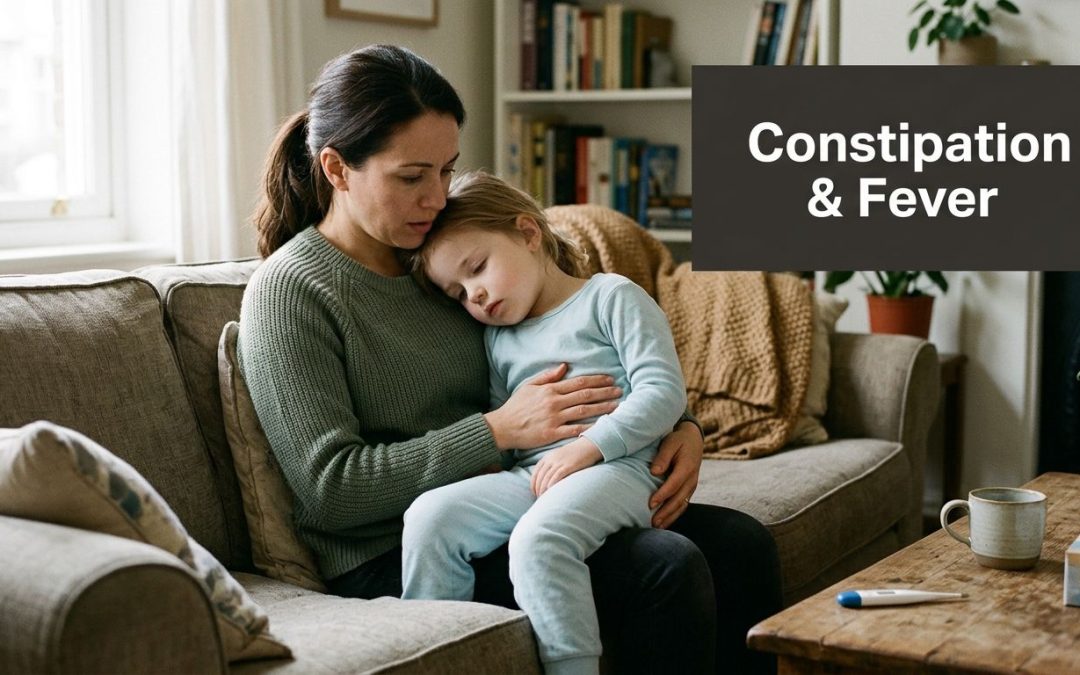
Your child hasn't pooped in days. Then they feel warm, look tired, and the thermometer confirms a fever. A lot of parents freeze in that moment because the symptom pair feels contradictory. Is this just constipation getting worse, or is something else going on?
That worry makes sense. Constipation is common. Fever is common. Seeing them together feels different, especially when your child is too young, too uncomfortable, or too overwhelmed to explain what hurts.
The reassuring part is that this pattern has a clear medical meaning. Constipation itself isn't the direct cause of fever. The more important question is what underlying problem could be triggering both at the same time. When you understand that shift, the next steps become much clearer.
The Worrying Moment Constipation Comes with a Fever
It often starts in a very ordinary way. A parent notices their child is straining, passing small hard stools, or skipping bowel movements. Then bedtime comes, and the child is flushed, clingy, or suddenly less active than usual. Now there are two problems, not one, and the internet answers rarely calm anyone down.
Parents tell me this combination is confusing because constipation usually sounds like a routine issue. Fever sounds like infection. When those two things show up together, it's easy to wonder whether the backed-up stool is somehow “causing” the temperature. That's a reasonable thought. It just isn't how the body usually works.
Fever is a body-wide signal. It usually means the immune system is responding to infection, inflammation, or another deeper stressor. Constipation is more often a gut movement problem, which can involve hydration, diet, stool withholding, pain, medication effects, or nervous system regulation of the bowel.
When constipation and fever show up together, the body is often pointing to a shared root problem, not a simple one-symptom-causes-the-other story.
This matters even more in children who don't describe symptoms clearly. A child with sensory sensitivities, autism, ADHD, or delayed communication may show distress through behavior long before they can point to a spot in the belly and say what feels wrong. In those moments, parents need guidance that is calm but direct.
You'll also see similar worry in adults during pregnancy or after delivery, when bowel habits change and abdominal discomfort becomes easier to dismiss. If you've dealt with another symptom puzzle before, such as sorting out whether an illness is routine or needs attention, this kind of careful observation is the same skill that helps when families weigh options like natural approaches parents often consider for ear discomfort.
Unpacking the True Link Between Fever and Constipation
The simplest answer is this. Constipation does not directly cause fever. Medical consensus described in Medical News Today's review of constipation and fever states there is a “zero percent chance” that constipation is the sole cause of fever. When both symptoms happen together, clinicians look for another condition such as appendicitis, diverticulitis, or inflammatory bowel disease.

Think of it like a dashboard warning
A fever is like a dashboard light. Constipation can be another light. One warning light doesn't usually create the other. Instead, both may turn on because the body is dealing with the same underlying problem.
That shift in thinking helps parents ask better questions:
- Is there inflammation? Conditions that inflame the intestines can slow bowel movement and raise body temperature.
- Is there infection? The body may create fever while the gut becomes painful, sluggish, or blocked.
- Is there obstruction or severe backup? If stool or swelling interferes with normal bowel movement, the body may react with pain, distention, and sometimes fever.
Why this confuses so many families
Constipation can absolutely make a child miserable. It can cause belly pain, poor appetite, irritability, and stool withholding. Because those symptoms look dramatic, it's easy to assume the fever is just part of the same constipation episode.
But fever isn't a standard feature of routine functional constipation. When a child or pregnant parent has both symptoms, clinicians widen the lens. They stop asking, “How do we get the stool out?” and start asking, “What process is affecting the bowel and the whole body at once?”
A practical way to think about constipation causing fever: don't focus on blame. Focus on the body system that may be under stress.
Where the nervous system fits in
The bowel doesn't work on willpower alone. The nervous system helps regulate intestinal movement, sensation, and the coordination needed to relax and empty. When that regulation is off, constipation can become more likely. But a fever points beyond gut motility alone. It suggests the immune system has joined the picture.
That's why this symptom pair deserves attention. One part of the body may be struggling with movement and elimination. Another part may be reacting to inflammation or infection. Those systems are connected, but they aren't interchangeable.
Underlying Conditions That Trigger Both Symptoms
Once you stop asking whether constipation is “causing” the fever, the next step is looking at the kinds of conditions that can produce both. Parents don't need to diagnose these at home. But knowing the patterns helps you recognize when a routine constipation plan isn't enough.

Appendicitis and similar inflammatory problems
Appendicitis is one of the most important examples in children. Early on, it doesn't always announce itself in a textbook way. A child may seem constipated, refuse food, move carefully, or complain only vaguely about the belly. Fever can appear as the inflammation worsens.
Inflammatory bowel diseases, including Crohn's disease, can also create this pattern. In those conditions, inflammation inside the digestive tract can slow or change bowel habits while also causing fever because the immune system is activated.
Diverticulitis and bowel inflammation
Diverticulitis happens when small pouches in the colon become inflamed. That inflammation can lead to constipation, abdominal pain, and fever at the same time. While it's discussed more often in adults, it matters because it shows the core principle clearly. The fever comes from the inflammatory process, not from the stool sitting in the colon by itself.
A bowel obstruction can also connect these symptoms. If the passage of stool or gas is blocked, pressure builds, pain increases, and the body can respond with fever when inflammation or infection enters the picture.
Severe fecal impaction is different from routine constipation
Most constipation is uncomfortable but not dangerous. Severe fecal impaction is a different category. In DrOracle's clinical discussion of constipation accompanied by fever, fever may arise in severe cases because bacteria can cross a compromised intestinal lining, or because pressure causes local inflammation. That situation needs urgent medical evaluation and may require manual disimpaction rather than more home laxatives.
That distinction is important. Parents sometimes keep escalating constipation remedies when the body is signaling that the problem has moved beyond ordinary backup.
A quick comparison
| Condition | What a parent may notice | Why fever can appear |
|---|---|---|
| Appendicitis | Belly pain, reduced appetite, guarding, constipation or bowel change | Inflammation inside the body triggers fever |
| Inflammatory bowel disease | Ongoing abdominal pain, bowel changes, fatigue, sometimes bleeding | Immune activation and intestinal inflammation |
| Diverticulitis | Constipation, abdominal pain, feeling unwell | Inflamed colon tissue can cause fever |
| Bowel obstruction or severe impaction | Distended belly, pain, little stool, worsening discomfort | Pressure, inflammation, and possible infection |
If your child looks more ill than “just constipated,” trust that impression and get them assessed.
Special Guidance for Children and During Pregnancy
Children and pregnant patients deserve extra caution because the body can give mixed signals in both groups. Constipation is common in each. Fever is never something to brush off casually when it's paired with new bowel difficulty.

Why children can be harder to read
Young children don't always localize pain well. Some say their whole tummy hurts. Some stop eating. Some get quiet. Others become agitated and can't settle. A child with sensory processing differences or communication challenges may show distress through posture, sleep disruption, meltdowns, or refusal to move.
That matters because pediatric appendicitis can look deceptively vague at first. Oxford Urgent Clinic notes that 30% of pediatric appendicitis cases initially present with constipation and fever, which helps explain why families can mistake an urgent condition for a simple bowel issue.
What parents of neurologically sensitive children should watch for
When a child's nervous system processes body signals differently, early symptoms may not come out as clear words. Instead of asking only, “Did they poop?” ask broader regulation questions:
- Behavior change. Is your child suddenly unusually still, irritable, floppy, or hard to console?
- Movement pattern. Are they walking bent over, resisting being picked up, or protecting one side of the abdomen?
- Body cues. Do they grimace when the belly is touched, refuse favorite foods, or wake repeatedly from discomfort?
- Autonomic signs. Do they look pale, sweaty, flushed, or markedly more fatigued than with ordinary constipation?
The nervous system and digestive system communicate constantly. A child who is already prone to dysregulation may not show “classic” symptoms in a classic order. That's one reason parents' observations are so valuable.
Parents often notice the shift before the full symptom picture appears. That early instinct deserves respect, especially in children who can't narrate what they feel.
During pregnancy the picture gets complicated
Pregnancy slows digestion for many people. Hormonal changes, reduced movement, pressure from the growing uterus, iron-containing supplements, and changes in hydration can all contribute to constipation. That can make it tempting to assume every bowel problem in pregnancy is normal.
It isn't normal to treat fever as part of ordinary pregnancy constipation. Fever suggests a separate issue deserves attention. It may be infection, inflammation, or another medical problem that needs evaluation.
Some expectant mothers also feel uncertain because abdominal sensations are already changing. Cramping, pelvic pressure, and bowel sluggishness can blur together. That's why symptom combinations matter more than any one symptom on its own. If constipation is joined by fever, worsening pain, vomiting, or a general “something isn't right” feeling, it's time to call your obstetric provider or seek urgent care.
After delivery, bowel changes can continue, and many parents are already navigating recovery, hemorrhoids, and fear of painful bowel movements. For some, practical postpartum support like helpful guidance on managing piles after labour can make normal recovery easier to understand. But fever still belongs in a different category and shouldn't be assumed to come from constipation alone.
When to See a Doctor Immediately
This is the section where guessing should stop. If constipation comes with fever, the threshold for getting medical advice is lower than it is for constipation by itself.
For a clear benchmark, a fever above 101°F (38.3°C) with constipation warrants urgent medical evaluation, according to clinical guidance summarized by Medical News Today. That combination can point to a serious issue such as bowel obstruction or infection.

Red flags that need prompt care
- Fever over 101°F. This is a key threshold when it appears with constipation.
- Severe or worsening abdominal pain. Especially if the pain localizes, your child guards the belly, or movement makes it worse.
- Vomiting. Repeated vomiting, green vomit, or inability to keep fluids down raises concern quickly.
- Swollen or firm abdomen. A distended belly can suggest significant backup or obstruction.
- Marked lethargy or unusual behavior. If a child seems hard to wake, much less responsive, or very unlike themselves, don't wait.
- Blood in the stool. This needs medical attention, especially with pain or fever.
- No improvement with routine constipation care. If simple measures aren't helping and the child looks progressively unwell, they need assessment.
A short video can help reinforce what urgent belly symptoms can look like in real life.
What to do while you arrange care
Use the information you have. Note the temperature, last bowel movement, whether your child is passing gas, where the pain seems strongest, and whether there is vomiting. If you're calling a clinic, that timeline helps them guide you quickly.
Don't keep layering home remedies if the child also has red flags. More fiber, extra laxatives, or waiting for the next bowel movement won't fix appendicitis, obstruction, or a significant inflammatory problem.
Bottom line: if constipation is paired with fever and your child looks ill, seek medical care the same day.
Prevention and Supporting Long-Term Gut Health
After the urgent questions are addressed, it helps to zoom out. Many families want to know how to support steadier bowel function so routine constipation happens less often in the first place.
For prevention, the basics still matter. Regular hydration, age-appropriate fiber, movement, relaxed toilet posture, and a consistent bathroom routine all support healthy motility. In children, the emotional side matters too. Stool withholding after one painful bowel movement can quickly become a pattern.
Support the gut before it becomes a crisis
A child who ignores body cues, rushes through meals, or stays in a constant stress state may struggle with bowel regularity. The digestive tract responds best when the body can shift into a calmer, regulated mode. That is one reason parents hear so much about the gut-brain connection.
The nervous system helps coordinate motility, sensation, and timing. When the body is stuck in a stress response, digestion often slows. That doesn't mean every case of constipation is a nervous system problem. It does mean long-term gut support works best when families think beyond stool alone.
Don't overlook medication patterns
One often-missed clue is medication or supplement timing. Healthline's overview of constipation and fever notes emerging clinical data showing up to 18% of patients on certain antidepressants or high-dose prenatal vitamins report constipation with low-grade fever as a symptom cluster, and it's often mistaken for a viral illness.
That doesn't mean every fever after a new supplement is harmless. It means parents and pregnant patients should consider the full context:
- Recent medication changes. A new antidepressant, iron supplement, or prenatal vitamin may matter.
- Timing of symptoms. Did constipation and low-grade fever start after the medication changed?
- Whole-body response. Are there signs of illness, or is the pattern more consistent with a side effect that needs review by the prescribing clinician?
A steadier nervous system often supports a steadier gut
Families interested in long-term regulation often look for ways to calm the body's stress response and improve communication between the brain and the digestive tract. Practices that encourage relaxation, breathing, sleep consistency, movement, and healthy vagal tone can be part of that picture. If you'd like to understand that connection better, this guide on ways to stimulate the vagus nerve naturally gives a helpful overview.
The key distinction is simple. Prevention supports routine constipation. It does not replace medical evaluation when fever is present. If you're worried about constipation causing fever, treat the fever as a sign to look deeper.
If you're looking for family-centered support that considers how digestion, regulation, and the nervous system work together, First Steps Chiropractic offers pediatric, prenatal, and family care focused on helping the body function with better balance and resilience.