
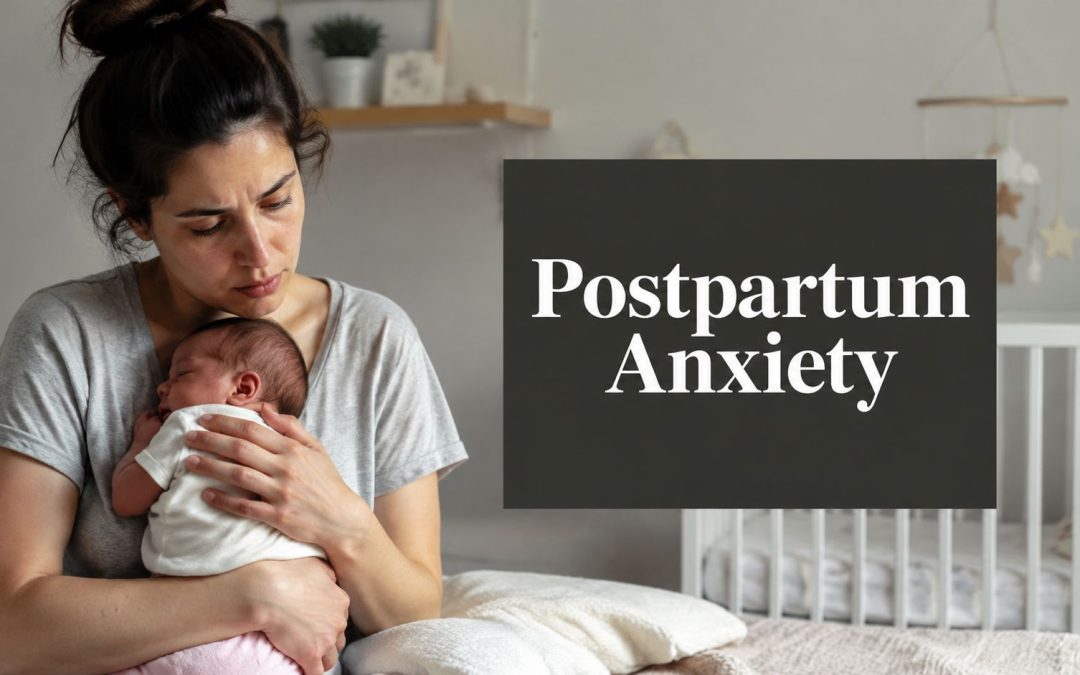
At 3 a.m., the house is quiet, the baby is finally asleep, and your body still won't settle. You stare at the monitor, listen for every tiny sound, and your mind keeps offering the same worst-case story, even though nothing is wrong in this exact moment. From the outside, it can look like ordinary new-parent caution. On the inside, it feels like your brain has stuck the alarm button in the on position.
That is the experience many parents are trying to name when they search for what is postpartum anxiety. It's not a character flaw, and it's not a sign that you're doing motherhood wrong. It's a real mental and physical state that can change how you think, sleep, bond, and move through the day. And because it often gets mistaken for normal exhaustion or folded into postpartum depression, many people don't realize what they're dealing with until the fear has been running their whole day for weeks.
A New Mother's Thoughts That Will Not Slow Down
She's rocked the baby, checked the diaper, checked the temperature, checked the monitor again, and still cannot stop thinking about what she might be missing. Her partner says the baby looks peaceful. Her mother says she should rest. From the outside, everything seems fine. Inside, her chest feels tight, her thoughts are racing, and every quiet moment turns into a new worry.
That gap between what other people see and what the mother feels is one reason postpartum anxiety is often missed. New parenthood does bring alertness. You notice every cry, every pause, every tiny change. But when worry stops rising and falling with the moment and starts staying in the background all day, it begins to shape sleep, attention, and even the simplest tasks.
A helpful rule of thumb: ordinary new-parent worry tends to come and go with the situation. Postpartum anxiety tends to linger, grow louder, and spill into sleep, focus, and daily functioning.
That distinction matters because many mothers hear, “all new moms worry,” and then assume they should just tough it out. Once the pattern is named, the question changes. The focus moves from self-blame to support, including support for the body's stress response, which can stay on high alert long after the baby is fed and settled.
A lot of people first notice it at night, when the house gets still and the thoughts get loud. Others notice it when they cannot leave the baby with anyone, cannot relax during feedings, or keep replaying a birth or hospital experience. For some, it feels like a mind that will not stop scanning for danger. For others, it shows up as a body that never fully lets go, even in calm moments.
What Postpartum Anxiety Is and How It Differs From Postpartum Depression

Postpartum anxiety is persistent, hard-to-control worry after childbirth. It can feel like your mind is stuck on alert, even when nothing is happening in front of you. Cleveland Clinic describes it as severe anxiety after having a baby or becoming a parent, with a constant sense of danger that is difficult to switch off (Cleveland Clinic). It can begin any time in the first year after birth, which is one reason people may not immediately connect it to the postpartum period.
A simple way to separate it from postpartum depression is to look at the emotional center of each condition. Anxiety tends to revolve around alarm, fear, and constant what if thinking. Depression more often shows up as sadness, numbness, fatigue, and losing interest in things that used to feel meaningful. Both can affect sleep, concentration, and energy, so the surface picture can look similar even when the internal experience is different.
That difference matters because it changes how people interpret what they are feeling. If a mother feels panicky, hyperaware, and unable to settle, but only hears the term “postpartum depression,” she may assume her symptoms do not fit. The reverse can happen too. Someone who feels flat and disconnected may assume it is only exhaustion or the stress of adjusting to a baby, when the emotional shutdown points somewhere else.
Postpartum anxiety and postpartum depression can overlap, but they do not feel identical. One often centers on threat-scanning, the other on shutdown or loss of pleasure.
This overlap is one reason postpartum anxiety is easy to miss. Symptoms can sit right beside each other, and one parent may feel both fear and emotional heaviness at the same time. In a population-based study, 35% of postpartum women who reported anxiety symptoms also reported depressive symptoms (Cambridge systematic review and meta-analysis). A pattern like that helps explain why parents often feel unsure about what is happening.
The safest frame is not to force symptoms into one box. It is to recognize that ongoing distress after birth deserves attention, even when the pattern does not match the simple version people expect. That is also why support sometimes needs to address both the emotional experience and the body's stress response, especially when the nervous system stays on guard long after the baby is settled.
How Common Postpartum Anxiety Really Is

A 2025 systematic review found that 15.0% of women reported postnatal anxiety symptoms from 1 to 24 weeks after birth, with rates of 17.8% in the first 1 to 4 weeks, 14.9% at 5 to 12 weeks, and 14.8% after 24 weeks postpartum across 14 to 39 studies and more than 145,000 participants (Cambridge systematic review and meta-analysis). Those numbers matter because they show postpartum anxiety is common, and it does not vanish once the newborn stage settles into a routine.
The same review reported that 18.0% of 4,451 postpartum women had anxiety symptoms, and 35% of those women also had depressive symptoms. That overlap helps explain why the condition is often missed. A parent may be focused on fear, racing thoughts, or constant checking, while also feeling low, numb, or overwhelmed, so the picture can look mixed rather than textbook.
A large U.S. claims-based study adds a different lens. Among 1,469,121 commercially insured people without prior prenatal mental health disorders, 84,984 were diagnosed with new-onset postpartum anxiety within 12 months of childbirth, a prevalence of 5.8%. The same study found 9,490 diagnoses in the first month after delivery, and diagnoses increased four-fold from 2008 to 2021 (claims-based study).
Those numbers are not meant to compete with each other. They measure different things. Symptom surveys usually capture more parents because they ask how someone is feeling, while diagnosis counts depend on screening, naming the problem, accessing care, and having it documented in the chart. A lower diagnosis rate does not mean the condition is rare, it often means it is easier to miss in real life than on paper.
Earlier work has estimated that about 8.5% of postpartum mothers experience one or more anxiety disorders, while other reviews place symptoms in the 15% to 20% range. That range reflects differences in definitions, timing, and how anxiety was measured. For a parent who feels trapped in constant worry, the exact percentage matters less than the larger point, postpartum anxiety affects a substantial number of new mothers, and many cases never get labeled clearly.
Because the body can stay in a high-alert state long after birth, some parents also notice symptoms that seem physical first, such as a racing heart, tension, or trouble settling. A closer look at HPA axis dysfunction symptoms can help explain why stress can feel so hard to switch off once the nervous system has been pushed past its usual balance.
What Drives Postpartum Anxiety in the Body and Mind
After birth, the nervous system can stay on high alert, almost like a smoke detector with the sensitivity turned up too far. It is meant to help you notice danger, but ordinary baby sounds, interrupted sleep, and the uncertainty of early parenting can all register as if they need an immediate response. The alarm is real. It is just reacting to far more than the situation requires.
Several forces can raise that alarm at the same time. Clinical sources describe postpartum anxiety as multifactorial, which means abrupt hormonal withdrawal after birth, sleep deprivation, psychosocial stressors, and changes in brain and body regulation can interact rather than having one single cause (Cleveland Clinic). After delivery, the sharp drop in estrogen, progesterone, and allopregnanolone can affect serotonin and GABA systems, the pathways that help the brain settle fear and tension.
Sleep loss adds another layer. This is not only about feeling worn out. Sleep is one of the ways the brain restores balance, so when it is broken night after night, the body stays more alert, more reactive, and less able to recover from small stressors. Put hormone shifts beside the demands of feeding, healing, and constant responsibility, and the whole system can begin to feel stuck in a higher gear than it can comfortably hold.
The emotional load matters too. Reviews report higher postpartum anxiety in people with prior anxiety or depression, antenatal anxiety, traumatic or stressful birth experiences, low social support, and poor coping resources (review on risk factors). One review noted that women with PTSD may be about twice as likely to develop postpartum anxiety (review on risk factors).
Sometimes the body gives the first clue. A clenched jaw, a racing heart, stomach upset, restless sleep, or feeling keyed up for no clear reason can all reflect a stress system that has not turned down after birth. A closer look at HPA axis dysfunction symptoms can help connect those physical signs to the body's stress regulation system.
The body does not need one huge trauma to become dysregulated. Sometimes it is the buildup of smaller stressors, poor sleep, and old vulnerability patterns that keeps the nervous system braced.
That is one reason postpartum anxiety is often missed. A parent may look exhausted, tearful, or irritable, and the symptoms can be mistaken for normal adjustment, postpartum depression, or being a worried new mother. The overlap with postpartum depression can blur the picture further, because both conditions can affect sleep, concentration, appetite, and mood. The difference is often in the quality of the distress, where anxiety tends to center on fear, dread, intrusive worries, and a body that will not settle.
Understanding this pattern also leaves room for recovery strategies that work on more than one level. Conventional care remains the foundation, and gentle support that helps the nervous system settle, including chiropractic care focused on regulation rather than force, may complement that care for some families.
Symptoms New Mothers Notice and How Anxiety Shows Up in Parenting

The first signs are often layered, and they do not always look dramatic from the outside. Emotionally, a mother may feel constant dread, irritability, or the sense that something bad is about to happen. Cognitively, she may notice racing thoughts, worst-case scenarios, and intrusive images or worries about harm coming to the baby. Cleveland Clinic describes examples such as staying up all night because of fear that the baby will stop breathing, or feeling terrified to leave the baby with a trusted adult.
Physical symptoms matter just as much. Restlessness, shortness of breath, a racing heart, nausea, trouble concentrating, and insomnia can all be part of the picture. When a mother says, “I know the baby is asleep, but my body still feels like it's bracing for something,” that is a physiological stress response, not exaggeration.
How it can change daily parenting
The behavioral side often looks like hypervigilance. Repeatedly checking the baby's breathing, avoiding outings, staying close to the baby at all times, or asking for reassurance over and over can become part of the day. From the outside, these habits may look like overprotectiveness. Inside, they usually come from fear.
Anxiety can also make it hard to enjoy feeding, play, or rest because the mind keeps scanning for problems. Some parents feel guilty for not relaxing. Others feel disconnected from partners because their nervous system is locked onto keeping watch, the same way a smoke alarm keeps sounding long after the kitchen is safe.
That is one reason postpartum anxiety is often missed. A parent may look exhausted, tearful, or irritable, and the symptoms can be mistaken for normal adjustment, postpartum depression, or being a worried new mother. The overlap with postpartum depression can blur the picture further, because both conditions can affect sleep, concentration, appetite, and mood. The difference is often in the quality of the distress, where anxiety tends to center on fear, dread, intrusive worries, and a body that will not settle.
Unmet practical needs can intensify that stress. Research on postpartum mental health help-seeking found that long wait lists, difficult phone systems, early discharge, weak referral protocols, and rural workforce shortages can get in the way of care. The same work also found that unmet social needs, like housing, food, transportation, and childcare instability, were linked with higher anxiety screening scores (help-seeking and unmet needs study). In daily life, that means anxiety does not sit apart from the rest of motherhood. It can be amplified by the pressure already around it.
If your anxiety gets louder when your life feels less supported, that does not make it imaginary. It means context matters.
Evidence-Based Diagnosis and Treatment Options
There isn't a single lab test for postpartum anxiety. Clinicians usually begin with a conversation about what you are feeling, when it started, and how it is affecting sleep, bonding, and daily tasks. Screening tools like the GAD-7 and parts of the Edinburgh Postnatal Depression Scale can help flag anxiety symptoms, but they are only part of the picture and do not replace a full clinical evaluation.
| Comparing Postpartum Anxiety Treatment Options | What It Involves | When It Fits Best | Key Consideration |
|---|---|---|---|
| Therapy | Cognitive-behavioral therapy, interpersonal therapy, or other talk therapies adapted for the postpartum period | When worry, intrusive thoughts, or avoidance are affecting daily life | Works best when the plan is customized to your specific triggers and routines |
| Medication | SSRIs or SNRIs prescribed by a clinician familiar with perinatal care | When symptoms are persistent, severe, or therapy alone isn't enough | Shared decision-making matters, especially if you're breastfeeding |
| Peer support | Support groups, postpartum mental health communities, or trusted peer connection | When isolation, shame, or fear of judgment are making symptoms worse | Support helps most when it's specific and consistent, not generic reassurance |
| Self-care strategies | Sleep support, gentle movement, nutrition, and practical help at home | When symptoms are milder or alongside other treatment | Self-care is supportive, but it's rarely enough on its own for severe anxiety |
Therapy is often the most straightforward first step. Cognitive-behavioral therapy can help you notice catastrophic thinking and replace it with more realistic responses, while interpersonal therapy can address identity shifts and relationship strain in the postpartum period. Medication can also be part of care, especially when anxiety is severe or paired with depression. Cleveland Clinic notes that treatment may include behavioral therapy or medication, and that using the two together can be more effective than either alone (Cleveland Clinic).
A few practical supports can make a meaningful difference too. Gentle movement, better sleep protection, and structured help from family or friends can lower the daily load. Postpartum support groups can also reduce the isolation that makes anxious thinking feel even louder.
Care is often harder to access than it should be. Research on postpartum help-seeking describes long wait lists, confusing phone systems, weak referral pathways, and rural shortages as real barriers (help-seeking and unmet needs study). That is why a plan has to fit your actual life, not an ideal one. If you're breastfeeding, pregnant again, or taking other medications, treatment choices need to be coordinated with a qualified clinician who knows perinatal mental health.
How Nervous System Regulation and Gentle Chiropractic Support Recovery
Postpartum anxiety often settles into a body that cannot seem to downshift. The heart rate stays high, the shoulders stay tight, and the brain keeps reading ordinary baby cues as danger. Nervous system regulation helps the body relearn what safety feels like, so the alarm system does not stay switched on all day.
Slow breathing, co-regulation with the baby, time outdoors, and restorative sleep all support that shift. Body-based care can also help by easing physical tension and making it easier to notice stress signals before they build. If you want a practical explanation of that connection, chiropractic and the nervous system is a useful place to start.
Gentle chiropractic care may be one complementary part of support for some families, especially when muscle tension, poor sleep, and a chronically activated stress response are part of the picture. At First Steps Chiropractic in Hayden, Idaho, care is neurologically focused and uses gentle techniques like Torque Release Technique within a broader family approach. That kind of care does not replace therapy or medical treatment, but it can fit alongside them as part of a recovery plan that pays attention to the nervous system.
The goal is not to force calm. It is to lower the body's baseline stress enough that calm becomes more available.
When the body feels less braced, sleep can feel a little easier, breathing can feel less restricted, and the coping tools a therapist teaches may be easier to use. That matters because treatment tends to work better when the nervous system is not fighting every attempt at recovery.
Practical Coping Strategies and When to Seek Urgent Help

Start with the smallest things that help your body come down one notch. 5-4-3-2-1 grounding, box breathing, and a 15-minute worry window can interrupt spiraling thoughts long enough for your nervous system to reset. If sleep is the sharpest trigger, protect the first block of rest you can get, even if that means letting someone else handle one feeding or one chore.
A short list can be easier to follow than a big wellness plan.
- Ground your senses: Name five things you see, four you touch, three you hear, two you smell, and one you taste.
- Slow the exhale: Breathe out longer than you breathe in, which helps the body shift away from fight-or-flight.
- Contain worry: Set one brief daily window for anxious thoughts, then write them down instead of carrying them all day.
- Accept concrete help: Ask for one task, not “whatever you want to do.” People help more easily when the request is specific.
If you want a body-based reset strategy, this guide on how to calm an overactive nervous system can give you simple next steps that fit real life. You do not need to fix everything tonight. You need one or two actions that help your system feel less alone.
Urgent help is needed if you feel unsafe, if you have thoughts of harming yourself or your baby, if you can't stop crying for hours, or if panic feels unmanageable. Call 988 in the U.S., go to the nearest emergency department, or call emergency services right away if there's immediate danger. Postpartum Support International and the National Maternal Mental Health Hotline are also reputable places to start when you need support and guidance.
If you're trying to understand what your body has been doing since birth, First Steps Chiropractic offers neurologically focused family care that can be part of a broader support plan for nervous system regulation. If you're ready to talk with a team that works with families, you can visit First Steps Chiropractic and ask what a gentle, whole-family approach could look like for you.