A lot of parents land here the same way. It's late, their child woke up crying, one hand is pressed against the ear, and the questions start immediately. Is this an ear infection? Is there anything natural I can do right now? What's safe, and what could make this worse?
That urgency is real. Ear pain can ramp up fast, especially at night when lying down increases pressure. The hard part is that many articles on ear infection natural remedies mix together comfort measures, prevention ideas, and risky home treatments as if they all belong in the same category.
They don't.
Some remedies help with pain. A few natural approaches have limited but real clinical support. Many popular options are mostly tradition, not proven treatment. And some should be avoided altogether if there's any chance the eardrum is irritated or perforated.
What helps most is a simple framework. Use safe home care for immediate relief. Treat anything placed in the ear with caution. Know the red flags that mean it's time for medical care. Then, once the immediate problem settles, work on prevention and better ear drainage so your child is less likely to end up in the same cycle again.
Navigating Ear Pain With Confidence
When a child says, “My ear hurts,” most parents want the same thing. Relief that's gentle, safe, and effective.
That instinct makes sense. Many ear infections improve with time and supportive care, especially when the main issue is pressure and inflammation. But “natural” doesn't automatically mean harmless. A warm washcloth over the ear is very different from dripping oils into an ear canal when you don't yet know whether the problem is in the middle ear or the outer ear.
What parents usually need first
In practice, the first decision isn't “Which remedy is strongest?” It's this:
- Is this for comfort or treatment? Some options soothe pain but don't treat the infection itself.
- Is this middle ear or outer ear? That changes what's useful and what may be unsafe.
- Are there warning signs? Drainage, worsening symptoms, or severe illness change the plan quickly.
Practical rule: If you're not sure what type of ear problem your child has, start with comfort measures outside the ear, not liquids inside it.
That approach keeps things simple and lowers the risk of making a painful ear worse.
A safer way to think about natural care
The most helpful ear infection natural remedies usually fall into two buckets. The first bucket is symptom support, such as warmth, hydration, and age-appropriate pain relief. The second is prevention support, such as improving the conditions that reduce recurrence over time.
The bucket that deserves the most skepticism is the one full of internet favorites that promise to “clear infection fast.” Parents deserve better than vague advice. They need to know which remedies may help discomfort, which have some evidence behind them, and which shouldn't be used unless a clinician has confirmed the ear is safe for drops.
What Is an Ear Infection Really
The phrase “ear infection” sounds simple, but it often describes two very different problems.
A middle ear infection happens behind the eardrum. An outer ear infection, often called swimmer's ear, happens in the ear canal itself. That difference matters because a remedy that touches the ear canal may have no effect on a problem trapped behind the eardrum, and it may be risky if the eardrum isn't intact.

Middle ear infection
Think of the Eustachian tube as a small drain that connects the middle ear to the back of the throat. When that drain is working well, it helps balance pressure and move fluid out. When it becomes swollen or blocked during a cold, congestion, or irritation, fluid can get trapped behind the eardrum.
That trapped fluid creates pressure. It can also create a setting where infection develops.
Common clues parents notice include:
- Deep ear pain that may worsen at night
- Fever or fussiness
- Muffled hearing
- Pain after a cold or congestion
- Occasional drainage, especially if the eardrum has ruptured
Outer ear infection
Swimmer's ear is different. The problem is in the ear canal, not behind the eardrum. The canal often becomes irritated after trapped moisture, scratching, or local skin breakdown.
This pattern tends to look different:
- Pain when the outer ear is touched or pulled
- Itching
- Visible redness or swelling near the canal
- Discharge from the canal
- Pain with chewing or pressure on the outer ear
Many popular online remedy lists fail to distinguish between outer and middle ear infections and don't adequately explain the risks of using drops if the eardrum might be perforated, a concern highlighted in Mayo Clinic's discussion of home remedies for middle ear infections.
Why this distinction changes home care
Here's the key safety point. If the pain is coming from the middle ear, putting oil or drops into the canal may not reach the source of the problem at all. If the eardrum is perforated, those same drops may irritate the ear or create new problems.
A simple comparison helps:
| Condition | Where it is | What parents often notice | Home care mindset |
|---|---|---|---|
| Middle ear infection | Behind the eardrum | Pressure, fever, pain after congestion, muffled hearing | Focus on pain relief and monitoring |
| Outer ear infection | Ear canal | Pain with touching ear, itching, redness, drainage | Avoid random home mixtures and get proper guidance on drops |
Once parents understand the anatomy, a lot of the confusion around natural remedies starts to clear.
Safe Home Care for Immediate Pain Relief
If your child has ear pain right now, the goal is comfort first.
The most evidence-based nonprescription approach for acute ear infection pain is systemic pain relief, not herbal drops or kitchen remedies. HealthPartners notes that acetaminophen or ibuprofen are the most evidence-based nonprescription options for ear infection pain, and warm compresses are commonly used as added comfort support.
What you can do tonight
Start with simple steps that don't put anything into the ear.
- Use age-appropriate pain relief: Acetaminophen or ibuprofen can reduce ear pain, pressure, and fever when used with correct pediatric dosing. Follow the label carefully or your child's clinician's instructions.
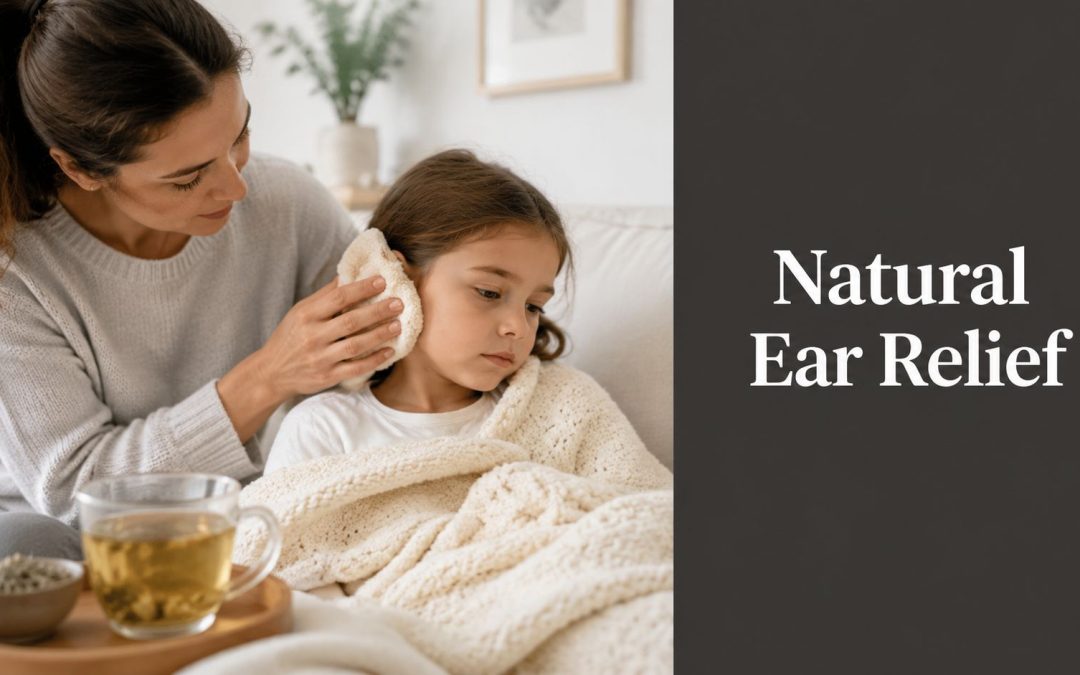
- Apply a warm compress: A warm, not hot, washcloth over the painful ear can be soothing.
- Keep the child upright when possible: Sitting up or resting at an incline may reduce pressure compared with lying flat.
- Encourage fluids: Hydration can support overall comfort, especially when congestion is part of the picture.
What these steps do, and what they don't
These measures can help a child feel better. That matters. Better sleep, less crying, and lower pain can turn a frightening night into a manageable one.
But they are supportive care, not a guarantee that the infection itself is resolved.
The safest first move for an unknown ear problem is to relieve pain from the outside while you watch the pattern of symptoms.
A quick safe versus caution guide
Generally safe for comfort
- Warm compresses
- Rest and hydration
- Acetaminophen or ibuprofen, when age-appropriate and dosed correctly
- Gentle positioning for comfort
Use caution or avoid without guidance
- Any drops or oils in a draining ear
- Anything placed in the ear when you suspect a ruptured eardrum
- Cotton swabs or attempts to “clean out” the ear
- Strong essential oils in or near the ear canal
That distinction matters because many families search for a cure when what they need in the first hours is safe pain control and a clear sense of what not to do.
Exploring Natural Remedies With Caution
Most natural remedy lists blur together remedies with very different levels of evidence. A better approach is to sort them by what they may realistically offer: some evidence for pain relief, traditional comfort use, or too much risk for routine home use.

Remedies with some clinical support
The most notable example is a specific herbal ear drop formula studied in children with acute otitis media. In a 2001 randomized controlled trial summarized in PubMed Central, a naturopathic ear drop containing garlic and mullein produced significant pain reduction, with 79.3% of the treatment group improving within 24 hours.
That finding is worth knowing, but it needs context. It does not mean every garlic oil or herbal drop sold online is equivalent to that studied preparation. It also doesn't erase the safety issue of putting drops into an ear when the eardrum may be perforated.
Remedies that may soothe but aren't reliable infection treatment
A lot of traditional ear infection natural remedies fit here.
- Warm compresses: Useful for comfort. They don't treat the underlying infection.
- Garlic-infused oil: Often discussed because garlic has antimicrobial properties. The practical problem is that homemade or over-the-counter oils vary widely, and irritation is possible.
- Onion packs or poultices: Some families use them for warmth and comfort. The evidence for actual infection treatment is weak.
- Steam or humidified air: These may help when nasal congestion is part of the problem, but they don't directly treat a middle ear infection.
If your child's broader pattern includes a lot of inflammatory congestion, some families also explore lifestyle steps that support recovery, such as sleep, hydration, and anti-inflammatory habits. A plain-language overview of that broader idea is covered in this discussion of ways to reduce inflammation.
Remedies that deserve extra caution
Some remedies are popular mostly because they sound natural, not because they're low risk.
| Remedy | Possible upside | Main concern |
|---|---|---|
| Tea tree oil | Traditionally valued for antiseptic properties | Can irritate tissue. Should never be used undiluted in the ear |
| Hydrogen peroxide | Sometimes used for cleaning wax or moisture issues | Can irritate the canal and doesn't address a middle ear infection |
| Vinegar mixtures | Sometimes used for outer-ear moisture problems | Wrong remedy for middle ear pain and risky if the eardrum may be open |
| Olive oil or random household oils | May feel soothing to some people | Can delay proper care and may be unsafe in a draining ear |
If fluid is coming from the ear, or your child had a sudden pop followed by less pain and drainage, stop using drops and get the ear evaluated.
The honest bottom line
Natural remedies can be helpful, but they are not interchangeable. A warm compress for comfort has a very different evidence and safety profile than a homemade oil dropped into the ear canal. The safest path is to reserve in-ear remedies for situations where you know what type of ear problem you're dealing with and the eardrum is intact.
Red Flags When to See a Doctor Immediately
Most ear pain isn't an emergency. Some situations are.
Parents do best when they have a short list of symptoms that mean “don't wait this out.” Ear infections can sometimes lead to complications, and severe pain can also point to a problem that isn't a routine middle ear infection at all.
This checklist is a good line in the sand:

Get prompt medical care if you notice
- High fever, especially a fever of 102°F (39°C) or higher
- Severe or rapidly worsening ear pain
- Fluid, pus, or blood coming from the ear
- A stiff neck, especially with fever
- Facial weakness or drooping
- New hearing loss or vertigo
- Swelling or redness behind the ear
A short visual walkthrough can also help parents recognize when ear symptoms need faster attention:
Why these symptoms matter
Drainage can mean the eardrum has ruptured. Swelling behind the ear can signal deeper infection. Facial weakness suggests nearby nerve involvement. A stiff neck with fever deserves urgent evaluation because it points beyond a simple earache.
Children should also be assessed if the pain isn't improving, if they look unusually ill, or if your instincts tell you something is off. Parents often notice the difference between a tired, uncomfortable child and one who is not acting like themselves.
This is one of those situations where being cautious is appropriate. If symptoms are escalating, don't keep trialing home remedies.
The Chiropractic Approach to Ear Infection Prevention
A common pattern shows up after the fever is gone and the pain settles. The child feels better for a while, then the ear pressure, congestion, or another infection returns. At that point, the question shifts from relief to prevention.
For many children, prevention starts with function. The middle ear needs to ventilate and drain well through the Eustachian tube. If that tube is swollen, compressed by surrounding tension, or not opening efficiently, fluid can linger behind the eardrum. Fluid does not always mean infection, but it does create a setting where pressure, discomfort, and repeat inflammation are more likely.
A neurologically focused view
Pediatric chiropractic care approaches that pattern by looking at the nervous system and the mechanics around the upper neck, jaw, and airway. In practice, I think of this as a support strategy, not an infection treatment. The goal is to improve how the body regulates muscle tone, posture, and motion in the areas that influence ear pressure and drainage.
That distinction matters.
A gentle adjustment does not kill bacteria or replace medical care for acute otitis media. What it may do, in the right child, is reduce mechanical restriction and calm excessive tension around the upper cervical region. That can support more normal movement and communication between the nervous system and the tissues involved in swallowing, jaw motion, and Eustachian tube function.

Safe vs. caution in chiropractic care
Here is the practical framework I want parents to use.
Generally safer: gentle, pediatric-specific care used between infections or as part of a broader plan for recurrent ear problems, especially when a child also has neck tension, feeding difficulty, persistent congestion, mouth breathing, or asymmetrical posture.
Use caution: any clinic that claims to cure ear infections, suggests chiropractic should replace urgent medical evaluation, or uses forceful techniques on infants and young children.
Technique and training matter. Pediatric care should be light, age-appropriate, and based on a clear exam. For parents who want a better sense of what that looks like, this overview of chiropractic care for babies explains how care is typically adapted for infants and young children.
First Steps Chiropractic describes its work as neurologically focused pediatric chiropractic care using gentle techniques and individualized assessment.
Prevention is usually multi-factorial
Chiropractic care fits best inside a larger prevention plan. A child with repeat ear infections often benefits from looking at airway health, congestion patterns, sleep quality, feeding history, posture, and family routines that affect immune resilience.
Several supportive measures can matter:
- Breastfeeding support: Exclusive breastfeeding in early infancy has been associated with lower recurrent ear infection risk in this peer-reviewed review on acute otitis media prevention.
- Airway and congestion support: Children who stay stuffy, mouth-breathe, or snore often need a broader look at nasal and throat function.
- Daily habits: Rest, hydration, smoke avoidance, and reducing repeated upper-airway irritation can lower the burden on the ears.
- Selective prevention tools: Some families discuss xylitol or other non-drug options with their clinician when infections keep recurring.
The most useful way to view chiropractic care is as one piece of prevention. It may help a child who tends to get stuck in a cycle of tension, congestion, pressure, and poor drainage. It should always be paired with sound medical judgment, especially if a child has significant pain, fever, drainage, or hearing changes.
Building a Resilient Family Your Action Plan
Parents usually need a plan they can remember when everyone is tired.
The simplest version looks like this. First, calm the pain safely. Second, be skeptical of anything dropped into the ear unless you're confident it's appropriate. Third, act quickly when red flags appear. Then, after the immediate episode passes, work on prevention instead of waiting for the next bad night.
A practical family framework
Start with comfort
Use warmth, rest, hydration, and appropriate pain relief. These measures help your child cope while you watch the pattern.
Separate comfort from cure
Many ear infection natural remedies are better at soothing than treating. That doesn't make them useless. It just means you should use them appropriately.
Protect the ear
Avoid putting oils, peroxide, vinegar, or essential oils into an ear that may have drainage, rupture, or an uncertain diagnosis.
Think long-term
If your child gets repeated ear issues, prevention matters more than another round of internet remedies. Sleep, nutrition, airway health, feeding history, and drainage support all belong in that conversation.
Prevention that has some support
For recurrent episodes, one natural preventive option with fair evidence is xylitol. A peer-reviewed review found fair evidence that daily xylitol can reduce the incidence of acute otitis media in healthy children by interfering with bacterial growth, as described in this review of prevention approaches for acute otitis media. That kind of support strategy belongs in a broader plan, not as a stand-alone promise.
The most useful mindset is this: don't judge a remedy by how natural it sounds. Judge it by what problem it's meant to solve, how safe it is for that specific ear, and whether the situation still looks like something that belongs at home.
When parents understand that difference, they make calmer decisions. Usually better ones too.
If your child keeps cycling through ear pain, congestion, and recurring infections, First Steps Chiropractic offers family-centered chiropractic care in Hayden, Idaho with a neurologically focused approach for infants, children, and parents. It can be a useful next step if you want a supportive plan that looks beyond short-term symptom management and focuses on drainage, nervous system function, and long-term resilience.