Parents often start looking for health support in the quiet gaps between appointments. A child isn't sleeping well. A pregnant mom wants more natural support but isn't sure where to start. A dad keeps meaning to ask someone about posture, headaches, stress, or whether a developmental concern is worth a deeper look. Routine care matters, but many families also want a place to ask practical questions before a problem grows.
That's where community health events can make a real difference.
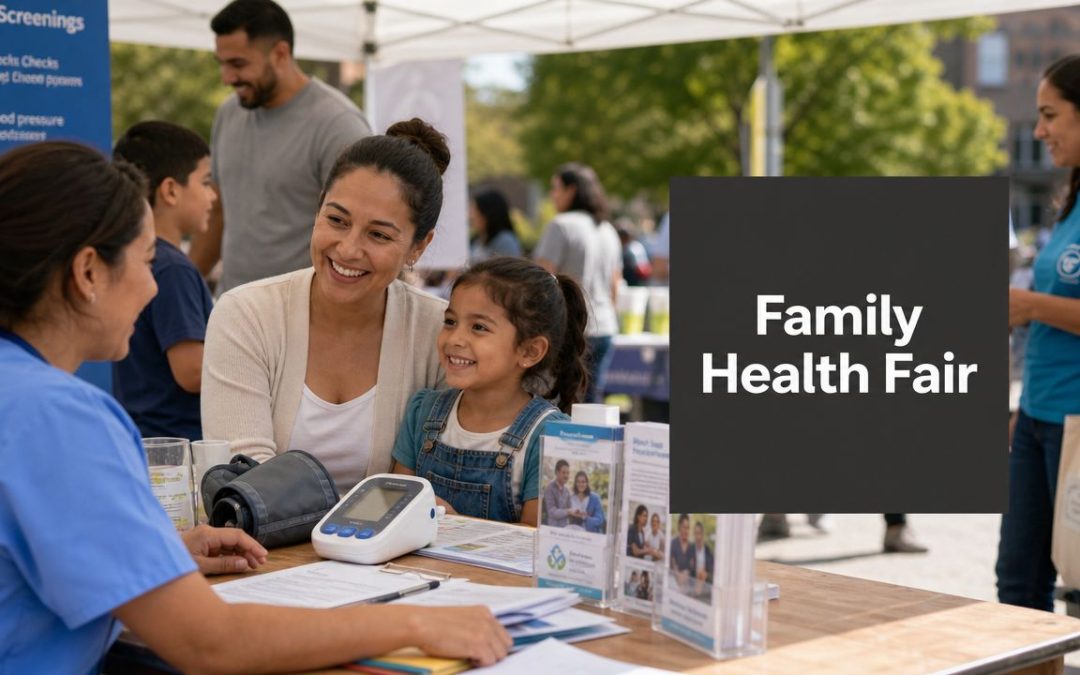
These events are usually much more approachable than the phrase sounds. They might be a school wellness night, a church health fair, a screening day at a community center, a prenatal workshop, a vaccination clinic, or an outreach event hosted in a parking lot with local providers and family resources. The best ones don't feel cold or corporate. They feel local. You meet real people, ask real questions, and leave with something useful.
That local, in-person model matters in a bigger way too. The Global Wellness Institute projects the global wellness economy will grow 7.6% annually from 2024 to 2029, reaching nearly $9.8 trillion by 2029. In the same source set, 58% of adults are more likely to trust a provider after a positive in-person interaction at a community event. That lines up with what many practitioners see every day. Families often decide to take the next step toward care only after a conversation that feels human, clear, and pressure-free.
For families, community health events can open doors. For clinics and local organizations, they can strengthen the entire neighborhood care network. Both sides matter. A healthy community doesn't come from a single office or a single event. It grows when families know where to go, providers know how to show up well, and follow-up doesn't get lost after the folding tables come down.
Introduction The Search for Community Wellness
A lot of families are looking for something more connected than a standard office visit. They want support that fits real life. That might mean finding answers about a child's sensory challenges, learning how to move better during pregnancy, getting a quick screening, or meeting local providers before making a care decision.
Community health events meet people in that exact moment.
They bring health education, screenings, conversation, and local referrals into spaces families already use. Instead of asking parents to sort through ten browser tabs and conflicting advice online, these events put trusted professionals, practical resources, and next steps in one place. For many people, that makes wellness feel possible again.
What these events look like in daily life
A good event doesn't have to be huge. Sometimes the most useful ones are small and focused. A library workshop on nervous system regulation. A school event where parents can ask about posture, sleep, and stress. A neighborhood fair where expectant mothers can meet prenatal providers and compare options face to face.
That in-person piece matters because people usually ask better questions when they feel comfortable.
Community health events work best when they feel less like a campaign and more like a conversation.
Families also tend to remember who helped them. A brief interaction at a health event can turn confusion into a plan. That might mean booking a follow-up appointment, trying a home strategy, joining a workshop, or realizing they aren't alone in what they're navigating.
Why they fit today's wellness culture
The interest in prevention and early support isn't a passing trend. It reflects a broader shift in how people think about health. Families want tools before crisis. They want access before delay. They want guidance they can use at home.
That's one reason community health events have become more common in major markets and smaller towns alike. They sit at the intersection of public health, education, and consumer wellness. They're practical, visible, and easier for many families to try than jumping straight into a formal care plan.
For local providers, that creates both an opportunity and a responsibility. If you host or join these events, you're not just promoting a service. You're helping build a local health ecosystem that families can use.
Why Community Health Events Matter
A strong community health event acts like a wellness checkup for the neighborhood. It doesn't replace clinical care, but it helps families and providers see what's happening on the ground. Who has access to care. What questions keep coming up. Which needs are being missed.

The public health value is clear. The CDC notes that community health assessments rely on data from events like screenings and fairs to identify local needs and track whether interventions are working. In practice, that means a well-run event can reveal patterns in access to care, health behaviors, and barriers families face day to day.
What families gain right away
For parents, the benefits are often immediate and practical.
- Direct access to professionals: You can ask questions without the pressure of a full appointment.
- Helpful screening opportunities: Many events offer simple entry points for concerns that otherwise get delayed.
- Local resource discovery: Families often find support they didn't know existed, from prenatal education to developmental resources.
- A better sense of fit: Meeting providers in person helps families decide who feels trustworthy and aligned.
That last point matters more than many clinics realize. Some families won't schedule care based on a website alone. They need to hear how someone explains things, whether they listen well, and whether they speak in a way that feels respectful.
What organizers learn from the event
For clinics, nonprofits, schools, and health departments, a community event is not just outreach. It's feedback.
You can learn:
| What you observe | What it tells you |
|---|---|
| Repeated questions at your table | What education the community is missing |
| Long lines at one station | Where demand is strongest |
| Low engagement in one area | What may need a different format or clearer messaging |
| Referral interest after conversations | Which services people are ready to pursue |
This is one reason integrated care conversations matter at events. When providers understand how their services connect, families get a clearer next step. That's also why many local practices benefit from a broader view of integrative healthcare solutions rather than treating outreach as a standalone marketing activity.
Practical rule: If an event only hands out flyers, it may create awareness. If it also collects useful questions, screening information, and referral intent, it starts creating community health momentum.
Trust is the real bridge
A family may forget a brochure. They usually don't forget a caring interaction.
That's why community health events matter so much. They give providers a chance to be visible, useful, and human in a setting that feels lower pressure than the clinic. For many families, trust begins there.
Exploring Different Types of Health Events
Not all community health events serve the same purpose. Some are broad and exploratory. Others are tightly focused and best used when a family already has a clear concern. Knowing the difference helps you choose wisely instead of attending every event that sounds vaguely healthy.
Here's a quick visual guide to the most common formats.

The main event types families will see
Some events are best for browsing. Others are best for action.
| Event Type | Primary Goal | Best For… | What to Expect |
|---|---|---|---|
| Health Fairs | Broad exposure to services and resources | Families exploring options | Booths, short screenings, handouts, local organizations |
| Screening Drives | Early detection around a specific issue | Adults or children with one clear concern | Focused stations, quick checks, referrals if needed |
| Fitness Challenges | Building healthier habits | Families who want accountability and movement | Group participation, tracking, encouragement |
| Educational Workshops | Deeper understanding and skill building | Parents, caregivers, expectant mothers | Teaching sessions, Q&A, practical take-home advice |
| Vaccination Clinics | Convenient preventive care access | Households needing routine immunization support | Efficient flow, paperwork, clear eligibility steps |
What each format does well
Health fairs are best when you're still figuring out what kind of support you need. They let you compare providers, ask short questions, and gather local options in one afternoon. If your family has several smaller concerns, this is often the best starting point.
Screening drives work well when there's already a specific issue on your mind. You're not there to browse. You're there to get a closer look and find out whether a formal follow-up makes sense.
A different model is the educational workshop. These events often offer the most lasting value because they teach skills, not just awareness. Families can ask detailed questions and leave with something they can apply at home that same day.
Later in the season, some organizations add movement-based programming or school-centered outreach. Those can be especially helpful for families who need convenience more than complexity.
Here's a short example of how one event format is often presented to the public:
Questions to ask before you go
A family gets more value from an event when they show up with a short list of questions.
- Ask about purpose: Is this event meant for education, screening, referral, or all three?
- Ask about age fit: Some events are ideal for toddlers, school-age kids, pregnant moms, or adults.
- Ask what happens next: If you learn something important, is there a clear referral path?
- Ask what to bring: Insurance cards, medication lists, prior records, and a notebook can all help.
Some of the best event decisions are simple. Go where the format matches your actual need, not where the flyer looks the nicest.
How to Find and Choose the Best Local Events
Good community health events are usually easy to attend and a little harder to evaluate. Families do better when they look beyond the event title and check who is behind it, what services are offered, and whether the format matches their needs.
Where to look first
Start with places that already serve the local community in a consistent way.
- County or regional public health pages: These often list screening days, vaccination events, and seasonal wellness outreach.
- Schools and PTA channels: School districts frequently share family-centered events that are practical and nearby.
- Libraries and community centers: These are excellent for workshops and health education nights.
- Hospitals and local clinics: Many post event calendars on their websites or social channels.
- Faith communities and neighborhood groups: These often host smaller, highly accessible events that families trust.
If you're a parent, keep one simple note on your phone with event names, dates, and one question you want answered. That alone makes attendance more useful.
How to judge whether an event is worth your time
A polished flyer doesn't guarantee a helpful experience. A plain one doesn't mean the event is weak. Look at the details.
Ask yourself:
- Who is sponsoring it? A credible organizer usually partners with known local institutions, providers, or community groups.
- Who will be there? If providers are listed, check whether they align with your family's needs.
- What's the actual format? A lecture, a screening day, and a health fair all ask different things from your time.
- Will you leave with a next step? Good events make the path forward obvious.
A quick parent checklist
Before attending, it helps to sort your goals into one of these categories:
| If you need… | Look for… |
|---|---|
| Basic guidance | A health fair or general family wellness event |
| A specific answer | A screening clinic or focused workshop |
| Parenting education | A class-style event with Q&A |
| Ongoing support | Events hosted by organizations that offer continuity after the day ends |
One practical sign of a worthwhile event is clarity. If the organizer can explain who it's for, what happens there, and what families should do afterward, that's a good sign. If the promotion is vague, the event may be too.
A Clinic's Checklist for Hosting a Great Event
Families notice when an event is thoughtfully run. They also notice when it isn't. Poor signage, long lines, unclear roles, and no follow-up plan can turn a good idea into a frustrating day. For clinics and community organizations, hosting well means treating the event as both a service opportunity and an operations project.

Start with one clear outcome
The first mistake many organizers make is trying to do everything at once. Education, screening, lead generation, referral building, family entertainment, and media visibility all sound good together. In practice, too many goals produce a scattered event.
Choose the primary outcome first.
- Education-first event: Build around teaching, demonstrations, and Q&A.
- Screening-first event: Focus on throughput, privacy, and referral pathways.
- Community-connection event: Highlight local partners and ease of conversation.
That single choice affects staffing, floor plan, equipment, timing, and promotion.
Build the event around access and flow
The logistics matter more than many teams expect. A public health planning guide from Broward County recommends choosing locations near public transit, ensuring adequate lighting, electrical outlets, shade, restrooms, and an emergency kit, while also staggering entry or station flow when large crowds are expected to avoid backlogs at screening and information tables, as described in the Broward County community health planning outreach event guide.
That advice is practical because it reflects what goes wrong in the field. If people can't park easily, can't find the check-in point, or stand in a congested line with tired children, participation drops. If your extension cords are insufficient or your shade plan is weak, even a clinically strong event can break down operationally.
A community health event succeeds or fails long before the first attendee arrives. It happens in the floor plan, staffing assignments, and check-in design.
Assign real roles, not vague help
Staffing should be precise. “Everyone helps with whatever” sounds collaborative, but it usually creates confusion.
A stronger setup includes:
- Check-in lead: Handles arrivals, forms, and traffic direction.
- Clinical station lead: Keeps the screening or consultation area moving.
- Runner or floater: Solves supply gaps and line bottlenecks.
- Family support person: Helps answer practical questions and guide next steps.
- Partner liaison: Coordinates with outside vendors or participating organizations.
Design for families, not just providers
Events often get planned from the provider perspective. Families experience them differently. They care about stroller space, seating, restrooms, understandable signage, and whether anyone can tell them what to do next in plain language.
That means the best events usually include:
| Operational choice | Why it matters for families |
|---|---|
| Simple map or booth layout | Reduces confusion and keeps parents from missing key stations |
| Weather backup plan | Protects continuity and lowers day-of stress |
| Vendor parking and unloading plan | Prevents setup delays that affect opening time |
| Clear exit point with next-step instructions | Turns a visit into an actual care pathway |
Promote with specificity
Generic promotion gets generic turnout. Be direct about who should attend and why. “Family wellness event” is broad. “Prenatal workshop and family resource fair” is clearer. “Children's sensory support and parent education night” is clearer still.
Short, targeted messaging usually outperforms vague language because families decide based on fit, not hype.
Ensuring a Lasting Impact Through Follow-Up
The event itself is only the opening move. If families leave with papers they never read, referrals they never schedule, or advice they don't know how to apply, the value fades quickly.
That's the weak point in many community health events. Research on health fairs often emphasizes attendance and promotion more than what happens after the screening, even though follow-up care is what turns a one-time interaction into lasting behavior change, as discussed in this review of health fair outreach and continuity gaps.
What families should do after the event
Most families benefit from a simple post-event routine.
- Review your notes the same day. Don't wait a week and try to remember who said what.
- Circle the one recommendation that matters most. If everything feels important, nothing gets done.
- Book the referral quickly if one was recommended. Delay creates drop-off.
- Add one home action. That might be a sleep routine change, hydration habit, exercise plan, or calming practice.
If your event included stress, regulation, or nervous system education, families often do better when they pick one simple daily tool rather than trying five new things at once. Something as straightforward as breathing or guided regulation work can support consistency, which is one reason many parents appreciate practical resources like these vagal tone exercises when they're trying to carry event learning into home life.
What clinics should measure after the event
Attendance matters, but it's not enough. A packed room can still produce very little health impact if no one takes the next step.
Better follow-up questions include:
- Which referrals were completed
- Which educational topics led to appointment requests
- Which partner organizations generated the strongest engagement
- Which families needed reminder contact or clearer instructions
Worth remembering: The real outcome is not how many people stopped at the table. It's how many people moved closer to the care or habit they needed.
The simplest follow-up system often works best
A clinic doesn't need a complicated process to improve continuity. It needs a consistent one.
Use a short next-step card. Send a reminder message if permission was given. Make sure someone owns follow-up. If an event offered screenings, the pathway to care should be obvious before the event even starts, not invented afterward.
That's how community health events stop being isolated moments and start becoming part of a functioning local health ecosystem.
Your Next Step Toward Family Wellness
Community health events give families something many healthcare experiences don't. A low-pressure way to learn, ask questions, and take action before a concern becomes bigger. They also give communities a practical bridge between education and care.
The strongest events do three things well. They meet people where they are. They make health information easier to use. They create a clear path after the event ends.

For families in and around Hayden, that means paying attention to the events already happening in schools, libraries, churches, neighborhood spaces, and local clinics. It also means choosing events with purpose. Go where you can ask your real questions, meet credible providers, and leave with a next step you'll follow.
A healthy community isn't built only in exam rooms. It's built in conversations, workshops, screenings, and trusted local relationships. Families who want a more connected approach to care often benefit from exploring broader ideas around holistic family wellness and then bringing those ideas into everyday routines.
If you've been waiting for the right place to begin, a local community health event may be that starting point.
If you're looking for family-centered support in Hayden, First Steps Chiropractic is a strong local resource for pediatric, prenatal, and family care. Families can explore the practice's educational content, attend a weekly workshop, or schedule a complementary consultation to take the next step with clear, personalized guidance.