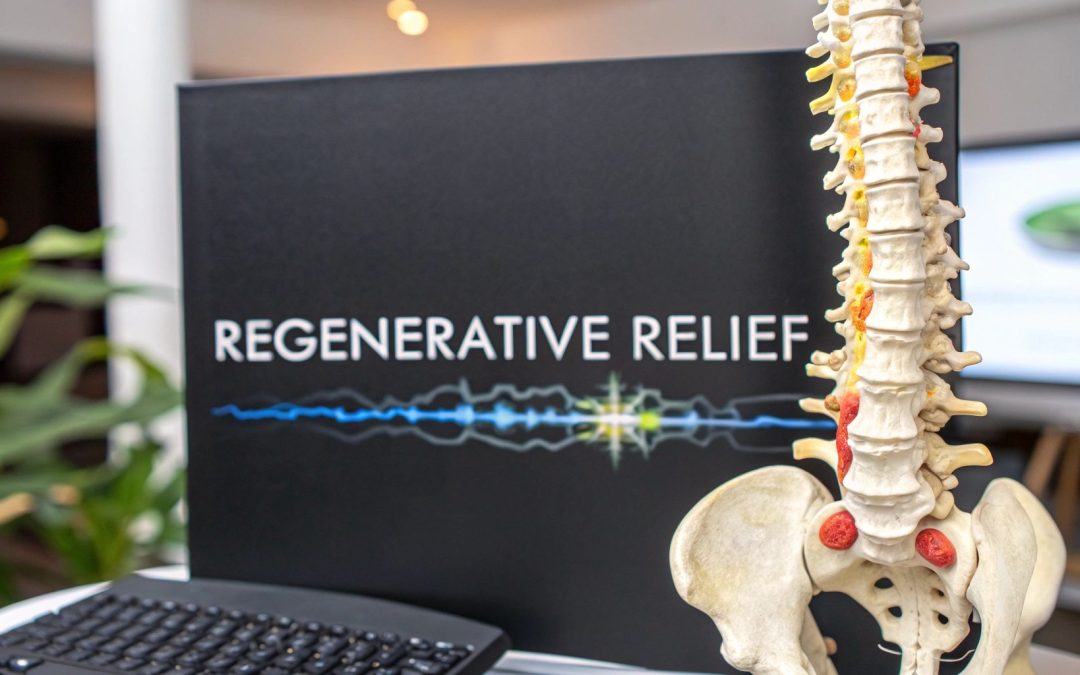
If you're stuck in a frustrating loop of temporary fixes for your chronic back pain, it’s time to consider a completely different path. Regenerative medicine for back pain isn't about masking symptoms; it's a field of medicine designed to kickstart your body's own powerful ability to heal damaged tissues. The entire goal is to repair the underlying cause of your pain, offering a real chance at lasting relief, not just another short-term patch.
Beyond Masking Symptoms: Understanding Regenerative Medicine
For decades, the standard approach to chronic back pain really only offered two options: manage the symptoms with medications or go for invasive surgery. While both have their place, they often fall short of a true solution. Painkillers can cover up the discomfort, but they do nothing to address the root problem. And surgery, of course, comes with significant risks and a long, difficult recovery.
Regenerative medicine gives us a powerful third option—one that works with your body, not just on it.
Think of your body as having its own internal construction crew. When tissues like spinal discs or ligaments get damaged, this crew gets to work. But sometimes, due to poor blood flow, chronic inflammation, or just the sheer scale of the injury, their efforts aren't enough. Regenerative therapies act like a specialized foreman, delivering a concentrated boost of resources and clear instructions directly to the job site.
The Core Principle: Cellular Repair
The fundamental idea is simple yet profound: empower the body to rebuild itself. Instead of just silencing the alarm bells (your pain signals), this approach focuses on putting out the fire that’s causing them in the first place. It accomplishes this by using your body’s own biological materials or stimulating its natural healing mechanisms.
This shift in thinking is gaining serious momentum. In 2023, the market for chronic lower back pain was valued at USD 6.7 billion and is projected to hit USD 10.0 billion by 2034. A major driver of this growth is the increasing adoption of regenerative therapies that target tissue repair for the more than 619 million people globally affected by low back pain. You can read more about this market trend on BioSpace.
A New Framework for Healing
Regenerative medicine isn't just a single treatment; it's a whole category of advanced, minimally invasive procedures. These therapies are designed to address the specific cellular damage causing your pain, whether it stems from:
- Degenerative Disc Disease: The breakdown of the natural cushions between your vertebrae.
- Soft Tissue Injuries: Damage to the ligaments, tendons, and muscles that support your spine.
- Joint Inflammation: Conditions like facet joint arthritis that lead to stiffness and chronic pain.
By addressing the problem at its source—the damaged cells and tissues—regenerative medicine opens the door to genuine, long-term recovery. It’s about restoring function, not just managing dysfunction.
In this guide, we'll walk through the specific therapies that make this possible, explaining exactly how they work to repair your body from the inside out. We'll demystify the science and give you a clear picture of what this healing journey really looks like.
Your Body's Toolkit: Core Regenerative Therapies Explained
Think of your body as an incredibly sophisticated, self-repairing machine. When you get injured, a whole cascade of events kicks off to fix the damage. But with chronic conditions, that natural repair system can get overwhelmed and just can't keep up. Regenerative therapies are all about giving your internal repair crew the precise tools and reinforcements it needs to finally get the job done right.
Let's unpack the main therapies we use for chronic back pain, cutting through the jargon to see how each one actually works. While they’re all different, they share one common goal: stimulating and supporting your body’s own healing power to fix the root cause of your pain.
Platelet-Rich Plasma (PRP) Therapy
Imagine a construction site where the workers are skilled but totally spread thin. Platelet-Rich Plasma (PRP) therapy is like bringing a highly concentrated, elite team of your body's best repair workers directly to the site of your back injury. The process is surprisingly simple and uses your own blood.
We take a small blood sample and place it in a centrifuge, a machine that spins at high speed to separate all the different components. This spinning process isolates the platelets and growth factors, creating a potent healing concentrate. This platelet-rich plasma is then carefully injected into the damaged area, whether it's a degenerated disc or an inflamed facet joint.
Think of platelets as the first responders to any injury. They don't just form clots to stop bleeding; they also release a flood of growth factors. These are powerful proteins that orchestrate the entire healing process, signaling other cells to jump into action and start rebuilding tissue.
Stem Cell Therapy
If PRP is the specialized repair crew, then stem cell therapy is like having the master blueprint and a versatile master builder all in one. Stem cells are incredible because they are "undifferentiated," which means they haven't been assigned a specific job yet. They hold the amazing potential to transform into the exact type of cell your body needs to repair itself—whether that's cartilage, ligament, or muscle tissue.
When we introduce these cells to an injured area in your back, they can:
- Differentiate: They can literally become new, healthy cells to replace ones that have been damaged or worn out.
- Signal: They release powerful molecules that calm inflammation and recruit other healing cells to the area, amplifying the repair process.
- Modulate: They help regulate the immune response, quieting the chronic inflammation that so often drives persistent back pain.
This ability to both rebuild tissues and coordinate the healing response makes it a foundational therapy in regenerative medicine. You can learn more about its specific uses in our detailed guide on stem cell therapy for pain.
SoftWave Therapy
Sometimes, the body's healing mechanisms just go dormant, especially in areas with poor blood flow like spinal discs. SoftWave Therapy acts like a powerful wake-up call, using electrohydraulic supersonic acoustic waves (a type of unfocused shockwave) to reactivate these sleeping repair processes without causing any damage.
This completely non-invasive treatment sends energy waves deep into your tissues. You'll feel a gentle, pulsing sensation that stimulates the area on a cellular level. This biological signaling has been shown to:
- Activate Stem Cells: It prompts your body’s own resident stem cells to wake up and move to the injury site.
- Increase Blood Flow: The therapy encourages the formation of new blood vessels, which delivers the oxygen and nutrients crucial for repair.
- Reduce Inflammation: It helps break the cycle of chronic inflammation that keeps you in pain and prevents healing.
Think of it like jump-starting a stalled car engine. SoftWave provides the spark needed to get your body's natural regenerative engine running at full capacity again.
Comparing Regenerative Treatments for Back Pain
While each of these therapies is powerful on its own, they are often chosen based on the specific nature and severity of your back condition. Seeing them side-by-side can help clarify which approach might be the best fit.
| Therapy Type | How It Works | Best For | Typical Treatment |
|---|---|---|---|
| PRP Therapy | Injects concentrated platelets from your own blood to release growth factors and signal tissue repair. | Mild to moderate disc degeneration, facet joint arthritis, ligament sprains, and muscle strains. | A series of 1-3 injections spaced several weeks apart. |
| Stem Cell Therapy | Introduces versatile stem cells that can differentiate into new tissue and orchestrate a broad healing response. | More significant degenerative disc disease, chronic tendon injuries, and conditions requiring substantial tissue rebuilding. | Often a single, comprehensive treatment, with results developing over months. |
| SoftWave Therapy | Uses non-invasive acoustic waves to stimulate dormant stem cells, increase blood flow, and reduce inflammation. | Chronic pain, conditions with poor circulation, and activating the body's foundational healing mechanisms. | A series of short sessions scheduled over several weeks. |
It’s important to know that these therapies aren't mutually exclusive. In fact, some of the most advanced treatment plans use them together for a more powerful effect. For instance, we might use SoftWave Therapy to "prepare the ground" by improving circulation and waking up local cells, which makes the area much more receptive to a follow-up PRP or stem cell injection. This combined approach makes sure your body's toolkit is fully equipped for a lasting recovery.
From Theory to Reality: The Science of Success
Understanding the science behind therapies like PRP and stem cells is one thing, but let's get to the real question: does regenerative medicine actually work for back pain?
The answer, backed by a growing mountain of clinical evidence and real-world patient outcomes, is a firm yes. These treatments are no longer just promising theories; they're delivering tangible, lasting relief for people who felt they'd run out of options.
The success of regenerative medicine comes down to its core philosophy. Instead of just blocking pain signals with drugs or surgically removing damaged tissue, it focuses on fixing the root cause of the pain—the damaged tissue itself. By kicking your body's own repair crew into high gear, it creates a durable solution that can provide relief for years, not just a few weeks or months.
This chart helps break down how these different therapies work together to promote genuine healing.
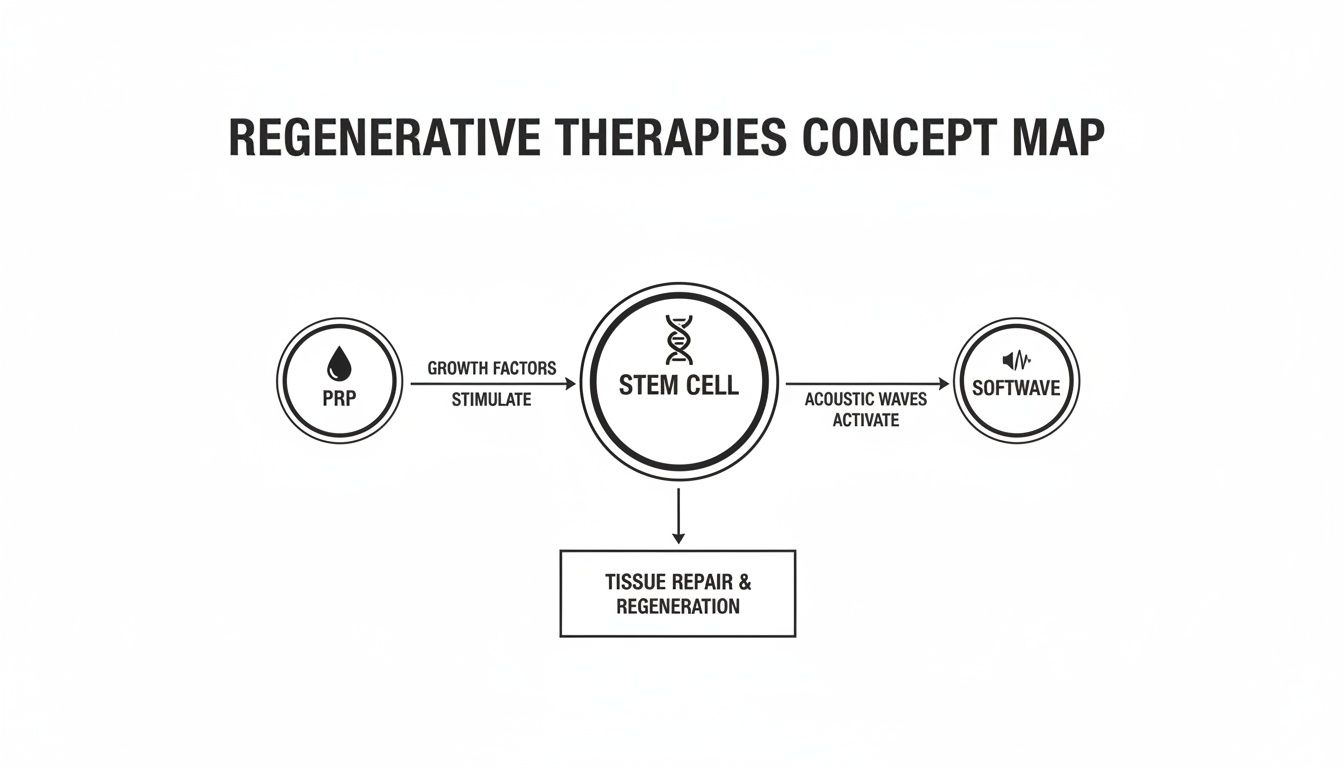
As you can see, therapies like PRP and SoftWave act as powerful catalysts. They wake up and direct your body’s own stem cells to get to work on repairing and rebuilding the problem area.
Measuring Success and Clinical Outcomes
Unlike treatments that offer temporary comfort, the goal here is sustained improvement in both pain levels and physical function. Clinical studies consistently track these key metrics, painting a clear picture of what you can realistically expect on your healing journey.
But success isn't just about a lower number on a pain scale. It’s about getting your life back.
- It’s being able to play with your kids or grandkids on the floor again.
- It's returning to a hobby you love, like gardening or hiking.
- It's getting through a workday without that constant, nagging pain.
- It's finally sleeping through the night without being jolted awake by back spasms.
These are the real-world victories that define a successful outcome. Patients don't just report less pain; they often describe a dramatic improvement in their overall quality of life, allowing them to reclaim the activities they thought they'd lost for good.
The ultimate measure of success is functional recovery. When you can move freely and live fully without being held back by your back, the treatment has achieved its primary goal.
The data continues to build confidence in this approach. Regenerative medicine boasts an approximately 80% success rate for joint repair and inflammatory conditions tied to chronic pain. That often outperforms the short-term fix offered by NSAIDs or corticosteroid injections.
For back pain specifically, treatments using bone marrow aspirate concentrate (BMAC) stem cells can deliver pain reduction and tissue repair that lasts for 1-2 years or even longer. The best part? The recovery timeline is typically just weeks to months, not the long haul associated with surgery. You can dig deeper into these success rates and what makes regenerative medicine so effective.
Why Lasting Relief Is Possible
The reason these results are so durable is simple: the therapies promote true healing. When a degenerated disc begins to regenerate healthy tissue or an inflamed facet joint is calmed down at a cellular level, the actual source of the pain is being addressed.
Think of it like fixing a pothole. You could just sweep the debris out of it—that’s like taking pain pills. The road is usable for a little while, but the underlying problem is still there and will cause trouble again. Regenerative medicine is like repaving that section of the road. It fixes the structural issue for a much, much longer-lasting solution.
This focus on repair is what sets regenerative medicine apart from conventional pain management. While it does require some patience as your body heals, the payoff is a stronger, healthier spine that's better equipped to support you for years to come.
Navigating Your Treatment Journey from Start to Finish
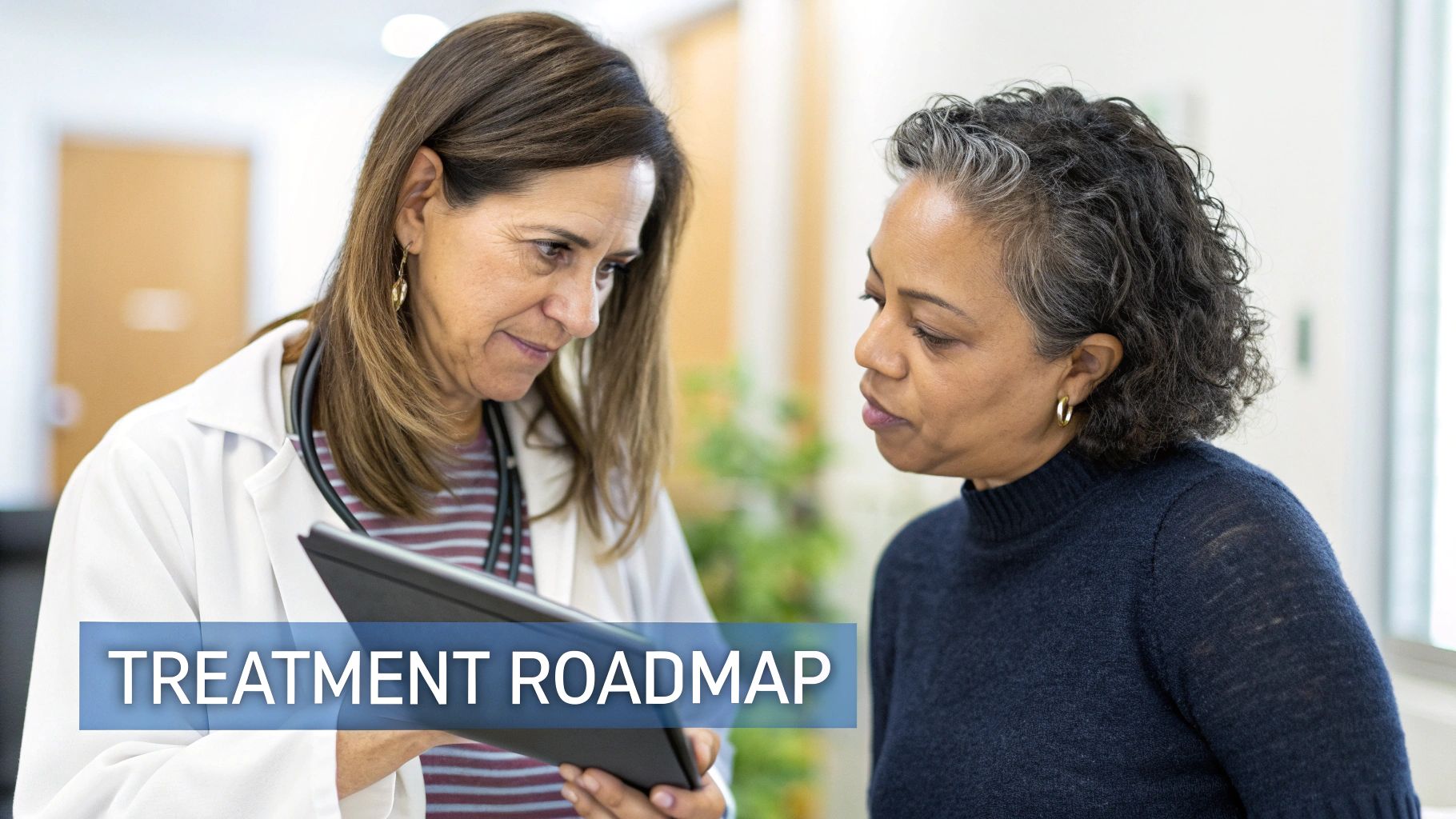
Starting a new treatment can feel a little overwhelming, but we’ve found that knowing exactly what to expect makes all the difference. The journey with regenerative medicine isn't a one-size-fits-all prescription. Think of it as a personalized roadmap we build just for you, based on your specific condition, your health history, and what you want to achieve.
Every single step is carefully planned to make sure your body is perfectly prepared to heal itself. This is about more than just a single therapy; it’s about creating the ideal internal environment for that therapy to work its magic. It's a true partnership between you and our team, with a shared goal of getting you lasting relief.
The Initial Consultation and Diagnostic Phase
Your journey kicks off with a detailed consultation. This is where we get to know you and the full story of your back pain—how it started, what makes it flare up, and how it's getting in the way of your life. It’s an essential conversation that forms the foundation for everything that follows.
Next, we move into diagnostics. We use advanced tools like our Insight Scans to get a clear picture of how your nervous system is functioning. This data helps us pinpoint the exact source of your pain, whether it’s coming from a degenerated disc, inflamed facet joints, or damaged muscles and ligaments. We want to be absolutely sure we're targeting the root cause, not just masking symptoms.
Your Personalized Treatment Session
Once we have a clear diagnosis, we map out your personalized care plan. This plan details the specific regenerative therapies we recommend for you—it might be SoftWave, PRP, or a strategic combination of different approaches. The treatment session itself is a major milestone, but it's really just the beginning of the healing process.
Most regenerative procedures are minimally invasive and done right here in our comfortable office. A SoftWave session, for instance, is completely non-invasive. If you're having a PRP injection, we'll numb the area to make sure you're comfortable. The whole point is to deliver those powerful healing agents directly to the damaged tissue with precision and as little disruption to your body as possible.
The treatment session isn’t the finish line; it’s the starting gun. It kicks off a powerful healing cascade that unfolds over the coming weeks and months as your body gets down to the deep work of cellular repair.
The Recovery and Integration Period
One of the biggest advantages of regenerative medicine for back pain is the recovery. Unlike major surgery, there’s typically no extended downtime. Instead, we focus on a supported, gradual healing process that lets you get back to your life.
Your body needs time to rebuild, and we’ll guide you every step of the way with specific recommendations. This often includes:
- Activity Modification: We’ll let you know which activities to temporarily limit to protect the healing tissues.
- Supportive Care: This is where complementary treatments, like chiropractic adjustments, play a key role in boosting your results.
- Follow-Up Monitoring: We’ll schedule check-ins to see how you're progressing and make any tweaks to your plan as needed.
Proper spinal alignment from chiropractic care ensures your nervous system—the body's master communication network—is working without a hitch. This allows healing signals to travel efficiently, which helps therapies like SoftWave work even better. This integrated approach is just one of many non-surgical back pain treatments that can create a powerful healing synergy. You can explore more options in our guide to non-surgical solutions for back pain.
The recovery phase is where the real magic happens. As your body’s internal repair crew gets to work, you’ll start to notice pain gradually fading and function returning. This patient, supported approach is designed to give you the best possible outcome and deliver the long-term relief you deserve.
Synergizing Chiropractic Care with Regenerative Medicine
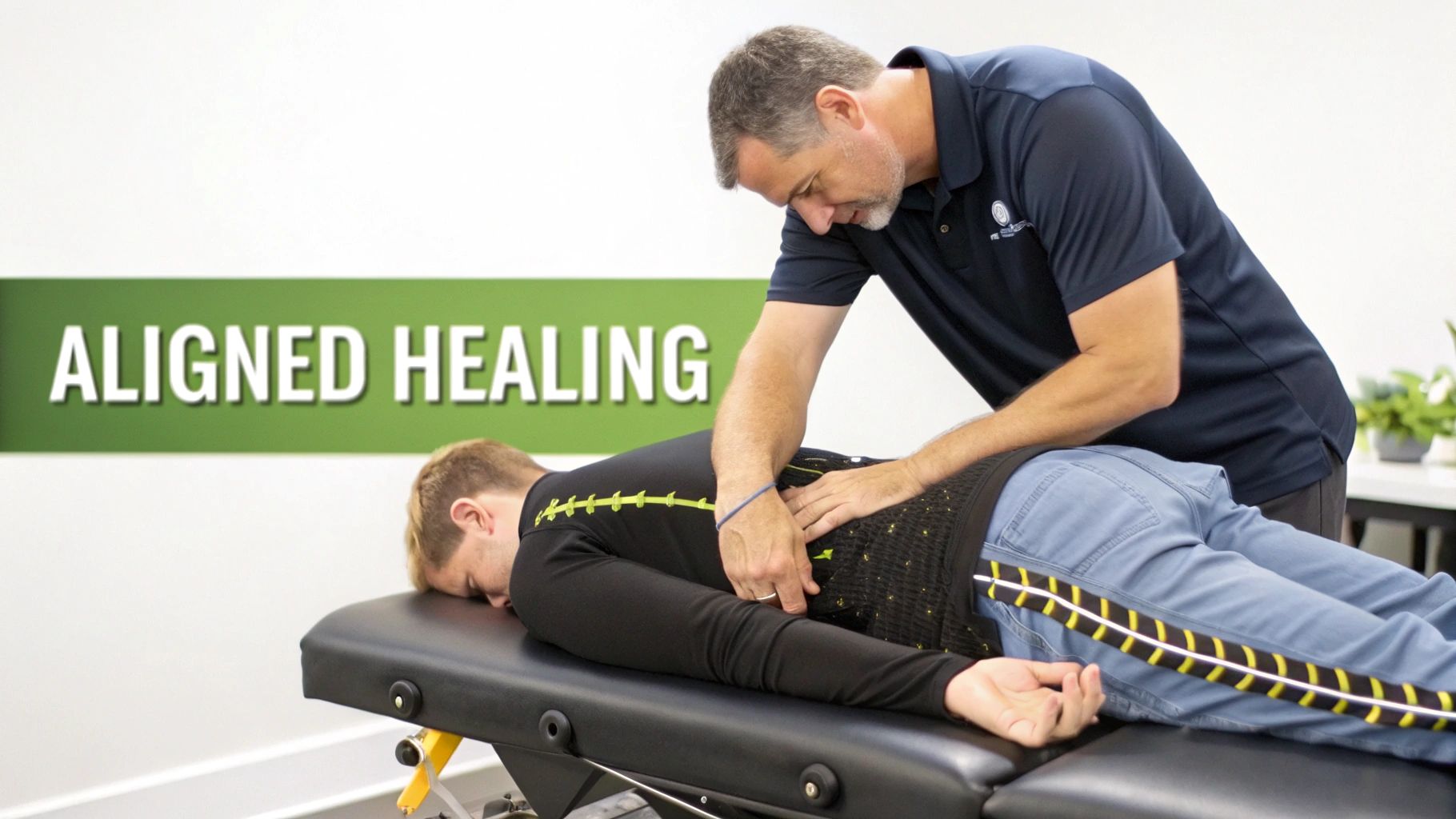
What happens when you pair therapies designed for targeted cellular repair with the precision of structural alignment? You get a healing environment that’s far more powerful than either approach could ever be on its own. This incredible synergy is the real secret to unlocking the full potential of regenerative medicine for back pain.
Think of your body’s nervous system—the brain, spinal cord, and all its nerves—as a sophisticated communication network. It’s the central command center, firing off billions of signals every single second to coordinate everything from muscle movement to tissue repair. Chiropractic care is all about making sure that system is running smoothly, without any static or interference.
When we introduce a regenerative therapy like SoftWave or PRP, we’re sending powerful new signals that tell your body to rebuild and heal. By combining these treatments with chiropractic adjustments, we ensure the body's communication lines are wide open, allowing those healing messages to be delivered with total clarity and efficiency.
Creating the Ideal Foundation for Healing
Imagine trying to plant a garden in dry, compacted soil. No matter how good your seeds or fertilizer are, the plants will struggle. Neurologically-focused chiropractic care is like tilling and enriching that soil before you plant the seeds.
By gently correcting spinal misalignments, or subluxations, we improve the function of the entire nervous system. This creates a cascade of benefits that directly amplify the effects of regenerative therapies:
- Improved Nerve Flow: Proper alignment clears the pathways, ensuring healing signals from the brain can reach damaged tissues without getting lost along the way.
- Enhanced Blood Circulation: Adjustments can boost local blood flow, which is crucial for delivering the oxygen and nutrients regenerative cells need to do their work.
- Reduced Systemic Stress: A balanced nervous system helps calm the body’s overall stress response, which in turn dials down the chronic inflammation that often stalls the healing process.
When your spine is aligned and your nervous system is clear, your body is in the optimal state for repair. It creates a perfectly prepped environment, making it more receptive to the powerful healing cascade initiated by regenerative medicine.
The Two-Way Street of Structural and Cellular Health
This relationship is a true partnership. Just as chiropractic care sets the stage for regenerative medicine to work its magic, the healing from those therapies helps stabilize and support the structural corrections we make with adjustments.
For example, when PRP helps rebuild a weakened ligament in your lower back, that ligament grows stronger and becomes better at holding your vertebrae in proper alignment. This makes your chiropractic adjustments hold longer and become even more effective over time.
This integrated approach tackles back pain from two critical angles at once:
- Structure and Function: Chiropractic restores proper biomechanics and nerve communication.
- Cellular Repair: Regenerative medicine fixes the underlying tissue damage right at the source.
This dual-action strategy not only accelerates recovery but also builds a stronger, more resilient foundation for your long-term spinal health. It's about moving beyond just managing symptoms and focusing on a total restoration of both form and function. By understanding the deep connection between chiropractic care and the nervous system, you can see why this synergy is so essential for lasting relief.
Ultimately, combining these disciplines isn’t just about adding another treatment—it’s about multiplying the healing effect. We’re making sure that every signal your body sends and receives is aimed at one goal: helping you recover, rebuild, and get back to the life you love, free from the limits of chronic back pain.
Are You a Candidate for Regenerative Medicine?
After learning how these therapies wake up your body's own repair crew, the big question is always, "Is this actually right for me?" Figuring that out isn’t about checking off boxes on a generic list. It’s about a careful process of matching the right person and the right problem with the right solution.
Regenerative medicine can be a game-changer for those looking for real, lasting healing, but it's important to be honest about who it helps most. The best candidates are often people who feel stuck in a frustrating cycle of chronic back pain. They've likely tried the usual suspects—physical therapy, pain meds, maybe even injections—only to find the relief never quite lasts. They’re tired of just masking the symptoms and are ready to address the root cause of their pain.
Who Benefits Most from These Therapies?
Regenerative treatments really shine when back pain comes from specific, tissue-related problems. If your pain is due to the slow, steady breakdown of the structures in your spine, you could be a great candidate.
We see excellent results with conditions like:
- Degenerative Disc Disease: This is when the discs—your spine’s natural shock absorbers—start to wear thin, leading to pain and instability.
- Facet Joint Arthritis: Think of this as arthritis in the tiny joints that link your vertebrae, causing that familiar stiffness and deep, chronic ache.
- Soft Tissue Injuries: This covers stubborn damage to the ligaments, tendons, or muscles that are supposed to be supporting your spine.
- Bulging or Herniated Discs: This happens when disc material bulges out and irritates nearby nerves, but isn’t quite at the point of needing surgery.
The bottom line is, if your pain is caused by tissue that's damaged but not completely gone, you're likely a strong candidate. The whole point is to repair and strengthen what’s already there, giving your body the tools it needs to heal from the inside out.
Understanding Important Contraindications
As powerful as it is, regenerative medicine for back pain isn't a one-size-fits-all fix. A responsible approach means knowing when these therapies aren't the best or safest choice. Being upfront about these limitations is key to making sure every patient gets the care that’s truly right for them.
Certain health conditions can get in the way of the body's healing process or introduce unnecessary risks, making regenerative treatments a poor fit. A thorough, one-on-one evaluation is the only way to know for sure.
Generally, these therapies are not recommended if you have:
- An active infection anywhere in your body.
- An active tumor or cancer.
- Certain blood disorders or diseases.
- An allergy to any of the agents used, like local anesthetics.
When it's a good fit, the results can be remarkable. In one study, over 80% of patients who received regenerative muscle stimulation for back pain reported long-term improvements. Even better, 70% were able to cut back or stop using opioids entirely. These numbers show what’s possible when you address the underlying injury instead of just chasing the pain. You can find more details on these new treatments for back pain relief.
Ultimately, the only way to know with certainty if you’re a candidate is to come in for a professional consultation. It's a chance for us to dive deep into your health history, get a precise diagnosis, and have a real conversation about your goals. That’s how you get the clarity you need to make a confident, informed decision about your health.
Common Questions About Regenerative Back Pain Treatments
Even after learning about the science, it’s only natural to have some practical questions. Making a decision about your health is a big deal, and we want you to have clear, direct answers so you can move forward with confidence. Here are some of the most common questions we hear from patients thinking about regenerative medicine.
Are Regenerative Treatments Painful
Most of our patients report little to no discomfort. SoftWave is completely non-invasive, so it just feels like a gentle tapping or pulsing sensation on your skin. You can definitely feel it working, but it’s not a painful experience.
For treatments that involve injections, like PRP, we always numb the area first with a local anesthetic. This ensures you’re comfortable the entire time. If you feel any mild soreness afterward, that’s actually a great sign—it means your body’s healing response has been successfully kicked into gear.
How Long Does It Take to See Results
Because these treatments work by helping your body actually rebuild tissue, the results show up gradually. This isn't a quick-fix painkiller; it’s a genuine healing process that takes a little time to unfold.
Some people notice an initial improvement within a few weeks as inflammation starts to go down. However, the real magic—the deep, structural repair happening at the cellular level—takes a bit longer to become obvious.
You can typically expect the most significant and lasting results to develop over 3 to 6 months. This is the timeframe it takes for your body to fully rebuild and strengthen damaged tissues from the inside out. Patience is key here, as this foundational healing is what creates lasting change.
This timeline is all about getting you a durable solution, not just a temporary patch for your symptoms.
Is Regenerative Medicine Covered by Insurance
This is a tricky one. Insurance coverage for regenerative therapies can be pretty inconsistent. Many insurance companies still consider these highly effective procedures to be “emerging” or “experimental,” so policies really vary from one plan to the next.
To get rid of any guesswork, we offer a complimentary benefits check for every single patient. This lets us find out exactly what your specific plan will cover before you commit to anything. Our goal is total transparency, and we also offer flexible payment plans to make sure care is accessible.
Who Should Avoid These Treatments
While regenerative medicine for back pain is safe and incredibly effective for most people, it’s not the right fit for everyone. A few specific conditions can get in the way of the healing process or create unnecessary risks.
Generally, you might not be an ideal candidate if you have:
- Active cancer or tumors
- A current, system-wide infection
- Certain blood-clotting disorders
This is exactly why your initial consultation is so important. We do a comprehensive review of your health history to make sure regenerative medicine is a safe and appropriate path for you. It’s how we ensure every person who walks through our doors gets the absolute best care for their unique situation.
Ready to find out if regenerative medicine can finally offer the lasting relief you’ve been searching for? The team at First Steps Chiropractic is here to answer all your questions and see if you’re a candidate for these powerful healing therapies.
Schedule your complimentary consultation today to take the first step toward a life with less pain. Find out more and book your appointment at https://firststepschiropractic.com.