You search for Antioch Family Chiropractic because something at home doesn't feel settled. Maybe your child melts down over sound and touch, can't wind down at night, or seems stuck in a constant state of stress. Maybe you're pregnant and want your body to feel more balanced instead of tighter each week. Maybe everyone in the family is dealing with recurring tension, sleep disruption, and symptoms that keep circling back.
That search usually leads to a long list of offices that sound similar. The harder question is whether the care you choose is built for simple pain relief, or whether it's designed to look at the nervous system patterns underneath the symptoms.
The Search for Antioch Family Chiropractic and What You Really Need
You search for Antioch family chiropractic after another hard week. Your child is overwhelmed by noise, bedtime takes two hours, or pregnancy is making everyday movement harder than it should be. At that point, a nearby office may feel like the obvious answer. For many families, the better question is whether that office is trained to evaluate nervous system stress patterns, not just where symptoms show up.

What families often miss in the search
General family chiropractic can help with joint restriction, muscle tension, and mechanical back or neck pain. Those are real benefits. But families dealing with ADHD, sensory processing challenges, anxiety, colic, sleep struggles, or prenatal tension usually need a more specific clinical lens.
The missing piece is often nervous system function.
A neurologically-focused office looks at whether the body is stuck in a stress response that keeps healing, regulation, digestion, sleep, and behavior from settling down. That is a different starting point from chasing the loudest symptom of the week. If you want a clearer picture of that connection, this explanation of how chiropractic care relates to the nervous system lays out why the nervous system is such an important part of family care.
I tell parents this often. A child can have sensory meltdowns, poor focus, constipation, and restless sleep at the same time because those issues may share the same underlying stress pattern. The same is true for a pregnant mother whose pain, tension, and poor sleep reflect more than simple biomechanics.
Why specialization matters
A search for "Antioch family chiropractic" can pull up many offices that sound similar on the surface. The difference shows up in training, assessment, and case focus. A PX Certified, neurologically-focused practice is built for more complex presentations, including ADHD, SPD, autism, and prenatal care where regulation matters as much as comfort.
That level of care is not available in every local office, and parents usually do not realize the trade-off until they have already spent months trying general care that never quite answers the bigger problem.
What to look for when comparing options
Use a stricter filter as you compare offices:
- Pediatric case focus: Does the doctor regularly care for children with sensory, behavioral, developmental, and regulation challenges?
- Prenatal-specific training: Is the care designed for pregnancy physiology, pelvic balance, and nervous system regulation?
- Objective findings: Does the office use measurable ways to assess function, or only ask where it hurts?
- Technique and tone: Are adjustments gentle enough for infants, pregnant mothers, and patients who are already stress-sensitive?
- Clinical depth: Can the doctor explain why symptoms may be connected instead of treating each one as an isolated complaint?
Families in Antioch do not just need another chiropractic office. They need to know whether the care in front of them is broad, general, and symptom-led, or whether it is specialized enough to address the root stress patterns affecting the whole family.
Beyond Adjustments Understanding the Neuro-Tonal Approach
A parent usually notices the pattern before they have language for it. Their child is exhausted but wired at bedtime, melts down over small transitions, struggles with digestion, and never seems to settle fully. In practice, that cluster of symptoms often points to a nervous system that is stuck in stress and having trouble shifting into regulation.
That is the clinical focus of the neuro-tonal approach.
A neurologically-focused chiropractor starts by asking how the brain, spinal cord, and autonomic nervous system are adapting, not just where the body feels tight or painful. The goal is to identify whether stress patterns and spinal tension are distorting communication through the NeuroSpinal System.

In this model, subluxation means more than a simple alignment problem. It describes a pattern of restricted motion, abnormal tension, and altered sensory input that can keep feeding stress signals into the central and autonomic nervous systems. For families dealing with ADHD, SPD, autism-related challenges, or prenatal stress, that distinction matters. A general chiropractic visit may help joint motion. A specialized, PX Certified, neuro-tonal approach is designed to examine regulation itself.
Parents usually see that dysregulation in daily life:
- Sleep problems: difficulty falling asleep, frequent waking, or light, restless sleep
- Stress reactivity: big emotional swings, poor transitions, startle responses, and fight-or-flight behavior
- Digestive and calming issues: trouble feeding, pooping, relaxing, or settling after stimulation
- Pregnancy tension: a body that keeps bracing instead of adapting comfortably as pregnancy progresses
Standard chiropractic care often centers on pain, stiffness, and joint mechanics. Neuro-tonal care asks a different clinical question. Is this person living in a pattern of protection that keeps the nervous system on high alert?
That trade-off is important. Pain-based care can be helpful for straightforward musculoskeletal complaints, but it may miss the bigger driver in families with chronic stress patterns, sensory challenges, developmental concerns, or difficult pregnancies. When the nervous system is overprotective, symptoms that look separate on the surface often share the same underlying stress physiology.
PX Docs describes the neuro-tonal approach as a method centered on balancing sympathetic stress responses with better parasympathetic regulation. That framework fits what many families are looking for. Less bracing, calmer behavior, easier sleep, and better adaptability.
Better function often begins when the body no longer spends the entire day preparing for threat.
Parents who want more background on that mechanism can read this explanation of chiropractic and the nervous system.
In real life, a neuro-tonal care plan does not chase each diagnosis one by one. It works to improve the nervous system environment underneath those symptoms. That is why Antioch families comparing offices should listen carefully to how a doctor explains care. If the conversation stays limited to pain and posture, the scope is narrow. If the doctor examines regulation, adaptation, stress patterns, and brain-body communication, you are looking at a more specialized level of family care.
Specialized Care for Every Stage of Family Life
A parent in Antioch might start by searching for family chiropractic because pregnancy is getting harder, a baby is not sleeping well, or a child seems stuck in a constant state of overload. Those situations do not call for generic care. They call for a doctor who understands how the nervous system changes from trimester to trimester, through birth, infancy, childhood, and adult stress recovery.
That is the difference specialized family care makes.
Prenatal care
Prenatal chiropractic should support function throughout pregnancy, not just offer short-term relief for back or hip pain. The clinical priority is better pelvic balance, less mechanical strain, and a body that can adapt more efficiently as baby grows and labor approaches.
The Webster Technique is widely used in prenatal chiropractic for that reason. The International Chiropractic Pediatric Association describes Webster as a specific chiropractic analysis and adjustment intended to reduce sacral subluxation and improve pelvic function during pregnancy. In practice, that matters because better pelvic mechanics can make late pregnancy more comfortable and may support smoother labor outcomes.
Pregnant patients usually do best with care that includes:
- Pelvic balance: Better motion and less compensation through the pelvis and surrounding ligaments
- Gentle adjusting: Low-force methods that respect comfort and tissue changes during pregnancy
- Birth preparation: Support for positioning, movement, and adaptability as delivery gets closer
- Whole-body function: Easier breathing, walking, sleeping, and recovery from daily physical stress
A good prenatal adjustment is specific, calm, and well-timed. More force is not better. Better analysis is better.
Pediatric care
Pediatric care requires a different level of training and judgment. Infants and children are not small adults, and their stress patterns often show up in ways parents do not expect. Sleep disruption, feeding struggles, sensory sensitivity, emotional reactivity, and difficulty settling can all reflect a nervous system that is working too hard.
That is why Antioch families looking for help with ADHD, SPD, developmental stress, or early regulation challenges should ask a harder question than “Do you see kids?” They should ask how the doctor evaluates nervous system tension, what pediatric training they have, and whether their technique is precise enough for a baby, a sensory-sensitive child, or a child who does not tolerate a lot of input.
A neurologically-focused pediatric office often looks for patterns like these:
- Stress after birth: Tension that may affect comfort, feeding, latching, or sleep
- Sensory dysregulation: Strong reactions to touch, noise, movement, clothing, or transitions
- Attention and adaptability challenges: Children who stay keyed up, impulsive, or hard to settle
- Developmental stress patterns: Kids who need gentler, more individualized care plans based on regulation, not just symptoms
Parents who want a practical overview can read this guide on chiropractic care for babies.
Whole family wellness
Family care works best when it matches each person's stage of life and stress load. A pregnant mother may need pelvic-specific work. A newborn may need extremely gentle support after a difficult birth. A parent may need care for chronic neck tension, poor sleep, headaches, or the physical effects of staying in survival mode for too long.
I often see one family member start care and the rest of the household follow. That pattern makes sense. Families share schedules, stress, sleep disruption, and often the same overwhelmed nervous system environment. They do not need identical care plans, but they do benefit from a provider who can recognize how those patterns show up differently in each person.
| Family member | Common reason they seek care | What matters most |
|---|---|---|
| Pregnant mother | Pelvic tension, physical stress, birth preparation | Prenatal-specific analysis and technique |
| Infant or child | Sleep issues, regulation concerns, sensory or developmental stress | Gentle, precise pediatric care |
| Parent or adult | Headaches, chronic tension, poor recovery, stress overload | Consistent care aimed at better regulation |
The right Antioch family chiropractic office is not just the closest one. For many families, the better choice is a true specialist in neurologically-focused prenatal and pediatric care who can address the root cause patterns underneath what the whole family is experiencing.
Advanced Tools for Gentle and Precise Results
Many parents hear “chiropractic” and immediately think of twisting, popping, and forceful movements. That concern is understandable. It's also one reason technique matters so much, especially for infants, pregnant women, and patients with sensitive nervous systems.
Why precision changes the experience
A specialized office may use Torque Release Technique, often called TRT. This is an instrument-based method designed to deliver a gentle, focused adjustment without the kind of manual force that some patients fear.
For a parent deciding between standard Antioch family chiropractic options and a more neurologically-focused model, this can be the dividing line. The question isn't whether an adjustment happens. The question is how much force, how much specificity, and how clearly the provider is working from the nervous system rather than from a “move everything and hope” approach.
In practice, gentle methods tend to work better for:
- Infants and young children: Their bodies don't need heavy force
- Pregnant patients: Comfort and positioning matter
- Sensory-sensitive patients: Too much input can be counterproductive
- Adults with chronic tension: Precision often lands better than intensity
Beyond adjusting the spine
Some specialized practices also use SoftWave tissue regeneration technology for chronic musculoskeletal complaints. That adds another layer of care for adults who are dealing with stubborn pain patterns, soft tissue irritation, or recovery that never seems complete.
The varied nature of problems means not every patient can be treated identically. Some patients need gentle nervous system support. Others also need local tissue-focused therapy. The office that can separate those needs usually gets more precise results than the office that treats every complaint with the same template.
For a practical example of how that technology is used in a musculoskeletal setting, this article on shock wave therapy for pain gives a useful overview.
Clinical rule: Gentle doesn't mean weak. In the right hands, gentle means targeted enough that the body can respond without guarding.
When families compare chiropractors, technique names aren't just marketing language. They tell you how the office thinks, how the care is delivered, and whether the plan is built for complexity or just convenience.
Your First Visit A Step-by-Step Walkthrough
A parent usually arrives with a tired child, a list of concerns on their phone, and one big question in mind. Is this finally the place that will look past the surface and explain why their child is struggling in the first place?

That first visit should answer that question with a clear process. In a neurologically-focused office, the goal is not to rush into an adjustment. The goal is to understand how your child or your own nervous system is handling stress, where compensation patterns are showing up, and whether this kind of care fits your case.
Step one starts with your story
The consultation is where the core work begins. For families dealing with ADHD, sensory challenges, sleep struggles, colic, recurrent tension, or prenatal discomfort, the pattern matters as much as the symptom.
For a child, that history may include pregnancy and birth details, feeding, digestion, sleep, sensory triggers, emotional regulation, milestones, and how stress shows up at home or school. For a pregnant parent, it often includes pelvic balance, prior birth experiences, round ligament tension, sleep position, and goals for labor and recovery.
I pay close attention to timing. Did the issue start after birth interventions, a fall, a growth spurt, a period of stress, or after months of poor sleep? Those details help distinguish a simple mechanical complaint from a deeper neuro-tonal pattern.
Then the doctor measures function
A specialized practice may use Insight Scans and a focused physical exam to look at nervous system stress, spinal tension patterns, posture, movement, and compensation. That changes the quality of the visit. Families get more than a best guess based on symptoms alone.
This is often where Antioch families notice the difference between a standard family chiropractor and a true pediatric or prenatal specialist. A neurologically-focused provider is asking a different set of clinical questions. Is the body stuck in a stress response? Is regulation poor? Is there a pattern that helps explain the meltdowns, sleep disruption, sensory overwhelm, or physical tension?
What a strong first visit should answer
- What is showing up right now: The doctor should explain the stress patterns, exam findings, and any signs of nervous system dysregulation in plain language.
- Why those patterns may be happening: The history and exam should connect the dots between the complaint and the underlying stress response or biomechanical strain.
- Whether care is appropriate: Some cases are a good fit for chiropractic care. Some need co-management or a referral first. Good offices are honest about that.
- What the plan looks like: You should leave knowing the recommended frequency, the goals of care, how progress will be measured, and what type of adjustment is being considered.
Cost should be explained clearly too. Many family practices offer affordable new patient options or bundled first-visit packages, but the right office should tell you exactly what is included before you commit.
The care plan should be clear, not confusing
A good report of findings explains the scan and exam results in a way a parent can effectively use. You should understand what the doctor found, why the recommendation matches your goals, and what kind of care your child or family member will receive.
That includes trade-offs. Some patients need a short period of closer follow-up because the nervous system is highly wound up and dysregulated. Others do well with less frequent care. A child with sensory sensitivity may need a slower pace and more time to build trust. A pregnant patient may need positioning modifications and a technique that keeps the visit comfortable from start to finish.
If it is clinically appropriate, the first adjustment may happen that day. In a neuro-tonal office, that first adjustment is usually gentle, specific, and well explained before it happens.
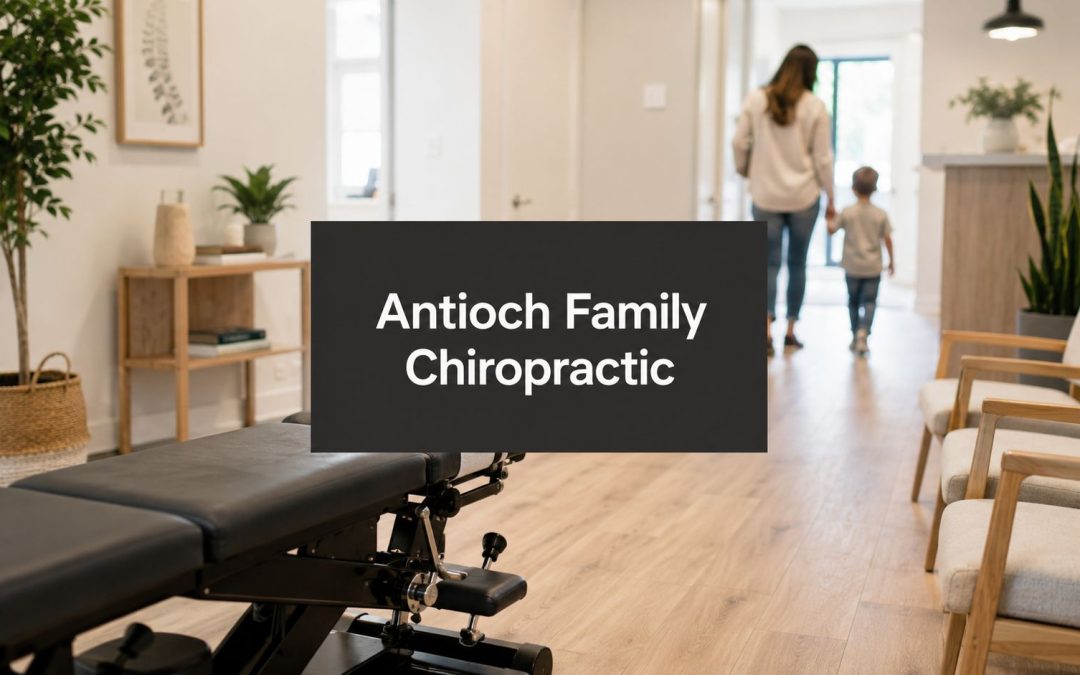
Here's a short look at how that environment and process can feel in real life:
What parents usually notice
The room feels calmer than expected.
Parents often expect force, noise, or a rushed experience. Instead, they usually notice careful observation, more listening, and a level of precision that fits babies, kids, pregnant mothers, and adults with complex stress patterns. That matters because families searching for Antioch family chiropractic are often not looking for another quick symptom-based visit. They are looking for a specialist who can identify root patterns and explain a path forward with confidence.
Answering Your Questions About Neurologically-Focused Care
Parents usually ask the same questions at this stage, and they should. Family health decisions deserve direct answers.
Is this safe for my baby or child
When care is pediatric-specific and delivered with gentle methods, it should look very different from the force many adults imagine. Infants and children require a measured, calm, age-appropriate approach. The right office should be able to explain exactly how it adjusts children, what it's looking for, and when care is or isn't appropriate.
If a provider gets vague or defensive around those questions, keep looking.
How is this different from my current chiropractor
The biggest difference is clinical focus. A standard chiropractor may do excellent work for pain and mobility complaints. A neurologically-focused chiropractor is also evaluating regulation, stress adaptation, sensory patterns, sleep issues, and the brain-body communication piece behind the complaint.
That distinction matters most for families dealing with ADHD, sensory processing issues, anxiety, developmental concerns, and pregnancy-related biomechanics.
Do you take insurance and what does cost usually look like
This is one of the biggest pain points in family chiropractic. Many practices still don't explain cost clearly enough before the first appointment, which leaves families uncertain about out-of-pocket responsibility.
One accessibility model that helps is straightforward insurance support. According to the practice's Instagram business information, the office accepts most insurance plans and offers free benefits checks and complementary consultations. That gives families a better chance to understand coverage before making a decision.
Is it worth traveling for this kind of care
Sometimes yes. Especially when the case is more complex than routine back pain.
If your child has sensory challenges, your pregnancy needs specific prenatal technique, or your family has already tried more generic options without lasting progress, distance becomes a secondary issue. Specialized care can save time, reduce confusion, and give you a plan that matches the problem.
The right question isn't whether a provider is nearby. It's whether the provider is trained for the case sitting in front of them.
When you search for Antioch family chiropractic, don't settle for the first office that appears. Choose the level of care your family's situation requires.
If you're looking for care that goes beyond symptom relief and focuses on nervous system function, First Steps Chiropractic offers pediatric, prenatal, and family neurologically-focused chiropractic care with gentle techniques, objective scans, and a clear starting point for families who want answers.