
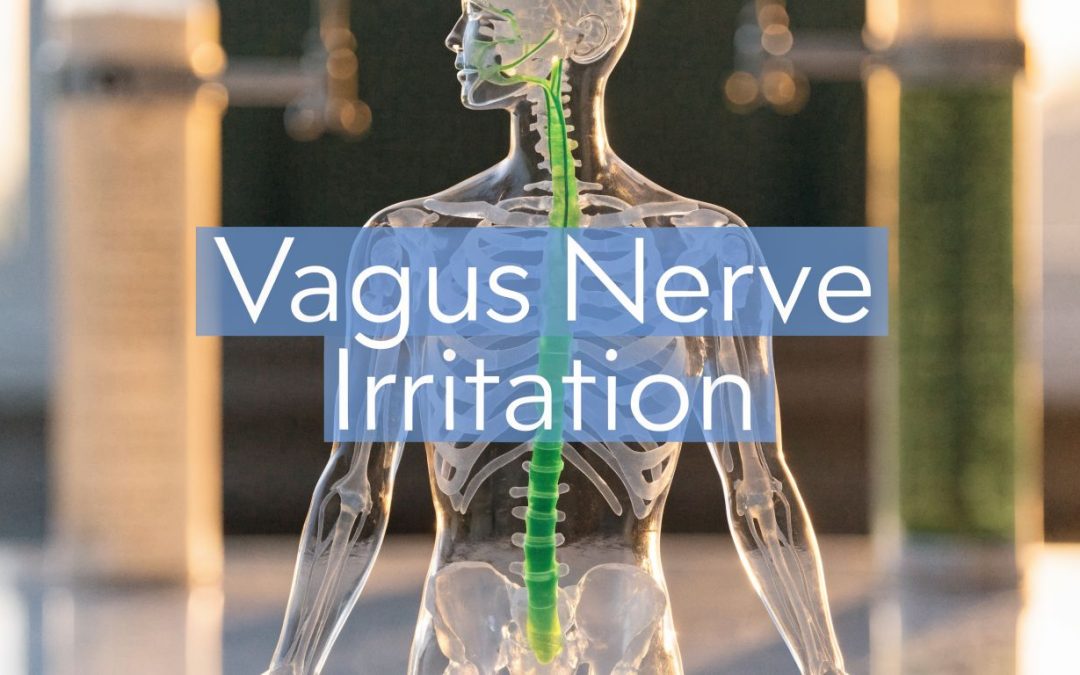
You might be reading this because the symptoms don't seem to match.
Maybe it's bloating after meals, a racing heart when you're just sitting, a chronic cough that won't leave, reflux that keeps coming back, or a child who seems stuck in a pattern of poor sleep, irritability, and hard-to-explain regulation struggles. A lot of people separate these into different buckets. Gut issue. Anxiety issue. Throat issue. Heart issue.
Sometimes the common thread is the nervous system.
When I talk with parents and adults about the symptoms of vagus nerve irritation, I try to slow the conversation down and make it practical. The vagus nerve isn't a trendy wellness topic. It's a real nerve with real jobs, and when it's irritated, the effects can show up in several body systems at once. That's why people often feel confused for a long time before anyone connects the dots.
Your Body's Internal Conductor The Vagus Nerve
The easiest way to understand the vagus nerve is to think of it as your body's internal conductor.
A conductor doesn't make the violin, drums, and piano exist. The conductor helps them play in sync. Your vagus nerve does something similar. It helps coordinate communication between your brain and key organs so your body can shift out of stress and back into regulation.

What the vagus nerve actually does
The vagus nerve is a major part of your parasympathetic nervous system, often called the “rest and digest” side of the nervous system. That's the system that helps you settle, digest food, recover from stress, and keep basic body rhythms steady.
In simple terms, it helps with:
- Calming the body after stress so you don't stay stuck in fight-or-flight
- Supporting digestion so food moves and breaks down properly
- Regulating heart rhythm so the heart can respond appropriately
- Coordinating throat and voice function for swallowing and speaking
- Relaying information back to the brain about what's happening inside the body
If you want a deeper overview of how this nerve works, this guide on vagus nerve function gives a helpful starting point.
Why irritation creates so many different symptoms
People often stumble here.
If one nerve influences the throat, lungs, heart, stomach, and parts of your stress response, then irritation of that nerve can create symptoms that seem unrelated. It can look like a digestive issue in one person and a voice issue in another. In some people, it looks like both at once.
Practical rule: When symptoms travel across body systems, it's wise to ask whether the nervous system is part of the picture.
The vagus nerve also works like a two-way communication highway. One direction carries information from the body up to the brain. The other carries signals from the brain back down to organs. If that signaling gets distorted, the body can lose some of its normal rhythm.
That doesn't mean every symptom is caused by the vagus nerve. It does mean the vagus nerve can be an overlooked link when the pattern doesn't make sense on the surface.
Decoding the Symptoms of Vagus Nerve Irritation
Some people expect nerve irritation to feel like numbness, tingling, or sharp pain. Vagus nerve irritation usually doesn't present that way. It often looks more like body systems that aren't coordinating well.
The most commonly reported vagally-mediated symptoms include voice changes, vocal fatigue, bloating, nausea, heartburn, sore throat, chronic cough, cardiac arrhythmias, and fainting. Low vagal tone is also associated with chronic anxiety, depression, and inflammation-related conditions, and gastrointestinal issues such as gastroparesis are especially common, according to clinical observations summarized here.

Digestive symptoms
This is often where irritation shows up first.
If the vagus nerve isn't signaling the digestive tract clearly, the stomach and intestines may not move food along as well as they should. People can notice bloating, nausea, vomiting, indigestion, heartburn, reflux, or a heavy feeling after eating. Some also experience difficulty swallowing or loss of gag reflex.
Gastroparesis is one example of this pattern. That term means food moves too slowly from the stomach into the intestines.
Heart and circulation symptoms
The vagus nerve also helps regulate heart rhythm and recovery after stress.
When that calming influence is reduced, people may notice palpitations, an irregular heartbeat, rapid heart rate, lightheadedness, or fainting. Some describe it as their body overreacting to small stressors. Others say, “My heart won't settle down.”
Throat, voice, and breathing symptoms
Because the vagus nerve has branches involved with the throat and voice box, irritation can affect how the voice feels and sounds.
Common complaints include:
- Voice changes such as hoarseness or reduced vocal strength
- Vocal fatigue after talking for a short time
- Effortful speaking or pain with voice use
- Sore or burning throat
- Chronic cough
- Asthma-like symptoms in some cases
Sometimes the clue isn't one dramatic symptom. It's a cluster of smaller ones that keep showing up together.
Emotional and autonomic symptoms
This part often surprises people.
Low vagal tone has been associated with chronic anxiety, depression, poor stress recovery, and inflammation-related conditions. That doesn't mean those experiences are “just in your head.” It means your body's regulation system may not be buffering stress well.
When the parasympathetic system isn't doing its job, the body can stay too alert for too long.
Vagus nerve irritation symptoms by body system
| System | Common Symptoms |
|---|---|
| Digestive | Bloating, nausea, vomiting, heartburn, indigestion, gastroparesis, difficulty swallowing |
| Cardiac | Rapid heart rate, arrhythmias, fainting |
| Throat and Voice | Voice changes, loss of vocal strength, vocal fatigue, sore throat, burning throat |
| Respiratory | Chronic cough, asthma |
| Emotional and Autonomic | Chronic anxiety, depression, poor stress recovery, inflammation-related symptoms |
Root Causes of Vagus Nerve Dysfunction
Stress can aggravate vagus nerve problems, but it usually isn't the whole story.
One of the most important root-cause questions is whether there's mechanical irritation affecting the nerve, especially in the upper neck where the vagus nerve exits the skull and travels downward. This is one reason many people with symptoms of vagus nerve irritation don't improve fully from lifestyle tips alone.
The upper cervical connection
Mechanical compression at the upper cervical level C1 to C3, often referred to as cervicovagopathy, is described as a primary cause of vagus nerve irritation. This disruption can impair parasympathetic tone and lead to symptoms such as new-onset anxiety, tachycardia, bloating, and nausea, with possible clinical signs including a deviated uvula or absent gag reflex on the affected side, as discussed in this overview of vagus nerve compression and the cervical spine.
That matters because the problem may not start in the stomach or chest. It may start higher up, where structure affects nerve signaling.
What can create that irritation
Several patterns can contribute to upper neck stress and vagus nerve dysfunction:
- Birth stress or early strain that affects the upper cervical area
- Falls or whiplash-type injuries
- Poor posture over time, especially sustained forward head posture
- Pregnancy-related biomechanical changes that alter spinal and pelvic balance
- Chronic inflammation or prolonged stress, which can make an already irritated system more reactive
If you've wondered whether irritation is different from damage, that's an important distinction. Irritation often points to altered function and poor signaling. Damage suggests a more serious structural injury. Many people need an evaluation that looks at both nerve function and the structures around it, especially when symptoms are persistent. This discussion of inflammation of the vagus nerve helps frame that difference.
A nerve can be present and still not be communicating well. Function matters, not just anatomy.
Why symptoms can snowball
Once vagus signaling drops, the body often leans harder on the sympathetic system, the fight-or-flight side. That can amplify gut sensitivity, raise heart rate, worsen stress recovery, and make someone feel like their body is always “on.”
That feedback loop is why these cases can feel so frustrating. The longer the system stays irritated, the more body systems may start joining the conversation.
How Vagus Nerve Health is Accurately Assessed
A lot of people with vagus-related symptoms bounce from one specialty to another.
They may see one provider for reflux, another for anxiety, another for a chronic cough, and another for dizziness or palpitations. Each symptom gets its own label, but nobody asks whether the nervous system is struggling to coordinate the whole picture.

What a useful assessment should look for
A thorough assessment should consider both function and structure.
That usually means looking at symptom patterns, upper cervical tension or misalignment, basic neurological findings, and signs of autonomic imbalance. In some settings, clinicians also look at heart rate variability, often shortened to HRV, because it can reflect how well the nervous system is shifting between stress and recovery.
A neurologically focused chiropractic approach may also include Insight Scans, which are non-invasive scans used to gather objective information about nervous system stress, adaptability, and regulation patterns. They aren't a stand-alone diagnosis, but they can help identify whether the body is staying stuck in a stress-dominant state.
What parents and adults often want to know
Most families ask some version of the same question: “How do we know whether this is really a nervous system issue?”
The answer isn't guesswork. It's pattern recognition plus testing and examination. For children, that can be especially helpful when symptoms seem spread out across sleep, digestion, emotional regulation, and behavior. For adults, it often explains why several mild but persistent symptoms have never fit neatly into one box.
Here's a short visual overview that helps explain the broader idea of vagal function and regulation:
The point of assessment
Good assessment should answer three questions:
- Is the nervous system showing signs of poor regulation
- Is there likely mechanical interference contributing to that pattern
- What kind of care matches the person's age, symptoms, and stress load
That process is often what gives families relief first. Not symptom relief yet. Clarity.
Gentle Solutions to Restore Vagal Tone
A common pattern looks like this. Someone tries breathing exercises, humming, cold water, meditation, and posture reminders. They feel a little better for a short time, then the old symptoms return.
That makes sense if the vagus nerve is being bothered near its path through the upper neck. Calming inputs can help the system settle, but they do not change the mechanical stress that keeps poking the alarm system. It is similar to turning down a smoke detector while something near it is still creating smoke.
Why root-cause care matters
Vagal irritation linked to upper cervical dysfunction calls for care that looks at the source of the irritation, not only ways to soothe the body after the fact.
Gentle chiropractic techniques such as Torque Release Technique, or TRT, are often used for that reason. TRT uses a low-force, specific approach to reduce spinal interference without heavy twisting or forceful manual pressure. The goal is better communication between the brain, spine, and body so the vagus nerve is not working in the middle of constant background tension.
Families may hear First Steps Chiropractic mentioned in this context because the practice uses Insight Scans and neuro-tonal techniques such as TRT in pediatric, prenatal, and family care. The value is not the name of the office. It is the clinical approach: measure nervous system stress, look for patterns of interference, and match care to the person in front of you.
Structural care and passive stimulation do different jobs
Breathing, humming, and similar strategies can still be useful. They are support tools.
But support tools and corrective care are not the same thing. If the upper cervical area is irritated, restricted, or misaligned, the nervous system may stay on guard no matter how faithfully someone practices calming exercises at home. Reducing that irritation often changes the baseline. Then the exercises have something better to build on.
What a supportive care plan may include
A balanced plan often has a few layers working together:
- Gentle upper cervical adjustments to reduce mechanical stress around the neck and brainstem
- Objective nervous system monitoring with scans that track stress patterns and regulation
- Postural and movement guidance to keep the same strain pattern from returning
- Simple home practices such as humming, breathing, or other vagal tone exercises that support regulation between visits
For pregnant patients, that plan may also include techniques chosen for changing biomechanics. For infants and children, it often means even lighter, age-appropriate care with close attention to feeding, sleep, digestion, and regulation patterns.
The main idea is simple. A nerve irritated by structure usually responds best when the irritation is reduced first, then the nervous system is supported as it relearns a calmer pattern.
Vagus Nerve Care for Pregnancy and Children
Pregnancy and childhood are two stages where nervous system stress can show up in ways people don't expect.
In both groups, vagus nerve irritation may be missed because the symptoms are often labeled separately. During pregnancy, it may look like reflux, nausea, breath-holding, tension, or a body that just doesn't settle well. In children, it may look like poor sleep, feeding struggles, emotional dysregulation, chronic congestion-like throat symptoms, reflux, or difficulty handling sensory input.

During pregnancy
As the body changes during pregnancy, biomechanics change too.
The pelvis shifts. Posture adapts. Rib and diaphragm patterns change. Neck tension can increase as the body compensates. When that whole chain is under strain, the nervous system may have a harder time regulating digestion, stress recovery, and muscle tone.
This is one reason some chiropractors use the Webster Technique during pregnancy. The goal is to support pelvic balance and reduce biomechanical stress patterns that may affect the broader spine and nervous system. It's a gentle approach, and families often appreciate that it focuses on function rather than symptom chasing.
In infants and children
Children don't usually say, “My autonomic nervous system feels off.” They show you through patterns.
A baby may arch, spit up, struggle to settle, resist laying flat, or wake frequently. A toddler may swing quickly from calm to meltdown. An older child may have trouble with emotional regulation, sleep, sensory processing, digestion, or attention.
A future-dated, hypothetical 2025 study in Pediatric Neurology reported low vagal tone in 68% of children with ADHD via HRV scans, linking irritation from birth trauma or subluxations to poor emotional regulation and sleep challenges. Because this citation is explicitly hypothetical in the provided material, it shouldn't be treated as established present-day fact. What it does highlight is an important clinical question: how often are nervous system regulation issues overlooked in pediatric care?
What gentle pediatric care aims to do
Pediatric chiropractic care, when done appropriately, doesn't look like adult care.
It uses very light input to reduce interference and support regulation in a developing nervous system. The goal isn't to force change. It's to help the body organize itself better.
Parents often notice changes in areas such as:
- Sleep rhythm that becomes more settled
- Digestive comfort with less tension around feeding or reflux
- Emotional regulation with fewer extreme swings
- Body ease during diapering, nursing, tummy time, or school tasks
Those changes make sense when you remember what the vagus nerve helps coordinate. Digestion, soothing, heart rhythm, swallowing, and stress recovery all live close to the same communication network.
Red Flags When to Seek Urgent Medical Care
Vagus nerve irritation can cause real symptoms, but some symptoms need urgent medical attention because they may signal something more serious.
Seek prompt medical care if you or your child has:
- Sudden severe chest pain
- Trouble breathing or worsening shortness of breath
- Loss of consciousness
- Sudden inability to swallow
- Sudden inability to speak clearly
- New one-sided weakness or facial drooping
- Persistent vomiting with signs of dehydration
- A rapidly worsening irregular heartbeat sensation
If you're unsure, it's always better to err on the side of caution and get evaluated right away.
If these symptoms sound familiar, First Steps Chiropractic offers consultations for families who want a nervous-system-focused look at what may be driving persistent stress, digestive, pregnancy, or pediatric regulation issues.