
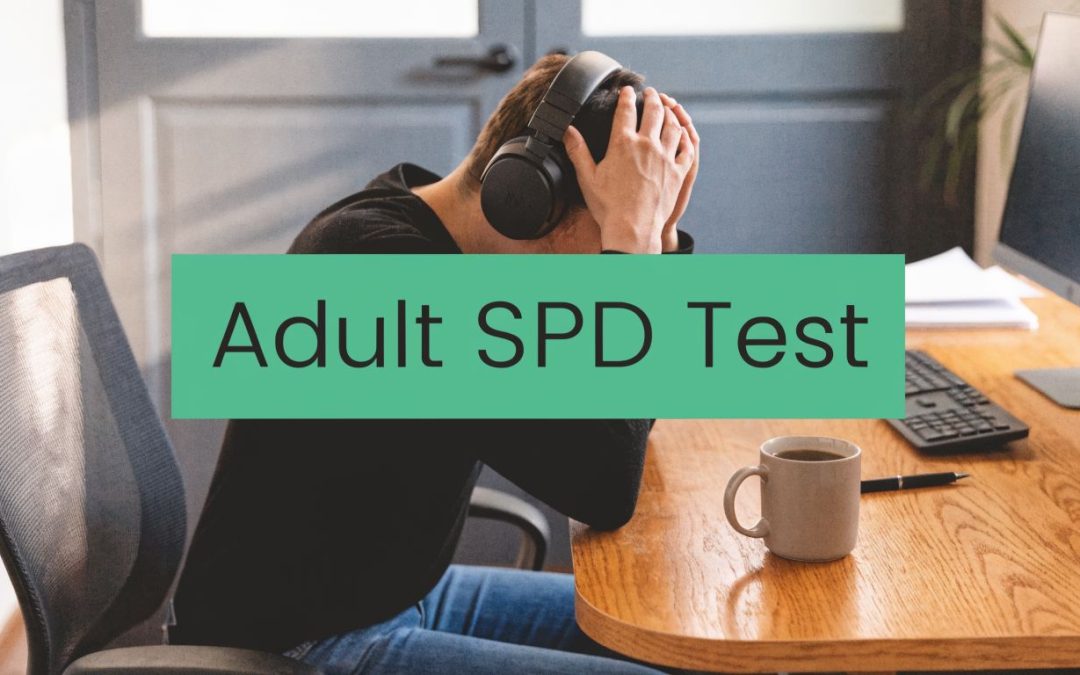
Some adults arrive at this question after years of calling themselves “too sensitive.” Others think they're distracted, irritable, picky, socially drained, or mysteriously exhausted by ordinary environments. The office lights feel harsh. Shirt tags feel impossible. A crowded restaurant sounds like every conversation is happening inside your head at once.
If that sounds familiar, you're not broken, dramatic, or failing at adulthood. You may be dealing with a real pattern in how your nervous system takes in and responds to the world. A sensory processing disorder test for adults can help put language around experiences that have felt random for a long time.
Do I Have Sensory Processing Disorder An Introduction for Adults
A common story goes like this. You get through the workday, but it costs you more than anyone can see. You keep one foot tucked under you in meetings because sitting still feels oddly uncomfortable. You avoid certain stores because the lighting and noise make you feel scattered. You come home from social events needing silence, darkness, and no one touching you for a while.

Many adults don't realize these patterns can fit under sensory processing disorder, often shortened to SPD. The term describes difficulty organizing, filtering, or responding to sensory input such as sound, touch, movement, light, smell, and body awareness. It's often discussed in children, but these patterns can continue into adulthood, even if no one identified them earlier.
If you need a basic primer, this overview of what sensory processing disorder is gives helpful background in plain language.
Why adults often miss it
Adult sensory challenges rarely look neat. They can show up as burnout, avoidance, chronic tension, relationship friction, messy work routines, or feeling “off” in places that seem normal to everyone else. Many people build coping systems without realizing they're compensating for a sensory pattern.
That's one reason this topic matters. Prevalence estimates suggest SPD symptoms affect 5% to 16.5% of the general population, and one extrapolation suggests sensory processing challenges could affect as many as 14.9 million adults in the U.S. according to this adult SPD prevalence overview from the Sachs Center.
You don't need to wait until things are falling apart to ask whether sensory processing is part of the picture.
What getting tested can actually do
A good assessment doesn't slap a label on you and send you home. It helps answer practical questions:
- What overwhelms you most
- What you tend to miss or under-register
- Whether you seek extra input to stay regulated
- How these patterns affect work, relationships, sleep, and daily routines
That kind of clarity can be a relief. It turns “Why am I like this?” into “Now I understand what my nervous system is doing.”
Your Nervous System's 'Volume Dial' How SPD Works in Adults
Think of your nervous system like a control board with two jobs. First, it has to notice incoming signals. Second, it has to set the right volume for those signals. In SPD, that system can misread intensity, importance, or timing.
A fluorescent light might come through too loud. A scratchy cuff might stay in the foreground instead of fading into the background. Or the opposite happens. Your body may miss hunger, pain, posture, or someone calling your name until the signal becomes very strong.
If you want a broader look at the body-brain connection, this explanation of how the nervous system works helps make sense of why sensory experiences can affect mood, movement, and focus.
When input feels too loud
Some adults are over-responsive. Their systems react strongly to sounds, touch, movement, smell, or visual clutter. This can look like:
- Sound overload that makes open offices, busy restaurants, or family gatherings draining
- Touch sensitivity that turns seams, tags, certain fabrics, or unexpected contact into real distress
- Visual strain in bright rooms, scrolling screens, or crowded stores
- Smell and taste sensitivity that makes ordinary products or foods feel overpowering
These adults often spend energy managing exposure. They choose quiet seats, trim tags, wear the same soft clothes, or leave events early. From the outside, that can look like pickiness. From the inside, it feels like survival.
When input feels too quiet
Other adults are under-responsive, sometimes called low registration. Their systems don't notice cues as quickly or as clearly. They may:
- Miss their body's signals for thirst, fatigue, or pain
- Not notice their name being called
- Seem slow to react in noisy or fast-moving settings
- Need stronger input before something registers
This can confuse people because under-responsivity doesn't always look “sensory.” It can look like forgetfulness, clumsiness, low motivation, or spacing out.
Practical rule: Sensory differences aren't only about hating stimulation. Sometimes they're about not getting enough clear input in the first place.
When the body goes looking for more
A third pattern is sensory seeking. The body actively looks for stronger input to feel organized. Adults might crave movement, pressure, chewing, pacing, music, stretching, or constant fidgeting. They may work better while walking, bounce their leg without noticing, or feel calmer after lifting, squeezing, or intense exercise.
This is one reason SPD in adults can be easy to misread. A person may look restless when they are self-regulating.
Why it hits adult life so hard
Children often show sensory patterns in play, school routines, or transitions. Adults carry those same patterns into jobs, marriages, parenting, driving, shopping, intimacy, and sleep. The stakes feel higher because there's less room to melt down, withdraw, or recover.
That's why many adults describe SPD as living with a nervous system that doesn't filter smoothly. It isn't only about discomfort. It affects energy, patience, concentration, and confidence.
Common Screening Questionnaires for Adult SPD
Most adults begin with a questionnaire, not a lab test. That's because sensory processing shows up in patterns across everyday life. Good screening tools capture those patterns in a structured way.
The most important name to know is the Adolescent and Adult Sensory Profile, often called the AASP.

The AASP is the main starting point
The AASP was developed by Winnie Dunn and first published in 1999. It's a norm-referenced self-report questionnaire for people age 11 and older with 125 items rated on a 5-point scale, and it compares responses to age-based normative data from 1,090 U.S. adults. A 2017 scoping review found the AASP was used in nearly 47% of analyzed studies on sensory processing in adolescents and adults with ASD and made up over 71% of questionnaire-based assessments, which is why many clinicians treat it as the foundational adult sensory tool, as described in this AASP scoping review on PubMed Central.
That sounds technical, but the idea is simple. The AASP asks how often common sensory experiences happen for you. Then it organizes your responses into patterns that make daily life easier to understand.
Dunn's four sensory patterns in plain English
The AASP is built around four core quadrants. These aren't personality types. They're patterns in how your nervous system notices and responds to input.
| Pattern | What it often feels like | Adult example |
|---|---|---|
| Sensory sensitivity | You notice sensory input quickly and strongly | You hear every keyboard click in the office |
| Sensory avoiding | You actively reduce input because it's too much | You leave crowded places early or control your environment tightly |
| Low registration | You miss cues other people notice right away | You don't realize you're hungry, uncomfortable, or being spoken to |
| Sensation seeking | You need or enjoy stronger input to feel organized | You pace, chew ice, need movement breaks, or turn music up |
What each quadrant can mean day to day
Sensory sensitivity
This profile is common in adults who feel “on edge” in ordinary settings. Your system notices details fast. The hum of a vent, a perfume in the hallway, or the flicker of a screen may all compete for attention.
A person with this pattern may not always avoid stimulation. Sometimes they stay in the environment but feel worn down by it.
Sensory avoiding
Avoiding goes a step further. Instead of just noticing input, you organize your life to reduce it. You may prefer routines, smaller groups, predictable clothes, dimmer rooms, or very specific work setups.
This doesn't mean you're antisocial or rigid. It often means your system works best when incoming input is controlled.
High avoiding scores often explain why someone feels better with planning, quiet, and control, even if they've been told they're “too particular.”
Low registration
This pattern surprises many adults. They expect sensory issues to mean hypersensitivity, but low registration is just as important. It can look like missing social cues, body signals, or changes in the environment until they become strong.
An adult with low registration may need reminders, stronger prompts, more movement, or clearer sensory feedback to stay connected and organized.
Sensation seeking
Seeking isn't a flaw. It's often a nervous system trying to get the input it needs. Some adults feel calmer after pressure, motion, repetitive movement, or a noisy gym. Others work better with constant sensory input in the background.
This can overlap with habits people developed long ago without realizing why they helped.
Other adult screening tools you may hear about
The AASP isn't the only option. Another tool often used in adults is the Sensory Processing Measure-2, or SPM-2. It looks across sensory systems and also considers planning, praxis, and social participation. Some clinicians use it alongside interview data and observation to get a fuller picture.
A few adults also encounter symptom checklists online. Those can be useful for self-reflection, but they're not a diagnosis. Their best use is helping you notice patterns worth bringing to a trained professional.
What these questionnaires can and can't do
A questionnaire can do a lot. It can identify recurring sensory themes, reveal why certain environments derail you, and give your clinician a structured way to understand your lived experience.
It can't diagnose the whole picture by itself.
That's because high sensory scores can show up with other conditions too. The score tells you there's a pattern. It doesn't automatically tell you why the pattern is there or what else may be contributing.
The Complete Assessment Pathway Who Diagnoses SPD
A questionnaire result is a starting point. A real evaluation pulls together your history, your daily functioning, your sensory patterns, and the observations of a trained clinician.
For adults, the professional most commonly associated with sensory assessment is an occupational therapist, especially one with training in sensory integration. Depending on the case, a psychologist, neuropsychologist, physician, therapist, or other provider may also be involved.

What a full adult evaluation usually includes
A quality assessment tends to look more like detective work than a single test. The clinician asks what happens, where it happens, how long it has been happening, and what it interferes with.
Most evaluations include:
- A detailed interview about triggers, routines, coping habits, work demands, sleep, stress, and developmental history
- Standardized questionnaires such as the AASP and sometimes the SPM-2
- Clinical observation of how you handle movement, posture, touch, coordination, planning, or sensory challenges
- Functional analysis of real-life impact, including work, relationships, self-care, driving, exercise, and community settings
The goal isn't just to confirm “yes” or “no.” It's to identify patterns that explain your lived experience.
Where the SPM-2 fits
The SPM-2 for adults adds useful detail because it looks at six sensory systems plus praxis and social participation. Its validity is strong, with correlations of r=0.60-0.82 with the AASP, and the source notes that fMRI-integrated studies found high tactile and auditory hypersensitivity scores correlated with hyperactivation in the somatosensory cortex and amygdala, linking the lived experience of overload with measurable neurological activity, according to this SPM-2 assessment overview.
That matters because many adults have been told their reactions are exaggerated, emotional, or imagined. A careful assessment says something very different. It treats sensory overload as a real nervous system pattern with functional consequences.
A strong evaluation doesn't ask whether your experience is “real enough.” It asks how your nervous system is processing input and what support would help.
Who else may be part of the picture
Sometimes the occupational therapist can handle the sensory piece directly. In more layered cases, other professionals help clarify overlap.
Neuropsychologist or psychologist
These providers can help sort out attention, executive function, learning differences, anxiety, trauma-related responses, and autism features. That's especially helpful when symptoms blur together.
Primary care or psychiatry
Medical and psychiatric providers can review sleep, medication effects, mood symptoms, chronic pain, or other health factors that may amplify sensory challenges.
Nervous-system-focused chiropractor
Some adults also explore nervous-system-focused chiropractic care as part of a broader support plan. This type of provider isn't replacing sensory assessment. The role is different. They may look at patterns of nervous system stress and regulation, especially when a person's body seems stuck in a constant state of tension, overwhelm, or poor adaptation.
What to bring to an evaluation
If you're pursuing a sensory processing disorder test for adults, arrive with examples, not just labels.
A short list helps:
- Environments that throw you off such as grocery stores, offices, family events, gyms, or traffic
- Specific sensory triggers like seams, brightness, chewing sounds, perfume, or motion
- What happens next including shutdown, irritability, headaches, spacing out, or a need to leave
- What helps such as pressure, movement, earbuds, darkness, routines, or silence
That turns a vague concern into a useful clinical map.
Is It SPD or Something Else Untangling Overlapping Conditions
One of the hardest parts of adult diagnosis is this. Sensory problems rarely travel alone.

You may think, “I can't focus in open offices, so this must be ADHD.” Or, “I avoid parties, so this must be anxiety.” Or, “I hate certain textures, so maybe it's just stress.” Sometimes that's partly true. Sometimes it misses the main driver.
A key challenge in adult assessment is that up to 75% of adults with ADHD also exhibit significant SPD traits, and many online tests don't include integrated screeners to help separate those patterns, as noted in this discussion of adult sensory symptoms and ADHD overlap from ADDitude.
The same behavior can come from different roots
Here's where people get stuck. The outward behavior may look identical, while the reason underneath is different.
| What you notice | Could point toward SPD when | Could point toward something else when |
|---|---|---|
| You can't focus in a noisy office | The sound itself feels intrusive, painful, or impossible to filter | Attention shifts for many reasons, not mainly sensory input |
| You avoid parties | Noise, lights, touch, and crowding push your system into overload | Fear of judgment or social evaluation is the main issue |
| You fidget constantly | Movement helps your body feel organized and alert | Restlessness is tied more to impulsivity or internal agitation |
| You seem emotionally reactive | Overload builds until your system can't regulate well | Mood, trauma, or anxiety symptoms are the stronger driver |
SPD and ADHD are not the same
ADHD often centers on attention regulation, impulse control, and executive function. SPD centers on how sensory input is detected, filtered, and responded to. But in real life, those systems interact.
An adult with ADHD may struggle in a meeting because of distractibility. An adult with SPD may struggle because the chair is uncomfortable, the fluorescent lights buzz, and side conversations are too loud to tune out. Some adults have both.
That's why a sensory checklist alone can mislead you. A high score doesn't automatically mean standalone SPD.
SPD and anxiety can look almost identical
Anxious adults often avoid overstimulating situations. Adults with SPD do too. The difference is often in the trigger.
If your body reacts because the room is too bright, the sounds are too sharp, and the sensory load itself is unbearable, that points toward sensory processing. If your distress is driven more by fear, anticipation, or social worry, anxiety may be primary. Sometimes sensory overload then triggers anxiety secondarily.
That distinction matters because treatment planning changes. If you only treat anxiety while ignoring sensory load, the person may still feel dysregulated in the same environments.
A short video can help clarify how overlapping neurodevelopmental patterns can feel in real life.
Clues that help in conversation with a clinician
Try describing your experience in this format:
- “The sensory part is the first problem.” Example: “I lose focus after the hum, brightness, and movement in the room start piling up.”
- “The body signal is weak or delayed.” Example: “I often don't notice hunger, thirst, or pain until it gets intense.”
- “I need specific input to function well.” Example: “Pressure, movement, or a quiet controlled space changes everything.”
- “I avoid or seek sensation in repeatable patterns.” Example: “I always scan for the least noisy corner.”
The more precisely you describe the trigger, the easier it is to tell whether sensory processing is central, secondary, or one part of a larger picture.
How to Interpret Your Sensory Profile Results
Getting results can feel strangely emotional. Many adults expect a simple answer and instead receive a profile with patterns, ranges, and sensory language they've never seen before. The useful question is not “What label did I get?” It's “What does this tell me about how my nervous system handles daily life?”
If your score shows sensory avoiding
A high sensory avoiding pattern usually means you actively manage input to prevent overload. You may prefer routine, quiet, soft clothes, predictable spaces, and control over your schedule.
What this often means: You're not being difficult. You've likely built a life that reduces the cost of sensory overload.
At work, this may look like closing the door, choosing remote tasks, or resisting sudden plan changes. In relationships, it may show up as needing decompression time before you can talk, socialize, or be touched comfortably.
If your score shows sensory sensitivity
A high sensory sensitivity pattern means your system notices input quickly and intensely. You may pick up details others miss, but that also means ordinary environments can feel crowded inside your body and mind.
This profile often fits adults who say things like, “Everything gets to me,” or “I can't ignore small things.” The issue isn't weak coping. It's that the signal arrives louder.
If your score shows low registration
A high low registration pattern means cues don't stand out enough or don't register quickly. You might miss body signals, not notice mess or noise until it becomes obvious, or seem slow to respond in busy settings.
That can affect routines more than people realize. Meals get delayed. Posture collapses. You miss subtle feedback in conversations. You may need stronger reminders, movement, texture, or body-based input to stay present.
For a helpful body-awareness angle, this article on proprioception and sensory processing connects sensory patterns with movement and physical awareness.
If your score shows sensation seeking
A high sensation seeking pattern often means your body functions better with more input, not less. You may crave movement, pressure, music, chewing, stretching, or hands-on activity.
Your results are best understood as a user manual, not a verdict.
This kind of profile can be a strength when you understand it. Adults with seeking patterns often do well when they intentionally build sensory input into the day instead of waiting until they feel scattered.
How to use the results in real life
Don't stop at the score sheet. Translate it into situations.
Ask yourself:
- Which environments bring out this pattern most clearly
- What signs show I'm getting dysregulated
- What kind of input helps me recover or stay steady
- Which relationships or routines are affected most
That turns a report into a practical guide for work setup, communication, daily scheduling, and support planning.
Your Action Plan After an SPD Assessment
Once you have results, the next step is support. Many adults freeze here because they expected the test itself to solve the mystery. In reality, assessment gives direction. What helps most is building a plan around the patterns you found.
Start with targeted follow-through
If your evaluation points strongly toward sensory processing differences, ask what the clinician recommends for daily function. For many adults, that includes occupational therapy, environmental changes, regulation strategies, and sensory supports customized for the profile.
Examples might include:
- Workspace changes such as reduced noise, softer lighting, and more predictable seating
- Routine changes like transition buffers, movement breaks, and scheduled recovery time
- Sensory tools including headphones, chewable items, textured supports, or pressure-based regulation tools
- Communication changes so family or coworkers understand what overload looks like for you
These supports aren't “extra.” They help reduce the friction between your nervous system and your environment.
Don't ignore the nervous system side
A major gap in adult SPD care is knowing how to use results beyond the standard referral pathway. One source discussing this gap notes that neuro-tonal techniques such as Torque Release Technique may reduce sensory overload symptoms by improving nervous system regulation, and that Insight Scans can identify vertebral subluxations that may exacerbate sensory dysregulation, allowing more personalized care plans. That perspective is outlined in this discussion of next steps after adult SPD testing.
Whether or not you pursue that route, the larger point is worth keeping. Sensory patterns don't only live on a questionnaire. They show up in the body as tension, poor adaptability, shutdown, agitation, and uneven regulation. Many adults benefit from care that supports nervous system function, not only behavior management.
Think in layers, not either-or
The best plan usually isn't one provider doing everything. It's coordinated support.
You might combine:
- Occupational therapy for sensory strategies and functional adaptation
- Mental health support if anxiety, burnout, trauma, or ADHD are also in the picture
- Nervous-system-focused chiropractic care if you want added support around regulation, body tension, and stress load
- Home and work accommodations that reduce avoidable overload
Recovery often starts when you stop asking your body to tolerate everything and start giving it the kind of input and support it handles best.
Questions to ask after your results come in
Instead of asking only, “Do I have SPD?” ask:
- Which sensory patterns are strongest for me
- How do they affect my functioning
- What should I change first at home or work
- What kind of care addresses regulation, not just symptom management
- Which overlapping conditions still need to be ruled in or out
That's how a sensory processing disorder test for adults becomes useful. It doesn't just name the problem. It gives you a map.
If you're looking for a family-centered, neurologically focused next step, First Steps Chiropractic in Hayden, Idaho offers consultations, Insight Scans, and gentle care designed to support nervous system regulation for children and adults. Their team takes time to explain what they find and how those findings may relate to sensory overwhelm, stress, and day-to-day function.