
If you're asking what causes sensory integration disorder, the simple answer is: it’s not just one thing. This complex neurological challenge comes from a mix of factors that shape how a child’s brain develops and handles information. It’s like a traffic jam in the senses, where the brain can’t quite direct all the incoming signals.
Unpacking the Roots of Sensory Challenges
When your child experiences the world differently, looking for the "why" is a natural first step. Understanding the causes of sensory integration disorder, often called Sensory Processing Disorder (SPD), helps us find the right path forward. This isn’t about blame; it’s about decoding the unique wiring of your child’s nervous system.
Picture the brain as an intricate air traffic control system. For most people, sensory signals—sights, sounds, and textures—flow in smoothly, get organized, and are sent to the right destinations. In a child with SPD, that system gets overloaded. Signals can get crossed, delayed, or misinterpreted, turning everyday experiences into something confusing and overwhelming.
A Mix of Influences
This neurological "traffic jam" doesn't happen because of a single event. More often, it's the result of several factors coming together, influencing a child’s development right from the very beginning. These influences lay a foundation where the nervous system struggles to properly organize all the sensory input it receives.
While the exact cause is still a major focus of research, experts have identified a few key contributors:
- Genetic Predisposition: Just like you can inherit eye color, a tendency for sensory challenges can absolutely run in families.
- Prenatal and Birth Stress: Any complications during pregnancy or the birth process can put a tremendous amount of stress on a baby’s brand-new, developing nervous system.
- Environmental Factors: Things like early life stress or even a lack of rich sensory experiences can play a role in how a child’s sensory pathways develop.
The Brain's Wiring Is Key
Groundbreaking research has confirmed that SPD has a real, biological basis. A 2013 study from UC San Francisco found measurable differences in the brain structure of kids with SPD. Specifically, they saw disruptions in the white matter tracts—the "highways" that carry sensory information.
This faulty wiring can mess with the timing and integration of sensory signals, making it incredibly hard for the brain to build a clear, coherent picture of the world. Affecting 5% to 16% of school-aged children, this condition is as common as ADHD but is still far less understood. You can find more details about these important neurological findings directly from the UCSF study.
The core issue in Sensory Integration Disorder isn't a problem with the senses themselves, but with the brain's ability to organize the information they send. It’s a processing challenge, not a perception problem.
Understanding these roots helps us shift our focus. Instead of just managing behaviors, we can start addressing the underlying neurological disorganization. When we get to the root cause, we can use proactive strategies that help rewire and strengthen these critical neural connections for the long term.
Key Suspected Causes of Sensory Integration Disorder
To help make sense of it all, this table breaks down the main suspected causes of SPD. It’s a quick-reference guide to the key areas of influence we see in practice.
| Category of Influence | Description | Examples |
|---|---|---|
| Neurological Basis | Differences in brain structure and function that affect how sensory signals are processed and integrated. | Abnormal white matter microstructure, inefficient neural pathways. |
| Genetic Factors | An inherited predisposition that makes a child more vulnerable to developing sensory challenges. | Family history of sensory issues, ADHD, or autism. |
| Prenatal & Perinatal Stress | Stressors experienced by the mother or baby during pregnancy, labor, and delivery. | Maternal stress, birth trauma (forceps, vacuum), C-section. |
| Environmental Contributors | Early life experiences that may impact nervous system development and sensory exposure. | Early hospitalization, lack of varied sensory experiences. |
Seeing these factors laid out helps clarify that SPD is not a simple issue with a simple cause. It's a complex puzzle that requires a comprehensive and understanding approach to solve.
Exploring the Neurological Roots of Sensory Challenges
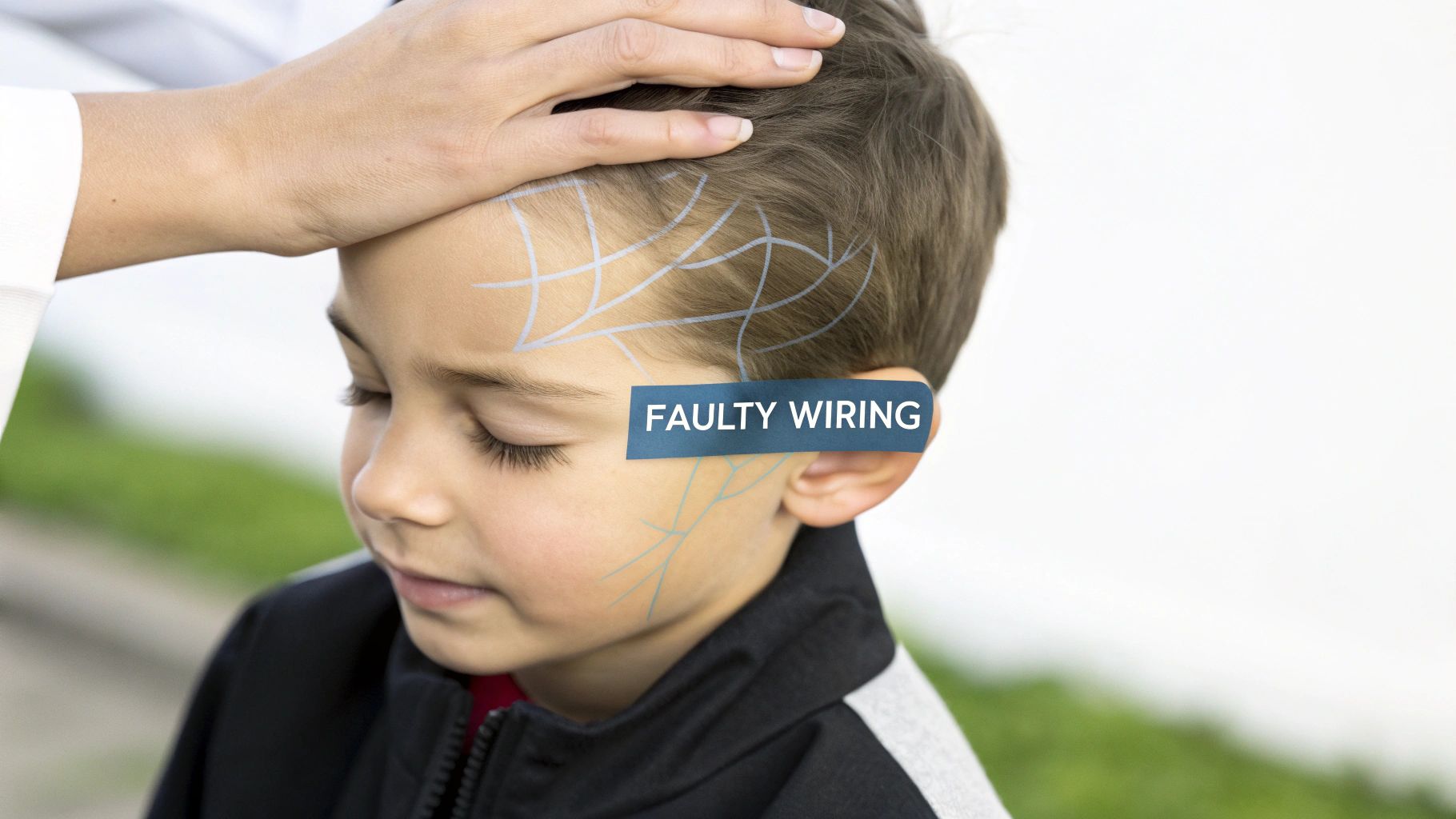
To really get to the bottom of what causes sensory integration disorder, we have to look at the body’s most incredible and complex system: the nervous system. Think of it as the body's internal wiring, sending a constant stream of messages between the brain, the body, and the outside world. When that wiring is working right, sensory information flows smoothly, letting a child learn, play, and connect with their world without a hitch.
But what happens if that wiring gets scrambled? When there’s interference, this delicate communication network can go haywire. We call this “faulty wiring,” and it’s often the true cause of sensory processing challenges. The brain starts getting messages that are too loud, too soft, or just plain garbled, leading to the overwhelming and confusing experiences that define SPD.
The Brainstem: The Body's Sensory Filter
Right at the center of this communication hub is the brainstem. It’s a crucial structure at the base of the brain where it meets the spinal cord. You can think of the brainstem as a master filter or a security guard for all incoming sensory information. Its main job is to sift through the endless flood of data from the senses and decide what’s important enough to get the brain’s attention.
This filtering job is absolutely essential. It’s what allows a child to tune into their teacher’s voice while tuning out the buzz of the lights overhead or the tag itching their neck. But when the brainstem isn't working at its best, that filter becomes unreliable.
Instead of keeping out the unimportant noise, it might just let everything flood in at once, causing a sensory meltdown. On the flip side, it might block out too much, leaving a child feeling disconnected and under-responsive to what’s happening around them. This neurological breakdown is a massive piece of the sensory puzzle.
How Physical Stress Disrupts the Wiring
So, what makes this critical filter go on the fritz? One of the biggest culprits is physical stress on the upper neck and brainstem area. This part of the body is incredibly delicate, especially for babies and young kids, making it highly vulnerable to misalignments, which we call subluxations.
This kind of physical tension often starts very, very early in life. Some of the most common causes of stress to this vital region include:
- Birth Trauma: Interventions like forceps, vacuum extraction, or a long, difficult labor can put a huge amount of strain on a newborn’s head and neck.
- C-Sections: While they are often medically necessary, the pulling and twisting involved in a C-section can create tension in the baby’s cervical spine.
- Early Childhood Falls: The bumps and tumbles that are a normal part of growing up can also add up over time, contributing to these misalignments.
When the bones in the upper neck are knocked out of their proper alignment, they can put direct physical tension on the brainstem and the nerves exiting the spinal cord. This tension is like static on a phone line—it garbles the sensory messages traveling to and from the brain.
This interference, known as dysautonomia, throws the entire nervous system off balance, crippling its ability to regulate itself and process sensory input correctly. The result is a child whose internal "traffic control system" is stuck in a state of chaos. To get a better handle on this, you can learn more about how the nervous system works in our other article.
Restoring Clear Communication
Understanding this neurological root cause is empowering because it points us toward a real solution. The goal isn’t just to manage the behavioral symptoms of SPD on the surface; it’s to address the underlying source of the faulty wiring. This is exactly where neuro-tonal chiropractic care comes into the picture.
By using gentle and precise adjustments, a neurologically-focused pediatric chiropractor can help correct misalignments in the upper neck. This takes the physical pressure off the brainstem and spinal cord, allowing the body's communication system to finally work without all that static.
This process essentially helps "reboot" the nervous system, allowing the brainstem's sensory filter to do its job properly. As the neurological signals become clearer and more organized, many families see huge improvements in their child's sensory integration, emotional regulation, and overall well-being. By getting to the root of the problem, we can help restore balance and allow a child to experience their world with comfort and confidence.
How Prenatal and Genetic Factors Shape Sensory Development
A child’s sensory journey starts long before they ever take their first breath. The foundation for how they’ll experience the world is actually laid during pregnancy and birth, where a mix of genetics and environmental factors creates a totally unique blueprint for their nervous system. Getting a handle on these early influences is a major key to understanding what causes sensory integration disorder.
Just like a child can inherit their mom’s curly hair or their dad’s blue eyes, they can also inherit a predisposition for sensory processing challenges. We see this all the time in practice—sensory issues often run in families, which points to a strong genetic link. This doesn't mean a child is guaranteed to have SPD, but it can make their nervous system more vulnerable to the effects of stress and interference.
Think of it like building a house. Your genetics provide the architectural plans—the basic structure and layout. If those plans happen to include a slightly less resilient foundation, the house might be more susceptible to cracks if it faces a big storm.
The Impact of the Prenatal Environment
Those nine months in the womb are an incredible period of rapid-fire neurological growth. During this time, the developing nervous system is super sensitive to its environment. The mother's physical and emotional well-being can have a profound impact on how her baby's sensory wiring is formed.
One of the biggest factors we look at is maternal stress. High levels of cortisol, the main stress hormone, can cross the placenta and directly affect the baby's developing brain and nervous system. This can essentially prime the baby’s system for a heightened "fight or flight" response before they're even born, setting the stage for sensory over-reactivity down the road.
A calm, well-regulated maternal nervous system creates the optimal environment for fetal development. On the flip side, a nervous system stuck in a state of chronic stress can lay a foundation of dysregulation in the baby, influencing their sensory processing from day one.
When Birth Interventions Create a Perfect Storm
The birthing process itself is a massive neurological event for a baby. And while they are often absolutely necessary for safety, interventions during labor and delivery can introduce a significant amount of physical stress to a newborn's delicate head, neck, and spine. This is a critical piece of the puzzle when we explore what causes sensory integration disorder.
This combination of a potential genetic vulnerability plus intense physical stress during birth is what we often call the "Perfect Storm." It’s almost never one single thing, but a cascade of factors that stack up, creating the exact conditions for sensory challenges to emerge.
Common contributors to this physical stress include:
- Prolonged or Difficult Labor: Hours and hours of pressure and contractions can create serious tension in the baby’s cranium and spine.
- Forceps or Vacuum Extraction: These life-saving instruments apply direct force to the baby’s head and are a common cause of misalignments in the upper neck.
- C-Section Delivery: The pulling and twisting that can be part of a C-section can also create significant strain on the cervical spine and brainstem area.
This kind of physical trauma can lead to tiny misalignments, or subluxations, that put pressure directly on the brainstem—the body's master control center for sensory filtering. When this crucial area is compromised, the brain's ability to properly organize and interpret sensory information gets disrupted, leading directly to the symptoms of SPD. Many of these early challenges can also be linked to other issues; you can learn more about what causes developmental delays in our detailed guide.
Supporting a healthy prenatal environment and ensuring proper alignment after birth can make a world of difference. It helps to calm the storm and promote optimal sensory development right from the very start.
Understanding the Overlap Between SPD, Autism, and ADHD
If you’ve ever found yourself wondering whether your child’s challenges are due to Sensory Processing Disorder, Autism, or ADHD, you’re not alone. It’s a common point of confusion for so many parents. The lines between these conditions can seem incredibly blurry because their symptoms often look remarkably similar on the outside.
There's a very real neurological reason for this: sensory struggles aren't just a separate problem but are often a core, foundational feature of both Autism and ADHD.
Many parents describe seeing behaviors like constant fidgeting, emotional meltdowns, or social awkwardness and struggle to pinpoint the exact cause. This overlap exists because all three conditions share common roots in how the brain and central nervous system get wired and organized. At their core, they all stem from a similar kind of neurological disorganization that impacts regulation, processing, and attention.
Instead of seeing them as three completely separate issues, it’s far more helpful to view sensory processing challenges as a critical piece of the puzzle for many children diagnosed with Autism or ADHD. In our experience, addressing the sensory component is often the key that unlocks progress in all other areas.
The Neurological Connection
So, what's happening in the brain? The connection between these conditions is deeply rooted in shared neurological vulnerabilities. The parts of the brain responsible for filtering sensory information, managing emotions, and handling executive functions are often working differently in kids with SPD, Autism, and ADHD.
This means the foundational "wiring" that supports focus, social engagement, and emotional balance is under a ton of stress.
This shared origin is exactly why a behavior that looks like defiance or inattention might actually be a child's response to overwhelming sensory input. For instance, a child who can't sit still in a noisy classroom might get labeled as having ADHD. But that restlessness could simply be their body's attempt to cope with auditory overstimulation—a classic sensory challenge.
When we understand that a child's nervous system is struggling to manage sensory information, we can reframe their behaviors. What looks like a behavioral problem is often a regulation problem at its core.
Recognizing this overlap is empowering for parents. It validates what you're seeing at home every day and shifts the focus from just managing surface-level behaviors to addressing the root cause: a nervous system that needs real support.
Symptom Overlap: SPD vs. Autism vs. ADHD
To help you see the subtle but important differences, we’ve put together a table that breaks down how common behaviors can show up differently depending on the underlying neurological driver. This can be a helpful starting point for parents trying to connect the dots.
| Behavior / Symptom | How It Manifests in SPD | How It Manifests in Autism (ASD) | How It Manifests in ADHD |
|---|---|---|---|
| Social Difficulties | Avoids social settings due to sensory overload (noise, crowds). May seem awkward because they are focused on managing their sensory experience. | Struggles with social cues, reciprocal conversation, and perspective-taking. May prefer solitary activities or interact in atypical ways. | Can be impulsive in social situations, interrupt others, or have trouble waiting their turn. May miss social cues due to inattention. |
| Meltdowns/Outbursts | Triggered by sensory overload (too much noise, light, touch) or under-stimulation. A physiological "fight or flight" response, not a tantrum. | Often caused by a break in routine, unexpected changes, or communication frustration. Can also be triggered by sensory overload. | Frequently stems from emotional dysregulation, frustration, or impulsivity. Can happen quickly with less of a build-up. |
| Inattention/Focus Issues | Difficulty focusing because the brain is distracted by environmental sensory input (a buzzing light, itchy tag, background noise). | Focus is often intense but narrow (hyper-focused on special interests). Difficulty shifting attention away from preferred topics. | Characterized by distractibility, difficulty sustaining attention on non-preferred tasks, and forgetfulness. |
| Repetitive Behaviors | Seeks specific sensory input (spinning, rocking, chewing) to self-regulate a disorganized nervous system. It's calming or organizing. | Often called "stimming," these behaviors serve a self-soothing function but are also tied to routine, anxiety, and expressing excitement. | Fidgeting and restlessness are common and are often an attempt to increase focus and alertness. Tends to be less rhythmic than autistic stimming. |
| Rigidity/Inflexibility | Prefers predictable routines because new environments bring unpredictable and potentially overwhelming sensory experiences. | Strong need for sameness and routine. Distress over minor changes is a core feature. Thinking can be very literal and rule-based. | Can appear inflexible due to executive function challenges, such as difficulty with planning, transitioning between tasks, or problem-solving. |
It's crucial to remember that this table is a guide, not a diagnostic tool. Every child is unique, and a thorough assessment by a trained professional is the only way to get a clear picture.
Why the Symptoms Look So Similar
The high rate of co-occurrence between these conditions is staggering and really confirms the deep connection. One of the biggest factors is SPD's incredibly high co-occurrence with autism spectrum disorder (ASD), where estimates suggest 45% to 96% of individuals show significant sensory processing differences.
The overlap is also huge with ADHD, where SPD rates can be as high as 57% in some studies. You can dive deeper into these important findings on sensory health.
This flowchart helps visualize how different factors—from genetics to stress during pregnancy and birth trauma—can combine to create the 'perfect storm' that leads to these neurological challenges.
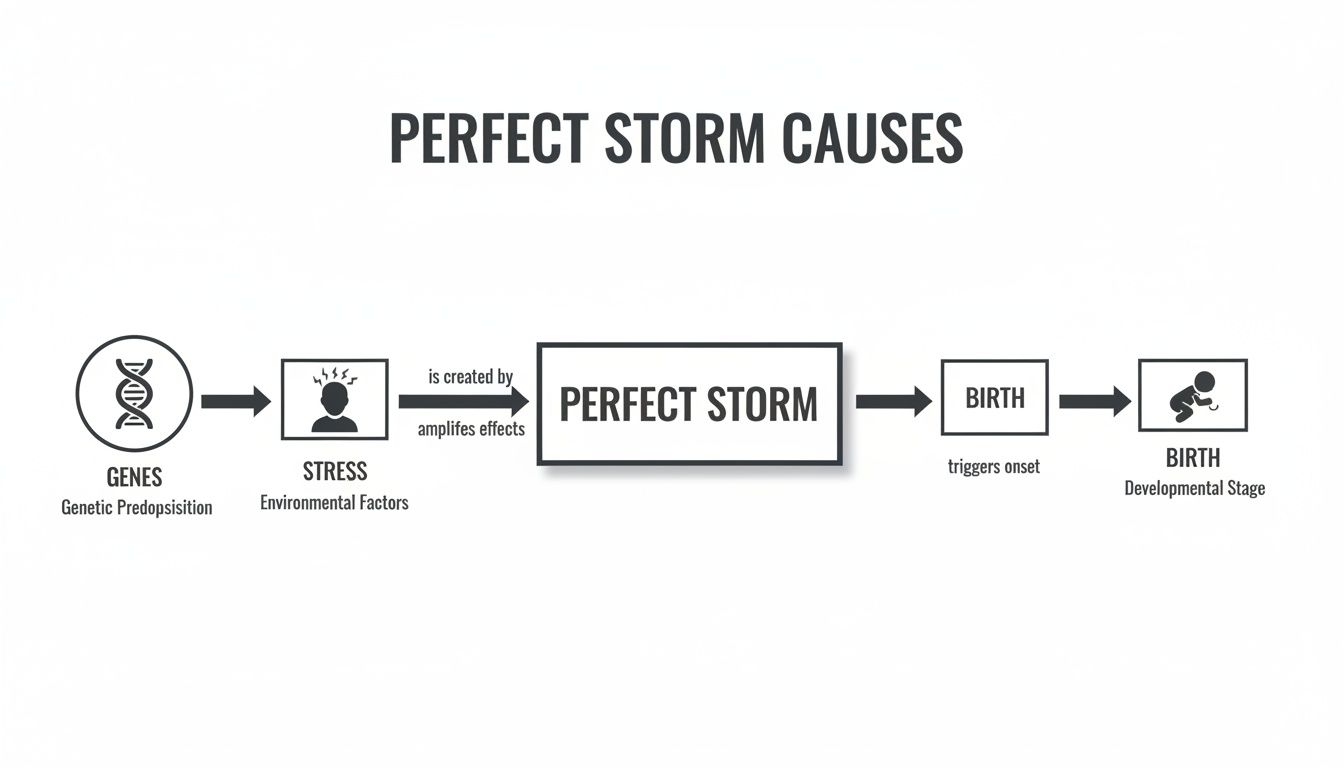
As you can see, it's rarely just one thing. It's often a sequence where genetic predispositions, followed by prenatal or life stress and then a difficult birth, can tip the scales and contribute to the development of sensory integration challenges.
A Holistic Path Forward
Because of this significant overlap, an effective approach has to look at the nervous system as a whole. Simply targeting ADHD-like symptoms with one tool or Autism-related behaviors with another may miss the foundational piece of the puzzle if the underlying sensory dysfunction isn't addressed first.
When care is focused on improving the function of the central nervous system, families often see improvements across the board. By calming that "fight or flight" response and helping the brain better organize sensory input, we can see incredible, positive changes in:
- Focus and Attention: A regulated nervous system is better equipped to filter out distractions and sustain focus.
- Emotional Regulation: This means fewer sensory-driven meltdowns and a greater ability to cope with frustration.
- Social Engagement: We see reduced social anxiety when a child feels more comfortable and secure in their own body and environment.
By acknowledging the sensory component as a potential root cause, we open the door to interventions that support the entire system. This perspective helps us move beyond just labels and toward real solutions that foster true neurological resilience, helping children thrive in every part of their lives.
A Parent's Guide to Recognizing Sensory Red Flags
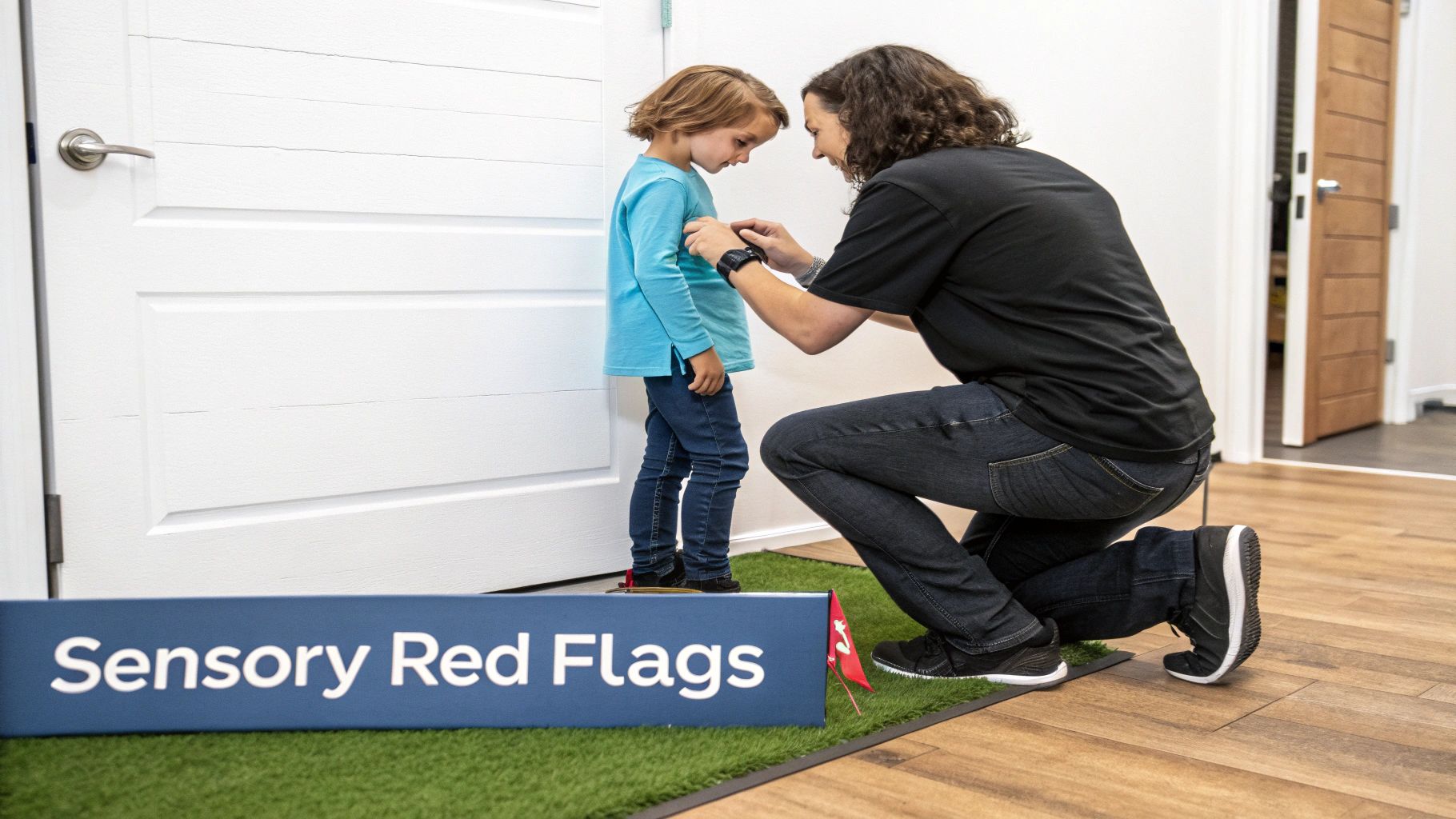
As a parent, you have a powerful intuition about your child. When you see persistent struggles that seem to go beyond typical childhood quirks, it’s so important to trust that gut feeling.
Recognizing the signs of sensory integration disorder isn’t about finding a label. It's about finally understanding the why behind your child's behaviors so you can get them the right kind of support.
These behaviors are often the brain's way of trying to make sense of a confusing, overwhelming world. They aren't intentional acts of defiance but are actually clues that the nervous system is disorganized and struggling. Seeing them as red flags for an underlying neurological cause is the first real step toward finding effective, targeted solutions.
Over-Responsive Red Flags
For some kids, it’s like the world’s volume dial is stuck on high. Their nervous systems are on hyper-alert, reacting with incredible intensity to sensations that most of us might not even notice. This is what’s known as being over-responsive or hypersensitive.
You might see this show up as:
- Extreme reactions to clothing: A child might refuse to wear certain fabrics, complain that seams or tags are physically painful, or insist on wearing the same soft, worn-out outfit every single day.
- Aversion to touch: They may pull away from hugs and cuddles, despise getting their hands messy, or become deeply distressed during grooming tasks like brushing their hair or trimming their nails.
- Sensitivity to sound and light: Everyday noises like a vacuum cleaner, a public restroom hand dryer, or a flushing toilet can be absolutely terrifying. They might squint or cover their eyes in brightly lit stores.
- Picky eating that goes beyond fussiness: This often involves an extreme avoidance of specific food textures, smells, or temperatures, which can severely limit their diet.
Under-Responsive and Sensory-Seeking Flags
On the complete other end of the spectrum are children whose nervous systems seem muted or dialed way down. They are under-responsive to sensory input, meaning they need much more intense sensations just to feel organized and aware of their own bodies.
This deep-seated need often leads to sensory-seeking behaviors. To an outsider, it can look a lot like hyperactivity, but it's really driven by a neurological need for more input.
Common signs include:
- A constant need for movement: These are the kids who are always on the go—running, jumping, spinning in circles, and crashing into furniture or even people.
- A very high pain tolerance: They might not seem to notice bumps, scrapes, or falls that would have another child in tears.
- Chewing on non-food items: You may notice them constantly chewing on their shirt collars, pencils, fingernails, or toys to get that organizing input their brain craves.
- Lack of awareness of personal space: They may stand too close to others when talking or touch people and objects without realizing it’s inappropriate.
A key takeaway for parents is recognizing that these sensory red flags are not isolated behavioral problems. They are direct communications from a nervous system that is struggling to regulate itself and process information from the world.
Understanding these signals is the key to getting to the root of the issue. For a deeper look at these behaviors, check out our guide on the most common sensory processing disorder symptoms.
This is especially critical because sensory issues often travel with other conditions. For instance, up to 41% of children show both sensory and attention impairments, highlighting a strong link with ADHD.
Yet, awareness remains shockingly low. A recent poll found that 36% of adults have never even heard of sensory difficulties, which can cause significant delays in a child getting the help they need. You can find more details about these important findings in the full poll on sensory integration difficulties. Identifying these flags early empowers you to take the right proactive steps.
How Neurologically Focused Care Can Help Your Child Thrive
Now that we’ve explored the neurological roots of sensory challenges, you’re probably looking for clear, effective ways to help your child. While traditional therapies like occupational therapy are incredibly important for managing symptoms, they often work best when paired with care that gets to the underlying cause—a disorganized and stressed-out nervous system.
This is exactly where neurologically-focused pediatric chiropractic comes in. Instead of just teaching coping strategies, we focus on restoring the fundamental communication lines between the brain and the body. By getting to the root of the interference, we can help calm the storm from the inside out.
Your Path to Answers and a Thriving Child
Finding the root cause of what’s triggering sensory integration disorder in your child begins with a clear, proven process. We’ve developed a five-step clinical journey to get you the answers and results your family deserves, ensuring we never guess when it comes to your child’s health.
Our process is built on precision and partnership:
- A Detailed Consultation: We start by listening. Your insights as a parent are invaluable, and we take the time to hear your child’s full story, from prenatal history to their current day-to-day struggles.
- Advanced Neurological Scans: We use state-of-the-art INSiGHT Scans to get a precise map of where stress and interference are "stuck" in your child’s nervous system. These scans are completely safe, non-invasive, and show us exactly how their system is functioning.
- A Comprehensive Exam: A hands-on physical and neurological exam helps us connect what we see on the scans to your child’s physical condition. We check for misalignments (subluxations) and other areas of tension that tell the full story.
- A Personalized Care Plan: We bring all the data together to create a customized plan of action. This plan outlines our specific recommendations, the frequency of care, and the exact goals we’ll work toward together.
- Gentle, Specific Adjustments: Using safe and gentle techniques like the Torque Release Technique (TRT), we make precise adjustments to release built-up tension from the nervous system, restoring clear brain-body communication.
A well-adjusted nervous system can better process sensory information, leading to improved regulation, better sleep, and healthier overall development. The goal is to help your child’s brain and body work together in harmony.
Restoring Clear Communication for Lasting Change
This focused approach gets right to the heart of the problem. When physical stress is removed from the brainstem and upper neck, the body’s "sensory filter" can finally start doing its job correctly.
The constant "fight or flight" signals begin to quiet down, allowing the nervous system to shift into a state of growth, healing, and development.
As this shift happens, families often report incredible changes. Children who were once overwhelmed by noise may become more comfortable in busy places. Those who struggled with focus might find it easier to engage at school. These improvements aren't a coincidence; they're the direct result of a healthier, more organized nervous system.
If you’re ready to move beyond just managing symptoms and start addressing the root causes of your child’s sensory challenges, we are here to help. Take the first step by scheduling a complimentary consultation with our team. We’re committed to providing the answers, care, and hope your family has been searching for, so your child can finally thrive.
Your Questions About Sensory Integration, Answered
When you’re navigating the world of sensory challenges, questions come up constantly. As a parent, you’re just trying to connect the dots and find the right path forward, and getting clear, straightforward answers is everything.
Is Sensory Integration Disorder a Real Medical Diagnosis?
This is one of the most common questions we hear, and the short answer is: it's complicated, but the challenges are very, very real. While Sensory Processing Disorder (SPD) isn't listed as its own standalone diagnosis in the main diagnostic manual (the DSM-5), its clinical significance is undeniable. In fact, sensory challenges are now officially recognized as a core diagnostic criterion for Autism Spectrum Disorder.
What matters more than the label, though, is that occupational therapists, neurologists, and other developmental experts see the impact of these struggles every single day. We now have research that identifies a clear biological and neurological basis for sensory challenges, showing real differences in the brain structure and function of kids who struggle.
The focus should always be on your child's very real functional difficulties and getting to the root of what's causing them.
The label isn't the most important thing. What is important is understanding that your child's struggles are real and have a neurological basis. The most effective care targets the root cause—the disorganized nervous system—to create true, lasting change.
How Can I Tell If My Child Is Just a Picky Eater?
It’s a fair question, and one that many parents grapple with. The difference really boils down to the severity of the reaction and its impact on your family’s daily life.
Typical picky eating is often a developmental phase or a simple matter of preference. A child might refuse to eat broccoli but will happily eat green beans or peas. It's manageable.
Sensory-related food aversions are a completely different ballgame. We’re talking about extreme, often physical reactions to specific textures, smells, or even the sounds of other people chewing. This isn't a behavioral choice; it's a neurological "threat" response that can turn every mealtime into a battle, severely limit nutritional intake, and create a massive amount of stress for the entire family.
Can a Child Outgrow Sensory Integration Disorder?
Over time, kids can definitely learn some excellent coping strategies. But the underlying neurological disorganization that drives sensory challenges rarely just resolves on its own without the right support.
Without proactive care, a child might simply learn to avoid overwhelming situations altogether. This can look like "outgrowing it," but it often means they're shrinking their world to feel safe, which can limit their social and developmental opportunities down the road.
Proactive care that focuses on improving nervous system function—like neurologically-focused pediatric chiropractic—is designed to help the brain actually learn how to process sensory information more effectively. The goal isn’t just to manage symptoms, but to create lasting change in how the nervous system works. By addressing the root cause, we help the nervous system recalibrate and reorganize, which paves the way for a child to not just cope, but truly thrive.
Are you ready to get to the root of your child’s sensory challenges? At First Steps Chiropractic, we provide the answers and care your family deserves. Schedule your complimentary consultation today!