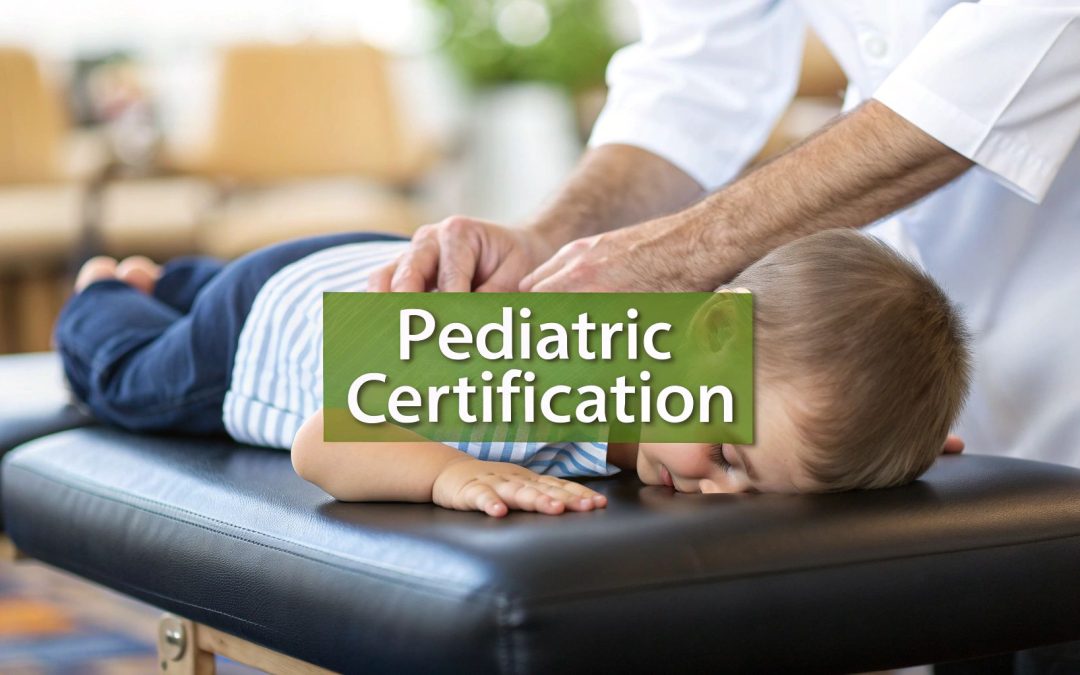
When you hear the term "pediatric chiropractic certification," it might sound a bit clinical or confusing. But for a parent, it’s really just a signpost for specialized, expert care.
Think of it this way: for your child's medical needs, you wouldn’t hesitate to choose a pediatrician over a general family doctor. A certified pediatric chiropractor is the exact same concept, but for your child’s neurological and structural health.
What a Pediatric Chiropractic Certification Really Means
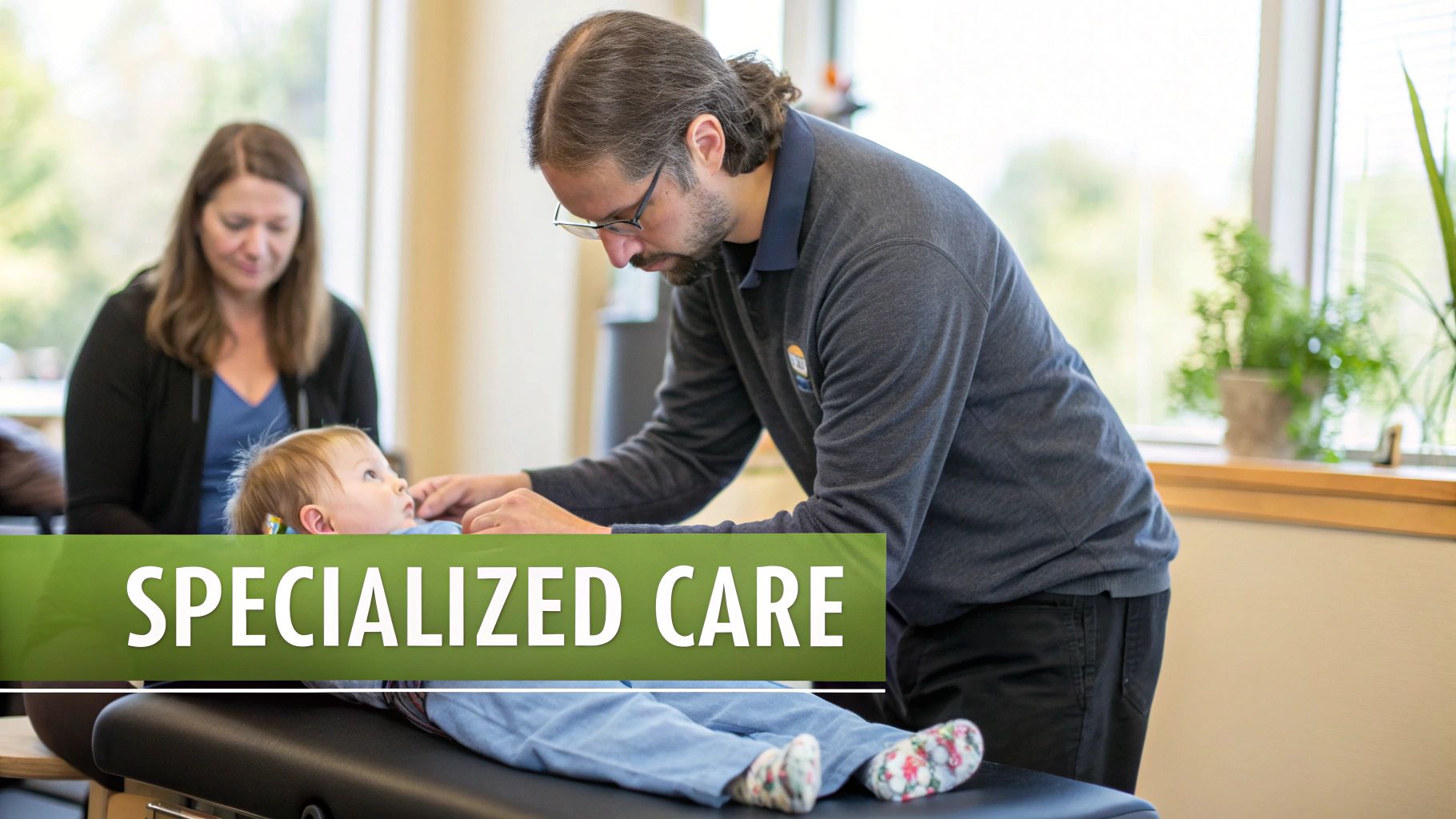
This credential isn't something a doctor gets from a weekend seminar. It represents hundreds of hours of immersive, postgraduate training dedicated entirely to the unique needs of infants, toddlers, and growing children.
Practitioners who earn this certification learn to use incredibly gentle, specific, and neurologically-focused techniques. These methods are tailored to a child’s rapidly developing spine and nervous system, which are completely different from an adult's.
A Focus on Specialized Training
The commitment to this specialty is pretty significant. In fact, a landmark 2011 survey of licensed chiropractors revealed that a remarkable 62% had completed the ICPA Pediatric Certification program.
This specific program requires 180 hours of postgraduate training. It dives deep into gentle adjusting, specific infant assessments, and understanding the nuances of developmental stages from newborn to teenager. These are the kinds of neuro-tonal approaches we use right here at First Steps Chiropractic. To see the data for yourself, you can read the full research on the topic.
This advanced training is what allows us to get to the root cause of common childhood challenges like colic, chronic ear infections, and sensory issues. Instead of just chasing symptoms, the goal is to improve the body's own ability to function, regulate, and heal itself.
Why This Specialization Matters for Your Family
A general chiropractor is trained to care for patients of all ages, and they do a great job. But a certified pediatric specialist has invested significant extra time, energy, and resources to truly master the art and science of caring for the youngest, most delicate patients. This builds a foundation of trust for families who are looking for true expertise.
This table gives a quick snapshot of the key differences:
General Chiropractor vs. Certified Pediatric Chiropractor
| Attribute | General Chiropractor | Certified Pediatric Chiropractor (PX) |
|---|---|---|
| Primary Training | Broad curriculum for all ages. | Standard chiropractic degree + hundreds of hours of postgraduate training in pediatrics. |
| Technique Focus | General spinal manipulation techniques. | Uses extremely gentle, low-force adjustments appropriate for a developing body. |
| Patient Population | Primarily treats adults and teens. | Specializes in infants, children, and pregnant women. |
| Clinical Approach | Often focuses on musculoskeletal pain and alignment. | Focuses on neurological development, sensory processing, and developmental milestones. |
Essentially, the specialization ensures the chiropractor deeply understands:
- Gentle Adjusting: The force used on an infant is often no more than the pressure you’d use to check if a tomato is ripe.
- Developmental Milestones: They can see how spinal health might be impacting a child's ability to hit key milestones like rolling over, crawling, and walking.
- Neurological Function: Their primary focus is on how adjustments can improve the vital communication between the brain and the body, which affects everything from sleep patterns to behavior and focus.
When you choose a certified practitioner, you're choosing a doctor who has invested in the highest level of training for your child’s specific needs. To explore this further, you can learn more about the different types of chiropractic care in our detailed guide.
Decoding the Credentials and Certifying Bodies
When you scan a chiropractor’s bio and see a string of letters like "CACCP" or "DACCP" after their name, they're not just random acronyms. Think of them like a pilot's flight certifications—each one tells a story of specialized training, rigorous exams, and a deep commitment to a very specific field. In this case, that field is the health and well-being of children and pregnant women.
These credentials mean a Doctor of Chiropractic has gone far beyond their standard doctoral degree. They've invested hundreds of extra hours in postgraduate programs dedicated solely to pediatric and prenatal care, and they’ve passed comprehensive exams to prove their expertise. This is a huge distinction to look for when choosing the right provider for your family.
The Gold Standards in Pediatric Certification
While a few organizations offer pediatric training, two have really set the bar as the most established and respected leaders. Earning a pediatric chiropractic certification from one of these bodies is a true mark of dedication.
The International Chiropractic Pediatric Association (ICPA): The ICPA is probably the most well-known name in the game. Their comprehensive program results in the CACCP credential, which stands for Certified by the Academy Council of Chiropractic Pediatrics. This isn't a weekend course; it involves over 200 hours of advanced coursework and a final exam.
The International Chiropractors Association (ICA) Council on Chiropractic Pediatrics: The ICA offers a diplomate program, which is one of the highest levels of postgraduate achievement you can get. Earning the DACCP (Diplomate of the American Chiropractic Council of Pediatrics) requires an even more intensive curriculum—we're talking 300+ hours—and represents a true pinnacle of clinical expertise.
When you choose a chiropractor with a CACCP or DACCP, you know they've been trained by leading experts in pediatric neurology, developmental milestones, and the gentle, specific adjusting techniques needed for infants and children. It’s a direct signal of their advanced skill set.
What These Credentials Truly Represent
Getting certified isn't a one-and-done deal. It’s an ongoing commitment to excellence. To keep their credentials active, these doctors have to complete annual continuing education, making sure they stay on top of the latest research and clinical best practices.
This cycle of continuous learning means a certified doctor's knowledge is always fresh and relevant. They're plugged into a professional community focused on refining their skills and improving health outcomes for their youngest patients. So when you see those letters, you can feel confident that your chiropractor has shown a profound and lasting dedication to the specialized art and science of pediatric care.
Inside the Specialized Certification Training
So, what does it really take for a chiropractor to become a pediatric specialist? It’s less like taking an extra weekend class and more like embarking on a deep-dive clinical journey. This advanced training is designed to completely reframe a doctor’s understanding of the body, shifting the focus to the incredibly unique needs of infants, children, and pregnant women.
This isn't a quick overview. The curriculum is intense, covering everything from the intricate stages of an infant's neuro-development to mastering how to assess a child’s nervous system from their first days of life. Doctors learn specific, gentle evaluation methods for non-verbal babies, helping them pinpoint underlying issues that a parent might only see as colic, unexplained fussiness, or trouble with latching.
From Theory to Hands-On Mastery
This training goes way beyond textbooks. A huge piece of the puzzle is mastering gentle, low-force adjustment techniques that are perfectly suited for a child's delicate and growing body. We’re talking about an incredibly light touch—often compared to the pressure you’d use to check if a tomato is ripe.
The curriculum is built around specialized techniques, including:
- The Webster Technique: This well-known method is specifically for pregnant women. It’s all about optimizing pelvic balance to support a healthier, more comfortable pregnancy and pave the way for a smoother birth.
- Cranial and Sacral Work: Doctors learn gentle approaches to address tension patterns in the skull and nervous system that can sometimes result from birth trauma.
- Neuro-Developmental Protocols: This training equips chiropractors to help manage common childhood challenges like sensory processing disorder, ADHD, and anxiety by getting to the root of how the nervous system is functioning.
This visual breaks down the straightforward path a doctor follows to earn these specialized credentials.
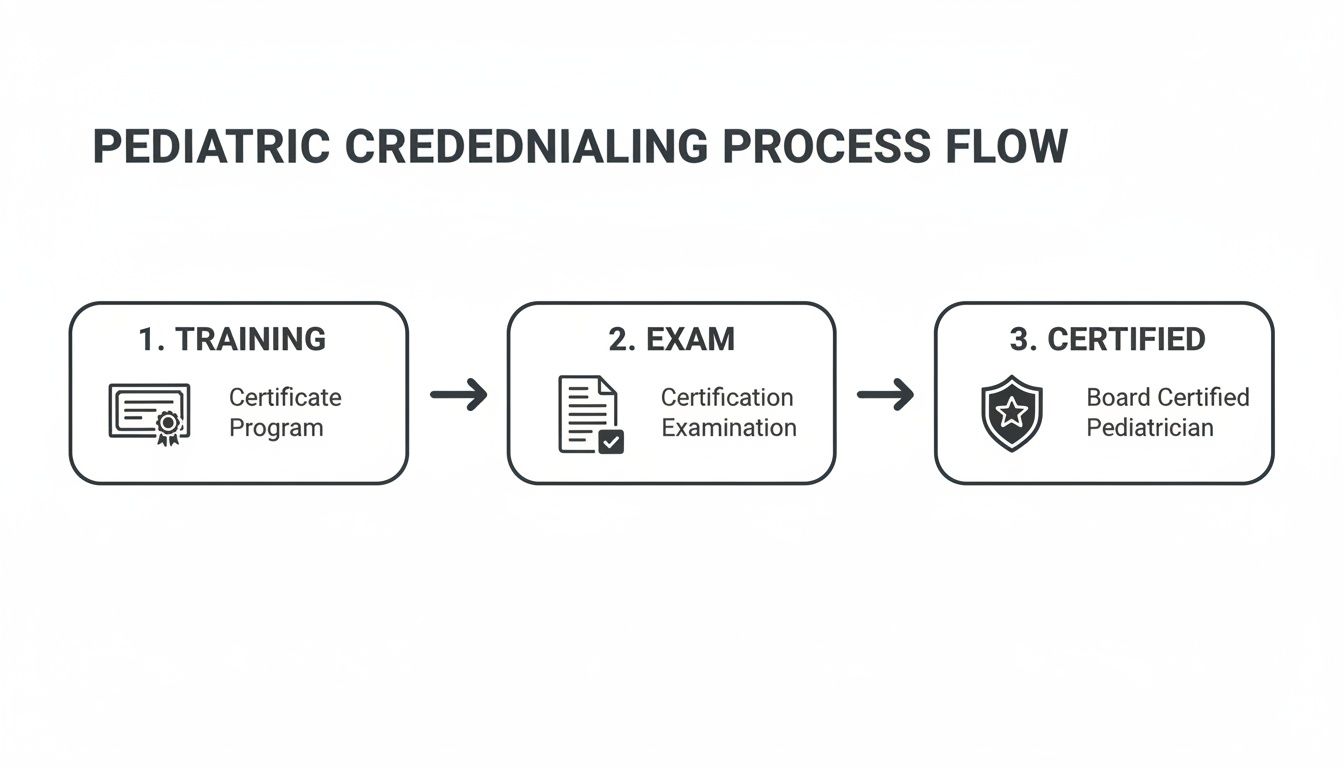
As you can see, the journey from initial training to final certification is a structured process designed to guarantee expertise and clinical confidence.
Clinical Hours: The Foundation of Trust
Maybe the most critical part of this whole process is the significant number of hands-on clinical hours required. Practitioners don't just learn the theory; they have to prove their skills in real-world settings, working directly with kids under the watchful eye of seasoned experts.
This ensures that by the time a chiropractor earns their pediatric certification, their care is not only evidence-informed but also incredibly safe, gentle, and effective.
The rigorous blend of advanced coursework, hands-on technique training, and extensive clinical practice is what gives parents peace of mind. It’s the assurance that this doctor has truly dedicated their career to mastering the precise art of caring for children.
This commitment transforms a great general chiropractor into a true pediatric specialist. They finish the program with the skills and confidence to support the unique health needs of children at every stage of development, helping them build a strong foundation for a vibrant, healthy life.
Why More Parents Are Choosing Specialized Chiropractic Care
If you're looking into specialized chiropractic care for your child, you're not alone. More and more parents are specifically seeking out practitioners with a pediatric chiropractic certification as they look for proactive wellness solutions that get to the root of health challenges.
This isn't just some passing trend; it represents a real shift in how families are thinking about healthcare. Today, parents have a much deeper understanding of the vital link between the nervous system and a child's overall health. They recognize that gently addressing interference from things like birth trauma or developmental stress early on can pave the way for a lifetime of well-being. And the data backs up this intuition, showing a clear and steady rise in the number of families bringing their kids to a chiropractor.
The Numbers Tell the Story
The demand for this kind of specialized pediatric care is impossible to miss when you look at the stats. The percentage of pediatric patients in U.S. chiropractic offices jumped from 9.7% in 1991 to 17.4% by 2014, and that momentum has only continued. It's a global phenomenon, and in the U.S. alone, about 2 million kids get adjusted each year. Discover more insights about this growing trend in pediatric chiropractic.
This chart from a major international survey really drives home the point, showing the top reasons parents bring their children in for care.
As you can see, "wellness" is one of the biggest reasons, which speaks volumes about the move toward preventative, proactive health strategies for kids.
A Focus on Proactive Wellness
So, what's behind this growing demand? It’s simple: families are looking for care that does more than just put a band-aid on symptoms. They want a true partner in their child's health, someone who understands the body’s incredible, innate ability to heal and regulate itself.
A certified pediatric chiropractor focuses on optimizing nervous system function. This approach helps address the underlying cause of many common childhood challenges, from colic and reflux in infants to sensory issues and anxiety in older kids.
This proactive mindset is really what it’s all about. Parents see firsthand how gentle, specific adjustments can help their kids navigate common hurdles related to:
- Birth Trauma: The journey into the world, even under the best circumstances, can create tension in a baby's delicate spine and nervous system.
- Developmental Milestones: A clear connection between the brain and body is essential for supporting key milestones like crawling, walking, and even speech.
- Sensory Processing: A well-regulated nervous system is the foundation for a child’s ability to successfully process and respond to the world around them.
When you choose a certified specialist, you're joining a community of well-informed parents who are putting a strong, healthy foundation first. To get a better feel for what this care looks like, you can learn more about chiropractic care for babies in our guide.
How Certification Improves Your Child's Health Outcomes

So, how does a pediatric chiropractic certification actually lead to better results for your child? It all comes down to the critical link between highly specialized knowledge and real-world health benefits. This advanced training gives a chiropractor a deep, nuanced understanding of pediatric neurology—the very foundation needed for precise assessments and truly customized care plans.
Think of it like this: any electrician can wire a house, but it takes a specialist to work on a delicate computer circuit board. A certified pediatric chiropractor works with that same level of precision, but on the tiny, complex connections of your child's developing nervous system.
Precision Care for Common Childhood Challenges
This specialized expertise becomes incredibly practical when we’re helping families with common childhood struggles. The goal isn’t just to chase symptoms, but to get to the root cause, which is often gentle nerve interference from everyday physical, chemical, or emotional stress.
Here are a few real-world examples of how this plays out:
- For an Infant with Colic: A certified provider knows how to gently assess and relieve subtle spinal tension left over from the birth process, which can be a major contributor to a baby’s discomfort and digestive upset.
- For a Child with Sensory Issues: Specialized care helps improve nervous system regulation. This calms the "fight-or-flight" response that can make it so hard for a child to process their environment.
- For a Baby with Latching Difficulties: By addressing tension in the jaw, neck, and cranium, specific adjustments can improve the baby’s ability to latch comfortably, making breastfeeding easier and more successful for both mom and baby.
Choosing a provider with a pediatric chiropractic certification is one of the most impactful decisions you can make for your child's well-being. It ensures they receive care designed specifically for their unique developmental stage.
The Connection Between Training and Results
This isn’t just a theory; the connection between a higher level of training and better patient outcomes is clear. An international survey of pediatric chiropractors found a significant positive correlation between certification levels and improved patient results.
In other words, the doctors with advanced training felt they saw better outcomes in the children they cared for. The study also highlighted the value of intensive programs like the ICPA's 200-hour pediatric certification. This commitment to specialized education is what builds confidence in family wellness, focusing on gentle, adapted techniques for pregnancy and pediatrics—exactly the approach we take here at First Steps Chiropractic.
How to Verify a Chiropractor's Pediatric Certification
Choosing a healthcare provider for your child is one of the most important decisions you'll make, and it's essential to know their credentials are solid. The good news is that confirming a pediatric chiropractic certification is actually a simple, straightforward process. You don't have to just take a clinic's word for it—you can check for yourself.
The most reliable way to verify a certification is by going straight to the source: the official online directories of the main certifying bodies. These organizations keep public databases of all the practitioners who have put in the work, passed their exams, and are currently in good standing.
A Step-by-Step Verification Guide
Check the ICPA Directory: The International Chiropractic Pediatric Association (ICPA) is the biggest and most recognized certifying body in the field. Head over to their website and use the "Find a Chiropractor" tool. You can search by the doctor's name or your location, and if they've truly earned their CACCP credential, they will be listed right there.
Look on the Clinic's Website: A chiropractor who has gone through this intensive training will be proud to show it. Check the "About Us" or doctor's bio page on their website. You should see the specific letters "CACCP" or "DACCP" right after their name. If those credentials are missing, it’s a sign that you should dig a little deeper.
Just Ask! Don't ever feel hesitant to call the clinic and ask the front desk or office manager directly. A team that's genuinely focused on pediatric care will be more than happy to confirm the doctor's credentials and explain what their training entailed. You could ask something like, "Is the doctor certified through the ICPA?" or "What specific postgraduate training in pediatrics has the doctor completed?"
Verifying a pediatric chiropractic certification isn't about distrust; it's about due diligence. Taking these simple steps ensures you are placing your child’s health in the hands of a true specialist who has invested in the highest level of training.
Beyond the official certification, look for other "green flags" that tell you a practice is serious about pediatric care. A welcoming, kid-friendly office, the use of advanced neurological scans like Insight Scans, and a clear focus on developmental milestones are all great signs.
If you're starting your search for local options, our guide on finding a pediatric chiropractor near you offers even more helpful tips.
Common Questions About Pediatric Chiropractic Certification
As a parent, you're going to have questions before you try any new approach to your child's health—and you absolutely should. Getting the facts about pediatric chiropractic certification can give you the clarity and confidence you need to make the best decision for your family.
Is Chiropractic Care Safe for My Newborn?
Yes, absolutely. A chiropractor who is certified in pediatrics uses incredibly gentle and specific techniques that look nothing like the adjustments used for adults.
The amount of pressure applied to a baby is often compared to the light touch you’d use to check if a tomato is ripe. This advanced training ensures the doctor has a deep understanding of a child's unique anatomy and developmental needs, making the care both safe and highly effective.
How Is a Certified Doctor Different?
While many general chiropractors are comfortable seeing children, a practitioner holding a pediatric chiropractic certification has gone the extra mile. They've completed hundreds of hours of additional postgraduate training focused entirely on pediatric and prenatal care.
This specialized education covers everything from an infant's neuro-development to specific evaluation techniques for non-verbal babies and gentle protocols for common childhood conditions. It signifies a much deeper level of expertise—think of it like the difference between a family doctor and a pediatrician.
This advanced certification means the chiropractor has mastered gentle, low-force adjustments that are perfectly suited to a child's delicate and developing nervous system, ensuring the highest standard of specialized care.
What Conditions Can This Care Help With?
Certified pediatric chiropractors are focused on one primary goal: optimizing nervous system function. When the nervous system works better, it can have a positive ripple effect on a wide range of childhood challenges.
We often help children with issues like colic, reflux, chronic ear infections, sleep difficulties, sensory processing disorder, ADHD, and even latching difficulties during breastfeeding. Our goal is to find and address the underlying neurological stress that may be contributing to these symptoms, allowing the body to function the way it was designed to.
At First Steps Chiropractic, our passion is providing expert, neurologically-focused care for your whole family. To see how our specialized approach can support your child's health and development, we invite you to schedule a complimentary consultation today.