
For parents on the journey with autism, finding supportive care that gets to the root of a child's well-being is everything. While it’s not a cure, neurologically-focused chiropractic care offers a gentle, non-invasive way to help regulate the nervous system. This kind of support can unlock noticeable improvements in sensory processing, sleep, and emotional balance, giving a real boost to your child's quality of life.
Exploring the Link Between Chiropractic and Autism
When most people hear "chiropractic," they immediately think of back pain. But neurologically-focused pediatric care is a whole different ballgame. It’s all about the deep connection between the spine and the central nervous system—the body's master control system. For so many kids with autism, this system is stuck in overdrive, a constant state of "fight-or-flight."
Think of your child's nervous system as their body's main operating system. If it gets overloaded with stress signals or "static," everything can get thrown off kilter. This interference often shows up as the common challenges we see with autism. Gentle chiropractic adjustments are designed to clear that static, helping the nervous system run with a lot more ease and resilience.
Optimizing the Body's Operating System
The goal here isn't to "treat" or "cure" autism itself. Instead, we focus on removing interference so the body can do what it's designed to do: regulate and heal itself. This approach supports the very foundation of a child’s development and can make other therapies, like OT and speech, even more effective.
By calming the nervous system, this care helps create an internal environment where a child can:
- Better process sensory information without getting so easily overwhelmed.
- Achieve more restful sleep, which is absolutely crucial for brain development.
- Improve emotional regulation, leading to fewer meltdowns and smoother transitions.
- Enhance motor skills and coordination because the brain and body are communicating more clearly.

The fundamental idea is that a more balanced and regulated nervous system allows a child to better adapt to their environment, engage with others, and participate more fully in life. It's about building resilience from the inside out.
How Chiropractic Care May Support Children with Autism
This compassionate approach can touch on several key areas that impact a child's day-to-day life. Every child's journey is unique, of course, but optimizing the function of the nervous system can provide a powerful foundation for progress. You can learn more about how neurological chiropractic supports autism in our detailed guide.
The table below breaks down how this support can translate to real-world changes.
How Chiropractic Care May Support Children with Autism
| Common Challenge in ASD | Potential Support from Neurological Chiropractic |
|---|---|
| Sensory Overload and Sensitivity | Aims to calm the 'fight-or-flight' response, helping the nervous system better process sensory input and reduce feelings of being overwhelmed. |
| Sleep Disturbances | Encourages a shift toward the 'rest-and-digest' state, which is essential for regulating healthy and restorative sleep cycles. |
| Emotional Dysregulation | By easing underlying nervous system tension, it can increase a child's capacity to manage emotional responses and navigate transitions more smoothly. |
| Motor Skills and Coordination | Improves brain-body communication pathways, which can support enhancements in balance, motor planning, and physical coordination. |
Ultimately, it's about helping a child's body work better, so they feel more comfortable, confident, and capable in their own skin.
The Nervous System's Role in Autism Care
To truly understand how chiropractic care can support a child with autism, we first have to get familiar with the body's master control system: the nervous system. You can think of it as the complex electrical wiring and internal software that runs everything from their heartbeat and digestion to how they process emotions and sensory information. It sounds complicated, but a simple analogy makes it all click into place.
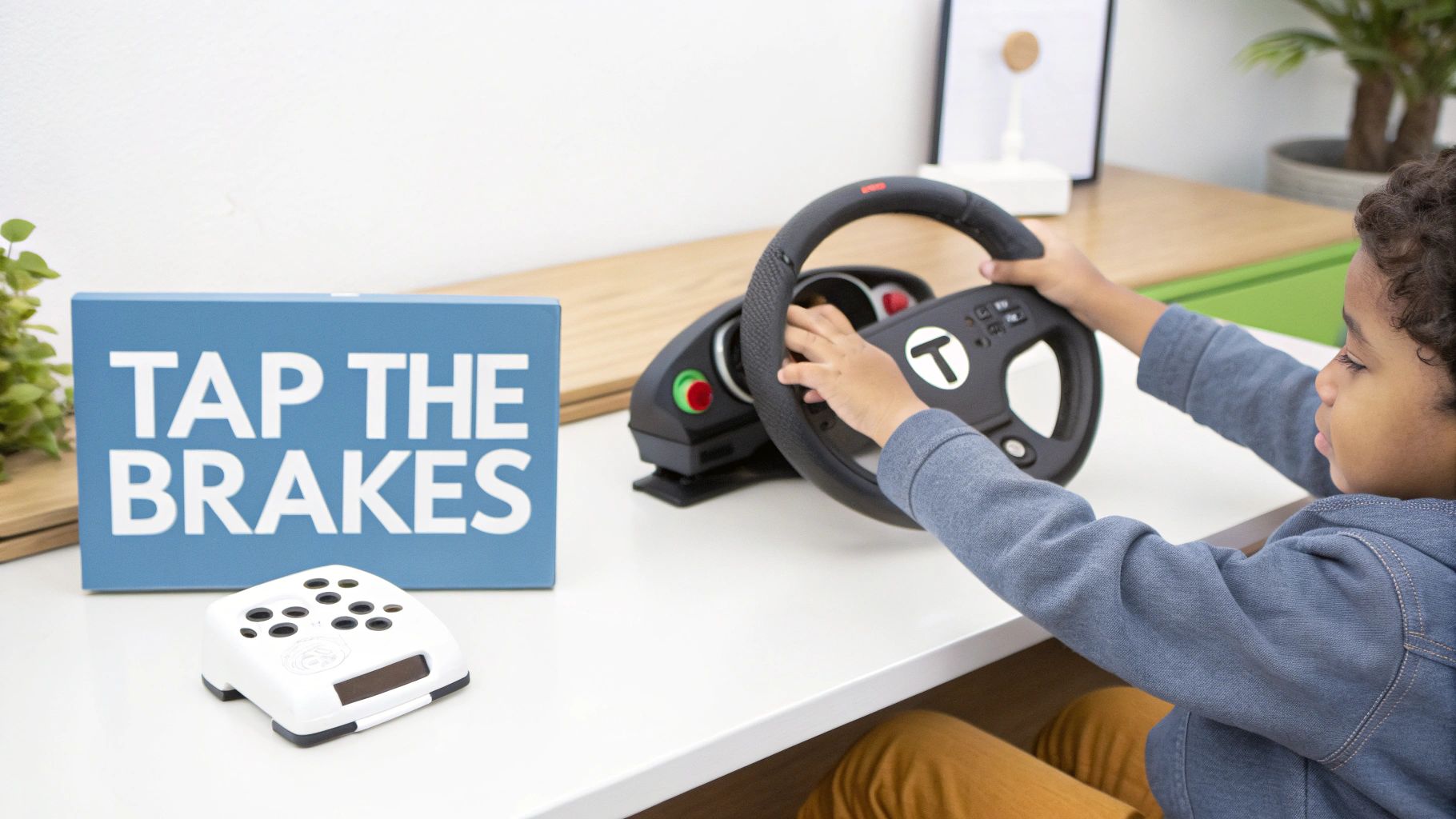
Imagine your child’s autonomic nervous system (ANS) is like the gas and brake pedals in a car. It has two main modes:
- The Gas Pedal (Sympathetic System): This is the body’s “fight-or-flight” response. It revs the engine, getting the body ready for stress, high alert, and intense action. It's built for short, powerful bursts when there's a genuine threat.
- The Brake Pedal (Parasympathetic System): This is the “rest-and-digest” response. It’s what gently slows the car down, allowing for recovery, regulation, healing, and calm. This is the state where true growth, connection, and learning really happen.
For so many kids on the autism spectrum, it’s like their internal system is stuck with the gas pedal floored. Being in this constant state of high alert—or sympathetic overdrive—can fuel chronic stress, anxiety, overwhelming sensory sensitivities, and emotional dysregulation.
Redefining Subluxation Neurologically
In old-school chiropractic, the word "subluxation" usually made people think of a bone that was out of place. But in modern, neurologically-focused care, we see it through a completely different lens. A subluxation is essentially a pattern of stress or interference that gets locked within the nervous system, scrambling the crucial communication between the brain and the body.
This interference is like static on a phone line, distorting the signals that help the body manage and regulate itself. It’s this underlying tension that keeps that "gas pedal" pressed down, making it nearly impossible for the body to access its calming "brake pedal."
The primary goal of neurologically-focused pediatric chiropractic isn’t to move bones, but to gently release this stuck neurological tension. This helps the body finally “tap the brakes” and shift out of a constant state of defense and into a state of growth and development.
How Adjustments Help Restore Balance
Gentle, specific chiropractic adjustments work to reduce this interference along the spine and nervous system. In doing so, they help the body shift gears from being stuck in a sympathetic-dominant state to a more balanced, parasympathetic-led one. For a child with autism, this shift can be profound.
When the nervous system can finally hit the brakes, the body gets the resources it needs to:
- Process sensory information more calmly, which reduces sensory overload.
- Regulate emotions more effectively, often leading to fewer meltdowns.
- Fall asleep and stay asleep, which is essential for brain development and daily function.
- Improve digestive function and support the immune system.
The evidence in this field is continuing to grow. In New Zealand, where autism affects roughly 1 in 100 people, a compelling case study showed a child's significant improvements in sensory processing and social skills after a 12-week course of chiropractic care. This isn't surprising when you consider that over 50% of ASD families use complementary therapies, with many preferring chiropractic due to concerns over medication side effects. Discover more insights from this compelling autism case study.
This approach isn't about "curing" autism. It's about helping a child's body function with more ease and resilience. By supporting a more balanced and regulated nervous system, we help build a stronger foundation for their development, learning, and overall well-being. Learn more about autism and the nervous system in our article.
What a Pediatric Chiropractic Visit Really Involves
The idea of taking your child to a chiropractor can bring up a lot of questions and maybe even a little anxiety. Words like “adjustment” and “spine” often make parents picture the kind of forceful twisting or cracking they might see in movies.
Let me set your mind at ease. A neurologically-focused pediatric visit is a completely different world. It’s a calm, gentle, and data-driven process designed to make both you and your child feel safe and understood from the very first moment.

This whole experience is built on connection, and that starts with a thorough consultation. The first visit is much more about listening than it is about physical adjustments. Your chiropractor will want to hear your child’s complete story, going all the way back to pregnancy, the birth experience, and those early developmental milestones. This detailed history gives us crucial clues about when and how stress may have first impacted their nervous system.
Seeing the Unseen with Insight Scans
After we talk, the next step is to gather some real, objective data about how your child’s nervous system is functioning. Neurologically-focused chiropractors use advanced technology called Insight Scans to get a clear picture of what’s happening beneath the surface. These scans are totally safe, non-invasive, and use zero radiation, which makes them perfect for kids.
Think of the results as a "weather map" for the nervous system. This map shows us exactly where stress is stuck and how much energy their little body is burning just to get through the day. For parents, seeing this data is often a huge "aha" moment. It visually confirms the internal struggles they've sensed in their child all along.
The scans usually have three key parts:
- Thermography Scan: This measures tiny temperature differences along the spine, which can point to areas of dysfunction in the autonomic nervous system—the part that controls things like heart rate, digestion, and immune response.
- Surface EMG (sEMG): This measures the electrical activity in the muscles that support the spine. It shows us precisely where tension and stress are locked in, holding the body in a state of defense.
- Heart Rate Variability (HRV): This is a critical measurement. It tells us how well your child’s nervous system can adapt and recover from stress. Essentially, it reveals whether they are stuck in a constant "fight-or-flight" mode.
The Gentleness of a Pediatric Adjustment
This is the part that often worries parents the most, but it’s also the most reassuring. The adjustment itself is incredibly gentle and precise. A pediatric chiropractor who specializes in neuro-tonal techniques uses a very light touch to help release that stored tension and restore clear communication between the brain and body.
The amount of pressure we use is often compared to what you’d use to check if a tomato is ripe. It is gentle, specific, and never forceful. Many kids are so comfortable during the process they barely even notice it’s happening.
The goal isn't to get a "crack" or "pop." Instead, we're focused on signaling to the nervous system that it’s safe to let go, relax, and shift out of that constant high-alert state. Techniques like the Torque Release Technique (TRT) use a small, handheld instrument to deliver a highly targeted and gentle impulse, making the whole experience comfortable even for the most sensitive children.
This careful, step-by-step process—from deep listening and advanced scanning to the light-touch adjustment—is designed to build trust. It shows parents that this approach to chiropractic and autism is founded on safety, data, and true compassion. It’s all about understanding your child’s unique nervous system and giving it the exact support it needs to find balance and begin to thrive.
The Real-World Changes Parents Often See
Theory and research are crucial, but what really matters are the day-to-day changes that bring more peace and connection into your home. When a child's nervous system starts to find its balance, the shifts can feel like tiny miracles unfolding. These are the stories of hope we hear from parents—the tangible results of a more regulated body.
For so many families, the very first change they notice is sleep. A child who has never once slept through the night might finally start getting that deep, restorative rest their body has been craving. This one change alone can completely transform a family's well-being, improving mood, focus, and everyone's ability to handle daily stressors.

Other parents tell us about a dramatic drop in the frequency and intensity of meltdowns. A simple trip to the grocery store, once a guaranteed source of sensory overload, can become a manageable—or even enjoyable—outing. This happens because a calmer, more organized nervous system is simply better at processing sensory input without hitting the "fight-or-flight" panic button.
From Survival Mode to Thriving
When the body isn't stuck in a state of constant, high-alert "survival mode," it finally has the energy and resources for growth, learning, and connection. This is why we often see incredible progress in so many other areas of a child's life.
- Social Engagement: A child who used to prefer playing alone might suddenly show an interest in interacting with siblings or friends at the park.
- Communication Breakthroughs: Parents often report more eye contact, new words popping up, or their child just becoming more expressive and engaged.
- Better Therapy Outcomes: A regulated nervous system means a child can be more present and available during their speech, OT, or behavioral therapy sessions, often leading to faster progress.
These improvements aren't random. They're the direct result of a nervous system that can finally "tap the brakes" and shift out of survival mode and into a state of development and growth.
The core idea is simple: a calmer, more organized nervous system creates the foundation upon which all other skills can be built. It helps a child feel safer and more comfortable in their own body, which in turn allows them to connect more deeply with the world around them.
Evidence of Profound Change
The potential for these kinds of shifts is backed by compelling clinical accounts. One notable case study followed a five-year-old boy with autism who, after just two weeks of upper cervical chiropractic adjustments, showed a 96% overall improvement in his symptoms. By the 3.5-year follow-up, that improvement had reached 102%, with his mother describing him as "near normal."
This isn't an isolated story. The clinicians and teachers involved in that same study saw remarkable changes in his social interactions and focus, along with a significant reduction in meltdowns. With over 75% of parents in ASD surveys reporting benefits from complementary approaches like chiropractic care, these accounts highlight the profound impact nervous system regulation can have. You can read more about these remarkable chiropractic findings for autism to see the data for yourself.
Ultimately, the goal of integrating chiropractic and autism care is to help your child thrive. By gently addressing the underlying neurological stress, we can help unlock their potential for greater comfort, connection, and joy in their everyday life.
How to Find the Right Pediatric Chiropractor
Choosing a provider for your child is a massive decision, and it's critical to understand that not all chiropractors are the same. A general family chiropractor is fantastic for aches, pains, and general wellness. But when we’re talking about chiropractic and autism, the conversation shifts entirely to the nervous system.
You need a specialist. This means finding a doctor with extensive postgraduate training in pediatrics and neurological development. They see beyond the spine and understand its intricate connection to the brain and the entire nervous system—which is the foundation of this entire approach.
Key Credentials to Look For
So, how do you find someone genuinely qualified? The best place to start is by looking for specific certifications that signal true advanced expertise. These credentials aren't just letters after a name; they represent hundreds of hours of extra training focused specifically on kids' neurodevelopment.
Look for practitioners who are:
- Certified by The Px Docs: Often just called PX, this is a network connecting families with chiropractors who live and breathe pediatric, prenatal, and neurologically-focused care. A PX certification is a huge green flag.
- Members of the ICPA: The International Chiropractic Pediatric Association offers rigorous training and certification in pediatric care. A doctor holding an ICPA credential has proven they are deeply committed to this specialty.
These organizations are really the gold standard in our field. Their online directories are the most reliable starting point when you're trying to find a pediatric chiropractor near you, because you know you’re connecting with someone who gets it.
Essential Questions to Ask a Potential Chiropractor
Once you have a shortlist, the next step is a consultation. This is your chance to interview them, get a feel for their approach, and see if it aligns with your family's needs.
Your instincts as a parent are invaluable. The right clinic should make you and your child feel safe, heard, and hopeful. The environment should be calm and accommodating to sensory sensitivities.
Come prepared with questions. A great pediatric chiropractor will not only welcome your questions but will be eager to answer them clearly and thoughtfully.
Questions for Your Consultation:
- What’s your experience working with children on the autism spectrum?
- What specific, gentle techniques do you use for children (like TRT or light-touch adjustments)?
- Do you use technology like Insight Scans to actually measure nervous system function?
- Can you explain your overall philosophy for supporting neurodevelopment in kids?
- How do you work alongside other therapists, like our OT or speech therapist?
Making an informed choice puts you in the driver's seat. You’re not just looking for a doctor; you're looking for a partner in your child's health journey—someone who will provide not just care, but also guidance, support, and a clear path forward.
Common Questions About Chiropractic Care and Autism
As you start exploring how neurologically-focused chiropractic care might fit into your child's life, it’s completely normal to have a lot of questions. This is a big decision, and feeling confident and informed is the most important part of the process. We've gathered some of the most common questions we hear from parents just like you when they first start looking into the connection between chiropractic and autism.
This isn't about finding a quick fix. It's about providing supportive care that helps your child's body and nervous system function with less stress and more resilience, creating a healthier foundation for all their developmental milestones.
Is Chiropractic Care Safe for Children with Autism?
Yes, absolutely. When performed by a chiropractor who has specialized training in pediatrics and neurology, the adjustments are incredibly safe and gentle. The techniques we use for children are completely different from what you might imagine for an adult.
Often, an adjustment involves no more pressure than what you’d use to check a ripe avocado. The entire focus is on precision and comfort, never force, making it a safe and well-suited approach for even the most sensitive kids.
How Soon Can We Expect to See Improvements?
Every child’s nervous system is unique and will respond at its own pace. Some parents tell us they notice subtle shifts—like calmer moods, better sleep, or less sensory overload—within just the first few visits. For others, progress is more gradual, becoming clearer over several weeks of consistent care.
The real goal here is to help the nervous system build resilience over time. That's why objective tools like our Insight Scans are so valuable. They allow us to track functional improvements in the nervous system, often before those changes become obvious in day-to-day behavior.
It's so important to remember that healing is a process, not a single event. Consistency is what allows the nervous system to gently unwind from long-held stress patterns and build new, healthier pathways for regulation and growth.
Will This Interfere with Our Other Therapies?
Not at all—in fact, it's designed to be a powerful teammate. We see neurologically-focused chiropractic care as a foundational support that can actually enhance the effectiveness of therapies like occupational, speech, or behavioral therapy.
When a child’s nervous system is calmer and more regulated, they are often in a better state to engage, focus, and learn during their other essential therapy sessions. Think of it this way: we're helping create a more organized and receptive nervous system, which makes it easier for all the other therapeutic work to stick.
Is This a Cure for Autism?
This is a really important question, and the answer is clear: chiropractic care is not a 'cure' for autism. Autism is a neurotype; it's a fundamental part of who your child is, not a disease that needs to be fixed or cured.
Our goal is to reduce nervous system interference (subluxation) and the chronic "fight-or-flight" stress that so often accompanies it. By doing so, we help the body function more optimally. This can lead to incredible improvements in well-being, comfort, and the ability to adapt to daily life. We're here to support your child's system so they can thrive as their authentic selves, not to change who they are.
At First Steps Chiropractic, we get it. We understand the unique journey you and your family are on, and we're here to provide the answers, data, and gentle care you deserve. If you're wondering if neurologically-focused chiropractic could be the missing piece in your child's care plan, we invite you to schedule a complimentary consultation with our team today.