
Simple, everyday activities like deep breathing, humming, or even gentle movement can do wonders for stimulating your vagus nerve. We call these vagal tone exercises, and they are a powerful, non-invasive way to help your body shift out of that stressed-out "fight-or-flight" mode and settle into a calm, connected "rest-and-digest" state. The result? Better emotional balance and a more resilient family.
Decoding Vagal Tone for a Happier Household
To really get what vagal tone is all about, think of your family’s nervous system like a car's gas and brake pedals. The gas pedal is your sympathetic nervous system—it revs everyone up for "fight-or-flight" when there’s a threat, whether that’s a looming work deadline for you or a toddler’s epic meltdown in the grocery store.
The brake, on the other hand, is the parasympathetic nervous system. It’s in charge of "rest and digest," helping everyone slow down, recover, and reconnect after the stress has passed. The vagus nerve is the superhighway for this calming brake pedal.
So, vagal tone is just a simple way to measure how well that brake is working. When your family has high vagal tone, the brake is responsive and efficient. You can all move from a stressful moment back to a state of calm without much trouble. Life just feels more balanced.
But when vagal tone is low, it’s like the brake is stuck or sluggish. The nervous system stays on high alert long after the stressful event is over, making it tough for anyone to truly wind down. This can bubble up in all sorts of ways, affecting everything from how well you sleep to digestion and emotional outbursts.
Signs of Low vs High Vagal Tone in Your Family
It can be hard to pinpoint whether your family is stuck in a state of stress or moving through it with resilience. This quick-reference table can help you recognize the signs of a dysregulated nervous system versus a balanced one in both children and adults.
| Indicator | Low Vagal Tone (Stuck in 'Fight-or-Flight') | High Vagal Tone (Balanced Nervous System) |
|---|---|---|
| Emotional Regulation | Quick to anger, frequent meltdowns, high anxiety | Calm, adaptable, recovers easily from upsets |
| Social Connection | Withdrawn, struggles with empathy, difficulty connecting | Engaged, empathetic, enjoys social interaction |
| Sleep Patterns | Difficulty falling or staying asleep, restless nights | Falls asleep easily, consistent and restful sleep |
| Digestion | Frequent stomachaches, constipation, picky eating | Regular digestion, good appetite |
| Focus & Attention | Easily distracted, struggles to concentrate, hyperactive | Can focus on tasks, attentive and engaged |
| Physical Health | Prone to inflammation, frequent illness | Strong immune system, recovers quickly from illness |
Recognizing these patterns is the first step. By understanding where your family lands, you can start using targeted strategies, like the exercises in this guide, to gently guide the nervous system back toward balance and resilience.
Why It's a Game-Changer for Kids
For kids, especially those navigating challenges like anxiety, ADHD, or sensory processing issues, understanding vagal tone is a complete game-changer. A child with low vagal tone might be perpetually stuck on high alert, and this can look a lot like common behavioral issues.
You might see:
- Frequent meltdowns over things that seem minor.
- Difficulty sleeping or fighting bedtime every single night.
- Picky eating or complaining of chronic tummy troubles.
- Challenges with focus and emotional control at school.
When you start working to improve their vagal tone, you’re not just putting a band-aid on behaviors—you're getting to the root of the issue by helping regulate their underlying nervous system. This empowers them to feel safer and more in control of their own bodies, making it so much easier to navigate the world. For a deeper look into the mechanics, you can learn more about vagus nerve function in our detailed guide.
Vagal tone is a powerful, measurable indicator of our well-being. It reflects our ability to regulate emotions and recover from stress, forming the biological foundation for both physical health and psychological resilience.
Clinically, vagal tone is often measured through heart rate variability (HRV), which looks at the natural, healthy variations between heartbeats. It’s fascinating stuff. Studies have even shown that endurance athletes often have 25-50% higher levels of respiratory sinus arrhythmia (RSA)—a key part of HRV—than the average person, which is directly linked to better emotional regulation and heart health.
Chiropractic Care: The Foundation for Success
While the vagal tone exercises we'll get into are incredibly effective, they work best when the body’s communication lines are already clear. That’s where neuro-tonal chiropractic care comes in. Our entire focus is on making sure the brain and body can talk to each other without interference.
Gentle, specific adjustments, especially to the upper neck where the vagus nerve exits the brainstem, can release built-up physical stress and dramatically improve the nerve’s ability to do its job. Think of it like clearing the static from a fuzzy phone line. By addressing these foundational roadblocks first, chiropractic care sets the stage for the nervous system to get the absolute most out of every vagal tone exercise you do.
Simple Breathing and Sound Exercises to Calm the Nervous System
Tapping into the power of your own breath and voice is one of the most direct and immediate ways to improve your vagal tone. The best part? These methods don't require any special equipment and can be woven seamlessly into your family’s daily rhythm, offering a quick path to a calmer state.
They work by directly engaging the muscles in your throat and diaphragm, which are intricately connected to the vagus nerve. When you intentionally slow your breathing or create gentle vibrations with your voice, you send a powerful signal to your brain that says, "You are safe." This message activates the parasympathetic "rest and digest" system, helping to lower heart rate, ease muscle tension, and bring a sense of groundedness.
Master Your Breath with Diaphragmatic Breathing
One of the foundational vagal tone exercises is deep diaphragmatic breathing, which you might know as "belly breathing." This is the opposite of the shallow chest breathing that so often kicks in when we're stressed. This technique fully engages the diaphragm, a large muscle at the base of your lungs, which in turn gently massages the vagus nerve.
Give it a try: place a hand on your belly. Inhale slowly through your nose for a count of four, and feel your belly expand like a balloon. Then, exhale even more slowly through your mouth for a count of six or eight, feeling your belly gently fall.
- For Kids: Let's make it a game! Have your child lie on their back and place a favorite stuffed animal on their belly. Challenge them to give their toy a slow-motion ride up and down with each deep "belly breath."
- For Adults: Look for small pockets in your day. Practice for just two minutes while waiting for your coffee to brew or before you even get out of bed in the morning.
This simple chart offers a quick guide on when to reach for these calming exercises.
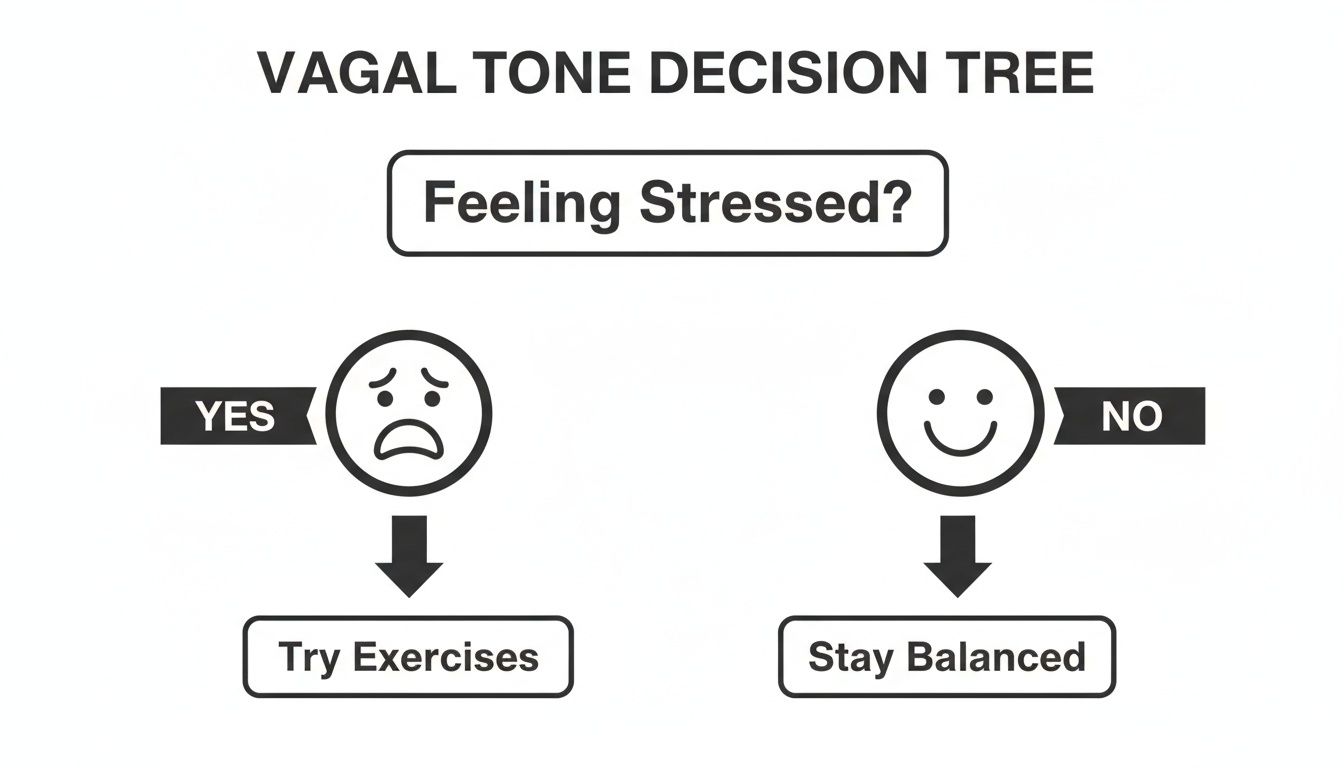
As you can see, when stress starts to creep in, trying one of these simple exercises is a direct path toward finding your balance again.
Find Your Rhythm with Box Breathing
Another powerhouse technique is box breathing, a structured practice used by everyone from Navy SEALs to yogis to manage intense stress. Its steady rhythm provides a focal point for a racing mind, making it especially helpful during moments of high anxiety or sensory overload.
Just imagine drawing a box with your breath.
- Inhale slowly for a count of four.
- Hold your breath at the top for a count of four.
- Exhale slowly through your mouth for a count of four.
- Hold your breath at the bottom for a count of four.
Repeat this cycle for several minutes, or until you feel your nervous system begin to settle. The holds are just as important as the breaths—they help reset your body's internal rhythm. For children, you can gently trace a square on their back as they breathe to give them a tangible cue to follow.
Use Sound to Soothe Your System
Did you know that humming, singing, chanting, and even gargling can stimulate your vagus nerve? It's true. The vibrations created in your throat and vocal cords act as a gentle massage for the nerve endings located there. This is why a mother’s gentle hum can be so profoundly calming for a fussy baby—it’s biology in action.
Sound vibration is a surprisingly effective tool for nervous system regulation. Engaging the muscles of the throat through humming or singing sends direct calming signals to the brain via the vagus nerve, helping to shift you out of a stress response.
And you definitely don't need to be a professional singer to get the benefits.
- Humming: Try humming your favorite tune during your commute or while doing chores around the house. A simple, low hum during a child's bedtime routine can work wonders to ease them into sleep.
- Chanting: Repeating a simple sound like "Om" creates a consistent, soothing vibration. You can even do this quietly to yourself if you're in a public space and need a moment of calm.
- Gargling: This one might feel a little silly at first, but gargling with water for 30 seconds activates the muscles in the back of your throat, giving your vagus nerve a little workout. It's an easy addition to your morning and evening routine.
By incorporating these simple breathing and sound-based exercises into your family's life, you build a powerful toolkit for resilience. These practices teach both kids and adults how to actively shift their own nervous state, empowering them to navigate stress with greater ease and connection.
Using Movement and Sensory Input to Boost Vagal Tone
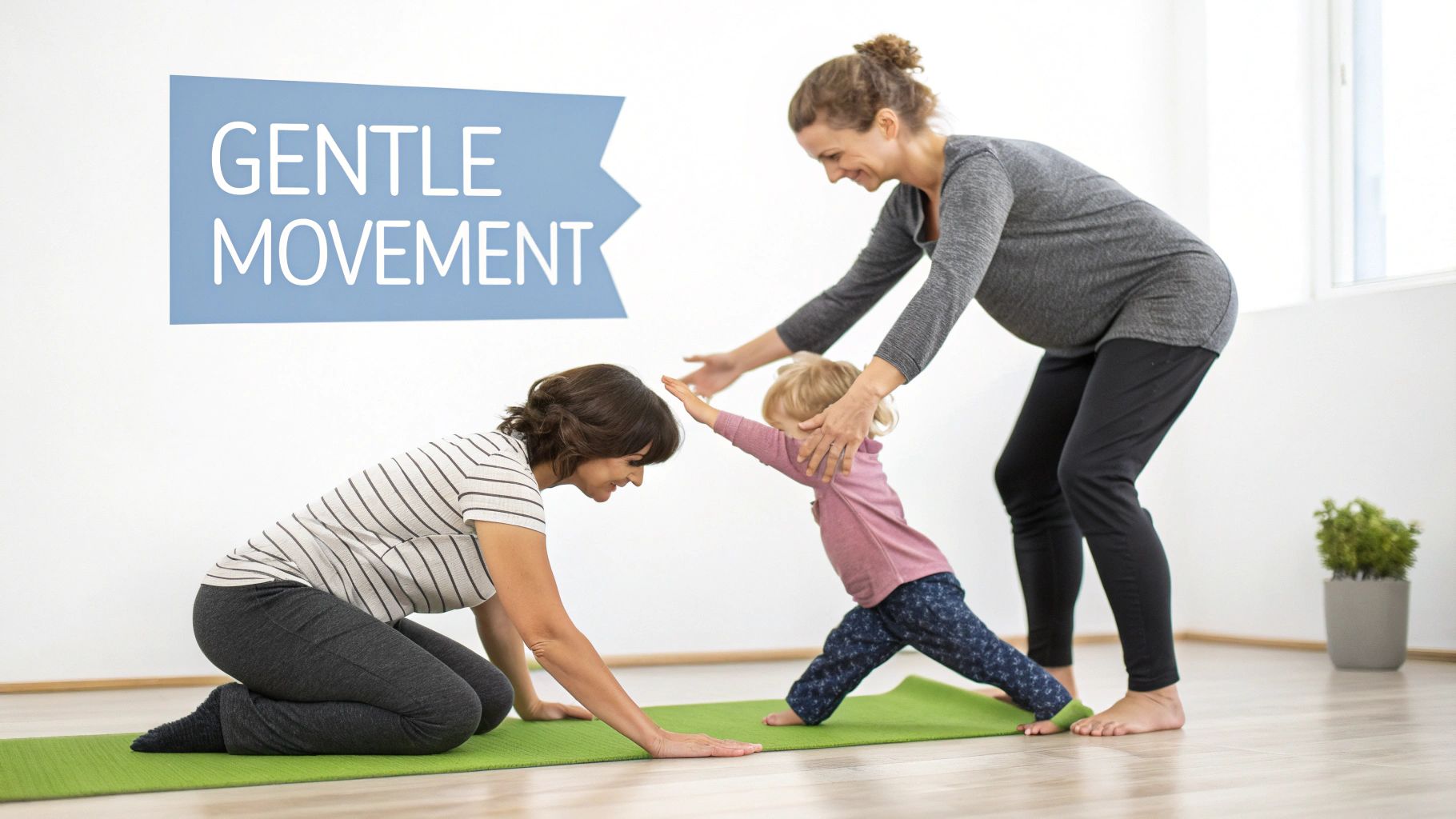
Beyond breathing and humming, the way you move your body and what you sense are powerful communicators with your vagus nerve. Gentle, rhythmic activities and quick sensory shifts send strong safety signals straight to the brain, which can significantly improve your vagal tone over time. These physical strategies work by tapping into the body's natural pathways to activate the parasympathetic "rest and digest" state.
You don't need intense workouts to see a benefit. In fact, gentle and mindful movement is often far more regulating for the nervous system. The goal here is to choose activities that feel restorative and soothing, not depleting.
Embrace Gentle, Rhythmic Movement
Rhythmic movements are especially calming because their predictability is grounding for the nervous system. These motions often mimic the soothing experiences we had as infants, like being rocked or swayed, which our brains are deeply wired to recognize as signals of safety.
Here are a few simple ways to bring gentle movement into your day:
- Yoga and Stretching: Slow, mindful stretches and yoga poses are fantastic for releasing physical tension where stress loves to hide. Poses that include gentle twists or forward folds can also provide direct, gentle stimulation to the organs connected to the vagus nerve.
- Rocking or Swaying: This one is as simple as it sounds. Using a rocking chair or just gently swaying from side to side can have an immediate calming effect. For little ones, a few minutes of rocking before bed can make a world of difference in helping them wind down for sleep.
- Mindful Walking: On your next walk, try paying close attention to the rhythm of your footsteps and the feeling of your feet connecting with the ground. This simple act of awareness pulls you out of a racing mind and back into your body.
These movements tap directly into your body's built-in sensory systems. For families wanting to go deeper on this, exploring proprioception and sensory processing can offer incredible insights into how movement helps regulate the nervous system.
Consistent, gentle physical activity is one of the most reliable ways to rewire the autonomic nervous system for greater resilience. Each session helps train your body to recover from stress more efficiently, boosting your baseline vagal tone.
The research backs this up consistently. Studies have shown that just six weeks of regular aerobic exercise can significantly increase cardiac vagal tone, even in people who weren't active before. This shows a direct link between movement and improved heart rate variability (HRV)—a key marker of a healthy, adaptable nervous system. You can explore the full study from the American Physiological Society to learn more about how exercise remodels nervous system function.
Harness the Power of Cold Exposure
Another surprisingly powerful way to stimulate the vagus nerve is through cold exposure. A sudden, brief drop in temperature triggers a physiological reaction called the "diving reflex." This process, mediated directly by the vagus nerve, immediately slows your heart rate and sends blood flow to your vital organs.
Don't worry, you don't need to commit to daily ice baths to get the benefits. Small, manageable doses of cold can be just as effective and are much easier to fit into a busy family's schedule.
Here are some practical tips for trying it safely:
- Splash Cold Water: The easiest method by far. Just splash your face with cold water for about 15-30 seconds. The nerves in your face are particularly sensitive and offer a direct line to the vagus nerve.
- A Cool Rinse: Try ending your warm shower with a 30-second blast of cool water. To make it more comfortable, start at your feet and slowly work your way up.
- Use a Cold Pack: Applying a cold pack or even a bag of frozen peas to your neck and chest for a minute or two can create a similar stimulating effect.
With kids, you can turn this into a fun game, like seeing who can hold their face in a bowl of cool water the longest. The key is to always keep the experience positive and never force it.
By weaving these simple movement and sensory vagal tone exercises into your family's routine, you're actively building a more robust and resilient nervous system for everyone.
Vagal Tone Exercises for Infants and Expectant Mothers
The transition into motherhood is a profound nervous system event, not just for mom but for the brand new baby, too. Supporting vagal tone during this delicate window is one of the most powerful gifts you can give—it builds a foundation of calm, connection, and resilience that will last a lifetime. The needs of a newborn and an expectant mother are unique, but the goal is always the same: creating a deep sense of safety and regulation.
For both mom and baby, these practices are gentle, intuitive, and deeply bonding. They provide the consistent, co-regulating input that a developing nervous system is hardwired to seek out.

Nurturing Your Newborn’s Nervous System
A baby’s nervous system is incredibly receptive to outside cues of safety. Simple, loving interactions are actually powerful vagal tone exercises that help them regulate crucial functions like sleep and digestion. This is especially true for little ones who might be struggling with common issues like colic or reflux.
Gentle, rhythmic touch is a baby's primary language.
- Infant Massage: Grab a gentle, plant-based oil and warm your hands. Start with slow, clockwise circles on their tummy, which can really help get their digestion moving. Before bedtime, try long, gentle strokes from their shoulders all the way down to their toes—it’s incredibly calming.
- Skin-to-Skin Contact: Also known as kangaroo care, simply placing your baby directly on your bare chest allows their breathing and heart rate to sync up with yours. This is one of the most potent ways to co-regulate and stimulate their vagus nerve.
- Calming Holds: The "colic carry," where the baby rests along your forearm with some gentle pressure on their belly, can work wonders. The key here is gentle pressure combined with rhythmic motion.
These practices do more than just soothe a fussy baby in the moment. They are actively building stronger neural pathways for self-regulation. That's why they pair so perfectly with pediatric chiropractic care, which focuses on ensuring those neurological pathways are clear and functioning from day one.
Soothing Practices for Expectant Mothers
Pregnancy brings immense physical and emotional changes, making nervous system care more vital than ever. The vagal tone exercises you practice now don't just benefit you; they also directly influence your growing baby, who feels and responds to your internal state.
A mother's calm nervous system is the most nurturing environment for her developing baby. Practices that improve her vagal tone during pregnancy create a shared state of regulation, setting the stage for a smoother birth and postpartum experience.
Prioritizing your own well-being with these simple techniques can ease pregnancy-related anxiety and prepare your body for the marathon of labor.
Prenatal Vagal Tone Exercises
| Technique | How It Helps | Practical Tip |
|---|---|---|
| Prenatal Yoga | Combines gentle movement, stretching, and deep breathing to release tension in the hips and back while calming the nervous system. | Focus on poses like Cat-Cow to gently mobilize the spine and consciously connect your breath to your movement. |
| Deep Belly Breathing | Increases oxygen flow to both you and your baby, lowers cortisol levels, and is fantastic practice for breathing through contractions. | Place your hands on your belly. With each inhale, imagine you are breathing space and calm directly to your baby. |
| Chanting or Humming | The vibrations you create in your throat and chest directly stimulate the vagus nerve, bringing about a profound sense of calm. | Find a comfortable seated position and hum a simple tune or chant a low "Om" for several minutes each day. |
These at-home practices work hand-in-hand with specialized prenatal chiropractic care. Gentle adjustments, like the Webster Technique, help ensure your pelvis is properly aligned for an easier birth. By combining chiropractic care to clear neurological pathways with daily exercises to tone your vagus nerve, you create a powerful synergy for a more balanced and connected pregnancy for both you and your baby.
How Chiropractic Care Unlocks Your Vagal Tone Potential
While the vagal tone exercises you practice at home are incredibly powerful for managing stress in the moment, they work best when your body's communication highways are clear and running smoothly.
Think of it like this: your nervous system is a complex electrical circuit. If there’s interference on the line—a short circuit or a weak connection—the signal just can't get through clearly, no matter how powerful the message is. This is where neuro-tonal chiropractic care makes a foundational difference.
The vagus nerve begins its long journey at the brainstem, exiting the skull and traveling down through the upper neck. Misalignments or physical tension in this critical area, known as subluxations, can act like a roadblock. They can physically compress or irritate the nerve, interfering with its ability to function the way it's supposed to.
When that happens, the effectiveness of all your hard work at home gets dampened. You might be faithfully practicing your deep breathing and humming, but if the primary nerve pathway is congested, you’re only getting a fraction of the potential benefit.
Clearing the Path for Better Communication
Gentle, specific chiropractic adjustments are designed to remove that interference. By restoring proper alignment and motion to the spine, especially in that vital upper neck region, we help clear the pathway for the vagus nerve. It’s like turning the power back on and removing the static so your brain and body can finally have a clear conversation.
This creates an environment where your vagal tone exercises can truly shine. Suddenly, those deep breaths and calming hums have a direct, unobstructed line to your parasympathetic nervous system, making them far more effective at shifting you into that healing "rest and digest" state.
This approach is especially important for children. Their developing nervous systems are highly sensitive to physical stressors, and addressing these roadblocks early on can set them up for a lifetime of better regulation and resilience. You can learn more about the deep connection between the vagus nerve and chiropractic in our dedicated article.
Measuring Your Progress Objectively
How do we know it’s actually working? We don't guess.
One of the most exciting parts of our care is our ability to objectively measure nervous system function using advanced tools like Insight Scans. These completely non-invasive scans give us a clear, detailed picture of how your autonomic nervous system is performing.
A key metric we track is Heart Rate Variability (HRV), which is a direct reflection of your vagal tone. A higher HRV means your nervous system is more adaptable, resilient, and better able to handle stress—which is exactly what we’re aiming for.
We use Insight Scans to provide tangible proof of your family’s progress. Seeing your HRV scores improve over time confirms that the combination of chiropractic adjustments and at-home exercises is successfully building a healthier, more balanced nervous system.
This concept of building "tone" is dynamic and constantly evolving. In fact, recent findings have challenged old beliefs about what happens during physical exertion. Researchers discovered that cardiac vagal nerve activity actually surges during exercise, a smart mechanism that helps optimize heart function. This shows that a well-maintained vagal drive supports the body’s ability to adapt and leads to a higher baseline tone over time. You can read the full research on vagal drive during exercise to see how our understanding continues to grow.
A Synergistic Approach to Nervous System Health
Combining at-home practices with professional care creates a powerful synergy for your family's health. While daily exercises help you manage stress in the moment, chiropractic care addresses the underlying structural issues that allow those exercises to be truly effective.
| Action | Vagal Tone Exercises (At Home) | Neuro-Tonal Chiropractic Care (In-Clinic) |
|---|---|---|
| Primary Goal | Provides immediate, in-the-moment regulation and stress relief. | Corrects underlying structural interference (subluxation) for long-term function. |
| How It Works | Directly stimulates the vagus nerve through specific activities like breathing and humming. | Removes physical tension on the brainstem and upper spinal cord, clearing nerve pathways. |
| Frequency | Daily, or as needed to manage stress and build resilience. | Based on a personalized care plan to create lasting structural and neurological change. |
| Measurement | Subjective feelings of calm, improved sleep, and better emotional regulation. | Objective data from Insight Scans, including Heart Rate Variability (HRV) improvements. |
Ultimately, these two approaches don't compete; they complete each other. The adjustments create the potential for optimal function, and your daily exercises help you realize that potential every single day.
Your Vagal Tone Questions Answered
We get a lot of questions from parents about how to bring these practices into the rhythm of family life. It's totally normal to wonder how it all works. Our goal here is to give you clear, straightforward answers so you can feel confident adding these powerful tools to your family's routine.
How Quickly Can We Expect to See Results?
This is probably the number one question we hear, and the honest answer is: it’s different for every family. Some people notice a subtle shift towards calm within just a few days of consistent practice, especially with the breathing and humming exercises. You might see a tantrum resolve a little quicker or notice bedtime becoming less of a battle.
For bigger changes in overall emotional regulation, digestion, or behavior, it can take several weeks of daily effort. The key thing to remember is that consistency is far more important than intensity. Think of it like building a muscle—small, regular workouts are what create real, lasting strength.
When you pair these exercises with neuro-tonal chiropractic care that addresses underlying nervous system interference, families often see positive changes happen faster. Our Insight Scans can even track these objective improvements over time, giving you a clear picture of the progress your family is making.
Are These Vagal Tone Exercises Safe for My Child with Sensory Processing Disorder?
Absolutely. In fact, not only are these exercises safe, but they are often incredibly beneficial for children navigating sensory or neurological challenges. The techniques are gentle, non-invasive, and, most importantly, they empower a child by giving them tangible tools to help regulate their own body.
The trick is to introduce them playfully and never force an activity that feels uncomfortable.
Here are a few ways to adapt the exercises for a child with sensory needs:
- Make it a game: Turn humming into a "guess that tune" contest or see who can make the funniest sound.
- Use a prop: Have your child place their favorite stuffed animal on their belly and watch it go for a ride as they practice "belly breathing."
- Start small: Just one minute of an exercise is a great starting point. You can gradually build up as your child gets more comfortable and confident.
The goal is always to create a positive, empowering experience that adds to their self-regulation toolkit. Our team has extensive experience working with children who have diverse needs, and we can offer personalized guidance to make it a perfect fit for your unique family.
Can Adults with Chronic Headaches or Neck Tension Benefit?
Yes, and the impact can be significant. Chronic pain—especially things like tension headaches, migraines, and that nagging neck tightness—is often linked to a nervous system stuck in a high-alert "fight-or-flight" state. When your body is in this state of sustained stress, it can ramp up inflammation and keep your muscles perpetually tense.
Vagal tone exercises are designed to help shift your nervous system out of that alarm mode and into its opposing "rest and digest" state. This physiological downshift can directly lower inflammation, ease muscle tension, and even change how your brain processes pain signals.
When you combine these daily exercises with our targeted chiropractic adjustments, you're tackling the problem from both sides—neurologically and structurally. This comprehensive approach gets to the root cause of the tension, leading to more lasting relief and a much better quality of life.
Ready to see how a balanced nervous system can change your family's life? The team at First Steps Chiropractic is here to help. We combine expert neuro-tonal care with practical guidance to help you achieve your wellness goals. Schedule your complimentary consultation with us today!