
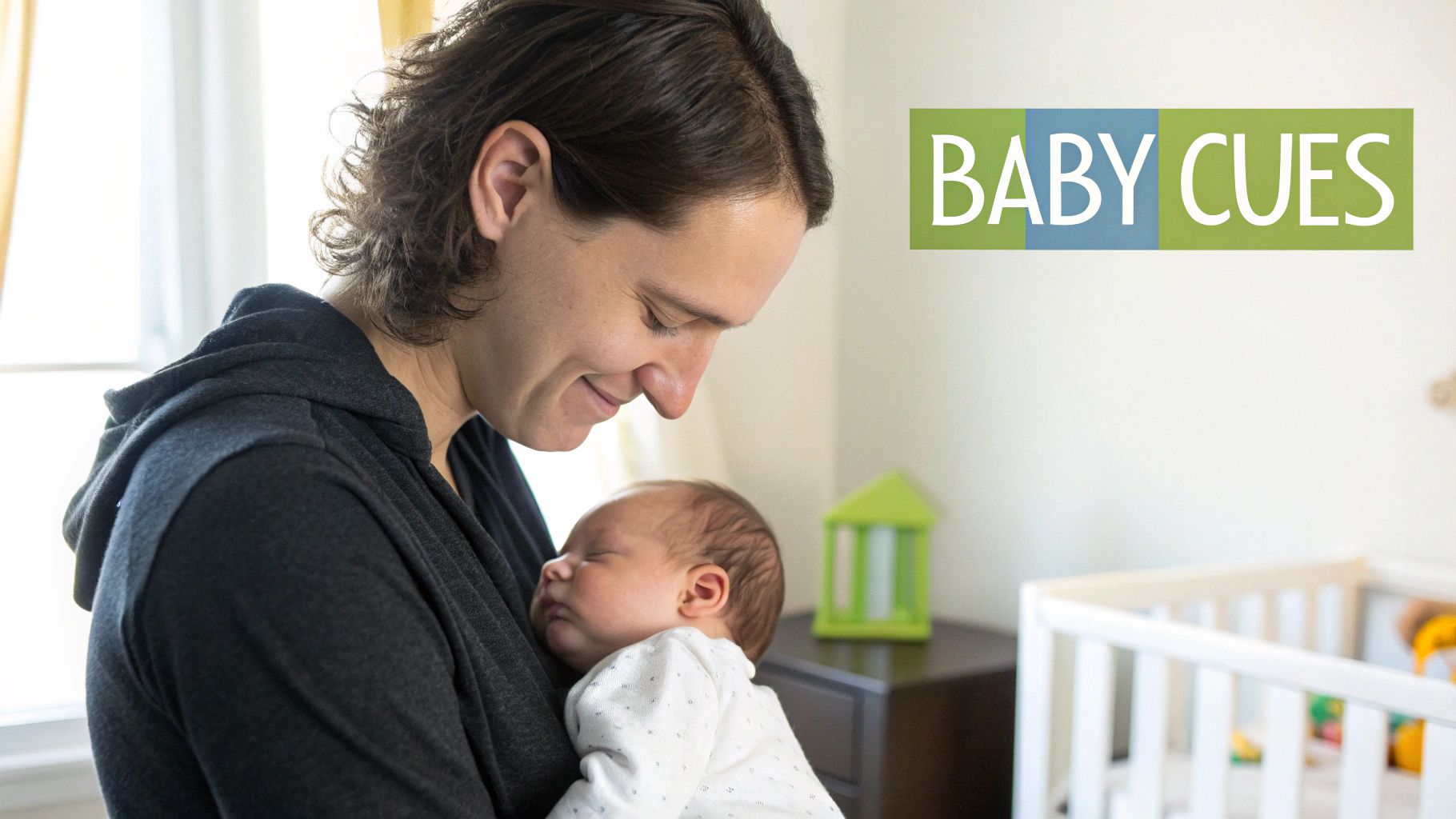
Bringing your newborn home is one of the most incredible moments of your life, but let's be honest—it can also feel a little overwhelming. Your baby has a unique way of telling you when they're feeling overwhelmed, too. These newborn stress signs are their first language, and learning to interpret them is the key to helping your little one feel safe and secure.
Signals like inconsolable crying, constantly arching their back, clenching their tiny fists, or sudden shifts in their eating and sleeping habits are all important messages. Recognizing these cues is your first step toward confidently meeting their needs.
Learning Your Newborns Secret Language
Think about the massive transition your baby just made. They moved from the dark, warm, and muffled world of the womb into a vibrant, loud, and unpredictable new environment. Their brand-new nervous system is working overtime to process all this information, and sometimes, it just gets to be too much.
When they show these signs of stress, it’s not a reflection on your parenting. Not at all. It’s simply their way of saying, “Hey, this is a lot for me right now. I need your help.” Learning to decode this secret language empowers you to respond in a way that truly helps them settle.
Understanding the Overwhelmed Nervous System
When you see your newborn arch their back, pull their legs up tight, or clench those little fists, you're seeing an involuntary physical reaction. It’s their body’s way of coping with a nervous system that’s on overload. For many babies, this sensitivity starts right from birth. The journey through the birth canal is physically intense and can introduce tension into their tiny spine and nervous system from day one.
This initial stress can easily be amplified by everyday life. Research has shown that even full-term infants in a NICU environment can experience over 11 stressful procedures daily. These aren't just minor interruptions; they can shape how a baby learns to self-regulate as they grow. You can discover more about how these early stressors affect newborns in this detailed study.
Your baby's cry isn't a manipulation; it's a communication. It's a raw, honest signal from a nervous system that is working hard to adapt to a brand-new world.
Decoding Common Communication Cues
Becoming fluent in your baby’s language really just starts with paying close attention. While every newborn is an individual, there are common patterns that give us clues. Catching these subtle signals early can help you step in and soothe them before they become completely distressed, building a foundation of trust and connection between you.
To help you get started, here’s a quick look at the different kinds of signals your baby might be sending.
Quick Guide to Common Newborn Stress Signs
This table breaks down the common signs of stress you might see, making it easier to spot what your baby is trying to communicate.
| Category | Common Signs to Watch For |
|---|---|
| Behavioral Cues | Sudden, intense crying that's hard to console; looking away or avoiding eye contact; seeming "checked out" or difficult to engage. |
| Physical Cues | Changes in skin color (blotchy, pale, or reddish); frequent hiccups or sneezes; yawning repeatedly even when not tired. |
| Motor Cues | Arching the back; keeping arms and legs stiff and straight; clenching fists tightly; frantic, disorganized movements. |
| Physiological Cues | Changes in breathing (faster or irregular); spitting up more than usual; changes in heart rate. |
Remember, seeing one of these signs occasionally is perfectly normal. It's the patterns and clusters of cues that give you the clearest picture of what your baby is experiencing.
The most common signs of newborn stress fall into a few key categories:
- Behavioral Cues: This is about their overall disposition. Think of sudden, inconsolable crying spells, actively avoiding eye contact, or becoming unusually difficult to soothe.
- Physical Cues: These are visible signs on their body. You might notice their skin becoming blotchy or pale, or you might see frequent hiccups, sneezes, or yawns that don't seem related to being tired.
- Motor Cues: This is all about body language. Arching the back is a classic sign, as is keeping their limbs stiff and straight or constantly clenching their fists. These movements often point to deeper discomfort and can be linked to underlying sensory issues in infants.
Uncovering the Root Causes of Newborn Stress
Knowing how to spot the signs of newborn stress is the first step, but figuring out why they’re happening is the real game-changer. These signals aren't random; they’re your baby's way of communicating that their developing nervous system is overwhelmed.
Imagine your newborn’s capacity for stress as a tiny cup. Little by little, different experiences add drops of water to this cup. A loud dog bark, a difficult feeding, or even a scratchy tag on their onesie can all add a drop. When that little cup finally overflows, you see the outward signs of stress—the fussiness, the back arching, and those tightly clenched fists.
Our job as parents and caregivers is to figure out what's filling their cup in the first place, so we can address the source, not just keep wiping up the spills.
The Journey into the World
The birth process itself is often the very first and most significant stressor a baby experiences. Whether the delivery was long and difficult or surprisingly fast, the physical forces at play can put an incredible amount of tension on a newborn's delicate head, neck, and spine.
Even medically necessary interventions like vacuum extraction, forceps, or a C-section introduce extra physical pressures. This initial tension can disrupt the nervous system’s ability to find its calm, making a baby more sensitive to other stressors right from the get-go.
This isn’t about placing blame on any particular birth experience. It’s about recognizing the profound physical journey your baby just went through. The lingering effects of that journey can mean their stress cup is already half-full before they even get home from the hospital.
Overstimulation and Sensory Overload
For nine months, your baby’s world was a dark, quiet, and cozy space. Suddenly, they're navigating a world bursting with bright lights, strange sounds, new textures, and constant motion. While this is an exciting part of their development, it can also be completely overwhelming.
A busy home with older siblings, a TV humming in the background, or a quick trip to the grocery store can fill their sensory cup in no time. Their nervous system is still learning how to filter out what’s important, so it tries to process everything at once.
This is a huge reason why so many newborn stress signs pop up in the late afternoon or evening. After a full day of taking in the world, their cup just overflows, leading to what many parents know all too well as the "witching hour."
Feeding and Digestive Discomfort
Feeding is a surprisingly complex process for a newborn, requiring a whole team of muscles to work in perfect coordination. When there are challenges here, it becomes a major source of stress for both baby and parents.
- Latching Difficulties: A poor latch can often be traced back to physical tension in the jaw or neck, which frequently stems from the birth process itself. This makes nursing inefficient and deeply frustrating for a hungry baby.
- Tongue and Lip Ties: These physical restrictions can stop a baby from feeding effectively, leading to gas, constant fussiness, and trouble gaining weight.
- Digestive Issues: Gas, constipation, and reflux are common culprits that keep a baby uncomfortable. The pain is like a constant, slow drip into their stress cup. It can be hard to tell what's what, but our guide on colic versus reflux can help bring some clarity.
These feeding issues create a tough cycle: the discomfort causes stress, and that stress can make feeding even more difficult.
Parental stress is a huge piece of the puzzle. It creates the environment your newborn lives in. Research has shown that a staggering 73.6% of parents with babies in the NICU report high stress levels, which can be amplified by things like a C-section or a long hospital stay. This parental stress can layer on top of a baby’s own physical and sensory challenges, making it harder for everyone to find their calm. You can read more about these findings and their impact in this in-depth medical study.
By getting to the bottom of these root causes—from birth trauma to sensory input and feeding problems—you can shift from just reacting to cries to proactively building a calmer, more supportive world for your baby. This empowers you to help your little one feel safe and secure, allowing their nervous system to relax, adapt, and thrive. The most effective way to stop the cup from overflowing is to address what's filling it.
A Deeper Look at Your Baby's Stress Signals
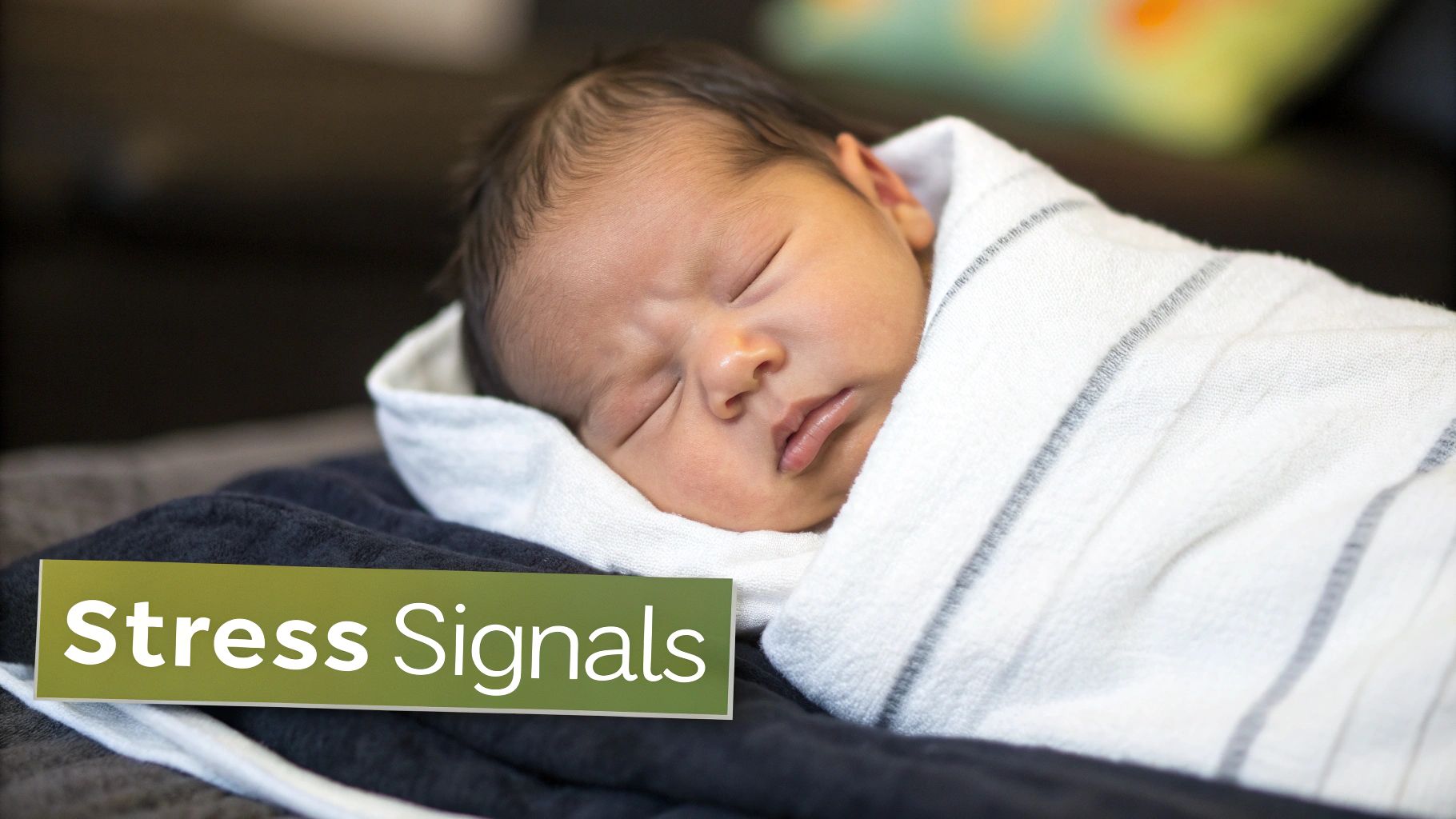
While our quick guide offers a great starting point, really understanding the nuances behind each of your baby’s stress signals can turn confusion into confidence. Try to think of these cues not as problems to be fixed, but as vital pieces of information. Each one tells a story about what your baby’s nervous system is experiencing in that exact moment.
When you learn to interpret this detailed language, you can respond more effectively and meet your baby’s needs before their stress cup overflows. Let’s break down these signals into clear categories to explore what each one might be telling you.
Decoding Behavioral Cues
Behavioral cues are all about your baby's overall state of being and how they're interacting with the world. When a newborn’s nervous system is on high alert, their ability to engage calmly and curiously just isn't there. Instead, you’ll see signs that they are trying to withdraw from all the stimulation around them.
- Inconsolable Crying: This isn't just a simple "I'm hungry" cry. It’s often higher-pitched, more frantic, and seems to keep going no matter what you do. This kind of crying means your baby has moved past simple communication and is now in a state of distress.
- Averting Gaze or Avoiding Eye Contact: A calm, regulated baby will often lock eyes with you. But when a baby consistently turns their head away or avoids your gaze, it’s a self-preservation tactic. They are essentially saying, “This interaction is too much for my brain to process right now.”
- A "Zoned Out" Appearance: Sometimes, instead of escalating, a baby will do the opposite and appear to shut down. They might get a glazed-over, distant look in their eyes. This is a classic sign of overstimulation, where their system disengages to cope with sensory overload.
Interpreting Physical and Autonomic Signs
Physical cues are the involuntary responses from your baby’s body. These are often the earliest and most subtle newborn stress signs, controlled by the autonomic nervous system—the part that runs things like breathing, heart rate, and digestion without any conscious thought.
Spotting these early can help you step in before your baby becomes fully distressed.
A newborn's sneeze or hiccup isn't always just a random reflex. Frequent, repetitive sneezing or hiccuping can be a clear signal that their nervous system is feeling disorganized and overwhelmed by sensory input.
Here are some of the most common physical signals to keep an eye on:
- Changes in Skin Color: You might notice their skin becoming blotchy, pale, or unusually reddish. This reflects changes in blood flow and oxygen as their body responds to a stressor.
- Frequent Hiccups, Sneezing, or Yawning: While an occasional hiccup is normal, a sudden bout of them can signal that their nervous system is dysregulated. It's their body's attempt to hit the reset button.
- Spitting Up or Gagging: Increased spitting up that isn’t related to a big feeding can be a sign of internal tension and stress affecting their digestive system.
Understanding Motor Cues and Body Language
Motor cues are maybe the most visible signs of newborn stress. They involve your baby’s muscles and movements, giving you a clear window into their level of physical tension. A relaxed, comfortable baby has soft, pliable limbs, while a stressed baby’s body becomes stiff and rigid.
These movements aren't intentional attempts to be "difficult"; they are reflexes driven by a nervous system that is stuck in a fight-or-flight mode.
Common Motor Cues of an Overwhelmed Newborn
| Motor Cue | What It Might Mean |
|---|---|
| Arching the Back | This is a classic sign of discomfort. It can be linked to digestive pain like reflux or gas, or it may point to physical tension in the spine from the birthing process itself. |
| Clenched Fists | Tightly balled fists, often with the thumb tucked inside, are a primary indicator of tension. A relaxed baby typically has soft, open hands. |
| Stiff or "Stuck" Limbs | You might notice your baby holding their arms or legs straight out and rigid, or keeping them pulled in tightly. This hypertonicity is a sign their muscles are locked in a stress response. |
| Frantic, Disorganized Movements | Instead of smooth, controlled motions, a stressed baby’s movements may seem jerky and chaotic. They might flail their arms and legs without purpose, unable to find a calm, settled state. |
For example, a baby who consistently arches their back and cries during or after feedings isn't just being fussy—they are communicating significant discomfort. This signal gives you a starting point to investigate potential causes, from feeding position and latch to underlying digestive issues or physical misalignments that need gentle support.
By seeing each of these signs as a clue, you become a detective for your baby’s well-being, ready to find solutions that bring lasting calm.
Gentle Soothing Techniques You Can Use Today

Spotting the different newborn stress signs is the first step. The next, and most important, is knowing how to respond with confidence to build connection and bring calm back into your home.
When your baby is overwhelmed, your calm presence is their anchor. This is a process called co-regulation, and it’s a beautiful concept: your baby’s nervous system can literally borrow calm from yours. Your steady heartbeat, your gentle touch, and your soothing voice tell their system, "You are safe."
The goal isn’t to silence the crying instantly but to offer comfort and security right through the middle of their distress. Think of it as a calming conversation held not with words, but through touch, sound, and movement.
The Five S’s: A Womb-Like Reset
One of the most powerful methods for calming a fussy newborn is the "Five S's" approach. It’s not magic; it’s biology. This combination of actions works by recreating the snug, rhythmic sensations of the womb, which can trigger a newborn's innate calming reflex—an off-switch for crying and an on-switch for sleep.
- Swaddling: Wrapping your baby snugly in a blanket creates a sense of security, much like the close quarters they were used to. It also helps prevent their own startle reflex from waking them up.
- Side or Stomach Position: Holding your baby on their side or stomach (while they are in your arms and you are awake and alert) can be incredibly calming. Just remember, this position is only for soothing—babies must always be placed on their back to sleep.
- Shushing: That loud, rhythmic "shushing" sound is a game-changer because it mimics the constant whoosh of blood flow your baby heard 24/7 in the womb. To get their attention, your shush needs to be as loud as their cries.
- Swinging: Gentle, rhythmic motion is key. Think small, jiggly movements instead of big, sweeping swings. Rocking or bouncing can also activate the motion sensors in their inner ear and lull them into a relaxed state.
- Sucking: Whether on a pacifier, a clean finger, or the breast, sucking is deeply organizing for a baby’s nervous system. It naturally lowers their heart rate and blood pressure, making it a powerful self-soothing tool.
You might find you don't need all five S's every single time. Sometimes, a simple swaddle and some shushing are all it takes to work wonders.
The Power of Touch and Connection
Beyond specific techniques, never underestimate the simple power of your touch. It’s one of the most effective tools you have. Your physical presence communicates safety and helps regulate their tiny, developing systems.
Skin-to-Skin Contact
Also known as kangaroo care, placing your baby bare-chested directly onto your chest has profound benefits. It helps regulate their heart rate, breathing, and body temperature. This simple act reduces stress hormones (like cortisol) for both of you, creating a beautiful, peaceful feedback loop.
Your calm, steady heartbeat is a familiar rhythm that guided your baby for nine months. Skin-to-skin contact brings them back to that place of ultimate safety, helping their disorganized nervous system find its rhythm again.
Gentle Baby Massage
A simple massage can be a miracle worker, especially for stress related to gas and digestive upset. Use gentle, clockwise strokes on your baby’s belly to help move gas along. You can also try bicycling their legs or gently pressing their knees up toward their tummy. This not only eases physical discomfort but also deepens your bond through nurturing touch.
Ultimately, soothing your newborn is less about a perfect formula and more about responsive, loving care. Pay close attention to what helps your baby settle. Some may love the gentle sway of a walk around the house, while others might calm instantly with a pacifier and a tight swaddle. By trying these techniques, you’ll quickly learn your baby’s unique preferences and become an expert in their language of comfort.
How Gentle Chiropractic Care Helps Your Baby Thrive

After you’ve recognized the newborn stress signs and tried all the go-to soothing techniques, you might still feel like there’s a missing piece to the puzzle. What if the constant fussiness, feeding struggles, or general discomfort are coming from physical tension that started way back during birth? This is exactly where gentle pediatric chiropractic care comes in, offering foundational support that gets to the root cause instead of just managing the symptoms.
Think of your baby’s nervous system as the master communication highway for their entire body. The birth process, even a perfectly smooth one, can create tiny misalignments in their spine known as subluxations. These act like little roadblocks on that highway, disrupting the critical signals flowing between your baby's brain and body.
When that communication is fuzzy, it can keep their nervous system stuck in a "fight-or-flight" state, making it incredibly difficult for them to simply relax, digest their food, and sleep peacefully.
A Precise and Gentle Approach
The idea of a chiropractic adjustment for a newborn might sound intimidating, but I promise you, it’s nothing like what you’d imagine for an adult. At First Steps Chiropractic, our approach is neuro-tonal, meaning we focus on restoring balance to the nervous system with an unbelievably light touch.
The pressure used for a newborn adjustment is often compared to the amount you’d use to check the ripeness of a tomato. It's incredibly specific, gentle, and designed to release tension without causing any discomfort for your baby.
Our process always starts with a thorough consultation and our advanced Insight Scans. These scans are completely non-invasive and give us a detailed map of your baby’s nervous system. They show us exactly where stress and tension are being held, which allows our care to be incredibly precise—no guesswork involved. We break down everything you need to know about chiropractic care for babies in our detailed guide.
Reconnecting the Communication Lines
Once we identify those areas of imbalance, we use gentle, specific techniques to restore proper motion and clear those roadblocks. By easing the physical tension, we help calm their entire nervous system, allowing your baby's body to shift from that state of constant stress into one of rest, healing, and growth.
For so many families we see, this shift can lead to incredible improvements in:
- Feeding and Latching: Releasing tension in the jaw, neck, and shoulders can make nursing far more comfortable and effective.
- Digestive Comfort: Easing spinal tension may help the body better regulate issues like gas, colic, and reflux.
- Better Sleep: A calm and balanced nervous system allows for deeper, more restorative sleep patterns for baby (and you!).
- Overall Disposition: Many parents simply report their baby seems happier, calmer, and more settled.
We also know that parental anxiety is closely linked to a baby’s distress. Studies have found that up to 47% of NICU parents experience significant anxiety, which can correlate with neurobehavioral challenges in infants. At First Steps Chiropractic—Hayden's only PX Certified neuro-focused clinic—our customized care plans help restore proper nervous system function right from the very beginning.
When to Seek Professional Medical Advice
Most of the time, the little signs of stress you see are a normal part of your newborn’s adjustment to life outside the womb. But your parental intuition is one of the most powerful tools you have. If something just feels off, it’s always best to trust that feeling.
Knowing the difference between typical fussiness and a true red flag empowers you to act quickly and confidently when it matters most. While most crying spells can be managed at home with simple soothing techniques, some signs are your baby's way of telling you they need immediate help.
Never hesitate to reach out for professional advice; your peace of mind and your baby’s safety are the top priorities.
Critical Red Flags That Need a Doctor
Think of these symptoms as non-negotiable signals that your baby needs to be seen by a medical professional right away. They point to a potential underlying issue that goes beyond a simple case of being overstimulated or uncomfortable.
If you notice any of the following, please contact your pediatrician immediately or head to the nearest emergency room.
- Fever: Any rectal temperature of 100.4°F (38°C) or higher in a newborn under three months old is considered a medical emergency.
- Difficulty Breathing: Look for signs like very rapid breathing, nostrils flaring with each breath, grunting sounds, or seeing the skin pull in sharply around their ribs or neck (this is called retractions).
- Changes in Skin Color: A bluish tint around the mouth or on the lips (cyanosis) is an urgent sign. Significant yellowing of the skin or the whites of the eyes (jaundice) also warrants an immediate call.
- Extreme Lethargy or Unresponsiveness: If your baby is unusually sleepy, nearly impossible to wake for feedings, or seems limp and floppy, it’s a critical sign.
- Signs of Dehydration: Not enough wet diapers—specifically, fewer than six in a 24-hour period—is a major warning. Other signs include a sunken soft spot on their head, a very dry mouth, or crying without any tears.
Trust your gut. You know your baby better than anyone. If their cry suddenly changes to a high-pitched, piercing shriek that is unlike anything you've heard before, or if they are truly inconsolable for hours on end, it’s always best to have them checked by a professional.
At the end of the day, you are your baby's most important advocate. While it’s important not to panic over every little cry, it’s just as important to recognize when a situation has escalated beyond normal fussiness.
Keeping your pediatrician’s number handy and knowing where the nearest 24-hour clinic is can give you incredible peace of mind during these challenging but beautiful early months.
Your Questions Answered
When you're trying to understand the signs of stress in your newborn, a lot of questions can come up. Here are some clear, straightforward answers to the most common concerns we hear from parents just like you.
Is Chiropractic Care Safe for a Newborn Baby?
Absolutely. It’s a common question, and one we love to answer. Pediatric chiropractic adjustments are incredibly gentle and specifically designed for a baby’s delicate system.
Here at First Steps Chiropractic, our techniques involve a light, precise touch. To give you an idea, we often use no more pressure than you'd use to check the ripeness of a tomato. Our doctors are certified by the PX Docs and have extensive training in caring for infants, so you can rest assured that every adjustment is safe and comfortable.
How Do I Know If My Baby's Stress Is from Birth?
It can be tough to pinpoint the exact cause without an examination, but certain factors like a long labor or the use of interventions like forceps can definitely increase the likelihood of physical tension.
Some of the most common newborn stress signs that point back to birth trauma include:
- Difficulty turning their head easily to one side
- Struggling to latch on one breast more than the other
- Showing significant discomfort when laid flat on their back
Our advanced Insight Scans are designed to detect this exact type of nervous system stress. This gives us a clear, objective picture of what your baby is experiencing without any guesswork, allowing us to get right to the root cause of their discomfort.
How Many Visits Will My Newborn Need?
Every baby is unique, so the number of visits will be, too. After a detailed consultation, examination, and our Insight Scans, we put together a personalized care plan tailored specifically to your baby's nervous system needs.
Our goal is always to address the root cause of the stress efficiently, and we constantly assess your baby's progress along the way. Many parents tell us they see positive changes in their baby's comfort, sleep, and feeding within just a few visits.
If you're seeing signs of stress in your newborn and want to explore a gentle, effective way to support their nervous system, our team at First Steps Chiropractic is here to help. Schedule your complimentary consultation with us today.