
When we talk about a dysfunctional nervous system, we're not talking about a disease in the traditional sense. It's more of a functional problem—a state of imbalance where the communication network between the brain and body gets overloaded and stuck in a constant state of "stress mode."
Think of it like an air traffic control system that's overwhelmed. When too many signals come in at once, the whole system becomes chaotic, leading to some very real and common challenges for kids and adults, like anxiety, sensory overload, and sleep struggles.
Your Body’s Two Essential Operating Modes
Your nervous system basically has two main settings: a gas pedal and a brake pedal. These two modes are designed to work together, keeping your body balanced and ready for whatever life throws at you. In a healthy, resilient person, the body shifts between these two modes smoothly. But when the nervous system becomes dysfunctional, it gets stuck—usually with the gas pedal floored.
This creates a constant state of high alert, even when there’s no real danger. It’s like a fire alarm that keeps blaring long after the smoke has cleared. The body stays tense, the mind races, and your internal battery is constantly being drained. This makes it incredibly difficult to rest, digest, heal, and grow properly.
The Gas Pedal: Fight or Flight
Your "gas pedal" is the sympathetic nervous system. Its job is to kick you into action—the classic "fight or flight" response. When you're facing a genuine threat, like swerving to avoid a car, this system is a lifesaver. It pumps your body full of adrenaline and cortisol, sharpens your focus, and sends a rush of energy to your muscles.
But in a dysfunctional nervous system, this emergency state becomes the new normal. This is why so many kids today feel anxious, are irritable, and seem to be constantly on edge.
The Brake Pedal: Rest and Digest
On the flip side, your "brake pedal" is the parasympathetic nervous system. Its role is to help you "rest and digest." This is the system that slows your heart rate, supports good digestion, and allows for cellular repair and deep relaxation. It's the calm, restorative state your body desperately needs to recover from daily stress.
When this system isn't engaging the way it should, you might see challenges like poor sleep, chronic digestive issues, or a weakened immune system that can't seem to fight anything off.
A dysfunctional nervous system isn't about being broken; it's about being stuck. The goal of care is to gently help the body remember how to use its brake pedal again, restoring its natural ability to adapt, regulate, and heal.
This image gives a great visual of how the brain is constantly trying to manage these two opposing systems.
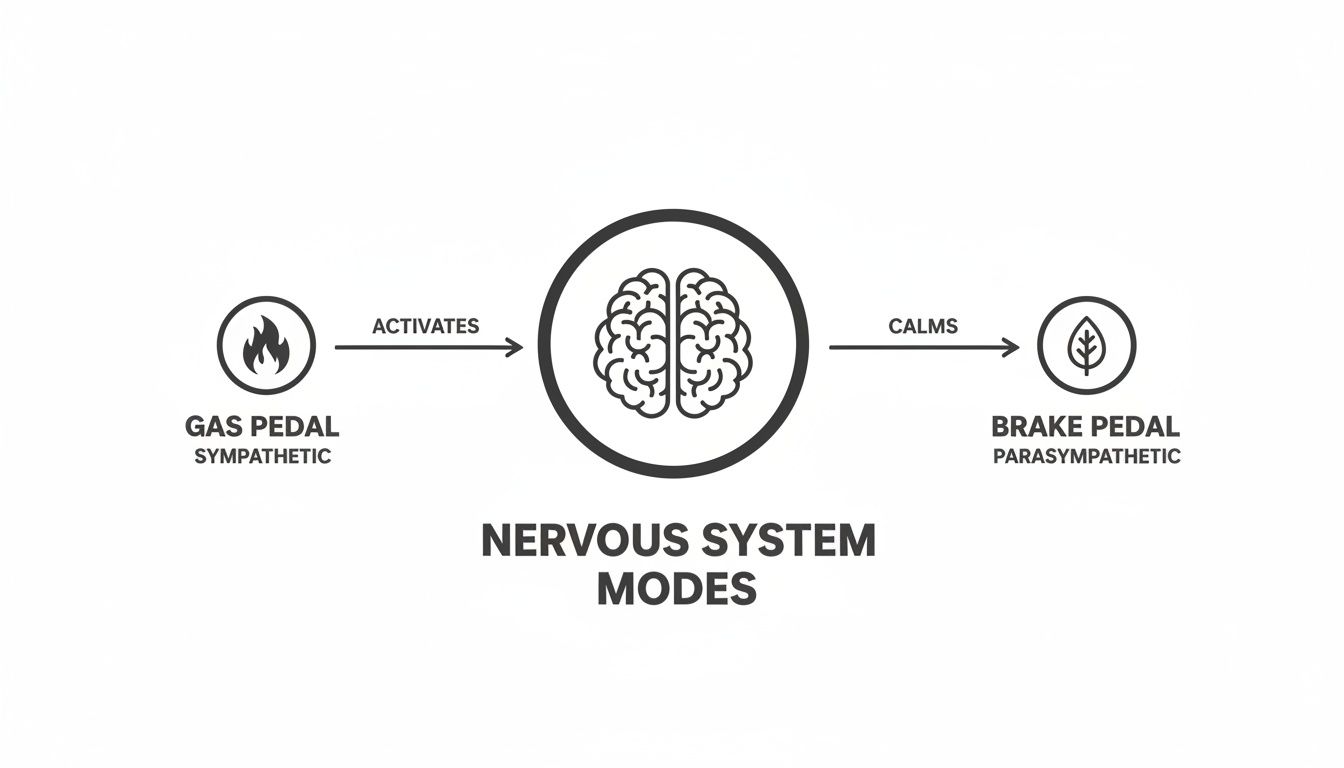
It really shows the balancing act between the "go-go-go" gas pedal and the calming "slow-down" brake pedal that a healthy nervous system performs without us even thinking about it.
To help you understand what this imbalance looks like in real life, we've put together a simple comparison table.
Your Nervous System's Two Operating Modes
| System State | Nickname | Primary Function | Common Feelings | When It's Healthy | When It's 'Stuck On' |
|---|---|---|---|---|---|
| Sympathetic | "Gas Pedal" | Protection & Action | Anxious, alert, tense, energetic | Reacts to real danger, helps you perform | Constant anxiety, poor sleep, burnout, irritability |
| Parasympathetic | "Brake Pedal" | Healing & Calming | Relaxed, calm, peaceful, tired | Promotes sleep, digestion, and recovery | Low energy, depression, poor focus, digestive issues |
Seeing the two side-by-side makes it clear how getting stuck on the "gas pedal" can lead to so many of the chronic health challenges we see in our office every day.
This kind of imbalance is far more common than most people think. In fact, nervous system dysfunction is a massive global health issue. The World Health Organization now reports that neurological conditions are the leading cause of ill health and disability worldwide, affecting over 40% of the world’s population.
That means more than 3 billion people are living with conditions tied to their nervous system health—everything from migraines and sleep disorders to major neurodevelopmental challenges. You can read more about these global health findings directly on the WHO website.
Tracing the Root Causes of Nervous System Imbalance

A dysfunctional nervous system rarely shows up out of the blue. It’s almost always the result of stress that has layered and stacked up over time, eventually pushing the body past its breaking point.
Imagine a bucket slowly filling with water. Each drop is a small stressor. Eventually, one last drop causes the whole thing to overflow. That overflow is when we start to see symptoms.
We can group these stressors into a simple but powerful framework called the "Three T's": Traumas, Toxins, and Thoughts. This trio covers the physical, chemical, and emotional challenges that lock the nervous system into a chronic "fight or flight" mode. Getting to know them is the first real step toward finding the root cause of the imbalance.
The First T: Physical Traumas
When most people hear "trauma," they think of major injuries or car accidents. While those are definitely significant, many of the physical stressors we see are much more subtle, especially during a child's early development.
For an infant, the birth process itself can be a huge physical event, full of intense pressure, pulling, and twisting. As kids grow, everyday things like tumbles off a bike, falls on the playground, or even just poor posture from constant screen time add layers of physical tension.
These events can create a state of subluxation—a misalignment in the spine that interferes with the nervous system's communication lines. It’s like a kink in a garden hose, slowing down the vital messages traveling between the brain and the rest of the body.
The Second T: Chemical Toxins
Our modern world is swimming in chemical stressors, or toxins, that our bodies have to constantly work to filter out. This goes way beyond obvious, harsh chemicals; it includes a huge range of substances we run into every single day.
A few examples of these chemical stressors include:
- Processed Foods: Diets loaded with sugar, artificial ingredients, and inflammatory oils put a massive burden on the body's systems.
- Environmental Pollutants: Exposure to pesticides, harsh cleaning chemicals, and even poor air quality adds to the body’s total stress load.
- Medications: While often necessary, certain medications can have side effects that directly impact how well the nervous system functions.
When the body gets overloaded with these toxins, its internal systems are forced into overdrive. This contributes to the overall stress that can tip the nervous system into a state of dysfunction.
The body's response to stress is cumulative. It's not one single event but the layering of many small and large stressors that eventually leads the nervous system to become stuck in a state of overdrive, unable to return to a calm baseline.
The Third T: Emotional Thoughts
The last piece of the puzzle is "thoughts," which really boils down to the emotional and mental stress that is so common in our lives. The brain doesn't always know the difference between a real physical threat and a perceived emotional one—it fires up the same "fight or flight" response either way.
This constant activation can be exhausting. For kids, it might be the pressure to perform at school, social anxiety, or stress at home. For adults, it could be looming work deadlines, financial worries, or relationship issues.
Over time, this relentless emotional stress keeps the sympathetic nervous system on high alert. This chronic "on" state is a huge factor in what’s known as HPA Axis Dysfunction, where the body's central stress response system gets thrown off balance. You can dive deeper into how this system gets dysregulated by exploring the link between the HPA axis and nervous system symptoms in our detailed guide.
By understanding how the Three T's build on each other, we can start connecting the dots between past and present stressors and today's health challenges. This gives us a clear path to follow as we work to restore balance.
Recognizing the Signs of Dysfunction at Every Age
A dysfunctional nervous system doesn't look the same in a baby as it does in a teenager or an adult. The signs of an overwhelmed system evolve as we grow, but they all tell a similar story. Learning to recognize these age-specific cues is the first step toward understanding that the struggles your family is facing might be connected to a deeper neurological imbalance.
When you know what to look for, you can shift from feeling confused by seemingly random symptoms to feeling empowered with clarity. The challenges are real, but they are often pointing directly to a nervous system that needs support.
Signs in Infants and Toddlers
In the very beginning, a baby's nervous system is running the show for all the foundational tasks: eating, sleeping, and digesting. If that system gets stuck in a "fight or flight" pattern, these basic functions can become incredibly difficult. This is what often leads to what parents describe as a fussy, unsettled baby who just can't seem to relax.
Here are some of the most common signs we see in this age group:
- Feeding Difficulties: Trouble latching, a weak suck, or a strong preference for one breast over the other.
- Digestive Distress: Chronic colic that never seems to end, frequent reflux or spitting up, and constipation that just won't resolve.
- Sleep Challenges: Fighting sleep for hours, waking up the moment you put them down, or only being able to sleep while being held.
- Physical Asymmetries: A noticeable head tilt (torticollis), a flat spot on their head (plagiocephaly), or constantly arching their back.
When these issues become chronic, they're more than just "normal baby problems." They are often the first whispers from a nervous system that is overwhelmed and struggling to find its rhythm.
Signs in School-Aged Children
As kids get older, a stressed nervous system often shows up in their behavior, learning, and how they interact with the world. That constant state of high alert makes it tough for them to regulate their emotions, focus at school, or handle the sensory input that's all around them.
For school-aged kids, it's like their neurological "gas pedal" is stuck to the floor, leading to challenges like:
- Sensory Processing Issues: Extreme sensitivity to noises, the texture of their clothes, or certain types of touch, which can trigger meltdowns or avoidance.
- Attention and Focus Struggles: Behaviors that often get labeled as ADHD, like hyperactivity, impulsivity, and an inability to sit still or concentrate.
- Emotional Dysregulation: Big, explosive reactions to seemingly small problems, constant irritability, or persistent anxiety and worry.
- Weakened Immune System: They seem to catch every bug that goes around—chronic colds, constant ear infections, or sinus issues.
It's easy to label these as a child being "difficult" or "defiant." More often than not, it's a child's way of showing us that their internal alarm system is ringing nonstop, and they have no idea how to turn it off.
Signs in Teens and Adults
By the time we hit our teen and adult years, the cumulative effects of stress have often been building for a long, long time. The signs of nervous system dysfunction become more internalized, showing up as chronic mental, emotional, and physical health challenges that can really get in the way of living a full life.
Too often, these symptoms are brushed off as just a normal part of "modern life," but they're clear indicators of a system that's been running on fumes. Common signs include:
- Persistent Mental Health Struggles: Chronic anxiety, feeling constantly overwhelmed, panic attacks, brain fog, and a persistent low mood or depression.
- Chronic Pain and Headaches: Frequent tension headaches, migraines, neck pain, and generalized body aches that never really go away.
- Digestive Problems: Ongoing issues like Irritable Bowel Syndrome (IBS), bloating, and new food sensitivities.
- Sleep Disturbances: Trouble falling asleep because of racing thoughts, waking up frequently during the night, or never feeling truly rested.
These issues are incredibly widespread. A recent analysis revealed that 1 in 2 Americans—about 54% of the population—are living with at least one disorder affecting their nervous system. This isn't just about severe conditions; it's also about the "everyday" struggles with headaches, anxiety, and poor sleep that so many families deal with. You can explore more of these important findings on nervous system health from JAMA Neurology.
Recognizing these patterns, at any age, is the crucial first move. It helps us stop chasing individual symptoms and start addressing the root cause: an imbalanced and dysfunctional nervous system.
How We Measure Your Nervous System Function
Trying to address a dysfunctional nervous system can feel like solving an invisible puzzle. You know something isn't right, but how can you actually see what’s happening inside your body’s most complex communication network? This is where we stop guessing and start measuring.
Instead of just talking about symptoms, we look at function. We use a set of advanced, non-invasive diagnostic tools called Insight Scans. These scans are completely safe, gentle, and painless for everyone, from newborns to adults, and they give us a direct window into how your nervous system is handling and adapting to stress.
The Three Key Insight Scans
Our process uses three different scans, and each one tells a crucial part of your health story. When we put them together, they create a comprehensive map that shows us exactly where stress is getting stuck and how it’s affecting your body's ability to regulate itself and heal. This data-driven approach is what allows us to create a precise, personalized roadmap for your care.
Let's break down what each scan actually measures.
-
Thermography Scan (The Heat Map): Think of this as a weather map for your body's internal stress. This scan measures tiny temperature differences along your spine. Why does that matter? Because those temperature changes correspond to specific organs and glands, revealing where the autonomic nervous system is struggling to regulate blood flow and organ function. An imbalanced pattern on this scan often points us directly to where that "stuck-on" stress response is creating problems.
-
Surface EMG Scan (The Energy and Tension Meter): The Surface Electromyography (sEMG) scan measures the electrical energy and tension held in the muscles all along your spine—the very muscles that support your posture and protect your spinal cord. When we see high tension levels, it’s a classic sign of an exhausted, overworked system that’s locked in a "fight or flight" state. This scan basically shows us how much precious energy your body is wasting just by being tense and trying to hold itself upright.
-
Heart Rate Variability or HRV (The Resilience Test): HRV is one of the most powerful and insightful metrics we have for nervous system health. It measures the variation in time between each heartbeat, which is a direct reflection of your body’s ability to adapt to stress. A healthy, resilient nervous system shows lots of variability. Low variability, on the other hand, is a clear sign that the "gas pedal" is stuck down, draining your body's adaptive reserves and leaving you vulnerable to burnout and illness.
By combining these three scans, we get an objective COREscore that quantifies the level of stress on your nervous system. This score isn’t just a number—it’s a clear visualization of your starting point and a reliable tool to track your progress throughout care.
This objective data finally removes the guesswork from your health journey. For parents, it provides concrete answers, showing precisely how stressors are impacting their child’s development and well-being. It turns an abstract problem into a measurable one with a clear path forward.
To see examples and learn more about this technology, you can find a detailed breakdown of the chiropractic nerve scan process in our guide. This scientific foundation is what empowers us to move beyond simply managing symptoms and start addressing the root cause of a dysfunctional nervous system.
Gentle Techniques to Restore Nervous System Balance

Once we have a clear picture of what’s going on inside your nervous system, we can start the gentle process of bringing things back into balance. Many people think chiropractic care involves forceful "cracking" or "popping," but our approach, known as neuro-tonal chiropractic, is completely different.
Our main goal isn’t just about spinal alignment; it's about improving the tone of the entire nervous system. Imagine tuning a guitar string. If the string is pulled too tight (hypertonic) or left too loose (hypotonic), it won’t make the right sound. A dysfunctional nervous system can get stuck in a state of high tension, disrupting the crucial conversation between the brain and the body.
Neuro-tonal adjustments are incredibly precise and gentle. They’re designed to release this built-up tension, allowing the nervous system to reboot and find a state of ease. This helps the body shift out of that constant "fight or flight" mode and finally tap into its own healing abilities.
Torque Release Technique
One of our foundational methods is the Torque Release Technique (TRT). This is a highly specific, low-force approach that pinpoints the exact spots along the spine where nervous system interference is happening. TRT actually grew out of research comparing different chiropractic techniques and is now considered one of the most scientific methods available.
Instead of manual twisting, TRT uses a specialized instrument called the Integrator. This handheld device delivers a gentle, fast, and precise impulse that essentially introduces new, calming information to the nervous system.
This gentle input helps the brain recognize the stored tension and effectively "reboot" the connection, clearing out the interference. The force is so minimal that it’s perfectly safe and comfortable for everyone, from newborns and pregnant moms to children with sensory sensitivities.
The Webster Technique for Pregnancy
For our expecting mothers, we use the Webster Technique. This is a specific chiropractic analysis and adjustment that focuses on restoring balance to the pelvis. Pregnancy brings incredible physical changes, and a pelvis that isn't properly aligned can create a number of challenges for mom and baby.
By ensuring the pelvis and its surrounding ligaments are balanced, the Webster Technique can help:
- Reduce Physical Discomfort: It can provide real relief from common issues like low back pain, sciatica, and pubic symphysis pain.
- Create Optimal Space for Baby: A balanced pelvis means more room for the baby to grow and move into the ideal position for birth.
- Support a Smoother Labor: When the pelvis has proper biomechanics, it can contribute to a more efficient and comfortable labor and delivery.
This technique is both gentle and safe, offering comfort and support through every stage of pregnancy.
The essence of our care is precision over force. We aren't trying to move bones back into place; we are focused on reducing interference so the body’s own intelligence can restore balance and function from the inside out. This approach is fundamental to healing a dysfunctional nervous system.
A Focus on Gentle and Safe Care
Your family's safety and comfort are our top priorities. The techniques we use are specifically chosen because they are both gentle and effective, which makes them ideal for the delicate nervous systems of infants and children. Most parents are amazed at how little force is needed to make such a profound difference.
This approach allows the body to downshift from a state of constant stress and finally access its restorative, healing mode. By gently clearing these pathways, we help stimulate the body’s "brake pedal." You can learn more about how to support this calm state in our guide to parasympathetic nervous system stimulation. Restoring that balance is the key to unlocking true health.
Your Family's Healing Journey With Us
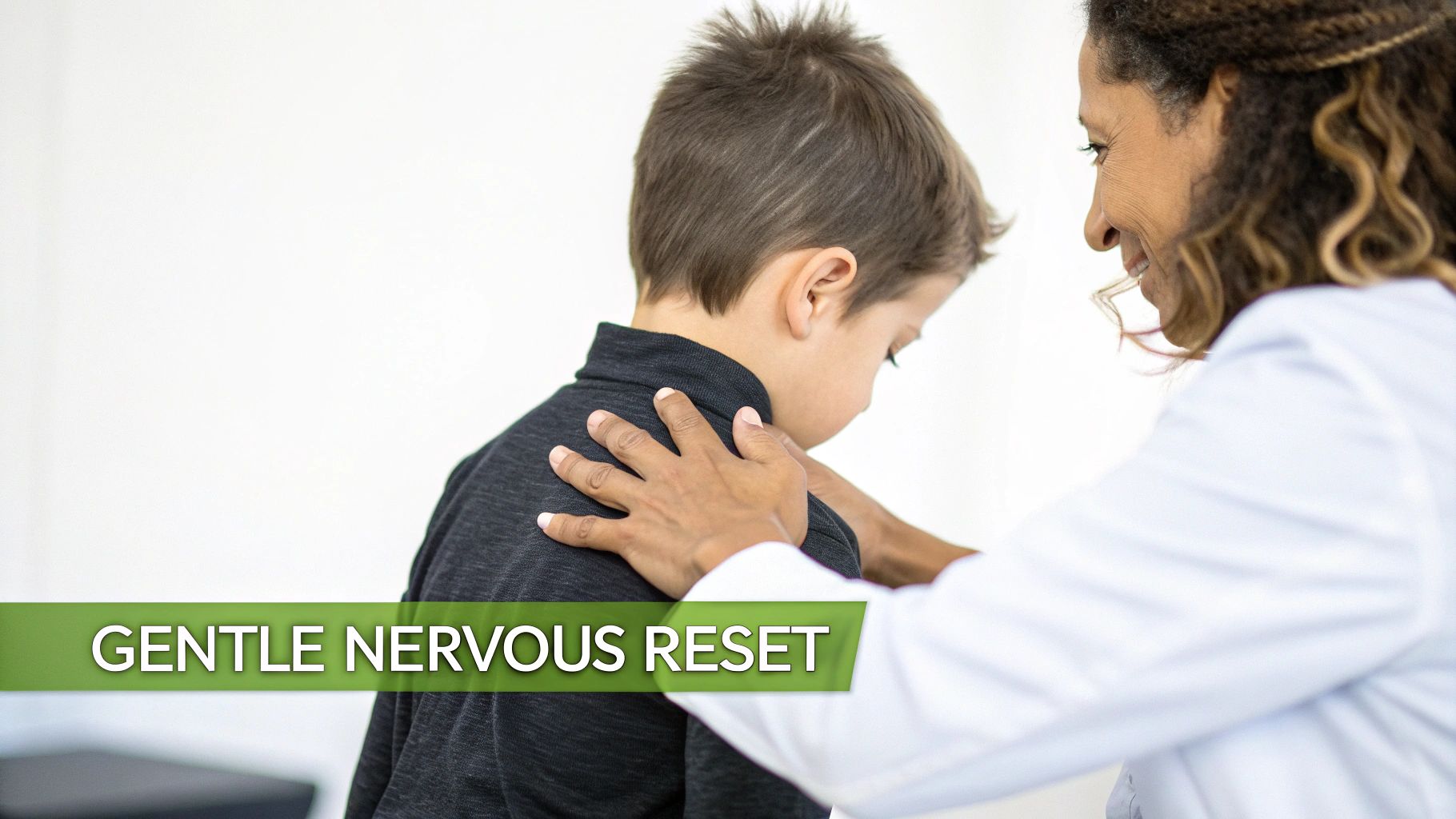
Starting a new care plan for your child can feel overwhelming, especially when you've been searching for real answers. We get it. That's why we've designed our process to be clear, supportive, and empowering right from the start. Our entire approach is built on creating a partnership with you, ensuring you know exactly what’s happening at every stage.
True healing isn't an overnight fix. It’s a process. It takes time for the nervous system to unwind layers of built-up stress and forge new, healthier pathways. Think of it like learning to ride a bike—it requires consistency and practice for the brain and body to adapt and make it second nature. Our job is to gently guide and support your body’s incredible, innate ability to heal itself.
Your First Steps Toward Wellness
Your journey with us follows a proven, five-step path designed to uncover the root cause of your family’s health struggles. This structured approach guarantees we have a complete picture of how your nervous system is functioning before we even begin care. This allows us to create a plan that’s a perfect fit for you.
Here’s a quick look at what that process involves:
- In-Depth Consultation: First, we just listen. This is where you get to share your story, your family's challenges, and your hopes for the future.
- Insight Scans: We use advanced, non-invasive technology to actually measure and map the stress on the nervous system. This gives us objective, concrete data to work with.
- Comprehensive Exam: Our doctors perform a detailed physical and neurological exam to see firsthand how your body is functioning and moving.
- Personalized Care Plan: We connect all the dots—your story, your scans, and your exam results—to build a customized roadmap to healing.
- Your First Adjustment: This is where the journey really begins, as we start the gentle process of releasing stored tension and restoring clear communication between the brain and body.
What to Expect From Your Care
Our clinic is designed to be a supportive and educational space for your entire family. We're committed to empowering you with the knowledge and resources you need to achieve lasting wellness. You aren’t just a patient here; you're a partner in this process.
The most important thing to remember is that healing is a journey, not a destination. Your care plan is designed to create momentum, building positive changes over time as your nervous system learns to regulate and adapt more effectively.
We often get asked what an adjustment feels like. Our neuro-tonal techniques are incredibly gentle. We use no more pressure than you’d use to check if a tomato is ripe. Most of our patients, especially kids, find the adjustments relaxing and calming.
The length of your care plan will be unique to your family's specific needs, based directly on your Insight Scan results and your health goals. We’ll outline the recommended frequency of visits and re-evaluate your progress with periodic scans to ensure your care is always on track and completely transparent. We are here to answer every question and support you at every step. Together, we can restore balance and health to your family.
Of course. Here is the rewritten section, designed to sound like an experienced, compassionate expert.
Your Questions, Answered
Stepping into a new way of caring for your family’s health always comes with questions. That's a good thing! We've put together answers to some of the most common things parents ask us, so you can feel clear and confident as you move forward.
Is Chiropractic Care Safe for My Newborn or During Pregnancy?
Absolutely. This is our specialty, and it's a world away from the "popping and twisting" people often associate with chiropractic. The pressure we use on a baby or a pregnant mom is incredibly gentle—often no more than you’d use to check if a tomato is ripe.
We use specific, low-force methods like Torque Release Technique (TRT), which is designed to be exceptionally gentle. For expecting moms, we use the Webster Technique, a certified and safe approach focused on balancing the pelvis. This not only improves comfort during pregnancy but also supports a smoother, more optimal birth. Our doctors hold advanced certifications in these areas to ensure the highest standard of safe, effective care.
How Can a Spinal Adjustment Help With Something Like Anxiety or ADHD?
This is a great question, and it gets to the heart of what we do. Picture the spine as the central highway for your nervous system's communication. When physical, chemical, or emotional stress builds up, it can cause tiny misalignments (what we call subluxations), which are like static on a phone line.
This interference doesn't just stay in the spine; it can trap the entire nervous system in a constant state of "fight or flight" (sympathetic overdrive). That always-on stress mode is directly tied to challenges like anxiety, poor focus, and hyperactivity. Our gentle, neuro-tonal adjustments work to clear that static, allowing the body to shift back into a calm, regulated "rest and digest" (parasympathetic) state. We're not treating the symptom; we're restoring balance from the inside out.
Will My Insurance Cover This Type of Care?
We do everything we can to make the financial side of things easy and stress-free. Our office accepts most major insurance plans, and we offer a complimentary benefits check for every new patient.
Before you ever commit to a care plan, our team will verify your specific coverage and lay everything out for you. No surprises, no hidden fees.
Our goal is total transparency. We want you to be able to focus on what truly matters—your family's health and healing. Let us handle the logistics so you can focus on seeing the results.
How Long Until We Start to See Results?
Every person’s journey is unique because healing is a process, not a one-time event. Some parents tell us they notice big shifts in their child's sleep or mood within just the first few visits. For others, especially those dealing with more chronic or layered stress, it can take a bit longer for the nervous system to unwind and build new, healthier patterns.
This is exactly why we use our Insight Scans. They give us an objective starting point and allow us to track real, measurable changes in nervous system function over time. Your family’s personalized care plan will map out the expected timeline and milestones based on those initial scan results and your specific health goals.
At First Steps Chiropractic, we're here to give your family a clear and supportive path to wellness. To learn more or to schedule your complimentary consultation, visit us online.