
When we talk about natural vagus nerve stimulation, we're really talking about simple, non-invasive things you can do every day—like deep breathing, humming a tune, or even a quick splash of cold water on your face. These gentle techniques activate the body's longest cranial nerve, helping to shift the entire family’s nervous system from a state of stress ("fight or flight") to one of calm ("rest and digest").
The result is a powerful sense of relaxation and well-being that benefits everyone, from kids to grandparents.
Understanding Your Family's Nervous System Superhighway

Think of the vagus nerve as your body's main information highway. It’s the longest and most complex of the cranial nerves, starting in the brainstem and branching out to connect with nearly every major organ system, including your heart, lungs, and gut.
Its primary job is to manage the parasympathetic nervous system—that's the "brakes" that slow you down and promote recovery after a stressful event.
When the vagus nerve is working well, your family is far more resilient to the ups and downs of daily life. This healthy, responsive state is often referred to as having good "vagal tone."
What Is Vagal Tone?
Vagal tone is really a measure of your nervous system's flexibility and resilience.
Someone with high vagal tone can bounce back quickly from a challenge, whether it’s a frustrating traffic jam on the way to school or a toddler's epic meltdown in the grocery store. Their body efficiently shifts from a stressed state back to a calm one.
On the other hand, low vagal tone means the body gets "stuck" in stress mode. This can show up as persistent anxiety, digestive upset, trouble sleeping, and just feeling overwhelmed. For a deeper dive into the mechanics, you can learn more about how the nervous system works in our detailed guide.
A healthy, well-regulated vagus nerve is the foundation of a calm and connected family. It's the biological basis for emotional regulation, resilience, and the ability to feel safe and secure in the world.
To get a clearer picture of its reach, here's a quick look at the systems it influences.
| System | Function | Impact of Healthy Vagal Tone |
|---|---|---|
| Cardiovascular | Regulates heart rate and blood pressure | Promotes a calm, steady heart rhythm. |
| Respiratory | Controls breathing rate and depth | Encourages slow, deep, and relaxed breathing. |
| Digestive | Manages gut motility and enzyme release | Supports efficient digestion and nutrient absorption. |
| Immune | Modulates inflammation | Helps calm systemic inflammation. |
| Social-Emotional | Influences mood and social connection | Enhances feelings of calm and empathy. |
As you can see, the vagus nerve has its hands in just about everything that keeps us feeling balanced and healthy.
Improving vagal tone isn't about getting rid of stress—that's impossible. It's about strengthening your body's ability to navigate it effectively. A strong vagal response is directly linked to better mood, lower inflammation, and improved heart health. For our kids, this translates to better focus, fewer meltdowns, and more restorative sleep.
The best part? You can actively and gently improve this tone. The natural techniques we're about to explore give your family a direct line to supporting this crucial system, empowering everyone with simple tools for lasting wellness.
The Science Behind Natural Stimulation
The idea of stimulating the vagus nerve isn't some new-age wellness fad; it's grounded in a rich scientific history that goes back more than 100 years. It all started with simple observations that certain physical actions could have a massive impact on the nervous system, especially for conditions that were notoriously hard to manage.
This journey from curious observation to established science proves a fundamental truth: we've known for a long time that the vagus nerve is a powerful gateway to influencing how our brain and body function. Understanding this history gives us a much deeper appreciation for the simple, natural techniques we use in our practice today.
From Mechanical Tools to Modern Medicine
The story of vagus nerve stimulation really begins in the late 1800s with neurologist James Leonard Corning. He had a theory that epilepsy was caused by too much blood flow to the brain and, in the 1880s, he actually developed a "Corning fork" to apply mechanical pressure and electrical currents to the vagus nerve in the neck.
His reported success was pretty remarkable—he claimed to stop seizures in their tracks and even prevent future ones. While his methods obviously didn't have the controlled trials we demand today, his pioneering work laid the critical foundation for what would later become a cornerstone of modern neuromodulation. You can read more about these fascinating historical findings to see just how far the science has come.
Decades of research followed, slowly building on this initial idea. Scientists began to map out the intricate neural pathways the vagus nerve uses to talk to the brain. This painstaking work eventually led to the development of Vagus Nerve Stimulation (VNS) therapy, a medical procedure where a small, pacemaker-like device is implanted to send gentle electrical pulses to the vagus nerve.
In 1997, the FDA officially approved VNS therapy for treating medication-resistant epilepsy. This was a landmark decision that validated the powerful, direct link between the vagus nerve and brain activity.
VNS therapy works by modulating neurotransmitter levels in the brain. Stimulating the vagus nerve has been shown to increase calming neurotransmitters like GABA and norepinephrine, helping to stabilize electrical activity and reduce the frequency and severity of seizures.
This exact principle of neuromodulation is what makes natural stimulation techniques so powerful, too.
How Natural Vagus Nerve Stimulation Works
The good news is you don't need an implanted device to get the benefits of a well-regulated vagus nerve. Natural methods use your body's own mechanics to create a similar, gentler effect, tapping into that same neural superhighway to send calming signals right to the brainstem.
Think about what happens when you take a slow, deep breath.
- Your diaphragm lowers, which gently stimulates the vagal nerve endings located in your lower lungs.
- Your exhale naturally becomes longer than your inhale—a direct signal that tells your parasympathetic "rest and digest" system to kick in.
- This sends a message up the vagus nerve to your brain that says, "Everything is safe. You can relax now."
Almost instantly, your heart rate slows, your muscles start to release tension, and your mind feels clearer. Other natural methods work in very similar ways:
- Humming or gargling: These actions create vibrations in your throat, directly engaging the vagal nerve fibers connected to your vocal cords and palate.
- Cold water exposure: Ever splashed cold water on your face when you felt panicked? That triggers the "mammalian diving reflex," a primitive response that instantly slows your heart rate via the vagus nerve to conserve oxygen.
Each of these actions is a form of biofeedback. You're giving your brain sensory input that encourages it to shift out of a "fight or flight" state.
While the stimulation from these methods is less intense than a medical device, consistent practice is what builds a stronger, more resilient vagal tone over time. For a deeper dive into its many roles, check out our guide on what is vagus nerve function. This is precisely the principle that neurologically-focused chiropractic care is built on—using gentle, precise adjustments to improve the nervous system's baseline function without invasive procedures.
Practical At-Home Techniques You Can Start Today
Knowing the science is one thing, but putting it into practice in your daily life is where you’ll see real, lasting change. The good news is that empowering your family with tools for natural vagus nerve stimulation doesn't require any fancy equipment or a huge time commitment. It’s all about weaving simple, intentional moments of calm into the routines you already have.
These techniques are designed to be easy, effective, and adaptable for everyone in your family, from toddlers to grown-ups. Each one works by sending direct signals of safety and relaxation to the brain, which helps build a more resilient and balanced nervous system over time.
The Power of Your Breath
The most direct and immediate way to influence your vagus nerve is right under your nose—literally. It's your breath. When we're stressed, our breathing naturally becomes shallow and quick, sending "danger!" signals to the brain. By consciously slowing our breathing down, we can flip that switch.
A simple yet powerful exercise for this is diaphragmatic breathing, or "belly breathing." Just place a hand on your belly. Inhale slowly through your nose for a count of four, feeling your hand rise as your belly fills with air. Then, exhale even more slowly through your mouth for a count of six. That longer exhale is the secret sauce; it’s what truly activates the body’s "rest and digest" response.
With kids, you can easily turn this into a game. Have them lie on their back and place a small, favorite stuffed animal on their tummy. Their mission is to make the "animal" gently rise and fall with each slow, deep breath. Doing this for just 5 minutes before school or at bedtime can make a world of difference in their ability to stay calm and manage their emotions.
Sound and Vibration for Self-Soothing
Did you know your vagus nerve is intricately connected to the muscles in your throat and your vocal cords? Because of this, using sound and vibration is a wonderfully effective way to give it some gentle, direct stimulation.
Think about it—we have a natural instinct to hum when we're content or let out a deep, audible sigh of relief. These are your body's built-in ways of tapping into this calming pathway. You can easily be more intentional with these actions:
- Humming: Simply hum a favorite tune for a few minutes. The vibrations you create in your throat and chest are a direct stimulant for the vagus nerve.
- Chanting or Singing: Singing together in the car or chanting a simple sound like "Om" can create a powerful, collective sense of calm. For an overstimulated child, a low, repetitive chant can be incredibly grounding.
- Gargling: It might sound a little strange, but gargling with water for 30-60 seconds engages those throat muscles in a unique way that effectively tones the vagus nerve.
These sound-based techniques are fantastic because you can do them almost anywhere. If you sense a child is on the verge of a meltdown in a store, quietly starting to hum a familiar lullaby can be just enough to de-escalate the situation by shifting their nervous system's focus.
The journey of VNS has come a long way, evolving from early mechanical devices to our current understanding of these simple, natural, at-home methods.
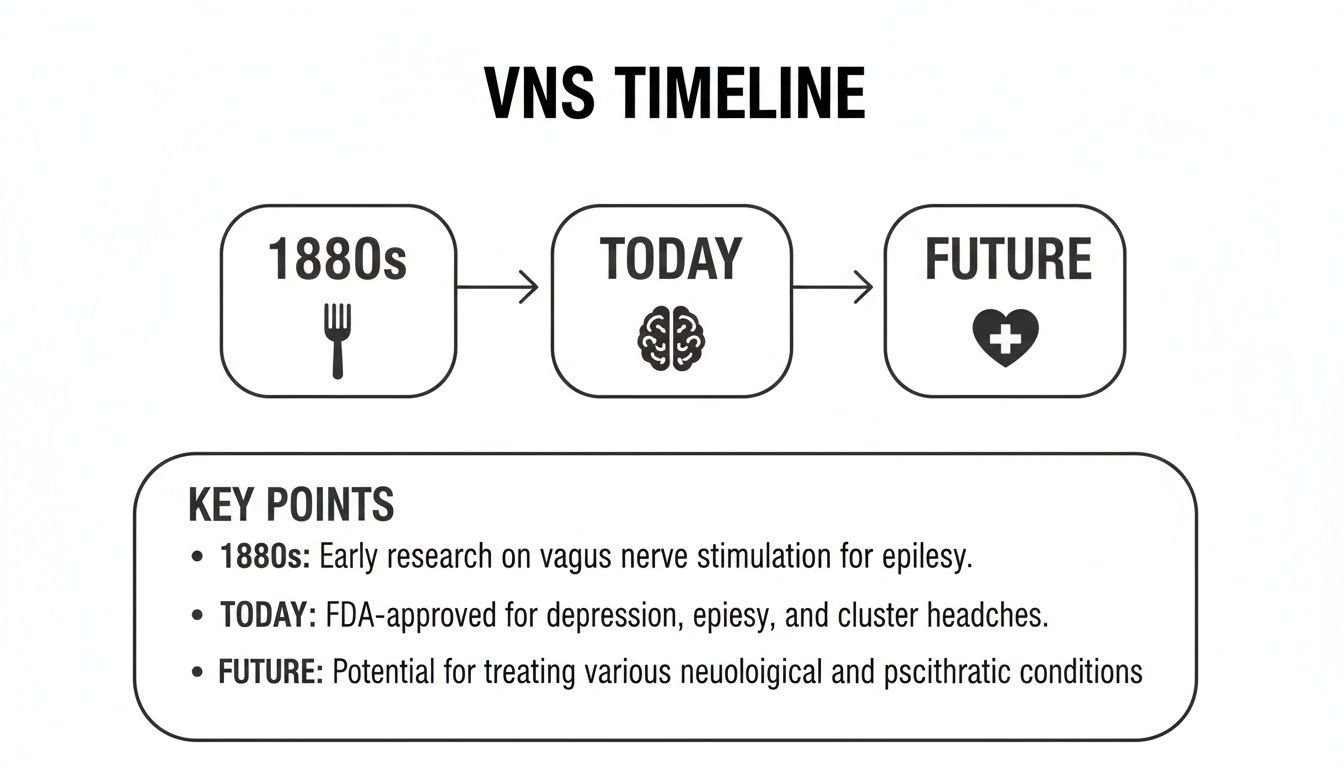
This visual really captures that journey, showing how scientific interest in harnessing the vagus nerve for wellness has been growing since the 1880s.
Using Cold Exposure for an Instant Reset
Have you ever instinctively splashed cold water on your face to calm down? There’s a powerful physiological reason for that, and it's called the mammalian diving reflex. When your face is suddenly exposed to cold, it triggers the vagus nerve to immediately slow your heart rate and conserve oxygen. It's a built-in reset button.
You don’t need to jump into an ice bath to get the benefits, either. A few simple tricks are all it takes:
- Splash cold water on your face and the back of your neck.
- Hold a cold pack or a chilled washcloth against your cheeks and forehead for 30 seconds.
- End your shower with a 30-second blast of cold water.
This is an amazing "pattern interrupt" for moments of high anxiety or panic. When a child feels overwhelmed, gently wiping their face with a cool cloth can provide an immediate system reset, pulling them out of that stress spiral. The physical sensation demands the brain's attention, redirecting it away from whatever was causing the distress.
To help you get started, here is a quick reference guide for some of our favorite techniques.
At-Home Natural VNS Techniques Quick Guide
| Technique | How It Works | Recommended Practice |
|---|---|---|
| Belly Breathing | A long exhale activates the parasympathetic nervous system, signaling calm. | Inhale for 4 counts, exhale for 6 counts. Try for 5 minutes daily. |
| Humming/Singing | Vibrations in the throat directly stimulate the vagus nerve where it passes through. | Hum a simple tune or sing along to a song for 2-3 minutes. |
| Cold Splash | Triggers the mammalian diving reflex, which instantly slows heart rate. | Splash cold water on your face for 30 seconds when feeling stressed. |
| Gargling | Actively engages the muscles in the back of the throat, toning the vagus nerve. | Gargle with water for 30-60 seconds during your morning routine. |
| Belly Laughing | The diaphragm's movement massages the vagus nerve and fosters social safety signals. | Watch a funny movie or play a silly game with the family. |
Remember, consistency is more important than intensity. Small, regular practices build a stronger, more resilient nervous system over time.
Laughter and Social Connection
Never underestimate the power of a good laugh. Genuine, heartfelt laughter is one of the most enjoyable forms of natural vagus nerve stimulation out there. A deep belly laugh causes your diaphragm to contract and relax rhythmically, essentially massaging the vagus nerve and signaling profound relaxation to your brain.
But it goes beyond just the physical mechanics. Laughter fosters social bonding, and positive social connection is a primary signal of safety for our nervous systems. When we feel seen, heard, and connected to the people we love, our vagal tone naturally improves. Make dedicated time for activities that spark joy and connection:
- Watch a funny movie together.
- Have a family game night.
- Share silly stories at the dinner table.
These moments of shared joy aren't just "nice-to-haves"—they are biologically essential for regulating our nervous systems. They reinforce the core message that we are safe and supported, which is the ultimate goal of stimulating the parasympathetic nervous system. To dive deeper into this, you can explore our detailed guide on the stimulation of the parasympathetic nervous system.
By integrating these simple, practical techniques into your daily rhythm, you empower your entire family with the tools to navigate stress and build a foundation of calm resilience from the inside out.
Tailoring Vagal Support for Pregnancy, Infants, and Children

A well-regulated nervous system is the foundation for health at every age, but how we support it looks very different from one life stage to the next. The core ideas of natural vagus nerve stimulation are the same, but the application has to be adapted to be safe and effective for the delicate systems of pregnant moms, newborns, and growing kids. What works for an adult needs to be thoughtfully adjusted for these unique developmental windows.
It’s all about meeting each person where they are. For an expecting mom, it's about creating a calm, supportive internal world for both her and her baby. For an infant, it's about using gentle touch and movement to unwind the physical stress of birth. And for a child, it's about turning these techniques into playful habits that build lifelong resilience.
Gentle Vagal Support During Pregnancy
Pregnancy is a time of huge physical and emotional shifts, placing incredible demand on the nervous system. Supporting your vagal tone during these nine months can make a massive difference in your comfort and can even contribute to a smoother labor. The goal here is simple: create calm and promote physical balance.
One of the most powerful tools you have is gentle, deep belly breathing. Just place your hands on your growing belly and breathe slowly. This not only quiets your own nervous system but also sends rhythmic, soothing signals to your baby. Singing or humming lullabies is another fantastic two-for-one—the vibrations in your throat directly stimulate your vagus nerve, and the sound creates an early bonding experience for your little one.
The Webster Technique, a specific chiropractic analysis we use for our pregnant patients, is a perfect example of this kind of support. By gently ensuring the pelvis is properly balanced, we reduce physical stress that can interfere with nerve function, creating a more optimal environment for both mom and baby to thrive.
Nurturing the Newborn Nervous System
A baby's nervous system is incredibly sensitive, and the journey through the birth canal can be their very first major physical stressor. This is why we are so passionate about addressing potential misalignments or tension patterns early on—it's foundational for their development. Safe and gentle natural vagus nerve stimulation for infants is all about touch, movement, and a deep sense of security.
Here are a few simple, safe practices for newborns:
- Skin-to-Skin Contact: This is one of the most powerful regulators there is. The warmth and steady heartbeat of a parent provide a profound sense of safety that directly calms a baby’s nervous system.
- Gentle Rocking and Swaying: Rhythmic, predictable movement mimics the environment of the womb, activating the parasympathetic "rest and digest" state.
- Specific Holding Patterns: Holding your baby in a way that supports their spine and allows their arms and legs to curl inward toward their center can help release tension left over from the birth process. We call this the "fetal tuck" position, and it's naturally calming.
These actions might seem intuitive, but they are also deeply neurological. They help an infant’s brain learn what safety feels like, setting a healthy baseline for vagal tone as they grow.
Age-Appropriate Techniques for Growing Children
For toddlers and older children, especially those navigating challenges like ADHD, anxiety, or sensory processing issues, we can frame vagal stimulation techniques as fun games. The idea is to empower them with tools they can use to self-regulate when they feel overwhelmed, without it ever feeling like a chore.
A "dragon breath" exercise, where a child takes a deep breath in and then "breathes fire" with a long, slow exhale, is a playful way to practice diaphragmatic breathing. Making silly sounds, like buzzing like a bee or growling like a bear, creates the same vocal cord vibrations as humming but feels much more like a game. These activities get right to the root of the issue by helping their nervous system shift out of a state of high alert and into one of calm, focused connection.
Knowing When to Seek Professional Support
While the at-home techniques for natural vagus nerve stimulation are incredible tools for daily support, they aren’t a cure-all. Sometimes, despite your best efforts with deep breathing and cold splashes, the nervous system remains stuck.
If you notice your child’s developmental delays aren’t improving, if anxiety feels like a constant guest in your home, or if significant sensory struggles are disrupting daily life, it might be time for a more direct and specialized approach. These aren’t signs of failure—they’re simply indicators that the nervous system is caught in a stress pattern that needs a professional hand to help unwind it.
The Role of a Neurologically-Focused Chiropractor
This is where a neurologically-focused pediatric and prenatal chiropractor comes into the picture. Our specialty is very different from general chiropractic that often focuses on musculoskeletal pain. We have one primary goal: optimizing the function of the nervous system itself. The focus is less on just adjusting bones and more on restoring that vital communication highway between the brain and the body.
For the families in our practice, this means we look beyond the symptoms to find the root cause. Using advanced, non-invasive technology like INSiGHT Scans, we can get an objective measurement of how your child’s nervous system is actually functioning. These scans give us a clear picture of where stress is stored, allowing us to create a precise and gentle care plan.
A neurologically-focused approach doesn't just chase symptoms. It aims to improve the baseline tone and resilience of the entire nervous system, helping the body heal and regulate itself from the inside out.
What to Expect from Specialized Care
When you visit a clinic like ours, we make the process clear and supportive. It always starts with an in-depth consultation where we listen to your family’s story and health history. From there, the INSiGHT Scans and a comprehensive exam give us the data we need to map out a personalized care plan. We use gentle, specific techniques like the Torque Release Technique (TRT).
These adjustments are nothing like the twisting or popping many people imagine. They are incredibly gentle and precise, designed to directly influence nervous system tone by correcting subluxations—misalignments that create interference and disrupt the signals flowing along the vagus nerve pathway.
The medical world is catching on to the power of vagal stimulation. Globally, projections estimate over 125,000 VNS device implants by 2025 for conditions ranging from epilepsy to depression. But research shows that natural methods, including focused chiropractic care, can achieve similar gains.
For parents at our practice tackling everything from ADHD to newborn misalignments, our five-step protocol naturally stimulates these same pathways, helping restore balance without invasive procedures. For our prenatal patients, the Webster Technique has been shown to optimize pelvic nerve function, contributing to smoother labor. You can discover more insights about these non-invasive approaches and their scientific backing here.
Ultimately, professional support offers a targeted strategy when at-home methods hit a wall. It provides objective measurements, precise adjustments, and a clear path forward, empowering your family with the comprehensive care needed to find lasting balance.
Common Questions About Natural Vagus Nerve Stimulation
As families start to see just how deeply the nervous system is tied to overall well-being, questions always pop up. It’s totally normal. Exploring things like natural vagus nerve stimulation can feel like learning a new language, and you want to be sure you’re getting it right.
We've pulled together the most common questions we hear from parents in our practice. Our goal is to give you straightforward answers that help you feel confident and empowered on this journey.
How Quickly Can We Expect to See Results?
This is usually the first thing parents ask, and the honest answer is: it really varies.
Some techniques can bring an almost immediate sense of calm. A few minutes of slow, deep belly breathing, for example, can quiet the system right away. That's your vagus nerve responding in real-time to the signal of a long, slow exhale.
But for more deep-rooted challenges—think chronic anxiety or significant sensory struggles—consistency is everything. Building a stronger, more resilient vagal tone is like strengthening a muscle. It takes time and regular practice, often over several weeks.
When you pair these at-home efforts with professional care like neurologically-focused chiropractic adjustments, the timeline can speed up. Many families tell us they see real improvements in sleep, emotional regulation, and mood within the first few visits. That's because the adjustments get right to the source, addressing the underlying interference in the nervous system.
Are These Natural Techniques Safe for a Child with SPD?
Yes, absolutely. Not only are these techniques generally very safe for kids with Sensory Processing Disorder (SPD), they're often incredibly beneficial. Many of the core methods we recommend, like deep pressure, humming, and rhythmic rocking, are the same foundational tools an occupational therapist would use to help calm a "fight-or-flight" response.
The key is to always follow your child's lead and introduce new things gently.
- Start small: If a cold cloth on the face is too much, try a little cool water on their hands or wrists first.
- Keep it playful: Turn breathing exercises into a game. "Let's blow out pretend birthday candles!" or "Let's breathe like a sleeping bear."
- Never force it: The whole point is to create signals of safety for the nervous system. These should feel like fun, calming activities, never a chore.
A pediatric-focused chiropractor who truly gets sensory needs can help design a care plan that respects your child's unique sensitivities, making sure every step of the process feels safe and supportive.
What’s the Difference Between General and Neurologically-Focused Chiropractic?
While both approaches aim to improve health, their focus is fundamentally different.
Think of it this way: a general chiropractor often acts like a skilled carpenter, focusing on the body's structure—the musculoskeletal system. They work to relieve things like back pain by correcting spinal alignment.
A neurologically-focused pediatric chiropractor, on the other hand, is more like an electrician for the body. Our primary goal is to improve the function of the nervous system itself. The adjustments are incredibly specific and gentle, designed to clear the lines of communication between the brain and body. This communication network governs everything from mood and digestion to sleep and focus.
It’s not just about aligning bones; it’s about enhancing the body’s ability to regulate itself. This is why it’s so effective for conditions rooted in nervous system dysregulation, like ADHD and anxiety. We also use advanced scans to get objective data on nervous system function, which allows us to track progress far beyond just symptom relief.
How Does the Webster Technique Relate to Vagus Nerve Health?
The Webster Technique is a specific chiropractic analysis and adjustment designed just for pregnant women. Its main purpose is to restore proper balance and function to the pelvis. While that might not sound directly related to the vagus nerve, its impact on the nervous system is huge.
When the pelvis is balanced, it reduces physical tension on the surrounding muscles, ligaments, and nerves. This drop in physical stress sends powerful signals of safety and ease throughout the mother's entire nervous system.
This creates an internal environment where the parasympathetic "rest and digest" system—which is governed by the vagus nerve—can finally do its job without interference. So, while the technique doesn't directly stimulate the vagus nerve like humming does, it creates the ideal physiological state for a healthy vagal tone to flourish, benefiting both mom and her growing baby.
At First Steps Chiropractic, we’re here to provide the answers and support your family needs to truly thrive. If you have more questions or you’re ready to see how a neurologically-focused approach can make a difference, we invite you to schedule a complimentary consultation.
Learn more and book your visit at firststepschiropractic.com.