While most forceps deliveries go smoothly and result in healthy, happy babies, some research points to a connection between this type of birth intervention and potential complications that can show up later in life.
These issues, which can range from subtle developmental hiccups to more noticeable neurological challenges, often trace back to the physical stress placed on an infant's head, neck, and nervous system during the birth process.
The Hidden Connection Between Forceps Delivery and Childhood Challenges
The moment your child is born is one you'll never forget. But if that moment involved a forceps delivery, you might have some lingering questions about what that means for their future. This guide is here to address those concerns head-on. We'll explore how this common medical intervention can sometimes cast a long shadow, leading to challenges that pop up months or even years down the road.
We’re going to look beyond the immediate recovery period and dig into the subtle, long-term effects on a child’s developing nervous system and physical structure. Think of this as a roadmap. First, we'll explain the 'why'—how the mechanics of a forceps-assisted birth can create hidden stress—before diving into the signs to watch for and the proactive steps you can take.

Unpacking the Initial Impact
A forceps-assisted birth is a tool doctors use when labor stalls out or when the baby is showing signs of distress. The instrument is designed to gently guide the baby's head through the birth canal. But, the reality is that applying any external force to a newborn's delicate skull and neck can sometimes have unintended consequences.
Even when applied with perfect technique, that pressure can cause tiny misalignments in the upper cervical spine. This area is a critical junction for the nervous system, housing the brainstem which acts like the body's main control tower for essential automatic functions.
The core issue isn't always a visible injury right after birth. Often, it's the subtle disruption to the brain-body communication pathway that can set the stage for health challenges down the road.
The Ripple Effect on Development
This initial physical stress can kick off a cascade of effects that might not become obvious until your child starts to grow. It’s like a tiny, unseen crack in a home's foundation; it might not seem like a big deal at first, but over time, it can impact the entire structure. A disruption in the nervous system from birth can show up in all sorts of ways as a child develops.
These challenges often fall into a few key categories:
- Neurological and Developmental: This bucket includes things like sensory processing issues, trouble with focus, emotional regulation struggles, and delays in hitting those big developmental milestones.
- Musculoskeletal Imbalances: You might notice signs like a persistent head tilt (torticollis), crawling in an asymmetrical way, or other subtle problems with their posture.
- Immune and Organ Function: Sometimes, chronic issues like recurring ear infections, relentless colic, or digestive troubles can be linked back to underlying nervous system stress from birth.
Just understanding this connection is the first, most powerful step. Our goal is to empower you with knowledge, helping you connect the dots between birth events and your child’s current well-being. From there, we can show you a path toward proactive solutions that get to the root cause, not just chase the symptoms.
How Birth Intervention Can Reshape Your Child’s Development
Think of your newborn's nervous system as a brand-new superhighway, perfectly designed for trillions of messages to zip between the brain and the body without a hitch. A forceps delivery, while sometimes medically necessary, can place unexpected roadblocks on this superhighway.
The physical pressure on a baby’s head, neck, and spine—no matter how carefully applied—can create tiny misalignments. In chiropractic, we call these vertebral subluxations. This isn't about broken bones or obvious injuries; it's about subtle shifts that can disrupt the vital communication flowing through the nervous system.
This initial physical stress can get the nervous system stuck in a state of high alert. It’s like a car alarm that just won’t turn off. This constant "on" signal is what we refer to as a neuro-tonal shift, where the body is locked in a fight-or-flight mode instead of the calm "rest and digest" state needed for growth and development.
The Foundation of Future Challenges
This underlying tension often goes unnoticed at first. After all, a newborn can't tell you they feel "stuck" or that their body is carrying stress. But this neuro-tonal shift can set a challenging foundation for their development, paving the way for struggles down the road.
When that crucial brain-body connection is even slightly off, a child may have trouble processing and reacting to the world around them. As they grow, this can show up in a few key ways:
- Sensory Processing Issues: The child might be extremely sensitive to noises, touch, or light. Or, they might be the opposite, constantly seeking out intense sensory input to feel regulated.
- Focus and Emotional Regulation: A nervous system stuck in overdrive makes it incredibly difficult for a child to concentrate, manage big emotions, or calm down after getting upset.
- Motor Skill Delays: Disrupted signals can interfere with coordination, balance, and hitting developmental milestones like crawling, walking, or even mastering fine motor skills.
This is a critical piece of the puzzle. It helps us see that many common childhood challenges may actually have a physical root cause that traces right back to the birth process. These aren't just "bad behaviors," but a child's body responding to a system that’s out of balance. To understand more about the root causes, read this in-depth article about what causes developmental delays.
From Subtle Shifts to Significant Complications
The mechanical force from a forceps delivery can have deep neurological effects that aren't always visible right away. The pressure on a baby's delicate cranial bones can sometimes lead to more serious, yet often hidden, injuries.
Research has shown that forceps deliveries significantly increase the risk of intracranial hemorrhages, which are small bleeds in the brain. In fact, one study found the risk was a shocking 16.4 times higher compared to babies born without intervention. These tiny bleeds might not be caught at birth but can surface later as developmental delays, lower IQ scores, or mild neurodevelopmental disorders, which were seen in 6.4% of cases in one study.
This connection highlights a crucial point: the physical events of birth can directly reshape a child’s neurological blueprint, influencing their health and development for years to come.
Understanding this link is the first step toward finding real solutions. Many parents are surprised when they learn about the potential root causes of their child's struggles, but this knowledge is empowering. It allows them to look beyond the symptoms and address the core issue—the stress held in the nervous system from day one. When we address this foundational stress, we can unlock a child's true potential to grow and thrive.
Recognizing the Signs of Long-Term Complications
As a parent, you are the world's foremost expert on your child. You know their every giggle, their unique quirks, and that gut feeling you get when something just isn't quite right. But figuring out what's a typical developmental hiccup versus a potential red flag from a tough birth can be really challenging. This is especially true when we talk about forceps delivery complications later in life, because the signs can be subtle and often change as your little one grows.
Think of this as a field guide for observation. We’re going to walk through the key stages of childhood—from those early newborn days to the busy school years—and highlight some of the signs that might be worth a closer look. The goal isn't to create worry. It’s to empower you with information so you can confidently ask questions and find answers if you see a pattern emerging.
This timeline diagram helps visualize how the physical stress from a forceps delivery can lead to subtle misalignments in the spine (subluxation), which in turn creates a neuro-tonal shift. This is just a way of saying the nervous system gets stuck in a state of stress, impacting how the brain and body communicate.
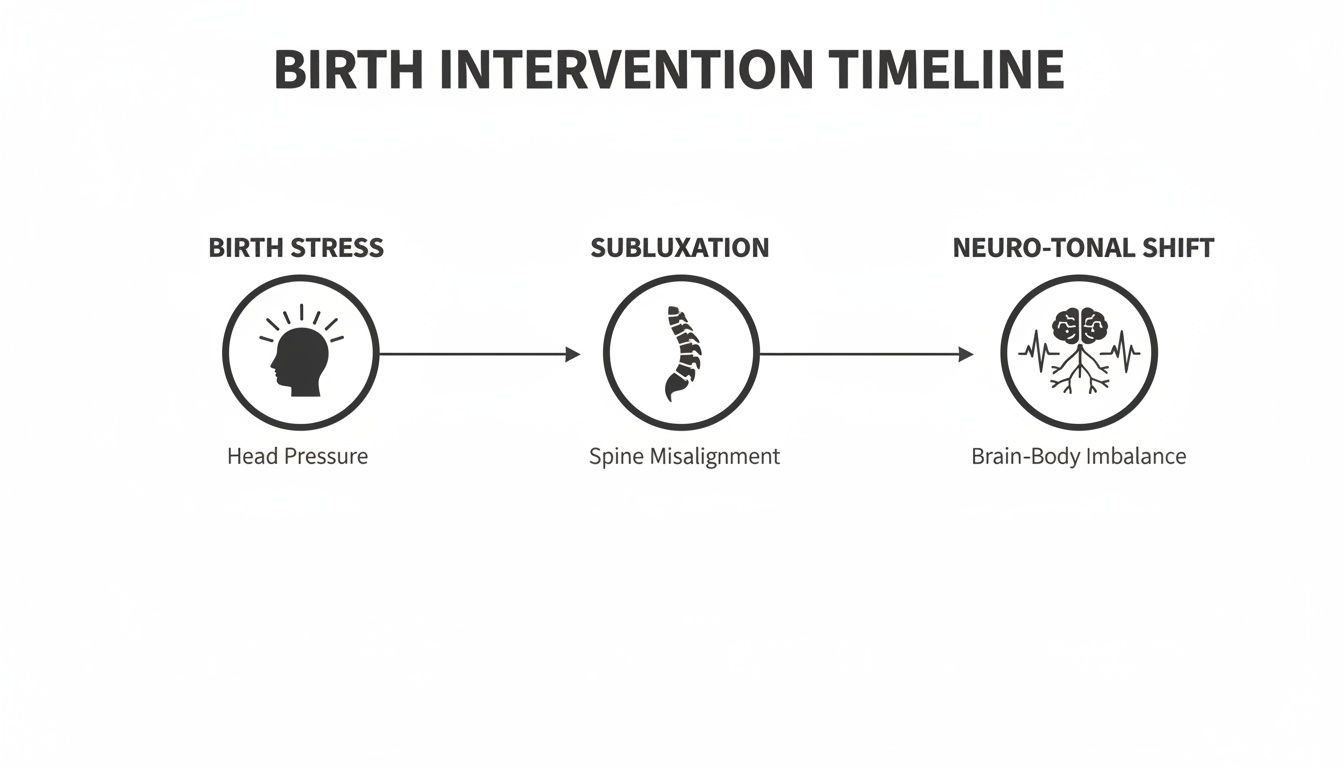
This journey from birth stress to a neuro-tonal shift is key to understanding how a physical event at the very beginning of life can have long-term neurological ripples.
To help you connect the dots, we've organized potential red flags by age. The table below provides a quick reference for signs you might observe as your child grows.
Potential Long-Term Complications by Developmental Stage
| Developmental Stage | Potential Neurological & Developmental Signs | Potential Musculoskeletal & Physical Signs |
|---|---|---|
| Infancy (0-12 months) | Inconsolable crying or colic; extreme fussiness; seems uncomfortable in their own body. | Persistent head tilt (torticollis); flattened head shape (plagiocephaly); favors one side. |
| Toddlerhood (1-3 years) | Sensory sensitivities (sound, touch, food); delayed speech or motor skills; intense, frequent meltdowns. | Chronic ear infections; appears clumsy or uncoordinated; balance issues. |
| Childhood (4+ years) | Difficulty with focus and attention (often looks like ADHD); struggles with emotional regulation and anxiety. | Chronic headaches or growing pains; poor posture; frequent illness. |
Remember, seeing one sign doesn't automatically mean there's a problem. We are looking for persistent patterns that tell a story about your child's nervous system.
Red Flags in Infancy (0-12 Months)
The first year is a whirlwind of growth, and it's often the earliest window where clues from birth trauma might surface. At this stage, the signs are almost always physical because it's how your baby communicates discomfort.
Pay close attention to symmetry and ease of movement. A nervous system holding onto tension from birth can create imbalances in your baby’s muscle tone, making them seem uncomfortable or restricted.
Common signs to watch for include:
- Persistent Head Tilt (Torticollis): Does your baby always seem to lean their head to one side? Or maybe they struggle to turn their head equally in both directions? This is a classic sign of neck muscle tension, often tied to birth interventions.
- Asymmetrical Movements: You might notice your baby favors one arm or leg when kicking or reaching. They might also only roll over in one direction.
- Feeding Difficulties: Trouble with latching, a weak suck, or strongly preferring one breast can sometimes be linked back to jaw and neck tension from delivery.
- Extreme Discomfort or Colic: While all babies get fussy, inconsolable crying for hours on end, often paired with an arched back, can be a sign of significant nervous system dysregulation.
- Flattened Head Shape (Plagiocephaly): If a baby’s neck movement is restricted, they’ll rest their head in the same position, which can lead to a flat spot.
Clues in Toddlerhood (1-3 Years)
Once your little one is on the move and starting to talk, the signs of underlying nervous system stress can evolve. They may shift from being purely physical to showing up in behavior and development. That "fight-or-flight" mode we talked about can make it incredibly difficult for a toddler to manage their emotions and sensory world.
While big feelings and tantrums are a normal part of being a toddler, persistent and extreme emotional dysregulation, sensory issues, or major developmental delays could be more than just a phase. They can be messages from a nervous system that's working overtime to find balance.
At this age, you might see:
- Sensory Sensitivities: This can look like an extreme reaction to loud noises, picky eating that goes beyond typical toddler behavior (especially with textures), or a hatred for tags in clothing. The flip side is "sensory seeking," where a child constantly crashes into things or needs intense physical input to feel regulated.
- Delayed Milestones: Keep an eye on significant delays in walking, talking, or developing fine motor skills when compared to their peers.
- Emotional Dysregulation: Are meltdowns happening all the time? Are they incredibly intense and hard for your child to recover from? This can point to a nervous system that gets overwhelmed easily.
- Clumsiness or Poor Coordination: If your toddler seems consistently off-balance or uncoordinated beyond the normal learning curve of a new walker, it could signal a disconnect in the brain-body communication.
Signs in School-Aged Children (4+ Years)
When a child starts school, the demands on their nervous system skyrocket. Suddenly, they need to sit still, focus for longer periods, process complex information, and navigate a busy social world. Any lingering issues from a forceps delivery can become much more obvious in this structured setting.
Often, the challenges show up as difficulties with focus, behavior, and learning. What looked like a "busy toddler" might now get flagged as a potential attention or hyperactivity issue.
Consider these potential signs:
- Focus and Attention Challenges: Difficulty concentrating, staying on task, or following multi-step directions is a hallmark. This is often the primary symptom that leads parents down the path of an ADHD evaluation.
- Anxiety or Emotional Imbalances: Kids with a dysregulated nervous system may deal with persistent anxiety, big mood swings, or have a really hard time coping with small, everyday stressors.
- Learning Difficulties: Trouble with reading, writing, or remembering information can sometimes be tied to how the brain is organizing and processing input—a system that can be impacted by early neurological stress.
- Chronic Physical Complaints: Recurring headaches, stomachaches, or "growing pains" that don't have a clear medical cause can be the body’s way of expressing that stored tension.
Noticing any of these signs isn't a reason to panic. It's simply an invitation to get curious. It’s the very first step in connecting the dots and finding gentle, effective ways to support your child's nervous system so they can truly thrive.
Understanding the Neurological and Physical Consequences
To truly get to the bottom of forceps delivery complications later life, we have to connect the dots. It’s about linking the symptoms we see in a child—whether it’s chronic ear infections, sensory issues, or developmental delays—back to the specific physical and neurological shifts that happened at birth. The immense pressure from forceps, even when medically necessary, can kick off a subtle but powerful domino effect.
This section is all about the "how" and "why." We'll break down the root causes into clear, understandable pieces, exploring how that initial stress at birth can show up as cranial, musculoskeletal, and developmental challenges months or even years down the road.
Cranial and Facial Issues
Picture a newborn's skull. It's not one solid bone, but a collection of soft, mobile plates designed to overlap and mold during the journey through the birth canal. It’s an incredible design. But when forceps are used, they can sometimes cause these plates to shift or get stuck in ways that don't fully resolve on their own, creating a low-grade but persistent tension in the head.
This isn't just about a slightly misshapen head. That tension directly impacts the delicate nerves that weave through the skull. A perfect example is the Eustachian tube, the tiny canal that drains fluid from the middle ear. If cranial misalignments put pressure on this area, it can't drain properly. Fluid builds up, and suddenly you have a perfect breeding ground for chronic ear infections.
Other issues that can stem directly from this underlying cranial tension include:
- Feeding and Latching Difficulties: When there’s tension in the jaw and palate, it can be incredibly difficult for a newborn to get a proper seal to nurse or take a bottle. This can turn feeding time into a frustrating, stressful experience for both baby and mom.
- Sinus and Congestion Problems: Just like with the ears, misalignments can mess with sinus drainage. This can lead to a baby who seems constantly stuffy or is prone to recurring sinus infections.
- Asymmetrical Facial Features: You might notice subtle things, like one eye appearing a bit smaller than the other or one side of the mouth not moving as freely when they smile. This can be a sign of nerve pressure from a cranial imbalance.
So often, these issues are treated one by one, but getting to the root of the cranial tension can provide a much more lasting solution.
Musculoskeletal Imbalances
The force from a forceps delivery doesn't just stay in the head. It travels right down into the neck and spine—the central communication highway for the entire body. The upper part of the neck, right where the skull meets the spine, is incredibly delicate and particularly vulnerable during this process.
Even a tiny misalignment in this crucial area can cause a baby’s head to constantly tilt to one side. This is a condition called torticollis. It's far more than a cosmetic issue; it’s a clear sign of significant muscle imbalance and stress on the nervous system. If it isn't addressed, torticollis can easily lead to a flattened head shape (plagiocephaly) simply because the baby is always resting their head on the exact same spot.
The body is a master of compensation. A small imbalance in the neck can force the rest of the spine to curve and adapt, potentially leading to subtle scoliosis or persistent postural problems as the child grows.
This early stress on the spine sets the stage for a body that is fundamentally out of balance. As the child grows, this can show up as clumsiness, poor coordination, or even chronic "growing pains" that are actually signals of underlying musculoskeletal strain.
Neurological and Developmental Disorders
This is where all the pieces of the puzzle come together. The combined cranial and spinal stress from a tough birth can essentially lock a child’s nervous system into a constant state of "fight-or-flight." This is what we call a neuro-tonal shift. It means their body is stuck on high alert, making it incredibly difficult to rest, digest, heal, and develop the way it’s supposed to. If you want a deeper dive on this, you can learn more about the crucial role of the nervous system in our detailed guide.
When a nervous system is constantly revved up, it struggles to properly process sensory information, regulate emotions, and maintain focus. Over time, this chronic state of stress can be a major contributing factor to diagnoses like:
- ADHD: A child whose brain can't filter out irrelevant sensory noise or calm their own body down is naturally going to appear hyperactive or inattentive.
- Sensory Processing Disorder (SPD): The brain might overreact or underreact to everyday sensations like sounds, textures, or lights, leading to extreme sensitivities or sensory-seeking behaviors.
- Anxiety: Living in a body that is in a constant state of physiological stress can understandably lead to feelings of anxiety and being easily overwhelmed.
While forceps can be life-saving, they can also cast a long shadow. In some of the most difficult cases, serious birth injuries from forceps can cause brain damage leading to cerebral palsy, a condition affecting mobility and requiring lifelong management. As you can discover in more detail from birth injury analyses, things like seizures and developmental delays are common long-term issues that can arise from initial skull fractures or nerve palsies that might have seemed minor at birth.
Understanding these connections is incredibly powerful. It helps us see that many common childhood challenges aren't just "bad behaviors," but are often signals from a nervous system that is still carrying the physical stress from day one.
A Proactive Path to Healing and Resilience
Knowing what you're up against is one thing, but taking action is where the real healing begins. This is the point where we shift from worrying about potential problems to embracing powerful, proactive solutions for families navigating the aftermath of a tough birth. The goal isn't just to manage the symptoms of forceps delivery complications later in life; it's to get to the root cause and unlock your child's natural ability to heal and grow.
Neurologically-focused pediatric chiropractic care offers a gentle, effective way forward. It’s a specific approach designed to find and release the physical tension stored in the body from the birth process. Releasing that tension allows your child's nervous system to finally relax, adapt, and develop just as it was meant to.

Seeing the Unseen Nervous System Stress
So how do we know where a child's nervous system is holding onto stress from their birth? We don't guess. We use advanced technology to get a precise, objective look at what’s really going on under the surface. This is where tools like Insight Scans come in.
These scans are completely safe, gentle, and non-invasive, making them perfect for infants and children. They measure the amount of stress and tension stuck in the nervous system, showing us the exact spots where misalignments (subluxations) from birth are disrupting that vital brain-body connection.
Think of it like a weather map for the nervous system. The scans show us the "stormy" areas of high stress and interference, allowing us to be incredibly specific and gentle with our approach.
The Power of Gentle Adjustments
Once we know exactly where the stress is held, we can work on releasing it. Pediatric chiropractic adjustments are nothing like the popping and cracking many adults associate with chiropractic care. They are incredibly gentle and tailored to a child’s delicate body.
The amount of pressure we use is often compared to what you’d use to check if a tomato is ripe—it's that light and focused. The entire goal is to gently unwind the tension stored in the upper neck and spine, allowing the nervous system to shift out of that constant "fight-or-flight" mode.
This process helps the body move back into a state of "rest, digest, and heal," which is absolutely critical for healthy growth and development. By restoring proper function and balance, we give your child’s body the support it needs to thrive from the inside out. For a deeper dive into this gentle process, you can find a lot of great info in our guide on chiropractic care for babies.
Unlocking Your Child’s Potential
Addressing the physical stress from a forceps delivery is about so much more than just easing the symptoms you see today. It’s about building a foundation for a healthier, more resilient future. When a child's nervous system is clear and balanced, their true potential is unlocked.
This proactive approach can lead to significant improvements across the board, including:
- Better Sleep: A calm nervous system allows for deeper, more restorative sleep.
- Improved Digestion: When the body isn't stuck in stress mode, functions like digestion can work more smoothly, often helping with issues like colic and reflux.
- Enhanced Emotional Regulation: A balanced nervous system makes it easier for a child to handle big emotions and cope with daily stressors.
- Greater Developmental Progress: By clearing the communication pathways, we support the brain and body in reaching developmental milestones more easily.
This is about restoring the body's innate ability to heal and function at its best. It’s not about treating a diagnosis, but about caring for the whole child. By gently removing the interference caused by birth trauma, we empower their nervous system to do what it does best: orchestrate health, healing, and vibrant development for years to come.
Frequently Asked Questions About Forceps Delivery and Chiropractic Care
After digging into the connection between a forceps delivery and the challenges that can show up later in life, it's totally normal to have a few questions. This is where we'll tackle the most common concerns we hear from parents, offering clear, straightforward answers. We'll cover everything from the safety of pediatric adjustments to how prenatal care can play a proactive role in your birth plan.
Our goal here is to give you the clarity and confidence you need to decide on the best path forward for your family’s health and well-being.
Are Chiropractic Adjustments Safe for a Baby After a Traumatic Birth?
Absolutely. This is often the first question parents ask, and for good reason. It’s so important to understand that neurologically-focused pediatric adjustments are incredibly gentle. The amount of pressure we use is often compared to what you’d use to check if a tomato is ripe.
You won't hear any of the "popping" or "cracking" sounds that people sometimes associate with adult chiropractic care.
The entire goal is to gently correct tiny misalignments, which we call subluxations, that can happen during a physically stressful birth. This light touch helps ease stress on the nervous system, which in turn allows your baby’s body to heal and function the way it’s supposed to. We also use advanced technology like Insight Scans to pinpoint exactly where that stress is, making every adjustment precise, targeted, and effective.
The focus is always on gentle precision. By locating the exact source of nervous system interference, we can provide care that is not only safe but also exceptionally effective for even the most sensitive newborns.
This approach ensures your baby gets the right support to recover from the physical strain of a difficult birth, helping them build a strong foundation for a healthy future.
How Can Prenatal Chiropractic Care Help Avoid a Forceps Delivery?
This is one of the most powerful and proactive steps an expectant mother can take for a smoother, more positive birth experience. One of the primary reasons interventions like forceps become necessary is a labor that stalls or isn't progressing efficiently. Often, this can be traced back to misalignments in the mother's pelvis.
The Webster Technique is a specific chiropractic analysis and adjustment designed to restore proper pelvic balance and function.
By gently reducing tension in the pelvic muscles and ligaments, this technique helps create more room for the baby. This allows the baby to get into the best possible position for birth, which can lead to a smoother, more efficient labor and reduce the chances of needing medical interventions.
Is It Too Late to Address Complications from a Forceps Birth in Older Children?
It is never too late to improve the function of the nervous system. While it's always ideal to address birth trauma early, before the body creates deep-rooted compensation patterns, chiropractic care can offer significant benefits at any age.
For older kids who are struggling with challenges like ADHD, sensory processing issues, anxiety, or even chronic headaches that might be linked to unresolved birth trauma, our neuro-tonal approach can still make a profound difference. By removing interference from the nervous system, we help the body better adapt, regulate, and heal itself.
We start with a comprehensive assessment to create a care plan that’s tailored to your child's specific needs, no matter how old they are. The ultimate goal is to get to the root cause of their struggles so they can finally reach their full potential.
This process helps unlock their body’s innate ability to function optimally, paving the way for improved health and well-being.
At First Steps Chiropractic, we specialize in neurologically-focused care for the entire family, from pregnancy and pediatrics to adults. If you suspect your child is dealing with later-in-life complications from a forceps delivery, we are here to provide answers and a clear path forward. Learn more about our approach and schedule a complimentary consultation today at https://firststepschiropractic.com.