
First things first, it's crucial to understand that chiropractic care for kids with autism isn't about "treating" or "curing" the condition itself. Instead, it's a supportive approach designed to help their nervous system function better. The goal is to gently address underlying neurological tension, helping a child’s body become more resilient and better able to manage stress and sensory information.
Why Parents Explore Autism Chiropractic Care
If you're a parent of a child on the autism spectrum, you know the journey is one of deep love and relentless dedication. You’ve likely poured your heart into finding the best support, from speech and occupational therapy to dietary changes and behavioral strategies. Still, watching your child struggle with sensory overload, sleepless nights, or intense emotional meltdowns can be exhausting, leaving you searching for another piece of the puzzle.
You're not alone in this search. Over the past few decades, we've seen autism prevalence rise from around 1 in 10,000 children to approximately 1 in 50 today. This significant shift has naturally led parents to look beyond conventional therapies for answers, especially when core challenges persist. It’s this search that often leads families to consider complementary approaches like autism chiropractic care. To learn more, you can explore the benefits of chiropractic for children.
A Focus on Nervous System Support
Let’s be crystal clear from the start: neurologically-focused chiropractic care does not aim to cure autism. The real focus is on supporting the nervous system—the body's master control system.
Imagine your computer has way too many programs running at once. It gets laggy, overheats, and struggles to do even the simplest things. In a similar way, a child's nervous system can get overwhelmed by a constant flood of stress and sensory input, becoming "stuck" in a state of high alert. This overload often shows up as:
- Sensory Sensitivities: Feeling overwhelmed by everyday sounds, lights, or touch.
- Emotional Dysregulation: Experiencing frequent meltdowns with a hard time calming down.
- Sleep Disturbances: Struggling to fall asleep or stay asleep through the night.
- Social Challenges: Feeling overwhelmed in social settings, often leading to withdrawal.
Chiropractic care works to gently "reboot" this overloaded system. By addressing physical tension and interference—especially along the spine—gentle adjustments help lower the stress load on the nervous system. This encourages the body to shift out of a constant "fight-or-flight" state and into a more balanced "rest-and-digest" mode, creating a stronger foundation for learning and development.
The core idea is simple: A calmer, more organized nervous system allows a child to better process their world, engage with others, and reach their full potential. It's about improving function, not fixing a condition.
This table gives a quick summary of the main goals behind this approach.
Core Principles of Neuro-Focused Chiropractic Care
| Core Principle | What It Means for a Child with Autism |
|---|---|
| Reduce Neurological Stress | Helps calm the "fight-or-flight" response, making it easier for the child to handle daily sensory input without becoming overwhelmed. |
| Improve Adaptability | Enhances the body's ability to adapt to new environments and stressors, potentially reducing meltdowns and anxiety. |
| Enhance Brain-Body Communication | Supports clearer signaling between the brain and body, which can improve coordination, motor skills, and body awareness. |
| Promote Regulation | Creates a foundation for better emotional and sensory self-regulation, leading to improved sleep, mood, and focus. |
By focusing on enhancing a child’s ability to adapt and regulate, autism chiropractic care plays a supportive role in their overall wellness plan. It offers a way to address the underlying neurological stress that can amplify daily challenges, helping your child feel more comfortable and connected in their own body.
How Stress Impacts the Developing Nervous System
To really get what neuro-tonal chiropractic care is all about, we first have to talk about the body’s master control system: the nervous system. You can think of it as the incredibly complex wiring that connects every single part of your child, from their brain right down to their toes. It’s in charge of everything they feel, think, and do.
This system has two main "modes" that function a lot like the gas and brake pedals in a car. These are the two sides of the Autonomic Nervous System (ANS), which handles all the background functions we don't have to think about, like breathing, heart rate, and digestion.
The Gas Pedal and The Brake Pedal
The sympathetic nervous system is the ‘gas pedal.’ It’s built for action, kicking into gear when we need to respond to a perceived threat or challenge. This is the classic "fight-or-flight" response, and it prepares the body for intense activity by ramping up heart rate, sharpening focus, and diverting energy to the muscles.
On the flip side, the parasympathetic nervous system acts as the ‘brake pedal.’ This is the "rest-and-digest" system. Its job is to calm the body down, conserve energy, support healthy digestion, and promote healing and growth. In a healthy, well-regulated nervous system, the body switches smoothly between these two modes as needed, keeping everything in balance.
For so many children on the autism spectrum, however, that balance is off. It's as if their system gets stuck with the gas pedal floored, leaving them in a near-constant state of fight-or-flight.
Imagine a car engine that's always revving at maximum RPMs. It's going to burn through fuel like crazy, overheat, and wear out fast. This is a powerful picture of what it can feel like for a child whose nervous system is perpetually stuck in that high-gear, stress mode.
Living in this constant state of high alert is neurologically exhausting. It’s a direct contributor to many of the challenges parents see every day—things like sensory overload, huge emotional reactions, and difficulty sleeping. When the body is always braced for a threat, even tiny things like the hum of a refrigerator or a slight change in routine can feel completely overwhelming.
This simple map shows how neuro-focused care looks at these interconnected systems of stress, sensory input, and regulation.
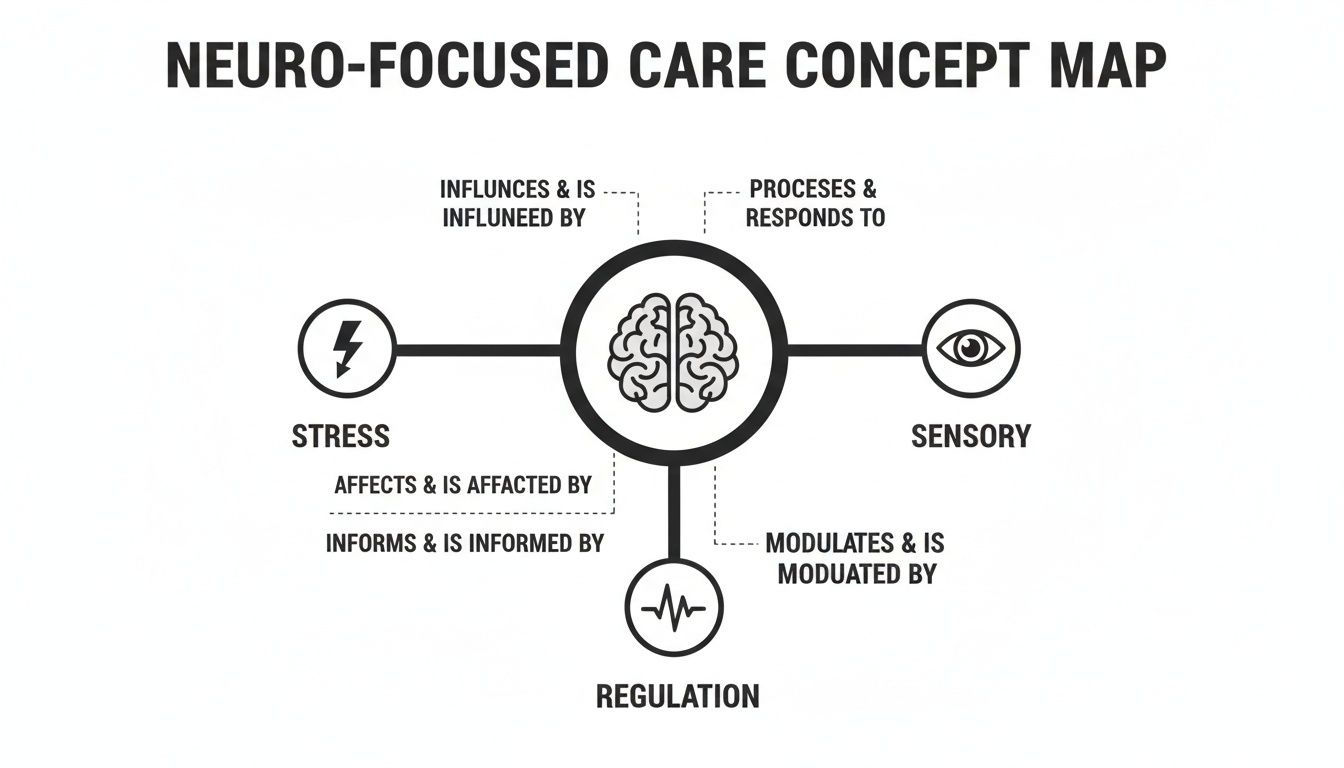
As you can see, we believe that addressing stress at the neurological level is the key to improving sensory processing and a child’s natural ability to self-regulate.
From Neurological Stress to Physical Tension
This constant "gas pedal" state isn't just a brain issue; it creates very real physical consequences. Chronic neurological stress forces the body to tense up, especially in the crucial muscles of the neck and upper back that protect the most vital part of the nervous system—the brainstem and spinal cord.
This physical tension, which we call subluxation, creates interference or "static" in the communication highway between the brain and the body. It’s like having a bad cell signal, making it much harder for clear messages to get through.
The vagus nerve is a major player in all of this. It's the primary nerve of the parasympathetic system—it's the main superhighway for hitting the brakes and telling the body it's safe to relax. This nerve runs directly from the brainstem down through the neck. When the upper neck is tight and misaligned, it can directly interfere with the function of this critical nerve.
What this means is the body’s ability to pump the brakes and calm down is physically compromised. You end up with a vicious cycle: neurological stress causes physical tension, and that physical tension makes it even harder for the nervous system to shift out of stress mode.
Gentle, specific chiropractic adjustments are aimed squarely at breaking this cycle. By releasing that built-up tension in the upper neck and spine, we can reduce the interference and help restore proper function to the vagus nerve. This helps the nervous system re-learn how to apply the brakes, opening the door for more moments of calm, connection, and restorative rest. For a deeper dive into this connection, you can learn more about autism and the nervous system in our detailed article.
Once you see how a stuck "gas pedal" creates both neurological and physical stress, it becomes much clearer how gentle autism chiropractic care can support a child's overall health and well-being. The goal is simple: help their body find its brake pedal again, creating the internal calm they need to truly thrive.
What Gentle Chiropractic Adjustments Actually Involve
When parents hear the term "chiropractic adjustment," it's easy to picture the kind of forceful movements and loud popping sounds you might see in a movie. It’s completely natural to feel protective and wonder if that’s the right approach for your child.
The great news is that pediatric chiropractic care, especially for a child on the autism spectrum, is a completely different world.

Here, the focus is always on precision, gentleness, and comfort. We often compare the amount of force used to the pressure you’d apply to check if a tomato is ripe—it’s incredibly light and specific. This ensures the entire experience is calming and supportive, even for the most sensitive nervous systems.
Low-Force Techniques for a Sensitive System
A pediatric chiropractor’s toolkit is filled with specialized, low-force techniques designed specifically for a child's developing body. One of the most common and effective methods we use in neurologically-focused autism chiropractic care is the Torque Release Technique (TRT).
Instead of manual twisting or popping, TRT often uses a handheld instrument called The Integrator. This device delivers a very gentle, quick, and precise impulse to a specific point along the spine.
The Integrator allows a chiropractor to make an exact adjustment without any cracking sounds. It's so gentle that many children don’t even realize an adjustment has happened, often describing it as just a light "tap" or "click."
This method is ideal for kids with sensory sensitivities because it’s predictable, controlled, and avoids any surprising movements or noises. The goal is simply to gently nudge the nervous system back toward a state of balance, not to force a joint into place. Our blog provides a detailed guide on how chiropractic care supports the nervous system that you might find interesting.
This gentle, neurologically-focused care is becoming a more common choice for families. Studies show that 5.3% of children with conditions like autism seek chiropractic support, which is a 56% higher rate than in the general pediatric population. This highlights a clear trend of parents seeking out these specific, gentle options for their children.
What a Typical Adjustment Session Looks Like
We design every session to be a calm and positive experience from the moment you walk in. A pediatric chiropractor knows that building trust and creating a sensory-friendly environment is just as important as the adjustment itself.
Here’s a simple breakdown of what a visit might look like:
- Connection and Comfort: The visit starts with the chiropractor connecting with your child on their level. That might mean sitting on the floor to chat, using a favorite toy to explain things, or simply speaking in a gentle, reassuring voice.
- Gentle Assessment: The chiropractor will use their fingertips to gently feel for areas of tension along the spine—a process called palpation. They will also reference the results from the non-invasive INSiGHT Scans to pinpoint exactly where neurological stress is being stored.
- Precise Adjustments: The adjustments themselves are quick and gentle. The chiropractor may use The Integrator, light fingertip pressure, or other low-force tools. Often, the adjustment can be done while the child is sitting on a parent's lap or playing with a toy.
- Positive Reinforcement: The whole process is kept light and encouraging. We want your child to feel safe and leave our office with a positive feeling about their visit.
Finding a provider with the right training is non-negotiable. Look for chiropractors who have advanced certifications in pediatrics, such as CACCP (Certified by the Academy Council of Chiropractic Pediatrics) or DACCP. This specialized training ensures they have a deep understanding of a child's unique neurology and physiology, guaranteeing your child is in the most capable and caring hands.
Understanding the Research and Setting Realistic Goals
When you’re looking into any kind of supportive care for your child, the big question is always, "Does it actually work?" For parents considering autism chiropractic care, this question is front and center. To make a decision you feel good about, it’s essential to have an honest conversation about the current science and set clear, realistic expectations for what this care can and cannot do.
Let's be perfectly clear: chiropractic care is not a "cure" for autism. Autism is a neurotype—it’s a fundamental part of who your child is. The entire goal of neurologically-focused chiropractic is not to change your child, but to support their body’s own ability to function, adapt, and regulate itself better.
Think of it like this: imagine your child’s nervous system is a super busy highway. Subluxation is like a series of frustrating traffic jams that slow everything down and cause backups. Gentle chiropractic adjustments are like clearing those jams, allowing communication to flow more freely and efficiently. This doesn't change the final destination, but it can make the entire journey a whole lot smoother and less stressful for everyone involved.
What the Current Research Shows
The scientific deep-dive into autism chiropractic care is still a growing field. As of now, most of what we know comes from individual case studies and case series, rather than the large-scale, double-blind clinical trials that are the gold standard in medicine. While case studies don't carry the same weight, they provide invaluable real-world insights and help pave the way for future research.
What's encouraging is that these studies consistently report positive shifts in children receiving care. One of the main tools used to track progress is the Autism Treatment Evaluation Checklist (ATEC), a questionnaire that looks at communication, socialization, sensory awareness, and overall health.
A 2016 systematic review pulled together the available research and highlighted several case reports where ATEC scores improved significantly after chiropractic adjustments. For example, one child’s score dropped from a 96 to a 66, and another saw a remarkable 54.3% improvement as their score went from 70 down to 32. These kids were typically getting one to three adjustments per week, and importantly, no adverse effects were reported in any of the studies. You can read the full review on chiropractic and autism for a closer look at the findings.
These reports often describe noticeable improvements in the very areas that can make the biggest difference in a family's day-to-day quality of life.
Focusing on Quality of Life and Function
So, what are realistic goals for a family starting this journey? The real aim is to improve function and resilience by supporting the nervous system. While every child’s path is unique, both case studies and our own clinical experience point to potential improvements in several key areas.
Many of the families we work with report seeing meaningful shifts in their child's daily life.
Potential Areas of Improvement with Chiropractic Care
This table summarizes some of the commonly reported improvements in children with autism who are undergoing neurologically-focused chiropractic care, based on clinical observations and published case studies.
| Symptom Category | Potential Improvement Examples |
|---|---|
| Sleep | Falling asleep more easily, staying asleep longer, and waking up more rested. |
| Emotional Regulation | Fewer intense meltdowns; quicker recovery from feeling overwhelmed. |
| Sensory Processing | Reduced sensitivity to sounds, lights, or touch; less sensory-seeking behavior. |
| Communication | Improved eye contact, more attempts at verbal communication, and better social engagement. |
| Digestive Health | Reduction in chronic constipation, diarrhea, or other common gut issues. |
These are the kinds of functional gains that can truly change a family's dynamic for the better.
It’s all about creating more "good days." The goal is to see your child feel more comfortable in their own skin, better able to navigate their world, and more connected to the people they love.
Setting realistic goals means focusing on these functional improvements rather than looking for a fundamental change in your child's diagnosis. Autism chiropractic care is a powerful supportive strategy—it's one piece of a comprehensive puzzle that helps your child thrive. By viewing it as a way to unlock their innate potential for health and well-being, you can approach this journey with hope and a clear understanding of the path ahead.
What to Expect During Your First Chiropractic Visit
Stepping into any new doctor's office can feel like a big deal, especially when you're there for your child. We get it. Knowing exactly what happens during that first visit for autism chiropractic care can turn any of that uncertainty into a feeling of hope and empowerment. The whole process is designed to be calm, thorough, and completely centered around your family’s unique story.
From the moment you walk in, our goal is to create a welcoming, sensory-friendly space where your child feels safe and comfortable. The first appointment isn't about adjustments; it's about making a connection, digging deep to understand your child, and building a clear roadmap for their care.

The Initial Conversation: Your Family Story
Honestly, the most important part of the entire first visit is the conversation. This is where we sit down and just listen. We want to hear your story—the struggles, the wins, what keeps you up at night, and what you hope for most for your child.
This chat is a deep dive into your child's health history, going all the way back to pregnancy and birth, right up to their current developmental journey and daily challenges. It’s a judgment-free zone where you can share everything, from sleep patterns and digestive troubles to sensory sensitivities and meltdowns. This is how we start to build a complete picture of what your child is experiencing every day.
The INSiGHT Scans: A Window into the Nervous System
After we talk, the next step is to get some real, objective data about how your child’s nervous system is actually functioning. We do this using our state-of-the-art INSiGHT Scans. These are a set of three non-invasive, totally painless tests that are safe for kids of all ages. No pokes, no prods, no radiation—nothing to worry about.
Think of these scans as a way to peek "under the hood" to see where stress and tension are getting stuck in the body.
- Thermography (Thermal Scan): This scan simply measures the temperature along the spine. When we see temperature differences from one side to the other, it can point to areas where the nervous system is struggling to regulate blood flow and organ function properly.
- Surface EMG (sEMG): This tool measures the electrical activity in the muscles that hold the spine up. It shows us exactly where muscles are working overtime, exhausted from holding onto built-up neurological stress.
- Heart Rate Variability (HRV): This is a powerful test that shows us how well the body is adapting to stress. It tells us if your child's nervous system is stuck on the "gas pedal" (that fight-or-flight mode) or if it can successfully shift to the calming "brake pedal" state.
Together, these scans give us a detailed, color-coded map of your child’s nervous system. This data lets us move past guesswork and zero in on the precise areas of subluxation that need our attention.
The Report of Findings: Your Personalized Care Plan
Your first visit is all about gathering information. Your second visit, which we call the Report of Findings, is where we connect all the dots. In this dedicated appointment, the doctor will sit down with you and walk you through the results from the INSiGHT Scans in a way that’s easy to understand.
We’ll show you the actual scan images, explain what they mean, and tie them directly to the challenges you’re seeing at home. This is where you get answers. You’ll finally be able to see the underlying neurological reasons for the symptoms, giving you a crystal-clear understanding of the root cause.
Based on this complete picture, we’ll lay out a personalized care plan. This roadmap will outline the recommended frequency of adjustments and a timeline for re-scans so we can track progress objectively. Everything is explained upfront, so you know exactly what to expect.
If you are looking to take the next step, our guide on choosing a pediatric chiropractor near you can provide additional helpful information. This first visit sets the foundation for a partnership dedicated to helping your child thrive.
Common Questions About Chiropractic Care for Autism
As a parent, you're your child's number one advocate, and a huge part of that role is asking good, tough questions. When you're exploring a supportive therapy like autism chiropractic care, it’s completely normal to have a list of concerns.
We've gathered the most common questions we hear from families just like yours and answered them clearly and directly. Our goal is to give you the confidence that comes from being fully informed.
Is Chiropractic Care Safe for My Child with Autism?
This is almost always the first and most important question parents ask. The answer is a definite yes, but with a critical condition: the care must be performed by a chiropractor who has extensive, specific training in pediatrics.
Pediatric chiropractic is its own specialized field. The techniques we use are incredibly gentle, precise, and low-force—nothing like the adjustments an adult might experience. You won't see any forceful twisting, popping, or cracking.
Instead, an adjustment often feels like light, sustained pressure. Sometimes we use a small, precise instrument that delivers a gentle tap. Many certified pediatric chiropractors complete hundreds of hours of post-graduate training focused on the unique neurological needs of children, especially those with conditions like autism. This advanced education is what makes every visit safe, calming, and comfortable.
How Do I Find the Right Chiropractor?
This is single-handedly the most important step in the entire process. Not all chiropractors are equipped or trained to work with kids on the spectrum, so it's vital to do your homework.
Your goal isn't just to find a chiropractor, but to find a practice that is truly centered around kids, families, and neurodevelopmental health.
- Look for Credentials: Seek out a chiropractor with specific certifications in pediatrics. Key credentials like CACCP (Certified by the Academy Council of Chiropractic Pediatrics) or DACCP show a deep commitment to advanced, specialized training.
- Check Their Focus: Does their office website and social media speak to you? It should be obvious they have a passion for working with children and neurodevelopmental challenges. The whole environment should feel welcoming and patient-first.
- Ask About Technology: Inquire if they use advanced technology like INSiGHT Scans. This is a great sign that they are committed to objective, data-driven assessments instead of just guesswork.
- Schedule a Consultation: The best way to know if it's the right fit is to simply meet the doctor. Ask them about their experience with kids on the spectrum and what their approach looks like. A great pediatric chiropractor will listen more than they talk, answer every question, and make the whole process low-stress from day one.
A truly qualified pediatric chiropractor will make you and your child feel seen, heard, and supported. Trust your gut—the right clinic will feel less like a doctor's office and more like a partner in your child's health journey.
How Long Does It Take to See Improvements?
This is such a fair question, but the honest answer is that it's different for every single child. Each nervous system is unique, and how quickly it responds depends on many factors, like how much stress the system has been under and for how long.
Some parents tell us they notice subtle but meaningful shifts within the first few weeks. These early changes often relate to foundational things like better sleep, a calmer mood, or smoother digestion. For other children, progress is more of a slow and steady build, unfolding over several months as their nervous system heals, adapts, and carves out new, more balanced pathways.
Consistency is the most important ingredient. Think of it like retraining the nervous system. Just like learning to ride a bike, it takes time and repetition for the body to build and trust these new, healthier neurological patterns. Your chiropractor will set up regular progress checks, often including new scans, to objectively track the changes and celebrate every win along the way.
Does Insurance Cover Chiropractic Care for Autism?
Navigating insurance can feel like a maze, and coverage for autism chiropractic care varies widely between plans. While many insurance policies cover general chiropractic for back pain, they often don't extend that same coverage to care focused on developmental or neurological function.
Because of this, many specialized pediatric chiropractic offices, including our own, operate on a private-pay basis. However, many also offer flexible wellness plans or packages to make ongoing care more affordable and predictable for families.
The best first step is to be direct. Ask the chiropractic office about their payment options and if they can provide the paperwork you'd need to submit a claim yourself. You can also typically use funds from a Health Savings Account (HSA) or Flexible Spending Account (FSA) for care, as these accounts are designed for a broader range of health services.
At First Steps Chiropractic, we're committed to making care accessible for families in our community. We provide free insurance benefits checks and offer complimentary consultations so you can get all your questions answered with zero pressure. If you're ready to see if neurologically-focused chiropractic care is the right next step for your child, we invite you to book your consultation with us today.