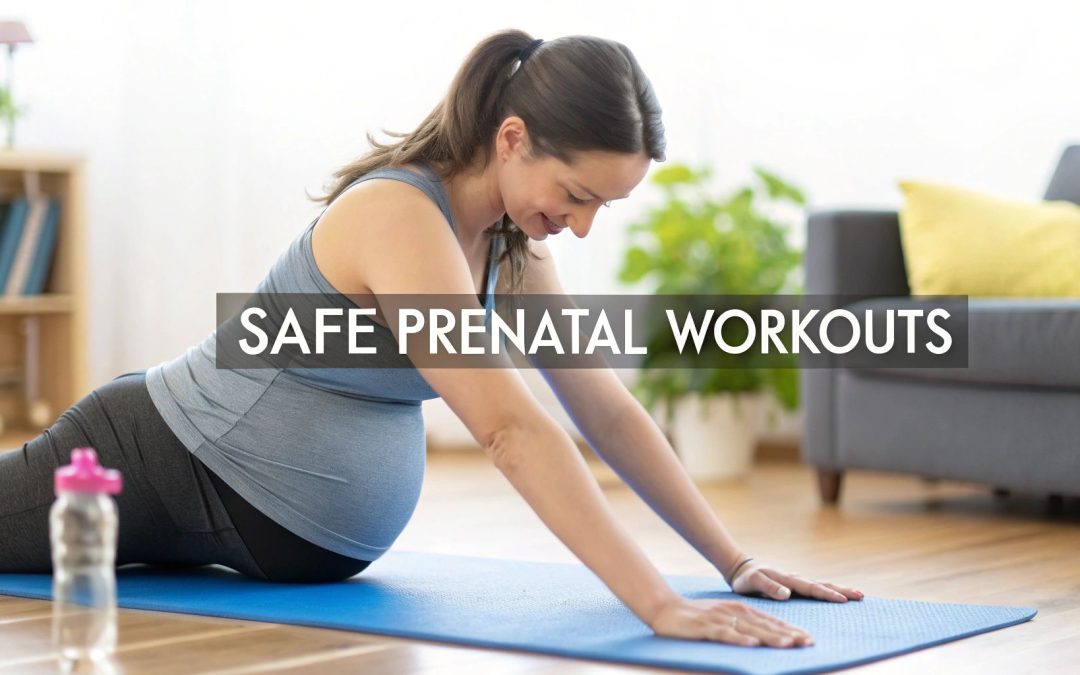
Staying active during your pregnancy is honestly one of the best gifts you can give yourself and your growing baby. And the great news? The list of safe exercises for pregnant women is probably much longer than you think.
Generally speaking, gentle activities like walking, swimming, stationary cycling, and prenatal yoga are fantastic choices. The key is always consistency and, most importantly, listening to what your body is telling you.
The Real-World Benefits of an Active Pregnancy
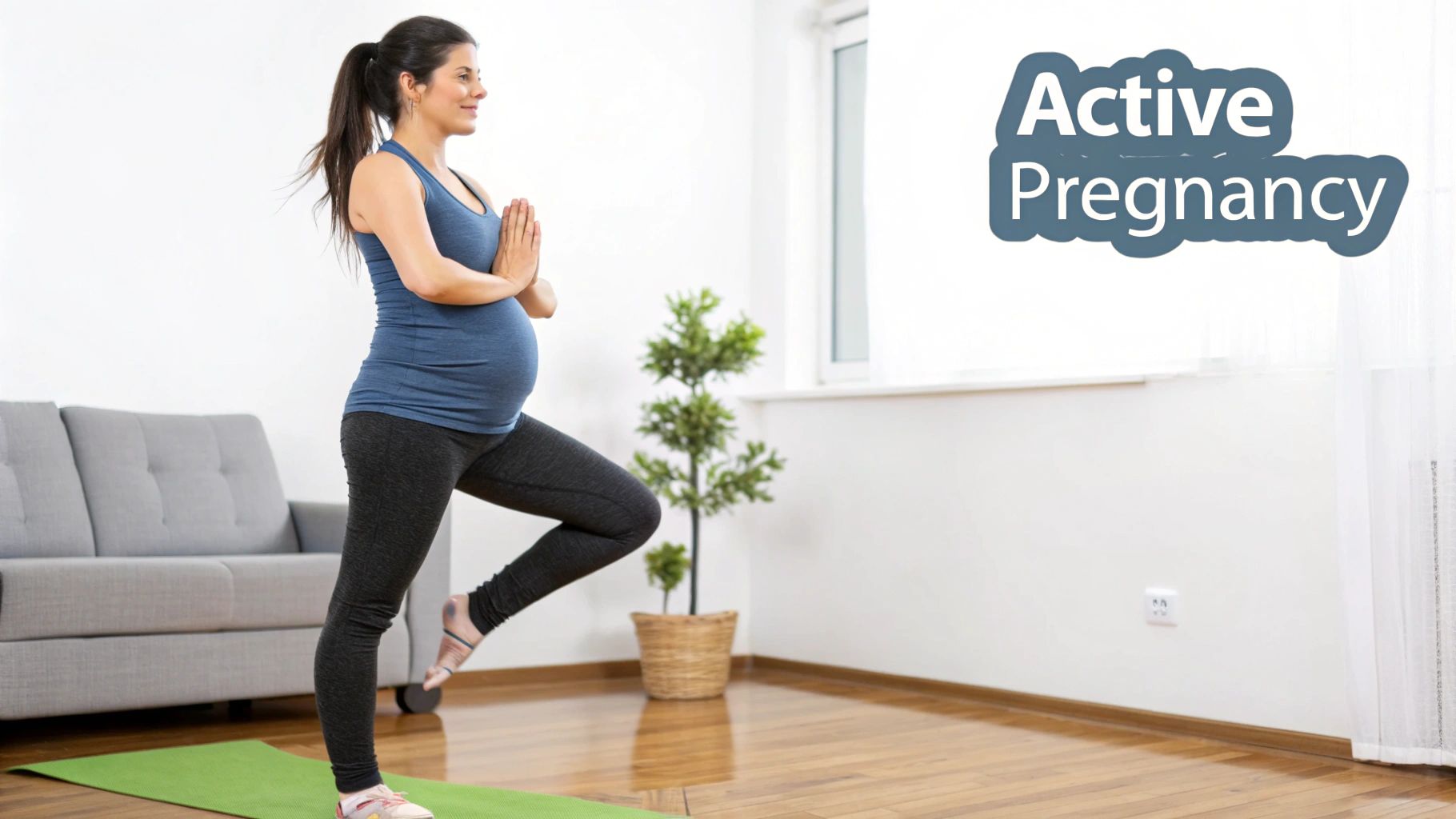
I get it—the thought of starting or even just keeping up with an exercise routine while pregnant can feel like a huge ask. But the rewards are so real and tangible. We're not talking about abstract health concepts; we're talking about genuine improvements that can make your entire nine-month journey feel so much smoother.
Think of movement as your secret weapon against many of the common aches, pains, and discomforts of pregnancy.
Why Movement Matters More Than Ever
Regular, moderate exercise is about so much more than just fitness. It's a powerful form of self-care that directly bolsters your physical and mental well-being. You’re essentially building resilience for the marathon of pregnancy, birth, and postpartum recovery.
The American College of Obstetricians and Gynecologists (ACOG) recommends getting at least 150 minutes of moderate-intensity aerobic activity each week. This isn't about pushing your limits or hitting personal bests. It’s about finding consistent, gentle movement that feels good for your body.
A well-structured prenatal exercise plan doesn't just prepare you for labor; it enriches your entire pregnancy experience by improving mood, reducing pain, and boosting energy levels.
Key Advantages of Staying Active
The positive effects of exercise ripple through every single aspect of your pregnancy. From easing those daily aches to preparing your body for the big day, the benefits are clear.
Here's a quick look at what you can expect when you stay active.
Key Benefits of Prenatal Exercise at a Glance
| Benefit Category | Specific Advantage | Impact on Your Pregnancy |
|---|---|---|
| Mental & Emotional | Improved Mood & Reduced Stress | Endorphin release helps manage stress and anxiety. |
| Rest & Recovery | Better Sleep Quality | Helps you fall asleep faster and get more restorative rest. |
| Physical Health | Reduced Risk of Complications | Lowers the risk of gestational diabetes and preeclampsia. |
| Labor & Postpartum | Easier Labor & Recovery | A strong core and pelvic floor can lead to a smoother birth. |
These benefits aren't just statistics; they are real-world improvements that can drastically change your pregnancy experience for the better.
You might also notice:
- Improved Mood and Reduced Stress: Physical activity releases endorphins, which are nature's mood-lifters. It also helps regulate your nervous system, which is crucial for managing the emotional ups and downs of pregnancy. Understanding the connection between the vagus nerve and pregnancy gives even deeper insight into how movement supports this balance.
- Better Sleep Quality: So many expectant mothers struggle with sleep. Regular, gentle exercise can be a game-changer, helping you fall asleep faster and enjoy deeper, more restorative rest.
- Reduced Risk of Complications: Research has consistently shown that staying active can lower the risk of developing conditions like gestational diabetes and preeclampsia.
- Easier Labor and Recovery: Building strength in your core and pelvic floor doesn't just help with pregnancy discomfort—it can contribute to a more efficient labor process and a quicker postpartum recovery.
This guide is designed to give you the actionable steps you need to feel confident and empowered on your prenatal fitness journey.
The Golden Rules of Prenatal Fitness
Before we get into specific exercises, we need to lay some groundwork. Think of these as the foundational principles for moving your body safely and effectively during pregnancy. These aren’t meant to be strict rules, but rather simple, powerful tools that help you build a deeper connection with your body’s needs during this incredible time. Once you get these down, you’ll feel so much more confident in your workouts.
One of the easiest and most effective tools is the "talk test." It’s exactly what it sounds like: you should be able to carry on a conversation while you’re exercising. If you’re getting breathless or can’t speak in full sentences, that’s your body’s signal to dial back the intensity. No fancy heart rate monitor needed—just this simple check-in.
Hydration is also non-negotiable. Your body is working overtime, supporting a higher blood volume and creating amniotic fluid, which means your water needs go way up. Getting dehydrated can lead to unwanted contractions and a spike in your body temperature, so keep a water bottle with you and sip on it all day long, especially during a workout.
Listen to Your Body Above All Else
Your body is brilliant and will give you clear signals when it’s time to slow down or stop. Pregnancy is a constantly changing state; what felt great one day might feel completely wrong the next. The single most important skill you can develop is learning to listen to those signals.
Never, ever push through pain. There’s a big difference between the mild burn of a working muscle and a sharp, sudden, or unusual pain. A bit of fatigue is totally normal, but true exhaustion is your body waving a white flag, telling you it’s time to rest and recover.
Your intuition is your best guide. If an exercise just feels off—unstable, uncomfortable, or causes any strain in your belly or pelvis—stop. There's always another way to move your body. We have plenty of modifications and alternative exercises to choose from.
Critical Modifications for a Changing Body
As your belly grows and your body adapts, your workouts need to adapt, too. There are two major shifts that call for some specific changes to keep you and your baby safe.
First, once you hit the second trimester, it's time to say goodbye to exercises that have you lying flat on your back for long stretches. The weight of your growing uterus can press down on a major blood vessel called the vena cava, which can restrict blood flow to you and your baby.
- Instead of flat bench presses: Move to an incline bench set at about a 45-degree angle.
- Instead of traditional sit-ups: Let's focus on things like pelvic tilts or standing core exercises that support your deep core muscles.
- For floor exercises: Just prop your head and shoulders up on some pillows or a wedge. You just need your heart to be higher than your belly.
Second, we need to talk about the hormone relaxin. Its job is to loosen up your ligaments and joints to prepare your pelvis for birth, but that means all your joints are a bit looser, making you more prone to injury. This is why you’ll want to steer clear of jerky, high-impact movements and avoid overstretching. The focus should always be on slow, controlled, and stable exercises that support your joints. Making these simple swaps is key to creating a program of safe exercises for pregnant women.
Your Trimester-by-Trimester Exercise Plan
As your body navigates the incredible journey of pregnancy, what it needs will change dramatically from one week to the next. A one-size-fits-all approach to fitness just won’t cut it. The key is to adapt your routine to each trimester, ensuring you’re giving your body the right kind of support at exactly the right time.
This plan breaks down the best safe exercises for pregnant women at each stage. We’ll start by building a strong foundation in the early weeks and then shift our focus to stability and preparation as you get closer to meeting your baby.
This simple prenatal fitness timeline drives home the core principles: always listen to your body, stay hydrated, and know when to stop.
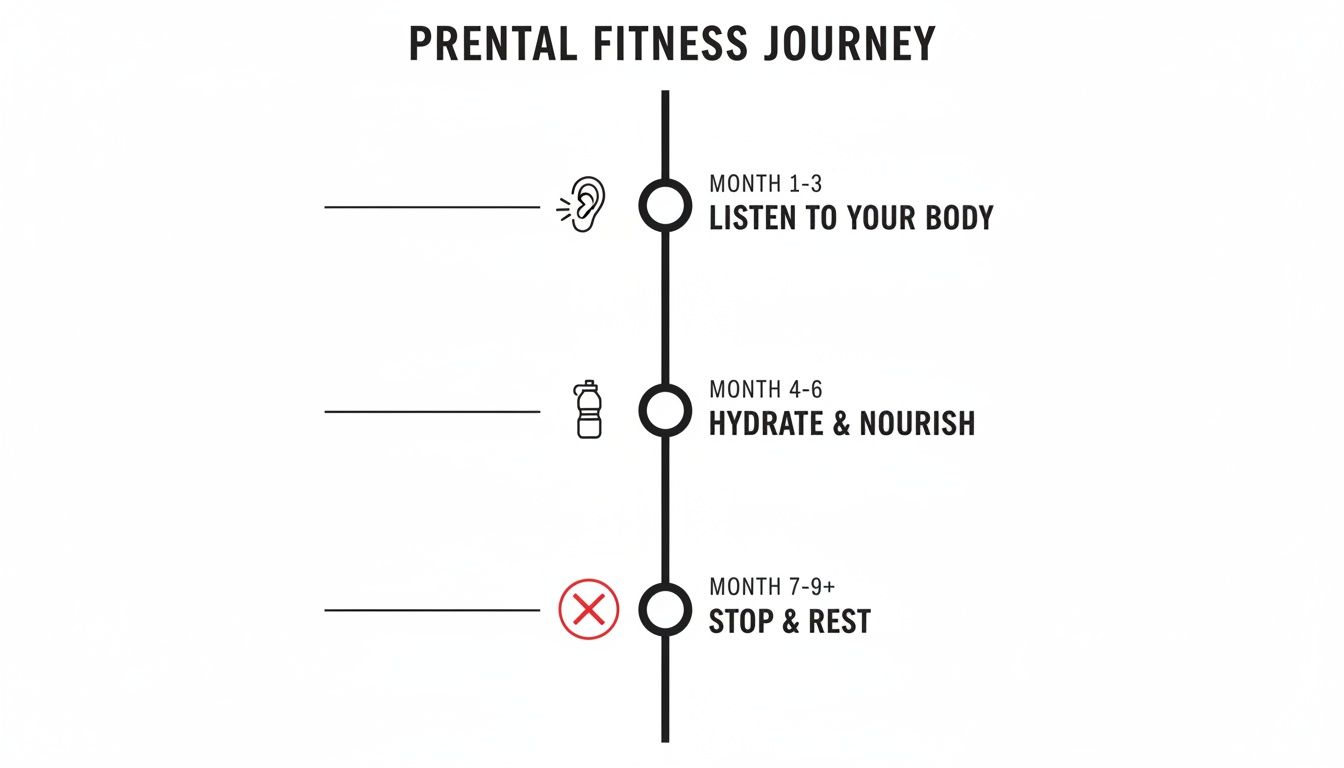
As you can see, these foundational safety rules are constant, even as the specific exercises evolve through your pregnancy.
First Trimester Focus: Foundational Strength
The first trimester (weeks 1-13) is often a whirlwind of immense change, sometimes bringing fatigue and morning sickness along for the ride. The most important thing here is to listen intently to your body. Some days, a simple walk is a huge victory, while on others, you might feel up for more. If you were active before getting pregnant, you can often continue your usual routine with just a few minor adjustments.
The goal right now is to establish a strong, stable base that will support your body through the months ahead.
- Squats: An absolutely essential movement for strengthening your glutes, quads, and pelvic floor. Focus on controlled form, keeping your chest up and weight in your heels.
- Glute Bridges: Perfect for activating your posterior chain (the muscles on the back of your body) without straining your back. This is fantastic for stabilizing your pelvis and can even help with lower back discomfort.
- Pelvic Curls: A gentle exercise that improves spinal mobility and strengthens the deep core muscles that support your growing uterus.
Second Trimester Focus: Stability and Posture
Welcome to the second trimester (weeks 14-27)! For many women, this is the "golden" period where energy returns and morning sickness finally subsides. Your growing belly now becomes a central factor in how you move, making stability and posture your top priorities.
As your center of gravity shifts forward, exercises that strengthen your back and core are crucial. This is also the time when you'll need to start modifying certain moves to avoid lying flat on your back for extended periods.
Remember, the goal isn't to build a six-pack. It's about strengthening the deep core muscles—like the transverse abdominis—that act as a natural corset, supporting your spine and pelvis.
A strong core is one of your best defenses against common pregnancy-related aches and pains. For more targeted movements, you can explore these prenatal exercises for back pain that are easy to incorporate into your second-trimester routine.
Here are some excellent choices for this stage:
- Bird-Dog: This classic movement is a superstar for enhancing core stability without putting any pressure on your abdomen. It challenges your balance and strengthens the muscles all along your spine.
- Incline Push-ups: By placing your hands on a wall or sturdy bench, you can continue to build upper-body strength safely, without straining your core or back.
- Side-Lying Leg Lifts: These target the hip abductor muscles, which are vital for pelvic stability as the hormone relaxin starts to loosen your joints.
Third Trimester Focus: Mobility and Preparation
In the final stretch (weeks 28-40+), comfort and preparation for labor take center stage. It's normal for your energy levels to dip again, and movement might feel more challenging. Now is the time to shift toward low-impact activities that promote mobility, circulation, and relaxation.
These activities can help ease common third-trimester discomforts like swelling and backaches while preparing your body and mind for childbirth. Staying active also has significant benefits for managing potential health risks.
Aiming for at least 150 minutes of moderate activity per week is highly recommended. For instance, studies show that exercising for 50–60 minutes just twice a week can reduce the risk of gestational diabetes mellitus (GDM) by about 24%.
Here are some gentle, effective exercises for this final stage:
- Swimming: The buoyancy of water provides a wonderful weightless feeling, relieving pressure on your joints and spine while offering a great cardiovascular workout.
- Prenatal Yoga: Focus on poses that open the hips, stretch the back, and incorporate deep breathing exercises. These practices are excellent for both physical and mental preparation for labor.
- Walking: Never underestimate the power of a good walk. It’s a fantastic, low-impact way to maintain cardiovascular health, improve circulation, and clear your head.
How to Build a Realistic Weekly Workout Schedule
Knowing the right exercises is one thing, but actually fitting them into your life? That's the real challenge, especially with pregnancy fatigue and a growing to-do list. Building a realistic weekly workout schedule isn’t about hitting every single workout perfectly. It's about showing up consistently and, just as importantly, giving yourself grace when you can't.
Our goal is to aim for the recommended 150 minutes of moderate activity each week. How you get there is completely up to you and your daily energy levels.
Designing Your Week of Movement
Think of your weekly movement as a well-balanced plate. You need a mix of everything: strength to support your changing frame, cardio to keep your heart and baby healthy, and flexibility to ease aches and prep your body for labor.
A great starting point is scheduling strength training on two days that aren't back-to-back. Add in two or three days of cardio, and then sprinkle in stretching or prenatal yoga whenever it feels right. Having a plan takes the guesswork out of it, which makes it so much easier to stay on track.
But remember, this is a template, not a rulebook. If a strength day rolls around and you're feeling completely drained, swap it for a gentle walk or just take the day off. Your body knows best.
A Sample Prenatal Workout Schedule
To give you a clearer picture, here’s a sample schedule you can tweak to fit your own needs. It's designed to be effective without feeling overwhelming, making sure you hit all the key areas of prenatal fitness.
| Day | Focus | Example Activities (Choose one) | Duration |
|---|---|---|---|
| Monday | Lower Body Strength | Squats, lunges, glute bridges | 30 minutes |
| Tuesday | Active Rest / Flexibility | Gentle stretching, prenatal yoga | 20 minutes |
| Wednesday | Cardio | Brisk walking, swimming, stationary bike | 30-40 minutes |
| Thursday | Upper Body & Core Strength | Incline push-ups, rows, bird-dog | 30 minutes |
| Friday | Cardio | Brisk walking or water aerobics | 30-40 minutes |
| Saturday | Active Rest / Flexibility | Long walk with partner, prenatal yoga | 30 minutes |
| Sunday | Full Rest | Rest and recover | – |
Key Takeaway: Flexibility is everything. If you only have the energy for three workouts one week, that's still a huge win! The goal is sustainable movement, not a perfect attendance record. Never sacrifice rest for a workout.
This schedule easily gets you to that 150-minute weekly goal while building in crucial time for recovery. And the benefits go far beyond just fitness. Regular activity has a powerful impact on delivery outcomes.
In fact, consistent prenatal exercise can boost the rate of normal vaginal births by 14% and cut the likelihood of a cesarean section by an incredible 34%. You can dive deeper into these powerful findings on prenatal exercise and delivery. Building this habit is one of the best things you can do for yourself and your baby.
How Chiropractic Care Supports an Active Pregnancy
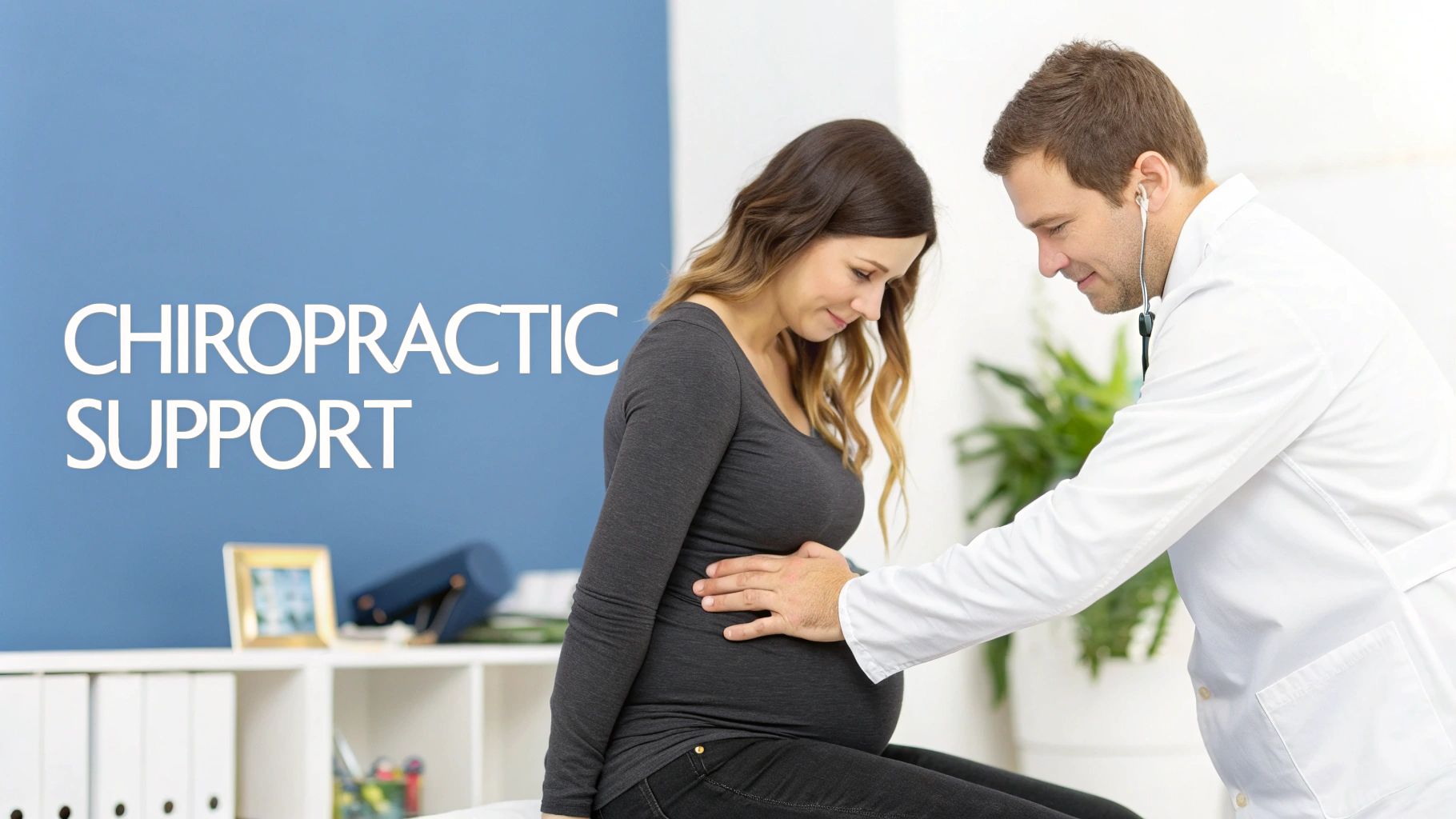
Think of prenatal chiropractic care as the dedicated support crew for your body during an active pregnancy. It works right alongside your fitness routine, making sure your body stays aligned and functions at its best while it's going through all those incredible changes.
This specialized care goes way beyond just chasing away the usual aches and pains. By focusing on gentle, targeted adjustments, a prenatal chiropractor helps maintain proper pelvic alignment and balance. This isn't just about side-stepping issues like back pain or sciatica that can derail your workouts; it’s about optimizing your body’s entire operating system.
Optimizing Pelvic Function for Fitness and Birth
One of the biggest focuses of prenatal chiropractic care is making sure the pelvis is aligned correctly. This is absolutely crucial for both your comfort during exercise and your baby’s positioning for birth.
We use specific approaches like the Webster Technique, which is designed to restore neuro-biomechanical function right where it matters most—in the pelvis.
When your pelvis is balanced, the benefits ripple out into your fitness journey. Proper alignment means better mobility, less discomfort during movements like squats and lunges, and it can even create more room for your baby to settle into an ideal position for birth. You can learn more about the specifics of chiropractic care during pregnancy and how it fits perfectly with an active lifestyle.
Proper pelvic alignment is foundational for a comfortable, active pregnancy. It helps your body adapt to the physical demands of exercise and prepares it for the marathon of labor and delivery.
Bringing this kind of care into your routine can make a huge difference. After all, staying active is one of the best things you can do for yourself and your baby, and the research backs it up.
For instance, consistent physical activity during pregnancy has been shown to significantly reduce the risks of preeclampsia and other hypertensive disorders. Getting just 5–6 hours of activity per week can lead to a risk drop of up to 40%. You can dig into the full research on physical activity and pregnancy outcomes to see the powerful connection for yourself.
This synergy between regular exercise and chiropractic care creates a solid foundation for a healthier, more comfortable pregnancy.
Common Questions About Pregnancy Exercise
Even with a solid plan, it’s completely normal for questions to pop up along the way. Let’s tackle some of the most common concerns we hear from expecting moms, giving you clear, straightforward answers to build your confidence.
Can I Start Exercising If I Was Inactive Before Pregnancy?
Yes, absolutely! Pregnancy is often the perfect motivation to build healthy new habits for yourself and your baby. You don't need a history of being a gym-goer to start moving your body safely.
The key is to ease into it. Start slow and be gentle with yourself. Something as simple as a 15-20 minute walk a few times a week is a fantastic starting point. As you feel stronger and more comfortable, you can gradually go for longer or walk more often. Swimming and prenatal yoga are also wonderful, low-impact options if you’re just getting started.
What Exercises Should I Absolutely Avoid?
While the list of things you can do is long, there are a few activities that are best to put on pause until after your baby arrives. The main goal here is pretty simple: avoid any risk of falling or taking a direct hit to your abdomen.
Here are the main things to steer clear of:
- Contact Sports: This one’s a no-brainer. Think soccer, basketball, or kickboxing where there's a real chance of impact to your belly.
- High-Fall-Risk Activities: Now’s not the time for horseback riding, downhill skiing, gymnastics, or even outdoor cycling where a tumble is more likely.
- Heated Exercise: Skip the "hot yoga" or "hot Pilates" classes for now. A significant spike in your core body temperature isn’t recommended during pregnancy.
- Scuba Diving: The pressure changes associated with scuba diving pose a risk of decompression sickness for your baby.
How Do I Know If I'm Pushing Too Hard?
Your body is your best guide, and trust me, it will give you plenty of signals when you need to pull back. The "talk test" is one of the most reliable tools out there—you should always be able to carry on a conversation while you're moving. If you're gasping for air, you're working too hard.
If you ever feel dizzy, breathless, or experience any sharp pain, especially in your pelvis or back, that’s a non-negotiable sign to stop immediately. Listening to your body isn't just a suggestion; it's the most important part of a safe prenatal workout.
Other red flags include things like vaginal bleeding, any leakage of fluid, or uterine contractions that don't go away when you rest. If you experience any of these, stop what you’re doing and contact your healthcare provider right away.
What's the Deal with Abdominal Exercises?
This is a huge point of confusion for so many, but the answer is actually quite simple. You should absolutely keep strengthening your core, but you need to change how you do it. Traditional crunches and sit-ups are officially off the table.
These old-school moves put too much forward pressure on your linea alba, the connective tissue that runs down your midline. This can actually worsen abdominal separation, also known as diastasis recti. Instead, you want to focus on exercises that train your deep core muscles—the transverse abdominis—which act like a natural corset to support your growing belly.
A few excellent, core-safe options include:
- Pelvic Tilts: These are amazing for gently waking up your deep core muscles.
- Bird-Dog: This move is fantastic for stabilizing your entire core from your shoulders to your hips.
- Standing Core Exercises: Things like Pallof presses with a resistance band are perfect for building functional strength without strain.
Making these simple swaps ensures you’re supporting your body for the demands of pregnancy and birth, keeping your core strong and stable.
At First Steps Chiropractic, we believe that a well-aligned body is the foundation for a healthy, active pregnancy. Our specialized prenatal care, including the Webster Technique, works in synergy with your fitness routine to enhance comfort, improve function, and prepare you for a smoother birth experience. Learn more about how we can support your journey at https://firststepschiropractic.com.