
Does your child seem to have a motor that just won’t quit? Are they constantly crashing, jumping, spinning, and touching everything they can get their hands on? Maybe they crave loud noises or give hugs that feel more like a full-body tackle.
This intense, seemingly endless drive for sensory input is what we call sensory seeking behavior. It’s not your child acting out or trying to be difficult—it’s their nervous system telling you exactly what it needs.
What Is Sensory Seeking Behavior in Children
At its core, sensory seeking behavior is a child's way of communicating a deep neurological need. It’s a sign that their nervous system is wired a bit differently.
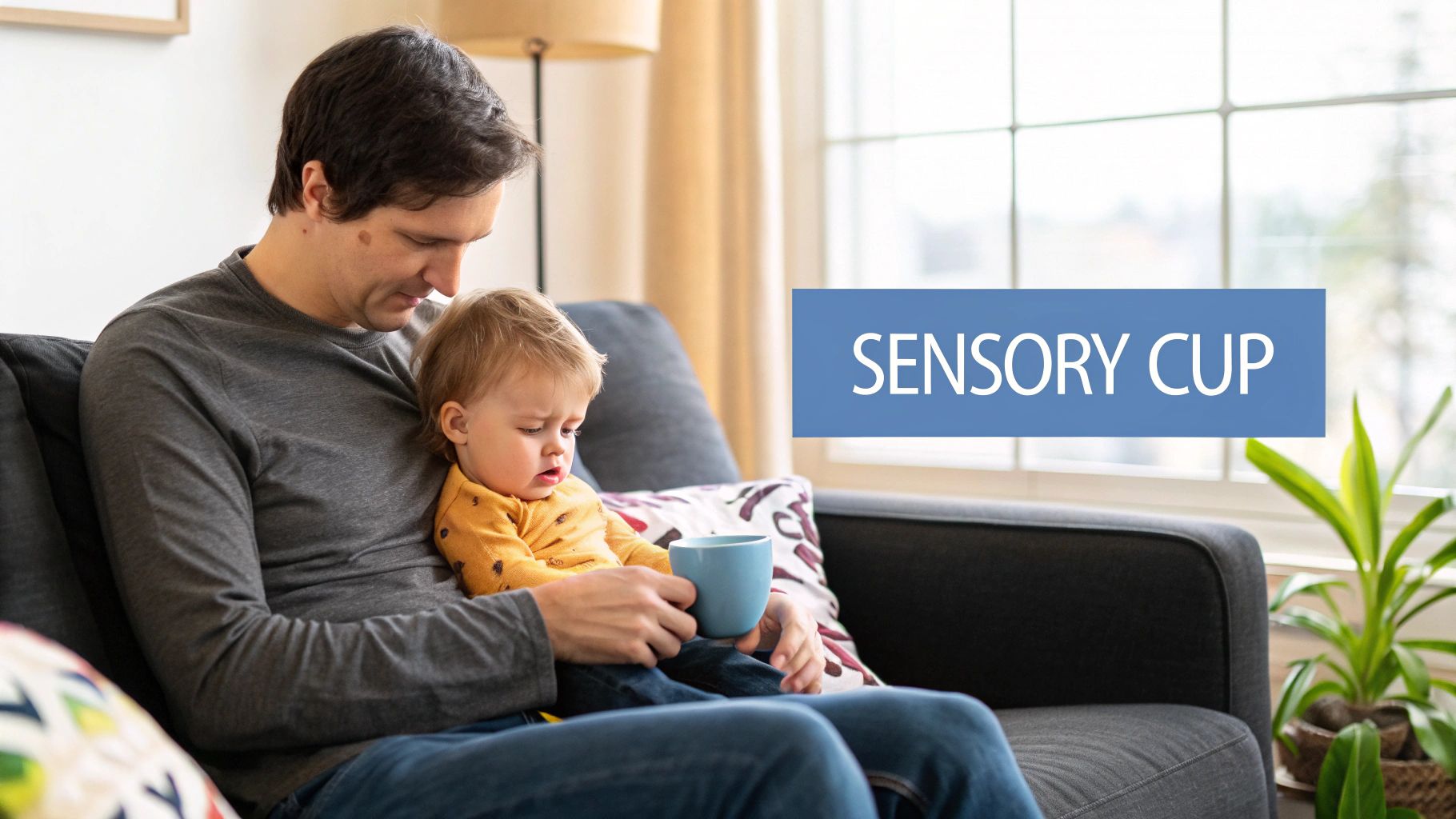
Unlike kids who might get easily overwhelmed by too much stimulation, a sensory seeker’s brain has a very high threshold for input. They actually require more frequent, intense, and long-lasting sensory information just to feel calm, focused, and organized in their own bodies.
The Sensory Cup Analogy
A really helpful way to picture this is with the "sensory cup" analogy. Think of every child having a cup that needs to be filled throughout the day with sensory inputs like touch, movement, sound, and pressure. For most kids, daily life—playing, running around, getting a hug—is enough to keep their cup feeling full.
But a sensory seeker’s cup is much bigger, or maybe it has a slow leak. The input they get from everyday activities barely covers the bottom. To feel regulated and satisfied, they have to actively find powerful experiences to fill their unique cup to the brim.
This is why they might:
- Crave intense movement: Constant swinging, spinning, or jumping stimulates their vestibular system, which controls balance and spatial awareness.
- Seek deep pressure: They might crash into the couch, wrestle with extra enthusiasm, or wrap themselves in tight blankets to engage their proprioceptive system, which tells the brain where the body is in space.
- Need oral input: Chewing on shirt collars, pencils, or toys provides powerful regulating feedback through the jaw—a major input center for the nervous system.
For a quick overview, this table breaks down the essentials of sensory seeking behavior.
Sensory Seeking At a Glance
| Key Aspect | Simple Explanation |
|---|---|
| What It Is | A neurological drive to seek out intense sensory experiences (movement, pressure, sound, etc.). |
| Why It Happens | The child's brain has a high threshold for sensory input and needs more stimulation to feel regulated. |
| Common Signs | Constant motion, crashing, jumping, loud noises, chewing on non-food items, and seeking tight hugs. |
| It's Not… | Misbehavior or a choice. It's an adaptive response to a neurological need. |
| The Goal | To "fill their sensory cup" so they can feel calm, focused, and organized. |
Understanding these basics helps shift your perspective and find effective ways to support your child.
When you reframe sensory seeking behavior as a child's attempt to fill their neurological "cup," you can shift from seeing it as a problem to solve to a need you can help meet. It transforms frustration into empathy and empowers you to provide the right kind of support.
Ultimately, sensory seeking is an adaptive response. Your child isn’t trying to be disruptive; they are instinctively doing what they need to feel "just right" in their own skin. Getting on the same page with their nervous system is the first, most powerful step toward helping them thrive.
Recognizing Sensory Seeking Behaviors at Different Ages
Sensory seeking isn't a one-size-fits-all experience. It shifts and changes as a child grows and their nervous system matures. What looks like a desperate need for bouncing in an infant can easily morph into a toddler’s love for crashing into the sofa.
Learning to spot these age-specific signs is the key to providing the right kind of support when your child needs it most.
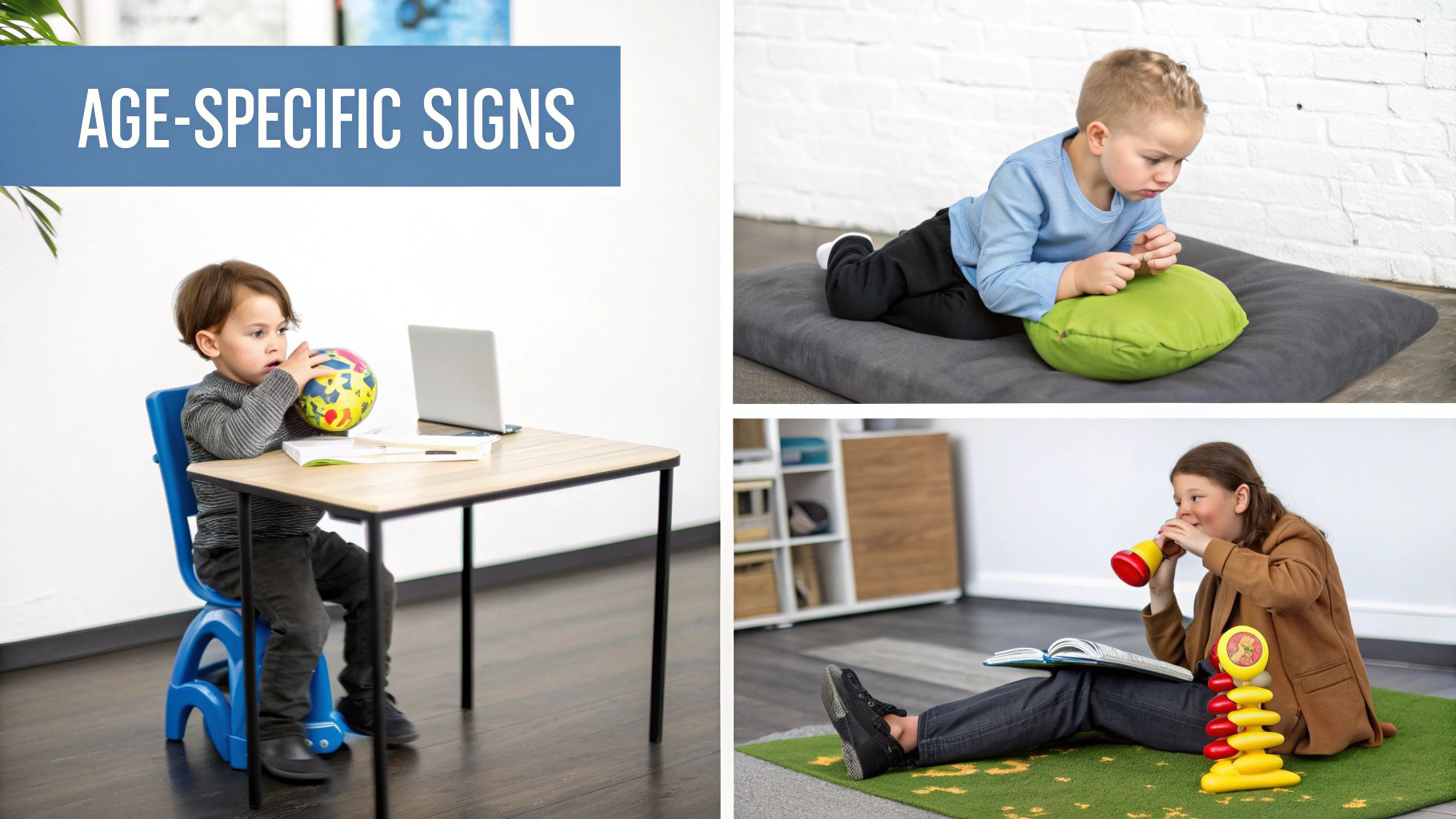
Let's walk through how this powerful drive for sensory input shows up at different stages, helping you connect the dots between your child's actions and their underlying neurological needs.
Infants Birth to 12 Months
A baby’s first year is a sensory explosion. For an infant with sensory seeking tendencies, this drive to explore is often far more intense and demanding. They aren’t just exploring their world; they are actively working to fill their sensory cup with powerful feedback.
You might notice these common signs in your infant:
- Constant Need for Movement: These are the babies who often seem happiest only when they’re being rocked, bounced, or carried around. The moment the motion stops, the crying starts.
- Intense Mouthing: All babies put things in their mouths, but a sensory seeker might do it with more force or for much longer, craving that strong oral input.
- Loves “Rough” Play: They often light up with giggles during activities like being gently tossed in the air or bounced on a knee, thriving on that intense vestibular feedback.
- Fascination with Sounds and Textures: This can look like banging toys together loudly and repeatedly or intensely rubbing different textures against their skin.
While many of these behaviors are typical, the real clues for sensory seekers are the intensity and frequency. For them, this powerful stimulation is what brings calm, rather than causing overwhelm. To learn more about this critical stage, you can explore common sensory issues in infants.
Toddlers 1 to 3 Years
Once a toddler is on the move, their sensory seeking behaviors become much more physical and obvious. This is often the age where parents start saying, "Their motor is just always running on high!"
A toddler’s sensory seeking might look like:
- Crashing and Bumping: They intentionally run into furniture, walls, or even people. They're not just being clumsy; they're getting that deep, calming pressure their bodies crave.
- Obsession with Messy Play: This is the child who dives headfirst into mud, sand, or finger paints, seeking those full-body tactile experiences.
- Constant Climbing: Couches, tables, and bookshelves all become mountains to be conquered. This constant climbing provides powerful proprioceptive and vestibular feedback.
A toddler who repeatedly crashes into the sofa isn't just being clumsy or defiant. They are performing a self-prescribed therapy session, giving their nervous system the intense input it needs to feel organized and grounded.
Preschoolers 3 to 5 Years
By the preschool years, motor skills are more refined. This allows a child's sensory seeking to become more coordinated—but it can also become more socially disruptive if their needs aren't being met in a healthy way.
Look for these signs in your preschooler:
- Spinning and Swinging: They might spin in circles until they’re dizzy or demand to be pushed higher and faster on the swings for what feels like an eternity.
- No Sense of Personal Space: They often stand too close to others or give overly enthusiastic hugs that feel more like tackles. They are seeking that deep pressure input from others.
- Loud Vocalizations: They might shriek with delight, make loud humming noises, or need the TV volume turned way up to get the auditory stimulation they need.
School-Aged Children 6 Years and Older
Once a child reaches school age, the world starts demanding more quiet, focused attention. This can be a huge challenge for a sensory seeker. Their behaviors often become smaller and more targeted, but they are just as crucial for their regulation.
In this age group, you might see sensory seeking show up as:
- Constant Fidgeting: This is the child who is always rocking in their chair, tapping their feet, or constantly shifting their weight while trying to sit still.
- Chewing on Non-Food Items: Pencils, shirt collars, and fingernails become tools for getting that organizing oral input needed for concentration.
- Thrill-Seeking on the Playground: They are often the ones hanging upside down from the monkey bars, jumping from the highest point, or seeking out the fastest-moving equipment.
Recognizing these patterns across different ages is the first real step. It helps you understand the "why" behind your child's behavior so you can find supportive, effective ways to help them feel good in their own skin.
Understanding the Science Behind Sensory Seeking
To really get what’s going on with a sensory-seeking child, we have to look past the behaviors—the constant crashing, spinning, and chewing—and dig into what’s happening inside their nervous system. This isn't a discipline problem or a conscious choice. It's about how their brain is wired to read and react to the world around them.
Think of your child’s nervous system as a cup that needs to be filled with sensory information. For most kids, everyday life provides just enough input to keep their cup full and their system regulated. But for a sensory seeker, that cup has a slow leak. They constantly need more intense, frequent, and powerful sensory experiences just to feel full, grounded, and organized.
This is why they instinctively search for bigger, louder, and more powerful sensations. They aren't trying to be disruptive; they're trying to fill their cup.
The Two Powerhouse Sensory Systems
While we all know the five basic senses, there are two "internal" senses that are absolutely critical for understanding sensory seekers: the proprioceptive and vestibular systems. These are the unsung heroes that give us a sense of grounding, balance, and security in our own bodies.
For sensory seekers, these are often the two systems that are the thirstiest for input.
-
The Proprioceptive System: This is our body awareness sense, running through receptors in our muscles and joints. It’s what tells the brain where our arms and legs are without needing to look. Any activity that involves heavy work—pushing, pulling, jumping, or getting a deep-pressure hug—sends a powerful, organizing message to this system. That’s why a child might crash into the couch on purpose; they're getting a huge blast of calming proprioceptive input that their brain craves.
-
The Vestibular System: Located deep in the inner ear, this system is our internal GPS, managing our sense of balance, movement, and spatial awareness. It tells us if we're moving, how fast we’re going, and in which direction. Swinging, spinning, and hanging upside down are like a supercharged meal for this system. A child who never wants to leave the playground swing is trying to fill their vestibular cup.
The constant need for motion and deep pressure isn't random. It’s a child's brilliant, intuitive attempt to regulate their own nervous system. They are giving their brain exactly what it needs to feel calm, organized, and ready to engage with the world.
Sensory Seeking Versus Sensory Avoiding
It’s also really important to understand that sensory seeking is just one part of a child's complete sensory profile. In fact, it's common for kids to have a mixed bag of sensory needs.
The very same child who loves loud music and roughhousing might completely melt down over a scratchy tag on their shirt. This isn’t a contradiction—it’s the difference between sensory seeking and sensory avoiding.
| Sensory Seeking | Sensory Avoiding |
|---|---|
| High Neurological Threshold (Needs more input) | Low Neurological Threshold (Needs less input) |
| Actively looks for intense sensations. | Actively pulls away from sensations. |
| Loves loud noises, bright lights, strong flavors. | Bothered by background noise, food textures, tags. |
| Under-responsive to typical levels of input. | Over-responsive and easily overwhelmed. |
Seeing this difference helps explain why a child’s behaviors can seem so confusing. A child might be a seeker when it comes to movement (vestibular) but an avoider when it comes to touch (tactile). This is perfectly normal and shows just how unique every child's nervous system is.
And sensory seeking is incredibly common. A 2022 study published in the PMC found that an amazing 76% of children scored in the "more than others" range for seeking behaviors, making it the most common sensory pattern out there. This just shows that these needs exist on a wide spectrum and aren't always tied to a specific diagnosis. You can read the full study on sensory processing patterns in children.
Learning more about the science behind nervous system regulation can also shed light on how these internal systems work together to find balance.
Sensory Needs and Co-Occurring Conditions
While sensory seeking behavior is a natural and healthy part of development for many children, sometimes its intensity and frequency can point to an underlying condition. It’s crucial to understand that sensory seeking itself isn't a disorder. Instead, think of it as a significant clue—a piece of the puzzle that, when put together with other signs, might suggest it's time for a professional evaluation.
For many families, this is where the journey into understanding conditions like Sensory Processing Disorder (SPD), Autism Spectrum Disorder (ASD), and Attention-Deficit/Hyperactivity Disorder (ADHD) begins. Recognizing the overlap isn’t about labeling a child; it's about gaining the clarity needed to provide the absolute best support.
Sensory Processing Disorder and Sensory Seeking
Sensory Processing Disorder (SPD) is a neurological condition where the brain has a tough time receiving and responding to information coming in through the senses. While it isn't a standalone diagnosis in the main diagnostic manuals just yet, it's widely recognized and treated by occupational therapists who see its impact every day.
For kids with SPD, sensory seeking is one of the most common patterns we see. Their nervous system is often under-responsive, meaning it takes a much higher level of input for their brain to even register a sensation. This explains exactly why a child might need to crash, spin, or chew with such intensity—they are simply working harder to get the sensory input their brain craves to feel organized.
Autism Spectrum Disorder and Its Sensory Profile
Sensory differences are a core diagnostic feature of Autism Spectrum Disorder (ASD). For many autistic children, sensory seeking is a fundamental way they interact with the world and regulate their internal state. This can look like a deep fascination with spinning objects, a constant need to touch specific textures, or finding immense joy in rough-and-tumble play.
The connection here is incredibly strong. Research consistently shows that unusual responses to sensory input, including intense seeking behaviors, are present in the vast majority of autistic individuals. A landmark 2022 study of over 25,000 children found that an incredible 74% of autistic children had documented sensory features like sensory seeking.
These behaviors were also strongly linked to challenges with adaptive skills, emotional regulation, and attention, which really underscores how central sensory support is to an autistic child's well-being. To dive deeper, you can explore the full findings on sensory features in autism.
This visual helps us see how sensory information from two powerhouse systems—the vestibular (balance) and proprioceptive (body awareness)—feeds directly into the brain.
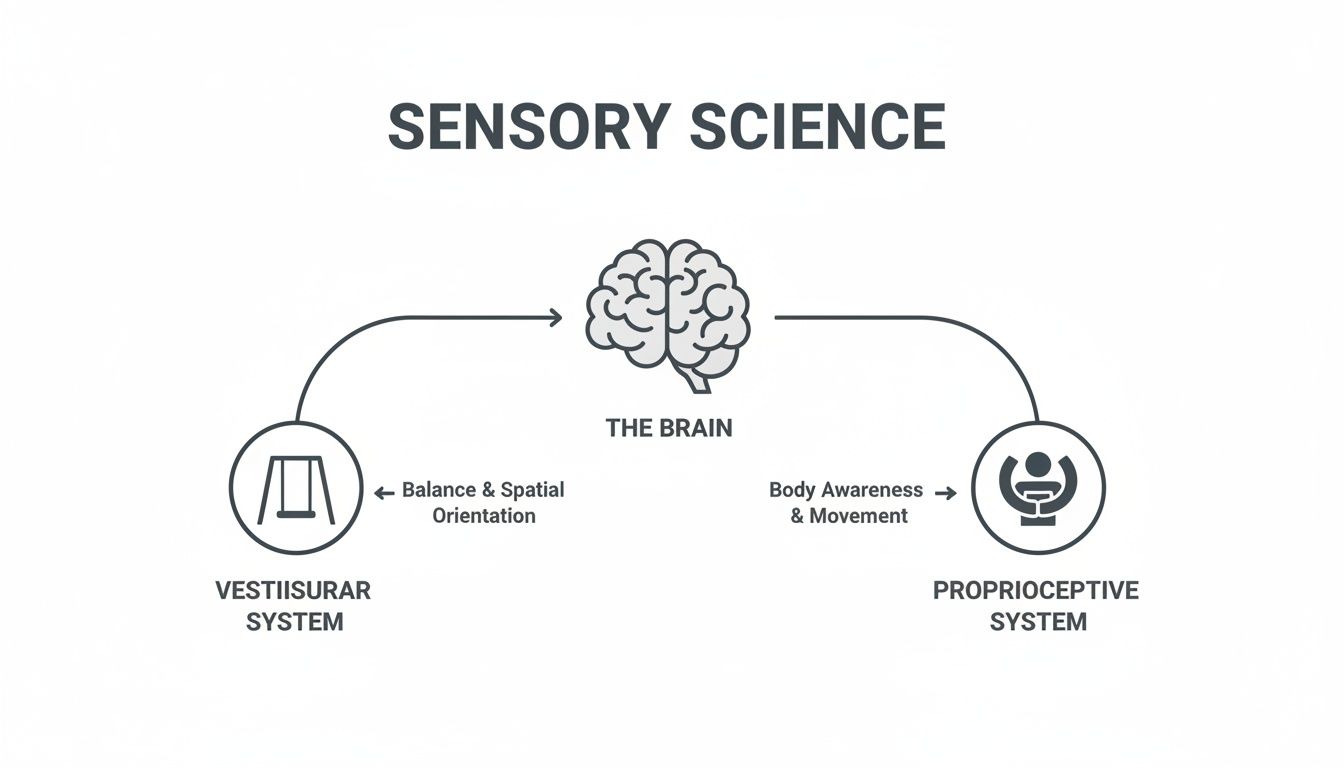
For many children, especially those with co-occurring conditions, these systems need more intense input to help the brain feel balanced, calm, and organized.
The Overlap with ADHD
The connection between sensory seeking and ADHD can be particularly tricky because, from the outside, the behaviors often look identical. A child who can't sit still, is constantly fidgeting, and seems driven by an internal motor could be described as either hyperactive or a sensory seeker. So, what’s the difference?
It really comes down to the "why" behind the movement.
- For a sensory seeker, the movement is about feeding the nervous system. That physical input is inherently calming and helps them feel organized.
- For a child with ADHD, the constant motion is often tied to challenges with impulse control, executive function, and maintaining focus.
However, the two are not mutually exclusive. Many children with ADHD also have significant sensory processing differences. This creates a dual need for both movement and strategies that support focus and attention.
When a child's sensory needs consistently interfere with their ability to learn, play, and connect with others, it's a sign that their drive for input is more than just a passing phase. It's a call for deeper understanding and targeted support.
Ultimately, navigating these overlaps requires a careful and compassionate approach. While every child's experience is unique, this table offers a simplified comparison of how sensory seeking might present across these conditions.
Sensory Seeking in Different Conditions
| Condition | Common Sensory Seeking Manifestations | Key Differentiator |
|---|---|---|
| SPD | An intense, persistent need for specific inputs (like deep pressure or spinning) that disrupts daily routines and activities. | The primary challenge is the brain's fundamental difficulty in processing and integrating sensory information effectively. |
| ASD | Repetitive sensory behaviors (stimming), a deep fascination with certain stimuli (lights, textures), and using sensory input to self-regulate. | Sensory seeking is a core diagnostic feature, often co-existing with sensory sensitivities and social communication differences. |
| ADHD | Constant fidgeting, climbing, and an inability to stay seated, which presents externally as hyperactivity. | The behavior is often linked to underlying challenges with executive function, impulse control, and attention regulation. |
Understanding these distinctions helps us look beyond the behavior to see the underlying need, which is the first and most important step in providing the right kind of support.
Practical Strategies to Support Your Sensory Seeker
Once you understand why your child seeks out intense sensory input, the next step is learning how to meet those needs in a healthy, productive way. The goal isn't to stop their drive for sensation—that's like trying to stop a river from flowing. Instead, we want to channel that energy into safe, effective, and socially appropriate activities.
This hands-on toolkit is all about helping you proactively fill your child's "sensory cup" throughout the day. When you do that, you'll see a calmer, more regulated, and happier kid.
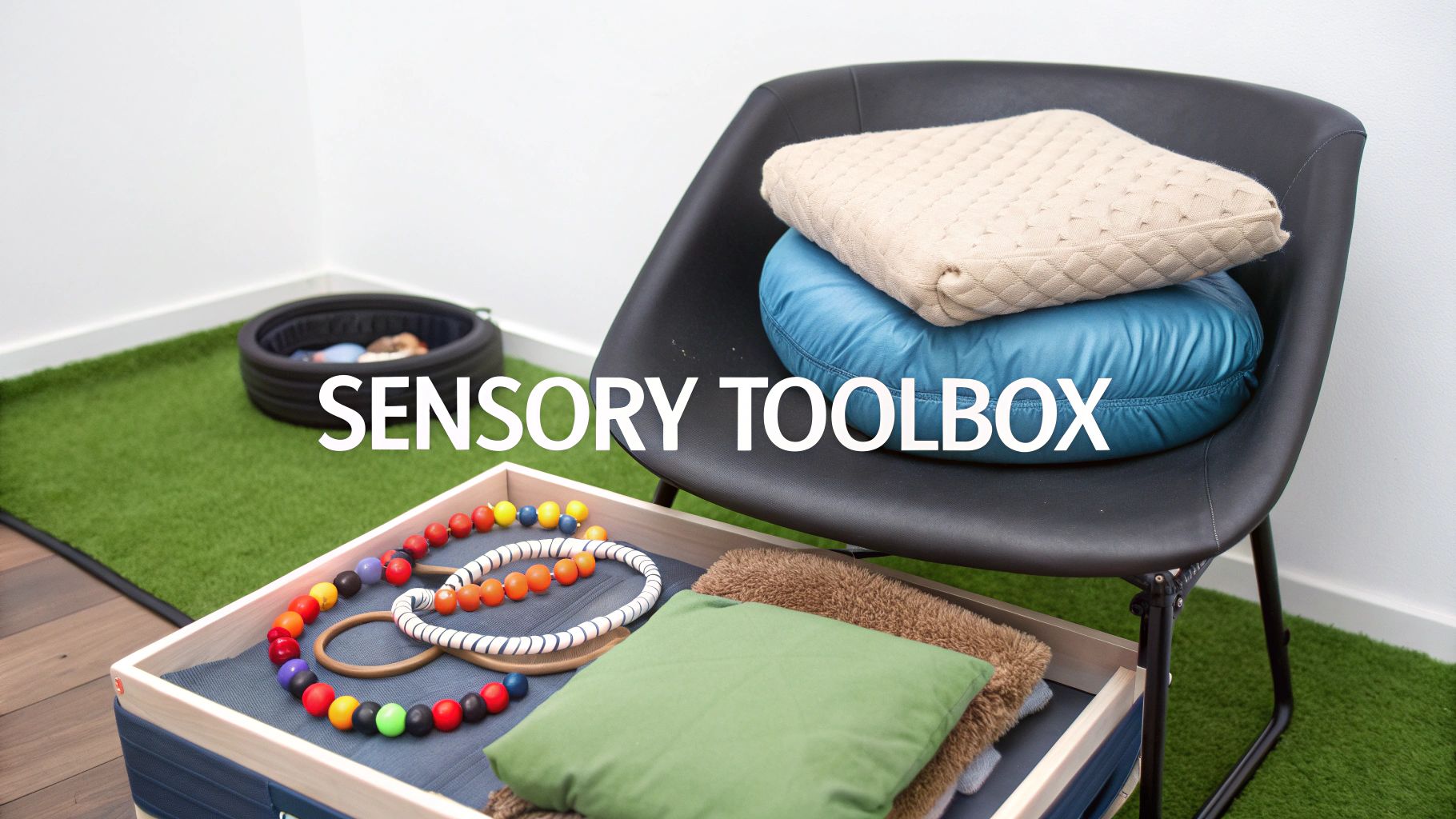
The real magic happens when you shift from a reactive approach (responding to crashes and meltdowns) to a proactive one. By weaving sensory-rich activities into your daily routine, you give the nervous system the consistent input it's craving. This prevents it from getting "hungry" and desperate for stimulation, which is often when challenging behaviors emerge.
Creating a Sensory Diet
An occupational therapist first came up with the term "sensory diet," and it’s a brilliant concept. No, it has nothing to do with food! Think of it as a personalized schedule of activities designed to nourish your child’s nervous system. A well-designed sensory diet provides a steady stream of sensory experiences to keep their internal "engine" running smoothly all day long.
Every sensory diet is unique to the child, but most include a mix of both calming and alerting activities. The whole point is to provide organizing input before the wiggles, crashes, or emotional outbursts start.
A sensory diet is the ultimate proactive strategy. Instead of waiting for a child's sensory cup to run empty, you schedule regular "refills" throughout the day, helping them stay balanced, focused, and organized from morning to night.
Heavy Work for the Proprioceptive System
Proprioceptive input, often called "heavy work," is one of the most powerful tools in your sensory toolbox. These are activities that involve pushing, pulling, lifting, and carrying—actions that send deeply calming and organizing signals to the muscles and joints. It’s like a grounding reset for the nervous system.
Here are some simple ways to incorporate heavy work into your day:
- Household Chores: Let them help carry in the groceries, push the vacuum cleaner, or lug the laundry basket.
- Playful Pushing: Pushing a toy lawnmower in the yard, a wheelbarrow full of leaves, or even a sibling on a swing provides fantastic input.
- Jumping and Climbing: A mini-trampoline can be a lifesaver indoors. Otherwise, make regular trips to the playground for climbing on the monkey bars.
- Deep Pressure: Offer big, tight bear hugs. Roll them up snugly in a blanket like a "burrito," or use a weighted lap pad during quiet activities like reading.
Movement for the Vestibular System
For the child who seems to never, ever stop moving, vestibular activities are an absolute must. This system, located in the inner ear, governs our sense of balance, movement, and spatial awareness. Feeding it helps a child feel coordinated and secure in their environment.
Try these vestibular-rich activities:
- Swinging: A simple backyard swing set, a porch swing, or an indoor therapy swing can be a game-changer for regulation.
- Spinning: Let them spin safely in an office chair (with supervision!) or play classic games like "Ring Around the Rosie."
- Upside-Down Time: Hanging upside down from the monkey bars or doing somersaults in the grass provides intense, organizing input that many seekers crave.
Safe Crashing and Tactile Fun
Does your child constantly crash into the sofa or dive onto their bed? They aren't trying to be destructive; their body is craving that powerful, full-body input. The trick is to give them a safe outlet for it.
- Create a Crash Pad: Pile up old cushions, beanbags, pillows, and blankets in a corner to create a designated zone for safe jumping and crashing.
- Offer Messy Play: A simple bin filled with sand, water beads, dry pasta, or shaving cream provides incredible tactile input for little hands.
- Use a Wiggle Cushion: For times when sitting is required (like at the dinner table or for homework), an inflatable wiggle cushion allows for subtle movement that can dramatically improve focus.
Oral Motor and Auditory Strategies
The mouth is packed with sensory receptors, which explains why many sensory seekers chew on shirt collars, pencils, or other non-food items. The right kind of auditory input can also be incredibly regulating.
- Provide Safe Chewing Options: Offer crunchy snacks like carrots, apples, or pretzels. For school-aged kids, chewable jewelry or pencil toppers can be a discreet and effective tool.
- Use Straws: Drinking a thick smoothie, applesauce, or yogurt through a straw is a fantastic oral motor workout.
- Incorporate Music: Experiment with different sounds. For some kids, rhythmic, predictable beats are very organizing. Others might need loud, stimulating music to feel regulated and focused.
By weaving these simple strategies into your daily life, you can transform challenging sensory seeking behavior into positive, regulating experiences. You're not just managing behaviors—you are fundamentally helping your child’s nervous system learn how to find balance and thrive in a world that can often feel overwhelming.
When to Seek Professional Guidance
While the home strategies we've covered can make a world of difference, it's just as important to recognize when your child’s needs call for a more structured level of support. You know your child best. Always trust your parental instincts.
If you feel like you’re constantly struggling to keep up, or if your child's sensory needs are significantly impacting their life, it might be time to seek professional guidance. This isn't a sign that you've failed—it's a proactive step toward getting your child and your family the expert support you all deserve. The goal is to move from just managing behaviors to truly building lasting skills for regulation and participation.
Red Flags to Watch For
So, how do you know when it’s time to make that call? A child’s drive for sensory input crosses the line from a simple preference to a real challenge when it consistently gets in the way of their ability to function, learn, and connect with others.
Here are some clear red flags that suggest a professional evaluation could be the right next step:
- Safety Concerns: Their sensory seeking leads to genuinely dangerous behaviors, like climbing way too high, jumping from unsafe surfaces, or just having a lack of awareness of potential harm.
- Disruption at School: The need for movement and input is so intense that it stops them from participating in classroom activities, focusing on lessons, or making friends.
- Social Isolation: Their behaviors—like getting into other kids' personal space or playing way too rough—are unintentionally pushing other children away and making friendships hard to build.
- Family Life Disruption: The sheer intensity of their needs is causing significant stress and strain on the entire family, making daily routines like meals or simple outings feel impossible.
- Extreme Emotional Reactions: They have huge meltdowns or show extreme frustration when their sensory needs aren't met right away.
The Role of an Occupational Therapist
When you decide to seek help, an Occupational Therapist (OT), especially one who specializes in sensory integration, will be your greatest ally. An OT is a trained professional who helps people of all ages do the things they want and need to do through the therapeutic use of everyday activities (or "occupations").
For a child with intense sensory seeking behavior, an OT’s job is to:
- Conduct a Comprehensive Evaluation: This involves a mix of standardized tests, clinical observations, and in-depth interviews with you to understand your child's unique sensory profile from every angle.
- Identify Underlying Challenges: They dig deep to figure out how sensory processing differences are impacting motor skills, emotional regulation, and daily living skills.
- Develop a Personalized Plan: Based on that evaluation, they create a targeted therapy plan, which often includes a formal sensory diet and specific strategies to use at home and school.
Seeking a professional evaluation isn't about slapping a label on your child. It's about getting a clear roadmap—a set of expert, personalized strategies that empower you to support your child's neurological needs in the most effective way possible.
It can be reassuring to know just how common these challenges are. Sensory seeking is a key part of Sensory Processing Disorder (SPD), a condition that’s estimated to affect between 5% and 16.5% of the general population. In fact, a groundbreaking 2006 study found that parents saw signs of SPD in 5.3% of their kids entering kindergarten. That means hundreds of thousands of children start school each year with these underlying needs. You can read the full study on SPD prevalence to learn more.
At First Steps, we believe in a neurologically-focused approach that gets to the root cause of these challenges. To see how specialized therapies can help, learn more about our approach to Sensory Processing Disorder therapy.
Your Questions About Sensory Seeking, Answered
As a parent navigating the world of sensory needs, it’s natural to have questions. We hear many of the same ones from families just like yours, so let's walk through some of the most common concerns together.
Will My Child Outgrow This?
This is one of the first things parents ask. While a child’s specific sensory preferences will absolutely change and mature as they grow, the underlying neurology often stays with them.
Think of it this way: the goal isn't to make the sensory seeking disappear entirely. Instead, our focus is on helping your child build a toolbox of healthy, effective, and socially appropriate strategies that will support them for life.
Is This Just Bad Behavior?
Absolutely not, and shifting your perspective on this is a game-changer. Sensory seeking behavior is communication, not defiance. It’s a genuine, neurological drive for more input to feel regulated and organized.
When you can see the behavior as a signal—your child's way of saying "my engine is running too low and I need help!"—you can respond with supportive solutions instead of discipline. That connection is always more effective in the long run.
What’s the Difference Between Sensory Seeking and ADHD?
It's easy to see why this is confusing—they can look almost identical on the surface and often show up together. The real difference lies in the why behind the constant motion.
A child who is sensory seeking is driven by a physical need for input to regulate their nervous system. For a child with ADHD, the hyperactivity is more closely tied to challenges with impulse control and executive function, though it's very common for them to have sensory needs, too.
How Can I Explain This to My Child’s School?
The key here is to keep it simple, practical, and solution-focused. You don't need to give a lecture on neuroscience.
Instead of explaining the vestibular system, try saying something like, "When he chews on his shirt collar, it actually helps his brain focus during lessons. We've found that giving him a chewy necklace as a safe alternative works really well at home." When you focus on practical strategies, you make it much easier for teachers to jump on board and provide the right support.
At First Steps Chiropractic, we specialize in neurologically-focused care that gets to the root cause of sensory and developmental challenges. Learn more about our approach and schedule a consultation today.