
A consistent bedtime routine is your secret weapon for getting a toddler to fall asleep fast. Seriously. This predictable sequence of calming activities, lasting about 30-45 minutes, is the clearest signal you can send to your toddler’s body and brain that sleep is coming. It makes the transition from wild playtime to quiet rest so much smoother for everyone involved.
Building a Bedtime Routine That Actually Works
If you feel like you're negotiating a peace treaty every single night just to get your toddler into bed, you are definitely not alone. The nightly struggle is real. But a well-designed bedtime routine isn't just a checklist of tasks—it's your most powerful tool for ending those bedtime battles.
Toddlers spend their days exploring a world they can't really control. Because of this, they find immense comfort and security in knowing what's coming next. A consistent routine tells their busy brains what to expect, creating a sense of safety that allows them to finally relax and unwind. This isn't about a rigid, military-style schedule. It's about creating a flexible rhythm that becomes a cherished part of your day—a time for connection that just melts away the resistance.
The Core Components of a Successful Routine
Think of your routine as a gentle ramp leading to sleep, not a steep cliff. Each step should be a little calmer than the one before it, guiding your toddler from high energy down to a state of rest.
- Warm Bath: A bath does more than just wash off the day's grime. When your child gets out of the warm water, their body temperature starts to drop, which is a natural trigger for sleepiness.
- Pajamas and Teeth Brushing: These are simple, physical cues that the day is officially over and nighttime has begun. Keep the energy low and the mood gentle.
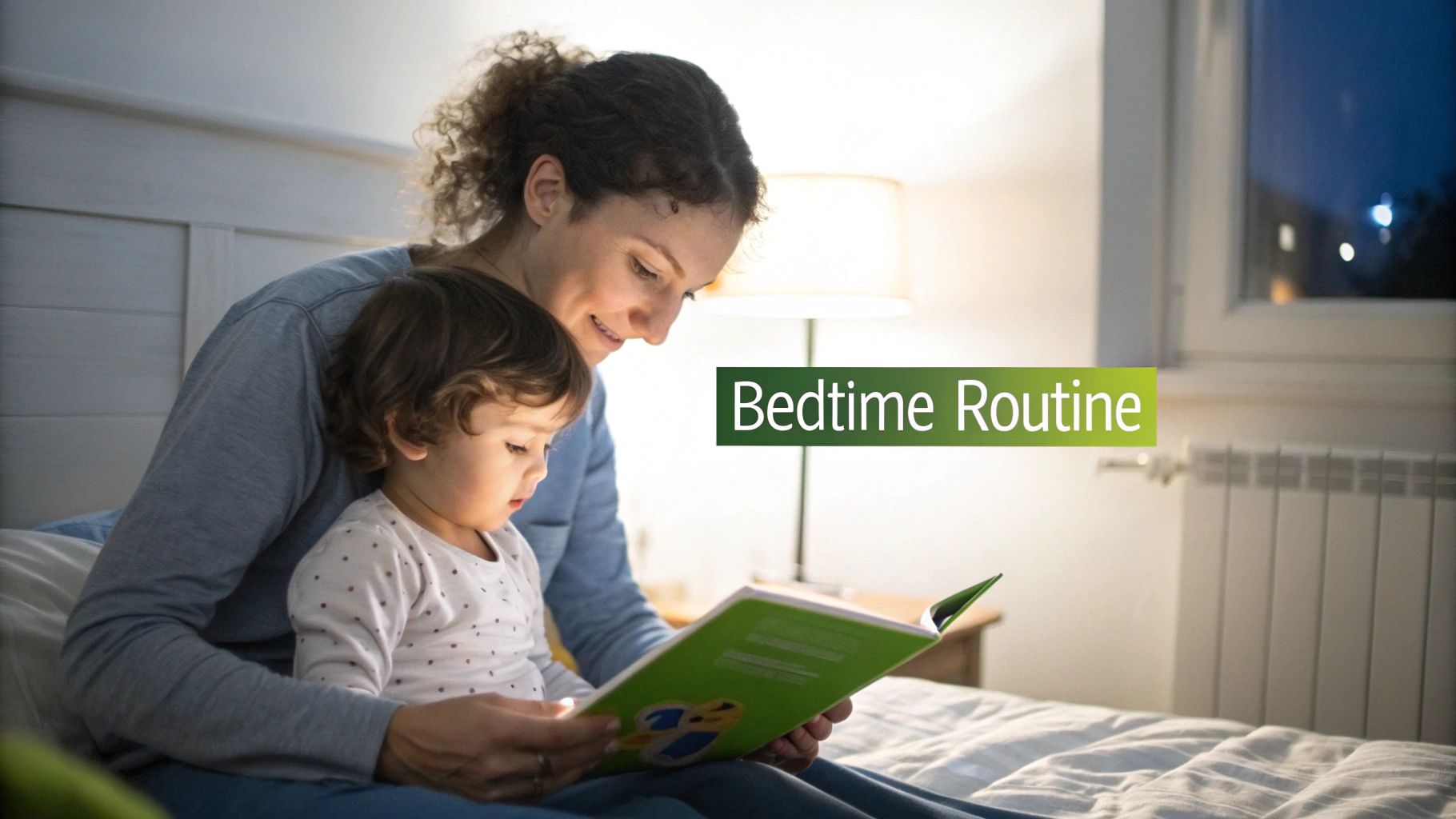
- Quiet Connection Time: This is the heart of the routine. Reading a familiar book, singing a soft lullaby, or sharing a few quiet cuddles reinforces your bond and gives them that final dose of security they need to let go.
This simple flow is incredibly effective because it’s predictable and soothing.
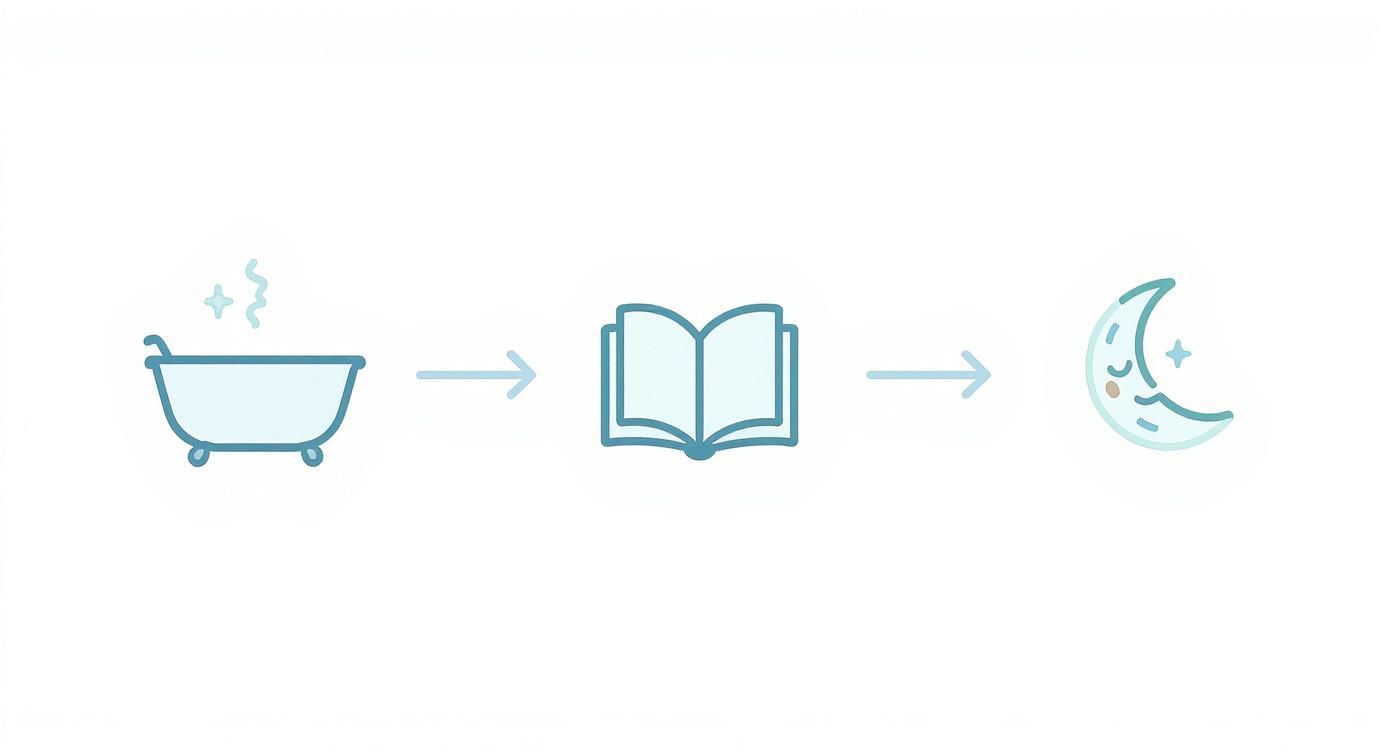
As you can see, each step naturally leads to the next, creating a rhythm that your child will quickly learn to associate with sleep.
Why Consistency Is Your Superpower
Doing the same things in the same order at roughly the same time every night is what transforms a series of actions into a powerful sleep cue. It becomes second nature.
Research shows just how common bedtime resistance is, with about 61.3% of mothers reporting their toddlers fight or stall at bedtime. These little ones not only go to bed later but also take much longer—over 40 minutes on average—to finally drift off. A solid routine is the best way to combat this.
The whole point of the routine is to make sleep feel inevitable and safe. It’s not about rushing through a list; it’s about creating an atmosphere where your toddler’s nervous system can downshift from "go" to "slow."
On those chaotic days when everything goes sideways, don't just skip the routine—shorten it. A quick 10-minute version with just the essentials (pajamas, teeth, one short book) still reinforces that consistency. It teaches your toddler that no matter what, the day always ends with this special, calming time together.
For parents exploring every avenue for peaceful nights, you might also be interested in our guide on finding a natural sleep aid for your baby.
Designing the Perfect Sleep Sanctuary
A powerful bedtime routine is only half the battle. The room itself can either invite sleep or encourage a second wind, and your toddler's bedroom environment plays a huge role in how quickly they can settle down.
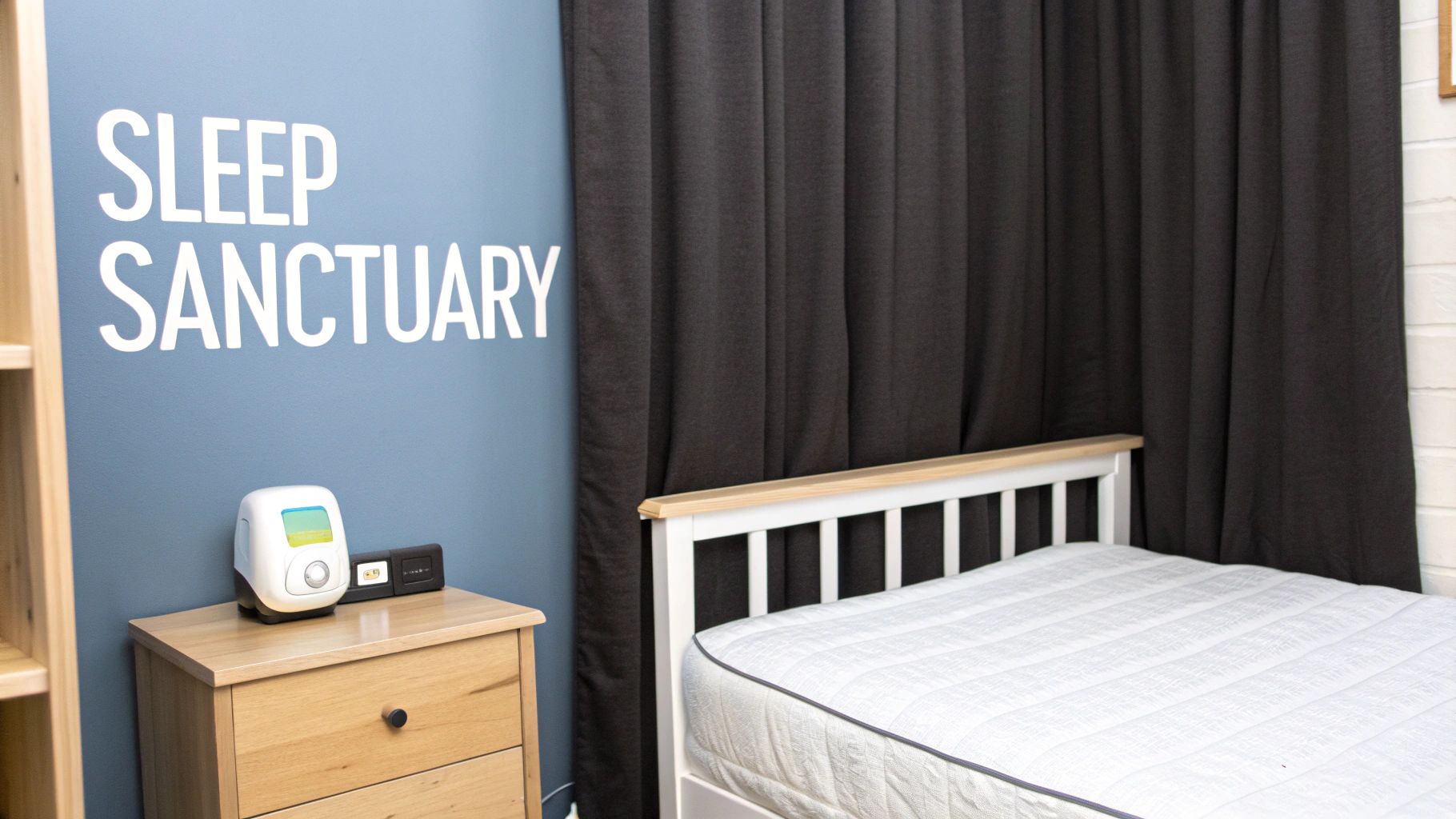
By focusing on light, sound, and temperature, you can create a peaceful space that tells their little body it’s time to rest.
Often, it's the small, strategic adjustments to their room that make a massive difference. These tweaks can help you get your toddler to sleep fast without those unnecessary struggles we all know too well.
Taming Light and Sound
Darkness is a powerful sleep signal. Even a small amount of light can interfere with the production of melatonin, the hormone that regulates our sleep-wake cycles. Blue light from screens or bright overhead lights is especially disruptive.
- Blackout Curtains: I consider these non-negotiable for blocking out streetlights and early morning sun. They help your toddler sleep longer and more soundly.
- Warm-Toned Nightlight: If your child needs a light, choose one that emits a dim, warm red or amber glow. You'll want to avoid bright white or blue lights at all costs.
Similarly, sudden household noises—a dropped dish, a barking dog, a flushing toilet—can easily startle a toddler who is just drifting off. A white noise machine can be a game-changer for masking these disruptions, creating a consistent, soothing soundscape. For many toddlers, that constant hum also feels incredibly comforting.
Optimizing Your Toddler's Sleep Environment
Creating that ideal sleep sanctuary can feel overwhelming, but it boils down to a few key factors. This table breaks down exactly what to aim for and why it matters.
| Environmental Factor | Optimal Setting | Why It Works | Practical Tip |
|---|---|---|---|
| Light | Pitch black | Signals the brain to produce melatonin, the sleep hormone. | Use blackout curtains and cover or remove any electronic lights. |
| Sound | Consistent & low | Masks sudden noises that can startle a child awake. | A white noise machine set to a low hum is perfect. |
| Temperature | 68-72°F (20-22°C) | A slightly cool room helps the body's core temperature drop, which initiates sleep. | Dress your toddler in breathable pajamas and use layers instead of one heavy blanket. |
| Visuals | Uncluttered & calm | Reduces stimulation and reinforces that the room is for rest, not play. | Tidy up toys into bins as part of the bedtime routine. |
By addressing each of these elements, you're setting the stage for a much smoother and faster transition to sleep.
Declutter for Calm
Finally, let's talk about the visual environment. A room overflowing with bright, stimulating toys can feel more like a playroom than a place for rest.
Try making a quick tidy-up part of the bedtime routine. Store most toys out of sight in bins or closets so the room feels calm and uncluttered. The goal is to make the bed a sacred space for one thing only: sleep. This simple association helps reinforce the purpose of the room when it's time to wind down.
For some little ones, sensory sensitivities can make these environmental factors even more critical. Understanding how to support kids with sensory issues can provide additional insights into creating the perfect calm-down space. In fact, environmental factors are often a primary obstacle; a recent survey found that disruptive noises and light present significant challenges for 32% of children. You can discover more insights about these leading sleep disruptors in the 2025 Child Sleep Survey.
Gentle Techniques to Calm a Busy Mind
We've all been there. Your toddler is running on fumes, but their mind is still going a mile a minute. Simply telling a little one to "calm down" when they're buzzing with the day's excitement is rarely effective. The real key is to help guide their body and brain from that high-energy state into a place of peace and rest.
This is where sensory strategies can be a game-changer. These aren't complicated procedures; they are simple, loving gestures that use touch and gentle motion to soothe their nervous system, sending a powerful signal that it's time to wind down.
- Gentle Lotion Massage: After their bath, take five minutes to slowly and calmly rub lotion onto their legs, arms, and back. Your warm touch combined with a soothing scent is incredibly grounding.
- Deep-Pressure Hugs: Instead of a quick squeeze, try offering a firm, sustained hug for about 10-15 seconds. This kind of deep pressure has a naturally calming effect on the nervous system.
- Rhythmic Rocking: Whether you're in a rocking chair or just swaying together, the predictable, gentle motion is deeply comforting and can help regulate their breathing and heart rate.
These simple sensory inputs help your child feel safe, secure, and ready for sleep.
Turning Relaxation Into a Game
Breathing exercises are fantastic tools for an overstimulated mind, but the instruction to "take a deep breath" often goes right over a toddler's head. The trick is to make it a game.
Try asking them to pretend their belly is a balloon. As they breathe in, they "fill the balloon up," and as they breathe out, they "let all the air out." Another favorite in our house is "blowing out the birthday candles," where they take one big breath in and then blow out slowly and steadily, as if they're trying to extinguish a whole row of imaginary candles.
This playful approach teaches them a valuable self-soothing skill without any pressure. You're giving them the tools to begin managing their own energy, which is a huge step in learning how to fall asleep on their own.
Key Insight: A toddler's inability to settle is often a sign of an overactive nervous system, not defiance. Calming techniques provide the external regulation they need to wind down internally.
Connection Before Lights Out
Once the physical wiggles start to fade, the focus should shift to quiet, connection-based activities. The goal here is to gently move their attention away from the day's stimulating thoughts and into a peaceful, shared moment with you.
Choose a picture book with a simple, familiar storyline and soft, calming illustrations. Now is not the time for exciting adventures with loud noises or surprising plot twists. You could also hum a soft lullaby or tell a quiet, made-up story about their favorite stuffed animal getting cozy for bed.
This final step reinforces that feeling of safety and love, creating the perfect emotional foundation for drifting off to sleep. If you find your child is consistently wired and struggling to settle down night after night, it might be helpful to learn more about how to calm an overactive nervous system for some deeper strategies.
Connecting Daytime Schedules to Nighttime Success
A good night's sleep for your toddler doesn't just happen at bedtime. It's actually the result of everything that happened since they woke up that morning. The way you structure their entire day—from meals to playtime to naps—has a direct line to how smoothly they drift off to sleep.

It’s a huge myth that skipping a nap will make your toddler so exhausted they’ll just crash at bedtime. More often than not, the exact opposite happens. An overtired toddler gets a second wind, their little body filled with stress hormones like cortisol that make it nearly impossible for them to calm down. Getting this part right is a game-changer if you're trying to figure out how to get a toddler to sleep fast.
The Power of a Consistent Wake-Up Time
This might sound strange, but one of the best things you can do for nighttime sleep is to start the day at the same time, every single day. A regular wake-up time, even on weekends, is the anchor for your toddler’s internal clock, or circadian rhythm.
When their body knows what to expect, it can regulate its own sleep-wake cycle. This predictability helps their system learn when it's time to be awake and when it's time to wind down. If their wake-up times are erratic, their entire day becomes a guessing game, which almost always ends in a bedtime struggle.
Try to wake them within the same 30-minute window each day. This one simple habit creates the foundation for a predictable nap and a much easier bedtime.
Nailing the Nap Schedule
For a toddler, naps aren't a luxury—they are a biological must. Naps prevent that dreaded overtired state, help their brains process what they've learned, and lead to a much happier kid. For most toddlers between 1-3 years old, one solid nap in the middle of the day is perfect.
- Timing is Everything: You want that nap to happen in the early afternoon, ideally ending by 3:00 PM. A nap that goes too late can sabotage bedtime by reducing their "sleep pressure," making it much harder for them to feel tired at night.
- Ideal Nap Length: A good, restorative nap should last somewhere between 1.5 to 2.5 hours. Anything shorter might not be enough to recharge them, but a nap that’s too long can also steal from their nighttime sleep bank.
If you’re struggling with short naps or outright nap refusal, start by checking their sleep environment. A dark room, quiet space, and some white noise can work just as well for daytime sleep as it does for nighttime.
Parent Tip: I like to think of a toddler's sleep like a bank account. A good nap is a healthy deposit that keeps them from going into "sleep debt." By the time bedtime rolls around, a toddler in sleep debt is running on fumes and cortisol, which makes it incredibly difficult for them to settle down and sleep peacefully.
Sample Toddler Daily Sleep and Activity Schedule
Sometimes seeing a schedule laid out helps all the pieces click into place. Remember, this is just an example—feel free to adjust the times to what works best for your family.
| Time | Activity |
|---|---|
| 7:00 AM | Wake-Up & Morning Cuddles |
| 7:30 AM | Breakfast |
| 8:30 AM – 11:00 AM | Active Playtime (outside if possible) |
| 11:30 AM | Lunch |
| 12:30 PM – 2:30 PM | Nap Time |
| 3:00 PM | Snack & Quiet Play |
| 5:30 PM | Dinner |
| 6:30 PM | Begin Bedtime Routine (bath, PJs, stories) |
| 7:15 PM | In Bed for the Night |
A balanced daily rhythm like this one, with a good mix of activity and rest, is your best defense against the overtiredness that fuels bedtime battles. When you're intentional about managing their day, you're setting the stage for a faster, easier, and more peaceful bedtime every single night.
Troubleshooting Common Bedtime Hurdles
Even when you’ve created the most calming routine and the perfect little sleep sanctuary, you’re going to hit a few bumps in the road. It happens to everyone. One night your toddler drifts off without a peep, and the next, you're in the middle of a full-blown bedtime protest. This is completely normal. Navigating these challenges is less about finding a magic fix and more about how you respond—with calm, consistent confidence.
From a sudden bout of separation anxiety to the classic toddler sleep regression, these hurdles are just part of the territory. The key is to have a plan in place. This way, you can handle these moments without derailing all the great progress you've already made. Staying patient and predictable, especially on those tough nights, reinforces the security your child needs to finally embrace sleep on their own.
The Never-Ending Stalling Tactics
"I need more water." "Just one more hug." "My blanket feels funny." If these sound familiar, you're dealing with a master of the stall. While these requests seem innocent enough, they're often a toddler's way of testing boundaries and stretching out their time with you. The best response is one that is both firm and loving.
To handle this, I often recommend the "check the boxes" method. Before you say your final goodnight, go through a quick, almost playful checklist together:
- "Is your tummy full?" (Check!)
- "Did you have a sip of water?" (Check!)
- "Are your teeth all brushed?" (Check!)
- "Have all the final hugs and kisses been delivered?" (Check!)
Once you've confirmed all their needs are met, you can confidently say, "Great! We've done all our jobs for tonight. It's time to sleep." If they call out again for something you've already covered, just respond calmly from the doorway with, "I love you, it's sleepy time now," without re-entering the room.
When They Keep Getting Out of Bed
The newfound freedom of a toddler bed can quickly turn bedtime into a nightly game of jack-in-the-box. The second you leave, they pop right back out. Your goal here is to be as calm and boring as possible—so boring that the game is no longer fun.
Each time they get out, silently and gently lead them back to their bed. Avoid giving lectures, getting into negotiations, or offering extra cuddles. Simply say, "It's time for sleep," place them back in bed, and leave the room. The first night might only take two trips. The next night might take ten. The key is absolute consistency. Your lack of an emotional reaction removes the incentive, and they will eventually learn that staying in bed is the only real option.
The discrepancy between how much sleep parents think their toddler is getting versus reality can be surprising. One study revealed that while 83% of parents believed their child slept enough, only 14% of children actually met sleep guidelines. The data showed kids were awake for over 38 minutes each night, a fact parents were often unaware of. To learn more about this gap, you can explore the research on parental sleep perception.
Answering Your Top Toddler Sleep Questions
When you're in the thick of a bedtime battle, your mind is probably racing with questions. Knowing what's normal versus what might need a closer look can bring some much-needed peace of mind. Let’s tackle some of the most common questions we hear from parents trying to get their little ones to sleep.
How Long Should It Take for a Toddler to Fall Asleep?
This is a big one, and the answer helps set realistic expectations. Ideally, a relaxed toddler in a great sleep environment should be able to drift off within 15 to 30 minutes of being put into their bed.
If they’re out cold the second their head hits the pillow, they might actually be overtired. On the flip side, if they’re still wide awake and partying in their crib an hour later, it could be a sign that their bedtime is too early or they’re simply overstimulated from the day.
That 15-30 minute window is your sweet spot—a great benchmark for a well-timed bedtime.
What Sleep Training Methods Are Best for Toddlers?
The phrase "sleep training" can sound intense, but for toddlers, it’s really about reinforcing healthy boundaries and helping them learn to fall asleep on their own. Gentle methods are often the most successful for this age group because they respect the big feelings that often come with separation.
- The Chair Method: This is a very gradual approach. You start by sitting in a chair right next to their bed until they fall asleep. Every few nights, you inch the chair a little further away, until you’re eventually out of the room completely. It offers them a reassuring presence while still encouraging independence.
- Graduated Checks (The Ferber Method): This involves checking on your toddler at progressively longer intervals. It’s not about letting them "cry it out" alone; it's about giving them the space to learn self-soothing skills while reassuring them that you will always come back.
Ultimately, the best method is the one that feels right for your family’s philosophy and that you can stick with consistently.
It's so important to remember that progress isn't always a straight line. Sleep regressions and random off-nights are totally normal. The key is to have a consistent plan you can fall back on when things get a little rocky.
When Should I Talk to a Doctor About My Toddler's Sleep?
Most toddler sleep hiccups can be ironed out with new routines and strategies, but some situations really do need a professional medical opinion. You should think about chatting with your pediatrician if you notice any of these red flags:
- Loud, consistent snoring or gasping for air: This could be a sign of sleep apnea.
- Extreme or frequent night terrors: While an occasional night terror is common, frequent and intense episodes are worth discussing with a doctor.
- Serious restlessness or jerky leg movements: This might point to an issue like Restless Leg Syndrome.
- Signs of pain or discomfort: If your toddler seems to be in physical pain that's messing with their sleep, it needs to be investigated.
Always trust your gut. If something just feels off about your child's sleep, a conversation with a professional can provide clarity and the right course of action.
At First Steps Chiropractic, we understand that a healthy, balanced nervous system is the foundation for restful sleep. If you feel like you've tried everything and are still facing nightly struggles, a gentle pediatric chiropractic evaluation can help identify and address underlying issues that may be contributing to sleep challenges. Learn more about how we support families in achieving better sleep.