
Have you ever felt like your body's systems are just… out of sync? Maybe you're wrestling with baffling anxiety, stubborn digestive issues, or a heart that randomly races, but every doctor’s visit ends with normal test results. These frustrating and often disconnected symptoms can point back to one powerful, commonly overlooked source: a pinched vagus nerve.
When this critical nerve pathway faces physical compression or interference, it disrupts the vital communication between your brain and your body’s core organs. This breakdown is what triggers that confusing cascade of symptoms, from gut trouble to heart palpitations, because it fundamentally compromises your body’s ability to self-regulate.
Understanding Your Body's Master Control Switch
Think of the vagus nerve as the master control switch for your internal world. It’s the longest cranial nerve we have, journeying from the brainstem, down through the neck, and into the chest and abdomen. This superhighway of information is in charge of your "rest and digest" system, scientifically known as the parasympathetic nervous system. When it’s functioning properly, it keeps your body calm, balanced, and resilient.
But when this nerve gets physically compressed or irritated—often right where it exits the skull and passes through the upper neck—it's like having a dimmer switch stuck on low. The crucial signals flowing between your brain and body become faint and distorted. This interference can trap your body in a constant state of "fight or flight," leaving you feeling exhausted, overwhelmed, and unwell.
The Importance of Healthy Vagal Tone
We measure the health and efficiency of this nerve with something called vagal tone. High vagal tone is a good thing; it means your body can quickly shift back into a relaxed state after stress and easily manage functions like your heart rate, breathing, and digestion.
On the other hand, low vagal tone—often a direct result of a pinched vagus nerve—means your body struggles to calm down. This can kick off a domino effect of chronic health issues that impact the entire family. You can learn more about its critical functions in our detailed guide on what is vagus nerve function.
A healthy vagus nerve is the foundation of resilience. It's the physiological basis for being able to gracefully navigate stress, recover from illness, and maintain a sense of calm and well-being in a busy world. Without proper function, the body remains on high alert, unable to truly rest, heal, and thrive.
Grasping how this single nerve influences everything from mood to gut health is the first real step toward finding answers. Below is a quick overview of its primary roles and the common signs that something is off.
Vagus Nerve Function and Symptoms at a Glance
This table offers a quick summary of the vagus nerve's role, what you might feel when it's compressed, and its impact on your family's health.
| Area of Function | Common Symptoms When Pinched | Impact on Your Family |
|---|---|---|
| Heart & Lungs | Unexplained heart palpitations, shortness of breath, or fluctuating blood pressure. | Increased stress and worry about sudden, alarming physical symptoms. |
| Digestion | Chronic bloating, constipation, acid reflux, or irritable bowel syndrome (IBS). | Dietary restrictions and discomfort that can disrupt family meals and activities. |
| Mood & Stress | Persistent anxiety, panic attacks, depression, or an inability to relax and "turn off." | A tense home environment where emotional regulation is a constant challenge for everyone. |
Looking at this, you can see how a problem in one person’s nervous system can quickly ripple outward, affecting the peace and well-being of the whole family.
The Hidden Reasons for Vagus Nerve Compression
The idea of a “pinched vagus nerve” isn’t something you hear about every day, but the potential for it is actually built right into our anatomy. To get a clear picture, think of the vagus nerve as a super important, delicate cable running from your brainstem down through your neck. It has to pass through a very busy and structurally complex neighborhood—your upper cervical spine.
This area, right where your head connects to your neck, is a crowded space full of bones, muscles, ligaments, and blood vessels. When everything is lined up and moving the way it should, the nerve has a nice, clear path. But even tiny shifts in this alignment can create physical pressure or tension, effectively “pinching” the nerve and messing with its critical communication signals.
How Spinal Misalignment Creates Nerve Interference
Think of the very top bone in your neck, the atlas (C1), as a gatekeeper for the vagus nerve. If this vertebra gets nudged out of alignment—whether from physical stress, chronic poor posture, or an old injury—it can narrow the space where the nerve passes through. This creates a bottleneck that irritates the nerve and disrupts its ability to function properly.
This isn't just a theory; it's a structural reality. The physical stress from a difficult birth, a fall during childhood, a car accident, or even years spent hunched over a desk can create lasting misalignments in the spine. These subtle shifts are often the hidden reason behind a whole cascade of confusing symptoms, from digestive upset to anxiety, because they directly interfere with the body's master control switch.
This map shows just how many critical jobs the vagus nerve has in connecting the brain to the body.
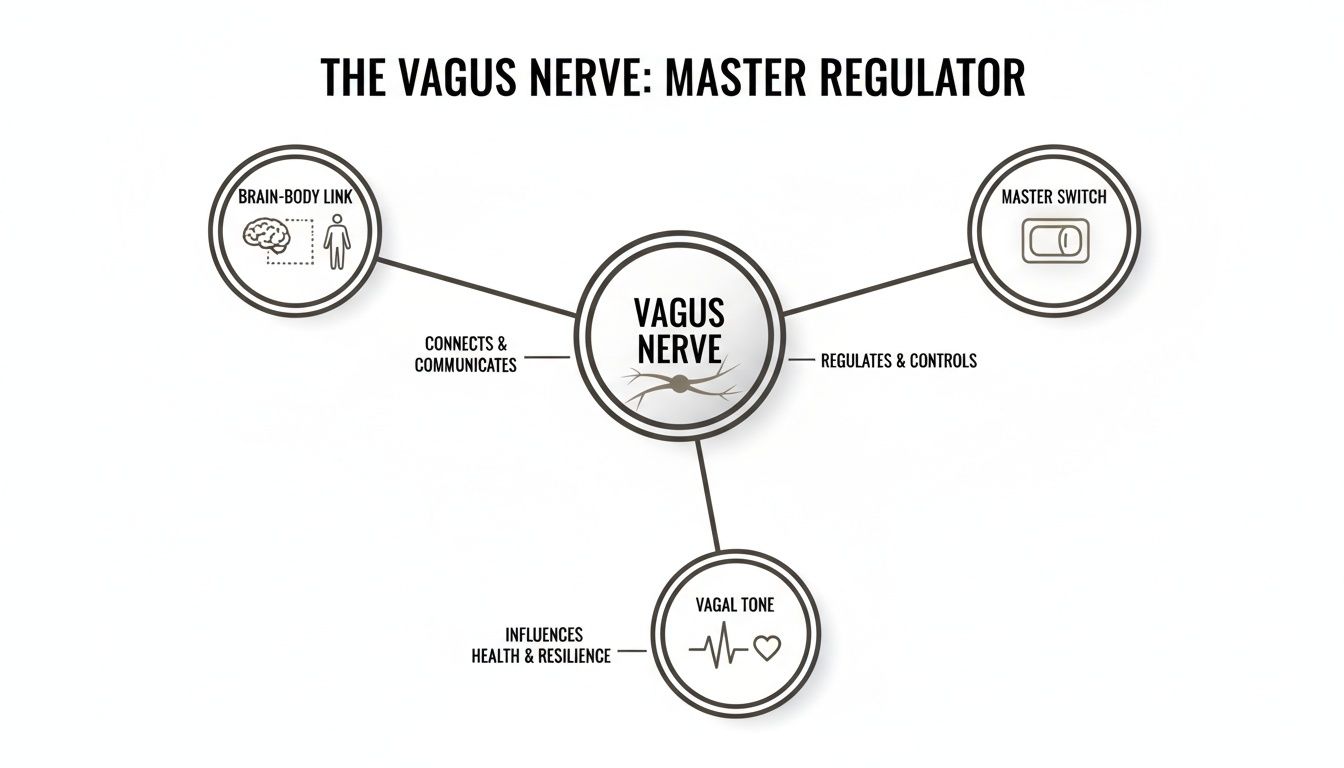
As you can see, it acts as the primary brain-body link, the master switch for our relaxation response, and a key regulator of something called vagal tone, all of which have a massive influence on our overall health.
The Impact of Anatomical Variations
To add another layer of complexity, not everyone's internal wiring is identical. It turns out that anatomical variations in the vagus nerve's path are surprisingly common, which can make some people naturally more likely to experience compression.
Your body's unique anatomy can predispose you to vagus nerve interference. Structural variations aren't a flaw; they are simply differences that can make proper spinal alignment even more critical for maintaining optimal nerve function and overall wellness.
For example, one major study found that nearly 36.2% of people have some kind of variation in their vagus nerve's positioning within the neck. This was more common on the left side and in the lower neck, creating a potential hotspot for otherwise unexplained symptoms.
Interestingly, the study also showed that men had a higher prevalence (42.1%) compared to women (32.7%). Age dramatically increases these odds, too, jumping from about 23% in those under 40 to a staggering 47.4% in individuals over 60. That nearly doubles the likelihood. You can read the full research about these anatomical findings to learn more.
This helps explain why symptoms of a pinched vagus nerve might seem to pop up out of nowhere later in life. Age-related changes can combine with those pre-existing anatomical quirks and the physical stress we’ve accumulated over the years. Understanding these hidden factors is the first step toward finding a lasting solution. It’s not just about chasing symptoms; it’s about getting to the root structural cause to restore proper communication within your nervous system.
Recognizing the Warning Signs at Every Age
A pinched vagus nerve doesn't show up the same way in everyone. In fact, its symptoms can be incredibly diverse, shifting and changing based on a person's age and stage of life. This is precisely why connecting the dots can be so tricky for families—what looks like colic in an infant could be the very same root issue that shows up as anxiety in a teenager or digestive upset in an adult.
Getting a handle on these different expressions is the key to finding the real cause. When the body's master control system is compromised, it sends out distress signals unique to each person's physiology. By learning to recognize these patterns, you can shift from just chasing symptoms to addressing the core problem head-on.

Symptoms in Infants and Toddlers
For the littlest members of our families, vagus nerve interference often appears as trouble with the most basic regulatory functions. The physical stress from the birth process is a common starting point for misalignments in the delicate upper neck, leading to symptoms that are all too often dismissed as just "normal" baby problems.
- Feeding and Digestive Troubles: You might see a real struggle with latching, sucking, or swallowing. Classic signs like chronic reflux, constant gas, and constipation also point to a digestive system that isn't getting clear signals.
- Colic and Discomfort: That seemingly endless crying and an inability to be soothed can be a major clue that the nervous system is stuck in a stressed-out state.
- Torticollis and Asymmetry: A persistent head tilt or a strong preference for turning the head to one side can indicate underlying tension in the neck, potentially affecting the vagus nerve's path.
Warning Signs in School-Aged Children
As kids get older, the symptoms of a pinched vagus nerve often evolve. They can shift from purely physical issues to things that impact behavior, emotional regulation, and how they interact with the world. A child's nervous system is working overtime to process a ton of sensory information, and any nerve interference can easily short-circuit that ability.
- Sensory Processing Challenges: This can look like being overly sensitive to noise, light, or touch. It might also show up as poor motor control, clumsiness, or difficulty with spatial awareness.
- Emotional and Focus Issues: A dysregulated nervous system can trigger heightened anxiety, big emotional swings, and trouble with focus and concentration, often leading to behaviors associated with ADHD.
- Weakened Immune Response: Think chronic ear infections, allergies, and getting sick all the time. These can be signals that the body is stuck in a state of stress and can't effectively rest, recover, and fight off germs.
How It Looks in Teens and Adults
For adults, including expectant moms, the signs of vagus nerve compression often become more chronic and systemic. Years of built-up stress—both physical and emotional—can lead to long-standing interference that impacts multiple body systems all at once.
When your nervous system is chronically stuck in 'fight-or-flight' mode, it's like trying to run a marathon every single day. The body simply can't keep up, leading to burnout, chronic symptoms, and a feeling of being constantly overwhelmed.
When the vagus nerve is compressed, it can set off a sudden cascade of symptoms like anxiety, a racing heart, bloating, and nausea. Research directly links this to a state of sympathetic dominance, where the "fight-or-flight" system completely takes over. This imbalance is measurable through Heart Rate Variability (HRV) analysis; a low HRV indicates poor vagal tone and a reduced ability to handle stress. This same low HRV has been shown to be a major predictor for more severe outcomes in various health conditions, highlighting just how crucial a well-functioning vagus nerve is for our overall resilience. You can discover more insights about vagal distress and its systemic impact.
Common signs for adults include:
- Chronic Digestive Upset: Persistent issues like IBS, bloating, and food sensitivities that just don't get better with dietary changes.
- Anxiety and Mood Swings: Feeling constantly on edge, having panic attacks, or struggling with an unshakable sense of dread.
- Physical Symptoms: This can include dizziness, lightheadedness, heart palpitations, chronic neck tension, and a deep fatigue that sleep just doesn't fix.
Recognizing these patterns across different life stages is the first step. It helps us see that these seemingly unrelated issues may all point back to a single, treatable cause: interference with your body's master control system.
How Neurological Chiropractic Care Releases the Pressure
When you’re grappling with the strange and frustrating symptoms of a pinched vagus nerve, the last thing you want is a solution that just papers over the problem. Instead of chasing symptoms, Neurological Chiropractic Care gets right to the root cause. This approach is worlds away from traditional manual adjustments because it targets the precise source of nerve interference that's scrambling your body's communication lines.
Our goal isn't just temporary relief; it's about gently and specifically releasing the physical pressure gumming up your nervous system. By doing that, we help reboot your body's master control system so it can finally function, heal, and regulate itself the way it was always meant to.
Pinpointing the Problem with Advanced Scans
You can't fix a problem until you find it. And when it comes to your family's health, guesswork just doesn't cut it. That's why our first step is always to use advanced diagnostic tools like our Insight Scans, a completely non-invasive and radiation-free technology that creates a detailed map of your nervous system.
These scans give us objective, reliable data that shows us exactly where stress is stuck. They measure three key things:
- Thermography: This scan shows us where inflammation and poor nerve regulation are hiding along the spine.
- Surface EMG (sEMG): This reveals muscle tension and imbalances, highlighting exactly where the body is physically holding onto stress.
- Heart Rate Variability (HRV): This is a crucial measurement. It tells us how well your body is adapting to stress and gives us a direct window into your vagal tone.
This detailed picture allows us to see the exact location and severity of the interference affecting the vagus nerve. We are no longer guessing; we are seeing. This data-driven approach ensures that your care is incredibly precise and tailored to what your body truly needs.
Gentle and Precise Adjusting Techniques
Once we know exactly where the interference is, we use specific, gentle techniques designed to correct it without any of the popping, cracking, or twisting you might expect. This is especially important for our littlest patients—infants and children—and for pregnant women, where safety and comfort are our absolute top priorities. Our primary methods are the Torque Release Technique and the Webster Technique.
A neurologically-focused adjustment is not about force; it is about precision. By applying a light, specific impulse to the right spot, we can restore proper motion to the spine, release tension, and allow the nervous system to reset itself.
The Torque Release Technique (TRT) is a highly precise and gentle method that uses a specialized instrument to deliver a low-force adjustment. It corrects misalignments right at the root level where the spinal cord attaches, helping to reboot the entire nervous system. This technique is exceptionally effective at releasing tension and pressure in the upper neck—exactly where a pinched vagus nerve is most vulnerable.
For our expecting mothers, we use the Webster Technique. This is a specific analysis and adjustment that helps to balance the pelvis. A balanced pelvis reduces stress on the uterus and its supporting ligaments, which in turn helps calm the entire nervous system. This supports a more comfortable pregnancy and can contribute to a smoother, safer birth by allowing the baby to get into the best possible position. You can learn more about how this all connects in our guide on the connection between the vagus nerve and chiropractic care.
By combining objective data from Insight Scans with gentle, specific adjustments, we can effectively release the pressure that causes a pinched vagus nerve. This approach doesn't just put a band-aid on symptoms—it helps restore the body’s innate ability to heal and thrive from the inside out.
Supporting Vagal Tone with Therapies and Home Strategies
While targeted neurological chiropractic care is the foundation for addressing the structural cause of a pinched vagus nerve, a well-rounded approach always includes supportive therapies and daily home strategies. These methods work together to improve your overall vagal tone, helping your nervous system become more resilient and better at navigating stress.
Modern medicine offers options like transcutaneous vagus nerve stimulation (tVNS). This is a non-invasive therapy using a small device to send mild electrical impulses to the vagus nerve through the skin, usually on the ear. The goal of this external stimulation is to manually "wake up" the nerve, encouraging the body to shift out of a stressed "fight-or-flight" state and into a calmer "rest-and-digest" mode. It's essentially an artificial boost for the nerve's activity.
Interestingly, this concept of stimulating the nerve to restore balance draws a powerful parallel to what gentle chiropractic adjustments achieve naturally. By correcting misalignments in the upper spine, chiropractic care removes the physical interference, allowing the vagus nerve to function optimally on its own—without needing external devices.

Modern Therapies and Their Natural Counterparts
The research into tVNS gives us fascinating insights into how the nervous system is regulated. Studies show it can be especially effective for people stuck in sympathetic overdrive—a state where poor vagal function is common. In one study of 51 participants, those with higher baseline stress markers saw a significant 20% drop in those markers during tVNS, signaling a clear shift toward parasympathetic calm. For older adults, daily tVNS has even been shown to boost resting vagal tone over time. You can read more about these innovative vagal stimulation findings and what they mean for nervous system health.
This research highlights a key principle: stimulating the vagus nerve works. While tVNS provides an external push, chiropractic care focuses on creating an internal environment where the nerve can thrive without interference, achieving a similar regulatory outcome through natural, gentle means.
Actionable At-Home Strategies to Boost Vagal Tone
Empowering yourself with simple, daily practices can make a huge difference in supporting your nervous system. These strategies help strengthen your vagal tone, making your body more adaptable and resilient between adjustments.
Your daily habits are powerful tools for nervous system health. Small, consistent actions like deep breathing or humming can retrain your body to exit the stress response and enter a state of calm and healing.
You can start incorporating these simple yet effective exercises into your routine right away:
- Deep Diaphragmatic Breathing: Short, shallow breaths signal anxiety to your brain. Instead, practice slow, deep belly breaths. Inhale deeply for a count of four, hold for five, and exhale slowly for a count of six. This directly activates the vagus nerve and has an immediate calming effect.
- Cold Exposure: You don’t need an ice bath to get the benefits! Simply splashing cold water on your face or ending your shower with 30 seconds of cold water can stimulate the vagus nerve, slow your heart rate, and reduce inflammation.
- Gargling, Humming, and Singing: The vagus nerve is connected to your vocal cords and the muscles at the back of your throat. Activating these muscles by gargling with water, humming your favorite tune, or singing loudly stimulates the nerve and can help shift you into a more relaxed state.
By integrating these practices, you actively participate in your own healing journey. For even more ideas, check out our guide on how to stimulate the vagus nerve naturally at home.
Common Questions About Vagus Nerve Care
When you're exploring ways to improve your family's nervous system health, it’s only natural to have a lot of questions. We get it. Understanding how our approach works is the first step toward feeling confident and empowered in your decisions.
We’ve put together answers to the most common questions we hear from families just like yours. Our goal is to give you clear, straightforward information so you can see how gentle, data-driven chiropractic care can make a real difference.
Is This Type of Chiropractic Care Safe for My Baby or During Pregnancy?
Absolutely. Safety is our non-negotiable, and it’s why our doctors have completed extensive post-graduate training to become certified in pediatric and prenatal care. This specialized knowledge focuses specifically on the unique needs of infants, children, and expectant mothers and is the bedrock of our entire practice.
The techniques we use, like the Torque Release Technique (TRT) and Webster Technique, are incredibly gentle and precise. To give you an idea, the amount of pressure used for an infant's adjustment is no more than what you’d use to check if a tomato is ripe.
For pregnant moms, our adjustments are specifically tailored to improve comfort, create balance in the pelvis, and support a healthier, more comfortable pregnancy from start to finish. Your family's well-being is always our highest priority.
What Exactly Do Your Insight Scans Show?
Think of our Insight Scans as a detailed weather map for your internal world. They are completely non-invasive, use zero radiation, and give us an objective, reliable look at exactly how your nervous system is functioning.
Specifically, the scans measure nerve interference, muscle tension, and your body's ability to adapt to stress—what we call Heart Rate Variability (HRV).
Instead of just guessing where the problem might be, these scans create a clear picture that shows us precisely where stress is “stuck” in the nervous system. This data is crucial. It allows us to create a highly personalized care plan and gives us a baseline to track your progress over time, so you can actually see the positive changes as they happen.
Could My Child's Sensory or Focus Issues Be Related to Their Vagus Nerve?
It’s a strong possibility. Many of the common challenges we see in kids today—like sensory processing disorders, anxiety, and difficulty with focus—can be linked back to a dysregulated nervous system, where the vagus nerve plays a starring role. Often, the physical stress of the birth process itself is the first trigger, causing interference in a child’s delicate upper neck and impacting this critical nerve from day one.
While we don't diagnose or treat specific conditions, our focus is always on identifying and correcting the underlying neurological stress that’s contributing to the symptoms.
Our comprehensive examination and advanced scans can determine if nervous system interference is impacting your child's well-being and development. By addressing the root cause, we often see significant improvements in their ability to regulate, focus, and thrive.
How Do I Get Started and Do You Take Insurance?
Getting started is simple, and it begins with a conversation. We invite you to schedule a complimentary consultation at our Hayden clinic to just sit down with one of our doctors, discuss your family's health goals, and see if our approach feels right for you. There's no pressure and no obligation.
If you decide you'd like to move forward, we can then proceed with a full examination. We want to make care accessible, which is why we are in-network with most major insurance plans. Our team will perform a complimentary benefits check for you, so you know exactly what your coverage is before you ever commit to care. We believe in making the entire process simple, transparent, and clear every step of the way.
At First Steps Chiropractic, we are committed to empowering your family with the knowledge and care needed to build lasting wellness. To discover if our approach is the right fit for you, schedule your complimentary consultation today.