You can stimulate the vagus nerve naturally using simple, everyday techniques—things like deep breathing, a splash of cold water, or even just humming a tune. These simple actions are powerful. They send calming signals directly from your body to your brain, flipping the switch on your "rest and digest" system to help you manage stress and find a real sense of well-being.
Your Guide to a Calmer Nervous System
This is your practical guide to tapping into your body’s own built-in system for calm and resilience. This isn't about jumping on a fleeting wellness trend; it's about understanding and working with one of the most critical parts of your nervous system—the vagus nerve.
Think of it as the superhighway connecting your brain to your body. It has a hand in everything from your heart rate and breathing to your gut feelings and digestion.
When you learn how to intentionally activate it, you can profoundly change how you handle stress, improve your mood, and boost your overall health. The best part? The power to regulate your nervous system is already inside you, accessible through simple, science-backed techniques you can weave into any daily routine.
What to Expect in This Guide
Throughout this article, we’ll lay out a clear roadmap with actionable steps. You won’t find vague, generic advice here. Instead, you'll discover specific, proven methods, including:
- Controlled Breathing: We'll show you how to use your breath to instantly shift your body out of "fight or flight" mode.
- Sensory Inputs: You'll explore how simple things like cold water and sound vibrations can help reset your entire system.
- Gentle Movement: Discover how mindful motion and targeted touch can improve your vagal tone for long-term resilience.
This guide is designed as a starting point for empowering yourself and your family. The goal is to provide tools that help regulate the nervous system, which is especially important when navigating challenges like anxiety, stress, or sensory processing issues in children.
This journey is all about building a better, more intuitive connection with your body. By understanding how to stimulate the vagus nerve naturally, you can build a foundation of calm that supports you and your family through all of life's ups and downs.
To give you a quick overview of the techniques we'll cover, here’s a simple summary table.
Quick Guide to Natural Vagus Nerve Stimulation
| Technique | Primary Benefit | Ideal For |
|---|---|---|
| Deep Breathing | Instant stress reduction and nervous system regulation. | Anyone needing a quick reset during moments of high stress or anxiety. |
| Cold Exposure | Boosts vagal tone and reduces inflammation. | Individuals looking to build long-term resilience and improve circulation. |
| Humming & Gargling | Directly stimulates the vagal nerve branches in the throat. | People seeking a simple, accessible way to promote relaxation and calm. |
| Gentle Massage | Eases muscle tension and activates the parasympathetic response. | Anyone experiencing physical tension, especially in the neck and shoulders. |
| Mindful Movement | Improves mind-body connection and reduces stress hormones. | Individuals of all ages, including children with sensory processing needs. |
This table is just a snapshot. Let's dive into the specifics of each method so you can start putting them into practice today.
Your Breath Is Your Most Powerful Tool for Calm
You already have one of the quickest, most effective tools to stimulate the vagus nerve naturally—your own breath. This goes way beyond the generic advice to "take a deep breath." By using specific breathing patterns, we can send a powerful, direct signal to the brain, telling it to pump the brakes on the 'fight or flight' response.
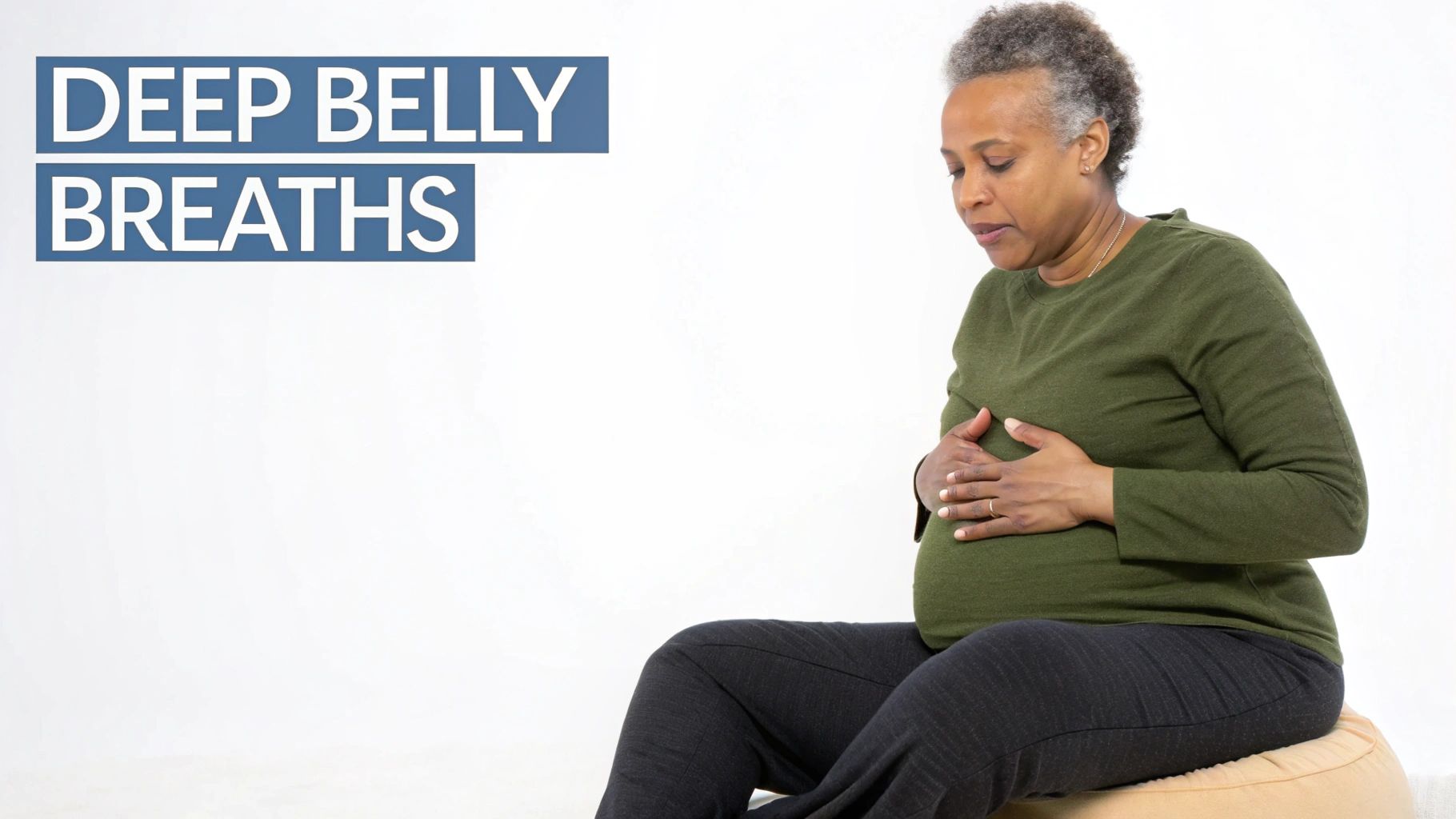
The secret lies in diaphragmatic breathing, what most of us call "belly breathing." Shallow chest breaths are a hallmark of stress, but deep, intentional belly breaths physically engage the vagus nerve. Because the nerve runs right through your diaphragm, the slow, rhythmic movement of belly breathing acts like a gentle internal massage, activating the body's calming parasympathetic nervous system.
Putting Belly Breathing into Practice
The real magic of belly breathing happens on the exhale. The goal is to make your exhale noticeably longer than your inhale. This extended exhale is what slows your heart rate and directly triggers the vagus nerve's calming effect. It’s a beautifully simple way to shift your entire physiological state, especially when stress is high.
Picture a parent in the middle of a toddler's epic meltdown. Instead of tensing up and reacting, they could pause for just three slow belly breaths. That tiny action carves out a pocket of calm, allowing them to respond in a more regulated way instead of accidentally escalating the chaos.
Ready to give it a shot? Here’s a simple exercise you can do right now, wherever you are.
- Get comfortable, either sitting up straight or lying on your back. Place one hand on your chest and the other on your stomach, right below your rib cage.
- Breathe in slowly through your nose for a count of four. As you inhale, feel your belly expand and gently push your hand up. The hand on your chest should stay pretty still.
- Hold your breath for just a moment, maybe a count of two.
- Breathe out slowly through your mouth for a count of six. Feel your belly flatten as you release all the air. Remember, that longer exhale is the most important part!
This simple rhythm is a direct line to your body's relaxation response. Doing this consistently helps build your vagal tone, which is a lot like strengthening a muscle. Better vagal tone means you'll have more resilience to stress and better emotional regulation in the long run.
Deep breathing is one of the most accessible ways to do this. Research from institutions like Cedars-Sinai confirms that even a few minutes of focused practice can create real, measurable changes in your body. One popular method is breathing in through the nose for a count of six and exhaling through the mouth for eight, paying close attention to the rise and fall of your stomach. This simple act has been shown to lower heart rate and blood pressure, creating a calming domino effect throughout your nervous system.
Make It a Daily Habit
You don't need to set aside huge chunks of time to make this work. You can practice belly breathing while you're waiting in the grocery line, sitting in traffic, or just before you walk into a tough conversation.
For kids, you can turn it into a game. Have them pretend to blow up a giant balloon in their belly, or let them lie down and place a favorite stuffed animal on their stomach to watch it go for a ride up and down with each breath.
This consistent, daily engagement is what really strengthens your parasympathetic nervous system. If you want to dive deeper into this, we have a detailed guide on parasympathetic nervous system stimulation. Over time, all these small moments of intentional breathing add up, building a more balanced and resilient nervous system for everyone in your family.
Simple Sensory Inputs for Nervous System Regulation
Beyond conscious breathing, we can use simple sensory inputs to stimulate the vagus nerve naturally. Two of the most accessible methods I recommend involve cold exposure and sound vibration.
These aren't extreme bio-hacks; they are gentle yet powerful ways to send calming signals to your nervous system without piling more stress onto your day.
The idea behind cold exposure is to create a mild, temporary thermal stressor. This brief shock prompts your body to engage its parasympathetic "rest and digest" system to rebalance itself. You don't need a full-blown ice bath to get the benefits; small, manageable doses work beautifully.
The Power of Cold Water
A sudden splash of cold water on your face can activate what’s known as the "diving reflex," a natural vagal response that quickly slows your heart rate. This makes it a fantastic tool for grounding yourself in a moment of high stress or anxiety.
- Face Splash: The next time you feel overwhelmed, lean over the sink and splash your face with the coldest water you can comfortably tolerate for about 15-30 seconds.
- Cool Rinse: End your next shower with a quick 30-second blast of cool water. I find it most effective to focus the stream on the chest and the back of the neck.
- Cold Compress: Keep a damp washcloth in the refrigerator. When you need a quick reset, place it over your face and neck for a minute or so.
This simple act can be a game-changer. I often suggest this to parents who feel frazzled after a long day. A quick face splash can reset their own nervous system before helping a child with homework, creating a much calmer environment for everyone.
Using Sound and Vibration
Sound is another direct pathway to the vagus nerve because its branches run right through your vocal cords and the muscles in your throat. Creating vibrations in this area acts like a gentle, internal massage for the nerve.
It’s no wonder that humming, chanting, and even gargling can feel so soothing.
Think about it: the act of humming a lullaby does more than just calm a baby. The vibrations created in the parent's chest and throat also stimulate their own vagus nerve, creating a shared state of co-regulation and calm.
This kind of sensory input is a key part of how we understand our bodies in space and manage regulation. To dive deeper into this, check out our guide on the importance of proprioception and sensory processing for a balanced nervous system.
Here’s how you can easily incorporate sound into your routine:
- Hum a Favorite Tune: While driving or doing chores, consciously hum a simple song. Pay attention to the vibrations in your throat and chest.
- Gargle with Vigor: When you brush your teeth, gargle with water for about 30 seconds. The muscle engagement required directly stimulates the nerve.
- Chant "Om": Even a few rounds of a deep, resonant "Om" sound in the morning can set a calm tone for your entire day.
These sensory techniques are simple, free, and can be done just about anywhere. By making them a regular habit, you provide your nervous system with consistent, gentle cues that promote a feeling of safety and relaxation.
Using Gentle Touch and Movement to Improve Vagal Tone
Mindful movement and gentle, intentional touch are some of the most fundamental ways we can stimulate the vagus nerve naturally. Think of them as sending powerful signals of safety and connection directly to your brain, helping to regulate the entire nervous system. They create a physical shortcut to a calmer emotional state.
By focusing on specific, accessible areas like the neck and ears where the vagus nerve is close to the surface, we can use gentle pressure to trigger a profound calming effect. In the same way, certain movements, like those you find in yoga, can release physical tension that might be getting in the way of optimal vagal function.
Vagal Massage Points for Quick Relief
One of the best things about this technique is that you can do it almost anywhere to find a moment of peace. The key is to be gentle. This isn't about deep tissue work, but rather light, soothing stimulation.
- Neck Massage: The vagus nerve travels down both sides of your neck, right alongside the carotid artery. To find it, place your fingertips on the side of your neck, just below your earlobe. You can often feel a light pulse here. With one or two fingers, apply very light, circular pressure for 30-60 seconds on one side before switching to the other.
- Ear Massage: A specific branch of the vagus nerve, the auricular branch, is located in your ear. Gently massaging the inner cartilage (called the concha) and the area right behind your earlobe can feel wonderfully calming. Try tracing the curves and folds of your ear with your thumb and forefinger.
This type of gentle touch is such a powerful self-regulation tool. If you're a parent feeling overwhelmed, taking just one minute for a quick neck or ear massage can provide the mental reset you need to respond to your child with more patience and presence.
This simple sensory input works in tandem with other techniques to help regulate your nervous system.
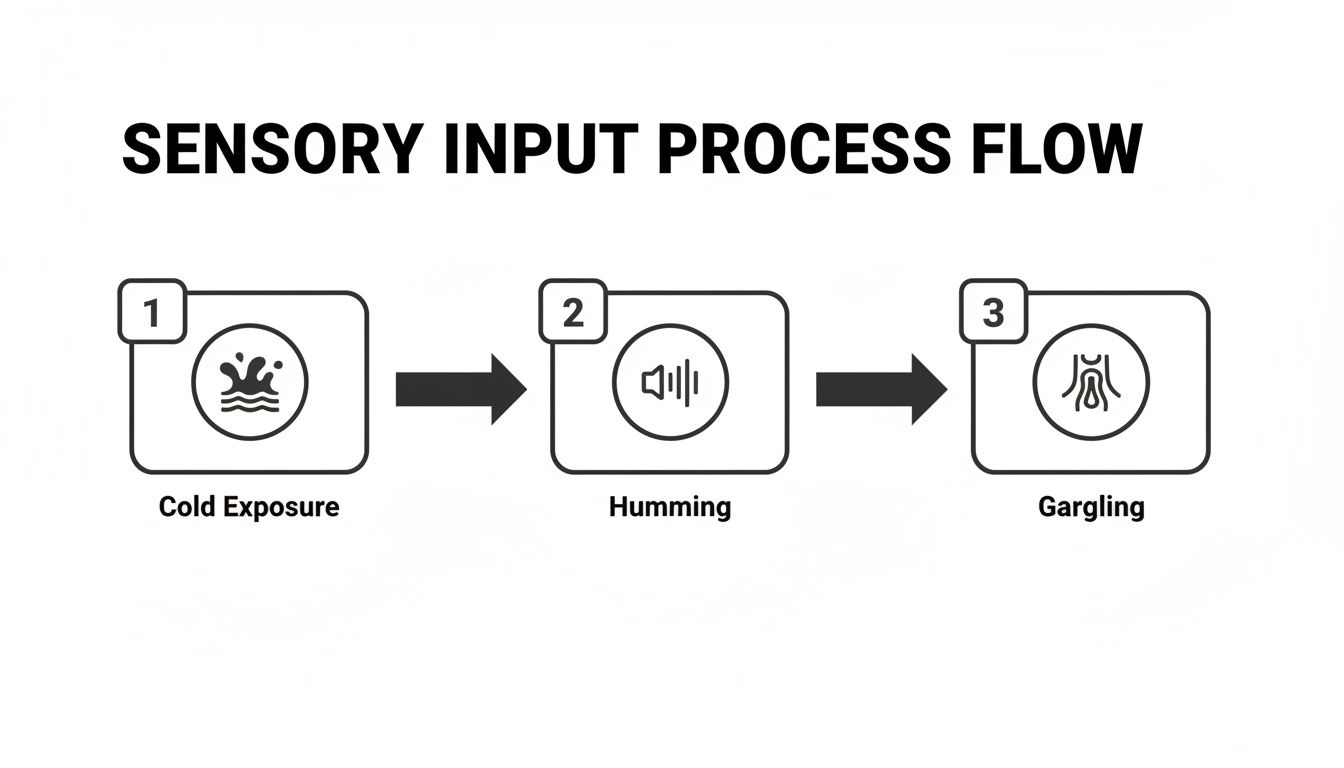
As the visual shows, inputs like cold exposure, humming, and gargling directly engage the body's calming pathways, much like a targeted massage does.
Mindful Movement with Yoga and Meditation
Practices like yoga and meditation are brilliant for enhancing vagal tone because they weave together physical movement, breathwork, and mindfulness. Certain yoga poses are especially good at releasing tension along the pathway of the vagus nerve.
Take the cat-cow stretch, for example. It's a staple in many yoga classes for a reason. This gentle flexing and extending of the spine not only loosens up a tight back and neck but also encourages the deep, belly breathing that directly stimulates the vagus nerve. It’s a simple, rhythmic practice that syncs your breath with your body’s motion, fostering a deep sense of calm.
Meditation, even for just a few minutes a day, helps you shift out of a reactive, stressed-out state. A brief mindfulness practice—maybe just focusing on the sensation of your breath or noticing the sounds around you—can help a busy parent find a precious moment of peace and reset their nervous system.
And these practices aren't just for adults. A shared family yoga session, even a silly one, creates moments of connection that build a collective sense of safety and well-being. By integrating these simple movements and touches into your life, you're building a more resilient nervous system for everyone.
For a deeper look into specific exercises, check out our guide to vagal tone exercises that you can easily add to your daily routine.
When Natural Techniques Need Professional Support
The techniques to stimulate the vagus nerve naturally are fantastic tools for day-to-day regulation. But sometimes, they aren’t enough to resolve deeper nervous system imbalances.
Think of it this way: if your car's alignment is off, you can learn better driving techniques, but you'll still feel that constant pull to one side and see uneven wear on your tires. Those at-home exercises are your improved driving skills. But sometimes, you need a mechanic to fix the underlying alignment.
It's so important to recognize when your body is signaling that a more direct, professional approach is needed. This isn't a sign of failure. It's simply an indicator that an underlying issue might be preventing your nervous system from finding and maintaining its balance on its own.
Recognizing the Signs of a Deeper Imbalance
If you’re consistently using these at-home techniques, you should be seeing gradual improvements. If you or your child are practicing these methods but are still stuck with persistent symptoms, it’s probably time for a deeper look. These signals often show up as chronic or recurring challenges that just don’t seem to budge, no matter how much you focus on breathing or cold exposure.
Some common indicators that professional support might be the next right step include:
- Persistent Digestive Issues: Ongoing struggles with constipation, reflux, or irritable bowel-like symptoms can point directly to poor communication between the vagus nerve and the gut.
- Chronic Anxiety or Overwhelm: That feeling of being perpetually stuck in "fight or flight," even when you're actively trying to calm your system down.
- Sleep Disturbances: Trouble falling asleep, staying asleep, or always waking up feeling exhausted are classic signs of a dysregulated nervous system.
- Developmental or Sensory Challenges in Children: When sensory processing disorder, ADHD, or emotional dysregulation significantly impacts a child’s daily life, it often points to a need for foundational nervous system support.
When these challenges persist, it suggests that there may be physical interference—like subluxation or tension in the upper spine—disrupting the communication superhighway of the nervous system. The at-home techniques can't fully work if the signals are getting scrambled at the source.
The Role of Neurologically-Focused Chiropractic Care
This is exactly where neurologically-focused chiropractic care comes in. Unlike conventional chiropractic that might focus only on back pain, our approach targets the function of the nervous system directly.
The vagus nerve originates in the brainstem and travels down through the upper neck. This is a critical junction for communication between your brain and the rest of your body. Gentle, specific adjustments to this area can help reduce that physical interference, essentially clearing the static from the line so your vagus nerve can function the way it’s supposed to. It’s all about restoring the body's innate ability to regulate and heal itself.
Advanced Tools for a Clearer Picture
To truly understand what’s happening beneath the surface, we use advanced diagnostic tools like Insight Scans. These scans are completely non-invasive and safe for all ages, from tiny infants to pregnant mamas. They measure how the nervous system is functioning and pinpoint the exact areas of stress or interference.
The scans give us a clear, objective picture of your nervous system's health, which allows us to create a precise and personalized care plan. This data-driven approach ensures that adjustments are targeted exactly where they are needed to restore proper communication.
By addressing the root cause, we can help your nervous system regain its natural balance, making all your efforts to stimulate the vagus nerve naturally far more effective.
Your Questions About Vagus Nerve Stimulation, Answered
As you start experimenting with ways to stimulate the vagus nerve naturally, it’s totally normal to have a few questions. Getting clear on the practical side of things can make all the difference, helping you feel confident as you bring these powerful techniques into your family’s daily life.
Let's dive into some of the most common questions we hear from parents in our practice.
How Long Does It Take to Notice a Difference?
This is a great question, and the answer has two parts: right away, and over time.
You can often feel an immediate shift. Take a few deep, intentional belly breaths right now, and you’ll likely feel a subtle wave of calm wash over you. That’s your nervous system shifting gears in real time—the instant reward.
But the bigger, more life-changing goal is building better vagal tone, which is a lot like strengthening a muscle. It takes consistency. Daily practice over several weeks is what leads to those lasting improvements in your baseline stress levels, mood, and overall resilience. You're essentially carving out new, healthier neural pathways, and that takes repetition.
For kids, especially those navigating sensory challenges, weaving these exercises into their day-to-day can bring about really noticeable changes in their ability to self-regulate. You might start to see shifts in their emotional responses and a general sense of calmness after a few months of consistent, playful effort.
Are These Techniques Safe for Everyone?
Absolutely. The gentle, non-invasive methods we’ve talked about—things like deep breathing, humming, and mindful movement—are incredibly safe and beneficial for just about everyone, from little ones to pregnant moms. They’re designed to work with your body’s natural rhythms, not against them.
- During Pregnancy: Diaphragmatic breathing is a fantastic tool for managing the stress that comes with pregnancy and can even help prepare your body for labor. Gentle, mindful movements are also wonderful for easing discomfort.
- For Children: These methods are foundational tools for emotional regulation. The trick is to introduce them in a playful, no-pressure way. Turn deep breathing into a game of blowing bubbles or make humming a fun family sing-along.
The most important rule is simple: listen to your body. Pay attention to your child’s cues, too. These techniques should always feel good and calming. If you ever feel dizzy or lightheaded, just stop, rest, and maybe try a gentler approach next time.
Is It Possible to Overstimulate the Vagus Nerve?
With the natural, gentle methods we've discussed here, it's extremely difficult to "overstimulate" the vagus nerve to a harmful degree. Your body has smart, built-in feedback loops that keep things in balance.
The primary concern with overstimulation is something called a vasovagal response, which can lead to fainting. But this is typically triggered by things like medical procedures, sudden intense pain, or extreme emotional distress—not by gargling with water or humming a happy tune. These gentle techniques are all about promoting balance, not pushing your system to an extreme.
How Does Chiropractic Care Influence the Vagus Nerve?
This is where everything connects. Neurologically-focused chiropractic care gets right to the heart of how your nervous system is functioning. The vagus nerve is a critical highway of information, and it starts its journey in the brainstem, traveling down through the neck and passing right by the upper cervical spine.
If there are misalignments or tension in this critical area—what we call subluxation—it can physically interfere with the nerve's ability to send and receive clear signals. Think of it like a kink in a garden hose; the water just can't flow freely.
Gentle, specific chiropractic adjustments help reduce that interference, allowing the vagus nerve to do its job without obstruction. By improving that core communication between the brain and the body, we help restore balance to the entire autonomic nervous system. This boosts your body’s innate capacity to rest, heal, and adapt to whatever life throws your way.
At First Steps Chiropractic, we specialize in helping your family's nervous system function at its absolute best. If you're ready to look beyond symptoms and address the root cause of health challenges, we're here to help you build a foundation for lasting wellness.
Learn more about our approach and book a consultation with us today.