
When you hear the term alternative therapies for autism, what comes to mind? For many families, it's a hopeful path toward addressing core challenges by focusing on foundational wellness—things like nervous system regulation and sensory processing.
These therapies are often used alongside or in place of conventional approaches like ABA or speech therapy. Let's dive into what that really means.
Exploring Supportive Care Beyond Conventional Autism Treatments

Navigating the world of supportive care for an autistic child can feel like trying to find your way through a dense fog. There are so many options out there, and all you want is to find what works best for your unique family.
This guide is designed to be your flashlight in that fog, offering a balanced and evidence-informed starting point. Our goal is to help you distinguish between different types of care so you can understand the full landscape of what's available.
Defining Complementary and Alternative
First, let's get our terms straight. You'll often hear "complementary" and "alternative" used interchangeably, but they have distinct meanings when it comes to building a care plan.
- Complementary Therapies: These are treatments used alongside conventional therapies. A perfect example is a child in speech therapy who also participates in music therapy to support their communication goals.
- Alternative Therapies: These are treatments used in place of conventional therapies. This is a much less common route and one that requires serious consideration and close consultation with medical professionals.
Think of it like building a house. Conventional therapies are the essential framework—the foundation, walls, and roof. Complementary therapies are the crucial systems within that framework, like the electrical wiring and plumbing, that help everything function better as a whole.
The interest in these integrative approaches is exploding. The global autism therapy market, valued at USD 2.33 billion, is on track to hit USD 3.89 billion by 2032. This isn't just a trend; it's a massive shift. In fact, up to 90% of autistic individuals have tried at least one complementary therapy. This powerful move towards more holistic care models shows that families are actively seeking more ways to support their children. You can discover more about this growing market and the rising demand for innovative therapies.
A Focus on Foundational Wellness
So, what's the big idea behind many of these therapies? Many complementary approaches operate on a simple yet profound principle: supporting the body’s foundational systems can unlock improvements in behavior, communication, and emotional regulation.
Instead of drilling a specific skill, they aim to create a state of better overall wellness from which new skills can emerge more naturally.
This guide will walk you through therapies that focus on core areas like nervous system regulation. By understanding how different approaches can work together, you can begin to build a support system that truly honors your child’s individual needs and promotes their long-term well-being.
Understanding the Brain-Body Connection in Autism
To really get why so many alternative therapies for autism can be effective, we have to start with the body's internal communication network: the nervous system. Think of the brain as a symphony conductor and the body as the orchestra. In a neurotypical person, the conductor gives a clear signal, and every musician plays their part in perfect harmony.
For many children with autism, it's a completely different story. The conductor (the brain) is sending out signals, but it feels like the orchestra members (the body) are receiving them through a wall of static. The violins can't quite hear the cellos, and the percussion is always just a little off-beat. This communication breakdown is often referred to as dysregulation.
This isn't just a creative metaphor; it's a physiological reality. Dysregulation means the nervous system is essentially stuck in a state of high alert, kind of like a car alarm that just won’t turn off. It’s constantly scanning for and perceiving threats, even in perfectly safe environments, which can make everyday experiences feel completely overwhelming.
The Impact of Nervous System Dysregulation
When a child's nervous system is locked into this constant "fight-or-flight" mode, it has a direct and profound effect on their daily life. This isn't a behavioral choice—it's the body's automatic, hardwired response to feeling overwhelmed and unsafe.
Here’s how that internal static can show up on the outside:
- Sensory Sensitivities: A gentle touch might feel like sandpaper, or the quiet hum of a refrigerator can sound as loud as a jet engine. The brain is having a hard time filtering and organizing all the sensory information coming its way.
- Emotional Outbursts: When the system is already overloaded, even a small trigger can lead to a massive reaction, which we often see as a meltdown. This is the nervous system’s way of screaming, "I can't handle one more thing!"
- Sleep Difficulties: A dysregulated system struggles to shift into the calm "rest-and-digest" mode that’s absolutely necessary for deep, restorative sleep. The brain stays on high alert, making it tough to fall asleep and stay asleep through the night.
This constant state of internal stress can also disrupt digestion, weaken immune function, and make it incredibly difficult to focus and learn. So many alternative therapies for autism are designed to get to the root of this by helping to calm the nervous system and clear that static.
"A dysregulated nervous system is like trying to listen to a radio station filled with static. The message is there, but it's scrambled and hard to understand. The goal of many foundational therapies is to fine-tune that signal, improving the connection between the brain and body."
The Vagus Nerve: The Key to Regulation
One of the biggest players in this brain-body symphony is the vagus nerve. You can think of it as the main communication highway running from the brain all the way down to the gut, connecting to vital organs along the way. It’s the primary driver of the parasympathetic nervous system—the "rest-and-digest" side of the whole equation.
A well-functioning vagus nerve helps the body calm down after stress, regulates heart rate, and even manages inflammation. In many children with autism, this crucial nerve may not be working at its best, which contributes to that persistent state of dysregulation. By improving what's known as "vagal tone," we can help the entire nervous system find a more balanced, regulated, and calm state.
If you want to dive deeper into this vital connection, you can explore our detailed guide on the vagus nerve and autism.
Understanding this brain-body connection gives us the "why" behind therapies that focus on improving nervous system function. By addressing the physiological static and stress at the source, we can build a solid foundation for better emotional regulation, sensory processing, and overall well-being.
A Balanced Look at Popular Complementary Therapies
When you start digging into complementary and alternative therapies for autism, you’ll find a whole world of options. The sheer number of choices can feel dizzying, with every approach promising to help your child in a different way. Our goal here is to give you a clear, balanced look at the most common therapies you're likely to come across.
We'll break down the "what," "why," and "what the science says" for several popular approaches. This isn't about pushing or dismissing any single therapy. It's about helping you understand the landscape so you can make informed decisions that feel right for your family and your child's specific needs.
Sensory, Creative, and Animal-Assisted Therapies
Many therapies that gain popularity focus on engaging a child through their senses, creativity, or the powerful human-animal bond. These approaches are often very motivating for kids and aim to improve regulation, communication, and social skills in a way that doesn’t feel like traditional therapy.
-
Sensory Integration Therapy: This is usually led by an occupational therapist and involves fun, play-based activities like swinging, bouncing on a trampoline, or diving into a ball pit. The goal is to help a child's brain learn to better process and organize incoming sensory information. In turn, this can help reduce sensitivities and improve focus and emotional regulation.
-
Music Therapy: This approach uses music—whether it's listening, singing, or playing instruments—to work on communication, social, and emotional goals. Music is thought to engage multiple areas of the brain at once, potentially opening up new neural pathways for expression and connection.
-
Animal-Assisted Therapy: This therapy brings animals into the session, most commonly horses (equine therapy) or dogs. Interacting with an animal is believed to help foster empathy, lower anxiety, and build social communication skills in a calm, non-judgmental setting.
While countless families will tell you they’ve seen wonderful changes with these methods, the scientific community often points out the need for more large-scale, rigorous research. It's good to go in with a clear-eyed view of the current evidence.
Dietary Changes and Nutritional Supplements
Another huge area of alternative therapies for autism centers on diet and nutrition. The fundamental idea here is that certain foods or nutrient imbalances might be contributing to autism-related challenges, and that targeted dietary strategies could lead to improvements.
This approach is heavily influenced by our growing understanding of the gut-brain axis—the constant two-way communication street between the digestive system and the central nervous system. It's becoming clearer that a healthy, calm gut is essential for a healthy, calm brain.
Common Dietary and Supplement Strategies
- Gluten-Free, Casein-Free (GFCF) Diet: This is one of the most widely known dietary plans. It means removing gluten (a protein in wheat) and casein (a protein in dairy). The theory behind it is that some kids may not digest these proteins well, which could lead to gut inflammation and behavioral issues.
- Common Supplements: Many parents look into supplements like Vitamin D, Omega-3 fatty acids, probiotics, and magnesium. These are typically used to address potential nutritional gaps or to support overall brain and nervous system function.
The image below gives a great visual of how nervous system dysregulation can be the underlying root cause of the outward symptoms and struggles families see every day.
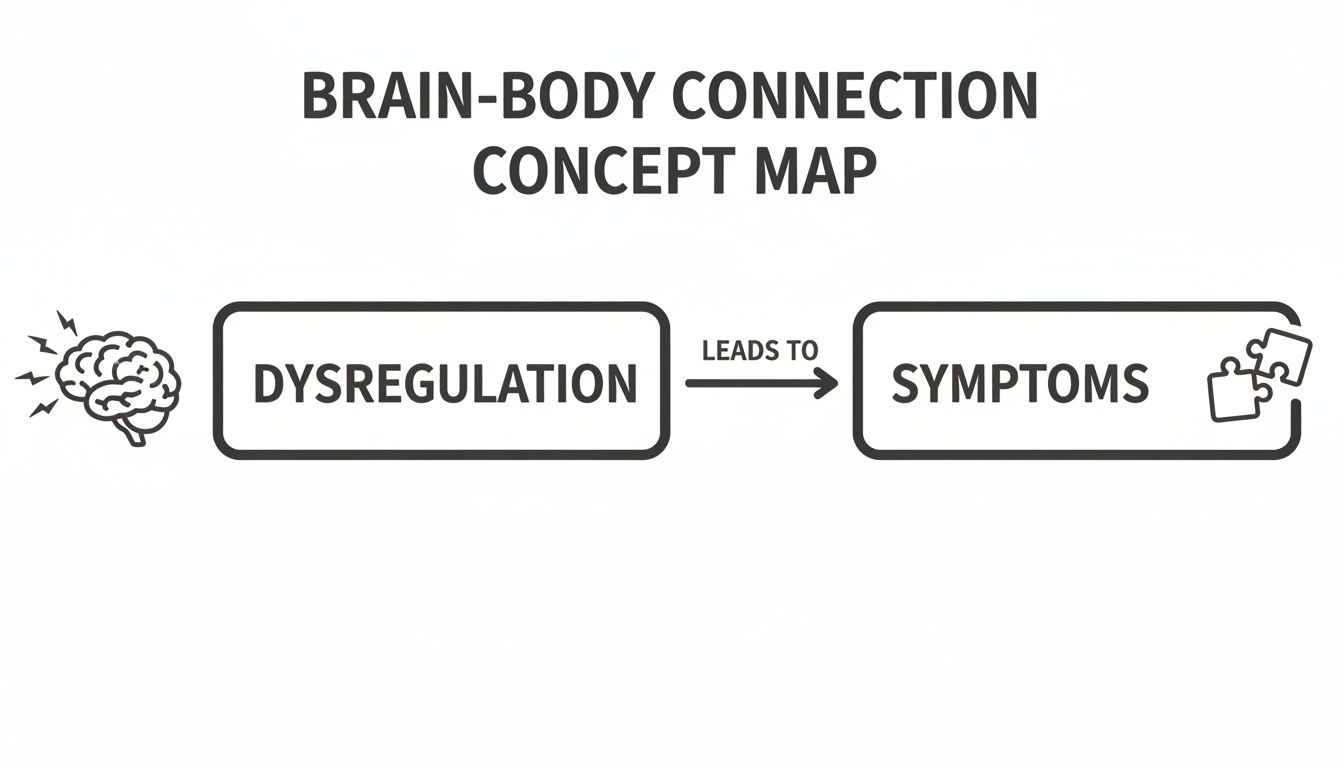
This map helps us see that many therapies, including dietary ones, are trying to calm the internal storm to improve what we see on the outside.
Here’s a quick overview of some of these therapies in a table format to help you compare them.
Overview of Common Alternative Therapies for Autism
| Therapy Type | How It's Thought to Work | Potential Focus Areas | Strength of Evidence |
|---|---|---|---|
| Sensory Integration Therapy | Helps the brain organize sensory input through play-based activities to improve neurological processing. | Sensory sensitivities, motor skills, emotional regulation, focus. | Mixed; widely used in OT but more high-quality research is needed. |
| Music Therapy | Engages multiple brain areas to build new neural pathways for communication and emotional expression. | Nonverbal communication, social skills, emotional regulation, anxiety. | Emerging; many positive case studies but needs more large-scale trials. |
| Animal-Assisted Therapy | Fosters connection and calmness through interaction with animals, reducing anxiety and promoting social skills. | Social communication, empathy, anxiety reduction, relationship building. | Promising but limited; most evidence is anecdotal or from small studies. |
| GFCF Diet | Removes gluten and casein to reduce potential gut inflammation and "leaky gut" that may affect brain function. | Behavioral issues, digestive problems, focus, sleep. | Controversial; some families report significant gains, but large studies show limited effects. |
| Nutritional Supplements | Addresses specific nutrient deficiencies (e.g., Omega-3s, Vitamin D) that may impact neurological health. | Overall brain function, mood, attention, sleep quality. | Varies by supplement; evidence is strongest for correcting known deficiencies. |
This table shows that while the theories behind these approaches are often compelling, the scientific backing can vary quite a bit.
Evaluating the Evidence and Safety
When you're looking into any of these therapies, it's so important to approach them with a critical yet open mind. Personal stories from other parents can be powerful and encouraging, but they aren't the same as high-quality scientific evidence.
A major scientific review from the University of Southampton analyzed 248 meta-analyses from over 200 clinical trials, which included more than 10,000 participants. The researchers found very little reliable evidence for many popular options, including probiotics, music therapy, animal-assisted interventions, and Vitamin D. A key takeaway was the major concern around safety, as many of these therapies haven't been properly evaluated for risks. You can read the full analysis of these autism therapy findings to get a deeper understanding of the research.
This doesn't automatically mean these therapies don't work for some children. It just means that large, well-designed studies haven't yet proven they are effective for the wider autistic population.
At the end of the day, deciding to try a complementary therapy is a personal choice. The key is to move forward with caution, keep your child's primary medical team in the loop, and always put safety first. By understanding both the potential benefits and the current limitations, you can build a supportive, well-rounded care plan that truly serves your child.
The Role of Neurologically-Focused Pediatric Chiropractic

Among the many alternative therapies for autism, one approach stands out by getting right to the root of the brain-body connection we’ve been talking about: neurologically-focused pediatric chiropractic.
This is a world away from the traditional chiropractic many people associate with back pain. The focus isn’t on "treating" autism, but on supporting the body’s master control system—the nervous system.
Think of your child’s nervous system like a radio trying to tune into a clear station. When there’s static on the line, the brain's messages get scrambled on their way to the body. Neurologically-focused care acts like a technician, gently fine-tuning the receiver to clear that static away.
The primary goal is simple: improve the communication superhighway between the brain and the body. By strengthening this connection, we help restore the body's innate ability to regulate itself, creating a much stronger foundation for all aspects of development.
A Focus on Neuro-Tonal Techniques
This type of care relies on gentle, specific, and low-force techniques designed for a child's developing body. There is absolutely no twisting, popping, or cracking. Instead, practitioners use precise contacts to help release stored tension within the nervous system.
This built-up tension, known in chiropractic as subluxation, is like "stuck stress." It can lock the body into that persistent fight-or-flight state. By gently releasing it, the nervous system can finally shift back toward a state of balance and ease—which is essential for healing, growth, and learning.
The core idea is that a more connected and less stressed nervous system creates a more regulated and resilient child. When the body isn't constantly fighting internal static, it frees up resources for social engagement, emotional processing, and skill development.
For so many families, this foundational support is a game-changer. It’s like improving the quality of the soil so the seeds planted by other therapies—like speech, OT, and ABA—have a much better chance to grow.
The Care Process From Start to Finish
Starting with neurologically-focused chiropractic is a detailed, data-driven process. This isn't a one-size-fits-all approach; it’s a journey personalized to your child’s unique nervous system patterns.
Here’s a look at what a typical care plan involves:
- In-Depth Consultation: It always starts with a real conversation about your child’s health history, your main concerns, and your family's goals. This helps us see the complete picture of your child's unique challenges and strengths.
- Insight Scans: This is where we gather objective data. These scans are completely non-invasive and use advanced technology to map out areas of stress and dysregulation in the nervous system. The scans give us a clear, visual map of where that "static" is coming from.
- Personalized Care Plan: Using the consultation and scan results, a customized care plan is created. It outlines the recommended frequency of adjustments and the specific areas needing support to help the nervous system work better.
- Gentle Adjustments: The adjustments are gentle and precise. We use specific neuro-tonal techniques to help the body release stored tension and improve communication along its nerve pathways.
This systematic process ensures care is both targeted and measurable. We track progress not just by observing behavioral changes, but by re-running the Insight Scans periodically to see objective improvements in how the nervous system is functioning. To get a deeper look at how this specifically supports kids on the spectrum, you can explore the connection between autism and chiropractic care in our detailed article.
Potential Areas of Improvement
By focusing on the root cause—nervous system dysregulation—this foundational care can lead to widespread positive effects. Parents often report seeing improvements in the very areas that are most challenging for children with autism.
Commonly Observed Changes:
- Better Sleep: A calmer nervous system can more easily shift into "rest-and-digest" mode, making it easier to fall asleep and stay asleep.
- Improved Emotional Regulation: With less internal stress, children may have fewer meltdowns and find it easier to manage their big emotions.
- Enhanced Sensory Processing: Clearing the static helps the brain better interpret sensory input, often reducing sensitivities.
- Increased Calmness and Focus: When the body isn't stuck on high alert, it opens the door for a greater sense of peace and better concentration.
- Better Gut Health: The nervous system is in charge of digestion. Improving its regulation can lead to better digestive function and comfort.
Neurologically-focused chiropractic care isn't a cure. It's a powerful tool that helps the body regulate and heal from the inside out. By supporting the nervous system, it empowers your child to better adapt to their world and get more out of all their other wonderful therapies.
How to Safely Evaluate and Integrate New Therapies
Deciding to explore new alternative therapies for autism is a huge step, one that’s often filled with a mix of hope and natural uncertainty. With so many different options out there, it’s easy to feel overwhelmed. Creating a safe, effective, and sustainable plan requires a thoughtful approach—not a frantic search for a magic bullet, but a careful process of building a supportive ecosystem around your child.
The key is to step into your role as a confident, informed advocate. That means knowing exactly what questions to ask, what red flags to watch out for, and how to gently weave new therapies into your existing care plan without causing more stress or disruption.
The world of autism support is growing incredibly fast. The global ASD treatment market is valued at USD 34.1 billion and is only projected to get bigger, with a surge of interest in approaches like music, art, and sensory integration therapies. This boom makes careful evaluation more critical than ever. One major review even urged caution, pointing to weak evidence and overlooked safety concerns for many emerging therapies. You can learn more about these market trends and findings to get the full picture.
Critical Questions for Any New Provider
Before you commit to anything, you need to have a direct, honest conversation with the provider. Their answers (or lack thereof) will tell you everything you need to know about their approach, their transparency, and whether they’re the right fit for your family.
Think of it like an interview. You are hiring them for the most important support team in the world: your child's.
Here are four essential questions to guide that conversation:
- What evidence supports this therapy for autism? Ask them for specific studies or data. A provider who is confident in their work should be able to clearly explain the science or theory behind their methods and be upfront about the current state of the research.
- What are the potential risks and side effects? Let’s be realistic—no therapy is completely without risk, even if that risk is just wasted time, money, and emotional energy. A trustworthy provider will be honest about any potential downsides.
- How will we measure progress? Vague promises of "improvement" simply aren't good enough. You need to know what specific, measurable goals will be set and how they’ll be tracked. This might involve data collection, checklists, or other objective assessments.
- How does this complement our existing care? A new therapy shouldn't operate in a silo. Ask them how they see their work fitting in with your child’s current ABA, speech, or occupational therapy. Are they willing to communicate and collaborate with your other providers?
These questions help you cut through the sales pitch and get right to the heart of a therapy’s true value and safety.
Spotting Red Flags
While you're looking for the right fit, it’s just as important to know what to run from. Certain claims and tactics are immediate red flags that should make you pause, dig deeper, or walk away entirely.
Be wary of anyone who offers a simple answer to a complex condition. True support for autism is a journey, not a quick fix, and it honors the individual, not a one-size-fits-all protocol.
Keep a sharp eye out for these warning signs:
- Promises of a "cure." Autism is a neurotype, a different way of being—not a disease to be cured. This kind of language is a massive red flag and shows a deep disrespect for the neurodiversity movement.
- Pressure to abandon conventional treatments. Complementary therapies should add to your child’s support system. They shouldn't replace proven methods without extremely careful consideration and guidance from your core medical team.
- Use of secretive or trademarked techniques. A provider should be able to explain what they do and why. If a technique is a closely guarded secret, you have no way to properly evaluate its safety or effectiveness.
- High-pressure sales tactics or demands for large upfront payments. Ethical care is a process, not a package deal sold with a sense of urgency.
Building a Collaborative Care Team
The ultimate goal is to create a care team that works in harmony. Picture each therapist—your pediatric chiropractor, ABA therapist, speech pathologist, and OT—as a specialist contributing their unique expertise to the same beautiful project: your child's well-being.
When these professionals communicate and collaborate, the results can be truly profound. For example, neurologically-focused chiropractic care can help calm and regulate the nervous system, which in turn might make a child more available and receptive during their ABA or speech sessions. You can learn more about creating this kind of framework by exploring our guide on integrative healthcare solutions.
Success lies in open communication and shared goals. By carefully vetting each new opportunity and fostering a true team-based approach, you can build a robust support system that truly honors your child's journey and helps them thrive.
Your Questions Answered About Autism Therapies
Diving into the world of alternative therapies for autism naturally brings up a lot of questions. As you weigh the options and figure out what’s best for your child, it’s completely normal to want clarity and reassurance. This section tackles some of the most common questions we hear from families, with direct, practical answers.
Our hope is to give you the confidence to move forward with a clear understanding, empowering you to make the best decisions for your child’s unique journey.
Is Neurologically-Focused Chiropractic Care Safe for Children with Autism?
Yes, absolutely. When performed by a certified pediatric chiropractor who specializes in this work, this form of care is exceptionally gentle and safe. The techniques we use are low-force and precise, with none of the “popping” or “cracking” sounds that many people associate with adult chiropractic.
Our team is specifically trained to create a calm, supportive, and predictable environment for children with sensory sensitivities and other developmental challenges. We work hard to make sure every single visit is a positive and empowering experience.
Should We Stop Therapies Like ABA or Speech Therapy?
Absolutely not. We view neurologically-focused chiropractic care as a foundational and complementary therapy. The goal is to improve how the nervous system functions, which in turn can help your child get even more out of their other existing therapies.
Think of it like improving the "soil" so the "seeds" planted by ABA, speech, and occupational therapy can grow stronger and healthier. We are huge advocates for open communication with your child's entire care team to create a truly collaborative support system.
How Long Does It Take to See Results from Alternative Therapies?
This really varies from child to child, depending on their specific challenges and the therapy being used. With neuro-tonal chiropractic care, some parents tell us they notice subtle shifts in their child’s sleep patterns, mood, or overall calmness within the first few weeks of starting a care plan.
However, true, lasting change is a process. It comes from consistent care that allows the nervous system to build new, healthier patterns over time. We don't guess—we use objective measures, like our Insight Scans, to track your child's progress at a neurological level.
How Do I Know if a Therapy Is Legitimate?
This is such a critical question for any parent to ask. When you're evaluating any of the alternative therapies for autism, look for providers who are transparent about their methods, the evidence supporting their work, and any potential risks involved.
Be very cautious of anyone who:
- Promises a "cure" for autism. This language is a massive red flag and shows a fundamental misunderstanding of what neurodiversity actually is.
- Demands large upfront payments without a clear, personalized plan. Ethical care is a journey, not a high-pressure package deal.
- Is unwilling to collaborate with your existing medical team. A legitimate provider will always welcome the opportunity to work as part of a comprehensive care team.
A trustworthy provider will always focus on supporting your child's development and well-being, setting clear and measurable goals along the way. Your intuition as a parent is powerful—if something doesn't feel right, it’s always okay to keep looking.
At First Steps Chiropractic, we are committed to providing transparent, data-driven, and compassionate care for your family. If you're ready to explore how neurologically-focused chiropractic can support your child's development, we invite you to book a complimentary consultation with our team. Learn more and schedule your visit today at https://firststepschiropractic.com.