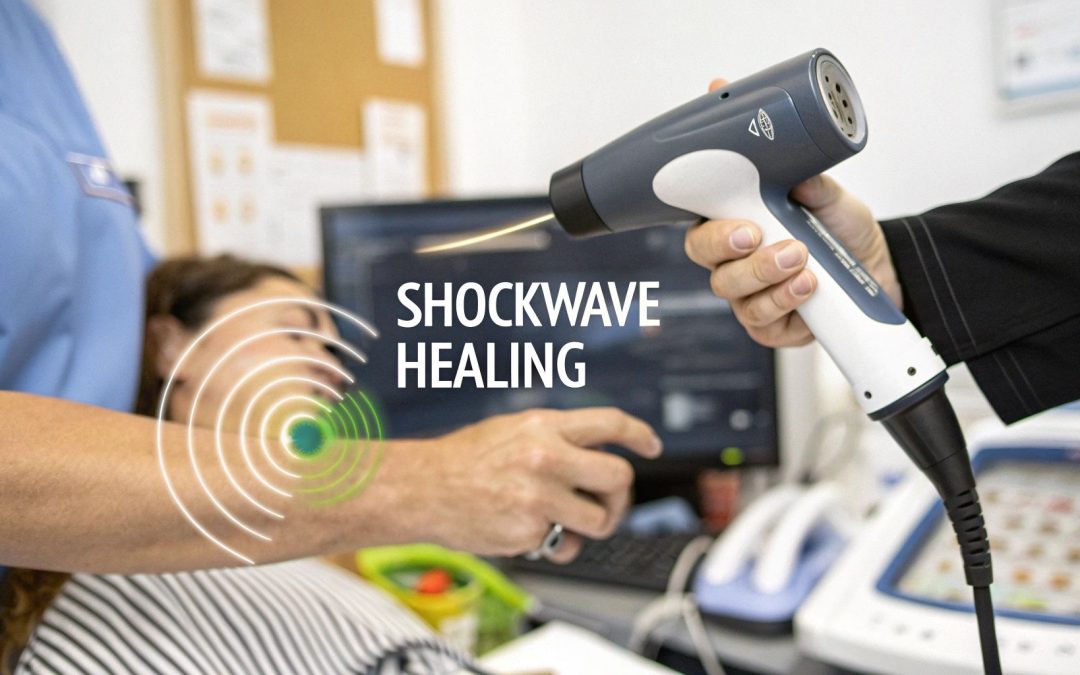
If you’re struggling with a stubborn tendon injury, you know how frustrating it can be. That nagging pain in your elbow, heel, or shoulder just won't quit. We’ve found that shockwave therapy for tendonitis is a game-changing, non-invasive treatment that taps into your body's own powerful healing mechanisms. Instead of just quieting the pain with injections or jumping to surgery, this approach gets to the root of the problem, restarting the stalled repair process in your tissues to create lasting relief.
A Modern Solution for Chronic Tendon Pain
When you hear "tendonitis," the first thing that probably comes to mind is inflammation. For years, we all assumed that swelling was the main villain behind chronic tendon pain. But as our understanding has grown, we've learned that for many long-term issues, the problem isn't really inflammation at all. It's a condition called tendinosis.
Think of a healthy tendon like a strong, tightly woven rope. In tendinosis, that rope has become frayed, disorganized, and weak from overuse. Your body's natural healing process tried to fix it, but somewhere along the way, it just gave up and the project stalled. This is exactly why rest and ice only seem to offer a temporary fix—they don't do anything to rebuild the damaged tissue itself.
Reviving Your Body's Repair Crew
This is where shockwave therapy comes in. Imagine sending a specialized crew to kickstart a construction project that’s been abandoned halfway through. That's essentially what this treatment, known clinically as Extracorporeal Shock Wave Therapy (ESWT), does inside your body. We direct high-energy acoustic waves to the injured area, creating a controlled, micro-level response that signals your body to get back to work.
Here’s how it helps get things moving again:
- It brings in fresh supplies: The acoustic waves trigger the formation of new blood vessels. This is a huge deal because it delivers a fresh supply of oxygen and nutrients right where they're needed most for healing.
- It wakes up the builders: The therapy activates fibroblasts—the cells that create new collagen—and even signals your body's own stem cells to come to the area and help with the rebuilding process.
- It dials down the pain: The waves also have a natural pain-relieving effect, helping to calm down the overactive nerve endings that have been sending constant pain signals to your brain.
The real beauty of shockwave therapy is that it doesn't introduce anything foreign into your body. Instead, it powerfully re-engages the incredible healing systems you already have. It's about breaking the cycle of chronic pain by prompting genuine tissue regeneration from the inside out.
Extracorporeal shock wave therapy has proven itself to be a reliable and effective option for tendinopathy, with studies showing success rates between 65% and 91%. It’s no surprise that it has become a standard treatment across Europe. We've seen that its effectiveness can depend on how advanced the tendon damage is, with research suggesting it’s best suited for more chronic stages of tendinopathy rather than fresh, acute injuries. You can explore the research behind these findings to see the clinical evidence for yourself.
How Shockwave Therapy Triggers Your Body's Natural Healing
To get a real sense of how shockwave therapy helps with tendonitis, let's think about a construction project that’s completely stalled out. The workers walked off the job, supplies stopped coming, and now the site just sits there, dormant. That's pretty much what happens inside a tendon with chronic tendinosis—the body's natural repair process has given up, leaving the tissue weak, disorganized, and painful.
Shockwave therapy is like a new project manager striding onto that site with a megaphone. It sends a powerful, targeted signal to restart the entire rebuilding process. Instead of just temporarily masking the symptoms with ice or injections, this treatment sends focused acoustic waves deep into the damaged tendon. These waves create a controlled, therapeutic jolt at the cellular level, effectively "waking up" the dormant cells and reminding them they have a job to do.
This visual helps map out how that initial inflammation can lead to the tendon breakdown that this therapy is designed to fix.
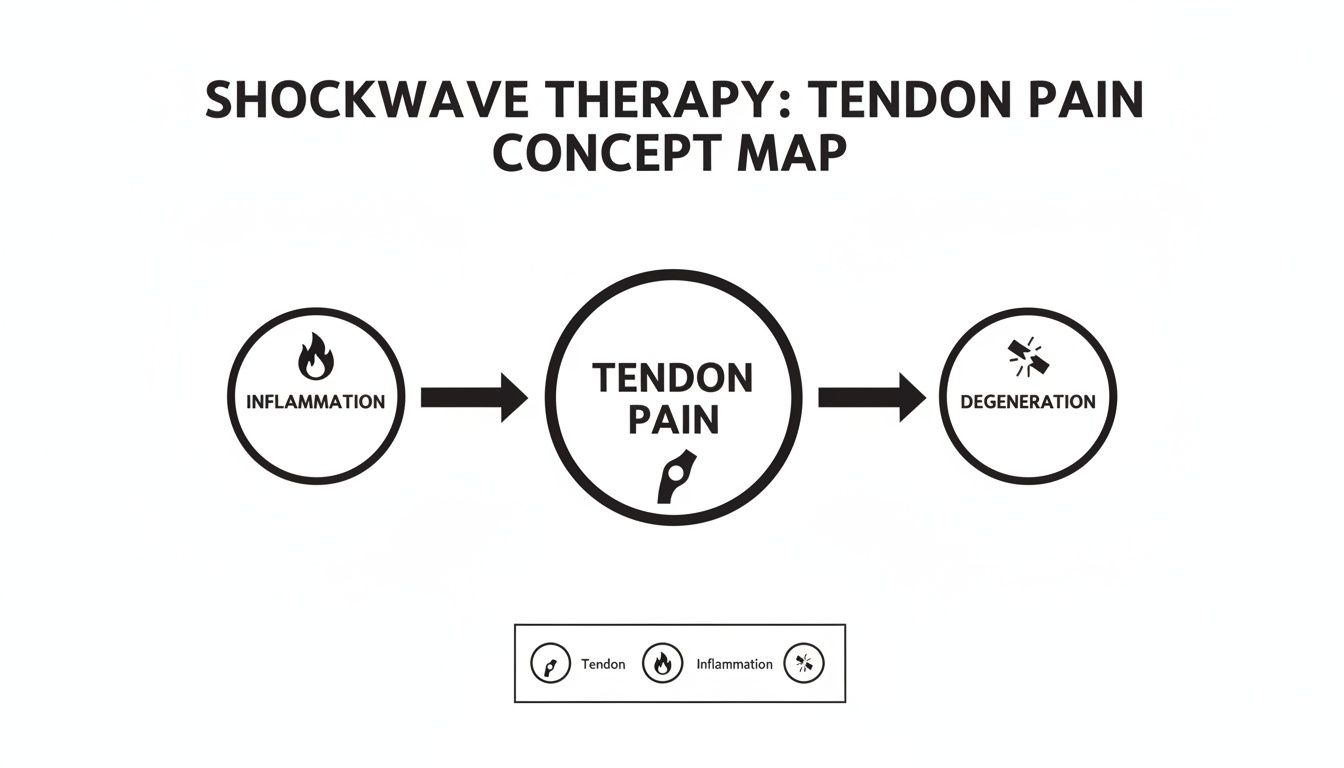
As you can see, the path from simple irritation to chronic pain involves a real structural breakdown of the tendon. That’s exactly where this targeted approach intervenes.
Igniting a Cascade of Biological Repair
The real magic of shockwave therapy isn't the waves themselves, but the chain reaction they set off inside your body. That physical stimulus isn't just a random nudge; it triggers several specific, powerful healing mechanisms that work together to regenerate the tissue from the ground up. This process is known as mechanotransduction, where physical energy gets converted into biochemical signals that your cells understand.
One of the most important effects is neovascularization—a fancy word for the formation of new blood vessels. Tendons are notoriously slow healers because they have a poor blood supply to begin with. The acoustic waves stimulate the growth of new capillaries, essentially building new supply lines right into the injured area. This fresh blood flow is critical because it delivers the oxygen and nutrients needed for rebuilding strong, healthy tissue.
It also prompts the release of some key biochemicals that kick healing into high gear.
- Growth Factors: The therapy stimulates the production of vital signaling molecules like Vascular Endothelial Growth Factor (VEGF), which is a key player in forming those new blood vessels.
- Nitric Oxide: This molecule is a powerhouse for modulating inflammation, improving circulation, and encouraging cell growth.
- Substance P: While we often associate it with pain signals, this neurotransmitter also plays a role in healing. When modulated by shockwaves, it can help dial down chronic pain signals over time.
This powerful combination of better circulation and a surge of healing compounds creates the perfect environment for tissue regeneration to finally take hold.
The goal isn't just to calm down an irritated tendon. It’s to fundamentally change the cellular environment from one of stagnation and degeneration to one of active, organized repair and regeneration.
Mobilizing Your Body's Elite Repair Crew
Beyond improving blood flow and releasing growth factors, shockwave therapy activates your body's most powerful internal repair team: stem cells. The controlled micro-trauma created by the acoustic waves acts like a powerful homing beacon, signaling resident stem cells to migrate directly to the site of the injury.
Once they arrive on the scene, these remarkable cells can transform into the specific cell types needed to repair the tendon, like tenocytes, which are responsible for producing new collagen fibers. This cellular-level recruitment is what makes shockwave therapy for tendonitis a truly regenerative approach. It doesn't just put a patch on the problem; it helps your body build a stronger, more resilient tendon from the inside out.
This process ensures the new collagen fibers are laid down in an organized, parallel pattern—like a brand-new, sturdy rope—instead of the tangled, weak scar tissue that defines tendinosis. By restarting and guiding this natural process, shockwave therapy offers a path to lasting relief and restored function, helping you finally move past chronic pain without needing invasive procedures.
What To Expect During Your Shockwave Therapy Session
Walking into any new therapy appointment can come with a bit of uncertainty. We get it. But a shockwave therapy for tendonitis session is actually a very straightforward and collaborative process. Knowing exactly what happens from the moment you walk in helps you feel prepared and confident.
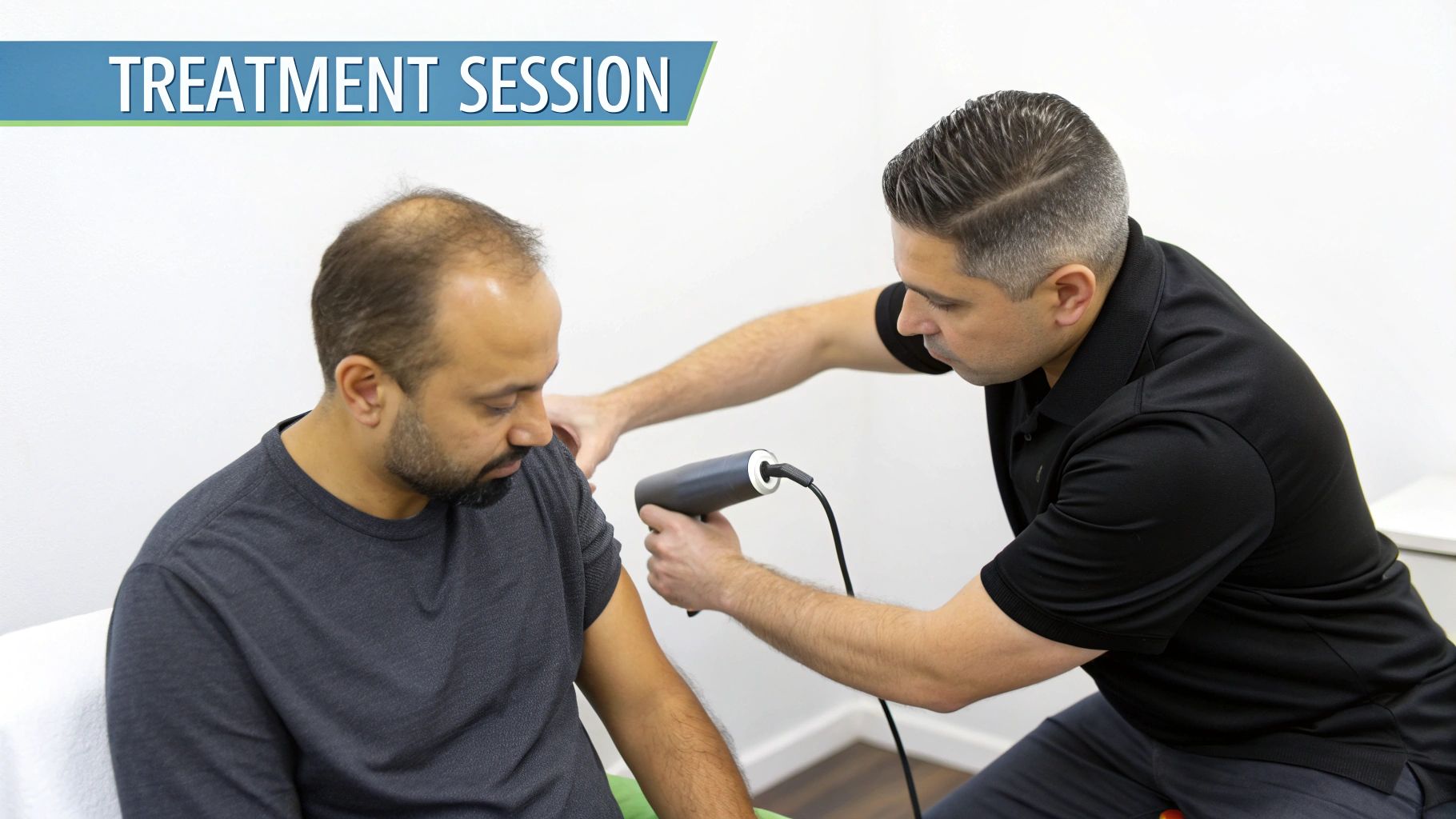
We always start with a quick chat. It's our chance to check in on how you've been feeling since your last visit and for you to point out the exact spots that are bothering you. This real-time feedback is crucial for us to deliver a targeted, effective treatment every single time.
The Treatment Process Step-By-Step
Once you're settled and comfortable, the process itself is simple and direct.
- Locating the Target Area: First, your practitioner will gently feel around the area to pinpoint the most sensitive spots in the damaged tendon. This hands-on step ensures the acoustic waves go precisely where your body needs them most.
- Applying the Gel: Next, we'll apply a thin layer of water-based gel to your skin over the treatment area. This gel is important—it acts as a conductor, making sure the sound waves are transmitted smoothly from the applicator deep into your tissues.
- Beginning the Therapy: Your practitioner will then place the handheld applicator on the targeted spot and start the treatment. You’ll hear a repetitive clicking sound and feel a distinct pulsing sensation as the acoustic waves get to work.
Most people describe the feeling as a strong, deep pulse, not a sharp pain. The intensity is completely adjustable, and we’ll be communicating with you the entire time to make sure the sensation is therapeutic but never uncomfortable.
A typical shockwave therapy for tendonitis session is surprisingly quick, usually lasting just 10 to 15 minutes for each area we're treating. It’s easy to fit into even the busiest schedule.
Your Typical Treatment Plan and Timeline
Shockwave therapy isn't a one-and-done fix; it's a cumulative process. Each session builds on the last, stimulating your body’s own biological repair crews. Lasting results take time and consistency.
Think of it like planting a seed. The first session gets the seed in the ground, and the follow-up sessions are the water and sunlight that help it grow into strong, new tissue. The real changes happen as that new tissue matures.
A typical course of care looks like this:
- Frequency: We schedule sessions once per week. This gives your body enough time to respond to the stimulation and kickstart the healing process between visits.
- Duration: A full treatment plan usually involves 3 to 6 weekly sessions. The exact number really depends on how severe your tendonitis is and how long you've been dealing with it.
- Results Timeline: While some people feel a bit of relief after just one or two sessions, the most significant, lasting improvements tend to show up 6 to 12 weeks after you've finished your full treatment plan. This is the timeframe your body needs to fully build and mature that new, healthy tissue.
This structured approach is essential for stubborn conditions like rotator cuff tendonitis, where deep, targeted healing is a must. You can learn more about how we tackle complex shoulder injuries in our guide to rotator cuff injuries.
Best of all, there's no downtime. You can head right back to your daily activities after your appointment. We might just advise you to skip any high-impact exercise for a day or two to give the healing process an undisturbed head start.
Comparing Shockwave Therapy To Other Tendonitis Treatments
When you’re dealing with tendon pain that just won't quit, the sheer number of treatment options can feel overwhelming. It's tough to decide between physical therapy, injections, or more advanced procedures without a clear picture of what each one actually does.
The thing is, shockwave therapy for tendonitis stands apart from the crowd. Instead of just chasing symptoms, it gets to the root cause of the problem: tissue degeneration. Let’s break down how it stacks up against the other common treatments so you can see why a regenerative approach often delivers a much more lasting solution.
Shockwave Therapy Versus Corticosteroid Injections
For decades, corticosteroid injections have been the go-to for quick pain relief. They work by flooding the painful area with a powerful anti-inflammatory medication. While this can bring down inflammation and pain very quickly, the relief is often short-lived and comes with some serious strings attached.
-
Steroid Injections: These are all about suppressing inflammation. With repeated use, they can actually weaken the tendon tissue over time and do nothing to fix the underlying tissue breakdown that's causing the pain.
-
Shockwave Therapy: This is all about stimulating regeneration. It triggers your body's own natural healing mechanisms to rebuild and strengthen the damaged tendon, aiming for long-term health.
Think of it this way: a steroid shot is like silencing a fire alarm while the fire is still smoldering. Shockwave therapy is like rebuilding the faulty wiring so the alarm never has to go off in the first place.
This isn't just theory; clinical research backs it up. Study after study shows shockwave therapy outperforming conventional methods for all sorts of tendinopathies. In one key study, 55% of patients who received shockwave therapy reported good or excellent results. That's a huge jump from the 30% satisfaction rate in the group that got corticosteroid injections. You can read the full research about these findings to dive into the data yourself.
Physical Therapy and Its Role
Physical therapy (PT) is, and should be, a cornerstone of tendonitis treatment. For good reason! It uses targeted exercises, stretching, and hands-on techniques to strengthen supporting muscles, fix your biomechanics, and promote healing through controlled, therapeutic stress on the tendon. PT is absolutely essential for a full recovery.
But sometimes, when a tendon has been damaged for a long time and is stuck in a state of chronic degeneration (what we call tendinosis), exercise alone isn't enough to get the healing process restarted. That's where shockwave therapy becomes such a powerful partner to physical therapy.
- PT is fantastic for correcting movement patterns and rebuilding strength.
- Shockwave therapy is fantastic for kickstarting cellular repair in stagnant, damaged tissue.
The two work together beautifully. Shockwave therapy prepares the soil and plants the seeds for new tissue growth, while physical therapy provides the ongoing care—the water and sunlight—to help that new tissue grow strong and resilient.
Tendonitis Treatment Comparison
When you're weighing your options for chronic tendonitis, it helps to see everything side-by-side. Each approach has a different goal, from short-term relief to long-term repair. This table breaks down the most common treatments to help you understand where each one fits.
| Treatment | Mechanism | Invasiveness | Recovery Time | Best For |
|---|---|---|---|---|
| Shockwave Therapy | Stimulates cellular repair and tissue regeneration | Non-invasive | Minimal to none | Chronic, degenerative tendon conditions (tendinosis) that aren't healing |
| Corticosteroid Injection | Potent anti-inflammatory; suppresses symptoms | Minimally invasive | Immediate, but may require rest | Acute, severe inflammation for short-term pain relief |
| Physical Therapy | Strengthens muscles, improves biomechanics, promotes healing through exercise | Non-invasive | Gradual (weeks to months) | Correcting underlying mechanical issues and rebuilding functional strength |
| PRP Injections | Uses your own platelets to stimulate healing signals | Minimally invasive | A few days of rest, then gradual return | Tendon injuries where healing has stalled; a step up from conservative care |
| Surgery | Removes damaged tissue and repairs the tendon | Highly invasive | Long (months) | Severe, structural damage like significant tears when other options have failed |
Ultimately, choosing the right path depends on your specific diagnosis and long-term goals. While options like injections can provide a temporary fix, regenerative approaches like shockwave therapy aim to solve the problem for good.
Surgery: The Invasive Last Resort
In the most severe cases of tendonitis, where a tendon is badly damaged or even torn, surgery might seem like the only path forward. Surgical procedures involve cutting away the damaged tissue and physically repairing the tendon. While it can be necessary, it's a major decision with significant downsides.
- Invasiveness: Surgery means incisions, anesthesia, and the risk of infection.
- Recovery Time: You're looking at weeks, or even months, of downtime and intense rehabilitation.
- Cost: It's almost always the most expensive option.
Shockwave therapy provides a powerful, non-invasive alternative that can help a lot of people avoid going under the knife. By stimulating your body to heal itself, it bridges that critical gap between conservative care that isn't working anymore and an invasive procedure you'd rather avoid.
This approach is perfectly in line with other regenerative medicine techniques. To learn more about how the body can heal itself when given the right push, check out our guide on stem cell therapy for pain. When you choose a method that supports your body's built-in healing capacity, you're investing in a solution that is both effective and sustainable.
Our Integrated Approach To Lasting Relief
Effective treatment for tendonitis isn't just about zeroing in on a single painful spot. Real, lasting healing happens when your entire body is communicating correctly. At First Steps Chiropractic, we combine SoftWave tissue regeneration with our signature neurologically-focused chiropractic care. This creates an environment where your body isn't just able to heal—it's primed to do so.

Think of your nervous system as your body's internal internet. When the signal is strong and clear, healing messages get exactly where they need to go, instantly. But if there’s a misalignment in your spine—what we call a subluxation—it’s like having a spotty Wi-Fi connection. Communication slows, signals get dropped, and your body's ability to repair itself is seriously hindered.
Even the best localized treatment can't deliver its full potential if the underlying "network" is faulty. Our approach ensures those lines of communication are wide open first, setting the stage for SoftWave therapy to do its incredible work.
The Foundation of Neurologically-Focused Care
Before we even start SoftWave therapy, we need to make sure your nervous system is working without interference. A body that's out of alignment can create hidden roadblocks that prevent injuries from fully repairing. We use a precise five-step process to find and fix these issues, creating the ideal internal environment for healing to begin.
It all starts with a deep dive into your health history and goals. We then use advanced Insight Scans to get an objective, real-time look at your nervous system. These scans measure nerve activity and muscle tone along your spine, showing us exactly where stress and misalignments are disrupting communication.
From there, we perform a complete chiropractic exam to connect the scan data with what we’re seeing physically. This gives us the full picture we need to build your personalized care plan. You can learn more about how we blend different methods in our guide to integrative healthcare solutions.
Amplifying Healing With Precise Adjustments
With a clear map of your nervous system in hand, we use the Torque Release Technique (TRT). This isn't your typical chiropractic adjustment; it’s a gentle and incredibly specific method designed to correct subluxations with pinpoint precision, restoring proper nerve function. TRT doesn't involve the cracking or popping sounds many people expect.
By correcting these foundational misalignments first, we remove the neurological static that can impede healing. This ensures your body’s own repair signals are being sent and received loud and clear, dramatically enhancing the regenerative effects of SoftWave therapy.
This integrated system ensures we’re not just chasing symptoms in a sore tendon. We are getting to the root causes of dysfunction to support your body’s total healing capacity. It’s a comprehensive strategy that helps you recover from your current injury and build a more resilient foundation to prevent future problems.
Common Questions About Shockwave Therapy
Deciding on a new treatment is a big step, and it’s completely normal to have questions. We want you to feel confident and fully informed before starting your healing journey with us. This section tackles the most common questions we hear about shockwave therapy for tendonitis.
Our goal is to clear up any confusion, address your concerns, and give you the clarity you need to make the best decision for your health. Let’s dive in.
Is Shockwave Therapy Painful and Are There Side Effects?
This is usually the first thing people ask, and for good reason. Most patients describe the feeling of shockwave therapy not as sharp pain, but as a strong tapping or deep pulsing sensation. We always adjust the intensity of the acoustic waves to your personal comfort level. We'll be in constant communication throughout the session to make sure the treatment is both effective and completely tolerable for you.
One of the biggest pluses of this approach is the minimal side effects. After a session, you might notice some temporary redness or feel a bit of mild soreness in the treated area for a day or so. Many people say it feels similar to how you’d feel after a deep tissue massage.
Because the treatment is non-invasive, your skin is never broken. This pretty much eliminates the risk of infection that comes with injections or surgery, and it means you don't have to plan for a long recovery period. Your comfort and safety are always our top priorities.
How Many Sessions Will I Need To See Results?
Every treatment plan is built specifically for you. It depends on your condition, how severe it is, and how long you've been dealing with the pain. Shockwave therapy works by kickstarting your body's own biological repair mechanisms, and that regeneration process takes time.
A typical plan for chronic tendonitis usually involves:
- A series of 3 to 6 sessions.
- Sessions scheduled about one week apart.
This rhythm gives your body the time it needs to respond and get the healing cascade going between visits. While some people report feeling some initial relief after just one or two appointments, the real magic is in the cumulative effect. The most significant, lasting improvements in pain and function usually show up 6 to 12 weeks after your full treatment plan is complete. This timeline gives your body the necessary time to fully regenerate and strengthen the new, healthy tendon tissue.
Is This Treatment Covered By My Insurance?
Insurance can be confusing, and coverage for shockwave therapy really varies depending on your provider and plan. Even though it's a clinically proven and widely used treatment for many musculoskeletal issues, some insurance companies still have specific policies around it.
We firmly believe that financial concerns shouldn't stand in the way of getting excellent care. That’s why our team offers a complimentary benefits check to confirm your exact coverage before you even start treatment. We're committed to making care accessible and will walk you through all financial options upfront. This way, you have a clear picture of the investment in your long-term health, with no surprises down the road.
Who Is An Ideal Candidate For This Therapy?
Shockwave therapy is a fantastic option for people who have been battling chronic tendon conditions that just haven't gotten better with traditional methods like rest, ice, physical therapy, or stretching. It’s particularly effective for those dealing with stubborn issues who want to find a real solution that avoids steroid injections or surgery.
Some of the conditions that respond exceptionally well include:
- Plantar Fasciitis
- Achilles Tendonitis
- Tennis Elbow (Lateral Epicondylitis)
- Golfer's Elbow (Medial Epicondylitis)
- Rotator Cuff Tendonitis
- Patellar Tendonitis (Jumper's Knee)
That said, this treatment isn't for everyone. We don’t recommend shockwave therapy for pregnant women, individuals with pacemakers, those with active infections or tumors in the area, or people on certain blood-thinning medications. A thorough consultation and health history review with our team is the essential first step to determine if this advanced healing technology is the right fit for you. We will make sure it is the safest and most effective choice for your situation.
At First Steps Chiropractic, we’re dedicated to helping you move past chronic pain and get back to your active life. Our integrated approach combines advanced SoftWave therapy with neurologically-focused chiropractic care to get to the root cause of your condition and optimize your body's healing potential. If you're ready to explore a lasting solution for your tendonitis, we invite you to schedule a consultation with us today.