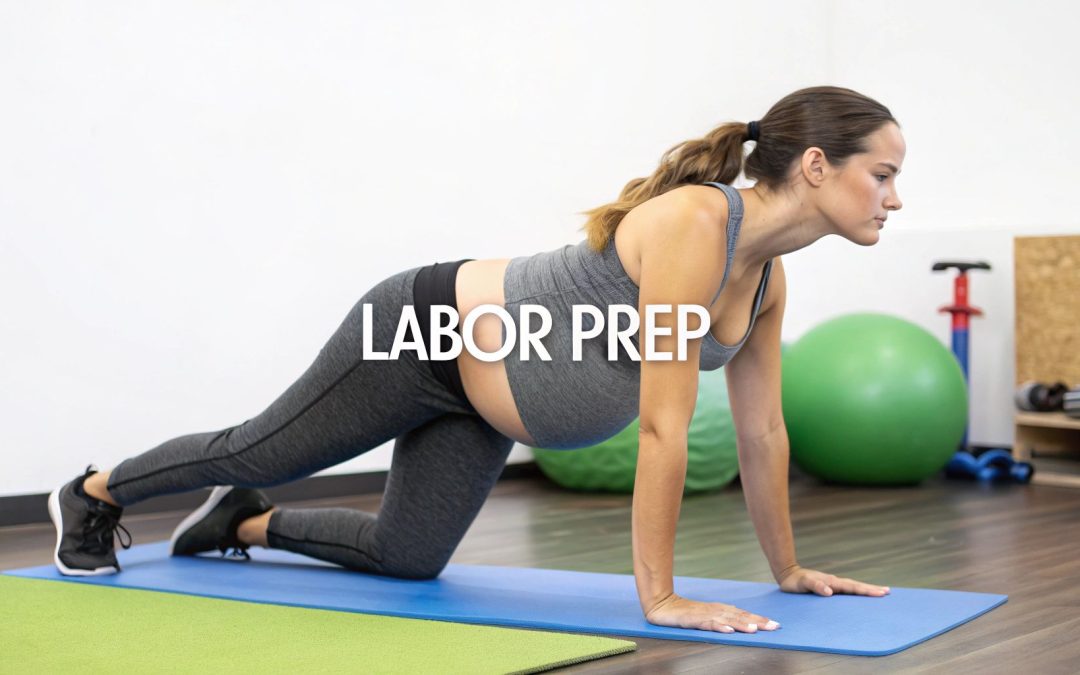
Preparing for labor is an athletic event that demands strength, stamina, and strategy. Just as an athlete trains for a marathon, you can train your body for the unique demands of childbirth. This guide moves beyond generic advice, offering a comprehensive roundup of essential exercises to prepare for labor.
We'll explore a curated selection of targeted movements and practices designed to enhance pelvic mobility, build core and lower body strength for endurance, and cultivate crucial relaxation techniques to support you through every stage. From the foundational power of Kegels and squatting to the dynamic benefits of birth ball exercises and prenatal yoga, each item in this list is a building block for a more empowered birth experience.
Furthermore, we will introduce how specialized prenatal chiropractic care can create the optimal foundation for all your preparation efforts. By focusing on pelvic alignment and nervous system regulation, this approach ensures your body is perfectly balanced and ready for the journey ahead. This article provides the practical, actionable blueprint you need to build physical resilience and confidence as you approach your birthing day.
1. Pelvic Floor Exercises (Kegel Exercises)
Pelvic floor exercises, commonly known as Kegels, are a foundational component of any routine featuring exercises to prepare for labor. These exercises involve intentionally contracting and relaxing the group of muscles that form a supportive sling across the base of your pelvis. This muscular hammock supports the uterus, bladder, and bowel, and strengthening it provides crucial benefits during pregnancy, childbirth, and postpartum recovery.
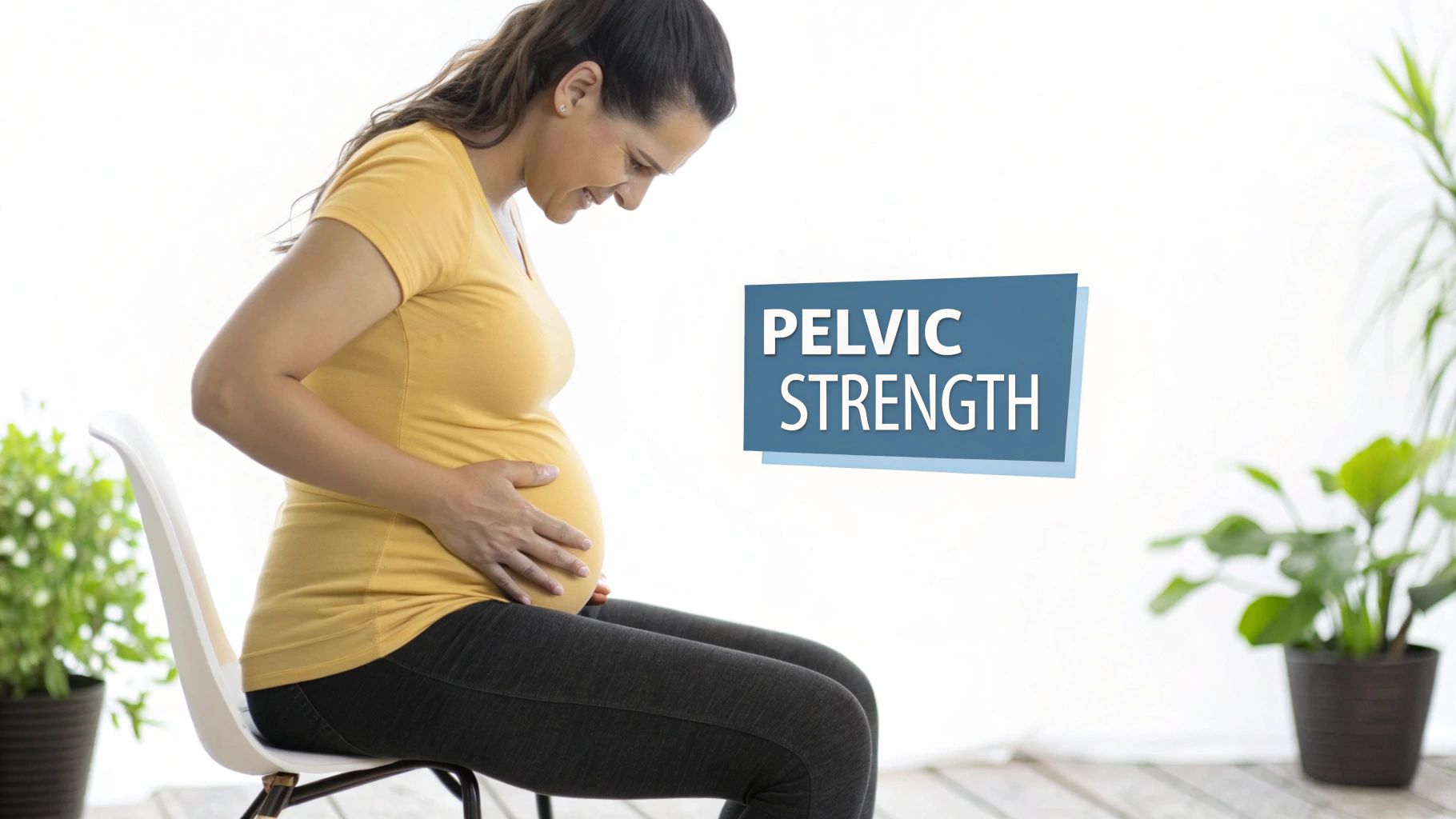
A strong yet flexible pelvic floor improves muscular control and endurance needed during the pushing stage of labor. It can also reduce the risk of perinatal tearing, prevent pregnancy-related urinary incontinence, and promote faster healing after delivery.
How to Perform Kegels Correctly
Proper form is essential to reap the benefits and avoid creating excess tension. The key is isolating the right muscles without engaging your abdomen, thighs, or buttocks.
- Identify the Muscles: The classic method for identification is to try stopping the flow of urine mid-stream. The muscles you use to do this are your pelvic floor muscles. Note: This is only for identification; do not make a habit of practicing Kegels while urinating, as it can interfere with bladder function.
- Contract and Relax: Once you've identified the muscles, find a comfortable position (sitting or lying down). Squeeze and lift the pelvic floor muscles, holding the contraction for 3 to 5 seconds.
- Breathe: Exhale during the contraction and inhale as you fully release the muscles for an equal amount of time. It's vital to achieve a complete release to prevent pelvic floor hypertonicity (over-tightness).
- Build a Routine: Aim for 3 sets of 10-15 repetitions daily. Consistency is more important than intensity.
Chiropractic Insight: Proper pelvic alignment, often achieved through techniques like the Webster Technique, ensures that the pelvic bones are not creating undue tension on the pelvic floor. This biomechanical balance allows Kegel exercises to be more effective, promoting optimal muscle function without restriction.
2. Walking and Stationary Movement
Often overlooked for its simplicity, walking is one of the most beneficial and accessible exercises to prepare for labor. This gentle, low-impact activity builds cardiovascular endurance and stamina, both of which are essential for navigating the physical demands of childbirth. Regular walking helps maintain muscle tone, improves circulation, and encourages the baby to settle into an optimal head-down position in the pelvis.
Staying active with walking helps manage weight gain, reduces back pain, and can even shorten labor time. The upright position and gentle swaying motion of walking uses gravity to its advantage, helping to open the pelvis and encourage cervical dilation, particularly during the early stages of labor.
How to Incorporate Walking Correctly
To maximize benefits and ensure safety, focus on consistency, proper posture, and listening to your body's signals. The goal is to build endurance without causing strain.
- Establish a Routine: Aim for the recommended 150 minutes of moderate-intensity activity per week, which can be broken down into 30-minute walks five days a week. Start slow and gradually increase your pace and duration.
- Maintain Good Posture: Walk with an upright posture, keeping your shoulders back and your gaze forward. This supports proper pelvic alignment and prevents strain on your lower back. Wear supportive, flat-soled shoes to maintain stability.
- Listen to Your Body: Pay close attention to how you feel. If you experience pain, dizziness, or excessive fatigue, slow down or stop. In the third trimester, stick to flat, even surfaces to reduce the risk of falling.
Chiropractic Insight: A well-aligned spine and pelvis are crucial for comfortable and effective walking during pregnancy. Chiropractic adjustments can correct misalignments that cause pelvic pain or sciatica, making movement easier. This ensures your walking routine effectively prepares your body for labor without adding unnecessary biomechanical stress. Learn more about safe exercises for pregnant women on firststepschiropractic.com.
3. Birth Ball Exercises and Pelvic Tilts (Stability Ball Activities & Pelvic Circles)
Integrating a birth ball (a large inflatable stability ball) into your routine is a dynamic and beneficial way to prepare for labor. These exercises engage your core, improve pelvic mobility, and can even encourage your baby into an optimal birth position. The gentle movements, such as bouncing and rocking, not only strengthen key muscles but also provide a comfortable way to stay active during pregnancy.
Combining birth ball activities with pelvic tilts and circles enhances flexibility in the hips and lower back, which can alleviate common pregnancy discomfort and create more space in the pelvis. This mobility is crucial for facilitating the baby's descent during labor and can be an effective tool for managing contraction pain. These movements are considered powerful yet gentle exercises to prepare for labor.
How to Perform Birth Ball Exercises Correctly
Proper form and the right equipment are key to getting the most out of these movements safely. Choosing the correct ball size is the first step; when seated, your hips should be slightly higher than or level with your knees, with your feet flat on the floor.
- Seated Pelvic Tilts & Circles: Sit upright on the ball and gently rock your pelvis forward and backward (tilts). Then, slowly make circles with your hips in one direction, then the other. These movements help loosen the sacroiliac joints.
- Gentle Bouncing: A soft, controlled bounce can help strengthen the pelvic floor and core while also providing gentle vestibular input for the baby.
- Figure-Eights: Trace a figure-eight pattern with your hips while seated on the ball. This movement engages the oblique muscles and further enhances pelvic mobility. It is also one of many breech baby turning exercises that may encourage optimal positioning.
- Build a Routine: Aim for 10-15 slow, controlled repetitions of each movement (tilts, circles, figure-eights) daily. Use gentle bouncing intermittently throughout the day or during labor to manage contractions.
Chiropractic Insight: A properly aligned pelvis provides the ideal foundation for birth ball exercises. Chiropractic adjustments can ensure the pelvic joints move freely and symmetrically, allowing movements like pelvic tilts and circles to be more effective at opening the pelvis and reducing biomechanical stress on the lower back and hips.
4. Squatting and Lunges
Squatting and lunges are powerful, functional exercises to prepare for labor, building essential strength in the legs, glutes, and core. These movements are particularly beneficial because they improve hip flexibility and help open the pelvic outlet, creating more space for the baby to descend during childbirth. By mimicking positions often used in active labor, they build muscular endurance needed for the marathon of birth.
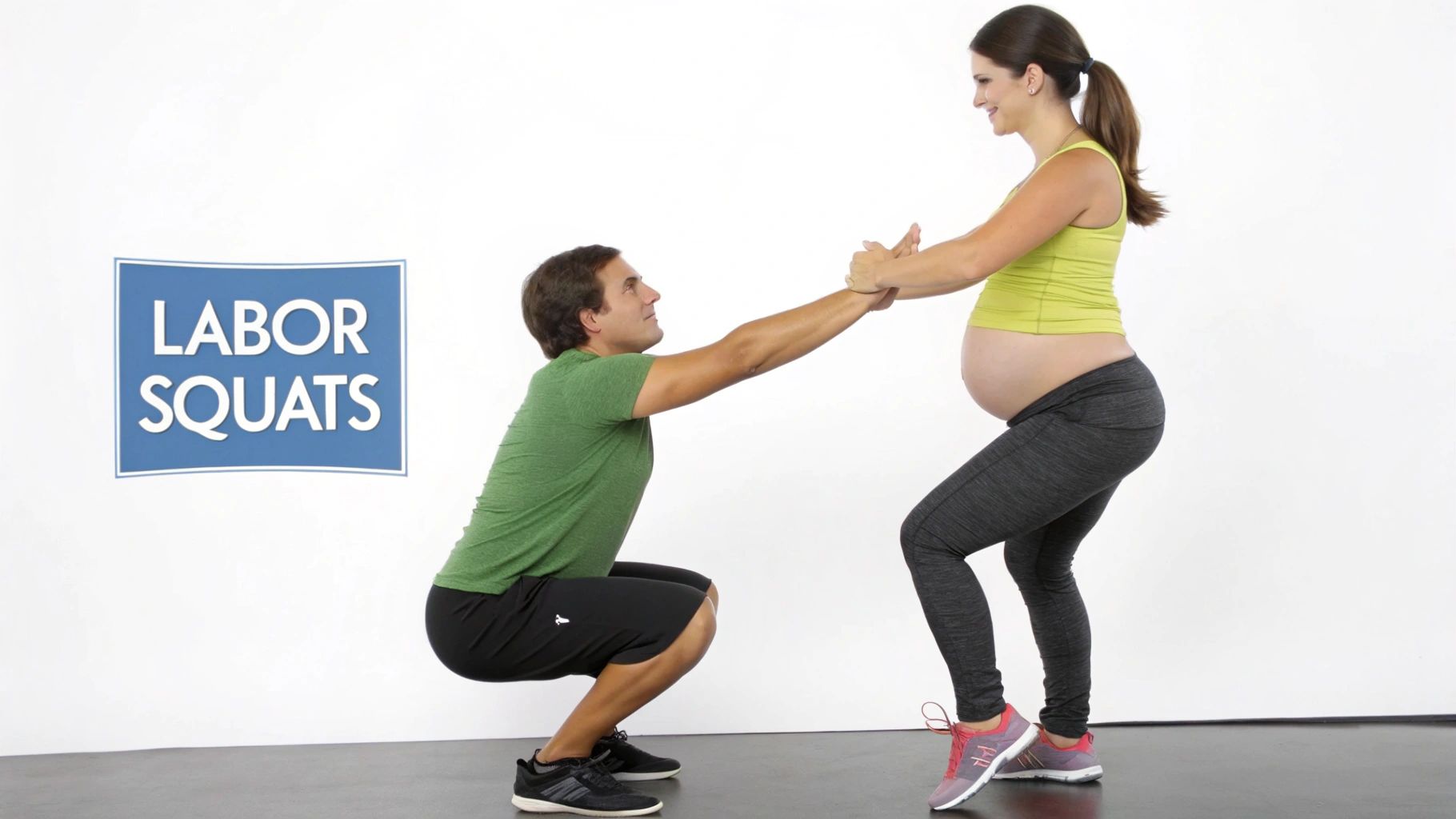
Incorporating squats and lunges into your routine strengthens the exact muscle groups that support your body during contractions and pushing. Regular practice can enhance your ability to find comfortable and effective laboring positions, potentially leading to a more efficient labor process.
How to Perform Squats and Lunges Safely
Correct form is crucial to protect your joints, especially as the hormone relaxin makes ligaments more pliable during pregnancy. The goal is controlled strength, not excessive strain.
- Master Your Form: For squats, keep your chest upright, shoulders back, and your weight primarily in your heels. Your knees should track in line with your toes, not cave inward. For lunges, ensure your front knee stays behind your toes and your torso remains vertical.
- Start with Support: Begin with modified versions like wall squats (sliding your back down a wall) or by holding onto a sturdy chair, countertop, or your partner for balance. This helps you focus on form without the risk of instability.
- Listen to Your Body: Never push through sharp pain. Muscle fatigue is normal, but joint pain is a signal to stop. Progress to deeper squats only as your strength and comfort allow, and avoid bouncing at the bottom of the movement.
- Build a Routine: Aim for 2-3 sets of 10-15 repetitions, performing the routine 2-3 times per week. Combine the movements with your breath, exhaling on the exertion (e.g., as you stand up from a squat) to maintain nervous system regulation.
Chiropractic Insight: For squats and lunges to be truly effective in opening the pelvis, the sacrum and iliac bones must move freely. Chiropractic adjustments can address any pelvic misalignments or sacral restrictions, ensuring that these exercises translate directly into improved pelvic mobility for labor, rather than placing stress on an already imbalanced structure.
5. Prenatal Yoga and Stretching
Prenatal yoga is a multifaceted practice that combines modified physical poses (asanas), intentional breathing techniques (pranayama), and mindfulness to holistically prepare both body and mind for the demands of labor. This specialized form of yoga improves flexibility in key areas like the hips and pelvis, strengthens important stabilizer muscles, and can even help encourage optimal fetal positioning for a smoother delivery.

Beyond the physical benefits, prenatal yoga activates the parasympathetic nervous system, which helps reduce stress, anxiety, and the perception of pain. The breathing and meditation skills learned in class are invaluable tools to use during contractions, promoting a sense of calm and control throughout the birthing process.
How to Practice Prenatal Yoga Safely
It is crucial to approach prenatal yoga with awareness and safety in mind. Always choose classes specifically designed for pregnancy and listen to your body, modifying poses as needed.
- Find a Certified Instructor: Seek out a class led by a Yoga Alliance certified prenatal instructor. These teachers are trained in the specific anatomical and physiological needs of pregnancy and can provide safe modifications.
- Focus on Key Poses: Incorporate hip-opening postures like Bound Angle Pose (Baddha Konasana) and gentle movements like Cat-Cow (Marjaryasana-Bitilasana) to increase pelvic mobility. Avoid deep twists, lying flat on your back for extended periods (especially after the first trimester), and intense abdominal work.
- Utilize Props: Generously use props like blocks, bolsters, and blankets. Supporting your body allows you to relax more deeply into stretches, creating space and comfort without strain.
- Practice Mindful Breathing: Master breathing techniques like Ujjayi breath. Practicing this calming, rhythmic breath regularly builds muscle memory, making it an accessible tool for managing the intensity of labor contractions.
Chiropractic Insight: A well-aligned spine and pelvis create a stable foundation for your yoga practice. Chiropractic adjustments can release restrictions in the sacrum and hips, allowing you to get more benefit from hip-opening poses and ensuring your body is biomechanically prepared for birth. This synergy makes your prenatal yoga practice even more effective.
6. Perineal Massage and Preparation
While not a traditional exercise, perineal massage is a hands-on preparatory technique that increases the elasticity of the tissues at the opening of the birth canal. The perineum is the area between the vagina and the anus, which stretches significantly during a vaginal birth. This gentle, manual stretching helps prepare these tissues to expand, potentially reducing the risk of tearing or the need for an episiotomy during delivery.
Regular massage familiarizes you with the sensation of stretching in this area, which can help you relax into the feeling during labor rather than tensing against it. It is one of the most direct exercises to prepare for labor that specifically targets the tissues involved in the final stages of childbirth, promoting tissue flexibility and reducing perineal trauma.
How to Perform Perineal Massage
This practice is typically started around 34-35 weeks of pregnancy. Consistency is key to improving tissue pliability.
- Prepare for Comfort: Find a comfortable, semi-reclined position with your back supported by pillows. A warm bath beforehand can help relax the muscles. Ensure your hands are clean and nails are trimmed.
- Use a Lubricant: Apply a natural, food-grade oil like sweet almond, coconut, or vitamin E oil to your fingers and the perineal area to reduce friction.
- Apply Gentle Pressure: Insert one or both thumbs about 1 to 1.5 inches into your vagina. Press down toward the rectum and to the sides, applying gentle, sustained pressure until you feel a slight stretching or tingling sensation.
- Massage the Area: Hold this stretch for about 60 seconds. Then, gently massage the lower half of the vaginal opening in a U-shaped motion for 3-5 minutes. Focus on breathing deeply and consciously relaxing your pelvic floor muscles throughout the massage. Aim to do this a few times per week.
Chiropractic Insight: A well-aligned pelvis helps reduce unnecessary tension on the surrounding soft tissues, including the perineum. When your nervous system is calm and regulated through chiropractic care, your body is better able to relax into practices like perineal massage, making it a more effective and comfortable part of your labor preparation routine.
7. Swimming and Water-Based Exercise
Swimming and other water-based activities are exceptional exercises to prepare for labor, offering a unique, low-impact environment for expectant mothers. The natural buoyancy of water supports your body weight, relieving pressure on the spine and joints, which is especially beneficial as your belly grows. This weightless feeling allows for a greater range of motion and makes movement feel easier and more comfortable.
Engaging in aquatic exercise helps maintain cardiovascular fitness, builds muscular endurance needed for childbirth, and can reduce common pregnancy discomforts like back pain and swelling. The gentle resistance of the water provides a full-body workout without the strain of land-based exercises, promoting both strength and relaxation.
How to Perform Water-Based Exercise Correctly
Safety and comfort are paramount when incorporating aquatic workouts into your prenatal routine. The goal is to build stamina and strength without overexerting yourself.
- Choose the Right Activity: Options range from lap swimming and prenatal water aerobics to simply walking or jogging in the shallow end. Activities like deep-water jogging with a flotation belt can also be highly effective.
- Maintain a Safe Pace: Aim for the American College of Obstetricians and Gynecologists (ACOG) recommendation of 150 minutes of moderate-intensity activity per week. This could look like 30 minutes, 5 days a week. Listen to your body and take breaks as needed.
- Stay Hydrated and Cool: Even though you are in the water, you are still sweating. Drink plenty of water before, during, and after your session. Ensure the pool temperature is comfortable and safe, typically between 82-86°F.
- Practice Good Form: Use proper swimming strokes to avoid straining your neck or back. In aerobics classes, follow the instructor's guidance for modifications that accommodate your changing body. Floating on your back with support can be a great way to decompress the spine.
Chiropractic Insight: The buoyancy of water complements the goals of prenatal chiropractic care beautifully. When the pelvis is properly aligned through adjustments, water-based exercises can help strengthen the supporting muscles (like the glutes and core) more symmetrically and without the compressive forces of gravity. This combination enhances pelvic stability and function, creating an ideal environment for birth.
8. Chiropractic Optimization: Webster Technique and Neuro-Tonal Adjustments
While not a traditional exercise, incorporating specialized chiropractic care is a proactive strategy to optimize your body's biomechanics for a smoother labor and delivery. The Webster Technique is a specific chiropractic analysis and adjustment that aims to reduce nervous system stress, balance pelvic muscles and ligaments, and optimize the maternal pelvis's function. This creates an environment that can support an easier, more efficient labor process.
This approach focuses on addressing sacroiliac joint misalignments and tension in the round ligaments. By removing these structural and neurological barriers, the technique helps ensure the pelvis can move and open as intended during childbirth, potentially facilitating optimal fetal positioning. It complements physical exercises by ensuring the underlying framework of the pelvis is properly aligned and functional.
How to Implement Chiropractic Optimization
Integrating chiropractic care is about finding a qualified provider and establishing a consistent routine. It works in synergy with the other exercises to prepare for labor by ensuring your body's foundation is sound.
- Find a Certified Provider: Seek a chiropractor certified in the Webster Technique, often indicated by a "CACCP" or "DACCP" credential from the International Chiropractic Pediatric Association (ICPA). Providers with a PX (Pediatric Experience) certification specialize in family and prenatal care.
- Establish a Schedule: It is often recommended to begin care early in pregnancy. A typical schedule might involve weekly or bi-weekly adjustments to adapt to your body's changes throughout each trimester.
- Combine with Movement: A chiropractor can provide guidance on which exercises, like Cat-Cow or birth ball movements, will best complement your adjustments. Proper alignment allows these exercises to be more effective.
- Utilize Technology: Some clinics use tools like Insight Scans to objectively measure nervous system function, helping to identify areas of stress that could interfere with labor readiness and track progress over time.
Chiropractic Insight: The goal of the Webster Technique is not to turn a breech baby but to restore proper pelvic and neurological function. When the mother's pelvis is balanced and nervous system stress is reduced, the baby has a greater opportunity to move into the optimal head-down position for birth on its own. Learn more about the specifics of the Webster Technique.
8-Item Comparison: Exercises to Prepare for Labor
| Method | 🔄 Implementation complexity | ⚡ Resources & efficiency | 📊 Expected outcomes | ⭐ Key advantages | 💡 Ideal use cases |
|---|---|---|---|---|---|
| Pelvic Floor Exercises (Kegel Exercises) | Low–Moderate — simple but technique-dependent | Minimal equipment; short daily sessions; highly time‑efficient | Improves continence, pelvic endurance, may shorten second stage | Non‑invasive, portable, evidence‑supported | Daily pregnancy/postpartum pelvic control and recovery; combine with PT or biofeedback |
| Walking and Stationary Movement | Low — easy to adopt and scale | Minimal gear (supportive shoes); scalable duration; efficient cardio | Better stamina, mood, fetal positioning, healthy weight management | Accessible, low injury risk, mood/endorphin benefits | All trimesters for general fitness and active labor stamina |
| Birth Ball Exercises & Pelvic Tilts | Moderate — requires balance and instruction | Low cost (ball); needs space; moderate learning curve | Enhances pelvic mobility, fetal positioning, labor comfort | Engages core + pelvic floor; versatile in labor | Prenatal classes, pelvic mobility work, comfort during contractions |
| Squatting and Lunges | Moderate — form critical to avoid strain | No/low equipment; physically demanding; builds strength efficiently | Improves leg/glute strength, pelvic opening, endurance for pushing | Functional strength for labor positions; easily modified | Strength training for active labor; 2–3x/week practice with support as needed |
| Prenatal Yoga & Stretching | Moderate — instructor recommended for safety | Low equipment; time commitment (classes) but high mind‑body payoff | Reduces anxiety/pain perception, improves breathing and flexibility | Strong mind‑body and breathing skills for labor | Stress reduction, breathing practice, hip opening and relaxation |
| Perineal Massage & Preparation | Low–Moderate — technique and comfort required | Minimal tools (oil); short daily practice; partner‑friendly | Reduces tearing/episiotomy risk; faster perineal recovery | Evidence‑supported; increases tissue elasticity and awareness | Late‑pregnancy tissue prep (~34 wks+); partner involvement encouraged |
| Swimming & Water‑Based Exercise | Low — access dependent but easy movement | Requires pool access and safe temperature; low joint stress; very comfortable late pregnancy | Maintains cardio fitness, reduces joint pain/swelling, promotes relaxation | Full‑body, low‑impact exercise safe in late pregnancy | Late pregnancy mobility, joint pain relief, low‑impact cardio |
| Chiropractic Optimization (Webster & Neuro‑Tonal) | Moderate–High — needs certified provider and repeated visits | Requires clinic visits, scans; integrates with other modalities | Improves pelvic alignment, reduces pain, may enhance fetal positioning | Addresses structural & neurological barriers; may improve labor outcomes | Pelvic misalignment, sacroiliac pain, to augment exercise-based prep |
Your Integrated Path to a Confident Birth Experience
Navigating the journey toward childbirth is an act of profound physical and mental preparation. As we've explored, creating a comprehensive routine of exercises to prepare for labor is not about checking off a list of movements. Instead, it’s about building a holistic, integrated system where each element works in concert to optimize your body’s innate ability to give birth. Think of it as a pyramid: foundational stability allows for greater strength, which in turn supports enhanced mobility and, ultimately, a more confident and empowered labor experience.
Weaving the Threads of Preparation Together
The true power of this guide lies in understanding how each exercise complements the others. You've learned how Pelvic Floor Exercises (Kegels) create a responsive, strong foundation, while dynamic movements like Walking and Birth Ball Exercises encourage crucial pelvic mobility. Strengthening exercises like Squatting and Lunges build the endurance your muscles will need, and Prenatal Yoga provides the essential flexibility and relaxation that allows your body to open and release.
However, the effectiveness of these physical practices is directly tied to the underlying structure and function of your body. If your pelvis is misaligned or your nervous system is carrying excess tension, your efforts may not yield their full potential. This is the critical link that transforms a good preparation plan into a great one.
Key Takeaway: A successful labor preparation strategy isn't just a collection of exercises; it's an interconnected system. Strength, mobility, and relaxation are all amplified when your body's foundational alignment and nervous system function are properly supported.
The Chiropractic Advantage: Unlocking Your Body's Potential
Integrating neurologically-focused chiropractic care, specifically the Webster Technique, serves as the catalyst that elevates your entire preparation. By ensuring your pelvis is balanced and your nervous system is calm and adaptable, chiropractic care creates the ideal internal environment for labor to progress efficiently. It ensures that the "road" is clear for your baby to navigate the birth canal, allowing the physical work you've done through exercise to be as effective as possible.
This synergistic approach addresses the complete picture:
- Structural Integrity: Chiropractic adjustments ensure your pelvis is aligned, creating optimal space for your baby.
- Nervous System Regulation: Gentle, neuro-tonal adjustments help shift your body from a state of stress ("fight or flight") to one of rest and growth, which is essential for labor.
- Enhanced Physical Training: A balanced frame allows you to perform your prenatal exercises with better form and greater benefit, reducing the risk of strain.
By combining consistent, targeted exercises with professional chiropractic support, you are not just passively waiting for labor; you are actively shaping your birth experience. You are building resilience, cultivating confidence, and empowering your body to perform the incredible task it was designed for. This proactive, integrated path is your key to transitioning from hoping for a good birth to intentionally preparing for one.
Ready to ensure your body’s foundation is perfectly aligned for your birth journey? The PX Certified team at First Steps Chiropractic specializes in the Webster Technique and nervous system-focused care to support mothers through every stage of pregnancy. Schedule your complimentary consultation today at First Steps Chiropractic to discover how we can help you build the ultimate foundation for a confident and empowered birth experience.