
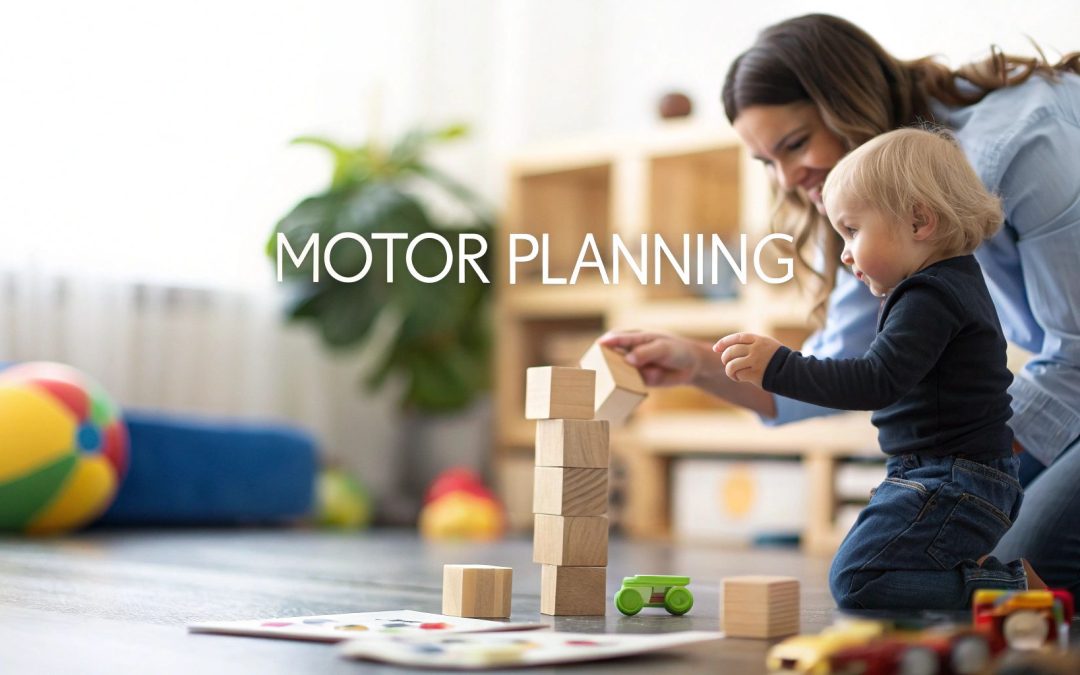
Motor planning, also called praxis, is your brain's internal GPS for learning and carrying out any new physical task. It’s a lightning-fast, three-step mental process: coming up with an idea, figuring out the steps, and then telling the body how to make it happen. This invisible process is what lets a child learn everything from stacking blocks for the first time to mastering how to ride a bike.
Unpacking Your Child's Internal Blueprint for Movement
Imagine your child wants to build a LEGO tower. It looks simple from the outside, but their brain is running a complex program behind the scenes. That program is motor planning, and it’s far less about muscle strength and more about mental organization. Think of it as the essential bridge between thinking about doing something and actually doing it.
This whole process happens in the blink of an eye. Neuroscientists have discovered that motor planning is the brain's rapid-fire rehearsal for making movements smooth and accurate. It all happens in the split second before a physical action even starts. In fact, the entire mental blueprint can be created in just a fraction of the 200-300 milliseconds it takes to react to something. You can read the full research about this fascinating neurological process for a deeper dive.
The Three Core Stages of Motor Planning
To really get what motor planning is, it helps to break it down into three distinct but connected stages. If a child struggles with any one of these stages, learning a new task can feel frustrating and completely overwhelming.
-
Ideation (The "What"): This is the creative spark. It’s the ability to even conceptualize a goal, like thinking, "I want to kick that ball over there." A child who has trouble with ideation might not know what to do with a new toy or seem stuck in the same repetitive play patterns.
-
Organization (The "How"): Once the idea is there, the brain has to map out a step-by-step plan. For kicking that ball, the sequence involves running toward it, planting one foot for balance, swinging the other leg back, and then making contact.
-
Execution (The "Do"): This is the final step, where the brain sends the signals down to the muscles to actually perform the planned sequence. This is where physical coordination comes into play, turning that mental blueprint into a physical reality.
Motor planning is fundamentally about novelty. It’s the brain's strategy for navigating unfamiliar physical challenges. Once a task like tying shoes is mastered, it becomes an automatic motor skill, no longer requiring conscious planning.
Why Motor Planning Is More Than Just Movement
It's easy to mistake motor planning challenges for simple clumsiness or a lack of coordination. The root issue, however, is often neurological. A child’s brain might be struggling to process the sensory information it needs to create an effective plan in the first place.
Understanding the link between motor planning and the wider sensory system is key. You can explore this connection further in our detailed guide on what is sensory processing.
The table below breaks down how these stages work for a common childhood task, making it a bit easier to visualize.
The Three Stages of Motor Planning
| Stage | What It Means | Simple Example (Putting on a Shirt) |
|---|---|---|
| Ideation | Conceptualizing the goal. | The child thinks, "I need to put my shirt on for school." |
| Organization | Sequencing the required actions. | They figure out they must grab the shirt, find the head hole, then find the arm holes. |
| Execution | Performing the physical task. | They successfully pull the shirt over their head and push their arms through the sleeves. |
Ultimately, strong motor planning skills build a foundation for independence, confidence, and a love of learning. When a child's brain can efficiently create and execute these internal blueprints, they are far better equipped to explore their world, master new skills, and truly thrive.
How Your Child's Brain Plans a Movement
Behind every single move your child makes—whether it's reaching for a toy or learning to pedal a bike—is an incredible neurological process. Think of your child’s brain as the conductor of a complex orchestra, with the different parts of the nervous system as the musicians. For any movement to come out smooth and coordinated, that conductor needs to communicate flawlessly with every single musician, ensuring they all play in perfect harmony.
When it comes to motor planning, this "orchestra" has a few star players. The motor cortex is like the lead violinist, initiating the command to move. The cerebellum acts as the rhythm section, fine-tuning coordination and timing. All the while, the sensory systems—vision, touch, and proprioception (the body's internal sense of position)—provide the sheet music, giving the brain essential feedback about the world around it.
This constant, lightning-fast communication between the brain and body is the very essence of motor planning. It's a seamless conversation that lets a child dream up a goal, organize the steps, and then physically carry out the movement.
The Neurological Blueprint for Action
So, what does this process actually look like inside the nervous system? It all starts with an idea, which sets off a cascade of neural signals. Sensory information floods the brain, painting a clear picture of the situation: where the body is in space, how far away the target is, and what obstacles might be in the way.
Using all this data, the brain creates a "blueprint" for the movement. This isn't just one simple command, like "pick up the ball." It's a highly detailed plan that maps out which muscles need to fire, in what order, with exactly how much force, and for precisely how long. It’s an incredibly sophisticated calculation that happens in a split second.
This infographic breaks down the core stages of this process.
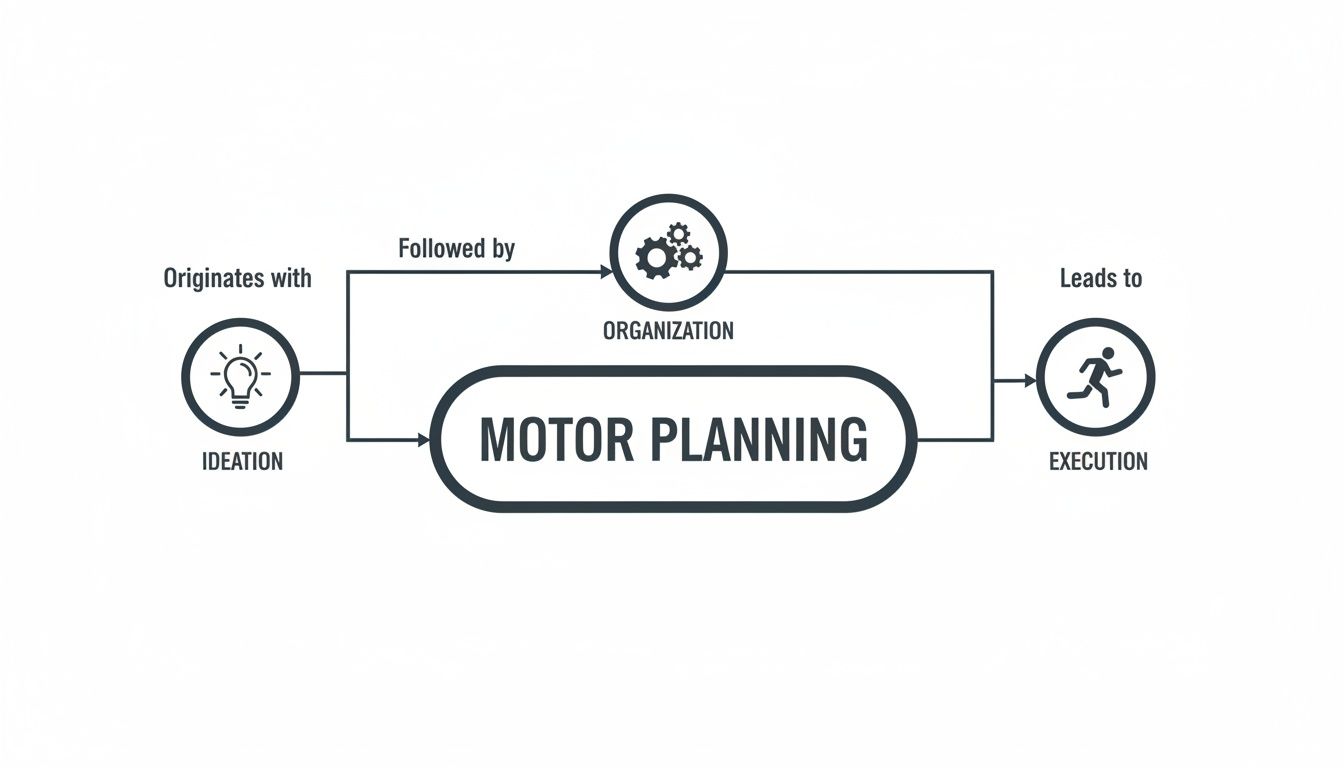
As you can see, motor planning flows from a mental concept (ideation), to a strategic sequence (organization), and finally to a physical action (execution).
When Communication Breaks Down
This whole intricate network depends on a clear and balanced nervous system. But physical, chemical, or emotional stress can create interference—think of it like static on a phone line. This neurological stress disrupts the signals between the brain and body, making it incredibly hard for the "conductor" to lead the "orchestra."
When that happens, a child might struggle with one or more parts of the motor planning process:
- Ideation Issues: The child may have trouble even coming up with a new idea for how to play with a toy.
- Organization Challenges: They might know what they want to do but can't figure out the steps to make it happen.
- Execution Difficulties: The plan might be there, but the body just can't carry it out smoothly, leading to clumsiness or frustration.
A healthy, well-regulated nervous system is the bedrock of effective motor planning. When the brain and body can communicate without interference, a child is better equipped to learn, adapt, and master new physical skills with confidence.
Optimizing the Neurological Foundation
This is exactly where neurologically-focused pediatric chiropractic care comes in. Our goal isn't just to treat the symptoms of poor motor planning. It's to get to the root cause: interference within the nervous system. Through gentle and specific adjustments, we can help reduce this neurological stress and restore those clear communication pathways.
By optimizing how the nervous system functions, we help ensure the brain can accurately perceive the environment, create effective movement plans, and send clear instructions to the body. This helps the "conductor" and the "musicians" get back in sync, empowering a child's brain to build stronger, more efficient blueprints for movement. Ultimately, this creates a solid foundation for improved motor planning and all-around development.
Recognizing Motor Planning Challenges at Different Ages
Every child hits milestones on their own timeline, so it can be tough to tell if your little one’s clumsiness is just a normal part of growing up or a sign of something deeper. Motor planning difficulties, sometimes called dyspraxia, aren't about how smart a child is or how hard they're trying. It all comes down to how their brain plans and sequences brand-new movements.
Knowing what to look for at different ages helps you become a more tuned-in observer of your child’s development. Think of these signs less as a diagnostic checklist and more as a guide to help you notice patterns. A kid might show a sign here or there, but if you see a consistent struggle with new physical tasks, it’s worth paying closer attention.
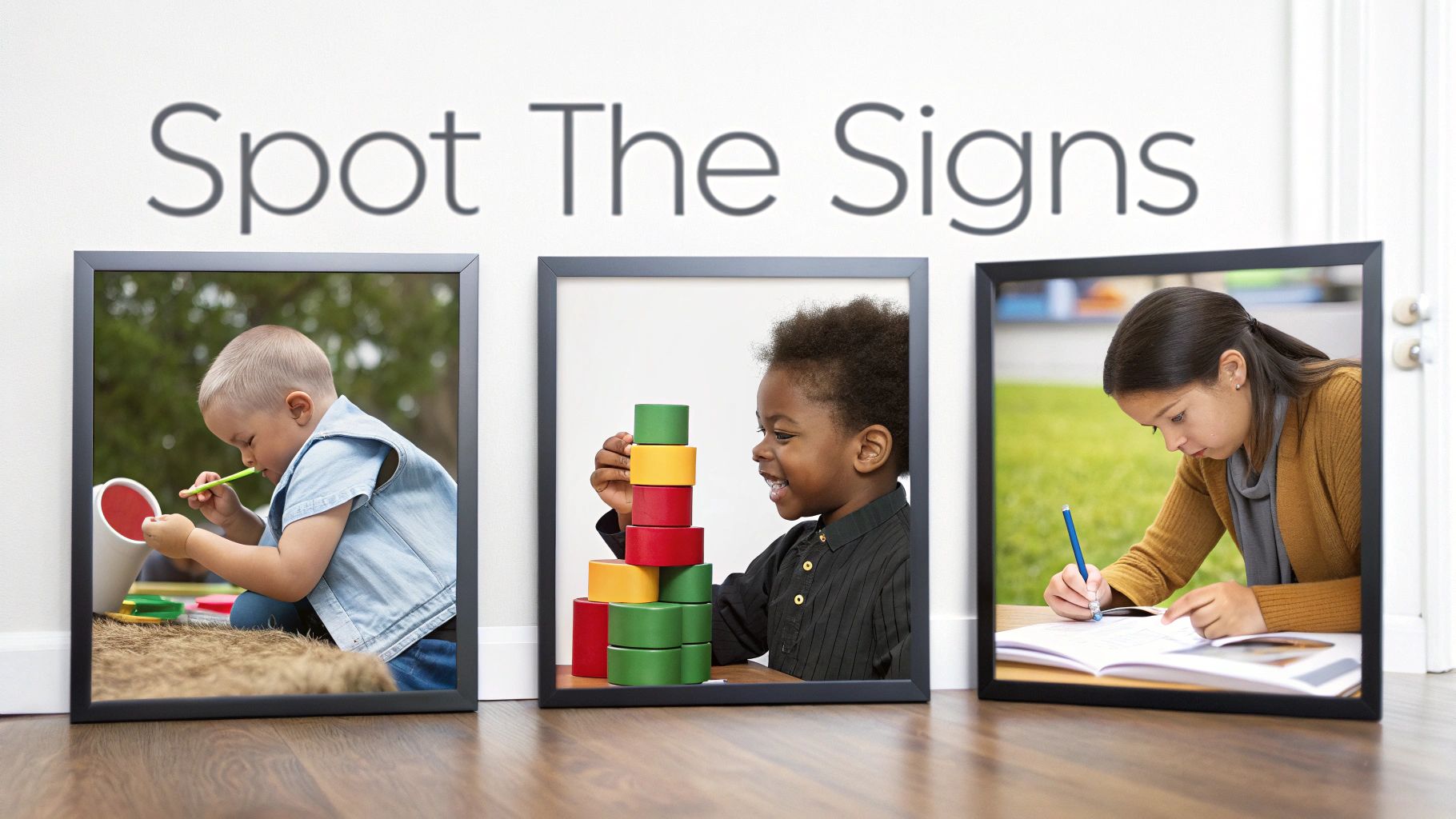
Signs in Infants and Babies (0-12 Months)
In that first year, life is all about exploring the world through movement. A baby's brain is working overtime to build the foundational pathways for every skill to come. Difficulties at this stage can be very subtle.
- Trouble with Feeding: They might struggle to get the suck-swallow-breathe rhythm down, seem extra messy during feedings, or have a tough time moving on to solid foods.
- Limited Exploration: You may notice they seem less interested in reaching for toys or don’t instinctively bring objects to their mouth to check them out.
- Delayed Motor Milestones: They might be consistently behind on big milestones like rolling over, sitting up unassisted, or crawling. When they do move, it can look a bit awkward or disorganized.
These early signs can sometimes be the first clue that the nervous system is having a hard time processing sensory information and creating those initial motor blueprints.
Signs in Toddlers (1-3 Years)
This is the age of a motor skills explosion! Toddlers are learning everything from walking and running to copying everything you do. Motor planning challenges often become much more obvious now, as the world starts demanding more complex actions.
- Difficulty with Imitation: They struggle to copy the hand movements to songs like "The Wheels on the Bus" or mimic simple gestures like waving bye-bye.
- Challenges with Simple Toys: Figuring out shape sorters, stacking rings, or easy puzzles is a real struggle without a lot of guidance.
- Clumsiness Beyond the Norm: They might seem to trip over air, constantly bump into furniture, or have a hard time navigating around obstacles in a room.
- Slow to Learn Self-Care: Simple tasks like pulling up their own pants, putting arms into sleeves, or using a fork are met with a lot of frustration and resistance.
A huge indicator of a motor planning issue is difficulty with novelty. A toddler might eventually master a specific task with tons of repetition, but they'll often struggle all over again when faced with a slightly different, new activity.
This stage really highlights the difference between learning a specific skill and having the underlying ability to plan new ones. For parents who want to dig deeper into this, understanding the basics of motor development skills can offer valuable insights.
Signs in Preschool and School-Aged Children (4+ Years)
Once kids head off to school, the demands on their motor planning skills ramp up significantly. They’re expected to follow multi-step routines, play organized games, and tackle fine motor tasks like writing.
- Trouble with Multi-Step Directions: Following a sequence like, "Get your backpack, put on your shoes, and line up at the door," can feel overwhelming.
- Awkward Gross Motor Skills: They may look uncoordinated when trying to learn to ride a bike, skip, or catch a ball. Often, they’ll start avoiding sports or playground games altogether.
- Fine Motor Frustrations: Learning to use scissors, holding a pencil correctly, or managing buttons and zippers can be a massive source of frustration. Their handwriting is often messy and looks like it takes a ton of effort.
- Disorganized Approach to Tasks: When they build with blocks or do a craft, there seems to be no plan. Their desk, room, and belongings might also be in a constant state of disarray.
Seeing these signs is not a reason to panic—it's a reason to get curious. Recognizing these patterns empowers you to ask the right questions and find the right support, helping your child build the confidence they need to navigate their world successfully.
How Professionals Identify Motor Planning Issues
If you've been seeing consistent patterns and feel like your child's struggles are more than just typical clumsiness, getting a professional opinion is a great next step. It can feel overwhelming, but understanding how experts identify motor planning issues helps demystify the whole process and get you clear answers.
The journey usually starts with a pediatric occupational therapist (OT), who acts like a detective for developmental challenges. An OT evaluation isn't some scary, single test. It's a comprehensive look at your child's skills from a few different angles, and it's designed to be engaging—most of the time, it just feels like playing to your child.
The Occupational Therapy Assessment
A thorough OT assessment pieces together several key components to create a full picture of your child’s abilities. This approach ensures the therapist understands not just what your child is struggling with, but why.
Here’s what an evaluation usually includes:
- Standardized Testing: Therapists use specific, research-backed tests that compare your child's performance to their peers. These tests give objective data on fine motor skills, gross motor skills, visual-motor integration, and overall praxis.
- Clinical Observations: This is where an OT's expertise really comes into play. They’ll engage your child in purposeful activities—building with blocks, drawing, or navigating a small obstacle course—to see their motor planning in real-time. They’re watching how your child comes up with ideas, sequences the steps, and then executes new tasks.
- Parent Interview: You are the true expert on your child. The therapist will ask you detailed questions about their developmental history, daily routines, and the specific challenges you've noticed at home or at school. Your insights are an absolutely critical piece of the puzzle.
Think about it: even a simple act like grasping a cup involves an incredible amount of motor planning. The brain has to calculate the cup's shape and orientation to create a precise action plan, and this process gets even more demanding with asymmetrical objects.
Recent studies found that rotating an object symmetrically can cut down the time it takes to reach for it by 15-20%. This highlights the complex prep work our brains are doing behind the scenes. You can discover more insights about these grasping tasks on Frontiers.
A Deeper Look into the Nervous System
While occupational therapy focuses on functional skills, neurologically-focused pediatric chiropractic care adds a complementary view by looking at the underlying "why." If the nervous system is the body's communication superhighway, any roadblocks or interference can seriously disrupt the signals needed for effective motor planning.
Our approach adds another layer to the assessment process, helping us find that interference.
The goal is to move beyond observing the symptom (e.g., poor handwriting) and uncover the root cause within the nervous system. By understanding the core issue, we can create a more effective and targeted care plan.
We use advanced Insight Scans to get a non-invasive window into how your child's nervous system is actually functioning. These scans are completely safe, gentle, and don't involve any radiation. They measure patterns of stress and imbalance, showing us exactly where communication might be breaking down between the brain and the body.
This data helps us see if hidden neurological stress is making it harder for your child to plan and coordinate their movements.
By combining the functional insights from an OT evaluation with the neurological data from our scans, we can build a truly complete picture of your child's health. This integrated approach allows us to not only support their skill development but also to address the foundational issues that may be holding them back.
Fun and Effective Ways to Support Your Child at Home
You don't need a background in therapy to support your child's motor planning development—you just need a commitment to play. Everyday activities are absolutely packed with opportunities to help your child’s brain and body learn to sync up more efficiently. By turning daily routines into fun little games, you can help build the neural pathways they need to plan, sequence, and execute new movements with more confidence.
The best part? You already have everything you need. The goal isn't to run drills but to create playful challenges that encourage your child to think, plan, and then do.
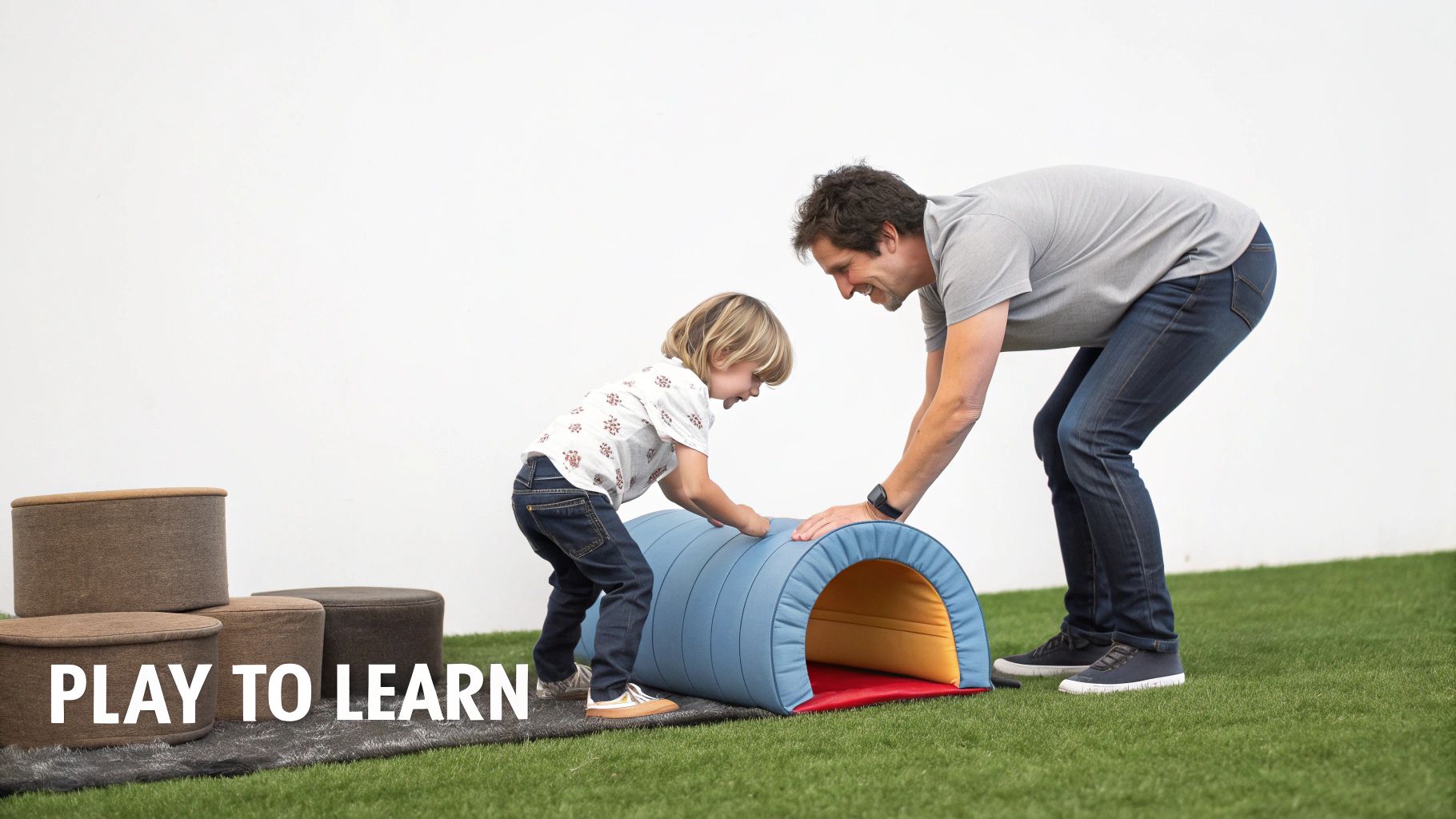
Transform Your Home into a Motor Planning Playground
Getting your child’s whole body moving is a fantastic way to strengthen the large-scale coordination needed for complex tasks. These activities encourage ideation (coming up with what to do) and organization (figuring out how to do it).
- Build an Obstacle Course: Grab some pillows, couch cushions, and blankets to create a course right in the living room. Ask your child to crawl under a table (like a tunnel), climb over a "pillow mountain," and spin around three times before hitting the finish line. This forces them to plan their movements in sequence.
- Play Animal Walks: Challenge your child to move across the room like different animals. Can they waddle like a penguin, hop like a frog, or stomp like an elephant? Each animal requires a different motor plan, which builds both creativity and body awareness.
- Have a Dance Party: Put on some music with a varied tempo and call out different moves. "Freeze! Now dance slow! Now wiggle fast!" This helps them learn to adapt their motor plan on the fly.
The core of these activities is novelty. By constantly changing the "rules" of play, you encourage your child's brain to stay active and create new motor blueprints instead of relying on old, memorized movements.
Strengthen Fine Motor Skills Through Play
While big movements are essential, many motor planning challenges show up in tasks requiring hand-eye coordination. These activities build the precision and strength needed for things like writing, buttoning clothes, and using utensils. Our guide on how to improve fine motor skills provides even more ideas for targeted play.
- Play with LEGOs or Building Blocks: Building a tower or following simple instructions to make a car requires planning, sequencing, and precise hand movements. It’s a powerful tool for developing both fine motor control and spatial reasoning.
- Get Creative with Play-Doh: Rolling, squishing, and cutting Play-Doh is great for building hand strength. Ask your child to make a "snake" or a "pizza" to encourage them to plan and execute a specific goal.
- Bake Together: Scooping flour, stirring batter, and decorating cookies are all fantastic fine motor exercises. Following a recipe also reinforces the concept of sequencing—first we do this, then we do that.
A Balanced Nervous System: The Foundation for Success
These play-based activities are incredibly effective, but their success really hinges on a well-regulated nervous system. If a child’s brain is dealing with underlying neurological stress, it’s like trying to build a house on an unstable foundation. The brain can struggle to process sensory information correctly, making it that much harder to create and execute an effective motor plan.
Ever watch a baby fumble for a rattle, missing by inches? That's motor planning at work. Research shows that planning a movement activates specific neural patterns in the brain’s sensory cortex, essentially getting neurons to an ‘ideal preparatory point’ before the action begins. When neurological stress is present, reaching this ideal point becomes difficult.
This is where neurologically-focused pediatric chiropractic care can make a significant difference. Through gentle and specific adjustments, we help reduce stress on the nervous system. This restores clearer communication between the brain and body, creating a more organized and receptive state for learning. When a child’s nervous system is balanced, they can get the maximum benefit from all the wonderful play and practice you do at home.
When Should You Seek Professional Support for Your Child?
That little voice inside your head—a parent’s intuition—is a powerful thing. You know your child better than anyone else on the planet, and if you have that nagging feeling that something just isn’t clicking with their development, it’s always worth listening to. Trusting that gut feeling is the most important first step you can take.
It can be tough to tell the difference between typical childhood clumsiness and a more consistent pattern of difficulty with what is motor planning. One off-day is normal; a series of them might mean something more. But there are a few red flags that can signal it’s time to get a professional opinion.
Key Signs to Watch For
Think about reaching out for support if you notice your child consistently:
- Avoids new physical activities, seeming genuinely fearful or anxious on the playground.
- Shows extreme frustration or gives up almost immediately on tasks like getting dressed, using a fork, or learning to write their name.
- Struggles to follow multi-step instructions for physical tasks, even simple ones you've shown them over and over.
- Appears significantly more uncoordinated or "out of sync" than their friends in different situations.
If this list sounds a little too familiar, the good news is that the path forward is simpler than you might think. Your first step doesn’t need to be a big, formal evaluation. It can start with a simple conversation with someone who lives and breathes child development, like a pediatric occupational therapist or a neurologically-focused chiropractor.
Early support isn't about putting a label on a child. It’s about giving them the right tools and strategies to help them feel confident and successful. Addressing motor planning challenges early on can make a huge difference in their school life, friendships, and emotional well-being.
An initial consultation is really just a chance to share what you’re seeing, get your questions answered, and figure out if a deeper look is needed. It’s a pressure-free way to gather information and find the right partners for your family's health journey. You are your child's biggest advocate, and seeking answers is one of the most proactive and loving things you can do to help them thrive.
Frequently Asked Questions About Motor Planning
As a parent navigating the world of child development, you're bound to have questions. Motor planning can feel like a complex topic, but getting clear answers is the first step toward advocating for your child and finding the right support. Let's walk through some of the most common questions we hear from families just like yours.
Is Poor Motor Planning the Same as Being Clumsy?
This is a fantastic question, and the short answer is no—they're quite different. While all kids go through awkward phases and can be clumsy, especially during growth spurts, poor motor planning (or dyspraxia) is a more consistent, underlying challenge. Clumsiness is often random and situational.
A child with motor planning difficulties struggles specifically with new and unfamiliar physical tasks. They might eventually learn a routine action through sheer repetition, but when faced with a slightly different challenge, it’s like they have to start from scratch every single time. It’s a persistent difficulty with the "how-to" of movement, not just an occasional trip or spill.
Can My Child's Motor Planning Skills Actually Improve?
Absolutely. This is where the amazing science of neuroplasticity comes into play. A child’s brain isn't hardwired; it's incredibly adaptable and is constantly building new connections based on their experiences. Just like practicing an instrument strengthens certain neural pathways, targeted activities can help the brain become much more efficient at motor planning.
Every time your child tries a new movement, like navigating an obstacle course or figuring out how to use scissors, they are giving their brain a chance to forge a new "motor map."
The brain is not static; it's a dynamic, living organ that can change and rewire itself. With the right support and consistent, playful practice, your child's brain can build stronger, faster, and more effective pathways for planning and executing movements. Improvement isn’t just possible—it’s expected.
How Does a Chiropractor Help with Motor Planning?
This question gets to the very foundation of how the body and brain learn together. Motor planning is a neurological process from top to bottom; it depends entirely on clear communication between the brain and the body. If there's stress or interference in the nervous system—think of it like static on a phone line—it disrupts the brain's ability to accurately perceive the world, create a good movement plan, and send clear signals to the muscles.
A neurologically-focused pediatric chiropractor works to find and gently correct this interference. Using specific, gentle adjustments, we help restore balance to the nervous system, creating a clearer, more organized state for the brain to operate in. By improving this foundational brain-body connection, we help create a nervous system that is more receptive to learning new things, making it easier for a child to build new motor skills through play and therapy.
At First Steps Chiropractic, we are dedicated to helping your child’s nervous system function at its best, creating a strong foundation for all aspects of development, including motor planning. To learn how our gentle, neurologically-focused approach can support your family, explore our services at https://firststepschiropractic.com.