
If you've ever watched your child with ADHD and noticed they often walk on their toes, you're picking up on a real neurodevelopmental connection. This isn't just some quirky habit they'll outgrow; it’s often a fascinating window into how their brain and body are communicating. The link between toe walking and ADHD is surprisingly strong, and it's a gait pattern many children on the neurodivergent spectrum share.
Unpacking the Connection Between Toe Walking and ADHD
It’s natural for parents to have questions when their child consistently walks on the balls of their feet long after they’ve mastered walking. While many toddlers go through a brief toe-walking phase, seeing it stick around can be a signpost for neurodevelopmental conditions like ADHD.
The relationship isn't about one condition causing the other. Instead, it points to shared, underlying factors that influence both motor control and the way the body processes sensory information.
Think of your child’s nervous system as a highly sensitive instrument. For some neurodivergent kids, that instrument is tuned a bit differently, leading to physical expressions like toe walking. It validates what so many parents see with their own eyes every single day.
Why Is This Pattern So Common?
The link between toe walking and ADHD is becoming much clearer with modern research. A groundbreaking 2018 study of 312 children with ADHD found that a striking 20.8% also exhibited idiopathic toe walking (ITW).
To put that in perspective, ITW only affects about 2% of typically developing children. This means the gait pattern is roughly 10 times more likely in children with ADHD.
This significant overlap points toward shared neurodevelopmental roots that often affect:
- Sensory Processing: A child might be over-sensitive or under-sensitive to touch. For them, the sensation of walking flat-footed can feel uncomfortable, strange, or just not neurologically "interesting" enough. Our guide on sensory processing explains these concepts in more detail.
- Proprioception: This is the body’s internal GPS—its sense of where it is in space. Challenges in this area are common in ADHD, and toe walking can be an unconscious strategy to get more intense sensory feedback from the ground.
- Motor Control: Issues with coordination, balance, and planning movements can make a standard heel-to-toe walk feel less natural for a child with an ADHD brain.
Understanding this connection is the first step. Toe walking is often a physical sign that invites us to look deeper into a child's unique sensory and neurological profile, rather than viewing it as just a bad habit to be corrected.
It’s so important to see the whole child, not just a single symptom. By exploring the 'why' behind the walk, parents and practitioners can find the most effective ways to provide meaningful support. This guide will walk you through the causes, assessment process, and evidence-based strategies to help your child find their footing.
Why Toe Walking Is Common In Children with ADHD
To really get to the bottom of the link between toe walking and ADHD, we need to take a look inside your child's nervous system. Toe walking is almost never a conscious choice or just a "bad habit" that needs correcting. It’s a physical, outward expression of how a child’s brain is wired to process the world around them.
At the heart of it all are two key concepts: sensory processing and proprioception. Understanding these neurological drivers helps explain why a simple act like walking can look so different for a kiddo with ADHD.
The Sensory Volume Dial
Picture your child’s brain having a “volume dial” for every single sensation—touch, sound, sight, even movement. For so many kids with ADHD, this dial is cranked way up, especially when it comes to the sense of touch. This is what we often call tactile hypersensitivity.
For a child with a super-sensitive tactile system, the simple feeling of their entire foot pressing firmly against the floor can feel like too much. The different textures of carpet, tile, or even grass can feel like sensory “noise” that is loud, irritating, and overwhelming. So, toe walking becomes this brilliant, unconscious strategy to turn that volume down.
By minimizing the part of their foot that touches the ground, a child effectively reduces the amount of sensory information flooding their brain. It’s a self-protective move that makes navigating their world a whole lot more comfortable.
Now, on the flip side, some kids have a volume dial that’s turned too low. They are the sensory seekers, constantly craving more intense input to feel organized, grounded, and regulated in their bodies. We dive deep into this in our guide on understanding sensory seeking behavior. For these children, the firm, deep pressure that comes from pushing up and off their toes provides a powerful, grounding sensation that walking flat-footed just can’t deliver.
Think of it this way: For a sensory-sensitive child, walking flat-footed is like listening to music with the bass turned up so high it rattles your bones—it’s just plain jarring. Toe walking is their way of adjusting the equalizer to a much more manageable level.
Navigating with a Fuzzy Body GPS
The other critical piece of this puzzle is proprioception. This is the body’s internal GPS, that amazing sixth sense that tells your brain where all your body parts are in space without you even having to look. It’s how you can touch your nose with your eyes closed or walk up a flight of stairs in the dark without tripping.
In many kids with ADHD, this internal GPS can be a bit fuzzy, like a weak or unreliable signal. Their brain doesn't receive clear, crisp messages from their muscles and joints, which can often lead to feelings of clumsiness or being uncoordinated.
Walking on their toes is a fantastic adaptation to this challenge. It forces the muscles in the feet, ankles, and calves to contract with a lot more intensity. This action sends a much louder and clearer signal up to the brain, helping to clear up that fuzzy GPS.
- Intensified Feedback: The strong muscle contractions give the brain powerful proprioceptive input, helping it create a more accurate "map" of where the body is and what it's doing.
- Improved Stability: This heightened feedback can make a child feel far more stable and secure as they move through their environment.
- Vestibular Input: That slight change in balance needed for toe walking also engages the vestibular system (the sense of balance and motion), which adds another helpful layer of sensory information for the brain to work with.
By walking on their toes, a child is essentially turning up the signal strength on their body's GPS, which helps them navigate their world with more confidence and control. This powerful combination of regulating sensory input and seeking proprioceptive feedback is a major driver behind the toe-walking pattern we so often see connected to ADHD. It's not a bad habit; it's a smart, adaptive strategy developed by a nervous system that is simply wired differently.
How Professionals Assess Toe Walking

Stepping into a clinic to talk about your child's toe walking can feel a little intimidating, but knowing what to expect can ease your worries. A professional assessment is much more than a quick check-up. Think of it as a collaborative fact-finding mission to really understand the "why" behind your child's unique way of moving.
The goal is to build a complete picture of your child, looking at everything from their birth and medical history to how they're hitting their developmental milestones. Your own observations are a huge piece of this puzzle—you see things at home that a practitioner could never capture in a brief office visit.
The Initial Conversation and Health History
The first step is always just a conversation. A practitioner needs to hear the full story to start sorting out whether the toe walking is a simple habit or if it has deeper sensory, neurological, or physical roots. This is your time to share all the little patterns you've noticed.
You can expect to be asked questions like:
- When did the toe walking begin? Did it seem to happen overnight, or was it more of a gradual change?
- How often does it happen? Does your child ever walk with their heels down, or are they on their toes nearly 100% of the time?
- Can they stand flat-footed? If you ask them to, can they physically get their heels to the floor?
- What triggers it? Does it happen more when they’re excited, tired, barefoot, or wearing certain shoes?
Your answers are invaluable clues. For example, if your child can stand with flat feet but often chooses not to, it might point toward a sensory or habitual pattern we often see with toe walking and ADHD. On the other hand, if they physically can’t get their heels down, it suggests a structural or muscular issue that needs to be addressed.
The Comprehensive Physical Examination
After we talk, the clinician will do a hands-on physical exam. This is a gentle, non-invasive process designed to check everything from your child’s hips down to their toes, focusing on their musculoskeletal and neurological function.
The practitioner will carefully assess several key things:
- Range of Motion: They will gently move your child's feet and ankles to see how flexible they are. The big focus here is on the Achilles tendon; if it’s too tight, it can physically block the heel from touching the ground.
- Muscle Tone: The clinician will feel the muscles in the legs and feet, checking for any unusual tightness (hypertonia) or looseness (hypotonia). These can be signs of underlying neurological stress.
- Gait Analysis: This is as simple as it sounds—we just watch your child walk! We're looking at their pattern, checking for symmetry, and noticing any other unique movements.
- Balance and Coordination: Your child might be asked to do fun little challenges like standing on one foot or walking heel-to-toe. This helps us see how well their proprioception and motor skills are working, which are the building blocks of healthy gross motor development.
This physical exam is crucial for ruling out structural causes. It helps us figure out if the toe walking is being driven by sensory needs or by a physical limitation that requires a different kind of intervention.
Advanced Neurological Insights
To get an even deeper look at the nervous system's role, some practices use advanced technology. Tools like Insight Scans give us a non-invasive way to measure and map the function and tone of the central nervous system.
Insight Scans provide a visual window into the nervous system, revealing the hidden patterns of stress and neuro-tonal imbalance that can contribute to toe walking. This helps pinpoint the root cause rather than just observing the symptom.
These scans can show us where there might be interference or "stuck" stress that's getting in the way of the brain-body communication needed for a balanced gait. This objective data helps us create a super specific and effective care plan that addresses the real neurological drivers behind the toe walking.
Exploring Effective Treatment Options
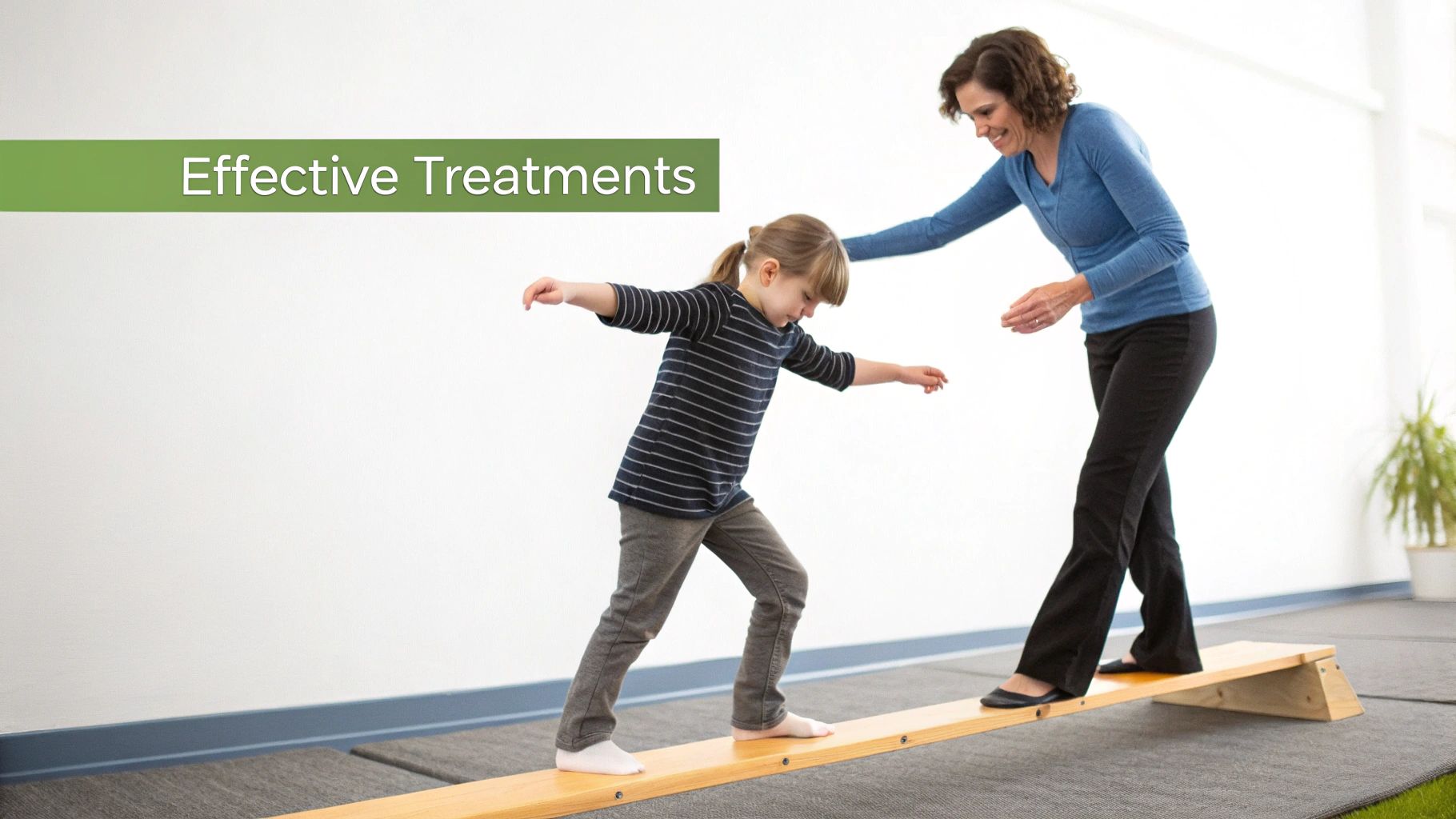
Once you start to understand why your child might be toe walking, the conversation naturally shifts to what you can do about it. The good news is, there are a number of effective, collaborative strategies out there to support your child. The approach is usually multi-faceted, blending different therapies to address both the physical habit and the underlying neurological drivers.
It’s helpful to see this as a roadmap, starting with the gentlest, most foundational methods first. The goal is always to find the least invasive path that truly fits your child’s unique needs. For many kids, especially when the cause is sensory or simply habit, these initial strategies are often all it takes to see real, lasting change.
The Role of Physical Therapy
For most children with persistent toe walking, physical therapy (PT) is the cornerstone of any treatment plan. A pediatric physical therapist is a specialist in movement, and they can design a completely customized plan to tackle the specific reasons behind your child’s gait pattern.
This isn't just about doing a few exercises. It’s a process of retraining the brain and the body to work together in a new, more efficient way.
A solid PT program typically includes a few key components:
- Targeted Stretching: The therapist will teach you and your child precise stretches for tight calf muscles and Achilles tendons. Consistency here is the secret sauce for improving ankle flexibility, which is what allows the heel to touch the ground comfortably.
- Strengthening Exercises: Sometimes, weakness in other muscles—like the ones that lift the front of the foot—is part of the problem. PT sessions often include fun, play-based activities to build strength in these supporting muscle groups.
- Gait Retraining: This is all about consciously practicing a proper heel-to-toe walking pattern, usually through games. Your child might walk on different textures (like grass or sand), step over small obstacles, or play games that encourage them to keep their feet flat.
Physical therapy works to make a heel-down walk the body’s new normal. It tackles the issue from both sides, building the physical ability for the foot to lay flat while also helping to rewire the brain’s motor patterns.
Supportive Tools and Medical Interventions
When physical therapy and stretching alone aren’t quite enough, a therapist or doctor might suggest adding some supportive tools to the mix. These act as external guides, holding the foot in a better position and providing a slow, steady stretch throughout the day.
Ankle-Foot Orthotics (AFOs) are custom-molded plastic braces worn right inside a child’s shoes. By holding the ankle at a 90-degree angle, they make it physically impossible to pop up onto the toes. Think of them like bumpers in a bowling lane—they simply guide the foot into the correct position.
For more significant tightness, serial casting might be the next step. This involves applying a new cast to the leg and foot every one to two weeks, with each new cast stretching the ankle a tiny bit more than the last. It's a highly effective way to lengthen tight tendons without surgery.
In a small number of cases where conservative treatments don't produce results, medical options like Botulinum toxin (Botox) injections may be considered. These injections relax the calf muscles, creating a window of opportunity for intensive PT to be more effective.
Neurologically-Focused Chiropractic Care
Beyond the traditional methods, neurologically-focused care offers a unique path forward by going straight to the root cause: the nervous system. This approach recognizes that toe walking and ADHD are often connected by a nervous system that is out of balance or holding onto too much tension.
The goal here is to help "retune" the nervous system, improving that critical brain-body communication required for a balanced gait. Pediatric chiropractors use gentle, specific neuro-tonal adjustments to reduce interference and restore proper function.
This is not about forceful cracking or popping. It’s about calming an overstimulated system. When a child’s nervous system is better regulated, it can process sensory information more effectively. This can ease challenges like sensory overload, which often contributes to both toe walking and other symptoms of ADHD.
By focusing on the body's master control system, this approach supports the body’s innate ability to heal and find balance, leading to a more natural and comfortable walking pattern.
Fun Home Activities to Encourage a Natural Gait
Real, lasting progress happens when therapy concepts are woven into everyday life, and that’s where you, as a parent, have the most power. You can be the one to transform therapeutic exercises into joyful, connected playtime. The idea isn't to add another chore to your list but to find fun ways to encourage a natural, heel-to-toe gait.
These activities are all about connection and building confidence. By making these simple games a regular part of your family’s routine, you’re not just doing “exercises”—you’re reinforcing all the positive changes your child is making in therapy and helping their brain and body work better together.
Animal Walks for Strength and Awareness
One of the best—and most fun—ways to build foundational strength is through good old-fashioned “animal walks.” These silly movements are fantastic because they naturally encourage your child to get their heels on the ground and fire up different muscle groups, all while they’re just pretending to be their favorite creature.
- Bear Crawls: Get them crawling on their hands and feet with their bottom way up in the air. It’s nearly impossible to stay on your toes in this position, and it gives a great stretch to tight calf muscles and Achilles tendons.
- Crab Walks: Have them sit on the floor, then lift their hips with their hands and feet flat on the ground. Walking backward like a little crab is a powerhouse for strengthening the glutes and core, which are essential for a stable, grounded walk.
- Frog Jumps: Squat down super low and then leap forward! This big movement encourages a deep bend at the ankles and knees. The act of landing with flat feet helps their brain better understand where their body is and how to plan movements.
These aren't just muscle-builders; they provide a huge dose of proprioceptive input. This is the sensory feedback that helps your child's brain build a better "map" of their body in space—a crucial step in correcting gait patterns often linked to toe walking and ADHD.
Engaging the Senses Through Play
For so many kids, toe walking has a deep connection to their sensory processing system. Giving them plenty of opportunities to feel different textures with their feet can help recalibrate that system, making a flat-footed stance feel safer and more comfortable.
A huge part of the strategy is turning sensory exploration into a game. We want to make full-foot contact a positive and interesting experience. This can help desensitize a child who is hypersensitive or provide more of the input a sensory-seeking child craves.
Try setting up a simple "sensory pathway" right in your living room or backyard. It’s easier than it sounds! Just lay out a few different things for your child to walk over, like:
- Soft, fluffy blankets or pillows
- A shallow bin filled with dry beans, rice, or sand
- Bubble wrap (always a huge hit!)
- Textured bath mats or a small piece of artificial turf
- Walking barefoot on grass, sand, or smooth stones outside (with supervision, of course)
This kind of play naturally encourages your child to slow down and really notice the sensations on the bottoms of their feet, promoting a more mindful and grounded way of walking.
Balance Games and Supportive Footwear
Improving balance is another key piece of the puzzle. When a child feels more stable and secure on their feet, they are far less likely to pop up on their toes as a strategy to feel in control.
Simple games can make a world of difference here. Try walking along a curb or a line of tape on the floor as if it’s a balance beam. Or, have a contest to see who can stand on one foot the longest. These little challenges do an amazing job of strengthening all the tiny stabilizer muscles in the feet and ankles.
Finally, let’s talk shoes. While barefoot time is incredible for sensory input, supportive shoes are just as important for other times. Look for footwear with a firm, flat, and flexible sole. A good shoe won’t be rock-hard, but it should have enough structure to gently discourage rising up onto the toes. Think of the right shoe as a consistent, gentle guide, encouraging a proper heel-strike with every step your child takes throughout their busy day.
Common Questions About Toe Walking and ADHD
As a parent, seeing your child toe walk can bring up a lot of questions, especially when you start hearing about its connection to things like ADHD. Let's walk through some of the most common concerns we hear from parents to give you some clear, direct answers.
Is Toe Walking Always a Sign of ADHD or Autism?
Not at all. While there's a definite link, it’s not a one-to-one connection. It's really common for toddlers to spend some time on their toes as they're figuring out how to move and coordinate their bodies. Most of them grow out of it naturally. When there's no known medical reason, it's called idiopathic toe walking.
The time to look closer is if the toe walking continues past age 3, or if you're noticing other sensory quirks or developmental hiccups. A good assessment looks at the whole child—their motor skills, sensory profile, and overall development—not just how they walk.
Will My Child Automatically Grow Out of Toe Walking?
Some kids do, but it's not something you can count on, particularly when it's tied to a neurodevelopmental condition like ADHD. When toe walking sticks around, it can start to cause physical problems down the line, like tight Achilles tendons, sore feet, and even balance issues.
Just waiting and seeing can sometimes let these issues become more ingrained and harder to address later. Early support through physical therapy, specific exercises at home, or neurologically-focused care can get to the root of the issue, helping your child build a healthier walking pattern before any long-term complications set in.
Think of persistent toe walking as a 'check engine' light for your child's developing nervous system. It’s a clear signal that something needs a closer look, but it doesn’t tell you the exact issue on its own.
How Does Neurologically-Focused Chiropractic Care Help?
This kind of care goes way beyond just looking at the feet. It’s all about the nervous system, which is the master controller for every movement and sensory signal in the body. Using gentle adjustments and specific techniques, the goal is to ease tension and interference within that system.
This can help improve the communication between the brain and the body. For a child with ADHD who toe walks because of sensory sensitivities or motor planning challenges, this approach helps get to the neurological 'why' behind the pattern. It's about promoting better overall function from the inside out.
When Should I Seek a Professional Evaluation?
It's a good idea to schedule an evaluation if you notice your child is on their toes more than 50% of the time, especially if they are over the age of 3. Other signals that it's time for a professional opinion include stiffness in their calf muscles, frequent tripping, or if they physically can't get their heels flat on the floor.
You should also reach out if the toe walking is happening alongside other developmental delays or sensory sensitivities. A comprehensive assessment can give you peace of mind and, if needed, create a clear, supportive path forward.
This decision tree gives you a few simple, fun ideas you can try at home to encourage a more natural, flat-footed gait.
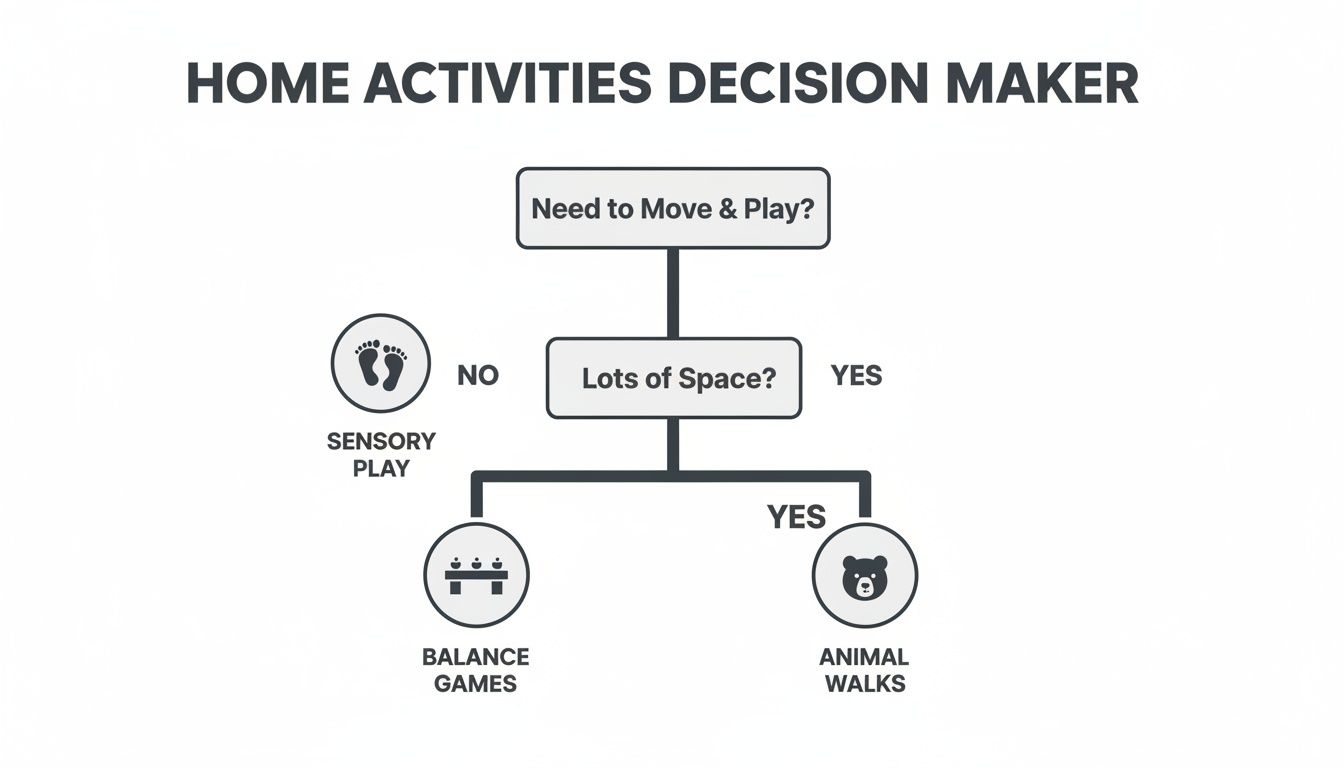
As the infographic shows, simple, play-based movements like animal walks, balance games, and sensory exploration can be incredibly powerful tools.
What Kind of Long-Term Problems Can It Cause?
If it's not addressed, chronic toe walking can lead to some very real physical issues. That constant pressure on the front of the feet creates a domino effect.
Over time, this walking pattern often leads to significantly shortened Achilles tendons and tight calf muscles. This physical change restricts the ankle's range of motion, which can cause pain, throw off their balance, and even make it tough to wear normal shoes comfortably. This creates a walking pattern that's not just inefficient but can become painful, impacting your child's ability to run, jump, and play freely.
What Should I Tell My Child's School?
Keeping the school in the loop is a really important step. A great place to start is by setting up a quick meeting with their teacher, and maybe the school nurse or special education coordinator.
Give them a brief, clear rundown of your child's situation. Sharing insights from your doctor or therapist can be helpful, along with explaining any strategies or accommodations that have been recommended.
Here are a few specific things you could discuss:
- Physical Education: Ask the PE teacher to encourage activities that promote flat-footed movement and to be aware of any exercises that might be extra challenging.
- Classroom Movement: Talk about chances for movement breaks or simple stretches during the day to help ease muscle tightness.
- Footwear: Make sure the school's dress code is flexible enough to allow for any supportive shoes your child might need to wear.
When everyone is on the same page, your child gets consistent support, which is key for building their confidence and making steady progress.
At First Steps Chiropractic, we understand the intricate connections between your child's nervous system and their development. Our neurologically-focused approach is designed to find the root cause of challenges like toe walking. If you're looking for answers and a supportive partner in your child's health journey, we invite you to learn more about our unique care process at https://firststepschiropractic.com.