

When a doctor says your child has "failure to thrive," it's a phrase that can stop any parent's heart. It sounds serious, and it is, but it's crucial to understand what it really means. It's not a disease in itself but a sign that a child isn't gaining weight or growing as expected for their age.
We can think of a child like a little sapling. For a sapling to grow tall and strong, it needs the right environment—rich soil, consistent water, and plenty of sunlight. If any of these are missing, the plant will struggle, even if it's perfectly healthy otherwise. Non organic failure to thrive is very similar; the child is typically healthy, but something in their environment is getting in the way of their growth.
This is different from organic failure to thrive, where an underlying medical condition is the root cause. With non organic cases, the issue comes from external factors related to feeding, the environment, or the parent-child dynamic.

It’s a Diagnosis of Circumstance, Not Blame
Let’s be clear: a diagnosis of non organic failure to thrive is not an accusation of bad parenting. It's a signal that we need to work together to figure out what challenges are preventing your child from getting back on their growth curve. It’s a call to action, not a reason for guilt.
The reality is that these external factors account for the vast majority of cases. In fact, psychosocial issues like feeding challenges, environmental stress, or parental difficulties contribute to up to 80% of all failure to thrive cases. You can find more information from great resources like Nationwide Children's Hospital's guide on failure to thrive conditions.
A diagnosis of non organic failure to thrive is a starting point, not a final judgment. It opens the door to identifying specific challenges and assembling a supportive team to help your child thrive.
To give a clearer picture, let's break down the key differences between the two types of failure to thrive.
Organic vs Non Organic Failure to Thrive at a Glance
This table highlights the fundamental distinctions between growth issues stemming from internal medical problems versus those arising from external, environmental factors.
| Characteristic | Organic Failure to Thrive | Non Organic Failure to Thrive |
|---|---|---|
| Primary Cause | An underlying medical condition (e.g., GI issues, heart defects, metabolic disorders). | External factors (e.g., feeding difficulties, environmental stress, psychosocial issues). |
| Caloric Intake | The child may eat enough, but their body can't absorb or use the calories properly. | The child is not consuming enough calories to meet their growth needs. |
| Child's Interest in Food | Can vary; they may have a poor appetite due to their illness or be very hungry. | Often shows disinterest in feeding, may be a "picky eater," or has feeding aversion. |
| Physical Exam Findings | May show signs related to the specific medical disease causing the growth issue. | Physical exam is often normal aside from low weight and height. |
| Typical Onset | Can occur at any time, often linked to the onset or progression of the medical condition. | Frequently seen in the first year of life, a period of rapid growth. |
| Treatment Focus | Managing and treating the underlying medical disease is the priority. | Focuses on nutritional therapy, behavioral support, and addressing environmental stressors. |
Understanding this distinction is the first step toward getting the right kind of help for your child and family.
Building Your Collaborative Care Team
The great news is that non organic failure to thrive is very treatable with the right support system. The key is a multidisciplinary approach where different specialists team up to address every angle of your child's well-being, from nutrition to neurological function.
Your collaborative care team might include:
- A Pediatrician: To rule out any hidden medical causes and keep a close eye on growth.
- A Nutritionist or Dietitian: To create a smart plan for increasing calories and ensuring all nutrient needs are met.
- Behavioral Specialists: To help with feeding dynamics, manage parental stress, and create positive, calm mealtime routines.
- A Neurologically-Focused Pediatric Chiropractor: To assess and address any nervous system stress that could be messing with essential functions like the suck-swallow-breathe reflex, digestion, or sensory processing.
This teamwork ensures both the "soil" (nutrition) and the "roots" (the body's internal systems) are healthy, allowing your child to finally absorb nutrients and grow. Sometimes, poor feeding mechanics can be an early red flag, and understanding what causes developmental delays can offer a broader perspective on how physical function ties into overall growth.
Recognizing the Signs and Symptoms of NOFTT
Spotting non-organic failure to thrive (NOFTT) is about much more than a low number on the scale. While poor weight gain is definitely the headline symptom, it’s usually the last piece of a much larger and more complicated puzzle. The real clues are often subtle, showing up across a child’s physical state, their behaviors, and their developmental timeline.
Think of it like a quiet engine problem in a car. The car might still run, but you notice it’s sluggish, makes odd noises, or burns through fuel too fast. In the same way, a child with NOFTT might not stop growing entirely, but the signs of a struggle are there if you know what to look for.
Physical Indicators Beyond the Scale
The most obvious signs are tied to physical growth, but they go way beyond just weight. A child’s body is hardwired to prioritize brain growth above everything else. So, when calories are in short supply, it starts pulling resources from other areas first.
This can show up in several ways:
- Poor Weight Gain: This is the big one. The child consistently falls off their own growth curve or drops below the 3rd or 5th percentile for weight.
- Slowed Height Growth: After weight gain stalls, height (or length in an infant) is the next thing to slow down.
- Stagnant Head Circumference: This is typically the last measurement to be affected because the body works so hard to protect brain development.
- Lack of Subcutaneous Fat: The child may look thin and bony, with very little "padding" on their arms, legs, and bottom.
- Dull, Sparse Hair: Nutrition has a direct impact on hair quality, so you might notice their hair seems brittle or isn't growing well.
These physical markers are critical data points for your pediatrician. They help paint a clear picture of how nutrition—or a lack of it—is impacting your child’s body over time.
Behavioral and Feeding Red Flags
Often, the very first clues of NOFTT are behavioral, especially around mealtimes. It’s a frustrating cycle: a child who isn't getting enough nutrition lacks the energy to eat well, which means feeding is both the problem and the solution.
Does your baby seem completely worn out after just a few minutes of nursing or bottle-feeding? Is your toddler suddenly refusing foods they used to love? These are major behavioral cues that shouldn't be ignored.
A child experiencing NOFTT might seem overly sleepy, have a weak cry, or show little interest in social interaction like smiling or cooing. They're conserving energy by disengaging, which can sometimes be mistaken for just being a "good, quiet baby."
Other behavioral signs include:
- Feeding Aversion: The child actively resists feeding by turning their head away, crying, or arching their back when food is offered.
- Irritability During Feedings: Mealtimes become a battleground, a source of stress instead of comfort and connection.
- Weak Suck: An infant may not have a strong, coordinated suck-swallow-breathe pattern, which makes feeding incredibly inefficient and tiring.
These behaviors can sometimes be tied to underlying sensory challenges. If a child's nervous system is overwhelmed, the very sensations of feeding—the touch, taste, and temperature—can be too much to handle. You can learn more about how this shows up by reading our guide on sensory issues in infants.
Developmental and Cognitive Delays
Nutrition is the fuel for brain development. It's that simple. When a child experiences prolonged inadequate nutrition, it can directly impact their ability to hit cognitive and motor milestones. The consequences of unchecked non-organic failure to thrive can be serious and long-lasting.
Children with a history of NOFTT face a higher risk of long-term developmental setbacks. Research consistently shows they may score 3-5 IQ points lower and fall behind in skills like arithmetic by the time they reach school age compared to their well-nourished peers. You can find a good synthesis of research on these outcomes in the Wikipedia entry about the effects of failure to thrive.
Connecting these dots—physical, behavioral, and developmental—is the key to understanding the whole picture. A child who isn't just small for their age but is also lethargic, uninterested in their surroundings, and slow to sit up or crawl is sending a clear signal that requires a closer look. By recognizing these combined signs, parents and providers can intervene early, get to the root causes, and put the child back on the path to healthy, happy growth.
Uncovering the Root Causes of NOFTT
When we talk about non organic failure to thrive (NOFTT), we’re really trying to solve a puzzle. It’s almost never just one thing causing the problem. Instead, NOFTT is usually a tangled web of biological, psychological, and social-environmental challenges—what we call the biopsychosocial model. To truly understand what’s going on, we have to look at all the interconnected pieces.
The signs of NOFTT often show up in three main areas: physical, behavioral, and developmental.
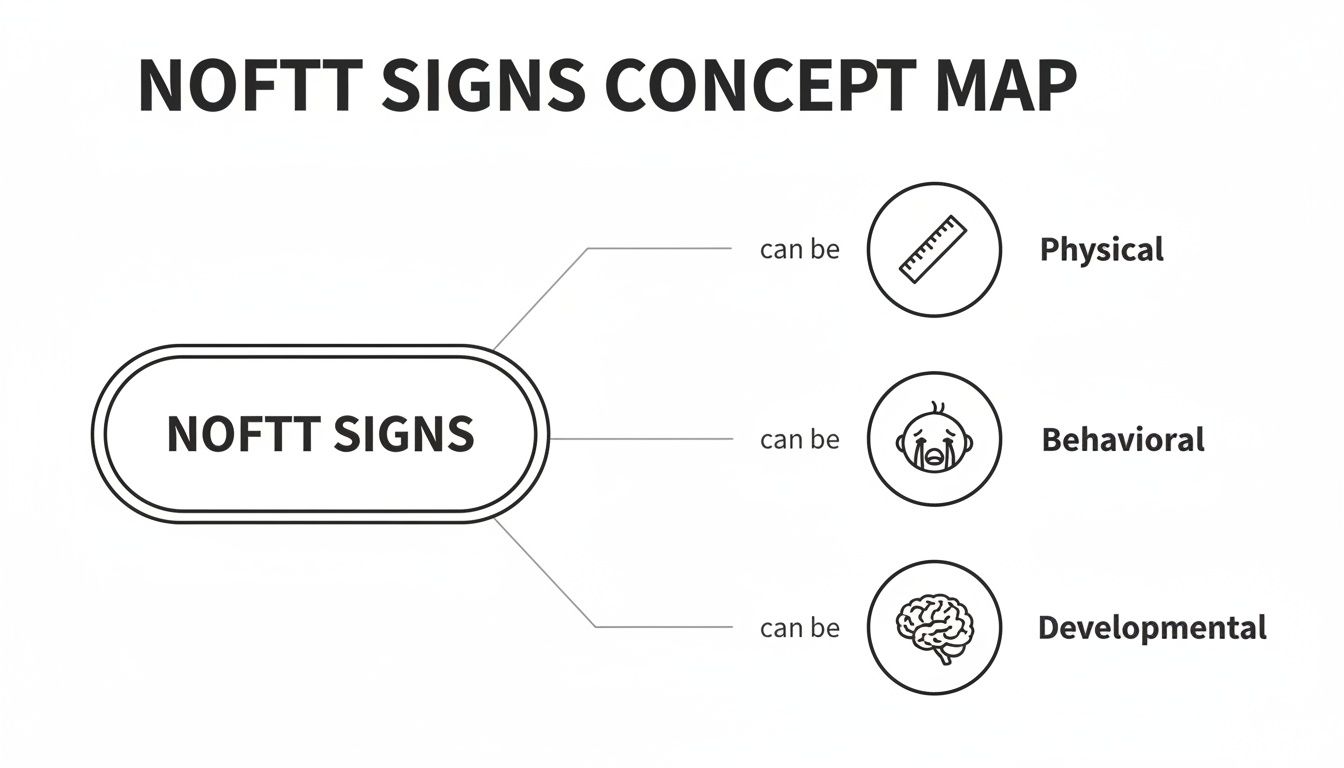
As you can see, an issue like poor weight gain (physical) is often tied directly to feeding refusal (behavioral), which can then lead to missed milestones (developmental). They all feed into each other.
The Nutritional Foundation
At the most basic level, NOFTT happens when a child isn’t getting enough calories. But the why is where it gets complicated. Research shows that insufficient calorie intake is the main driver in up to 86% of cases. This often comes down to things like feeding refusal, mistakes in mixing formula, or even a parent’s stress impacting their milk supply.
A few common nutritional roadblocks we see are:
- Breastfeeding Difficulties: A poor latch, low milk supply, or pain during nursing can make it incredibly difficult for a baby to get the calories they need to grow.
- Incorrect Formula Preparation: It's an easy mistake to make, but accidentally adding too much water to formula dilutes its calories, leading to slow growth over time.
- Transition to Solids: Some little ones really struggle with the new textures and tastes of solid food, which can lead to a diet that’s too low in key nutrients and calories.
- Limited Food Variety: If a child is only offered a small range of foods, especially low-calorie ones, it can easily create a nutritional gap.
It’s a simple but critical equation: the calories being used for energy and growth are more than the calories being taken in.
The Parent-Child Dynamic
Mealtimes should be about connection, not just consumption. When that parent-child dynamic gets strained, it can have a real impact on a child's intake. It’s so important to remember that parents are often under immense pressure, and this isn't about placing blame.
A parent dealing with postpartum depression or high stress, for instance, might struggle to keep up with structured feeding times or miss their baby's subtle hunger cues. The baby, in turn, can pick up on that tension, becoming fussy and resistant to eating. This creates a feedback loop of stress for everyone involved.
The feeding relationship is a delicate dance. When one partner is stressed or struggling, the rhythm is disrupted, and the connection can falter. Supporting the parent is often the first step in supporting the child.
Environmental and Social Stressors
A child’s environment plays a huge role in their ability to grow and thrive. Factors that might seem totally unrelated to the dinner table can have a surprisingly direct impact.
Think about these environmental stressors:
- Food Insecurity: When a family doesn't have consistent access to affordable, healthy food, it’s a direct cause of inadequate caloric intake.
- Chaotic Home Life: A stressful or unpredictable home can shift a child’s nervous system into a "fight or flight" state, which naturally suppresses appetite and messes with digestion.
- Lack of Social Support: Parents who feel isolated often don’t have the resources, knowledge, or emotional bandwidth to navigate tough feeding challenges alone.
These external pressures can create an unstable foundation, making it incredibly difficult to maintain the consistent, nurturing feeding environment a child needs.
The Biological Piece: Neurological Stress
Now, let’s look at the "bio" part of the puzzle. This is a piece that often gets missed, but the state of a child’s nervous system is critical. The birth process itself, even when everything goes smoothly, can put a lot of physical stress on a baby’s delicate upper neck and skull.
This tension can interfere with the nerves that control the suck-swallow-breathe reflex. It’s like trying to drink through a pinched straw—no matter how hard you suck, you’re just not going to get enough. For a baby with this kind of neurological stress, feeding is exhausting, inefficient, and deeply frustrating.
This underlying stress can also be a hidden contributor to issues like reflux, which turns feeding into a painful experience. If this sounds familiar, learning more about the signs and symptoms of silent reflux can shed some light on the connection between feeding challenges and the nervous system. Addressing this neurological component is often the key that unlocks the door, making all the other nutritional and behavioral strategies far more effective.
What to Expect During the Diagnostic Process
Hearing that your child needs a referral to investigate their growth can be incredibly stressful. I want to reassure you—this process isn't a test of your parenting. Think of it as a collaborative information-gathering mission. The goal is to build a complete, 360-degree picture of your child's health so we can create the most effective care plan together.
It all starts with a detailed conversation. Your pediatrician will want to walk through your child’s entire medical and feeding history, creating a timeline from birth right up to today. This is your chance to share everything—the breastfeeding challenges, how you mix formula, or what a typical meal looks like for your toddler. No detail is too small.

The Comprehensive Physical Exam
Next, your doctor will perform a thorough physical exam. This is a crucial step to methodically rule out any underlying "organic" or medical issues that might be contributing to poor growth. We want to make sure no stone is left unturned before we focus on external factors.
During this head-to-toe check, the provider will:
- Listen carefully to your child's heart and lungs.
- Gently feel their abdomen to check for any abnormalities.
- Assess their muscle tone and important neurological reflexes.
- Look for subtle physical signs that might point to a specific medical condition.
This exam gives us a clear baseline and helps confirm if the primary issue is likely related to caloric intake rather than a hidden disease. It’s a process of elimination that brings much-needed clarity.
Plotting Growth and Observing Feedings
A cornerstone of the diagnostic process is carefully plotting your child’s growth on standardized charts. Your doctor will track weight, height, and head circumference over time. They aren’t just looking at a single low number; they’re analyzing the trend of your child’s growth curve.
One of the key metrics your doctor will analyze is weight-for-length. This measurement is particularly insightful because it helps us see if a child is proportionately small or if their weight has dropped significantly below what’s expected for their height—a classic indicator of recent nutritional struggles.
Finally, one of the most valuable parts of the evaluation is often just observing a feeding session. This isn’t about judging your technique! It’s a practical way to spot any subtle challenges that might be getting in the way.
Your provider will be watching for a few things:
- Mechanical Issues: How well does your baby latch? Is their suck-swallow-breathe pattern coordinated and efficient, or do they seem to be working too hard?
- Interactional Dynamics: Does feeding time feel calm and connected? Or has it become a source of stress for either you or your little one?
- Behavioral Cues: Does your child show clear hunger and fullness cues? Do they tire out quickly or get fussy partway through a bottle or meal?
By watching this firsthand, the clinical team can pick up on subtle difficulties that might not be obvious in the day-to-day routine. This whole process is about gathering all the puzzle pieces, allowing your care team to build a supportive, effective plan to get your child back on the path to thriving.
Building a Comprehensive Management Plan
Once we've pinpointed the underlying reasons for non-organic failure to thrive, the next step is to create a supportive, multi-layered plan to get your child back on their growth curve. This isn't about enforcing a rigid set of rules. Instead, think of it as cultivating a rich, nurturing environment where your child can finally flourish. It’s truly a team effort, blending practical strategies at home with professional guidance.
The goal is to address every piece of the puzzle at once: the nutritional intake, the emotional and physical environment surrounding mealtimes, and the deep-down function of your child’s own body. Each part of the plan supports the others, creating a powerful synergy for healing and growth.

The First Pillar: Nutritional Rehabilitation
At its heart, non-organic failure to thrive is a problem of not getting enough calories. So, the first and most critical piece of the plan is nutritional rehabilitation. This involves working closely with your pediatrician or a dietitian to safely and effectively increase your child's caloric intake and spark that crucial "catch-up growth."
But this isn’t just about pushing more food; it's about making every single bite count. Some practical strategies include:
- Increasing Caloric Density: For infants, this might mean adding less water to concentrated formula (only under strict medical supervision) or fortifying breast milk. For toddlers and older kids, you can add healthy fats like avocado, olive oil, or smooth nut butters to their favorite meals.
- Structured Mealtimes: A predictable routine of three meals and two to three snacks a day helps regulate their hunger cues and creates consistent opportunities to eat.
- Time-Limited Feedings: Mealtimes should be pleasant, not drawn-out battles. Aim for sessions of about 20-30 minutes. If your child doesn't eat much in that time, calmly end the meal and wait for the next scheduled snack or meal.
The real focus here is on creating positive, low-pressure experiences around food, which is just as important as the calories themselves.
The Second Pillar: Behavioral and Environmental Support
A child’s desire to eat is deeply tied to their emotional state. A stressed or chaotic environment can shut down hunger signals and turn feeding into a source of anxiety for everyone involved. Creating a calm, nurturing atmosphere isn't just nice—it's a non-negotiable part of the plan.
This is all about strengthening the parent-child connection and learning to confidently read your child’s subtle signals. Make mealtimes a point of connection, free from distractions like TV screens or the pressure to "clean your plate."
Key Insight: The goal is to shift feeding from a stressful chore to a moment of positive interaction. When a child feels safe, connected, and relaxed, their body is primed to receive nourishment.
When that bond is strong, it becomes much easier to spot early hunger cues before your child gets overly distressed, which naturally leads to more successful and peaceful mealtimes.
The Third Pillar: Neurological and Functional Support
This is the foundational piece that helps the other strategies actually stick. What if your child wants to eat, but their body is physically struggling to do it? This is where neurologically-focused pediatric chiropractic care becomes so important.
Think of the nervous system as the body’s master control system, running everything from the suck-swallow-breathe reflex to digestion. Stress from birth—even a seemingly smooth one—can create tension in the spine, especially the upper neck. This tension can act like a 'dimmer switch' on the nerve signals that manage these vital functions.
A trained pediatric chiropractor can identify this underlying tension. Through incredibly gentle and specific adjustments, they help release that stress, effectively turning the dimmer switch back up. This can lead to dramatic improvements in:
- Suck-Swallow-Breathe Coordination: Making nursing or bottle-feeding more efficient and far less tiring.
- Vagus Nerve Function: This crucial nerve controls digestion and helps shift the body into a "rest and digest" state, which can reduce issues like reflux and improve how well the body absorbs nutrients.
- Overall Calm: Releasing neurological stress helps calm a fussy, tense baby, making them more open to feeding and helping them sleep better—which is when most growth happens.
By addressing the body's internal function, chiropractic care helps ensure that when you offer the right nutrition in a calm setting, your child's body is actually able to use it.
Assembling Your Multidisciplinary Team
No parent should ever have to navigate this journey alone. A truly successful plan for NOFTT relies on a team of caring professionals who can offer specialized support from every angle.
Here’s a look at the key players who might be part of your child's support system:
Multidisciplinary Support Team for NOFTT
| Team Member | Role and Contribution |
|---|---|
| Pediatrician | Monitors overall health and growth, rules out organic causes, and oversees the medical aspects of the care plan. |
| Dietitian/Nutritionist | Creates a specific, high-calorie meal plan, offers strategies for fortifying foods, and provides guidance on feeding schedules. |
| Lactation Consultant | Assists with breastfeeding challenges like poor latch, low milk supply, and painful nursing to ensure efficient milk transfer. |
| Occupational/Feeding Therapist | Addresses oral motor weaknesses, sensory aversions to food textures, and helps develop positive feeding behaviors. |
| Pediatric Chiropractor | Assesses and corrects nervous system stress that interferes with feeding mechanics, digestion, and overall physiological calm. |
Together, this team creates a safety net, tackling non-organic failure to thrive from every angle—nutritional, behavioral, and functional. This comprehensive approach gives your child the best possible foundation for healthy, sustained growth.
Your Questions About NOFTT, Answered
When you first hear the term non-organic failure to thrive, it’s natural for a wave of questions and worries to surface. This is a space for clear, straightforward answers to the concerns we hear most often from parents. We want to demystify this diagnosis and give you the confidence you need to take the next right step for your child.
Can Non-Organic Failure to Thrive Cause Permanent Damage?
This is usually the very first thing on a parent’s mind, and it’s an important question. The honest answer is that yes, if NOFTT goes unaddressed for too long, it can create lasting challenges for a child’s cognitive development, physical growth, and even how they do in school down the road. A growing brain is incredibly hungry for calories and nutrients, and a prolonged shortage can impact its development.
But here’s the most important thing to hear: early and thorough intervention makes all the difference. The vast majority of children who get a supportive, multi-faceted care plan absolutely can and do catch up. When you combine the right nutritional support, create a low-stress feeding environment, and address the underlying physiological reasons a child is struggling to eat, you dramatically reduce any long-term risks. Acting quickly is your most powerful tool.
The human body has an amazing, built-in capacity for catch-up growth. Once you remove the barriers to nourishment and get the body's systems functioning smoothly, a child's natural drive to grow and develop takes over. The focus should always be on swift, supportive action, not on fear.
How Does Chiropractic Care Fit in With Medical Treatment?
This is a fantastic question because it gets right to the heart of a true team-based approach. The medical treatment for non-organic failure to thrive correctly focuses on two crucial goals: increasing calorie intake and addressing any psychosocial factors at home. This is the essential foundation for helping a child get back on their growth curve.
Neurologically-focused pediatric chiropractic care adds a vital piece to that puzzle—it’s the "bio" in the biopsychosocial model. It looks at how a child’s body is actually functioning on the inside. Specifically, it assesses the nervous system’s control over the core mechanics of eating and growing, like the suck-swallow-breathe coordination, proper digestion, and the ability to get into a calm, restful state to absorb nutrients.
You can think of it like this:
- Medical and nutritional plans provide the high-quality fuel (calories).
- Chiropractic care helps make sure the engine (the body) can actually use that fuel efficiently.
Gentle, specific adjustments can help resolve physical tension from birth trauma or other stressors, improving the body's internal communication so the medical and nutritional plans can do their job. It’s a powerful partner to conventional care, not a replacement.
I Suspect My Child Has NOFTT. What Are My First Steps?
If your parental gut feeling is telling you something isn’t right with your child’s growth or feeding, please trust that instinct. Acting on it is the most important thing you can do. The path forward is clear and involves a two-pronged approach to get the full picture.
Your first step is always to schedule an appointment with your pediatrician for a complete evaluation. They are your primary partner on this journey.
- They will measure your child's growth on standard charts.
- They will perform a physical exam to rule out any underlying medical conditions.
- They will talk with you in detail about your child's feeding history, diet, and any stressors in your home environment.
At the same time, a proactive second step is to consult with a PX-certified pediatric chiropractor. While your pediatrician is looking for disease, a pediatric chiropractor is looking at function. Using tools like Insight Scans, they can perform a neurological assessment to see if hidden stress in the nervous system is contributing to the feeding challenges. This gives you a much deeper understanding of the functional roadblocks that might be making it hard for your child to eat, digest, and grow.
By looking at the issue from both a medical and a neurological perspective right from the start, you build the most comprehensive and effective foundation for your child’s recovery. It ensures you’re not just chasing the symptom (poor weight gain) but are addressing the root causes, giving your child the absolute best chance to get back on track and truly thrive.
At First Steps Chiropractic, we specialize in finding and addressing the underlying neurological stress that can contribute to feeding struggles and non-organic failure to thrive. If you're looking for answers and a supportive partner in your child's health, we invite you to book a consultation with us today.