
To find an effective overactive nervous system treatment, we first need to get a handle on how your body’s stress response actually works. The whole key is rebalancing the two main parts of your nervous system—the one that revs you up for action and the one that pumps the brakes so you can recover.
Your Nervous System's Gas Pedal and Brake

Imagine your autonomic nervous system is like a car, with a gas pedal and a brake pedal controlling how you move through the world. These two parts are designed to work together in perfect harmony, keeping you balanced, resilient, and healthy. Grasping this simple analogy is really the first step toward finding lasting relief.
The Gas Pedal: Your Sympathetic Nervous System
The "gas pedal" is your sympathetic nervous system. This is your action hero, your "fight or flight" response. When your brain senses a threat—whether it’s a real emergency or just a looming deadline at work—this system kicks into high gear.
It floods your body with hormones like adrenaline and cortisol to get you ready to act. Your heart starts pounding, your muscles tense up, and your senses get laser-focused. This response is absolutely essential for survival and for performing at your peak when challenges pop up.
The Brake Pedal: Your Parasympathetic Nervous System
On the flip side, the "brake pedal" is your parasympathetic nervous system. This is your "rest and digest" mode. Once the danger has passed, this system is supposed to take over and calm everything back down.
It gently slows your heart rate, lets your muscles relax, and gives your body the green light to focus on important background tasks like digestion, healing, and recovery. This calming state is crucial for long-term health; it's when your body does all its essential repair work and conserves energy.
When the Gas Pedal Gets Stuck
An overactive nervous system is what happens when that gas pedal gets jammed to the floor, a condition we often call sympathetic dominance. Your body stays in a constant state of high alert, even when there's no real threat in sight. This imbalance keeps the brake pedal from ever really engaging, robbing your body of its chance to rest and recharge.
When the sympathetic system is working overtime, our bodies are continually flooded with stress hormones. In the short term, we might feel tired or irritable. Over time, this can lead to more serious issues like high blood pressure and weakened immune function.
This chronic overdrive is what’s behind the huge range of symptoms families come to us with. It’s the root of a child’s constant meltdowns and sensory struggles, and it’s the same engine driving an adult's persistent anxiety, brain fog, and terrible sleep. These aren't a bunch of separate problems—they're all interconnected signs that the body's core operating system is dysregulated. To dig deeper into how this all works, check out our guide on how does the nervous system work.
Chronic sympathetic overactivity is linked to serious health conditions like hypertension, which affects millions. It's also a major player in dysautonomia, where automatic functions like heart rate go haywire; in fact, it’s involved in up to 70% of postural orthostatic tachycardia syndrome (POTS) cases. For families here in Hayden, Idaho, First Steps Chiropractic offers a unique path forward. As the area's only Pediatric Certified (PX) neurologically-focused clinic, we use a proven five-step protocol to address these imbalances right at the source. Getting to this root cause is the foundation of any successful overactive nervous system treatment.
Recognizing the Signs of Nervous System Overdrive

It’s all too easy to chalk up constant irritability, digestive upset, or sleepless nights to the everyday grind of modern life. But what if these aren't just random struggles? Often, they are clear distress signals from a body whose internal alarm system is stuck in the "on" position.
An overactive nervous system doesn't just feel like stress—it shows up physically, emotionally, and behaviorally. Learning to spot these signals is the crucial first step toward finding an effective overactive nervous system treatment.
The key is recognizing that seemingly unrelated symptoms—like a toddler’s epic meltdowns and an adult’s chronic fatigue—can often be traced back to the same root cause: a dysregulated nervous system.
The way this dysregulation shows up can look very different depending on age. Below is a table that breaks down the common signs you might see in your infant, child, or even yourself.
Symptoms of a Dysregulated Nervous System Across Different Life Stages
| Life Stage | Common Physical Symptoms | Common Behavioral & Emotional Symptoms |
|---|---|---|
| Infants | Colic, reflux, poor sleep, constipation, difficulty latching or feeding, back arching | Inconsolable crying, excessive fussiness, difficulty self-soothing |
| Children | Frequent colds/infections, digestive issues, headaches, bedwetting, tics | Sensory sensitivities, hyperactivity (ADHD), big emotional meltdowns, anxiety |
| Adults | Chronic fatigue, digestive upset (IBS), muscle tension, headaches/migraines, hormonal imbalance | Anxiety, panic attacks, brain fog, irritability, feeling constantly "on edge" or overwhelmed |
Looking at this chart, you can start to see how that early colic might evolve into sensory issues and, eventually, adult anxiety. It’s all connected. Let's dig a little deeper into what these signs look like at each stage.
Signs in Infants and Toddlers
Even our tiniest family members can show clear signs of being stuck in "fight or flight." Their brand-new nervous systems are incredibly sensitive, and stressors like a difficult birth can quickly push them into a state of overdrive. For parents, this can be exhausting and deeply frustrating. Spotting the pattern is everything.
Common signs to watch for include:
- Colic and Constant Fussiness: This isn't just normal crying. It’s inconsolable and can last for hours, often with no obvious cause.
- Feeding and Latching Issues: Trouble nursing, frequent spitting up, or reflux can all be tied to a nervous system that’s preventing the digestive system from working properly.
- Poor Sleep: Difficulty falling asleep, staying asleep, or an absolute inability to self-soothe are classic signs.
- Arching the Back: This is a common physical signal of tension and discomfort in their tiny bodies.
Symptoms in Children and Teens
As kids get older, the signs of an overactive nervous system often become more complex. What started as colic might now look like behavioral challenges or trouble focusing at school. Their bodies are still on high alert, which makes it incredibly difficult to learn, manage emotions, and connect with others.
Many parents hear that their child will just "grow out of it." But these are often indicators of deep-rooted neurological stress that needs gentle and effective care. If you want to dive deeper into how this works, our guide on the symptoms of an overactive sympathetic nervous system is a great resource.
An overactive nervous system can make a child feel constantly unsafe, even when they're in a loving, secure home. This can lead to behavioral issues that aren't about discipline—they're about a brain and body stuck in survival mode.
Keep an eye out for patterns like these:
- Sensory Processing Issues: Getting easily overwhelmed by loud noises, bright lights, scratchy tags, or certain food textures.
- Hyperactivity and Focus Challenges: An ADHD diagnosis is often directly linked to a dysregulated nervous system that simply cannot find its "off" switch.
- Big Emotional Meltdowns: Explosive reactions to seemingly small triggers that feel out of proportion.
- A Weakened Immune System: Constantly battling colds, ear infections, and other bugs.
How Overdrive Appears in Adults
By the time we reach adulthood, a dysregulated nervous system can become a chronic issue. Years of accumulated stress—from old injuries, work pressure, or unresolved emotional trauma—can keep the sympathetic nervous system firing nonstop. This constant state of alert drains your energy and makes it impossible to ever feel truly at ease.
These symptoms often become our new "normal," and we forget what it even feels like to be calm, centered, and balanced.
Look for these persistent signs in your own life:
- Chronic Anxiety or Panic Attacks: A constant sense of dread, worry, or feeling like you’re always on edge.
- Brain Fog and Poor Concentration: Struggling to focus, remember things, or make clear decisions.
- Relentless Fatigue and Burnout: Feeling utterly exhausted, even after getting a full night's sleep.
- Digestive Problems: Issues like IBS, bloating, and food sensitivities become a daily battle.
- Chronic Muscle Tension and Pain: Unexplained headaches, jaw clenching, or persistent neck and shoulder pain.
Exploring Treatments for a Balanced Nervous System
When your family is stuck in a cycle of stress, anxiety, and pure exhaustion, figuring out the right way forward can feel completely overwhelming. The good news is there are many effective ways to calm an overactive nervous system and get back on track. A truly successful overactive nervous system treatment plan will almost always combine different strategies to address both the symptoms you see on the surface and the underlying cause of the imbalance.
Think of it like taking care of a garden. You can’t just pull the weeds you see; you also have to enrich the soil, provide the right amount of water, and make sure it gets enough sunlight. In the same way, calming the nervous system requires a multi-faceted approach that supports your body’s incredible, natural ability to find balance.
Let's walk through several evidence-based approaches, from common therapies and lifestyle changes to a foundational strategy that gets right to the root of the problem.
Conventional Medical and Behavioral Therapies
For many families, the first step is seeking help from medical doctors or mental health professionals. These conventional treatments can be incredibly effective at managing the intense symptoms of sympathetic dominance, providing some much-needed immediate relief and building a foundation for deeper, lasting healing.
These approaches usually fall into a few key categories:
- Medication: Certain medications can help manage symptoms like anxiety, high blood pressure, or sleep problems by directly influencing neurotransmitters and hormonal responses in the body.
- Cognitive Behavioral Therapy (CBT): This is a form of talk therapy that helps you and your child identify and change the negative thought patterns and behaviors that keep the body in a stressed-out state.
- Mindfulness-Based Practices: Techniques like meditation and mindfulness training are proven to help activate the parasympathetic nervous system—your body's "brake pedal."
These methods provide valuable tools for handling the day-to-day experience of an overactive nervous system. However, they often focus more on managing the symptoms rather than correcting the root physical cause of the dysregulation.
While therapies like CBT are powerful for reshaping our mental responses to stress, they work best when combined with strategies that also address the physiological "stuck" points in the nervous system itself.
This is exactly why integrating other approaches is so essential for long-term wellness and real results.
Powerful Lifestyle Adjustments
You'd be amazed at how simple, consistent changes to your daily routines can have a profound impact on nervous system regulation. These lifestyle adjustments work by sending steady signals of safety to the brain and body, gently encouraging it to shift out of that constant "fight or flight" mode.
Making small but intentional shifts can create significant positive change over time. Consider incorporating these simple practices:
- Nutrition: Focus on a diet rich in whole foods, magnesium (found in leafy greens and nuts), and omega-3 fatty acids (found in fish). At the same time, reducing inflammatory foods like sugar and processed ingredients can dramatically lower the overall stress load on your body.
- Breathwork: Simple breathing exercises, like taking a slow, deep inhale followed by a long, extended exhale, can instantly activate your vagus nerve and engage your parasympathetic response. You can learn more by reading our guide to the stimulation of the parasympathetic nervous system.
- Mindful Movement: Gentle activities like yoga, tai chi, or simply going for a walk in nature help release stored physical tension and calm the mind without over-stimulating an already taxed system.
These habits empower you to take an active role in your own healing journey, creating a supportive environment for your nervous system to finally recalibrate.
A Foundational Approach: Neuro-Tonal Chiropractic
While the strategies above are crucial pieces of the puzzle, they may not address a core underlying issue: physical interference happening within the nervous system. This is where Neuro-Tonal Chiropractic offers a truly foundational solution. It operates on a simple principle: the structure and alignment of your spine directly impact the function of your entire nervous system.
Even subtle misalignments, which we call subluxations, can create tension and interference in the critical communication pathways between your brain and body. This interference is like static on a phone line, keeping your body stuck in a state of high alert.
Over the last 50 years, science has confirmed that an overactive sympathetic nervous system is a key factor in conditions like hypertension. Research shows that targeted interventions can produce significant results. For example, some medical treatments have been found to reduce muscle sympathetic nerve activity by 19% and improve the body's pressure-response system by 44% in just eight weeks. This demonstrates just how effectively a system can be recalibrated with precisely targeted treatments. You can discover more insights from this comprehensive review on sympathetic nervous system activity.
Neuro-tonal chiropractic aims to achieve this same kind of recalibration, but naturally. Through gentle, specific adjustments, we can release this stored tension and remove the interference. This doesn't just mask symptoms; it helps restore clear communication, allowing your nervous system to regulate itself the way it was always designed to. It’s a safe, effective path to wellness for the entire family, from infants to adults.
How Neuro-Tonal Chiropractic Restores Balance
When you're looking for an effective overactive nervous system treatment, you might wonder what exactly a chiropractor does to help. The neuro-tonal approach is a world away from traditional chiropractic. It’s not about forceful pops or cracks; it's about gently restoring the vital communication highway between your brain and your body.
Think of your nervous system like the complex electrical wiring in your house. Your brain is the main circuit breaker, and the spinal cord is the thick bundle of wires running through the walls, sending precise signals to every light switch, outlet, and appliance. Now, imagine a kink or fray in one of those wires. The signal gets fuzzy, causing lights to flicker or appliances to short out.
This is a perfect picture of what happens when your nervous system is stuck in overdrive. Small but significant misalignments in the spine, which we call subluxations, act just like that kink in the wire. They create physical tension that disrupts the smooth flow of nerve signals, creating static and interference in your body's communication network. All that "noise" keeps your body's alarm system switched on, locking you into a state of 'fight or flight.'
Correcting the Interference Gently
Our main goal is to find and correct these subluxations, giving your nervous system the chance to reset and work the way it's supposed to. To do this, we use specialized, gentle techniques that are safe and effective for everyone, from tiny newborns to adults. One of our go-to tools is the Torque Release Technique (TRT).
TRT is a highly precise and gentle method that involves zero twisting or popping of the spine. Instead, we use a small, handheld instrument to deliver a very specific and light impulse to the affected areas of the spine. This gentle adjustment helps the body release stored tension and clear out the nerve interference—much like smoothing out that kink in the electrical wire.
This process helps your body shift out of sympathetic dominance (the gas pedal) and back into a parasympathetic state (the brake pedal). By restoring clear communication, we aren't just chasing symptoms; we're helping your body’s master control system get back in the driver's seat.
"A subluxation isn't just a misaligned bone; it's a neurological traffic jam. Our job is to clear the road so your body's innate intelligence can take over, restoring order and promoting healing from within."
Seeing Is Believing with Insight Scans
So, how do we know exactly where this interference is happening? We don’t guess—we test. A critical part of our process is using advanced technology called Insight Scans. These scans are completely non-invasive, painless, and safe for all ages, giving us an objective, data-driven picture of how your nervous system is performing.
The scans give us critical information by measuring three key things:
- Neuro-Thermal Scan: This tool measures tiny temperature differences along your spine. Imbalances can pinpoint where nerve interference is affecting your autonomic nervous system—the part that controls your organs, glands, and blood vessels.
- Surface EMG (sEMG): This measures the electrical activity in the muscles that support your spine. It shows us exactly where your body is holding onto stress and tension, often in patterns that reveal an underlying neurological struggle.
- Heart Rate Variability (HRV): This measures the variation in time between each heartbeat, which is a powerful indicator of your body's ability to adapt to stress. A low HRV is a classic sign of a system stuck in 'fight or flight.'
Together, these scans create a detailed map of your nervous system's health. This allows us to build a care plan that is 100% specific to your body’s needs. Better yet, we perform these scans regularly throughout your care. This lets you see the objective progress you're making as your nervous system finds its way back to a state of balance and calm.
Your Path to Nervous System Regulation
Starting a new health journey for your family can feel like a big step, especially when you’re looking for an overactive nervous system treatment that actually gets to the root of the problem. We believe in being crystal clear and working as partners from the very first day. Think of this section as your roadmap—it outlines the exact five-step clinical process you’ll go through with us.
This isn’t just a random set of appointments. It’s a proven pathway designed to be supportive and empowering. Each step builds on the one before it, taking your family from simply understanding the struggle to seeing real, measurable improvements in health and well-being.
Step 1: The Deep-Dive Consultation
Your journey with us starts with a conversation, not a commitment. During your initial consultation, our main job is to sit down and listen. This is your time to share your family's story—the health challenges you're facing, the daily struggles, and what you hope to achieve.
We need to understand the whole picture. This deep-dive conversation helps us connect the dots between what your family is experiencing every day and the potential neurological causes behind it all. It’s the best way to know for sure if our approach is the right fit for you.
Step 2: Non-Invasive Insight Scans
After we talk, the next step is to see what’s really going on inside. We use advanced Insight Scans to gather objective data about your nervous system's function, giving us a clear, accurate picture of where stress and interference are being stored in the body.
These scans are completely safe, painless, and non-invasive, which makes them perfect for everyone, including infants and pregnant moms. They measure three key things:
- Neuro-Thermal Scan: This shows us how the autonomic nervous system—the body's "automatic" control system—is functioning.
- Surface EMG (sEMG): This reveals where muscle tension and stress are locked in along the spine.
- Heart Rate Variability (HRV): This critical test assesses your body’s resilience and ability to adapt to stress.
This data gives us a baseline map of your nervous system's health. We're not guessing; we're using precise information to guide our care.
The Insight Scans are like a window into how your nervous system is performing under pressure. They take the invisible struggles you feel and make them visible, giving us a clear and powerful starting point.
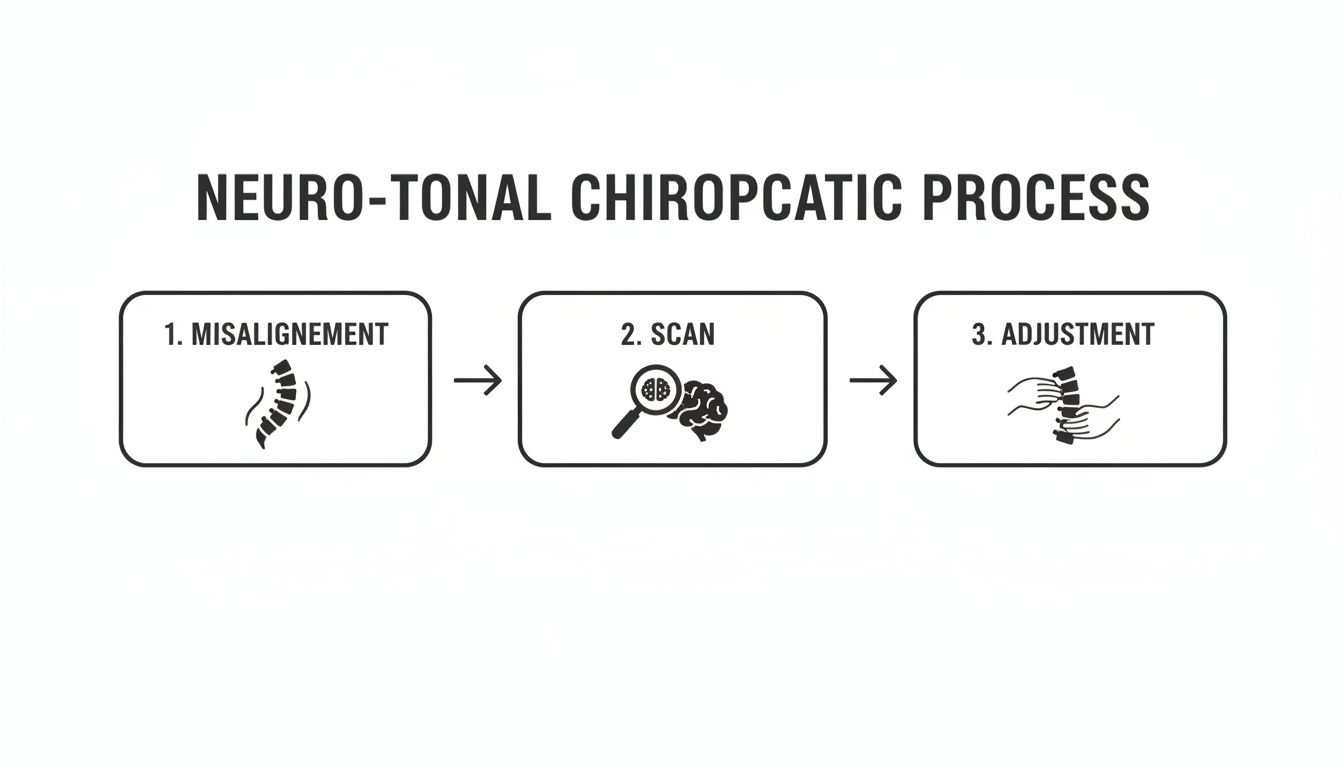
This simple flow shows how we pinpoint the source of nervous system interference and then work to correct it, helping restore your body’s natural balance.
Step 3: Comprehensive Chiropractic Exam
With the scan data in hand, we move on to a detailed, hands-on chiropractic examination. This is where we bring everything together—your health history, your current symptoms, and the objective findings from the scans.
This physical assessment helps us confirm the exact location and severity of any spinal misalignments (what we call subluxations) that are creating interference in your nervous system. It’s the final piece of the diagnostic puzzle.
Step 4: Your Personalized Care Plan
Now, we build your family's roadmap to wellness. We’ll schedule a follow-up meeting to go over all of our findings with you in detail. We'll show you the results from your scans, explain exactly what they mean in plain language, and present a personalized care plan designed to meet your family's specific goals.
This plan will outline the recommended frequency of adjustments and a clear timeline for re-scans so we can track progress together. Our goal is to make sure you understand every aspect of the plan and feel confident about the path ahead.
Step 5: Gentle Adjustments and Progress Tracking
The final step is to begin the gentle adjustments that help your nervous system find its way back to regulation. Using precise, low-force techniques like the Torque Release Technique (TRT), we work to release stored tension and clear the interference from your body's communication pathways.
We don’t just hope for the best—we track your progress with follow-up Insight Scans. This allows both you and our team to see the objective changes happening in your nervous system. We can celebrate the improvements and adjust the plan as needed to ensure you get the best possible results.
Common Questions About Nervous System Care
Exploring a new path for your family’s health always brings up a few questions. That’s completely normal. When you’re trying to find a real, lasting solution for an overactive nervous system, you deserve clear answers that give you confidence.
We’ve put together a list of the most common things parents ask us. Our goal is to demystify our gentle, neurologically-focused approach so you can make the best decision for your loved ones, whether you're seeking support for your newborn, your child, or yourself.
Is Chiropractic Care Safe For My Baby and Children?
Absolutely. This is often the first and most important question we get from parents, and we’re happy to answer with a resounding yes.
Pediatric chiropractic adjustments are incredibly gentle and specifically tailored to a child’s delicate, developing nervous system. If you're picturing an adult adjustment, think again. The pressure we use is often no more than what you’d use to check the ripeness of a tomato.
As the only Pediatric Certified (PX) clinic in Hayden, we have specialized training to care for the littlest members of your family. We use advanced scans—never guesswork—to find exactly where, when, and how to make a gentle adjustment. Our focus is on removing interference so their nervous system can function at its best, which is fundamental for healthy development right from day one.
How Is Neuro-Tonal Chiropractic Different From Traditional Chiropractic?
This is a fantastic question because it gets to the heart of what we do. While traditional chiropractic often focuses on musculoskeletal pain and improving range of motion, neuro-tonal chiropractic’s main focus is on the function of the nervous system itself.
Our goal isn't just to make you "feel" better for a little while, but to actually improve how your brain and body communicate for the long haul.
We do this through specific techniques designed to regulate the body's master control system.
- We look at "tone." We’re measuring the "tone" of the nervous system—is it stuck on high alert in a "fight or flight" state?
- We use gentle techniques. Our methods, like the Torque Release Technique (TRT), don't involve any of the popping or twisting you might associate with chiropractic care.
- We measure everything. We rely on objective data from our Insight Scans to see exactly how your nervous system is performing, rather than just going by symptoms alone.
This focus on neurological function is why we see such profound changes in areas like anxiety, sleep, sensory processing, and overall well-being.
While structural health is important, true wellness comes from a nervous system that is clear, connected, and resilient. Our approach targets the root cause—the neurological interference—to help your body regulate and heal itself.
What Are the Insight Scans and Do They Hurt?
The Insight Scans are a cornerstone of our practice, and we can assure you they are completely safe, non-invasive, and painless. There is absolutely no radiation involved, which makes them perfectly safe for everyone, including pregnant mothers and brand-new babies.
These advanced scans give us an objective, data-driven look at how your nervous system is functioning. One scan measures tiny temperature differences along the spine to flag areas of autonomic nerve dysfunction. Another measures the electrical activity in the muscles supporting your spine to see exactly where your body is storing stress.
This technology gives us a clear picture of your nervous system's health, helps us create a precise care plan, and allows us to track your progress objectively over time.
How Do I Get Started With a Consultation?
Getting started is simple. You can call our office or visit our website to schedule your initial consultation. This first appointment is just a conversation, not a commitment. It’s our chance to listen to your family’s health story and goals to see if our neurologically-focused approach is the right fit.
To make things even easier, we also offer a complimentary insurance benefits check. We want to make sure there are no financial surprises along the way. Our mission is to give you all the information you need to take that next confident step toward better health.
At First Steps Chiropractic, we are here to help your family find balance and resilience. If you're ready to explore a gentle, effective, and neurologically-focused path to wellness, we're ready to talk. Schedule your consultation with us today and let's get started.