

Preparing for labor involves so much more than just packing a hospital bag. It’s really a dedicated process of getting your body, mind, and nervous system all on the same page. This means blending targeted physical exercises, optimizing your nervous system through chiropractic care, and keeping up with mindful nutrition. When you take a proactive approach, you'll often find it can lead to shorter labor, fewer interventions, and a smoother postpartum recovery.
A Holistic Blueprint for Your Birth Preparation
Think of preparing for childbirth as building a partnership between you, your body, and your baby. When these three are working in harmony, the entire experience can feel more empowering and manageable. Instead of just waiting for labor to begin, you can actively shape the process by focusing on a few key pillars of preparation.
This isn't about chasing a "perfect" birth, but about creating the best possible conditions for your body to do what it’s built to do. It’s an integrated approach that recognizes the deep connection between your physical state and your mental calm. When your nervous system is balanced and your body is aligned, those communication pathways are crystal clear, which can mean more efficient contractions and a more positive birth outcome.
The Mind-Body Connection in Labor
The link between your mental state and your physical experience during labor is incredibly powerful. Feeling anxious or fearful can trigger a stress response, releasing hormones that cause muscles—including your uterus—to tense up. This can potentially slow down your labor. On the flip side, a calm and centered mind supports the release of hormones like oxytocin, which helps facilitate effective contractions.
Here are the key areas to focus on:
- Physical Conditioning: Build strength and flexibility, especially in your pelvic floor and core, to support the demands of labor.
- Nervous System Regulation: Make sure the brain-body connection is clear and balanced. Specialized prenatal care can be a huge help here.
- Mental and Emotional Readiness: Develop coping strategies, breathing techniques, and a positive mindset to navigate the intensity of childbirth.
A neurologically-focused approach, like the care we provide with prenatal chiropractic, recognizes that a well-functioning nervous system is the foundation for a well-functioning body. This directly impacts everything from your pelvic alignment to hormonal balance during labor.
To help you visualize this integrated approach, here’s a timeline showing how you can focus on your body, mind, and nervous system as you prepare.

This visual highlights that preparing for birth is a parallel journey. You’re strengthening your physical self while calming your internal systems so everything can function at its best. We’ll get into how gentle chiropractic care, a key part of this blueprint, specifically supports pelvic biomechanics and nervous system health.
You can learn more about the unique benefits of chiropractic care during pregnancy in our detailed guide. In the sections that follow, we'll dive deeper into each of these essential pillars, giving you actionable steps to help you prepare.
Building Physical Strength and Flexibility for Birth

Think of preparing your body for labor like training for an endurance event. It’s not about hitting the gym hard but about intentional, gentle movements that build strength, stamina, and flexibility. Getting your body ready for the marathon of childbirth helps you navigate the physical demands with more confidence and ease.
A well-conditioned body is simply more resilient. When you focus on key areas—like your core, pelvic floor, and hips—you’re actively helping your body work with your baby during birth. Even a simple, consistent routine can make a profound difference in your labor experience.
Master Pelvic Mobility for Better Positioning
One of the best things you can do to prepare for labor is to encourage pelvic mobility. A flexible, open pelvis gives your baby the room needed to get into the best possible position for birth, which can translate to a smoother, more efficient labor. A few gentle movements each day can make a huge impact.
Try incorporating these into your daily routine:
- Cat-Cow Stretches: Get on your hands and knees, gently arching your back and then letting your belly drop. This simple movement boosts spinal flexibility and encourages pelvic tilting.
- Pelvic Tilts: You can do these anywhere—standing, lying down, or on an exercise ball. Just gently tilt your pelvis forward and back to release lower back tension.
- Figure-Eights: Sit on an exercise ball and trace a slow figure-eight pattern with your hips. This is fantastic for opening the hips and can feel incredibly soothing during early labor.
These exercises aren't just stretches; they actively create the physical space your baby needs to navigate the birth canal. You can think of it as gently guiding your baby into the starting blocks.
Understand Your Pelvic Floor Connection
Your pelvic floor muscles are the support system for your pelvic organs, and their role in birth is huge. But here's a common misconception: it's not all about Kegels. Preparing for birth requires both strengthening and releasing these crucial muscles. A pelvic floor that knows how to relax and lengthen is what allows your baby to pass through.
The goal is a dynamic pelvic floor—strong enough to support you during pregnancy but flexible enough to open up during delivery. An overly tight pelvic floor can actually make the pushing stage more difficult.
To get in touch with that release, practice deep, diaphragmatic breathing in a child's pose or a deep squat. As you inhale, feel the muscles gently expand downward. As you exhale, just let them return to a neutral position without clenching.
For more ideas on effective and safe movements, check out our guide on safe exercises for pregnant women.
Build a Supportive Core and Flexible Hips
A strong, functional core is your best friend during pregnancy, providing essential support for your back and pelvis as your belly grows. Pregnancy-safe core work isn't about crunches. Instead, it focuses on deep stabilizing muscles with exercises like bird-dog or seated abdominal bracing, which build stability without putting pressure on your abdomen.
Flexibility is the other half of the equation, especially in your hips and inner thighs. Tight hips can restrict your pelvic opening and add to discomfort.
Stretches to Create Space:
- Butterfly Stretch: Sit with the soles of your feet together and let your knees fall out to the sides to gently open your inner thighs.
- Deep Squats: Hold onto something stable and lower yourself into a deep squat, keeping your heels on the floor. This position is a natural pelvic opener.
- Hip Flexor Stretch: In a kneeling lunge, gently press your hips forward to get a good stretch in the front of your hip.
Carving out just 15 minutes a day for these targeted movements can dramatically improve how physically ready you feel. This consistent effort builds the muscle memory and flexibility that will serve you well when labor begins, helping your body work more efficiently through every stage.
Aligning Your Nervous System for a Smoother Labor
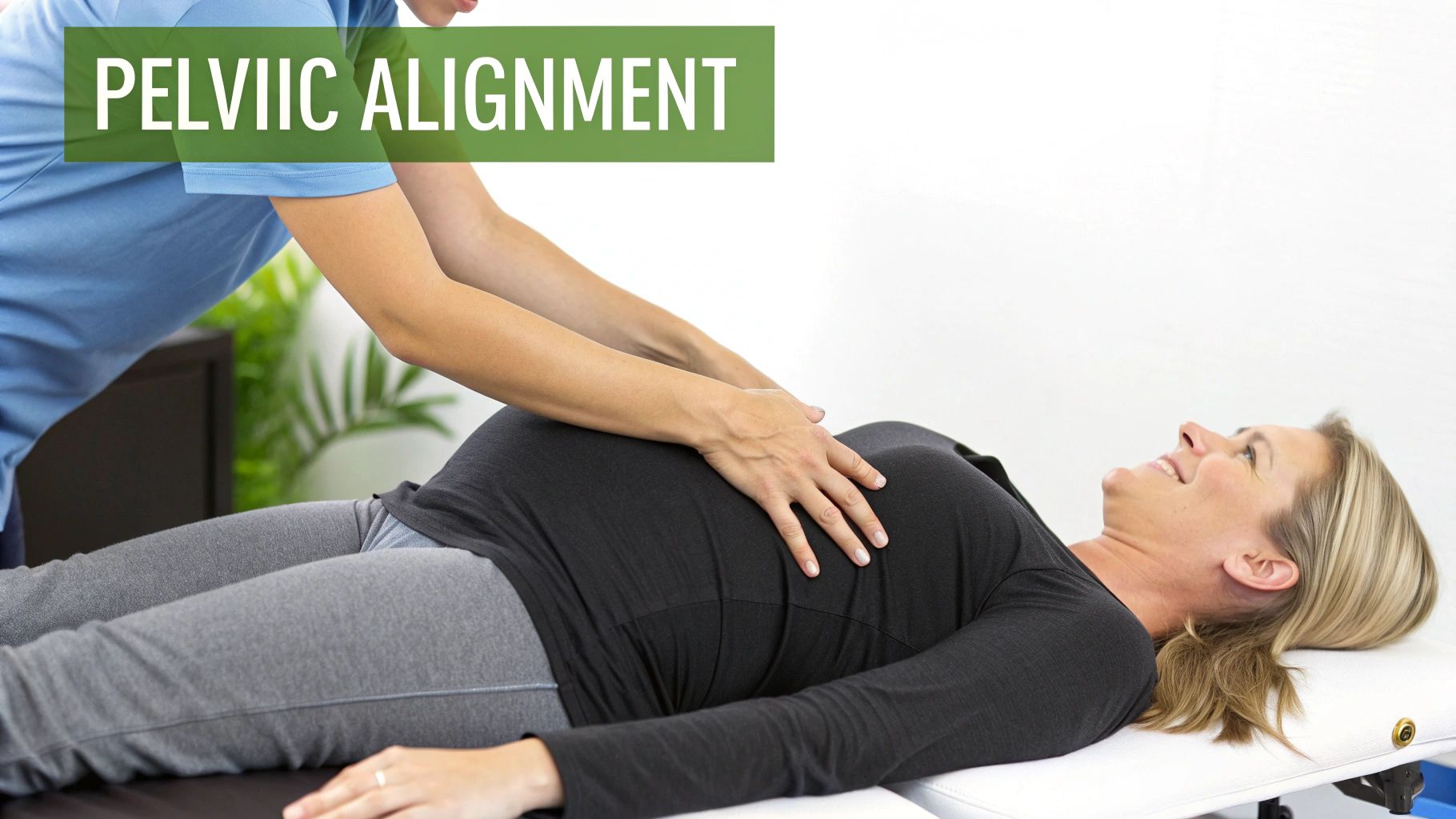
While all those squats and stretches are building your body's strength, there's another system quietly running the show: your nervous system. Think of it as the master control center, coordinating every single signal and contraction during labor. If that communication network has any static or interference, labor can feel less efficient and much more challenging.
Gentle, specific prenatal chiropractic care is designed to clear up that static. By making sure your spine and pelvis are properly aligned, we can remove interference from the nervous system. This allows for crystal-clear communication between your brain and your body—a crucial ingredient for a smoother, more effective labor.
The Webster Technique for Optimal Pelvic Function
A true cornerstone of prenatal chiropractic is the Webster Technique. It's a common misconception that this technique is for turning babies. In reality, it's a specific analysis and adjustment focused on reducing stress in the pelvis to improve its overall balance and function. The goal is to create the best possible environment for your baby to thrive in.
When the pelvis is misaligned, it often creates tension in the surrounding muscles and ligaments, especially the round ligaments supporting the uterus. This can lead to uterine constraint, limiting the space your baby has to get into the ideal position for birth.
By balancing the pelvis with the Webster Technique, we help ensure the uterus is not being torqued or twisted. This allows the baby to find the optimal head-down position naturally, which is a key factor in preparing your body for labor.
This is exactly why the technique is so well-known for helping with breech presentations. We aren't manually turning the baby—we're simply restoring balance so the baby can do the turning all on their own.
How a Calm Nervous System Influences Labor
Pregnancy puts a ton of stress on your body, both physically and emotionally. When you're stressed, your body defaults to a "fight-or-flight" state, which is the exact opposite of what you want during the natural, flowing process of labor. Chiropractic adjustments help gently shift your nervous system into a "rest-and-digest" state, which promotes calm and relaxation.
Let's take a real-world example: a mom-to-be in her third trimester is dealing with nagging sciatica pain. That constant pain keeps her nervous system on high alert. A prenatal chiropractor can use targeted adjustments to relieve the pressure causing that pain.
- Pain Reduction: Alleviating the nerve irritation doesn't just make her more comfortable; it calms her entire nervous system down.
- Improved Sleep: With less pain, she can finally get the deep, restorative rest she needs to conserve energy for the big day.
- Enhanced Mind-Body Connection: A calmer state helps her become more in tune with her body's signals and rhythms during birth.
This reduction in physical stress is non-negotiable for effective labor prep. It helps ensure your body isn't fighting itself and can focus all its energy on the beautiful task at hand. You can learn more about the deep connection between the vagus nerve and pregnancy and how a calm system supports a healthier experience.
The Measurable Impact of Prenatal Chiropractic Care
The benefits of aligning your nervous system aren't just feel-good anecdotes; they're backed by some really encouraging findings. Women who receive consistent prenatal chiropractic care have been shown to have a direct, positive impact on their labor outcomes.
For example, studies have shown that chiropractic adjustments throughout pregnancy can lead to dramatically shorter labor times. For moms who have given birth before, there's an average reduction of 31% in labor duration. For first-time moms, the number is just as impressive, with an average of 25% shorter labor. The data makes it clear: a well-aligned body simply works more efficiently.
This table provides a snapshot of the research, highlighting how chiropractic care can positively influence labor and delivery.
Chiropractic Care Impact on Labor Outcomes
| Metric | Improvement with Chiropractic Care |
|---|---|
| Labor Duration (First-Time Moms) | Average of 25% shorter |
| Labor Duration (Multiparous Moms) | Average of 31% shorter |
| Breech Presentation | 82% success rate in resolving with the Webster Technique |
| Back Pain During Labor | Significantly reduced, leading to less need for interventions |
As you can see, the improvements are significant across the board, from shorter labor to better positioning for the baby.
Ultimately, preparing your body for birth is all about creating an internal environment of balance, calm, and efficiency. Gentle chiropractic care is a powerful tool to ensure your nervous system—the master controller—is functioning at its absolute best, paving the way for a smoother and more positive birth experience.
Fueling Your Body and Mind for Delivery
Just like a marathon runner prepares for a race, your third trimester is all about intentionally fueling your body for the incredible endurance event of labor. This final stretch isn’t just about waiting—it’s about actively building up your energy reserves, nourishing your tissues, and cultivating a calm, powerful mindset.
What you eat, drink, and even think has a direct line to your stamina and resilience on delivery day. Think of food as functional fuel. Your body is working overtime to finish growing your baby and prepare for birth, making every meal an opportunity to give it the exact building blocks it needs. This isn't about a rigid diet; it's a mindful approach to eating for pure strength and energy.
Nourishing Your Body for Peak Performance
In these final weeks, your body has very specific nutrient demands to support tissue elasticity, energy production, and hormonal balance. When you focus on nutrient-dense foods, you ensure both you and your baby have everything required to thrive. It’s a simple but profound way to prepare your body for labor from the inside out.
Certain foods are rockstars during this time:
- Iron-Rich Foods: To fight fatigue and keep your blood volume healthy, load up on leafy greens like spinach, lean red meat, and lentils. Iron is essential for carrying oxygen to your hard-working muscles, including your uterus.
- Healthy Fats: Think avocados, nuts, and seeds. These provide sustained, slow-burn energy and are crucial for your baby's brain development. They also help your body absorb other important vitamins.
- Dates: A growing body of research suggests that eating dates daily in the last few weeks of pregnancy can help with cervical ripening and may even reduce the need for labor induction. If it feels right for you, aiming for about six dates a day is the general recommendation.
And don't forget hydration. It's non-negotiable. Your uterine muscles need plenty of water to contract efficiently. Dehydration can sometimes trigger Braxton Hicks contractions, so keep a water bottle glued to your hand and sip constantly all day long.
Your nutritional strategy in the third trimester is about so much more than calories. It’s about providing the specific resources your body needs to perform one of its most demanding and incredible tasks.
Cultivating Mental and Emotional Resilience
While physical fuel is critical, your mental and emotional state is equally important. Labor is just as much a mental game as it is a physical one. By practicing relaxation and breathing techniques ahead of time, you’re building mental muscle memory. This gives you go-to tools to pull from your toolkit when contractions intensify.
These practices help shift your nervous system out of a "fight or flight" stress response and into a state of calm focus. When your mind is at ease, your body is better able to relax and open, allowing the labor process to unfold more smoothly instead of fighting against it.
Breathing Techniques for Labor Management
Your breath is your anchor during labor. It’s the one thing you can always control. When you feel a contraction building, a slow, controlled breathing pattern can make all the difference. It sends a powerful signal to your brain that you are safe, preventing the unconscious tensing-up that can work against your body's efforts.
A simple yet incredibly effective technique is Box Breathing:
- Inhale Slowly: Breathe in through your nose for a count of four.
- Hold Gently: Hold your breath for a count of four.
- Exhale Slowly: Breathe out through your mouth for a count of four.
- Hold Gently: Hold at the end of the exhale for a count of four.
Practicing this daily will help it become second nature.
Another powerful tool is visualization. As you breathe, close your eyes and imagine your cervix softening and opening. Picture your baby moving down and your body working in perfect, powerful harmony. This mental rehearsal creates a positive feedback loop, building your confidence and dialing down fear. Combining smart nutrition with these mindfulness practices creates a robust toolkit, ensuring both your body and mind are fully prepared for the big day.
Your Practical Toolkit for Labor and Partner Support

As you get closer to your due date, all that preparation starts to feel very real. This is when you and your partner shift into being an active, hands-on team, ready to navigate labor together. Honestly, moving your body and having confident support are absolute game-changers for managing the intensity of birth.
Think of labor positions less like static poses and more like intuitive movements that help you work with gravity, not against it. The goal here is simple: open your pelvis, make space for your baby, and find relief during contractions. Taking an active role can make the entire experience feel much more empowering and less overwhelming.
Using Gravity Labor Positions That Work
When you’re upright and mobile, gravity is your best friend. It helps guide your baby down into the pelvis and encourages your cervix to dilate more efficiently. Lying flat on your back often works against this natural process, so exploring different positions is a key part of how you prepare your body for labor.
Here are a few powerful, gravity-friendly positions to practice ahead of time:
- Leaning Forward: Stand and lean against a wall, your partner, or the back of a hospital bed. This simple move takes pressure off your lower back and can feel incredibly soothing during a tough contraction.
- Squatting: A deep squat is one of the most effective ways to open up your pelvic outlet, giving your baby maximum space to descend. Hold onto a sturdy chair or have your partner support you to maintain balance and save energy.
- Hands and Knees: This position is fantastic for relieving back labor. It lets your belly hang, which encourages the baby to rotate into a better position and takes that intense pressure right off your spine.
The key takeaway here is to change positions often. Your body will usually tell you what it needs if you listen. Even just shifting your weight prevents fatigue and can help keep labor progressing smoothly.
Empowering Your Birth Partner for Active Support
A prepared partner is an invaluable asset. They can transform from a nervous spectator into a confident, essential member of the birth team. Their role goes so far beyond just holding your hand—they can provide physical relief, emotional encouragement, and crucial advocacy when you need it most.
For a partner to be truly effective, they need a concrete plan. Understanding specific comfort measures gives them tangible ways to help when you're in the thick of it.
Partner's Action Plan:
- Master Counter-Pressure: This is a lifesaver for back labor. Your partner can use the heel of their hand or even a tennis ball to apply firm, steady pressure to your lower back or hips during a contraction.
- Offer Verbal Encouragement: Remind you of your strength. Simple phrases like, "You are so strong," or "Each contraction brings our baby closer," can be incredibly grounding when you feel like you can't go on.
- Be the Advocate: A partner can communicate your birth preferences to the medical team, ask clarifying questions, and make sure your voice is heard. This frees you up to stay focused on the work of labor.
Imagine this: you're in the middle of intense back labor and feeling totally overwhelmed. Instead of just watching helplessly, your partner immediately helps you lean over an exercise ball while they apply firm counter-pressure to your hips. This not only eases the pain but gives you a mental boost, reminding you that you're in this together.
Recognizing the Early Signs of Labor
Knowing what to look for can seriously reduce anxiety as your due date gets close. Your body often gives you subtle clues that it’s getting ready.
Keep an eye out for these common signs:
- Pelvic Pressure: An increased feeling of heaviness or fullness in your pelvis as the baby "drops."
- Loss of Mucus Plug: This can happen days or even weeks before labor begins, but it’s a clear sign your body is preparing.
- Persistent Lower Back Ache: A dull, constant ache in your lower back that just won't go away can be an early indicator.
Back pain is a common complaint, with over 50% of women experiencing it during pregnancy. Proactive care, however, can make a world of difference. Research shows that prenatal chiropractic adjustments significantly reduce the incidence of "back labor," with some studies showing 84% of women finding relief. This pain reduction often leads to shorter labors and fewer interventions because a well-aligned body simply functions more efficiently. You can learn more by checking out the research on chiropractic and back pain in labor.
Common Questions About Preparing for Labor
As your due date gets closer, it’s totally normal for a flood of questions to pop up. You’ve been preparing for months, but suddenly the little details and “what-ifs” feel much more real. Let's tackle some of those common concerns to quiet the noise and help you feel confident and ready.
Knowing what to expect is a huge part of feeling in control. Here are some of the most frequent questions we hear from expecting parents, with clear answers to help you navigate these final weeks with peace of mind.
How Can I Tell Real Labor From Braxton Hicks?
This is one of the biggest questions for almost every expecting mom. The real difference between true labor contractions and Braxton Hicks “practice” contractions comes down to their pattern and progression.
- Braxton Hicks are all over the place. They’re irregular, unpredictable, and don’t get stronger or closer together. A lot of the time, they’ll fade away if you change positions, take a walk, or drink a big glass of water.
- True Labor Contractions fall into a rhythm. They’ll start to build a consistent pattern, gradually becoming more intense, lasting longer (from 30 seconds up to a minute or more), and happening more often. Nothing you do will make them stop; they just keep getting stronger.
A great guideline is the 5-1-1 rule: contractions that are five minutes apart, last for one minute each, and have been happening like that for at least one hour. For many, this is the cue that it's time to head to your birthing location.
Is It Safe to Get Adjusted Close to My Due Date?
Absolutely. Not only is it safe, but it’s incredibly beneficial. We perform gentle, specific chiropractic adjustments, especially using the Webster Technique, right up until the day of delivery.
These final tune-ups help ensure your pelvis is balanced and your nervous system is calm, which creates the best possible environment for a smooth labor. Many of our practice members find that an adjustment in late pregnancy or even during early labor helps them feel more comfortable and encourages labor to progress more efficiently.
Getting adjusted close to your due date isn't just about managing last-minute aches and pains; it's about optimizing your body's function for the marathon of childbirth. A balanced pelvis gives your baby the best chance to get into the ideal position for birth.
Can Chiropractic Care Help Avoid a C-Section?
While no single thing can ever guarantee a specific birth outcome, we’ve seen firsthand how prenatal chiropractic care can significantly reduce the need for interventions like C-sections. This is almost entirely due to its impact on pelvic alignment and helping the baby get into the right position.
A common reason for a C-section is a breech presentation, meaning the baby isn't head-down. The Webster Technique has an incredible 82% success rate in helping correct breech positions simply by restoring pelvic balance and function.
Research also shows that women under regular chiropractic care often experience smoother labors, with labor times reduced by 25-31%. By creating a better environment for the baby to move into an optimal position, chiropractic care directly addresses a key factor that can otherwise lead to a surgical birth. You can learn more about these findings on chiropractic and pregnancy at chiroher.com.
What Are Some Natural Ways to Encourage Labor?
If you’re past your due date and starting to feel anxious, there are a few gentle, natural things you can try to encourage labor to start. Just be sure to chat with your provider before trying any of them.
Gentle Encouragement Methods:
- Walking: It’s simple, but it works. Walking uses gravity to help your baby settle deeper into your pelvis, putting gentle, consistent pressure on your cervix.
- Spicy Food or Nipple Stimulation: These are more anecdotal, but the theory is that they stimulate the digestive system or release oxytocin, the hormone that can trigger uterine contractions.
- Relaxation: Stress is the enemy of labor progression. A warm bath, meditation, or just doing something that calms you down can help your body relax enough to let labor begin on its own time.
Ultimately, your baby knows the best time to arrive. Focusing on rest and staying calm in these final days is one of the most powerful things you can do to prepare your body for labor.
At First Steps Chiropractic, we are here to support you through every stage of your pregnancy with gentle, neurologically-focused care. If you're ready to optimize your body for a smoother, more empowered birth experience, schedule your consultation with us today.