
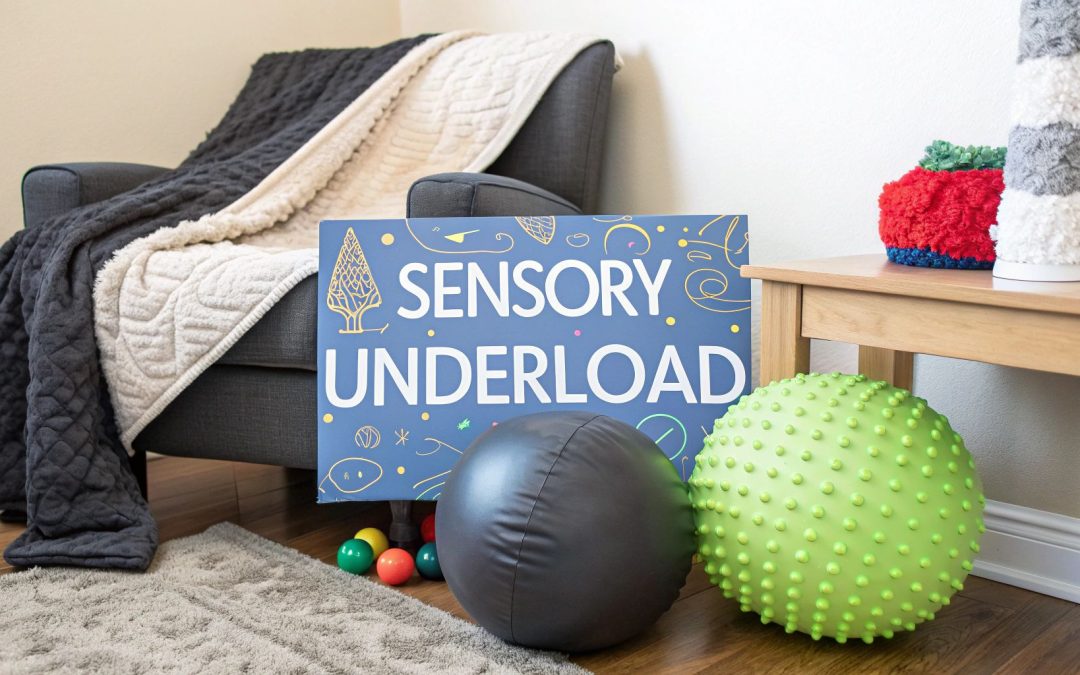
When a child’s nervous system is hyposensitive, it’s essentially under-responsive to the world around it. You can think of it like a radio with the volume turned way down low; the brain needs much more intense and prolonged sensory signals just to register that something is happening.
This is why these kids are constantly on the move, seeking out stronger sensations to help them feel organized, grounded, and simply aware of their own bodies in space.
What Is Hyposensitive Sensory Processing Disorder
Imagine your child’s brain has a sensory “cup” that needs to be filled up each day to feel alert and regulated. For most of us, the normal sights, sounds, and movements of life are enough to gradually fill that cup.
But for a child with hyposensitivity, it’s like their cup has a small leak. Everyday sensory input trickles out almost as fast as it comes in, never quite reaching the level needed to feel “full.”
This explains why they need a much faster, more intense stream of information. They might seem to have endless energy, crash into furniture on purpose, or give bone-crushing hugs. It’s not bad behavior—it’s their nervous system actively trying to get the feedback it’s missing to make sense of the world. Grasping this is the first real step toward giving them the support they need.
The Two Sides of Sensory Processing
Sensory challenges usually fall into one of two buckets: being over-responsive (hypersensitive) or under-responsive (hyposensitive). While it's common for kids to have a mix of both depending on the sense, understanding the main difference is crucial.
Hypersensitivity is when the nervous system's volume is cranked up too high, making even small inputs feel like an assault. Hyposensitivity is the polar opposite. To get a better handle on the bigger picture, you can check out our detailed guide on what sensory processing disorder is.
A child with hyposensitivity isn't looking for trouble; they are looking for information. Their sensory-seeking behaviors are their brain's natural attempt to feel present, regulated, and connected to their own body.
Hyposensitivity vs Hypersensitivity At a Glance
Sometimes, seeing the two extremes side-by-side makes everything click. This table breaks down the core differences to help you spot the patterns in your child’s behavior.
| Characteristic | Hyposensitive (Under-Responsive) | Hypersensitive (Over-Responsive) |
|---|---|---|
| Core Need | Seeks out intense sensory input to feel regulated. | Avoids sensory input to prevent feeling overwhelmed. |
| Behavioral Cues | Appears to have endless energy; crashes, jumps, and spins. | Is easily startled; avoids crowds, loud noises, and messy textures. |
| Response to Touch | Craves deep pressure, tight hugs, and rough play. | Dislikes light touch, certain clothing tags, and unexpected hugs. |
| Pain Tolerance | May not notice bumps, scrapes, or being hot/cold. | May have an extreme reaction to minor discomfort or pain. |
| Alertness | Can seem "tuned out" or lethargic without stimulation. | Is often in a state of high alert or anxiety. |
Recognizing whether your child is primarily seeking input or avoiding it is fundamental to creating a supportive environment that helps them thrive instead of just cope.
Recognizing the Signs of Hyposensitivity in Your Child
Figuring out if your child has hyposensitive sensory processing disorder can feel like you're trying to put together a complex puzzle. The behaviors you're seeing—the constant motion, the crashing, the chewing—are often just the outward signs of a nervous system that is hungry for more information. Instead of seeing these actions as disruptive, we can learn to read them as clues that point directly to what your child’s body and brain truly need.
These signs aren't one-size-fits-all. They show up differently across the eight sensory systems and can look very different as a child gets older. For example, a baby who seems unusually calm and rarely fusses might grow into a toddler who barrels into everything, and then become a school-aged child who is constantly chewing on their shirt collar. Each of these behaviors is a piece of the same puzzle: a brain that needs more input to feel organized and calm.
This diagram helps visualize what's happening at a neurological level. It shows how the brain can receive signals that are either too high in volume (hypersensitive) or, in this case, too low (hyposensitive).
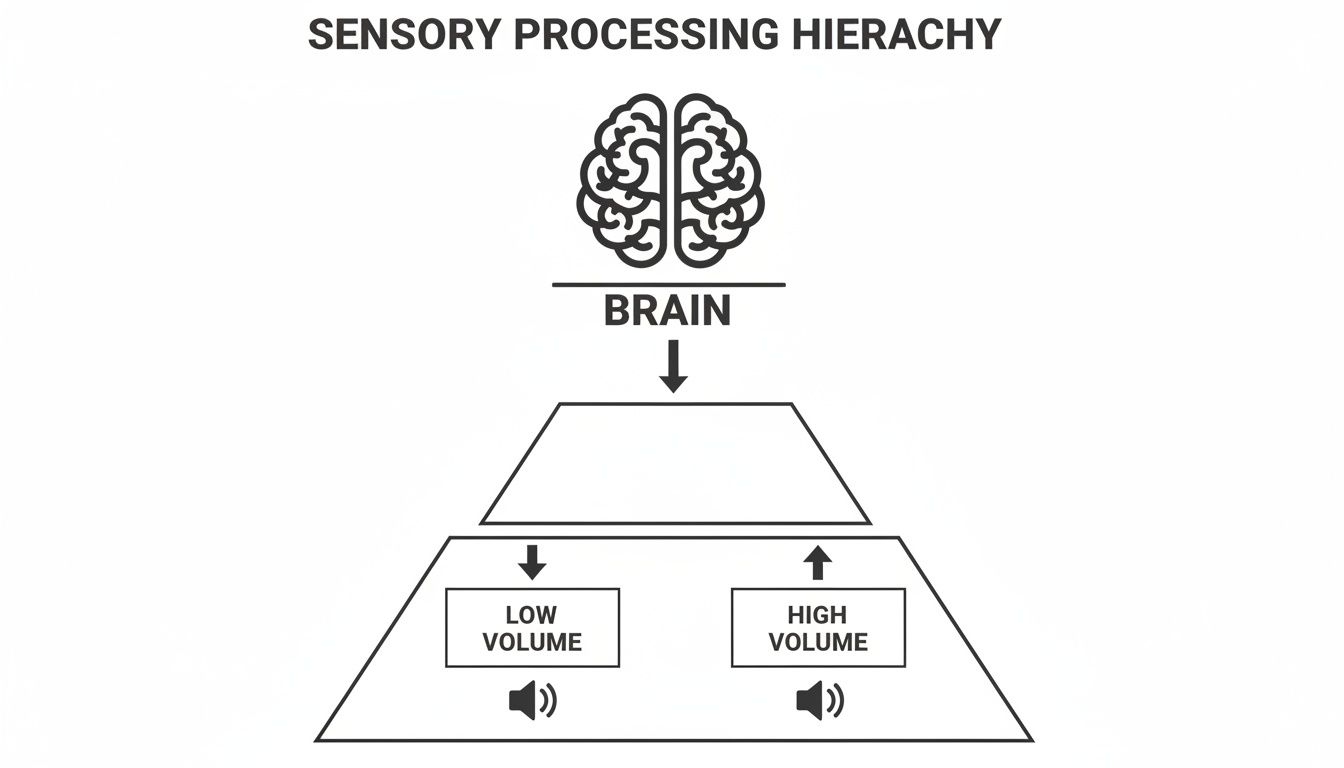
This image simplifies a complex process, but the core idea is that a hyposensitive child's brain is working with a signal that’s fundamentally turned down too low. They need more intense sensory experiences just to register what's happening around them.
The Hidden Senses: Vestibular and Proprioceptive
Two of the most powerful systems involved in hyposensitivity are the ones we rarely talk about: the vestibular system (our sense of balance and motion) and the proprioceptive system (our sense of body awareness).
An under-responsive vestibular system is exactly why a child might spin and spin in circles without ever getting dizzy. They aren't just playing—they are quite literally trying to "wake up" their brain with intense movement.
Proprioceptive seeking is just as common. This is the child who gives bone-crushing hugs, stomps their feet when they walk, and seems to crash into furniture or people on purpose. They aren't trying to be destructive; they're seeking that deep pressure input to help them understand where their body is in space. We dive deeper into these actions in our guide on common sensory-seeking behaviors.
When a child with hyposensitivity crashes, stomps, or spins, they are not misbehaving. They are feeding their nervous system the intense input it needs to feel calm, focused, and aware.
Signs Across the Five Familiar Senses
Hyposensitivity also shows up through the senses we all know well: touch, sight, sound, taste, and smell. Spotting these signs is crucial for understanding your child’s complete sensory profile.
- Tactile (Touch): This child might have an unusually high pain tolerance, hardly noticing scrapes or bumps that would make another child cry. They often prefer tight clothing, crave rough-and-tumble play, and may constantly touch everything and everyone.
- Auditory (Sound): You might feel like this child is ignoring you when you call their name, or they might not react to loud noises that startle others. On the flip side, they might make loud noises themselves, seeking that auditory feedback.
- Visual (Sight): A visually hyposensitive child is often drawn to bright, flashing lights or will stare intently at spinning objects like fans or wheels. They need more visual stimulation to keep their brain engaged.
- Oral (Taste and Smell): You may notice this child chewing on non-food items like pencils, shirt collars, or their own fingers. They also tend to prefer foods with intense flavors—extra spicy, sour, or crunchy—to get the sensory input they crave.
Interoception: The Eighth Sense
Finally, we have interoception, our internal sense of what’s happening inside our bodies. A child with poor interoceptive awareness may struggle to recognize internal cues like hunger, thirst, or the need to use the bathroom.
This can create major challenges with toilet training, as they may not feel the sensation of a full bladder until it's too late. They might also go long stretches without asking for food or a drink, simply because their brain isn't getting those signals from their body.
Understanding these patterns isn't just about labeling a problem—it's about recognizing how common these challenges are. Research suggests that between 5% and 16.5% of children struggle with sensory processing difficulties, and hyposensitive profiles make up a significant portion of those cases. One school-based study found that a conservative 5.3% of kindergarteners had SPD, a number that translates to hundreds of thousands of children in the U.S. alone.
These studies also show a strong link between sensory issues and attention. In one clinical sample, a staggering 41% of children had both sensory and attention problems, highlighting how deeply these systems are connected.
The Link Between Hyposensitivity and Other Conditions
Hyposensitive sensory processing rarely shows up by itself. It's much more common to see it as one piece of a larger neurodevelopmental puzzle, often sharing the stage with conditions like Autism Spectrum Disorder (ASD) and Attention-Deficit/Hyperactivity Disorder (ADHD). For parents, understanding this overlap is key to seeing the whole picture of your child’s needs.
For so many kids, what looks like classic inattention or hyperactivity is actually their nervous system’s way of seeking out the intense input it craves. The constant fidgeting, running, and climbing we often associate with ADHD can be a direct result of an under-responsive system trying to generate enough sensory information just to feel organized and focused. It’s not about a lack of willpower; it’s a neurological necessity.
Likewise, in Autism Spectrum Disorder, unique sensory responses are often a core feature. A child’s powerful need for deep pressure, their unusually high tolerance for pain, or their fascination with certain lights or textures aren’t just quirks. They are fundamental to how that child experiences and interacts with the world around them.
The Numbers Behind the Connection
This connection between hyposensitivity and other conditions isn't just a hunch; it's backed by solid clinical data. Looking at the numbers really highlights just how deeply intertwined these experiences are for neurodivergent kids.
Take the autism community, for instance. Sensory processing differences are incredibly common. It’s estimated that roughly 90% of individuals with ASD experience significant sensory challenges, and for many, that includes hyposensitivity to touch, sound, or movement. When you consider that recent data shows ASD prevalence is around 1 in 36 children in the U.S., you realize just how many kids need support for their under-responsive sensory systems. You can learn more about this profound connection in our article on supporting children with autism.
The overlap with ADHD is just as significant. Studies show that between 50% and 64% of children with ADHD also display signs of sensory processing difficulties, including hypo-responsive patterns. For these children, addressing the sensory piece of the puzzle is crucial for improving their focus and regulation.
Recognizing that sensory seeking is a neurological need—not a behavioral choice—transforms how we approach support. It shifts the goal from stopping the behavior to providing safer, more effective ways for a child to get the input their brain requires.
Why This Overlap Matters for Your Child
Understanding this link is crucial because it completely reframes how we should approach care. Helping a child with their hyposensitive needs isn't just an "add-on" to their ASD or ADHD support plan; it's an essential, foundational part of it. When a child’s sensory system is regulated, their ability to learn, engage, and manage their emotions improves dramatically.
Imagine trying to listen to a lecture in a room where the speaker is barely audible. You'd probably lean in, fidget in your chair, or tap your pen just to stay alert. A hyposensitive child is doing the exact same thing, but on a much larger, full-body scale.
By providing targeted sensory input through therapies and home strategies, we help fill their "sensory cup." This allows their nervous system to finally settle, freeing up the mental and emotional energy they need to tackle other challenges. This integrated approach—one that sees the deep relationship between sensory processing and other conditions—is what truly paves the way for meaningful progress.
Proven Therapies That Support Sensory Needs
Once you understand the "why" behind your child's constant movement and sensory-seeking behaviors, you can start exploring ways to truly support them. A diagnosis of hyposensitive sensory processing disorder isn't a label that limits your child; think of it as a map that points you toward proven, evidence-based therapies. These interventions are all designed to help their nervous system feel more organized, calm, and ready to take on the world.
The goal isn’t to stop sensory-seeking behaviors altogether. It's about giving them the right kind of sensory input in a structured, safe, and helpful way. This approach helps fill their "sensory cup" so they don't have to spend all day crashing, jumping, and spinning just to feel grounded in their own bodies.
The Cornerstone of Support: Occupational Therapy
When it comes to hyposensitive sensory processing disorder, Occupational Therapy (OT) is the gold standard of care. A pediatric occupational therapist is an expert in sensory integration—the brain's ability to take in sensory information, make sense of it, and respond appropriately. They have specialized training to look past the behaviors and get to the root of a child's neurological needs.
The first step with an OT is always a comprehensive assessment to build a unique "sensory profile" for your child. They'll figure out which sensory systems are under-responsive and just how much input your child needs to feel regulated. This deep dive is the foundation for a personalized and truly effective therapy plan.
From there, the OT uses fun, play-based activities in a sensory-rich gym. While it might look like just playing, every swing, jump, and crash is carefully planned to deliver the precise vestibular, proprioceptive, and tactile input that your child's nervous system has been craving.
Introducing the Sensory Diet
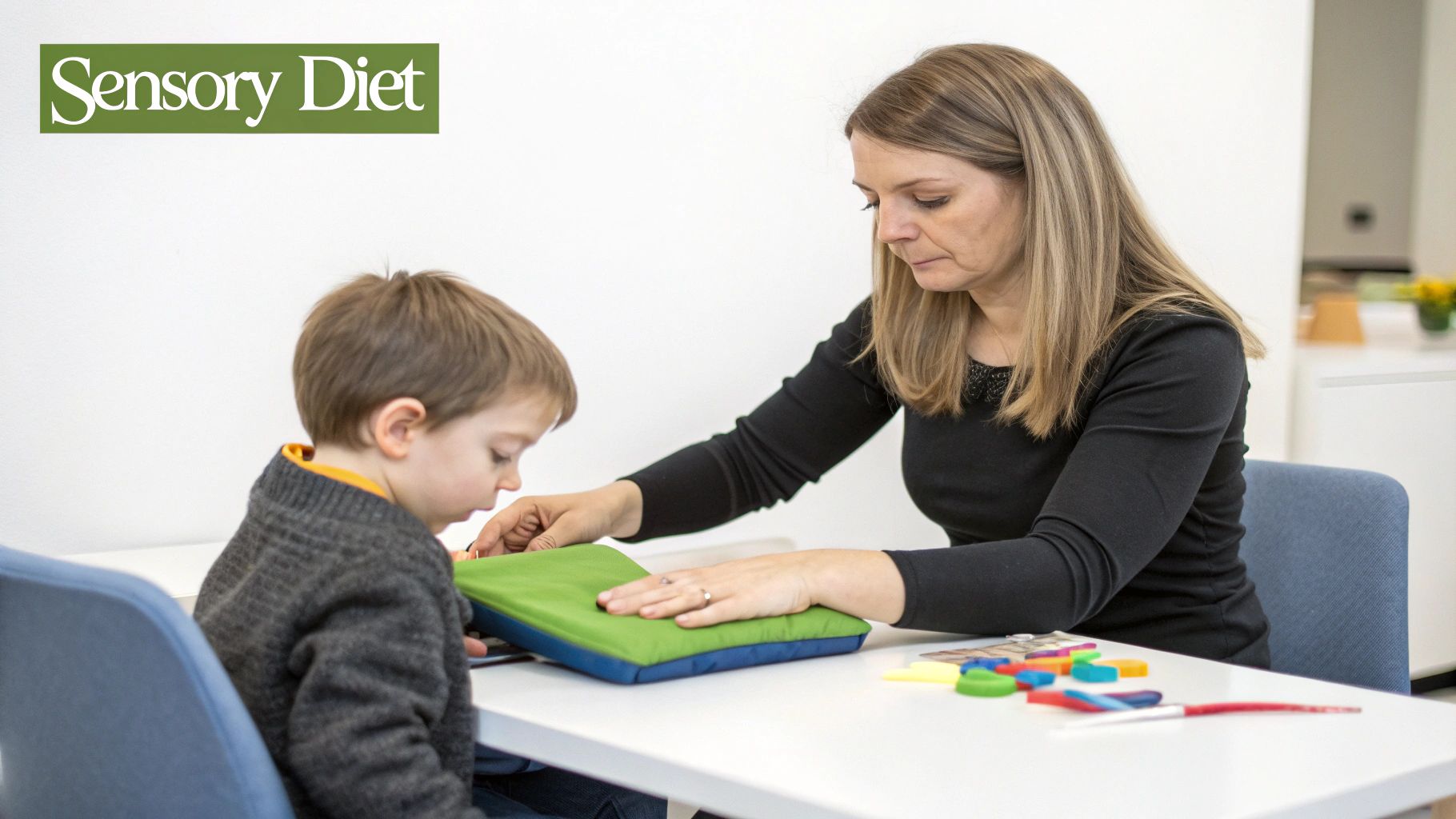
One of the most powerful tools an OT will create is a sensory diet. And no, it has nothing to do with food! A sensory diet is a carefully planned schedule of sensory activities and tools woven into your child's day to help them stay at that "just right" level of arousal and focus.
Think of it as giving them small, nourishing "sensory snacks" throughout the day before their nervous system gets so starved for input that it leads to unsafe or disruptive behaviors. A sensory diet is proactive, not reactive, and it empowers both you and your child to manage their needs.
A great sensory diet provides the right input at the right times, helping prevent the system from getting overwhelmed or under-stimulated. It’s custom-built for your child’s specific needs and the demands of their environment, whether they’re at home, school, or out in the community.
A sensory diet works by proactively feeding the nervous system the input it needs to stay balanced. It transforms the day from a series of reactive struggles into a structured flow of supportive, regulating activities.
Common activities in a sensory diet for a hyposensitive child often include:
- Heavy Work Activities: These tasks involve pushing, pulling, or carrying things, which provides powerful and organizing proprioceptive input. This could be as simple as helping carry a laundry basket, pushing a small shopping cart, or helping with yard work.
- Deep Pressure Input: This can be incredibly calming and grounding. Tools like weighted blankets, lap pads for seated work, or compression clothing can provide this steady, organizing pressure.
- Movement Breaks: Scheduling time for jumping on a mini-trampoline, swinging, or rolling on an exercise ball provides that intense vestibular input that helps "wake up" the brain and body.
- Oral Motor Activities: For kids who constantly chew on their shirts or other non-food items, a sensory diet might include safe alternatives like chewy tubes or snacks with a lot of crunch, like carrots or granola bars.
Behavioral Strategies for Home and School
Alongside a sensory diet, practical behavioral strategies can make a huge difference in daily life. These approaches focus on tweaking the environment and routines to better support your child's sensory system, making it easier for them to participate and thrive.
Creating a sensory-friendly space is a fantastic place to start. This might mean setting up a "crash corner" with pillows and beanbags where your child can safely get the deep pressure they need. At school, this could look like using a wiggle seat or a resistance band on their chair legs to allow for quiet movement during lessons.
Visual aids are also incredibly helpful. Using a visual timer can make transitions between activities much less stressful for a child whose nervous system has a tough time shifting gears. Similarly, a visual schedule helps them see what's coming next, which reduces anxiety and gives them a sense of predictability and control over their day.
How Neurologically-Focused Chiropractic Care Can Help
While Occupational Therapy is fantastic for building the essential skills a child needs to navigate their world, neurologically-focused chiropractic care gets to the very root of sensory challenges. Think of the nervous system as the body's master communication network—it's in charge of receiving, interpreting, and responding to every single sight, sound, and touch your child experiences.
For a child with hyposensitivity, this intricate network isn't processing signals with enough intensity. It's like having a bad cell phone connection; the messages from the environment just aren't getting through to the brain clearly. This forces the brain to constantly seek out bigger, louder, and more intense signals simply to make sense of what's going on. That underlying neurological imbalance is often the reason why sensory diets and other strategies become necessary in the first place.
The Brain-Body Connection
The goal of this approach is to improve the connection between the brain and the body. When a child’s nervous system gets stuck in a state of stress—from birth trauma, tumbles, or other stressors—it creates imbalance. In chiropractic, we call these specific areas of stuck stress subluxations.
A subluxation acts like a traffic jam on the information highway, interfering with the nervous system's ability to communicate efficiently. It slows down and distorts the sensory signals traveling to the brain. For a hyposensitive child, this neurological "traffic jam" is what keeps the volume of their sensory world turned down way too low.
Neurologically-focused chiropractic care doesn’t just treat the symptoms of hyposensitivity. It addresses the underlying neurological dysregulation, helping to clear the communication pathways so the brain can better process and understand sensory information.
Gentle, specific chiropractic adjustments are designed to release this stored tension and restore proper function. The process helps "turn up the volume" on the sensory system, allowing the brain to finally receive clearer signals. When the brain-body connection improves, the nervous system can start to regulate itself more effectively, which in turn reduces that constant, overwhelming need for intense sensory seeking.
Advanced Tools for Neurological Insight
To get a truly clear picture of what’s happening inside your child's nervous system, we use advanced, non-invasive technology. Insight Scans are a crucial part of our process, giving us a window into how your child’s nervous system is actually functioning. These scans measure and map out areas of stress and imbalance, showing us exactly where the communication breakdowns are happening.
These scans include three key components:
- Thermography: This scan measures the temperature along the spine to see where stress might be affecting organ and gland function.
- Surface EMG: This tool assesses how much energy the muscles supporting the spine are using, revealing hidden areas of tension and fatigue.
- Heart Rate Variability (HRV): This is a powerful measurement that shows how well your child’s nervous system can adapt to stress, giving us incredible insight into their overall resilience.
This data allows us to create a precise, personalized care plan that’s tailored to your child’s specific neurological needs.
Gentle Techniques for Lasting Change
The adjustments themselves are incredibly gentle and completely safe for children of all ages, even infants. We use techniques like the Torque Release Technique (TRT), which involves a specialized instrument to deliver a very light and specific impulse to the nervous system. There is absolutely no popping, twisting, or cracking.
This method is highly targeted, allowing us to correct subluxations with precision and help the nervous system shift out of a state of stress and into one of growth and healing. By addressing the root cause of the neurological imbalance, this type of care becomes a powerful partner to traditional therapies. While OT provides the crucial strategies for navigating the world, neurologically-focused chiropractic helps ensure the nervous system is in the best possible state to learn and apply them.
Practical Ways to Support Your Child at Home

Supporting a child with hyposensitive sensory processing disorder isn't about adding more to your already packed schedule. The best strategies are the ones you can weave right into your existing family routines, turning everyday moments into powerful sensory experiences.
By building sensory input into your morning, playtime, and bedtime rituals, you can proactively fill your child’s sensory “cup.” This helps them feel more grounded and regulated, ready to take on the world from the minute their feet hit the floor.
Power Up the Morning Routine
The start of the day is the perfect opportunity to give a hyposensitive child the intense input their nervous system craves. These activities are designed to wake up their brain and get their body ready for whatever comes next.
- Bear Hugs and Burritos: Start the morning with a few deep, firm bear hugs. You can also try rolling your child up snugly in a blanket, like a burrito, to provide that calming deep pressure all over their body.
- Crunchy Breakfasts: Serve foods that give strong oral feedback. Think crunchy cereals, crisp apples, or chewy granola bars. The intense input from the jaw muscles is incredibly organizing for the brain.
- Vibrating Toothbrush: A simple vibrating toothbrush can deliver a great burst of oral sensory information, helping boost alertness in a fun and functional way.
Weave Sensory Input into Playtime
Play is a child's most important work, and it's also the ideal time for "heavy work"—activities that involve pushing, pulling, and carrying. This provides organizing proprioceptive input that can be incredibly regulating.
Instead of seeing them as chores, you can frame these tasks as important "helper jobs." This not only meets their neurological needs but also gives them a sense of purpose. Have them help carry the laundry basket, push a small cart at the grocery store, or bring in a few grocery bags.
By reframing "chores" as "heavy work," you meet your child's deep-seated need for proprioceptive input. Carrying laundry isn't just a task; it's a powerful regulating activity that helps them understand where their body is in space.
Other great playtime ideas include building a fort with heavy couch cushions, having a lively pillow fight, or playing a game of tug-of-war. These activities deliver the intense feedback their body is looking for, but in a safe and structured way.
Wind Down with Calming Bedtime Rituals
Bedtime can be a real challenge when a child’s system is still seeking input. A calming sensory routine can signal to their nervous system that it's time to settle down and prepare for sleep.
A gentle but firm deep-pressure massage with lotion can be a wonderful way to connect and calm them down. Use firm, slow strokes on their arms, legs, and back. Another fantastic strategy is to stack a few heavy blankets on top of your child for a few minutes before they drift off—it provides that grounding, secure feeling their body needs to fully relax.
Common Questions About Hyposensitivity
When you're navigating the world of hyposensitivity and sensory processing disorder, a lot of questions pop up. Getting clear, straightforward answers is the first step toward feeling confident as you support your child’s unique neurological needs and advocate for the right kind of care.
We've gathered some of the most common concerns we hear from parents right here.
Can a Child Outgrow Hyposensitive Sensory Processing Disorder?
This is a big one. While a child’s core neurology doesn’t just disappear, their ability to manage it absolutely can—and does—change. They won't necessarily "outgrow" their under-responsive system in the traditional sense, but with the right support, they can develop incredible self-regulation skills. The goal is to make those sensory-seeking behaviors far less disruptive to their daily life.
The focus isn’t on a cure, but on empowerment. Through targeted strategies from occupational therapy and foundational support from neurologically-focused chiropractic care, your child can build the nervous system balance and gain the tools they need to truly thrive.
Is This Just a Case of Being a Daredevil?
It’s easy to confuse the two, but there's a crucial difference between a personality trait and a neurological need. A typical "daredevil" is often chasing a thrill or testing boundaries for the fun of it. Hyposensitivity, on the other hand, is driven by the brain's legitimate need for intense sensory input just to feel regulated and aware of its surroundings.
A child with hyposensitivity isn't looking for danger; they are desperately seeking the sensory information their brain isn't getting. They crash into the couch not to be reckless, but because they need that powerful feedback to understand where their body is in space.
When Should I Seek Professional Help for My Child?
Trust your gut on this. The time to seek professional support is when your child's sensory needs consistently get in the way of daily life. If their behaviors are creating significant challenges in these key areas, an evaluation is a great next step:
- School Participation: They’re struggling to focus, sit still, or engage in what’s happening in the classroom.
- Social Interactions: They have a hard time with personal space or playing gently with their friends.
- Safety Concerns: Their high pain tolerance means they might not notice injuries right away.
- Family Distress: The stress of managing daily routines is becoming overwhelming for them or your whole family.
At First Steps Chiropractic, we provide neurologically-focused care that gets to the root of sensory challenges. Learn how we can support your child’s development by scheduling a consultation at https://firststepschiropractic.com.