
Do you ever feel like you're constantly on edge, overwhelmed, or just can't seem to focus? That's not just "stress"—it could be a sign that your nervous system is dysregulated. The good news is, you can start to fix your nervous system by intentionally activating its "rest-and-digest" mode. It starts with simple, foundational practices like deep breathing, mindful movement, and making sleep a priority. These actions are powerful because they send signals of safety straight to your brain, helping to dial down the chronic "fight-or-flight" state that drives so many of our modern health struggles.
Understanding Your Body's Internal Alarm System

Think of your nervous system as the master control center for your entire body. It’s in charge of everything from your heartbeat and digestion to your emotions and thoughts. When it's working well, it flows smoothly between states of alertness and relaxation.
The problem is, modern life bombards us with stressors—work deadlines, family pressures, and constant digital noise—that can get our system "stuck" in high gear. This is what we call nervous system dysregulation.
It’s like having a smoke detector that blares for burnt toast with the same intensity it would for a house fire. Your body stays in a perpetual state of alert, even when there's no real danger. This constant imbalance is often the hidden root cause behind many common, yet debilitating, health challenges.
Common Signs of a Dysregulated System
The first step toward healing is learning to recognize the signs. A dysregulated system isn't just a feeling; it shows up in very real physical, emotional, and cognitive ways. Many people live with these symptoms for years, just assuming they're a normal part of life, without realizing their nervous system is crying out for help.
To make it easier to spot, here's a quick comparison of what a dysregulated system looks like versus a regulated one.
Signs of Nervous System Dysregulation vs. a Regulated State
| Indicator | Sign of a Dysregulated System (Fight-or-Flight) | Sign of a Regulated System (Rest-and-Digest) |
|---|---|---|
| Emotional State | Persistent anxiety, irritability, or feeling overwhelmed | Calm, present, and emotionally resilient |
| Sleep Quality | Difficulty falling or staying asleep; waking up tired | Falls asleep easily; enjoys deep, restorative sleep |
| Digestion | Unexplained bloating, stomach pain, or IBS-like symptoms | Regular, comfortable digestion |
| Energy Levels | Wired but tired; chronic fatigue or exhaustion | Stable energy throughout the day |
| Focus & Clarity | Brain fog, difficulty concentrating, scattered thoughts | Clear-headed, focused, and mentally sharp |
| Social Connection | Feeling withdrawn, isolated, or overly reactive | Feels connected, empathetic, and engaged |
| For Kids | Sensory sensitivities, frequent meltdowns, hyperactivity | Manages sensory input well; emotionally stable |
Seeing these signs in yourself or your child doesn't mean something is permanently broken. It's simply an indication that the body's internal alarm system needs to be reset.
A dysregulated nervous system means the body is stuck in an imbalanced state—either constantly in high alert (sympathetic dominance) or sluggish and disconnected (parasympathetic overdrive). This chronic imbalance is often the hidden driver behind many health issues that don't seem to have a clear medical cause.
This guide will give you an actionable roadmap to help bring your nervous system back into balance using a whole-body approach. We’ll cover practical lifestyle strategies you can start today and explain how specialized neuro-tonal chiropractic care can be a foundational piece of the puzzle. By addressing the root cause instead of just chasing symptoms, you can finally start your journey toward true, lasting wellness.
Uncovering the Root Causes of Nervous System Stress

To really start healing your nervous system, you first have to understand what’s causing the trouble. Your nervous system is designed to be incredibly resilient, but it can get overwhelmed when stressors pile up over time. Think of these stressors like layers, building one on top of the other until the system just can’t adapt anymore. That’s when dysregulation happens.
In our practice, we’ve found it’s easiest to break these stressors down into three main categories, what we call the “Three T’s”: Traumas, Toxins, and Thoughts. This framework helps us connect the dots between the symptoms you’re feeling and the real-life events or environmental factors behind them, which makes the path to feeling better a lot clearer.
Physical Traumas Big and Small
When most people hear “trauma,” their minds jump to major accidents or big injuries. And while those absolutely count, so many of the physical stressors we see are far more subtle. But they have a huge cumulative effect on the nervous system.
These physical traumas can start right from birth. A difficult delivery process, the use of interventions like forceps or vacuum, or even a C-section can put a massive amount of strain on a baby’s tiny neck and spine. That early interference can unfortunately set the stage for nervous system challenges down the road.
As a child gets older, more physical stressors get added to the pile:
- Childhood Falls: All those tumbles and spills that are just a normal part of learning to walk and play.
- Poor Posture: Countless hours hunched over a school desk or, more commonly now, looking down at a phone or tablet.
- Repetitive Motions: The strain that comes from playing sports or lugging around a heavy, uneven backpack day after day.
Each one of these events might seem minor on its own, but together they create patterns of physical tension that the nervous system has to constantly work around, pushing it into a state of chronic alert.
The Impact of Environmental Toxins
The second "T" is for Toxins. This is all about the chemical stressors we’re exposed to every single day. Our bodies are built to filter out and get rid of toxins, but the sheer volume in our modern world can completely overload the system.
A diet loaded with processed foods, sugar, and artificial ingredients is a major source of internal inflammation, which directly impacts neurological health. It doesn't stop there. Exposure to harsh cleaning chemicals, pesticides, and pollutants in our air and water adds another layer of stress for the nervous system to deal with. This constant chemical burden can mess with communication pathways in the body and keep it stuck in a protective, high-stress state.
By identifying and minimizing exposure to these three core stressors—Traumas, Toxins, and Thoughts—you can begin to lift the burden on your nervous system, creating the space it needs to heal and regulate.
Emotional Stress and Overthinking
The third "T" is Thoughts, which gets at the powerful impact of our emotional and mental stress. Here’s the key: your brain doesn't know the difference between a real physical threat and a perceived emotional one. A looming work deadline, constant money worries, or a tough relationship can trigger the exact same "fight-or-flight" response as being chased by a bear.
When that emotional stress becomes chronic, your nervous system gets locked on high alert. Negative thought patterns and constant worry essentially keep your internal alarm system ringing 24/7. Learning to spot and manage these emotional stressors is an absolutely critical piece of the puzzle if you want to fix your nervous system for good.
Making the Invisible Visible
Understanding these root causes is empowering, but how can you tell which ones are affecting you or your child the most? This is where objective measurement tools are so helpful. We use advanced technologies like Insight Scans, which give us a non-invasive way to see exactly how the nervous system is functioning.
These scans actually measure the amount of stress and interference in the system, showing us precisely where the body is stuck in that fight-or-flight mode. This data takes the guesswork out of it. It validates what you’re feeling with objective findings, connecting your symptoms of a dysregulated nervous system to a clear picture of what’s really going on inside.
Practical Lifestyle Strategies for Nervous System Health

While professional care is fantastic for correcting underlying interference, the daily choices you make are what truly build a resilient and balanced nervous system. Your habits send constant signals of safety and support to your brain and body. Thinking about how to fix your nervous system really starts with these four powerful pillars of wellness.
This isn't about achieving perfection; it's all about consistency. Small, intentional actions practiced daily can create profound shifts in your body’s ability to handle stress and find its calm, regulated state.
Create a Sanctuary for Sleep
Sleep is absolutely non-negotiable for neural repair. During deep sleep, your brain clears out metabolic waste and solidifies memories—a process essential for sharp cognitive function and emotional stability. A chronically sleep-deprived nervous system is a chronically stressed one, making it nearly impossible to find that sense of calm.
The first step is creating an environment that invites rest. Your bedroom should be a sanctuary dedicated to sleep, not a multi-purpose room for work, scrolling, and entertainment.
Simple Tips for Better Sleep Hygiene:
- Keep it Dark and Cool: Use blackout curtains and aim for a room temperature around 65°F (18°C). Darkness is the cue your brain needs to produce melatonin, the hormone that governs your sleep-wake cycle.
- Establish a Wind-Down Routine: About an hour before bed, put the screens away. The blue light from phones and TVs can suppress melatonin production. Try reading a physical book, doing some gentle stretching, or taking a warm bath instead.
- Be Consistent: Try to go to bed and wake up around the same time every day, even on weekends. This consistency reinforces your body's natural circadian rhythm.
Nourish Your Nerves with the Right Foods
The food you eat directly communicates with your nervous system. A diet high in processed foods, sugar, and unhealthy fats fuels inflammation, which is a major source of stress on the body. On the flip side, a nutrient-dense diet provides the very building blocks your nerves need to function at their best.
Focus on adding anti-inflammatory foods to your plate. Think of it as calming your system from the inside out.
Neuro-Supportive Pantry Checklist:
- Omega-3 Fatty Acids: Found in fatty fish like salmon, plus walnuts and flaxseeds, these fats are crucial for brain health and taming inflammation.
- Magnesium: This mineral is a calming powerhouse. You can find it in dark leafy greens, almonds, avocados, and even dark chocolate.
- B Vitamins: Essential for producing neurotransmitters, these are abundant in lean meats, eggs, legumes, and whole grains.
- Hydration: Dehydration is a physical stressor. Make sure you're drinking plenty of water throughout the day to support every cell in your body.
What you avoid is just as important as what you include. Minimizing caffeine, alcohol, and refined sugars can significantly reduce the burden on your nervous system, preventing those jittery highs and crashing lows that keep you feeling dysregulated.
Embrace Mindful Movement
Movement is a powerful tool for discharging stress, but the type of movement really matters. While high-intensity workouts can be great, they can sometimes add more stress by spiking cortisol when your system is already overloaded. Mindful, gentle movement, on the other hand, is like a balm for the nervous system.
These kinds of activities encourage a strong mind-body connection, helping you tune into your body’s signals and release stored tension.
- Yoga: Combines physical postures with breathwork, which directly activates the parasympathetic "rest-and-digest" response.
- Walking in Nature: Spending time outdoors is proven to lower cortisol levels and quiet racing thoughts. The simple act of walking helps your body process stress hormones.
- Tai Chi: This gentle martial art involves slow, flowing movements that promote a sense of balance and deep calm.
The goal isn't to burn calories; it's to calm your mind and body. Even 15-20 minutes of gentle movement a day can make a world of difference in how you feel.
Practice Simple Stress Regulation Techniques
You don’t need to go on a week-long retreat to learn how to manage stress. Simple, accessible techniques can be woven into your daily routine to provide immediate relief and build long-term resilience. These practices help you consciously shift out of that tense, fight-or-flight state.
One of the most effective tools you have is your own breath. The physiological sigh—a double inhale followed by a long, slow exhale—is a scientifically proven way to quickly calm your entire system down.
Here are a few other practices to try:
- Box Breathing: Inhale for a count of four, hold your breath for four, exhale for four, and hold again for four. Repeat this cycle for 2-5 minutes to reset your rhythm.
- Grounding: When you feel overwhelmed, bring your attention to your physical senses. Notice five things you can see, four you can feel, three you can hear, two you can smell, and one you can taste. This pulls you out of anxious thoughts and into the present moment.
- Nature Connection: If you can, step outside and place your bare feet on the grass or soil. This practice, sometimes called "earthing," can have a surprisingly calming effect. For more tips on calming your body, explore our detailed guide on parasympathetic nervous system stimulation.
How Specialized Care Restores Nervous System Function
While lifestyle strategies are absolutely essential for building a strong wellness foundation, sometimes they just aren't enough to correct deeper, long-standing patterns of nervous system dysregulation.
When your body has been stuck in a state of stress for a long time, it often needs a gentle, targeted push to get back on track. This is where specialized professional care can make all the difference.
Neuro-tonal chiropractic care is designed to get right to the root of the problem. It’s not about chasing symptoms like anxiety or poor sleep. Instead, our focus is on addressing the underlying nerve interference that causes them in the first place. By restoring proper communication between the brain and the body, we help create the conditions for the nervous system to finally heal and regulate itself naturally.
A Gentle Approach to Neurological Balance
When people hear "chiropractor," they often picture popping, twisting, or cracking. That's not what we do. A neuro-tonal approach is entirely different, focusing on precision and gentleness to release stored tension and improve the overall tone of the nervous system.
One of the primary techniques we use is the Torque Release Technique (TRT). This method uses a specialized instrument to deliver a very precise and gentle adjustment. There is no cracking or forceful manipulation involved. The goal is to correct misalignments, known as subluxations, that are putting direct pressure on the nervous system and interfering with its ability to function optimally.
This gentle approach is especially crucial for children and pregnant women, as their systems are more sensitive. The nature of TRT makes it a safe and effective way to fix the nervous system at any stage of life.
Restoring the Brain-Body Connection
Your brain and body are in a constant state of communication, sending trillions of messages back and forth every single second. When there is interference on this communication highway, problems start to pop up. Think of it like static on a phone line—the messages get distorted, and the body can't respond the way it's supposed to.
This interference is often the neurological basis for many common childhood challenges.
- For a child with ADHD, this static can make it incredibly difficult to filter out unimportant information, leading to challenges with focus and attention.
- In a child with sensory processing disorder, the brain may misinterpret sensory input, causing them to feel overwhelmed by normal sounds, sights, or textures.
- For someone struggling with anxiety, their brain might be stuck receiving constant "danger" signals, even when there's no real threat present.
Neuro-tonal adjustments work to clear up that static. By gently correcting misalignments—especially at the top of the neck where the brainstem is located—we can dramatically improve the flow of information. The results can be profound.
A groundbreaking group trial highlighted in chiropractic research showed that 22% of participants who received targeted chiropractic treatments saw their headache frequency plummet by an incredible 90%. Additionally, an impressive 49% reported a significant drop in pain intensity.
This really highlights how restoring proper nerve function can resolve issues that seem completely unrelated to the spine. To dive deeper into this connection, you can learn more about the critical relationship between the vagus nerve and chiropractic care in our detailed article.
Complementary Support with softWave Technology
Sometimes, chronic musculoskeletal issues can act as a constant source of stress on the nervous system. Old injuries, inflammation, or areas of poor circulation can create ongoing "danger" signals that keep the body in a state of high alert.
To address this, we also utilize softWave technology. This innovative approach uses acoustic waves to stimulate the body's natural healing processes at a cellular level. It works to promote tissue regeneration, increase blood flow, and activate the body's own stem cells to repair damaged areas.
By addressing these sources of chronic physical stress, softWave therapy helps reduce the overall load on the nervous system. This complementary treatment works hand-in-hand with our chiropractic adjustments, helping to create a more stable and resilient internal environment where lasting healing can finally occur.
Supporting Nervous System Health at Every Stage of Life
The path to a healthy, well-regulated nervous system doesn’t just start when we’re adults—it begins before we're even born. The time spent developing in the womb and the transition into the world are foundational moments that truly shape our neurological health for a lifetime. This is exactly why a proactive approach during pregnancy and early childhood is so critical.
When we support the nervous system from the very beginning, we help set a child up for greater resilience, better emotional regulation, and optimal development. It’s all about creating the ideal environment for them to grow and thrive, both in the womb and out.
Prenatal Care and the Webster Technique
A mother's nervous system and her baby's are deeply connected. When an expecting mom is in a state of ease and her body is well-aligned, it creates a healthier, more peaceful environment for her developing child. This is where specialized prenatal chiropractic care becomes so valuable.
The Webster Technique is a specific chiropractic analysis and adjustment that centers on balancing the pelvis. It’s an incredibly gentle and safe method designed to reduce nervous system stress, balance pelvic muscles and ligaments, and optimize pelvic function throughout pregnancy and birth.
A balanced pelvis offers several key benefits for both mom and baby:
- Reduces Intrauterine Constraint: It helps make sure the baby has plenty of room to grow and move into the best possible position for birth.
- Supports Mom's Comfort: Proper alignment can be a game-changer for alleviating common pregnancy-related back pain, sciatica, and general discomfort.
- Promotes a Smoother Birth: By optimizing the body's natural biomechanics, it may help pave the way for an easier and safer labor process.
The First Trauma: Newborns and Infants
The birth process, as miraculous as it is, can be the very first significant physical trauma to a person's spine and nervous system. Even in what seems like a perfectly smooth delivery, the amount of pulling and twisting pressure on a baby's delicate neck and cranium can be immense. This can easily lead to tiny misalignments, or subluxations.
These early misalignments can interfere with proper brain-body communication right from the start. We often find that this interference is the hidden root cause behind many common newborn challenges.
Gentle newborn adjustments can be performed just days after birth. These adjustments are incredibly light—using no more pressure than you'd use to check the ripeness of a tomato—and are designed to correct birth-related spinal stress, helping the nervous system function without interference.
This early intervention can make all the difference for issues like:
- Colic and excessive fussiness
- Difficulty with latching or breastfeeding
- Reflux and digestive upset
- Sleep disturbances
By addressing these challenges at their neurological source, we can help infants get the best possible start in life.
Supporting Children Through Neuro-Tonal Care
As kids grow, their nervous systems are constantly being challenged by physical tumbles, emotional stressors, and environmental toxins. For children facing developmental hurdles like sensory processing disorder, ADHD, or autism, their nervous systems are often stuck in a constant state of overwhelm.
We once worked with a 6-year-old boy with autism who struggled intensely with sensory overload and emotional meltdowns. His parents described him as being in a constant state of "fight-or-flight." Through consistent, gentle neuro-tonal adjustments, we started to see a remarkable shift. Over several months, his meltdowns became less frequent and less intense. He began sleeping through the night and was better able to engage at school. His nervous system was finally learning how to move out of that survival mode and into a state of safety and regulation.
This story highlights just how crucial a balanced nervous system is for overall well-being. In fact, research into vertebral manipulative therapy has shown it can significantly reduce symptoms of both tension-type headaches and depression, demonstrating a powerful link between spinal health and our mental-emotional states. You can read the full research about these chiropractic findings. Addressing interference allows the body to heal and function exactly as it was designed to, no matter your age.
Your Journey to Nervous System Regulation with Us
Taking that first step toward better health for your family is a big deal, and we get that. That’s why we’ve designed our entire process to be clear, comfortable, and supportive right from the very beginning. Our goal is to take the guesswork out of the equation so you feel completely confident in your choice to explore what’s really going on with your nervous system.
We’ll walk you through every stage, ensuring you understand exactly what’s happening and why.
It all starts with a friendly, in-depth, and complimentary consultation. Think of it as a conversation, not a commitment. This is our chance to listen to your health story, understand the challenges you're facing, and see if our neurologically-focused approach is the right fit for your family.
What to Expect on Your First Visit
After our initial chat, we move into our comprehensive evaluation process, which is all about getting a crystal-clear picture of your health.
The first, and honestly most fascinating, part involves our Insight Scans. This technology is completely non-invasive and allows us to see precisely how your nervous system is functioning. These scans measure nerve interference and show us exactly where your body is stuck in that chronic stress mode, giving us objective data to guide your care.
From there, we conduct a detailed chiropractic exam. This helps us connect the dots between the scan results and the physical and neurological patterns contributing to your symptoms. With all this information in hand, we create a personalized care plan tailored specifically to you or your child. We’ll review everything with you in detail before we even think about your first gentle adjustment.
And our support doesn't stop there. We're passionate about education and offer weekly workshops and a ton of resources to help you on your healing journey.
We believe care should be accessible. That's why we accept most insurance plans, provide complimentary benefits checks, and offer free consultations to remove any financial hurdles to getting started.
Care for Every Chapter of Life
Nervous system health isn't a one-and-done thing; it’s a lifelong journey. Our care is designed to support you and your family at every critical stage.
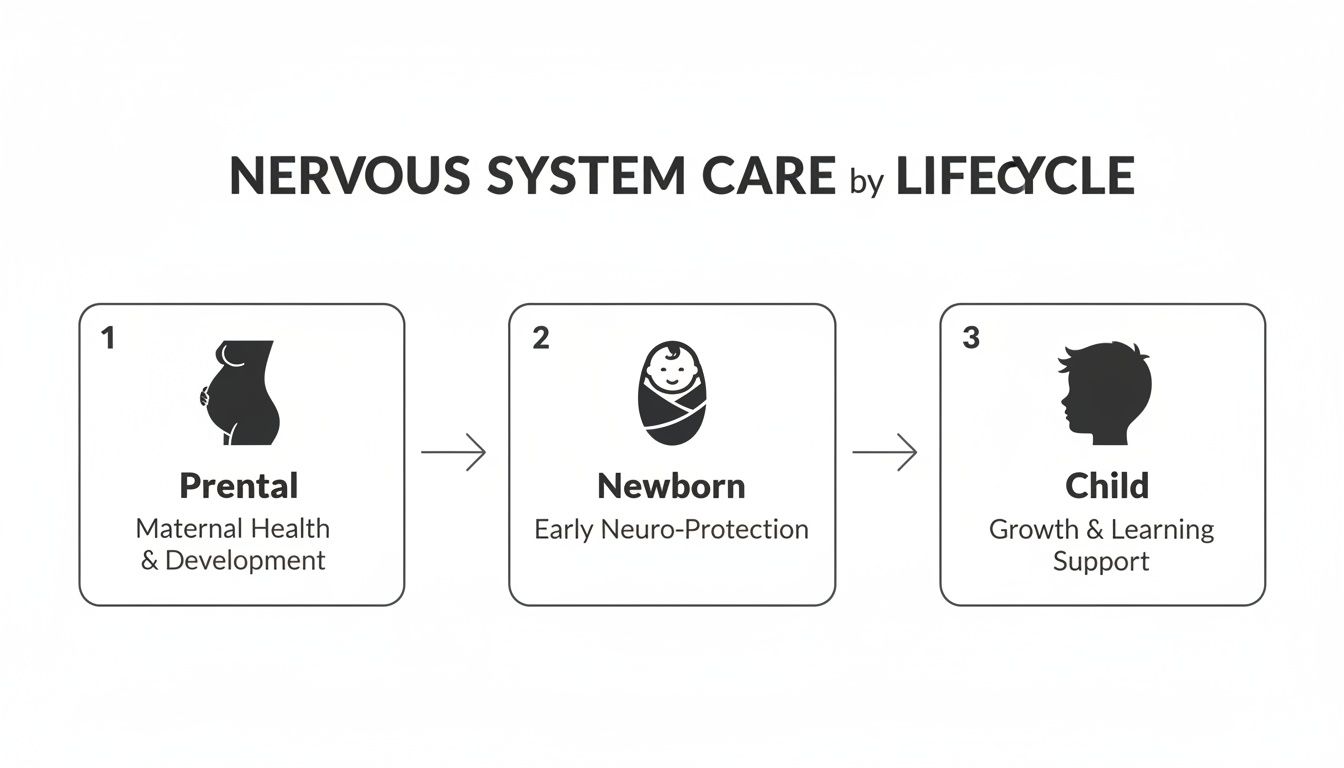
As you can see, gentle, specific care during the prenatal, newborn, and childhood phases addresses the unique stressors present at each stage, building a strong foundation for lifelong wellness.
Many people are surprised to learn how effective this kind of care is for issues that go way beyond simple backaches. For instance, a recent study showed that 94% of chiropractic patients experienced at least 30% pain relief from chronic low-back pain—a massive stressor on the nervous system. For comparison, only 54% of those relying on medication alone saw similar results.
It's a powerful reminder of how spinal alignment can directly help recalibrate the nervous system for lasting relief. You can discover more insights about these comparative trial results if you'd like to dig into the research yourself.
Common Questions About Nervous System Chiropractic Care
It's completely normal to have a few questions when you're looking into a new kind of healthcare for your family. We get it. That's why we believe in giving you clear, straightforward answers so you can feel totally confident in your decisions.
Is This Care Safe for Kids and During Pregnancy?
Yes, absolutely. Safety and comfort are our top priorities.
Techniques like the Webster Technique for pregnancy and our neuro-tonal adjustments for kids are incredibly gentle. They’re not at all like the traditional twisting or popping many people associate with chiropractic. These approaches are specifically designed for the unique needs of expectant moms and growing little ones.
How Quickly Can We Expect to See Changes?
This is a great question, and the honest answer is that every person’s nervous system heals at its own pace. Some of our practice members, especially those who come in feeling wound up and stressed, report feeling a sense of calm after their very first adjustment.
For others dealing with more chronic or long-standing issues, the improvements are often more gradual. Think of it like peeling back layers—we see steady progress over several weeks as the body adapts, rebalances, and finds its way back to a more regulated state.
The key is consistency. Lasting change comes from gently and persistently removing interference. This allows the body's own innate healing intelligence to take over and do what it does best.
Ready to feel the difference a balanced nervous system can make in your family's life? First Steps Chiropractic invites you to schedule a complimentary consultation to see if our approach is the right fit.