
When you're an exhausted parent staring at the ceiling at 3 a.m., the search for a natural sleep aid for infants can feel all-consuming. But the truth is, the most powerful and safest sleep aids aren't found in a bottle or a box. They’re the consistent, nurturing routines and sleep-friendly environments you build for your baby, starting tonight.
The Search for Gentle Infant Sleep Solutions
In those quiet, middle-of-the-night hours, scrolling through your phone for a magic bullet for your baby's sleeplessness is a modern parenting rite of passage. The market knows this desperation all too well. It’s flooded with an overwhelming array of gadgets, supplements, and products, all promising a quick fix for tired families.
This isn’t a small niche; it's a massive industry. The global market for baby sleep products was valued at a staggering USD 6.5 billion in 2023 and is only expected to grow. While this number shows a powerful desire for non-drug approaches, it also creates a ton of confusion for parents. You can explore more data about the baby sleep product market to see just how big these trends are.
Instead of chasing a product, let’s reframe the goal. A true "natural sleep aid for infants" isn't one thing you buy, but a collection of practices that work with your baby’s biology, not against it. Think of it less like flipping a switch and more like gently guiding a ship into a calm harbor.
The most powerful sleep aids are not things you buy, but rather the safe, predictable, and loving practices you establish. Your consistency becomes your baby’s comfort and their cue for rest.
Shifting Focus from Products to Practices
Before we dive into specific strategies, it's critical to know the difference between what is safe and what carries potential risks. So many well-intentioned products and "natural" remedies are simply not studied or recommended for infants. Getting clear on this from the start empowers you to make confident, safe choices for your little one.
To help set the stage, it’s helpful to see a clear comparison of what’s safe versus what you should be wary of.
Safe vs. Potentially Unsafe Infant Sleep Aids
This table is a quick-reference guide to help you distinguish between evidence-based practices and remedies that either carry risks or just don’t have the science to back them up for babies.
| Category | Safe and Recommended Practices | Aids Requiring Caution or Avoidance |
|---|---|---|
| Routines | Consistent bedtime rituals, predictable schedules, calming activities like a warm bath or story time. | Inconsistent schedules, overstimulating activities before bed, reliance on motion for all sleep. |
| Environment | A dark room, white noise, a firm and flat sleep surface, appropriate room temperature, swaddling until rolling. | Soft bedding, pillows, weighted blankets, sleep positioners, essential oil diffusers in the nursery. |
| Supplements | No supplements are recommended for infants without direct medical supervision from a pediatrician. | Melatonin, herbal teas (like chamomile), gripe water, or any over-the-counter sleep product. |
Think of this as your starting point. This guide will focus entirely on that "Safe and Recommended" column, giving you the practical tools to build a strong sleep foundation for your baby, naturally.
Building a Foundation of Sleep Routines and Environment
Before we even touch on specific remedies, it's so important to get this one thing straight: the single most powerful natural sleep aid for your baby isn't something you can buy. It's a process.
Think of your baby’s journey into sleep like an airplane getting ready for takeoff. It needs a clear, predictable runway to build momentum before it can smoothly lift off into dreamland. A solid routine and a calming environment create that runway for your little one.
Every step you take becomes a familiar signal to your baby’s developing brain and body, telling them it's time to wind down. This predictability is incredibly comforting and helps set their internal clock, also known as their circadian rhythm.
Crafting a Predictable Bedtime Ritual
A bedtime ritual doesn't need to be complicated or take forever, but consistency is everything. The whole point is to create a sequence of calming events that happen in the same order, at roughly the same time, every single night. That repetition is what forges powerful sleep associations.
This routine is also a beautiful chance to connect and gently transition your baby away from the busyness of the day.
A Sample Step-by-Step Bedtime Routine:
- A Warm, Calming Bath: This is more than just getting clean. A warm bath raises your baby's body temperature just a bit. As they cool down after, it triggers a natural drop in their core temperature—a key physiological cue that tells the body it's time for sleep.
- Gentle Infant Massage: After the bath, spending a few minutes on a gentle massage with some baby-safe lotion can work wonders. It helps release soothing hormones like oxytocin and can ease any little physical tensions, leaving them feeling relaxed and content.
- Dressing for Sleep: Change your baby into their diaper and pajamas in a dimly lit room. Even this simple act becomes a predictable part of the sequence leading to sleep.
- A Final Feeding: A quiet, final feeding in the nursery helps ensure your baby goes to bed with a full tummy. Just be sure to keep the atmosphere calm—no bright lights or loud noises that could make them too alert.
- Story Time or a Lullaby: Reading a book in a soft voice or singing a gentle lullaby is a final, comforting connection. The sound of your voice is one of the most powerful soothing tools you have.
- Into the Crib Drowsy but Awake: This is a big one. Try to place your baby into their crib when they are calm and sleepy, but not totally asleep. This helps them start to learn how to fall asleep on their own, right there in their crib.
Optimizing the Nursery for Sleep
Your baby's sleep environment is the other half of this foundational strategy. Just as the routine signals when it's time to sleep, the nursery environment should signal where sleep happens. The goal is to dial down the stimulation and create a cozy, womb-like sanctuary.
Your baby's nursery should be a haven for rest, not a hub of activity. By controlling light, sound, and temperature, you are essentially curating an environment where sleep is the most natural and easiest thing to do.
A few key adjustments here can make a world of difference in how well—and how long—your baby sleeps.
- Embrace the Darkness: Light is the number one signal to the brain to be awake. Even tiny amounts of light from electronics or a streetlamp outside can mess with the production of melatonin, the sleep hormone. Using blackout curtains can make the room pitch-dark for both naps and nighttime.
- Introduce White Noise: The world outside the womb is surprisingly quiet for a baby. A white noise machine can mimic the constant, shushing sounds they heard for nine months, which is incredibly comforting. It also does a great job of masking sudden household noises—a dog barking, the doorbell ringing—that can startle a baby awake. Just keep the volume at a conversational level (around 50 decibels) and place it across the room from the crib.
- Keep It Cool: A baby's room should be kept at a comfortable temperature, generally between 68 and 72 degrees Fahrenheit. Overheating isn't just uncomfortable; it's also a risk factor for SIDS. A good rule of thumb is to dress your baby in one more layer than you would wear comfortably yourself.
This simple flowchart shows the journey from a parent's perspective: you see the need, you implement consistent practices, and the result is a peacefully sleeping baby.
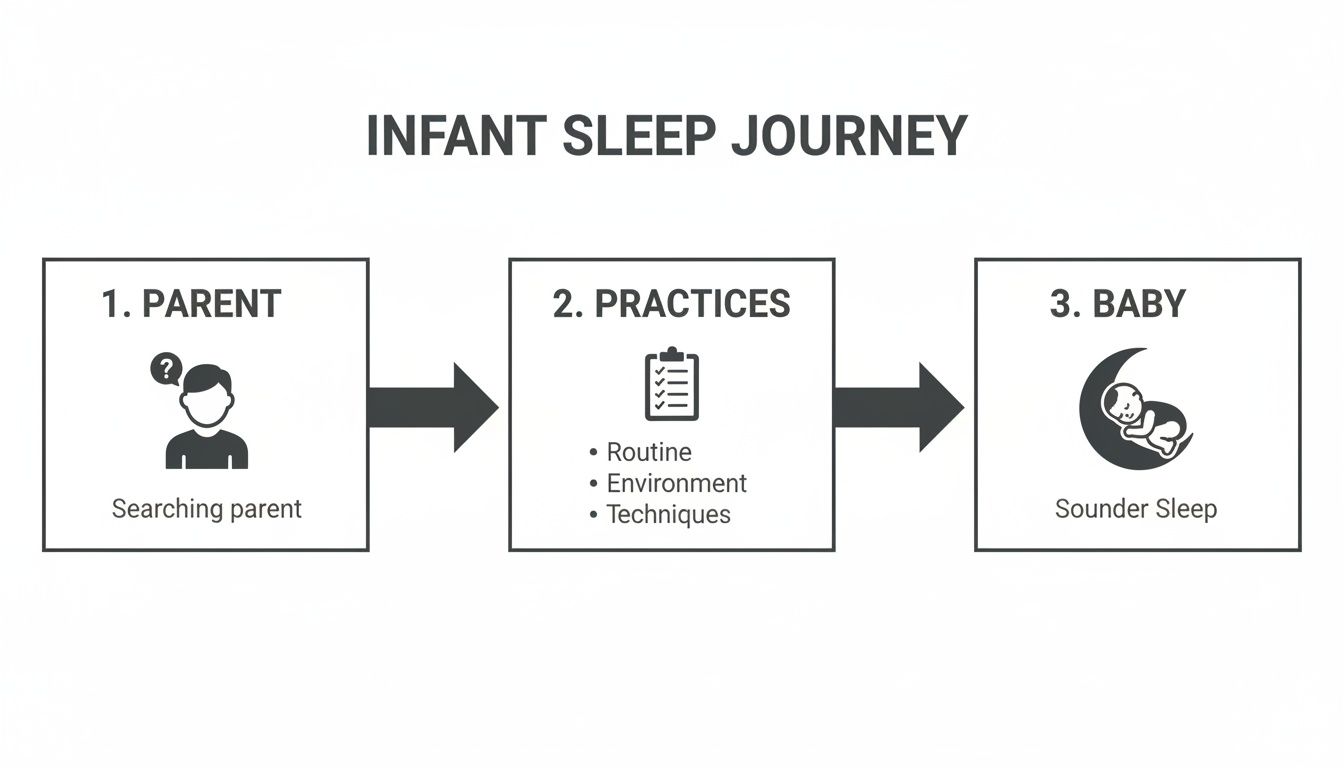
The key takeaway is that your actions—creating routines and a calming environment—are the bridge to better sleep for your baby.
By focusing on these foundational elements, you are creating the most powerful and sustainable natural sleep aid for infants there is. These behavioral and environmental cues work together, reinforcing each other every single night to build a strong, reliable foundation for healthy sleep habits that can last a lifetime.
Evaluating Common Herbal and Dietary Remedies
When your baby just won’t settle, it’s completely natural to search for anything that might bring them (and you) some peace. Well-meaning friends, family, and a thousand online forums might suggest things like a little chamomile tea or a calming essential oil in the nursery. While these suggestions always come from a good place, we have to approach them with extreme caution.
As a general rule, pediatricians are firm on this: infants should only have breast milk or formula, especially during their first six months. An infant’s digestive and immune systems are incredibly delicate and still figuring things out. Think of their gut as a brand-new garden—you wouldn’t throw in a bunch of foreign seeds and expect it to flourish. Introducing anything else, even if it’s labeled “natural,” can disrupt that fragile ecosystem and lead to tummy troubles, allergic reactions, or other issues you didn't see coming.
This is why your first stop—always—is a conversation with your pediatrician before you even think about trying a remedy, no matter how gentle it seems.
The most important thing to remember is that babies are not just tiny adults. What’s perfectly harmless for you can be risky for them. When in doubt, always, always default to your doctor's guidance.
Chamomile Tea: A Closer Look
Chamomile is probably the most common "natural" sleep remedy you'll hear about. For adults, it's known for its mild, calming effects. For babies, though, the story is very different and far from clear. The bottom line is there just isn't solid scientific research to prove it's safe or effective for infants.
Here are the main concerns:
- Allergic Reactions: Chamomile is a member of the ragweed family. If allergies or hay fever run in your family, giving chamomile to your baby could easily trigger a reaction.
- Contamination Risk: Herbal teas aren't regulated like infant formula or medicine. There’s a real risk they could be contaminated with bacteria, including botulism spores, which are incredibly dangerous for any baby under one year old.
- Displacing Nutrition: A baby’s tummy is tiny. Even a small amount of tea can fill them up, taking the place of the nutrient-packed breast milk or formula they need to grow and develop.
The Truth About Lavender and Essential Oils
Lavender oil is another popular go-to, often suggested for a diffuser in the nursery to create a soothing vibe. While the scent of lavender can be relaxing for us, you have to be very careful using essential oils around a baby. Their little respiratory systems are sensitive, and strong smells from a diffuser can be overpowering or even irritating.
More importantly, essential oils should never be put directly on a baby’s skin. It can cause burns, rashes, and bad allergic reactions. And they should absolutely never be ingested. If you do decide to use a diffuser, make sure the room is well-ventilated, only run it for a very short time, and do it long before the baby is actually in the room.
Melatonin Supplements: Are They Safe for Babies?
You’ve probably heard of melatonin as a sleep aid for adults or even some older kids, but it is not recommended for infants. Melatonin is a hormone your body produces on its own to manage sleep-wake cycles. Giving it as a supplement can mess with the development of your baby’s own endocrine system.
A huge red flag here is the lack of regulation. A 2023 study found that the actual amount of melatonin in some over-the-counter gummies was anywhere from 74% to 347% of what the label claimed. With that kind of wild inconsistency, you have no idea what dose you're actually giving. The long-term effects on a developing baby are unknown, and the risks just aren't worth it.
At the end of the day, the safest and most powerful natural sleep aid for infants isn't something you can buy in a bottle. It’s built on the foundations of a solid routine and a calming environment. These methods work with your baby’s biology, gently guiding them toward healthy sleep without introducing any unnecessary risks.
Connecting Feeding and Comfort to Promote Sleep
A baby’s world is beautifully simple. It really boils down to two things: eating and sleeping. But these two activities aren't separate events—they’re deeply connected. A calm, satisfied belly is often the fastest route to a restful, happy baby, making your feeding and comfort techniques a powerful natural sleep aid for infants.
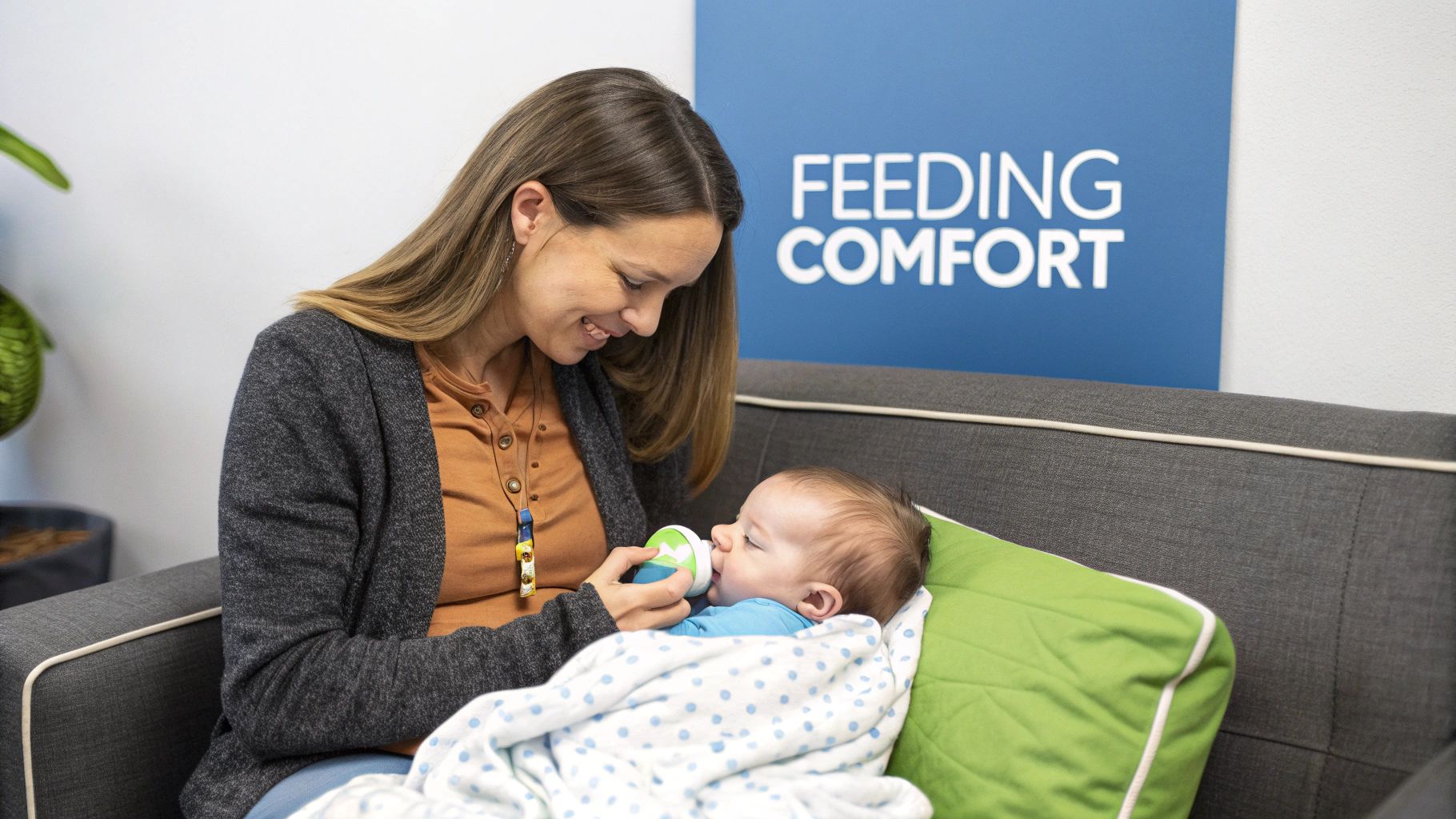
Learning how to manage feedings can prevent a lot of unnecessary wakeups. The goal is to make sure your baby is comfortably full before they go down for a longer stretch, but not so full that it causes discomfort from gas or reflux. Think of it as fueling up their tiny bodies just enough for the journey into dreamland.
Optimizing Feeding for Sleep
Timing your feedings strategically is a huge part of building a great sleep strategy. A well-timed feed right before you start the bedtime routine can ensure hunger doesn't wake them up right after you've finally gotten them settled.
For some parents, a "dream feed" becomes an invaluable tool. This is where you gently rouse your baby just enough to feed them a few hours after they've gone to bed, usually right before you head to bed yourself. The idea is to top them off, helping them push through that first long stretch of sleep.
Of course, not every baby loves this approach. Some might wake up completely and have a tough time getting back to sleep, while others just don't need the extra calories. It's a technique worth trying carefully if you're struggling with those early-night wakeups. If you notice your baby is consistently fussy after feedings, it may be worth exploring issues like colic. You can learn more about how to bring your newborn relief in our article on that very topic: https://www.firststepschiropractic.com/blog/colic-relief-for-newborns.
The Power of Non-Pharmacologic Comfort
Beyond a full tummy, physical comfort is the cornerstone of infant sleep. Simple techniques that mimic the secure, snug feeling of being in the womb can be incredibly effective for calming a fussy baby and easing them into sleep. These are some of the safest and most instinctual sleep aids you have.
Creating a sense of security for your infant is paramount. Techniques like swaddling and offering a pacifier tap into their innate reflexes, providing a physical sense of calm that allows their nervous system to relax and prepare for rest.
These non-drug comfort measures aren't just old wives' tales; they're backed by a major shift in parenting practices. As public health campaigns have rightly emphasized safe sleep environments, caregiver behavior has evolved right along with them. Sales of swaddles, sleep sacks, and firm sleep surfaces have ballooned into a multi-billion dollar market, which tells us that parents are actively choosing product-based, non-pharmacologic methods to help their babies sleep better. You can read more about this trend and the supporting data on non-pharmacologic sleep aids.
Swaddling The Right Way
Swaddling is simply the practice of snugly wrapping your baby in a blanket to recreate that secure feeling of the womb. It’s a game-changer because it can prevent their natural startle reflex (the Moro reflex) from jerking them awake.
Key Swaddling Tips for Safety and Comfort:
- Keep It Snug, Not Tight: The swaddle should be firm around their arms but nice and loose around the hips and legs. They need to be able to bend their legs up and out for healthy hip development.
- Use Breathable Fabric: Always choose lightweight materials like cotton or muslin to keep your baby from overheating.
- Always on Their Back: A swaddled baby must always be placed on their back to sleep. This is crucial for reducing the risk of SIDS.
- Know When to Stop: It is critical to stop swaddling as soon as your baby shows any signs of trying to roll over. At that point, a sleep sack becomes a much safer alternative.
Using a Pacifier for Soothing
Pacifiers can be another fantastic tool for soothing your little one. Sucking is a natural, calming reflex for infants that has even been shown to have a pain-relieving effect. For many babies, a pacifier satisfies this need to suck when they aren't actually hungry, helping them self-soothe and drift off to sleep.
When you bring together smart feeding and comforting techniques, you create a powerful synergy. A baby who is well-fed, warm, and secure is a baby who is primed for restorative sleep—all achieved through gentle, responsive care.
Gentle Physical Support for Better Infant Sleep
Sometimes, the real reason your baby can't settle has nothing to do with being hungry or the temperature in the nursery. It can be easy to overlook hidden physical discomfort, which often traces back to the birth process itself or even how they’re positioned in car seats and swings day after day.
When this kind of underlying tension is present, it's incredibly hard for them to truly relax. No matter how perfect your sleep routine is, it might fall short.
Addressing your baby’s physical well-being through gentle, hands-on support can be an incredibly powerful natural sleep aid for infants. The focus of these methods is to release that stored tension, improve their overall comfort, and gently calm their developing nervous system.
We're not talking about anything forceful here. This is all about subtle, responsive touch that helps your baby's body feel safe, secure, and ready for rest.
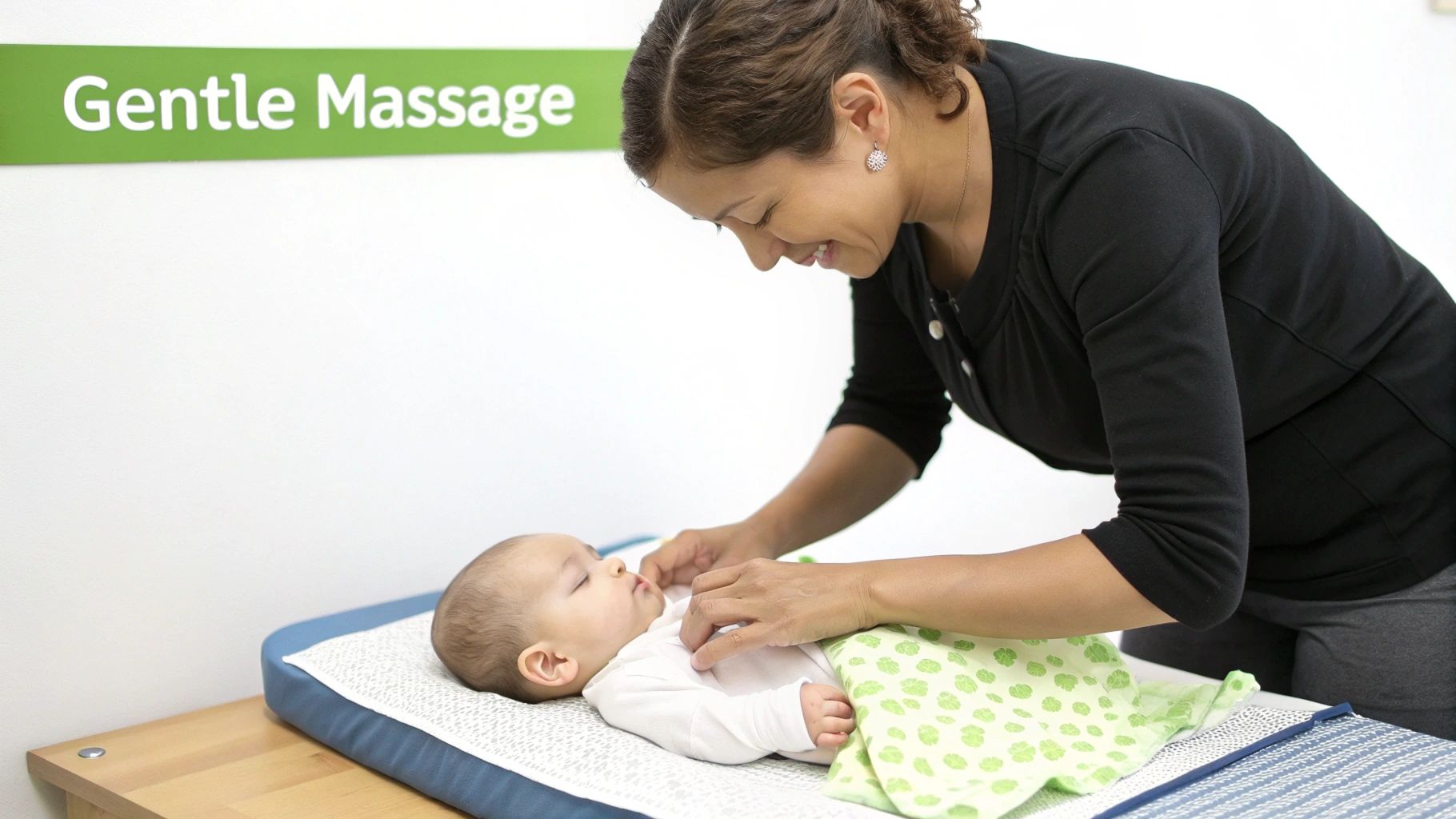
The Calming Power of Infant Massage
Infant massage is one of the simplest yet most profound ways to connect with your little one while helping them unwind. Think of it as a quiet, loving conversation you have through touch.
This practice has actually been shown to stimulate the release of oxytocin (often called the "love hormone") in both of you, which deepens your bond and creates a powerful sense of calm. Plus, regular massage can also help with common culprits of nighttime fussiness, like gas and constipation. It makes a wonderful addition to any bedtime routine.
Simple Massage Strokes to Try:
- Leg Paddles: Gently take hold of one of your baby’s ankles and “milk” their leg from the thigh down to their foot. This is fantastic for releasing tension from all that kicking.
- "I Love U" Tummy Stroke: Trace the letter "I" down your baby's left side. Then trace an "L" across their belly and down. Finally, trace an upside-down "U" from their right side to their left. This simple pattern follows the path of the colon and can help move stubborn gas bubbles along.
- Tiny Circles on Hands and Feet: Use your thumb to make small, gentle circles in the palms of their tiny hands and on the soles of their feet.
Understanding Pediatric Chiropractic Care
When parents hear the word "chiropractic," their minds often jump to the pops and cracks associated with adult adjustments. I want to be very clear: specialized pediatric chiropractic care is a completely different world.
It involves absolutely no twisting or forceful movements. Instead, it relies on incredibly gentle, targeted pressure—often no more than you’d use to check if a tomato is ripe.
The goal is simply to relieve musculoskeletal stress that can build up during birth or from daily positioning. This tension can interfere with the nervous system's ability to shift into that calm "rest and digest" state that is absolutely essential for sleep.
A pediatric chiropractor isn't 'cracking' your baby's back. They are using precise, feather-light touches to ease tension in the spine and cranium, helping the nervous system function optimally so the body can relax and sleep.
For some families, this gentle approach can be a valuable piece of their baby's wellness puzzle. To get a better sense of what these appointments look like, you can learn more about what chiropractic care for babies actually entails.
It is crucial to find a practitioner who has specific training and certifications in pediatric care. And as always, consult with your pediatrician first to make sure it's an appropriate step for your child and to ensure a collaborative approach to their well-being.
When to Consult a Doctor About Sleep Issues
Most of the time, the sleep challenges you're facing are a completely normal part of your baby’s whirlwind development. Sleep regressions, cluster feeding marathons, and those nights that feel endlessly fussy are often just par for the course.
That said, your parental intuition is a powerful tool. You should always trust it when something feels off.
While a true natural sleep aid for infants is all about building routines and a calming environment, no strategy can fix an underlying medical issue. Knowing when it’s time to call in your pediatrician is a critical part of caring for your baby and protecting their overall well-being.
Your job isn't to diagnose your baby—it's simply to observe and report what you see. If you’re noticing signs that seem to go beyond typical fussiness, it's always better to get a professional opinion than to wait and worry.
Red Flags That Warrant a Pediatrician Visit
Think of these signs not as definitive proof of a problem, but as important signals that it's time to have a conversation with your doctor. It helps to document what you’re seeing—when it happens, how often, and for how long. This gives your pediatrician the clearest possible picture to work with.
Here are some specific warning signs to watch for:
- Consistent Snoring or Noisy Breathing: An occasional soft snore can be normal, but loud, consistent snoring is not. Any gasping or noticeable pauses in breathing during sleep are significant red flags that need immediate medical evaluation.
- Extreme Fussiness or Signs of Pain: If your baby seems to be in pain, arches their back a lot during or after feedings, or is simply inconsolable for long stretches, it could point to issues like reflux.
- Poor Weight Gain or Feeding Issues: Sleep and eating are deeply connected. If your baby is struggling to gain weight, frequently spits up large amounts, or has trouble feeding in general, it will absolutely impact their ability to sleep soundly.
- Drastic Changes in Sleep Patterns: A sudden, unexplained shift to extreme sleepiness or, on the flip side, an inability to settle down at all can sometimes indicate an underlying issue.
Trust your gut. You know your baby better than anyone. If your intuition is telling you that something is wrong with their sleep or overall comfort, that is more than enough reason to schedule a visit with your pediatrician.
The Importance of Safety and Regulation
Seeking professional advice also extends to the products you use for your baby. Product safety issues have become a major concern in the baby sleep market, fundamentally changing how parents shop. Industry reports show this intense focus on safety is key, with market projections reflecting a clear shift toward certified, safety-tested products over unregulated items. You can read more about these baby product market trends to understand the data.
This means that while you’re keeping an eye on your baby’s sleep, it’s also wise to double-check that your sleep aids—like swaddles or sleep sacks—meet current safety standards. This proactive approach, combining medical oversight with safe product choices, creates a complete safety net for your little one.
If you suspect an underlying condition might be at play, our guide on recognizing infant sleep disorders can provide more context for your conversation with the doctor.
Answering Your Top Questions About Your Baby’s Sleep
It’s completely normal to have a million questions running through your mind as you navigate your baby’s sleep. When you're exhausted and overwhelmed, getting clear, straightforward answers can make all the difference.
Let's tackle some of the most common concerns we hear from parents just like you.
What Is a Sleep Regression and How Do I Handle It?
Just when you think you’ve got it figured out, you hit a sleep regression. It’s that frustrating phase when a baby who was sleeping pretty well suddenly starts waking up constantly or fighting naps with all their might. These regressions are almost always tied to huge developmental leaps—like when your baby is learning to roll over, sit up, or crawl. Their little brain is working overtime on these amazing new skills, and that excitement can easily spill over into their sleep patterns.
The absolute best way to get through it is with consistency. Stick to your established bedtime routine as best as you can. Now is not the time to introduce new habits or sleep crutches that you’ll just have to break later on. It feels tough in the moment, but remember, this phase will pass.
Is Co-Sleeping or Bed-Sharing Safe?
This is a big one, and the guidance is very clear. The American Academy of Pediatrics (AAP) strongly advises against bed-sharing because it significantly increases the risk of SIDS and accidental suffocation. Things we take for granted, like our soft adult mattresses, fluffy pillows, and cozy blankets, create a genuinely dangerous sleep environment for a tiny baby.
The safest place for your baby to sleep is on their own firm, flat surface, like in a bassinet or crib. It's recommended they sleep in the same room as you for at least the first six months, but not in the same bed. This is what experts call room-sharing.
When Should I Stop Swaddling My Baby?
You need to ditch the swaddle the moment your baby shows any sign of trying to roll over. This can happen as early as two months old, so you have to be watching for it. A swaddled baby who manages to roll onto their stomach is in real danger because their arms are pinned, and they can’t push themselves up to breathe.
As soon as you spot those first attempts to roll, it’s time to transition them into a wearable blanket or a sleep sack. These are fantastic because they provide that same sense of warmth and comfort without restricting their arms. Making this switch is a non-negotiable safety step and a key part of finding the right natural sleep aid for infants.