
When you hear the term sensory impairment, it’s easy to think it’s a choice or a behavior issue. But it's so much more than that. At its core, a sensory impairment is a neurological challenge where a child's brain struggles to correctly process information coming in from their senses.
This isn't about being difficult; it's a fundamental difference in how their nervous system interprets the sights, sounds, textures, and movements that make up their world.
Decoding Your Child's Sensory World
Think of your child’s brain as a busy air traffic control tower. Every single second, it’s flooded with signals from vision, hearing, touch, taste, smell, and even balance and body awareness. For most kids, those signals get processed smoothly, leading to the right response. But what if the signals get scrambled? Or come in way too loud, or far too quiet?
This is the reality of a sensory impairment. The brain’s “air traffic control” system gets overwhelmed, disorganized, and can’t properly manage the information it receives. The result? A gentle touch might feel like a slap, the hum of a classroom could be deafening, or they might feel completely lost in space, unsure of where their body is.
Beyond the Five Senses
We usually stop at the classic five senses, but to truly understand your child, we have to look at two more that are absolutely critical for development and self-regulation.
- Vestibular System: This is our inner GPS, managed by the inner ear. It tells us where we are in space, if we’re moving, and how fast. A child with a vestibular impairment might be terrified of the playground swings, or they might be the total opposite, constantly seeking out spinning, crashing, and tumbling to feel centered.
- Proprioceptive System: This is our sense of body awareness, thanks to tiny receptors in our muscles and joints. It’s what lets you touch your nose with your eyes closed. When this system is struggling, a child might seem clumsy, press way too hard with their pencil, or crave deep pressure like bear hugs just to feel where their body ends and the world begins.
Recognizing these two hidden senses is often the key to understanding behaviors that seem confusing. What looks like acting out is really just their nervous system’s best attempt to make sense of a chaotic inner world.
A sensory impairment isn't about a child being "difficult." It's about their brain having a difficult time interpreting the world. The behaviors you see are their best attempt to cope with overwhelming or confusing sensory input.
A Spectrum of Experiences
It's crucial to know that sensory impairments exist on a huge spectrum. No two children are the same.
On one end, you have the hypersensitive (over-responsive) child. For them, even the slightest stimulation can feel like an assault. This is the child who covers their ears at a birthday party, hates the seams in their socks, or gags at the texture of certain foods.
On the other end is the hyposensitive (under-responsive) child. They need more intense input just to feel anything. This is the kid who seems to have a sky-high pain tolerance, touches everything and everyone, or is in constant motion, seeking that input to feel grounded.
Many kids are a mix of both, which can make their sensory needs feel complex and ever-changing. This guide is here to help you navigate these nuances and find the right path to support your child's unique journey.
Getting to Know the Different Types of Sensory Impairments
When we talk about sensory challenges, most of us immediately think of vision and hearing. While those are definitely big pieces of the puzzle, they don't give us the whole picture. Our nervous system is constantly juggling a huge amount of information from many different senses, and understanding each one helps us finally see the "why" behind our child's behaviors.
The scale of these challenges is staggering. Sensory impairments, including issues with vision, hearing, and our other sense organs, create a massive global health burden. In 2021 alone, there were over 2 billion cases worldwide, which led to more than 77 million years lived with disability (YLDs). In fact, sense organ diseases are the single biggest cause of YLDs across the globe, which really underscores how deeply these conditions impact a person's quality of life. You can read more about these stunning findings from the research published in Nature Portfolio.
The Two Senses We All Know
When we first start exploring what sensory impairments are, two big categories usually come to mind right away. They're fundamental to how we navigate the world around us.
- Visual Impairment: This isn't just about being blind; it's a huge spectrum. For a child, it could show up as trouble recognizing familiar faces, difficulty tracking a toy you roll across the floor, or struggling to walk through a cluttered room. You might also notice them holding books right up to their nose or being extremely bothered by bright sunlight.
- Hearing Impairment: This also exists on a spectrum, from mild hearing loss to profound deafness. It can directly impact a child's speech development, make it harder for them to connect with friends, and even create safety issues, like not hearing a car horn.
These two are often the most straightforward to spot and diagnose with standard tests. But they are only the beginning of the sensory story.
Digging into the "Hidden" Senses
So many of the behaviors that leave parents feeling confused and overwhelmed come from impairments in senses that aren't as obvious but are just as critical for a child's development and regulation. These are our "internal" senses that help us manage our own bodies.
To make it easier to connect these "hidden" senses to what you might be seeing at home, here's a quick breakdown.
Common Sensory Impairments and Their Signs in Children
| Type of Impairment | What It Affects | Common Signs in Children |
|---|---|---|
| Tactile | Sense of touch, pressure, texture, and temperature. | Hypersensitive (Over-Responsive): Hates messy play, avoids certain foods or clothing textures, dislikes hugs or light touch. Hyposensitive (Under-Responsive): Craves deep pressure (tight hugs), constantly touches things, has a high pain tolerance. |
| Vestibular | Sense of balance and spatial orientation. | Hypersensitive (Over-Responsive): Fears playground equipment (swings, slides), gets carsick easily, seems clumsy. Hyposensitive (Under-Responsive): Loves spinning, swinging, and being upside down; is a "thrill-seeker" and seems fearless. |
| Proprioceptive | Sense of body awareness from muscles and joints. | Hyposensitive (Under-Responsive): Crashes into things, stomps feet, uses too much force (breaks crayons), chews on non-food items, enjoys wrestling and roughhousing. |
As you can see, a child's reaction often gives us clues as to which system is struggling and whether it's over- or under-responsive. Let's look a little closer.
Tactile System Impairments
Our tactile system is all about touch—pressure, texture, temperature, and pain. When this system is out of sync, it can lead to some very strong reactions.
A child who is hypersensitive (or over-responsive) to touch might have a meltdown over a tag in their shirt, refuse to walk barefoot on grass, or despise messy hands. This is the kiddo who insists on wearing the same super-soft sweatpants every single day. On the flip side, a child who is hyposensitive (under-responsive) might not even notice they’ve scraped their knee, constantly touch everything and everyone, or seek out tight bear hugs and weighted blankets just to feel secure and grounded in their body.
Vestibular and Proprioceptive Challenges
These two senses are best friends—they work together to control our balance, movement, and body awareness. Think of them as our internal GPS.
A child's fear of the playground is rarely about the equipment itself. More often, it's their vestibular system screaming that they are unsafe and out of control as they swing through the air.
- Vestibular Impairment (Balance): This sense is located in our inner ear and tells our brain where our head is in relation to gravity. A child with vestibular issues might be the one who gets carsick on short drives or seems terrified of swings and slides. Or, they could be a sensory seeker who is constantly spinning, rocking, or hanging upside down to give their sluggish vestibular system the input it craves.
- Proprioceptive Impairment (Body Awareness): This is the sense that comes from our muscles and joints, telling us where our body parts are without having to look at them. A child with poor proprioception might look clumsy, often bumping into walls or people. They might stomp their feet when they walk or use way too much force when coloring because their brain needs that intense feedback to figure out where they are in space.
Cracking the code on these less-visible impairments is often the key to understanding behaviors that seem to come out of nowhere. What looks like aggression (pushing other kids) or destructiveness (breaking toys) could actually be a child’s desperate, instinctual attempt to feel their own body and make sense of the world around them.
How to Recognize the Signs of Sensory Challenges

Learning to read your child's unique sensory language is one of the most powerful things you can do as a parent. What often looks like confusing or difficult behavior is actually a child communicating a deep sensory need they simply don't have the words for yet.
The key is shifting your perspective from seeing "bad behavior" to recognizing a child's attempt to regulate their own nervous system. These signals almost always fall into two main categories, which tell us how their brain is interpreting the world around them.
The first is hypersensitivity, where a child is over-responsive to sensory input. The second is hyposensitivity, which is when a child is under-responsive and needs more sensory feedback to feel okay.
Understanding Hypersensitivity or Over-Responsiveness
Imagine living in a world where the volume is always turned up to 10. That’s what daily life can feel like for a hypersensitive child. Their nervous system is on constant high alert, making ordinary sensations feel like a full-blown assault.
This over-responsiveness can trigger a fight-or-flight reaction to everyday things. A busy grocery store isn't just a place to get food; it’s a blinding, deafening wave of noise and light that can easily lead to a total meltdown.
Common signs of hypersensitivity include:
- Extreme reactions to sounds: They might cover their ears when a vacuum starts, a toilet flushes, or a crowd cheers.
- Tactile defensiveness: They may despise the feeling of tags in their clothes, seams on their socks, or certain scratchy fabrics. An unexpected hug or a light touch might even feel painful to them.
- Picky eating: They might gag or refuse to eat foods based purely on their texture, smell, or even how they look on the plate.
- Visual sensitivity: Bright lights, cluttered rooms, or even fast-moving cartoons on a screen can cause genuine distress.
For a deeper look at these behaviors, our guide to understanding the signs of sensory processing challenges provides more helpful insights for parents.
Understanding Hyposensitivity or Under-Responsiveness
Now, let's flip the coin. Imagine the world’s volume is turned way down, almost to mute. For a child with hyposensitivity, their nervous system registers sensations at a much lower intensity. To feel grounded and aware, they have to seek out more powerful experiences.
This is exactly why these kiddos often seem to be in constant motion. They aren’t trying to be disruptive; they're trying to generate enough sensory feedback to feel present and organized in their own skin.
A child who constantly crashes into furniture isn't just clumsy. They are often using the deep pressure from the impact to give their proprioceptive system the strong input it needs to understand where their body is in space.
Common signs of hyposensitivity include:
- High pain tolerance: They might not even notice scrapes or bumps that would have another child in tears.
- Constant need for movement: You'll see lots of fidgeting, rocking, bouncing, and an almost magnetic pull away from sitting still.
- Lack of awareness of personal space: They may stand too close to others or use too much force without realizing it.
- Touching everything: They constantly run their hands along walls or need to physically touch and handle objects to understand them.
Decoding Sensory-Seeking Behaviors
Beyond these two categories, you'll also see behaviors that are specifically sensory-seeking. This is when a child proactively tries to get the exact kind of input their nervous system is craving to feel calm and regulated.
These actions can look odd from the outside, but they serve a critical purpose. Chewing on a shirt collar, for instance, provides intense oral-motor and proprioceptive feedback that can be incredibly organizing for a stressed nervous system. Spinning in circles isn't just play; it's a way to stimulate a sluggish vestibular system.
By understanding the "why" behind these actions, you can start offering safer, more effective alternatives that meet that same deep sensory need.
The Ripple Effect on Daily Life and Development
Sensory impairments are never just a single, isolated challenge. Think of them more like a ripple effect, spreading outward to touch just about every corner of a child's development, their daily routines, and the entire family’s well-being. What starts as a simple glitch in neurological processing can quickly snowball, impacting social skills, emotional balance, and even how well they do in school.
Understanding this ripple effect is a game-changer for parents. It’s what helps you connect the dots between what looks like a random, out-of-nowhere meltdown and the scratchy tag on a new t-shirt. It helps make sense of why a child struggles so much with handwriting, linking it back to a proprioceptive system that isn't giving their brain enough feedback.
Suddenly, these challenges aren't just isolated incidents anymore. They're all interconnected pieces of your child's whole sensory experience.
Social and Emotional Development
For most kids, social situations are a complex dance of reading body language, respecting personal space, and tuning out background chatter. But for a child with sensory impairments, a simple playdate can feel like being caught in a chaotic storm.
Imagine a child who is hypersensitive to sound—a friend’s excited shout might feel physically painful, causing them to either shut down or lash out. On the flip side, a child who is hyposensitive and craves more input might play way too rough, not realizing their friendly game of tag feels like a hard shove to another kid.
This can create some pretty big social hurdles:
- Difficulty making friends: Other children can easily misinterpret their reactions, thinking they're being mean, overly shy, or just "weird."
- Social anxiety: Over time, the child might start avoiding birthday parties or family gatherings altogether because they’re just so predictably overwhelming.
- Emotional meltdowns: When the sensory input becomes too much to handle, the nervous system simply overloads. The result is an intense emotional release that often gets mistaken for a classic temper tantrum.
These outbursts aren't a form of manipulation; they are a genuine sign of a nervous system in distress. It’s the brain's emergency alarm bell, signaling that it has hit its absolute limit and can't process one more drop of sensory information.
Impacts on Motor Skills and Learning
The classroom is a sensory minefield. The constant hum of fluorescent lights, the background chatter, the feel of the chair—all of this can be a massive distraction for a child whose brain is already working overtime just to process the world.
Sensory challenges have a direct impact on a child's ability to learn and master physical skills. For instance, a child with an under-responsive proprioceptive system might grip their pencil so hard that their hand cramps up, turning writing into a frustrating and exhausting task. A child with vestibular challenges might find it impossible to sit still, not because they’re being defiant, but because their body needs to move to feel centered and focused.
Sensory struggles are not a reflection of a child's intelligence or their willingness to learn. They are a barrier to accessing that intelligence. When we provide the right support, we clear the path for learning to happen.
The Toll on Family Life
This ripple effect doesn't stop with the child—it touches the entire family dynamic. Parents often find themselves in a constant state of high alert, always trying to anticipate and head off the next sensory-driven meltdown. Daily routines that are second nature for other families can become sources of major stress.
- Mealtime battles: A child with oral sensory sensitivities might refuse entire food groups simply based on texture, turning every single meal into a drawn-out negotiation.
- Sleepless nights: Some kids need the deep pressure from a weighted blanket to finally calm their nervous system enough to sleep, while others are woken by the slightest sound.
- Constant worry: It's completely normal for parents to feel a mix of exhaustion, confusion, and even guilt, constantly wondering if they're doing enough to support their child.
Acknowledging this family-wide impact is so important. These challenges, even those you might spot in the earliest months, can profoundly shape daily life. Learning more about identifying sensory issues in infants can give you a crucial foundation for understanding and providing that early support.
By seeing these tough moments as opportunities to connect—offering a tight hug instead of a timeout, for example—you can start turning moments of stress into moments of support and much deeper understanding.
Finding the Right Professional Support
When you suspect your child has a sensory impairment, knowing where to turn can feel incredibly overwhelming. The first and most important step is simply trusting your gut and starting a conversation with a professional. That journey almost always begins with your child's pediatrician.
Your pediatrician is your family's partner in your child's health. They can perform an initial screening, rule out other potential medical issues, and give you the right referrals to specialists who can dig deeper. Think of them as your trusted guide through the healthcare system.
Assembling Your Team of Specialists
Depending on what you're seeing in your child, your pediatrician will likely refer you to a team of experts. Each of these professionals plays a unique and important role in figuring out what sensory challenges your child might be facing and how to best support them.
The key specialists you might meet include:
- Occupational Therapist (OT): OTs are often at the very center of sensory support. They are the experts in how the sensory system impacts everyday life and can run comprehensive assessments to pinpoint specific processing challenges.
- Developmental Pediatrician: This is a pediatrician who specializes in how children develop. They are skilled at diagnosing a wide range of developmental delays and conditions, including those tied to sensory processing.
- Audiologist: If your concerns are around hearing, an audiologist will conduct tests to figure out the extent of any hearing loss.
- Ophthalmologist: For anything vision-related, an ophthalmologist will assess your child's eye health and how well their visual system is functioning.
What to Expect During an Evaluation
A sensory evaluation isn't just one test—it's a combination of methods that all come together to paint a full picture of your child's sensory world. The whole process is designed to be kid-friendly and often just feels like structured playtime.
An assessment will typically involve these steps:
- Parent Interview: You know your child better than anyone. The specialist will ask you detailed questions about your child’s history, your specific concerns, and the behaviors you've been seeing at home.
- Standardized Testing: These are specific, research-backed assessments that compare your child's sensory responses to those of other kids their age.
- Clinical Observations: The therapist will engage your child in different activities to see firsthand how they react to sensory input, whether it's swinging, playing with different textures, or moving through a little obstacle course.
This diagram shows how a sensory impairment can create a ripple effect, touching every part of a child's daily life and development.
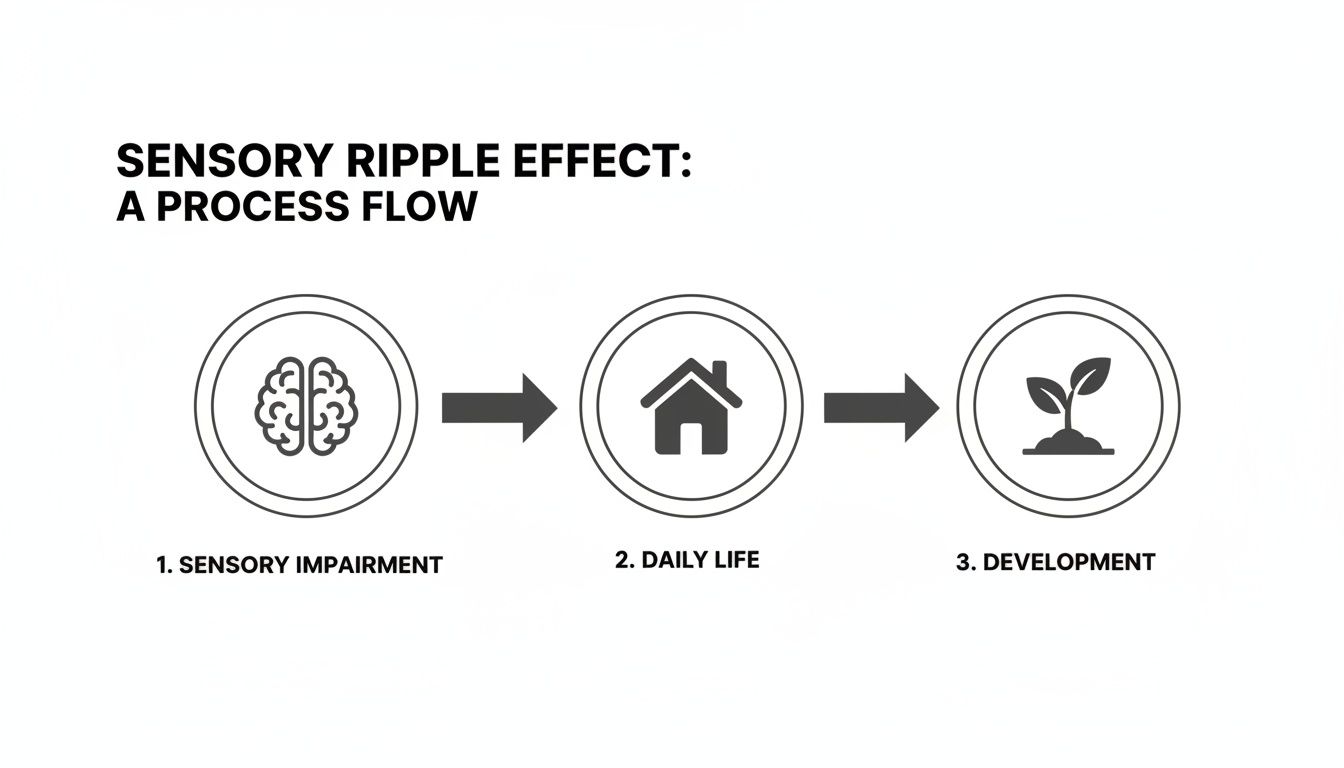
As you can see, what starts as a neurological challenge quickly spreads, influencing everything in a child's world.
The most valuable tool you can bring to any appointment is a simple journal of your observations. Note specific situations, your child’s reactions, and what seemed to help—or make things worse. This real-world information is priceless for a diagnostician.
Sometimes, a child may struggle with more than one sense. For example, dual sensory impairment (DSI), which is the combined loss of both hearing and vision, is more common than many people think. One large-scale analysis found that DSI affects 5.50% of the global population, though this number changes a lot depending on age and where you live. You can learn more about the global prevalence of this combined sensory impairment.
Practical Therapies That Make a Real Difference
Getting a diagnosis can feel like a huge, overwhelming moment. But it’s also the first real step toward getting your child the support they need. Thankfully, there are powerful, evidence-based therapies designed to help a child’s nervous system better organize and manage all that sensory information, allowing them to not just cope, but truly thrive.

Often, the cornerstone of this support is Occupational Therapy (OT). OT is all about helping people participate in the meaningful activities—or "occupations"—of their daily lives. For a kid, that means everything from playing with friends and focusing at school to getting dressed in the morning.
Occupational Therapy And Sensory Integration
Within OT, there’s a specialized approach called Sensory Integration (SI) therapy. This isn't just about teaching a child a new skill; it's about fundamentally rewiring how their brain processes sensory input from the world around them.
Think of it like tuning a guitar. SI therapy helps adjust a child's nervous system so it can receive sensory signals more clearly and produce a more organized, "in-tune" response. A trained occupational therapist will use fun, play-based activities to give your child the exact sensory input their nervous system is craving.
This might look like:
- Swinging in a stretchy lycra swing to provide calming, organizing vestibular input.
- Crashing into a giant pile of pillows to deliver that deep, satisfying proprioceptive feedback.
- Playing with messy shaving cream or cool kinetic sand to gently expand their tolerance for different textures.
The goal is to challenge their sensory system just enough to forge new, more efficient neural pathways. Over time, these sessions help the brain learn to automate sensory processing, which frees up so much mental energy for learning, socializing, and just being a kid. If you want to dive deeper, you can explore more about the benefits of sensory processing disorder therapy and how it helps kids feel more comfortable and confident.
Building A Personalized Sensory Diet
One of the most powerful tools that comes out of OT is the idea of a "sensory diet." It’s a brilliant concept. Just like a nutritional diet gives our bodies the fuel they need to function well, a sensory diet gives a child’s nervous system the specific input it needs to stay calm, alert, and organized throughout the day.
This isn't a one-size-fits-all plan. A sensory diet is carefully designed around your child's unique sensory profile. It's a proactive approach—the goal is to regulate their nervous system before it gets overwhelmed, instead of just reacting after a meltdown has already started.
A sensory diet isn't a reward system or a form of punishment. It's a vital part of your child's sensory health, giving their nervous system the essential "nutrients" it needs to stay balanced and regulated.
Practical Strategies For Home And School
The great news is that you don't have to turn your home into a therapy gym. Integrating a sensory diet into your daily routine can be simple, and small, consistent activities make a world of difference.
Here are a few real-world examples of what might be in a sensory diet:
-
For the Child Who Constantly Needs to Move:
- Start the day with "heavy work" activities, like helping carry the laundry basket or pushing the grocery cart.
- Schedule short "movement breaks" for a few jumping jacks or wall pushes every hour.
- Use a wiggle cushion on their chair during homework or mealtimes.
-
For the Child Who Needs Help Calming Down:
- Offer a weighted blanket or lap pad during quiet reading time.
- Create a cozy, quiet corner with soft pillows and dim lighting where they can go to recharge.
- Provide crunchy snacks like carrots, apples, or pretzels for organizing oral-motor input.
These strategies aren't just about managing behavior; they’re about honoring your child’s neurological needs. By giving them this consistent, predictable sensory input, you're building a foundation of regulation that empowers them to engage more fully and joyfully with their world.
Your Questions Answered by Our Team
When you’re navigating the world of sensory impairments, questions are bound to come up. It's a complex topic, and as parents, you want clear answers. Here are some of the most common questions we hear in our practice, along with straightforward insights to help guide you.
Is a Sensory Impairment the Same Thing as Autism?
This is one of the most frequent—and important—questions we get. While it's true that sensory challenges are a core part of an Autism Spectrum Disorder (ASD) diagnosis, a child can absolutely have sensory processing issues without having autism. This is often referred to as Sensory Processing Disorder (SPD).
The reason there's so much overlap is that both conditions are rooted in how the nervous system works. This is exactly why a comprehensive evaluation from a developmental specialist is so important. Getting an accurate diagnosis is the only way to build a support plan that truly targets your child's specific needs, whether that means sensory-focused occupational therapy, behavioral support, or a combination of approaches.
Will My Child Outgrow Their Sensory Impairment?
The honest answer is that the underlying neurology of a sensory impairment doesn't just disappear. But what can change, and quite dramatically, is your child's ability to manage it. Through consistent, targeted therapies and the right support strategies at home and school, kids can learn incredible coping skills.
They get better at recognizing their own needs, regulating their responses, and even advocating for what they need to feel calm and focused. Starting intervention early and staying consistent is the best way to build these lifelong skills. The goal isn't to change how their brain is wired, but to give them the tools to master their sensory world.
While a child may not "outgrow" their unique neurology, they can absolutely grow into an expert at managing their sensory world. We want to empower them to thrive just as they are.
How Can I Best Support My Child at School?
Your most powerful tool here is collaboration. The key is to get everyone on the same page. Start by requesting a meeting with your child's teacher, the school counselor, and anyone on the special education team. Come prepared with the results of their evaluation and work together to create an Individualized Education Program (IEP) or a 504 Plan.
Sometimes, even simple accommodations can make a world of difference. Things like:
- Movement Breaks: For a child who is constantly seeking input (hyposensitive), scheduled breaks to move their body can be a huge help for focus.
- Noise-Reducing Headphones: These can be a lifesaver for a child who gets easily overwhelmed by classroom noise (hypersensitive).
- Smart Seating: Placing a child away from a busy doorway or distracting window can dramatically improve their ability to pay attention.
Open and ongoing communication with the school team ensures your child gets the consistent support they need to feel safe, regulated, and ready to learn.
Here at First Steps Chiropractic, we see firsthand every day how deeply the nervous system is connected to sensory processing. If you're curious about how a neurologically-focused approach can support your child's development, we'd love to talk. We invite you to learn more about our pediatric care and schedule a complimentary consultation to see if we're the right fit for your family.