When you hear the term “parasympathetic stimulation,” it’s really just a scientific way of saying you’re intentionally activating your body’s “rest and digest” mode to get a handle on stress. It involves simple, specific techniques—like focused, deep breathing—to slow your heart rate, kickstart your digestion, and create a powerful sense of safety and calm.
Think of it as your body’s natural brake pedal.
Understanding Your Body's Rest and Digest System
Imagine your nervous system has both a gas pedal and a brake. The gas pedal is your sympathetic nervous system, the one behind the famous “fight-or-flight” response that gets you ready for action. It pumps your body full of adrenaline, makes your heart race, and primes you to deal with a threat—whether that’s a real emergency or just a looming deadline at work.
The parasympathetic nervous system (PSNS), on the other hand, is your brake. Its entire job is to slow things down, conserve your energy, and take care of all the quiet, background functions that keep you healthy day in and day out. This is your “rest and digest” system, and tapping into it is absolutely essential for your long-term health and well-being.
The Problem of a Stuck Accelerator
In our non-stop, modern world, it’s easy to feel like the gas pedal is constantly floored. Chronic stress from work, family responsibilities, and the endless stream of digital notifications keeps our sympathetic system on high alert. When this happens, the brake pedal barely gets a chance to be used, leading to an imbalance we call sympathetic dominance.
Living in this prolonged state of high alert can show up in a lot of different ways, including:
- A constant feeling of anxiety or being “on edge”
- Digestive troubles like bloating, reflux, or indigestion
- Difficulty falling asleep or staying asleep through the night
- Chronic muscle tension, headaches, and fatigue
Learning how to intentionally hit the brakes isn’t just about finding a moment of relaxation; it’s a fundamental skill for keeping your body healthy and resilient.
By consciously activating your parasympathetic nervous system, you are essentially sending a powerful message to your body: "You are safe." This simple signal can interrupt the cycle of chronic stress and give your body the space it needs to repair, recover, and truly thrive.
Reclaiming Balance Through Conscious Action
The best part is that you have direct control over this system. Stimulation of the parasympathetic nervous system is a conscious practice aimed at bringing your body back into balance. It’s all about learning techniques that let you manually apply the brake, signaling to your brain and body that it’s okay to shift out of high-alert mode and into a state of recovery.
When you do this, you can directly influence your body’s most vital functions. You can lower your heart rate, improve digestion and how well you absorb nutrients, and foster a deep sense of calm and control. This guide will walk you through exactly how this incredible system works and give you actionable, evidence-backed methods to manage stress effectively and support your health from the inside out.
The Science Behind Calming Your Nerves
To really get why parasympathetic stimulation is so powerful, we need to peek under the hood at how your body’s internal communication system actually works. It’s a fascinating collaboration between your brain, nerves, and organs designed to create a state of calm. This isn't just about "feeling" relaxed; it's a specific, biological process you can absolutely learn to influence.
The Vagus Nerve: Your Body’s Superhighway to Calm
At the very heart of this system is the vagus nerve, the longest and most intricate of all your cranial nerves. Think of it as a superhighway running directly from your brainstem down through your neck and into your chest and abdomen. It's a busy route, connecting to nearly every major organ along the way, including your heart, lungs, and your entire digestive tract.
This incredible network is exactly why the vagus nerve is the main player in your parasympathetic nervous system. It's the primary line of communication carrying those "rest and digest" messages between your brain and your body.
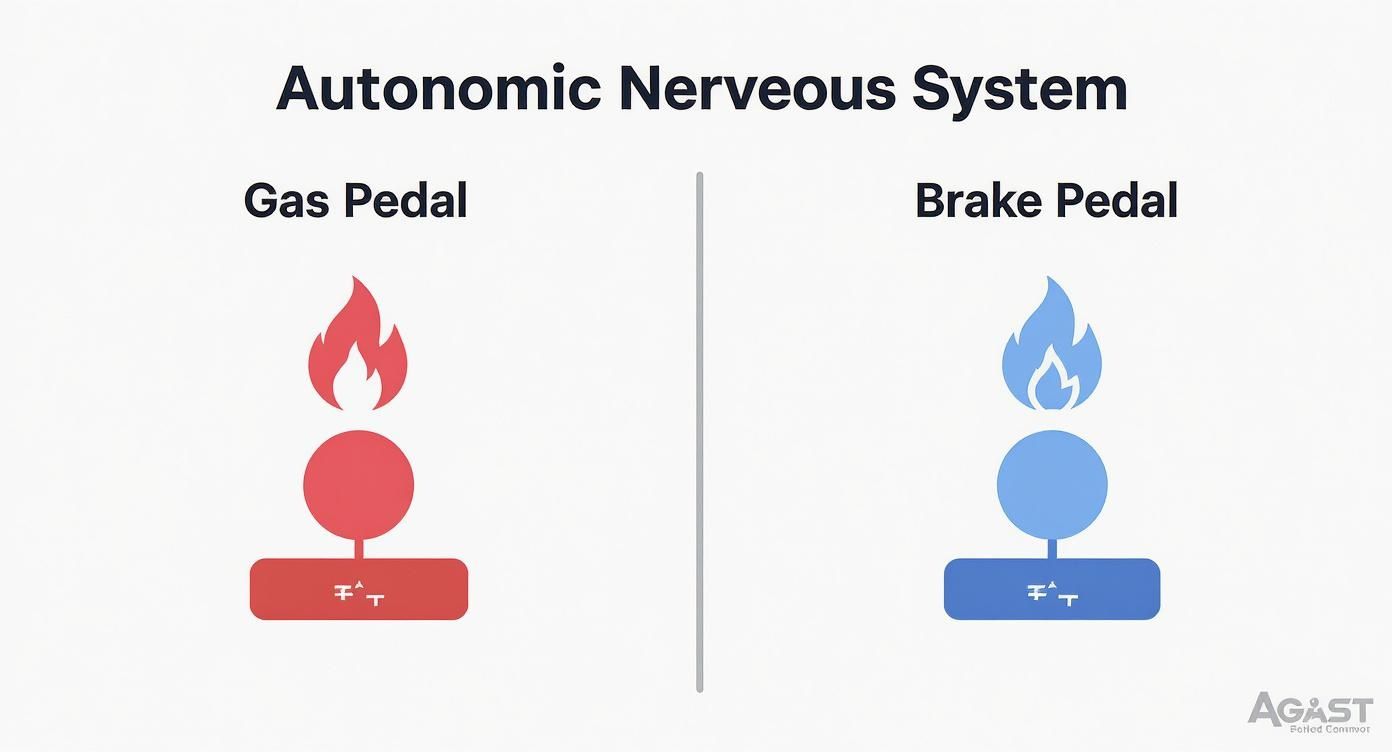
This image nails it. One system—the sympathetic—is the gas pedal getting you ready for action. The other—the parasympathetic—is the brake pedal that allows for recovery. Optimal health is all about the constant balancing act between the two.
For a clearer picture, let's break down how these two opposing systems function.
Sympathetic vs Parasympathetic At a Glance
The table below highlights the push-and-pull relationship between these two critical parts of your nervous system. You'll see how one ramps things up while the other brings everything back down to a state of balance.
| Function | Sympathetic (Fight or Flight) | Parasympathetic (Rest and Digest) |
|---|---|---|
| Heart Rate | Increases | Decreases |
| Breathing | Becomes faster and shallower | Becomes slower and deeper |
| Pupils | Dilate (widen) | Constrict (narrow) |
| Digestion | Slows or stops | Stimulates |
| Saliva Production | Decreases | Increases |
| Muscles | Tense up for action | Relax and recover |
Seeing them side-by-side makes it obvious just how complementary they are. You truly need both working in harmony to navigate the demands of life.
The Chemical Messenger of Calm
Now, a highway is pretty useless without cars. In your nervous system, the "vehicles" are chemical messengers called neurotransmitters. For the parasympathetic system, the most important one is acetylcholine.
When you do something that stimulates your vagus nerve—like taking a long, slow breath out—a signal travels down that nerve highway. At the very end of the nerve endings, acetylcholine is released. It's this specific chemical that delivers the "slow down" message directly to your organs.
Acetylcholine is the key that unlocks a state of calm. It binds to specific receptors on your organs, telling your heart to beat slower, your lungs to breathe more deeply, and your digestive system to get back to work.
This is the core mechanism behind the stimulation of the parasympathetic nervous system. When you use specific techniques, you're essentially encouraging your body to release more of this natural, calming neurotransmitter.
Why This Brain-Body Connection Matters
Understanding this connection is incredibly empowering. It shows that your feelings of stress or calm aren't just vague emotions; they are the direct result of real physiological processes happening inside you.
This intricate process helps explain why certain simple activities have such a profound impact on your well-being:
- Deep Breathing: Directly stimulates the vagus nerve endings located in your diaphragm and lungs.
- Humming or Gargling: The vibration in the muscles at the back of your throat activates the nearby vagus nerve.
- Gentle Movement: Can ease physical tension, signaling to your brain that any threat has passed and it's safe to relax.
Each of these actions is a physical cue that travels up the vagus nerve to the brain. The brain then sends the calming signal—carried by acetylcholine—right back down to the rest of your body.
By learning to activate this pathway, you gain a powerful, hands-on tool for managing your body’s response to stress. You can consciously shift yourself from a state of high alert to one of mindful recovery. You can discover more about the principles of nervous system regulation in our detailed guide.
The Health Benefits of a Balanced Nervous System
Tapping into your parasympathetic nervous system does a lot more than just make you feel calm for a moment. It creates real, measurable health benefits that impact your entire body. When you learn to consciously apply your body's "brake," you're making one of the best investments you can in your long-term health and resilience.
This goes way beyond just "relaxing"—we're talking about deep physiological regulation. Let's dig into the specific, evidence-backed perks of having a balanced and responsive nervous system.
Enhancing Heart Health and Resilience
One of the biggest wins is a healthier heart rate variability (HRV). Don't let the name intimidate you; HRV is simply the natural, tiny variations in time between each heartbeat. A higher HRV is a fantastic sign of a healthy, adaptable heart and a clear signal that your parasympathetic nervous system is doing its job well.
When you're stuck in a state of chronic stress (sympathetic overdrive), your HRV plummets. Your heart starts beating like a rigid metronome. But by activating your parasympathetic tone, you give your heart the flexibility it needs to respond to life's ups and downs, which is directly tied to better cardiovascular health.
Optimizing Digestion and Nutrient Absorption
Your gut is incredibly sensitive to stress. The moment your "fight-or-flight" system kicks in, it slams the brakes on anything it deems non-essential for survival, and that includes digestion. This is why so many people struggling with chronic stress also deal with indigestion, bloating, and trouble absorbing nutrients from their food.
Flipping the switch to your "rest and digest" system does exactly what it sounds like.
- It sends more blood flow to your digestive organs.
- It cues the production of essential digestive enzymes.
- It supports healthy gut motility, which is the muscle movement that keeps everything flowing smoothly.
This all means your body can actually break down food properly and soak up the vital nutrients it needs for energy, repair, and overall wellness.
Bolstering Your Immune System
There's a direct and powerful line of communication between your nervous system and your immune response. A nervous system that's constantly on high alert pumps out stress hormones like cortisol. Over time, that constant cortisol drip can suppress your immune function, leaving you more open to getting sick.
By intentionally shifting into a parasympathetic state, you help dial down those inflammatory stress hormones. This frees up your immune system to work as it should, making you better at fighting off bugs and recovering faster when you do get sick.
The parasympathetic nervous system is a major player here, regulating about 70-80% of the activity of the vagus nerve. This is why "vagal tone" is such a big focus for managing stress, especially when you consider that research shows 60-70% of people exposed to chronic stress have noticeably lower parasympathetic activity. You can learn more about the deep connection between the nervous system and stress resilience in this academic overview.
Promoting Deeper and More Restorative Sleep
A good night's sleep isn't just about how many hours you're in bed. It's about your body's ability to sink into those deep, restorative sleep cycles where the real magic happens. Your sympathetic nervous system is great for keeping you awake and alert, but when it stays revved up at night, you get tossing, turning, and that awful feeling of waking up exhausted.
Parasympathetic stimulation is the essential prep work your body needs for sleep. It slows your heart rate, relaxes your muscles, and quiets your mind, creating the perfect internal state for truly restorative rest. A well-regulated nervous system is the foundation of a healthy sleep-wake cycle.
Strengthening Emotional Regulation
Finally, a balanced nervous system gives you a much greater capacity for emotional regulation. When you aren't constantly on high alert, you can face challenging situations with more calm and clarity instead of just reacting.
Think of it as widening your "window of tolerance." You can handle more of life's triggers without getting thrown into a state of anxiety or shutdown. That mental clarity and emotional stability are fundamental to feeling good and improving your quality of life.
Practical Techniques for Parasympathetic Stimulation
Knowing the why behind your body's relaxation response is empowering. Now, it’s time to explore the how. This section is your practical toolkit for activating your body’s natural “rest and digest” system, with clear, evidence-based methods you can start using today.
These aren't complicated procedures. They are simple, powerful actions that send a direct message of safety to your brain. Each technique is a way to consciously apply the brake, giving your body the chance to downshift from a state of stress to one of calm.
Master Your Breath with Diaphragmatic Breathing
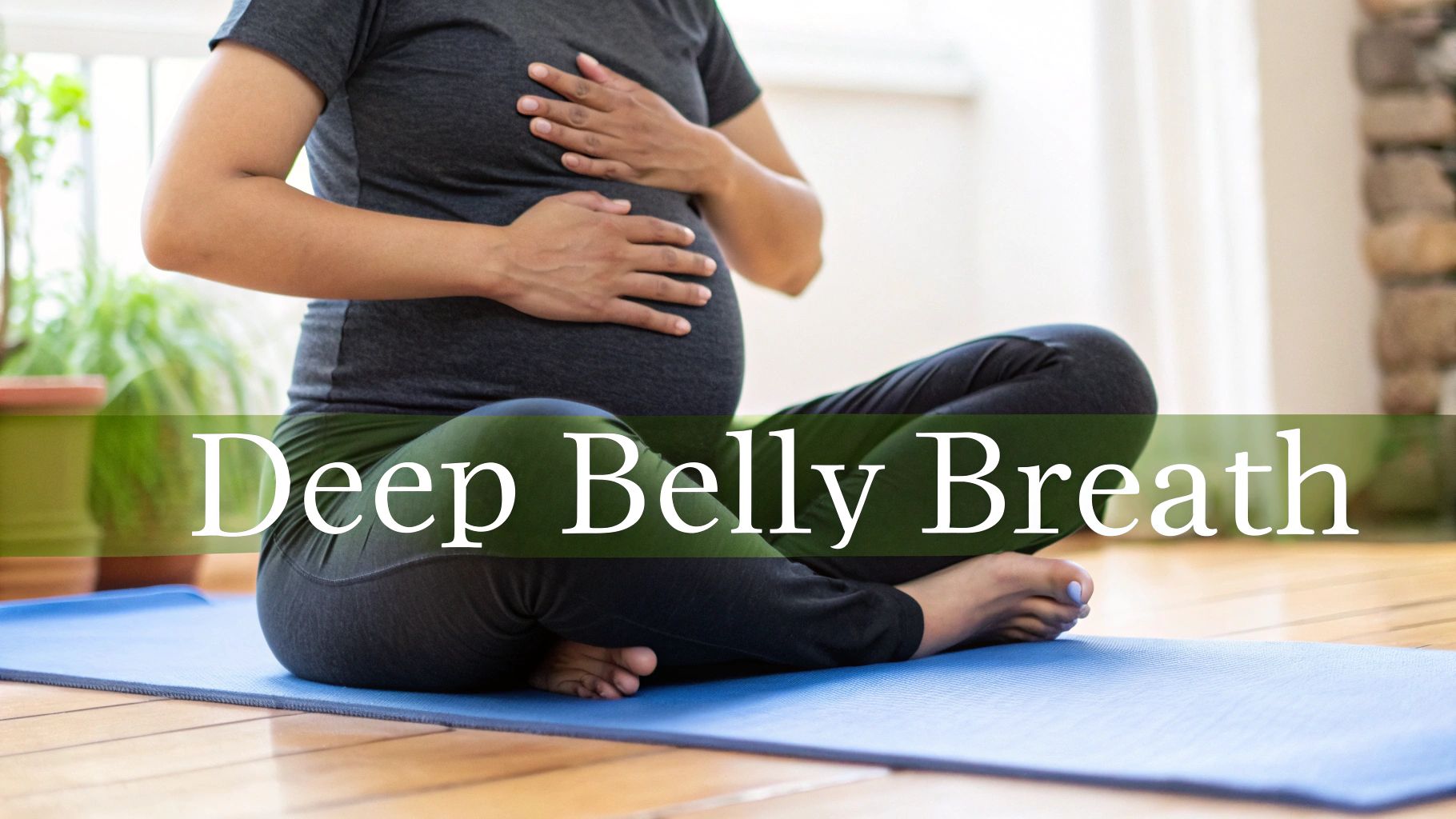
Your breath is the most direct and immediate tool you have to influence your nervous system. Think about it: shallow, rapid breathing from the chest signals stress. In contrast, slow, deep belly breathing activates the vagus nerve endings in your diaphragm, turning on the parasympathetic response.
This technique, also known as diaphragmatic breathing, is incredibly effective. Here's how to do it:
- Find a comfortable position, either sitting upright or lying on your back. Place one hand on your chest and the other on your belly.
- Inhale slowly through your nose for a count of four. Your focus should be on letting your belly expand outward, feeling the hand on your stomach rise while the hand on your chest stays relatively still.
- Hold the breath for a moment or two if it feels comfortable.
- Exhale slowly through your mouth for a count of six to eight. The key is making the exhale longer than the inhale. This extended exhale is a powerful signal to your nervous system to relax.
- Repeat this cycle for 5-10 breaths, just focusing on that gentle rhythm.
Cultivate Calm with Mindfulness and Meditation
Mindfulness is simply the practice of paying attention to the present moment without judgment. It’s a way to step out of the endless cycle of worrying about the future or replaying the past—two habits that keep your sympathetic system stuck in overdrive.
Meditation is a focused way to practice mindfulness. It might involve concentrating on your breath, a specific sound, or bodily sensations. Even just 5-10 minutes a day can begin to retrain your brain to be less reactive to stress, strengthening your parasympathetic tone over time.
By simply observing your thoughts and feelings without getting tangled up in them, you reduce their power. This creates a mental space where your nervous system can default back to its natural state of balance and calm.
Use Cold Exposure to Reset Your System
It might sound counterintuitive, but a brief shock of cold can trigger a powerful parasympathetic rebound. When your body is exposed to cold, it initially kicks the sympathetic system into gear. But as you adapt, your vagus nerve fires up to slow your heart rate and regulate your response.
You don't need to jump into an ice bath to get the benefits. Here are some simple ways to start:
- Splash your face with cold water. The nerves in your face are particularly responsive to this.
- End your shower with 30-60 seconds of cold water. Start with a temperature that's uncomfortable but tolerable and gradually work your way colder.
- Hold an ice pack to the back of your neck or your wrists for a minute.
This jolt, followed by regulation, helps improve your nervous system’s adaptability. Many of these methods directly impact the vagus nerve, and you can explore more ways to stimulate the vagus nerve naturally in our related article.
Soothe Your System with Gentle Movement
Chronic stress often leads to physical tension as our muscles remain in a constant state of readiness. Gentle, mindful movement helps release this stored tension, signaling to your brain that the perceived threat has passed and it's safe to finally relax.
Activities like yoga, tai chi, and even a slow, mindful walk are excellent for this. They combine physical movement with focused breathing and present-moment awareness, creating a multi-layered approach to parasympathetic stimulation. The focus isn't on an intense workout but on the quality of the movement and the connection between your body and mind.
Connect with Others to Co-Regulate
As humans, we're wired for connection. Our nervous systems are designed to attune to one another in a process called co-regulation, where one person's calm nervous system helps soothe another's. A genuine, safe connection with a friend, partner, or family member is one of the most potent ways to activate your parasympathetic system.
This can be as simple as having a heartfelt conversation, sharing a hug, or even just sitting in comfortable silence with someone you trust. The feeling of safety and belonging that comes from social connection is a powerful antidote to the isolating effects of stress.
Supporting Nervous System Health at Every Age
A balanced nervous system isn’t just for managing adult stress—it's the foundational bedrock for health and well-being across our entire lives. The same principles that help an adult feel calm can be adapted to support every member of the family, from the earliest moments of life onward. Each stage just has its own unique needs and opportunities to build that resilience.
The journey toward a regulated nervous system actually begins before birth. When an expecting mother keeps her internal state calm, it has a profound effect on both her and her developing baby. We know that chronic stress during pregnancy can impact fetal development, so intentionally activating the parasympathetic system helps create a more stable, nurturing environment from the very start.
This focus on internal balance is a relatively modern application of a long-understood concept. The idea of stimulating the parasympathetic nervous system has deep historical roots, with early researchers working to map out the body's intricate wiring. The formal distinction between the sympathetic and parasympathetic systems was first clearly articulated by John Newport Langley back in 1921. He coined the term 'parasympathetic nervous system' to describe this crucial "rest and digest" branch. You can discover more insights about the history of our autonomic nervous system on emjreviews.com.
Nurturing Calm in Pregnancy and Infancy
During pregnancy, simple, consistent practices can make a world of difference. Techniques that support a parasympathetic tone don't just manage a mother's stress; they contribute to a healthier pregnancy and can even support a smoother labor and delivery.
Here’s how these principles apply:
- Deep Breathing: Gentle belly breathing calms the mother's nervous system, which in turn helps regulate the baby’s environment.
- Mindful Movement: Things like prenatal yoga and gentle stretching release physical tension and promote a sense of well-being.
- Positive Social Connection: Spending quality time with a supportive partner, family, or friends helps us co-regulate and fosters deep feelings of safety.
Once a baby is born, their nervous system is still brand new and learning how to navigate the world. Infants can’t regulate their own emotions or stress levels; they rely entirely on their caregivers in a process known as co-regulation.
A parent's calm presence is an incredibly powerful tool. When a caregiver holds a crying baby with a steady heartbeat and calm breath, they are literally helping the infant’s nervous system shift from distress (sympathetic) to safety and calm (parasympathetic). Gentle touch, swaddling, and soft, soothing vocalizations are all essential for building a resilient nervous system from day one.
Building Resilience in Childhood
As children grow, they start to develop their own capacity for self-regulation, but they absolutely still need our guidance and support. Creating a predictable, safe, and loving environment helps their developing nervous systems learn what it feels like to be in that calm, parasympathetic state.
Parents can actively teach their kids simple regulation tools. For example, "belly breathing" with a favorite stuffed animal on their tummy helps them visualize the calming motion. Establishing calming bedtime routines and encouraging plenty of unstructured outdoor play are also powerful ways to support their parasympathetic health.
These practices help children build a wider "window of tolerance," which allows them to handle life's small frustrations and big feelings without becoming completely overwhelmed.
Sustainable Habits for Adulthood
For us adults, the biggest challenge is often counteracting the chronic, low-grade stress of modern life. The key is to develop sustainable habits that make parasympathetic activation a regular part of your daily rhythm, not just a tool you pull out in a crisis.
The goal isn't to eliminate stress entirely—that's impossible. Instead, it's about becoming more skilled at navigating it by consciously and consistently engaging the body's natural relaxation response.
This means weaving small, consistent practices into your day. Take a few deep breaths before hopping on a conference call. Go for a short walk at lunchtime. Dedicate five minutes to mindfulness before you go to sleep.
By peppering these moments of calm throughout your life, you strengthen your parasympathetic tone, making your entire nervous system more balanced, adaptable, and resilient for the long haul.
How Gentle Chiropractic Care Can Help Regulate Your System
While things like deep breathing and mindfulness are fantastic tools, sometimes your nervous system is so stuck in a state of chronic stress that it needs more direct support. This is where specialized, gentle chiropractic care comes in, helping to build balance and resilience from the inside out.

Unlike traditional chiropractic that might involve more forceful movements, a neuro-tonal approach is designed to work with your nervous system—not against it. Our goal is to find where stress has created tension and interference in your body’s communication lines and then use incredibly precise, non-invasive techniques to help it let go.
Shifting from “Fight or Flight” to “Rest and Digest”
This gentle process directly supports the stimulation of the parasympathetic nervous system. By easing physical tension, particularly around the upper neck and brainstem where the crucial vagus nerve originates, this type of care helps your body shift away from sympathetic dominance—that feeling of being constantly on high alert.
The focus is on improving your body’s parasympathetic tone, which is really its underlying ability to flip the “rest and digest” switch when it needs to. When your parasympathetic tone is healthy, you can move out of a stress response and into a state of recovery and calm much more easily. To dive deeper into how this works, check out our guide on the powerful connection between the vagus nerve and chiropractic care.
Our approach isn't about chasing a specific symptom. It’s about restoring the body’s incredible, innate ability to regulate itself. The adjustments are just gentle inputs that encourage your nervous system to find its own way back to a state of balance and safety.
A Path Toward Greater Resilience
Think of it like tuning a guitar. Over time, chronic stress can pull your nervous system "out of tune." A neuro-tonal chiropractor gently guides it back to its natural harmony, which in turn makes it much more resilient to future stressors.
It’s a common story: someone comes to us struggling with constant anxiety and terrible sleep. They’ve tried all the relaxation apps and breathing exercises, but they still feel “stuck” on high alert. Gentle care helps address the underlying physical stress patterns that are keeping them stuck.
Once their system starts to regulate more effectively, they often tell us they:
- Feel a much greater sense of calm throughout the day.
- Fall asleep faster and experience deeper, more restorative rest.
- Have more capacity to handle daily challenges without feeling completely overwhelmed.
This personalized support creates a strong foundation for better nervous system health, helping you build the resilience you need to truly thrive.
Frequently Asked Questions About Nervous System Regulation
As you start exploring nervous system health for your family, it's natural for questions to pop up. Getting clear answers is the first step toward feeling confident in these new practices. Here’s what we hear most often from parents in our practice.
How Quickly Can I Feel the Effects?
That really depends on the technique. Something like a physiological sigh—two quick inhales through the nose followed by a long, slow exhale—can bring a wave of calm within a minute. You're giving your vagus nerve a direct signal to slow things down, and the results are almost immediate.
But for other methods, it’s more about consistency than speed. Building long-term resilience and improving your overall parasympathetic tone doesn't happen overnight. Many people tell us they start to feel a more grounded sense of well-being after just a few weeks of regular practice.
The goal is both immediate relief and long-term regulation. A single deep breath can calm you in the moment, while daily practice strengthens your nervous system’s ability to handle stress over time.
Is It Safe if I Have a Medical Condition?
For the most part, yes. Gentle techniques like deep breathing, mindfulness, and light stretching are safe for nearly everyone. However, if you're managing a pre-existing medical condition, especially anything related to your heart or blood pressure, it's always a good idea to chat with your healthcare provider before starting something new.
This is particularly important for more intense methods, like significant cold exposure. Your doctor knows your health history and can help you figure out what’s right for you.
Is This Different From Simple Relaxation?
It is, and the distinction is important. "Relaxation" is often a pretty general term for just unwinding. On the other hand, targeted stimulation of the parasympathetic nervous system is a very specific, physiological process.
- Relaxation might be kicking back to watch a movie.
- Parasympathetic stimulation is when you intentionally use a technique, like slow diaphragmatic breathing, to actively shift your body out of "fight-or-flight" and into "rest and digest" mode.
Can You Overstimulate Your Nervous System?
While it’s tough to “overdo” gentle practices like deep breathing, it is possible to have an overactive parasympathetic response, though it's not common. This might leave you feeling a bit sluggish or unmotivated. The ultimate goal is always balance—creating a nervous system that can easily and effectively shift between action and rest, whatever the day brings.
At First Steps Chiropractic, we specialize in gently guiding your family's nervous systems back to that natural state of balance. If you're ready to build resilience and support your family’s well-being from the ground up, schedule your consultation with us today.