
When a clinician first mentions an Autism Level 2 diagnosis, the medical jargon can feel overwhelming. So, what does it actually mean for your child and your family?
At its core, Autism Level 2 is a clinical term for children and adults who need substantial support because of their distinct challenges with social communication and because of their restricted or repetitive behaviors. This label comes from the DSM-5, the guide that helps professionals understand and diagnose different neurotypes.
What Does Autism Level 2 Actually Mean for My Child?

Let's break it down into real-world terms. A Level 2 diagnosis simply means that a child's difficulties with social skills and behavior are noticeable enough to be apparent to even a casual observer, and they regularly interfere with day-to-day life.
Imagine the autism levels as a dial for support needs. Level 1 is like a low volume, requiring some support. Level 3 is high volume, requiring very substantial support. Level 2 sits right in the middle—it calls for a significant and consistent amount of help for your child to navigate their world successfully.
A Tool for Understanding, Not a Label for Life
It's so important to see this diagnosis not as a permanent box defining your child’s potential, but as a practical tool. Its main purpose is to clarify the intensity of support needed to help your child learn, grow, and thrive. Understanding this is the first step toward getting the right therapies, school accommodations, and community resources in place.
This diagnosis is really a roadmap. It helps everyone—parents, therapists, and teachers—get on the same page to create a coordinated plan that builds on your child’s strengths and addresses their specific needs.
The Centers for Disease Control and Prevention (CDC) recently found that about 3.2% of 8-year-old children in the U.S. were identified with ASD, and a significant portion of those children fall into the Level 2 category. You can find more helpful context on autism facts from Motivity.net.
To give you a clear, at-a-glance summary, we’ve put together a simple table outlining the core characteristics.
Autism Level 2 At a Glance
This table breaks down the key challenges of Autism Level 2 as defined by the DSM-5, focusing on social communication and repetitive behaviors.
| Area of Challenge | Key Characteristics in Level 2 | Example |
|---|---|---|
| Social Communication | Marked deficits in verbal and nonverbal communication; social impairments are apparent even with supports in place. | A child might speak in simple sentences but finds it very difficult to keep a back-and-forth conversation going. They also rarely start interactions on their own. |
| Repetitive Behaviors | Restricted interests and repetitive behaviors are obvious to casual observers and interfere with functioning in various contexts. | A child may have an intense fascination with lining up their cars and become deeply distressed or agitated if someone moves them or interrupts the routine. |
This framework helps paint a clearer picture of the daily realities and support needs associated with an Autism Level 2 diagnosis.
Recognizing Level 2 Autism in Everyday Life
A clinical definition can feel pretty abstract. The true meaning of Level 2 autism really clicks when you see how it shows up in the familiar settings of home, school, and play. It’s in these everyday moments that the need for “substantial support” stops being a diagnostic term and becomes a real, tangible need.
Let's step away from the manual and look at what Level 2 autism can actually look like in your child or teen. This isn't about running down a checklist of deficits. It's about understanding the unique way your child experiences and interacts with the world around them.
When we connect the diagnosis to real-life situations, it becomes less of a label and more of a roadmap for providing the right kind of support. We can see these everyday traits fall into two main areas: social communication and repetitive behaviors.
Social Communication in Action
A child with Level 2 autism often has verbal skills, but they struggle with the natural give-and-take of a conversation. The challenge isn't usually about forming words, but about how to use language socially.
Here are a few common scenarios you might recognize:
- One-Sided Conversations: A teen might be able to talk for an hour about their favorite video game or a specific historical event they love. But asking someone else about their day or showing interest in a topic they didn't choose can feel almost impossible for them.
- Literal Interpretations: They may have a tough time with sarcasm, jokes, or common sayings. If you say, “It’s raining cats and dogs,” your child might genuinely look outside for animals falling from the sky.
- Difficulty with Nonverbal Cues: Reading facial expressions, body language, or a person’s tone of voice can be like trying to understand a foreign language. They might not notice when a friend is sad or when a teacher's voice shows they're becoming impatient.
The core challenge often lies in initiating and sustaining social interactions. While a child with Level 1 autism might struggle with the subtleties of a conversation, a child with Level 2 often has very noticeable difficulties just getting one started.
Repetitive Behaviors and Routines
The second major area involves a powerful need for sameness and predictable routines, along with very focused interests. These behaviors aren't random; they are often a child's way of coping with a world that can feel chaotic and overwhelming.
For instance, you might notice:
- An intense need for routines. Even a small change—like taking a different route to school—can cause significant distress or a meltdown.
- Repetitive physical movements, such as hand-flapping, rocking, or spinning. These often appear when a child is excited, stressed, or trying to self-soothe.
- A narrow but incredibly deep interest in a specific subject. This goes way beyond a simple hobby; it can shape nearly every conversation and activity they engage in.
Many of these behaviors are also deeply connected to sensory sensitivities. The distress from an unexpected change might be directly related to how their nervous system is trying to process all the new information. You can learn more about how this works by exploring our guide on what is sensory processing.
Understanding these connections helps you see the behavior not as defiance, but as your child's response to feeling completely overwhelmed.
How Level 2 Compares to Level 1 and Level 3
When you’re trying to understand Level 2 autism, seeing how it fits with the other levels can make everything click. The DSM-5 levels aren’t a judgment on your child’s potential or worth—they're simply a clinical tool to figure out the right amount of support they need to really shine.
It helps to think about it like planning a big hike. A child at Level 1 might just need a good map and a compass; they can handle a lot of the journey on their own but benefit from some guidance. A child at Level 3, on the other hand, needs a dedicated guide for the whole trip to ensure they stay safe and on track.
That puts Level 2 right in the middle. Think of it as needing that guide for the steepest, trickiest parts of the trail. The support is more hands-on than what’s needed for Level 1, but it might not need to be as constant or intensive as it is for Level 3.
Breaking Down the Differences
The main difference between the levels boils down to one thing: how much a child’s social communication struggles and repetitive behaviors affect their day-to-day life.
A child with Level 1 autism might have trouble picking up on social cues or making friends, but their challenges are often less obvious. With Level 2, the difficulties in social situations are much more apparent to others.
At the far end of the spectrum, an individual with Level 3 autism faces severe challenges that get in the way of nearly everything they do. They often have very limited verbal communication and find it extremely distressing to cope with any kind of change.
This visual helps break down the main areas of difficulty for a child with a Level 2 diagnosis.
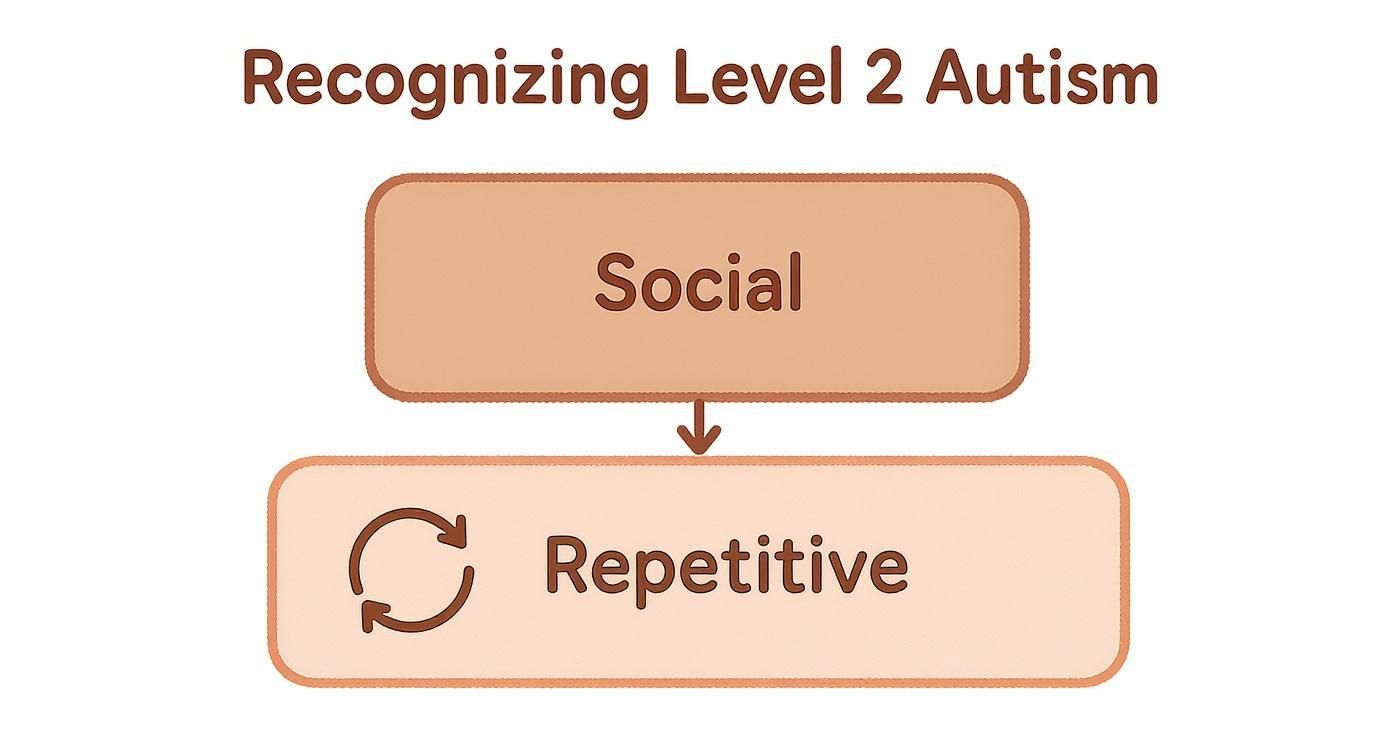
As you can see, both social communication and repetitive behaviors are significant factors, which is why a focused and substantial support system is so crucial.
A Clear Comparison of Support Needs
Laying out the three levels side-by-side can make these distinctions even clearer. This really helps illustrate what "substantial support" means in the real world for a child with Level 2.
The levels are a clinical tool to unlock the right resources. They describe what a child needs today, not who they will be forever. A child’s needs can and often do change over time with the right support.
This table gives a practical look at how the support needs and characteristics differ across the spectrum.
| Feature | Level 1 Requiring Support | Level 2 Requiring Substantial Support | Level 3 Requiring Very Substantial Support |
|---|---|---|---|
| Social Communication | Difficulty initiating social interactions; may seem to have decreased interest in social engagement. Struggles with back-and-forth conversation. | Marked deficits in verbal and nonverbal social communication skills. Social impairments are apparent even with supports in place. Limited initiation of social interactions. | Severe deficits in verbal and nonverbal communication. Very limited initiation of social interactions and minimal response to social overtures from others. |
| Repetitive Behaviors | Inflexibility of behavior causes significant interference with functioning in one or more contexts. Difficulty switching between activities. Problems with organization and planning. | Repetitive behaviors and restricted interests are obvious to casual observers and interfere with functioning in a variety of contexts. Distress and/or difficulty changing focus or action. | Inflexibility of behavior, extreme difficulty coping with change. Restricted/repetitive behaviors markedly interfere with functioning in all spheres. Great distress/difficulty changing focus. |
| Support Needs | Needs support to navigate social situations and manage organizational challenges. Can often function in a mainstream setting with accommodations. | Requires substantial support. Needs focused, consistent intervention (like speech, occupational, and behavioral therapies) to build skills and manage daily activities. | Requires very substantial support. Needs intensive, often one-on-one, therapy and support across all environments to develop basic communication and life skills. |
For example, a child with Level 2 might speak in simple sentences and sometimes try to start an interaction. This is a key difference from Level 3, where a child might be nonverbal or have only a few words. At the same time, their social challenges are far more noticeable than those of a peer with Level 1, who might be able to hold a conversation but still struggles to form lasting friendships.
Ultimately, the focus is always on understanding the specific type and intensity of support a child needs to thrive.
Building Your Child's Support System

Knowing the autism level 2 meaning is just the starting line. The next step is turning that understanding into a practical action plan. For a child needing substantial support, this isn't about finding a single magic bullet. It’s about weaving together multiple therapies and strategies to create a strong, collaborative safety net. This multidisciplinary approach is key to addressing your child's needs from every possible angle.
Think of it like building a custom toolkit for your child. Instead of one tool for every job, you’ll have specialized instruments designed for communication, social skills, and sensory regulation. Each therapy and educational support plays a unique, vital role in empowering your child.
The real goal here is to build skills, boost confidence, and nurture independence. A well-rounded support system gives your child the tools they need to navigate a world that isn't always built for them.
Core Therapies and Interventions
Several evidence-based therapies form the foundation of most support plans for Level 2 autism. These are designed to build critical life skills and reduce challenging behaviors by providing structure, consistency, and positive reinforcement.
Applied Behavior Analysis (ABA) is one of the most well-known therapies for autism. It takes a systematic approach to teaching new skills—from communicating wants and needs to mastering daily routines—by breaking them down into small, manageable steps. ABA is highly individualized and focuses on reinforcing positive behaviors.
Speech Therapy goes way beyond just pronunciation. A speech-language pathologist (SLP) will work on both verbal and nonverbal communication, teaching children how to express themselves, understand others, and navigate the unwritten social rules of conversation.
Occupational Therapy (OT) is all about building the skills needed for daily living. This could be anything from fine motor skills for writing and buttoning a shirt to sensory integration techniques that help a child manage overwhelming sights, sounds, and textures in their environment.
A key takeaway for parents is that these therapies work best when they work together. Your child’s OT, SLP, and behavior therapist should ideally be communicating to ensure their goals are aligned and reinforcing the same skills across different settings.
As awareness of autism grows, so does our ability to provide targeted support. Globally, as diagnostic capabilities improve, more children are being identified with specific support needs. In high-income nations, children with Level 2 autism make up an estimated 20% to 30% of all ASD diagnoses. That highlights the millions of families who rely on these vital interventions. You can discover more about this data on the CDC’s autism data and research page.
Essential Educational and Developmental Supports
Your child's support system extends right into the classroom. The school is a critical partner in their development, and formal plans are what ensure they receive the accommodations they need to thrive both academically and socially.
Here are the two main tools you'll encounter in the educational system:
- Individualized Education Program (IEP): This is a legally binding document for students in public schools who qualify for special education. It outlines specific, measurable goals for your child and details the services the school will provide, like access to a special education teacher, in-school therapy sessions, or modified assignments.
- 504 Plan: A 504 plan provides accommodations for students with disabilities who don't necessarily need specialized instruction but still require support to access the general education curriculum. This might include things like extra time on tests, preferential seating, or the use of sensory tools in the classroom.
Creating this support system is an ongoing collaboration—a partnership between you, your child's clinical team, and their educators. By working together, you create a powerful, unified front that champions your child's growth and well-being every single day.
Getting the Right Diagnosis and Advocating at School
Getting the right support for your child really starts with a formal diagnosis, but I know firsthand how overwhelming and confusing that journey can feel. The first move is always a professional evaluation. This single step is what unlocks access to effective therapies and crucial school-based services.
This isn’t just about getting a label or confirming a level. It’s about building a detailed, holistic picture of your child—their unique strengths just as much as their challenges. This complete profile becomes the roadmap for every single support plan that comes next.
Securing a Professional Evaluation
So, where do you begin? You’ll want to connect with a specialist who can perform a truly comprehensive assessment. This is the cornerstone for understanding your child’s specific needs and getting a diagnosis you can trust.
Look for these key professionals:
- Developmental Pediatricians: These doctors are the specialists in child development and have extensive experience diagnosing autism.
- Child Psychologists or Neuropsychologists: These experts are incredible at assessing cognitive skills, social-emotional health, and behavioral patterns.
- Child Neurologists: They can help rule out other neurological conditions that might look similar to autism.
Before you go, take some time to jot down your own observations. Think about specific examples of social communication hurdles or repetitive behaviors you’ve noticed at home or out in the world. This firsthand information from you, the parent, is absolutely invaluable to the clinician.
Come prepared with a list of questions. Ask about what comes next, which therapies they recommend, and how you can best support your child at home. You want to walk out of that appointment feeling empowered and clear on the path forward.
For a little more guidance on this part of the journey, our article on navigating developmental delays with confidence offers some great insights.
Partnering with Your Child's School
Once you have a diagnosis in hand, the next big step is to team up with your child's school to create a learning environment where they can truly thrive. Your primary goal here is to secure an Individualized Education Program (IEP). This is a legally binding document that outlines all the specific accommodations and services your child will receive.
To get the ball rolling, you’ll need to submit a written request for an evaluation to the school's special education department. The school will then conduct its own assessments to figure out eligibility.
When it’s time for the IEP meeting, remember that you are a critical, expert member of that team. Come ready to share the results from your private evaluation and to advocate passionately for what your child needs. This plan is what turns the diagnosis into a concrete strategy for success, making sure teachers and therapists are all working together to help your child shine.
Exploring Complementary Neuro-Tonal Approaches
Alongside the well-established therapies, many families find themselves looking for complementary approaches that can support their child’s overall health and well-being. This search often leads to options focused on the body's foundational functions—especially the nervous system.
One of these approaches is neuro-tonal chiropractic care. It’s a gentle form of chiropractic that centers on the vital connection between the spine and the central nervous system. The whole idea is to help regulate the nervous system so the body can better manage and process all the sensory information and daily stress it encounters. For a child with Level 2 autism, who is often dealing with significant sensory overload, this can be a powerful supportive goal.
A Supportive Piece of the Puzzle
It’s so important to be clear about where these therapies fit in. They are not a cure or a replacement for evidence-based medical and developmental treatments like ABA, speech therapy, or occupational therapy. Think of them as working alongside your primary care plan to support foundational wellness.
A great way to look at it is ensuring the body's "operating system" is running as smoothly as possible. A more regulated system might just help a child get more out of their essential therapies.
Many parents are curious about how exactly nervous system regulation ties into developmental challenges. A key player here is the vagus nerve, which is massively important for managing the body's "fight or flight" and "rest and digest" responses. To dive deeper, you can check out our guide on the vagus nerve and autism.
Before starting any new therapy, it's always best to have a conversation with your child’s primary medical team. This ensures that any complementary care you choose fits safely and effectively into their complete, comprehensive support plan.
Answering Your Questions About Level 2 Autism
Getting an autism level 2 diagnosis can feel like opening a door to a hundred new questions. It's completely natural. Below, we've tackled some of the most common concerns we hear from parents, offering clear answers to help you understand the path ahead.
Can a Child's Autism Level Change Over Time?
Yes, absolutely. A child’s designated level isn't set in stone. Think of the DSM-5 levels as a snapshot of the support your child needs right now, at the moment of their evaluation.
With the right therapies, natural development, and new skills, a child's need for support can lessen. This might mean that, upon re-evaluation, they meet the criteria for a different level. On the other hand, big life changes—like the social complexities of starting middle school—can sometimes temporarily increase their support needs.
A diagnosis level is a snapshot in time, not a life sentence. It’s a tool meant to get your child the right resources for right now, and it can absolutely evolve as they grow.
Does Level 2 Mean My Child Will Never Live Independently?
Not at all. A Level 2 diagnosis simply describes a child’s current need for substantial support; it doesn’t have a crystal ball for the future.
Many individuals who were once diagnosed with Level 2 autism grow up to lead happy, fulfilling lives with varying degrees of independence. The outcome really depends on their unique strengths, consistent access to good resources, and a strong support system cheering them on.
Is Level 2 Autism the Same as Moderate Autism?
Essentially, yes. You might hear the term "moderate autism" used, and it generally corresponds to what clinicians now call Level 2. That older term was common before the DSM-5 was updated back in 2013.
The new level system was introduced to be more specific and helpful. Instead of relying on broad, sometimes vague labels, it focuses on something much more practical: the actual intensity of support a person needs to thrive.
At First Steps Chiropractic, we know this journey takes a village. Our neuro-tonal approach is designed to support your child’s nervous system, helping them feel more balanced and better able to adapt to their world. Learn how we can fit into your multidisciplinary care plan by visiting us at firststepschiropractic.com.